|
As we begin 2026, the Water & Health Advisory Council is taking a moment to look back at 2025 – a year defined by urgent challenges and steady leadership across the drinking water sector.
From wildfires and aging infrastructure failures to accelerating PFAS policy debates and growing affordability pressures, 2025 reinforced a central truth: protecting public health depends on clear science, practical solutions, and sustained investment. Throughout the year, Council Members helped bring clarity to complex issues – elevating facts over misinformation and advancing a more resilient, reliable drinking water future.
| | |
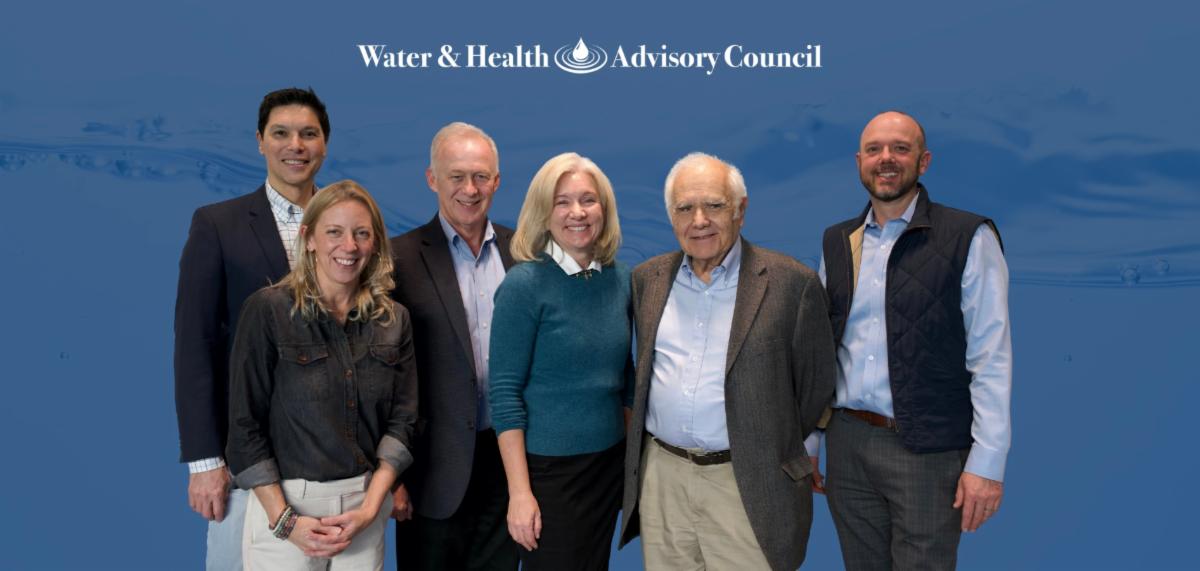
In 2025, the Water & Health Advisory Council marked an important leadership transition. After years of service as Chair, Rob Renner stepped down, and we are grateful for his foundational leadership and continued involvement as a member of the Council’s new Emeritus Board, alongside Joyce Dinglasan-Panlilio.
Kathryn Sorensen stepped into the role of Chair, bringing deep expertise in water utility leadership, infrastructure, and policy. The Council also welcomed Alan Roberson as a new Council Member, adding decades of experience in drinking water regulation and governance.
| | |
In 2025, major wildfire events fueled widespread public confusion about the role of water utilities in firefighting. Council Members Kathryn Sorensen and Chad Seidel helped correct the record through national media and podcasts, emphasizing that municipal water systems are designed for localized firefighting and daily reliability – not large-scale wildfires intensified by extreme weather.
Their insights also pointed toward solutions: strengthening infrastructure, improving emergency response coordination, and helping communities prepare for climate-driven risks that are increasingly testing systems nationwide.
| | |
The Safe Drinking Water Act remains one of the most consequential public health laws in U.S. history. The 51st anniversary of the SDWA on December 16, 2025, provided an important moment to reflect on its legacy and sharpen a key question: What must we prioritize next?
Across the year, the Council elevated thoughtful, solutions-oriented dialogue about the future of safe drinking water – highlighting challenges that are not only technical, but also organizational, financial, and political. Millions of Americans still face unreliable or contaminated drinking water, especially in small, rural, and disadvantaged communities. Meeting this moment will require credible leadership, durable funding strategies, and regulatory approaches grounded in science and real-world implementation.
| | |
PFAS remained one of the defining water policy issues of 2025. The Council supported strong public health protections while urging policies rooted in sound science, transparent risk analysis, and practical implementation realities.
A recurring theme throughout the year was the need to confront tradeoffs. Where PFAS poses the greatest health risks, treatment is essential. But many communities may achieve greater near-term public health gains by prioritizing investments that address more immediate local risks – particularly in systems already strained by aging infrastructure and financial constraints.
| | |
From repeated water main breaks to national assessments underscoring long-term investment gaps, 2025 made clear that infrastructure and affordability are inseparable from public health protection.
Council Members emphasized that rebuilding trust and reliability depends on sustained infrastructure investment, honest conversations about costs and tradeoffs, and policies that protect vulnerable communities from being disproportionately burdened.
| | |
In 2025, several Council Members were recognized for their leadership and contributions to the water sector.
-
Manny Teodoro received the Donald R. Boyd Award from the Association of Metropolitan Water Agencies and was named a Hydro20 Honoree for his influential work on water affordability and public trust.
-
Alan Roberson received the Career Achievement Award from the Association of State Drinking Water Administrators, recognizing decades of service and impact in drinking water regulation and policy.
These honors reflect the depth of expertise and leadership represented across the Council.
| | |
The Water & Health Advisory Council closed out 2025 with its Q4 meeting in December, where Council Members convened to discuss emerging drinking water challenges heading into 2026. Conversations focused on PFAS implementation realities, infrastructure investment gaps, affordability pressures, climate-driven risks to water systems, and priorities for future research and engagement.
Additional insights and takeaways from these discussions will be shared in the months ahead.
| | |
Entering 2026, the challenges before the water sector are complex–but solvable. With science-based decision-making, durable investment, and collaborative leadership, we can ensure safe, reliable, and affordable drinking water for every community.
Thank you for your continued engagement with the Water & Health Advisory Council. We look forward to the work ahead.
With appreciation and resolve,
The Water & Health Advisory Council
| | | | |