|
September 15, 2026
The FY 2027 FMR Picture in Plain Terms
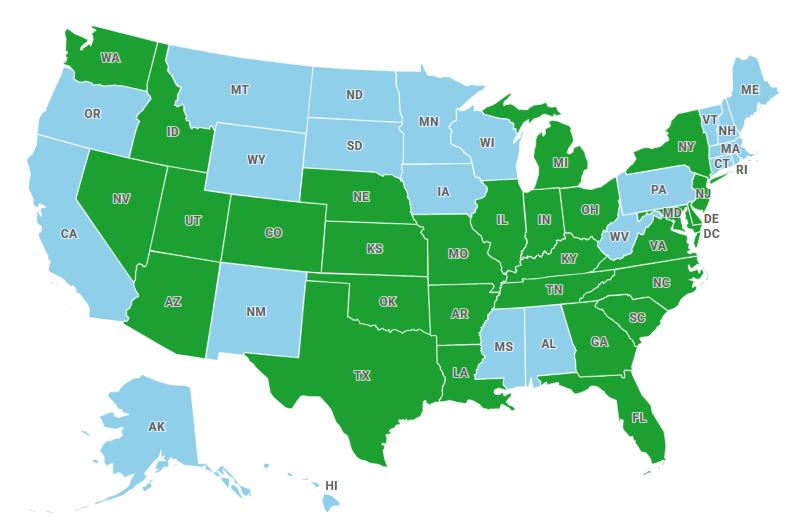
---Every year, HUD publishes Fair Market Rents (FMRs) — its estimate of what a recent someone moving to a given area pays for a typical apartment. These numbers set the payment standard for Section 8 Housing Choice Vouchers, and in high-cost markets they also influence LIHTC income limits. For FY 2027, effective October 1, the national picture is one of a market losing momentum:
-The population-weighted average increase was just 2.0%, down from 2.8% last year and the second straight year under 3%.
-Nearly 1 in 5 FMR areas saw an outright decrease, and because several very large metros were among them, more than one-third of the U.S. population now lives somewhere FMRs went down.
-Non-metro and rural markets grew about 4.1%, more than double the 1.66% average in metro areas, the usual growth engines (big Sun Belt metros in particular) cooled or reversed.
-States that have historically posted big FMR increases (California and Texas among them) actually saw average decreases this year.
---For owners and asset managers, that's a real constraint. Voucher payment standards are tied to FMR, so a flat or falling FMR caps what a housing authority will approve for contract rent. And in high-cost areas, FMR feeds directly into HUD's income-limit formula, so a soft FMR year can mean a soft income-limit year too. Rents aren't the only lever available, though. There's a second number on every LIHTC compliance worksheet that owners have far more ability to actively manage: the utility allowance.
Why the Utility Allowance Matters More in a Soft-FMR Year
---In a LIHTC deal, the tenant's total housing cost is rent plus utility allowance and that combined figure is capped by the area's maximum rent limit. When FMR growth stalls or reverses, the room to raise gross rent gets squeezed. But the utility allowance is calculated separately, using actual utility rates and consumption data, and updated at least annually. If utility costs in a market have genuinely fallen, a lower, well-supported utility allowance frees up rent dollars dollar-for-dollar, the maximum gross rent stays the same, but a smaller utility allowance component means the owner can charge more in tenant-paid or owner-collected rent within that same cap.
Put simply: in a year where FMR isn't giving owners any room, a properly updated utility allowance study can.
Texas as a Case Study: Electricity Costs Actually Fell This Summer!
---Texas is a useful example precisely because it's one of the states where FMRs went flat or negative this year and it's also a state where electricity costs behaved in a way that could support a lower utility allowance in many areas (we saw this firsthand this year when we conducted a statewide UA audit for a large national client of ours).
It's worth separating two different pieces of a Texas electric bill:
- Delivery (TDU) charges — the regulated fee Oncor or CenterPoint charges to move electricity over their wires, set by the Public Utility Commission of Texas. These actually ticked up modestly in 2026: Oncor's PUCT-approved rate case added roughly 3% to a typical residential bill starting midyear, and CenterPoint saw a comparable adjustment.
- Energy (generation/supply) charges — the cost of the electricity itself, which is set by the competitive retail market and driven by wholesale ERCOT prices. This is where the real relief showed up.
---ERCOT set a new all-time peak demand record above 91 GW in July 2026, roughly 6-8% above the prior 2023 record yet wholesale and retail prices behaved better than in past high-demand summers. Texas has added a record amount of solar and grid-scale battery storage over the past two years (grid-scale storage roughly doubled between January 2025 and March 2026), and that capacity did exactly what it was built to do: solar drove down midday wholesale prices, batteries then discharged that cheap power into the evening peak, and the combination reduced the frequency of the $200+/MWh price spikes that characterized summer 2025. By some market trackers, retail electricity rates actually fell roughly 10% from June to August 2026, a break from the typical summer pattern of rising prices as demand climbs.
---The net effect for a lot of Texas properties: even with a small uptick in the regulated delivery fee, total electricity costs for many households were flat or lower than the same months last year, because the much larger energy-supply component moved down.
Connecting the Dots for Owners
---Whatever methodology an owner uses—HUD Utility Schedule Model, Energy Consumption Model, or actual data from a provider like Conservice—a summer of flat or falling all-in electric costs is exactly the kind of input that produces a lower or steady utility allowance at the next update. That matters most where FMR didn't move: a refreshed, lower utility allowance preserves or increases the rent portion of the gross rent limit, offsetting a stagnant FMR. This is especially worth revisiting for Texas assets in Oncor (DFW) and CenterPoint (Houston) territory, where 2026 data no longer supports assuming utility costs are still climbing the way they were in 2023-2025 and it's a reminder that allowances need annual refreshes, since a stale assumption can either cost the owner rent capacity or create compliance risk if it's too low.
The Takeaway
---FY 2027 FMRs tell owners that rent growth, as HUD measures it, has largely stalled and in a lot of the country's biggest markets, reversed. That's a real challenge, particularly for properties that lean on voucher tenants or sit in high-cost areas where FMR drives the income limit. But FMR isn't the only variable in the gross rent equation. Utility costs move on their own timeline, driven by their own supply-and-demand dynamics and in Texas this year, the story was falling wholesale energy prices thanks to a historic build-out of solar and battery storage, even as regulated delivery fees ticked up. For owners willing to revisit their utility allowance studies with current data, that's an opportunity to soften the landing that a flat FMR year creates recovering through the utility side of the ledger what the rent side isn't providing.
|