EDI Newsletter: September 2023
Welcome to the sixth edition of the Ontario CLRI’s Equity, Diversity and Inclusion (EDI) newsletter! These quarterly newsletters feature updates, news, and educational resources to support your EDI journey.
Join us online!

Follow and tag us using #EDIinLTC
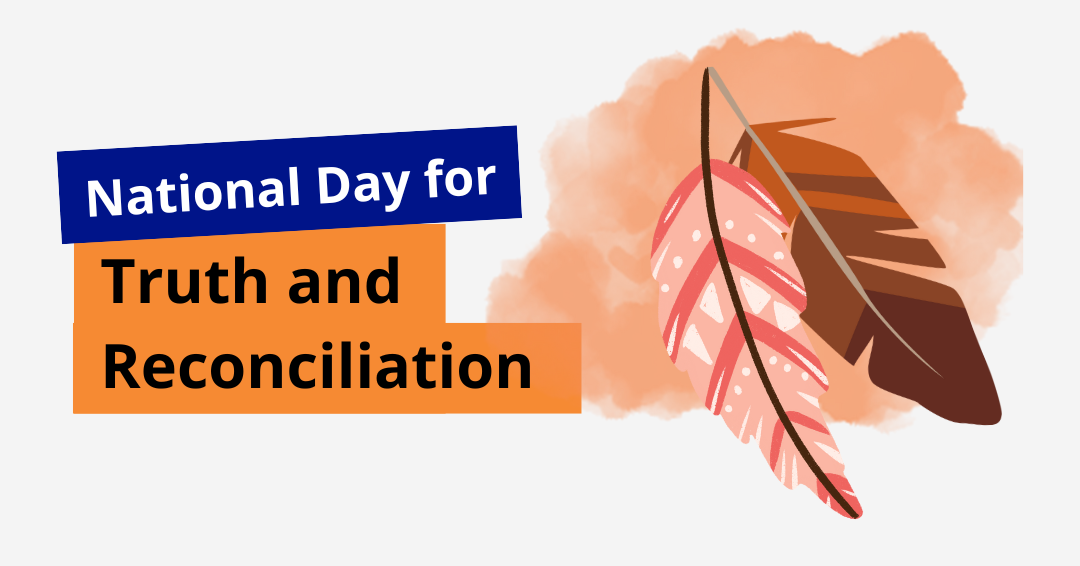
National Day for Truth and Reconciliation
September 30, will be the 3rd Annual National Day for Truth and Reconciliation.

This is a day to reflect on the history and ongoing intergenerational impacts of the residential school system in Canada. It is a time for mourning, education, and commitment to ensure harm like this never happens again. 

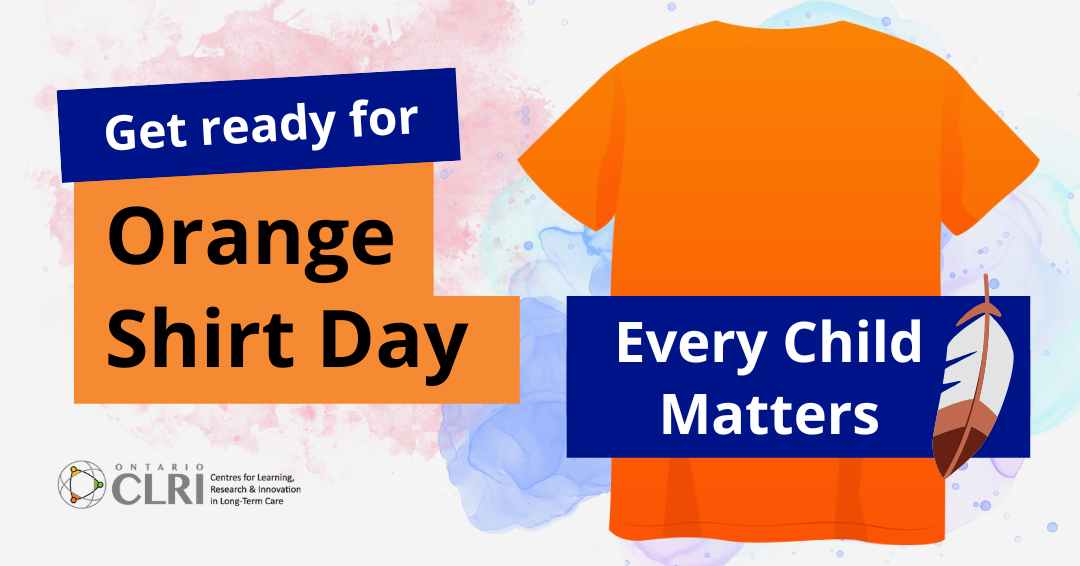
It is also a day where we appreciate and honour Phyllis Webstad, who bravely shared her story about having her orange shirt taken from her when she was forced to attend residential school in British Columbia. This story sparked a national movement of awareness raising and education. 

You can start now if you haven’t already developed your LTC home’s plans to mark this important day. Here are just a few ideas of things you can do:

  • Wear an orange t-shirt, pin, or other item purchased from a local Indigenous business. Here are some options:


  • Reach out and engage with a local Indigenous community and attend a community event.

  • Start a Sharing Circle in your organization to discuss and learn together by reflecting on and discussing learnings from books, articles, podcasts, and documentaries by Indigenous Peoples about their history and perspectives. See the resources below as a starting point. 

  • Craft Land Acknowledgements or look at your current statement(s) and consider how to expand them. Do they convey respect, sincerity, and meaningful commentary on land acknowledgment and reconciliation? You can use Land Acknowledgements at your events, meetings, and forums or in your email signature/other communications activities.

  • Attend a local event, or watch the live stream of the commemoration of National Day for Truth and Reconciliation and Orange Shirt Day on Parliament Hill on September 30, 2023.

  • Let us know what you are doing. We are compiling stories that we’d like to share about how LTC homes in Ontario are taking action on Reconciliation. Please send us an email to Michelle Fleming at mfleming@bruyere.org.
Resources to Explore
Take some time to explore these resources in support of Indigenous Reconciliation and to commemorate National Day for Truth and Reconciliation.

Learn more about Orange Shirt Day

YouTube
Phyllis Webstad explains the story of her experience at Residential School and the origination of Orange Shirt Day in Canada. She discusses the present situation and her hopes for the future.

The 519 Podcast
This podcast highlights the voices of Indigenous leaders in our communities and reflects on questions like, ‘What does the day mean to them? How does Canada continue with reconciliation? How can reconciliation help all of us?’. 

Land Acknowledgement Resources

Behavioural Supports Ontario (BSO)
This comprehensive guide outlines the essential elements and considerations for crafting meaningful and respectful Land Acknowledgements. It provides a step-by-step framework, examples, and guidelines for individuals and organizations to acknowledge the traditional territories of Indigenous Peoples with authenticity and cultural sensitivity. 

Public Health Ontario
This is a comprehensive guide that delves into the significance of Land Acknowledgements in the context of public health. It provides practical insights, examples, and best practices for public health professionals to respectfully acknowledge and honour the Indigenous lands on which they work. This resource is essential for fostering cultural humility, promoting reconciliation, and building meaningful relationships with Indigenous communities.

Palliative Care

SPA-LTC Podcast (Strengthening a Palliative Approach in Long-Term Care)
This podcast explores various aspects of health equity and provides valuable insights from Holly Prince about the barriers to care for Indigenous Peoples and the importance of equitable access to palliative care within Indigenous communities.

Cancer Care Ontario
This toolkit includes resources and reference material for First Nations, Métis, and Inuit families and communities. It can be used to help support people with palliative care needs. These educational materials can be used by anyone in the community.

Engagement and System Transformation Resources

Indigenous Primary Health Care Council
This resource is to assist non-Indigenous healthcare organizations that are seeking to work with Indigenous Knowledge Keepers. This guide puts into consideration which particular wise practices/protocols are to be implemented before, during, and after the event (e.g. openings, closings, smudging, workshops, seminars, talks, ceremonies, conferences, mentorship, mediation, committees, advice/support, etc.)

Indigenous Primary Health Care Council
The Indigenous Health System Transformation Booklet is a valuable resource that explores the process of transforming health systems to better meet the needs of Indigenous communities. It provides insights, strategies, and case studies that highlight the importance of culturally appropriate care and the integration of Indigenous knowledge and practices.
Featured Opportunity
Free-From-Harm: Opportunity to Participate! 

The Towards Free-from-Harm Care Labour Project, in collaboration with LTC homes across Ontario, works to make LTC homes more supportive, inclusive, equity-oriented, and safe among individuals working in these environments.

LTC home team member knowledge holders are needed to take part in a study about minimizing gender and race-based harm for long-term care home staff. 

Participants must:

  • Have worked as a team member in LTC homes providing direct care to residents (personal support worker, recreation, spiritual care, dining support, therapist, etc.) in Ontario, Canada for at least one year;
  • Identify as a visible minority/racialized person/person of colour (e.g., Black, Indigenous, Asian, Southeast Asian, East Asian, mixed race, etc.); and/or
  • Identify as a woman, non-binary, or gender queer/person with trans experience.

For more information on how to participate, invite us to deliver a workshop at your LTC home, or for any questions, please visit our website or contact Kimberly Lopez at kjlopez@uwaterloo.ca.
Upcoming Learning Opportunities

As always, if there is a particular type of resource you’re looking for, please don’t hesitate to contact us! If there’s a resource or upcoming learning opportunity you’d like to see us share, please let us know at mfleming@bruyere.org.
Logo with text "Ontario CLRI Centres for Learning, Research & Innovation in Long-Term Care"
Bruyère logo
RIA logo with text "Research Institute for Aging: Schlegel, UWaterloo, Conestoga"
The Ontario CLRI is funded by the Government of Ontario and hosted at Baycrest Health Sciences, Bruyère, and the Schlegel-UW Research Institute for Aging. The collective expertise, resources and partnerships of the host organizations help advance the Program’s provincially mandated goals.
Received this email as a forward? Subscribe to the Ontario CLRI EDI newsletter to receive your own quarterly edition!