|
Good morning, and welcome to The Ship Show!
Summer’s almost over, which means you’ve got about two weeks left to force yourself to have the kind of fun that you'd swore you'd have back in May, but forgot to actually act upon.
Don’t panic though, because there’s still time to squeeze in those classic summer traditions before Starbucks repeatedly reminds you that it's nearly pumpkin spice latte season.
Here's some ideas to get you started:
- Pay $14 for a beer at a baseball game with the other six people who remembered that the season is still going on.
- Burn a vacation day driving three hours to a lake you’ll immediately regret swimming in.
- Light $200 worth of fireworks in your neighborhood on a Tuesday night to remind everyone that America should be celebrated every day, not just July 4th.
- Attempt to “day drink responsibly” and wake up redder than a lobster on the patio with a half-eaten hot dog in your hand.
- Partake in a blood donation for the local mosquito population.
And if all else fails, just stand outside for ten minutes, sweat through a shirt, and call it “soaking up the season.”
The memories will last. The sunburn will not.
- Greyson Harris
| | Photo: Peter Parks (almost Spider-Man) / Getty | | International Tariff Concerns Lead to Package Pause | | |
If you’ve been procrastinating on ordering that authentic beer stein from Germany, consider this your final boarding call.
Starting this Friday, the U.S. is suspending the de minimis exemption for all countries. That’s the long-standing import rule that let businesses ship packages worth less than $800 to your doorstep duty-free.
It’s how everything from fake Gucci to cheap electronics and Etsy crafts managed to stay affordable. Now? Not so much...
Quick recap for those just tuning in:
- The Trump administration already ended the exemption for China and Hong Kong in May.
- On August 29, everyone else loses access too.
- This affects more than 90% of all cargo coming into the U.S. by volume.
So who’s freaking out?
Just about every postal system not called USPS (and we can't guarantee they aren't a least slightly concerned given the recent surge of privatization talks).
Postal services and parcel carriers across Europe, Asia, and Oceania are halting some U.S.-bound shipments while they scramble to figure out how to comply.
Some notable slowdowns include:
- France, Spain, Italy, and the UK are among over a dozen countries putting packages on hold.
- Germany’s DHL has suspended business shipments through its Deutsche Post and Parcel service, saying “key questions remain unanswered.”
- The Royal Mail thinks it can sort things in a couple of days (how extremely optimistic of them).
It’s not just about the money (shoutout to that one scene in The Dark Knight). It’s also about the paperwork, the customs coordination, and the sheer logistics mess of redoing the entire cross-border playbook.
Here’s what’s still allowed:
- Letters (yes, people still send those)
- Gifts under $100 sent from person to person (not companies)
- Premium services like DHL Express
Why does it matter?
Your checkout total is about to go up (by at least 10% in many cases), and that’s if your order can even be processed right now. Retailers like Shein and Temu have already raised prices in response to the China/Hong Kong cutoff.
The White House calls de minimis a “catastrophic loophole” that helps smugglers and hurts U.S. companies. There’s bipartisan support for doing something about it. Even the Biden administration previously floated similar ideas.
But critics, like the Cato Institute, warn that ending it will:
- Make life harder for low-income Americans
- Increase red tape for global supply chains
- Create an administrative headache for logistics providers
And judging by this week’s postal freakout, they might have a point.
Meanwhile, in other tariff news...
Canada is dialing back many of the retaliatory tariffs it slapped on U.S. goods earlier this year, signaling a step toward smoother relations with our neighbors in the north.
Not everything is thawing, though. Canada’s own 25% tariffs on U.S. autos, steel, and aluminum will remain in place for now. Still, Carney sounded optimistic at a press conference, calling Canada’s arrangement with the U.S. “the best trade deal of any country.”
India-U.S. trade relations, on the other hand, are going in the opposite direction. After talks between the two countries collapsed, the Trump administration confirmed a new round of tariffs on Indian goods will kick in Wednesday.
The latest duties (an additional 25%) are in response to India’s increased imports of Russian oil and bring the total tariff rate up to a steep 50%, among the highest levied by Washington.
| Book Our Loads on Highway's TFX | |
We’re now posting freight on the Trusted Freight Exchange (TFX), a secure, Highway-powered network made for verified carriers like you.
It’s built right into Highway, free to use, and designed to connect you with quality freight fast.
Every KCH load on TFX is:
- Verified: posted by trusted shippers and brokers.
- Ready to roll: book it instantly and get moving.
With TFX, you skip the back-and-forth and get straight to hauling.
| What to Know About the Trump Administration's Trucking Visa Freeze | |
In the wake of a fatal Florida truck crash, the Trump administration has paused the issuance of certain work visas for commercial truck drivers.
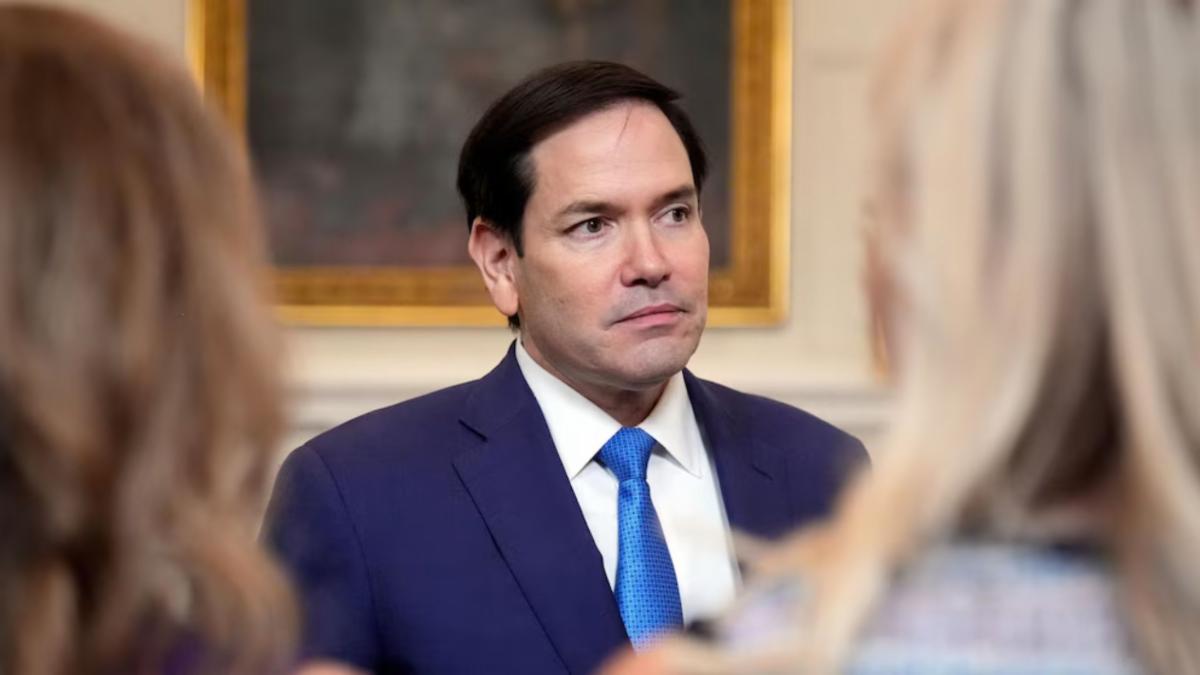
The move was announced by Secretary of State Marco Rubio on X last week, who warned that foreign drivers are “endangering American lives and undercutting the livelihoods of American truckers.”
- So what’s actually happening here?
- Who’s affected?
- Is this about road safety or reelection optics?
Let’s unpack it, hopefully in a way that doesn't get me in trouble...
What just happened?
The State Department confirmed Friday that the visa pause applies to:
- H-2B visas (for temporary or seasonal non-agricultural jobs)
- E-2 visas (for foreign investors)
- EB-3 visas (for skilled workers like electricians, nurses, and truck drivers)
But here’s the thing: only about 1,500 truck drivers received H-2B visas this year. That’s not even a rounding error in a workforce of 3.5 million. It’s more like slapping a “closed for maintenance” sign on a side door no one was really using.
Canadian and Mexican cross-border drivers on B-1 visas were not included, though initial confusion had folks along the border sweating.
Why now?
This announcement came just days after a deadly Florida crash involving a truck driver later found to be in the country illegally.
Authorities say Harjinder Singh made an illegal U-turn on a highway, causing a minivan to slam into his trailer and killing three people.
Singh, who held a California-issued CDL, was later arrested in Stockton, CA and flown back to Florida.
He was personally escorted by the state’s lieutenant governor in what can only be described as the world’s most awkward episode of Undercover Boss.
The industry reacts
Despite the drama, trucking associations are all in on the visa pause, and they’re not exactly being subtle about it.
OOIDA President Todd Spencer called it a win for safety, not just supply chains:
“There’s no driver shortage. There’s an overcapacity problem. And bringing in more foreign drivers, especially through visa misuse and non-domiciled CDL programs, makes our roads less safe.”
OOIDA has also asked DOT and states to suspend non-domiciled CDL programs entirely, arguing that too many drivers are being licensed without proper training or language skills.
ATA’s Chris Spear echoed similar themes, saying it’s time to “pause and audit” how non-domiciled CDLs are being handed out, and called for a surge in enforcement.
How much of an impact will this actually have?
So, here’s the gray area...
Supporters say it’s a step toward restoring common sense. But critics and immigration attorneys argue this move is more about politics than policy.
“This creates fear and panic in communities that there’s a swarm of ‘illegal alien’ drivers on U.S. roads,” said Jeff Joseph of the American Immigration Lawyers Association. “But the numbers don’t support that narrative.”
The visa pause, however small, has certainly touched a nerve. It’s exposed the deep cracks in how commercial drivers are licensed, trained, and monitored across 50 wildly different state systems.
The bigger picture
Despite the low number of drivers affected, this visa pause could reshape the conversation around driver qualifications, especially in states with more flexible CDL rules.
Expect to see:
- More audits of CDL programs (especially non-domiciled ones)
- Greater scrutiny on training providers
- Renewed focus on enforcement, carrier compliance, safety scores, and licensing pathways
The deeper question isn’t about visas. It’s about how the industry defines a “qualified driver” in an era where overcapacity, safety risks, and immigration tension all collide.
| | Photo: Joe Raedle / Getty | | Trans-Pacific Container Rates Slide Back to Earth | | |
If you blinked, you might’ve missed peak season, which went by quicker than Hawk Tuah girl's 15 minutes of fame.
Early surge or false start?
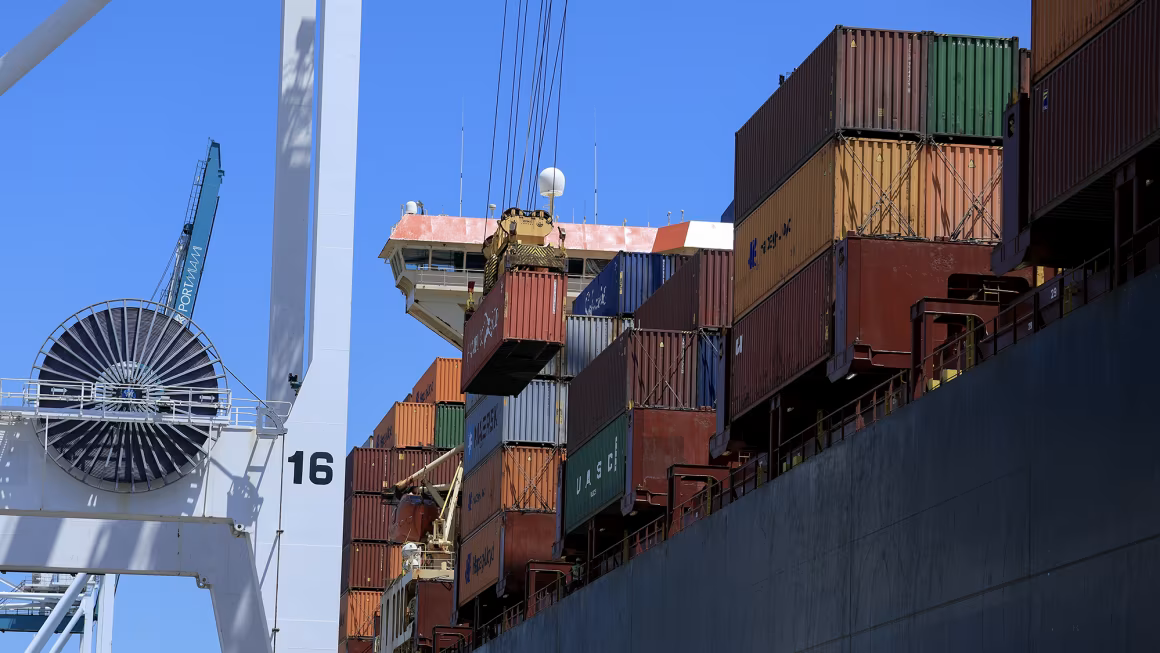
Trans-Pacific container rates have now plunged below where they were before the Red Sea crisis began last year, which seems impossible given how high it spiked.
By the numbers:
- Spot rates from Asia to the U.S. West Coast dropped 8% to $1,940/FEU (forty foot equivalent units), their lowest point since the Red Sea crisis kicked off late last year/late 2023.
- Rates to the East Coast slid too, down 3% to $3,472/FEU, and now sit within arm’s reach of their pre-crisis levels.
All this while the Red Sea situation is still very much a situation, with Houthi attacks ongoing and the Suez Canal still off-limits for most carriers through 2026.
So if the risks haven’t gone away, why are the rates cratering?
Too many ships, too little time
The market’s still bloated with capacity, and it’s showing across the board:
- Asia-Europe rates are down 60% from this time last year, despite decent demand and ongoing Red Sea detours.
- Asia-North Europe lanes are stuck at $3,300/FEU.
- Asia-Mediterranean rates fell from $4,800/FEU in June to $3,100/FEU last week.
Carriers are already planning September capacity cuts to stop the bleeding.
Tariffs giveth, tariffs taketh away
Back in May, the U.S. lowered baseline tariffs on Chinese exports from a scorching 145% to a "merely" sizzling 30%, but only for 90 days.
- That sparked a short-lived import frenzy as retailers scrambled to get goods stateside before the window closed.
- Rates spiked above $6,000/FEU to the West Coast.
That's no longer the case according to Judah Levine of Freightos, who's basically the logistics version of Paul Revere.
“Half the market thinks the extension of those lower tariffs will spark another mini-peak. The other half thinks the party’s already over. Right now, container rates are siding with the pessimists.”
Customs can't keep up
Sources say this latest extension wasn’t just about economic policy. It was about buying time for U.S. Customs, which reportedly got buried under system strain and de minimis data overload.
So rather than collapse under the weight of a million misclassified fidget spinners, the administration punted, buying more time for both Customs and shippers.
The "peak" that wasn't
If this really was peak season, it didn't end with a bang, but with a confused shrug.
It feels like the market's just… waiting.
- Waiting to see if the tariff clock runs out.
- Waiting to see if carriers can actually hold the line on capacity.
- Waiting for some kind of clarity that’s not coming from spot rates or policy updates or Truth Social posts.
| | |
📈 Rising Diesel Prices Putting Pressure on Trucking Companies
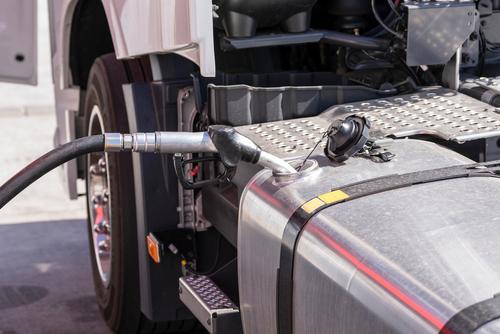
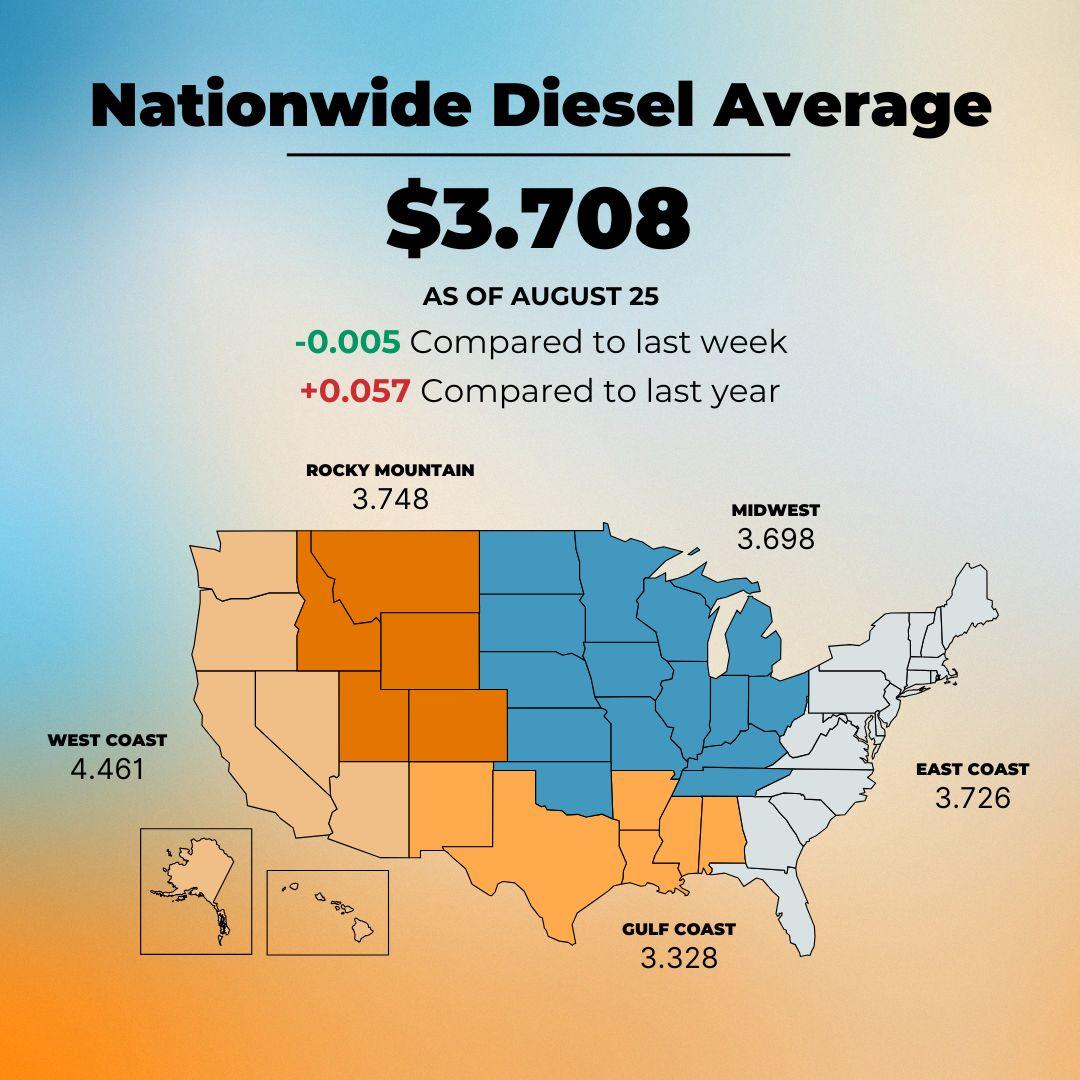
Diesel prices are back on the upswing (in general; it's actually been falling recently, but we're talking about a year-over-year rise), and it’s putting the squeeze on trucking and logistics budgets.
According to a new survey from Tech.co, 20% of U.S. logistics professionals now say fuel costs are their biggest challenge, the highest that number’s been in three months. Over half of the companies surveyed are spending more than 20% of their monthly operating budget just to keep the tanks full.
The bigger concern? Rising diesel costs are likely to stall investment in the very tools that could cut those costs in the long run, like route optimization tech or fuel-saving upgrades.
So basically, instead of planning for the future, a lot of fleets are just trying to make it through the month without getting steamrolled at the pump.
| | |
✈️ Air Canada Cargo Resumes on Modified Freighter Schedule
Air Canada is back in the air after a flight attendant strike grounded operations from August 16–19, but its cargo arm is still operating on a modified schedule while things get back to normal.
During the strike, Air Canada Cargo limited new bookings for specialty commodities and warned that existing shipments could be delayed or cancelled.
To keep things moving, the carrier shifted to a modified freighter schedule that protected up to 25% of volumes.
That temporary setup isn’t going away just yet.
In its latest update, Air Canada Cargo said it expects it will take several days for operations to fully stabilize. Some flights will continue to be cancelled over the next seven to ten days.
The freighter network will continue running a relief schedule (including temporary service to Europe) to ensure some level of continuity.
| | |
🚂 Rail Traffic Hits Red Signal
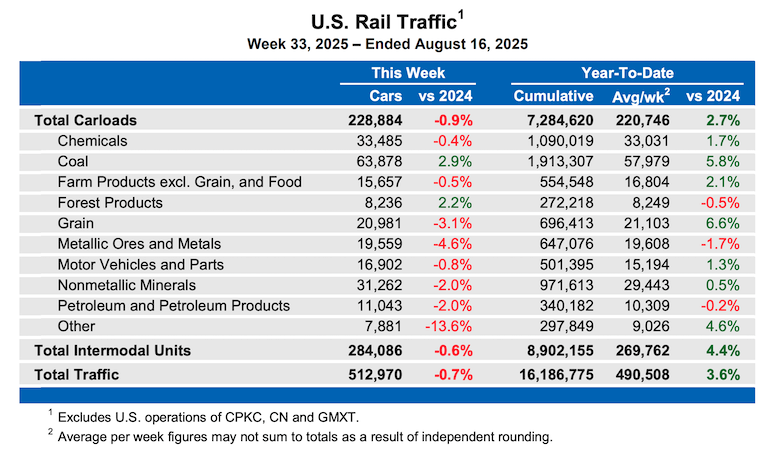
After a decent summer stretch, U.S. rail volumes finally lost steam during the week ending August 16, posting the first year-over-year decline in weeks.
Total U.S. freight rail traffic came in at 512,970 units, down 0.7% from the same week last year. That includes:
- 228,884 carloads (–0.9% y/y)
- 284,086 intermodal units (–0.6% y/y)
Only two commodity groups managed to squeeze out a win:
- Coal: up 2.9%
- Forest products: up 2.2%
The rest? Not so lucky. the biggest drops came from:
- Metallic ores & metals: –4.6%
- Grain: –3.1%
Despite the weekly dip, the year-to-date numbers are still looking pretty healthy:
- Carloads: 7.28 million (+2.7%)
- Intermodal: 8.9 million (+4.4%)
- Total combined traffic: 16.19 million units (+3.6%)
So even if the week was meh, the year’s still trending positive.
Looking at the big picture across the U.S., Canada, and Mexico:
- Total carloads: 320,190 (–3.8%)
- Intermodal units: 365,668 (–0.6%)
- Combined weekly volume: 685,858 units (–2.1%)
- YTD North American total: 22.3 million units (+2.6%)
| | Chart: Association of American Railroads | | Photo: Perry Nelson / Imagn Images | | |
Did You Come to Watch Hockey or Lose Money? Yes.
If you watched this year’s Stanley Cup Finals and felt like the game was betting on you instead of the other way around, you weren’t imagining things.
According to a new study from the University of Bristol, hockey fans were hit with a gambling-related marketing message every 13 seconds during NHL broadcasts. You could've lost your rent money before the first line change.
Live odds on your eyeballs
Over six NHL Finals games, viewers were hit with an average of 3.5 gambling promos per minute, including:
- Logos on the ice
- Rinkside ads
- Jersey patches
- In-game mentions
- Commercials.
You name it, it told you to gamble.
More ads than an F1 car
Across the Stanley Cup and NBA Finals combined (13 games total), researchers tallied a whopping 6,282 gambling messages, and 94% of them came from NHL broadcasts.
It adds up to an average of 3.5 gambling messages per minute during the NHL Finals. The most ad-saturated game reached 4.7 per minute.
NBA Finals games averaged just 0.26 gambling references per minute, which might be because they've had multiple players investigated for shady gambling practices (we all learned who Jontay Porter was at the same time).
The house always wins
Since the Supreme Court overturned the federal sports betting ban in 2018, it’s been an all-out blitz for gambling operators:
- Sports betting is now legal in 39 states + D.C.
- Online gambling firms have spent billions on marketing
- Athletes, teams, and leagues are now in full-on partnership mode
What used to be a taboo is now prime-time real estate. As one researcher put it, games have become a “second-by-second gambling opportunity.”
I'm gambling again
Industry groups like the American Gaming Association (AGA) say sports betting only made up 0.4% of U.S. TV advertising in 2024, less than alcohol or pharmaceuticals.
That number doesn’t reflect the visibility, though. A single rinkside logo gets seen more often than a 30-second Burger King ad between injury timeouts.
And while the COVID-era spike in gambling addiction has tapered off, a recent national survey found nearly 20 million U.S. adults still report recurring problem gambling behavior.
| | Credit: ThinkFreight / Thomas Werdine | | |
Truck parking sucks. Let's fix that.
The U.S. has 23 million truck parking spots. You should be able to find one without feeling like you're on a wild goose chase.
We’re teaming up with Truck Parking Club to make that happen.
Use code KCH25 for $25 off your next reservation.
Less wandering. More rest.
| |
| |
The Frog
Comfort Colors Garment-Dyed Heavyweight T-Shirt
$39.95
| | | | | | |