May 14, 2025

Good morning, and welcome back to The Ship Show!


You ever realize something about your life that makes you question your place in the social hierarchy?


Like, what does it say about me that I've been a groomsmen in four separate weddings, yet I've never just attended one as a normal guest?


To be clear, I do get invited. I just... don't go.


And I think I've figured out why.


I'm not a wedding guest. I'm a wedding utility. In sports terms: the glue guy.


Shane Battier. Tayshaun Prince. Andre Iguodala. You get the gist.


I'm a role player. I need responsibilities. I need a to-do list. I need a mission.


If I show up to your wedding, I’ve got an itinerary in one hand, a flask in the other, and I’m working.


What does this have to do with today's newsletter? Absolutely nothing.


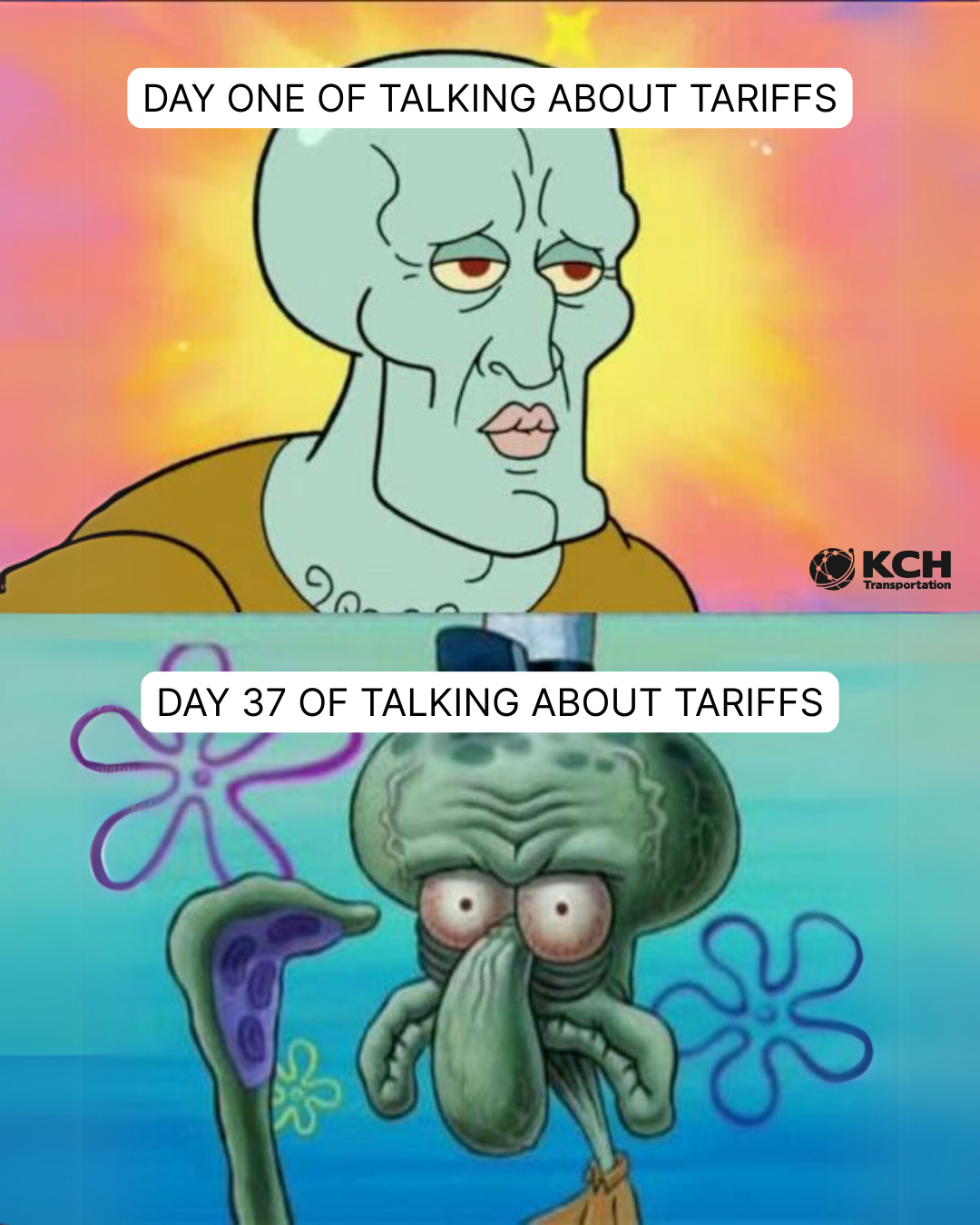
Just wanted to create a distraction before I force-feed you more tariff news.


- Greyson Harris

The Headlines...

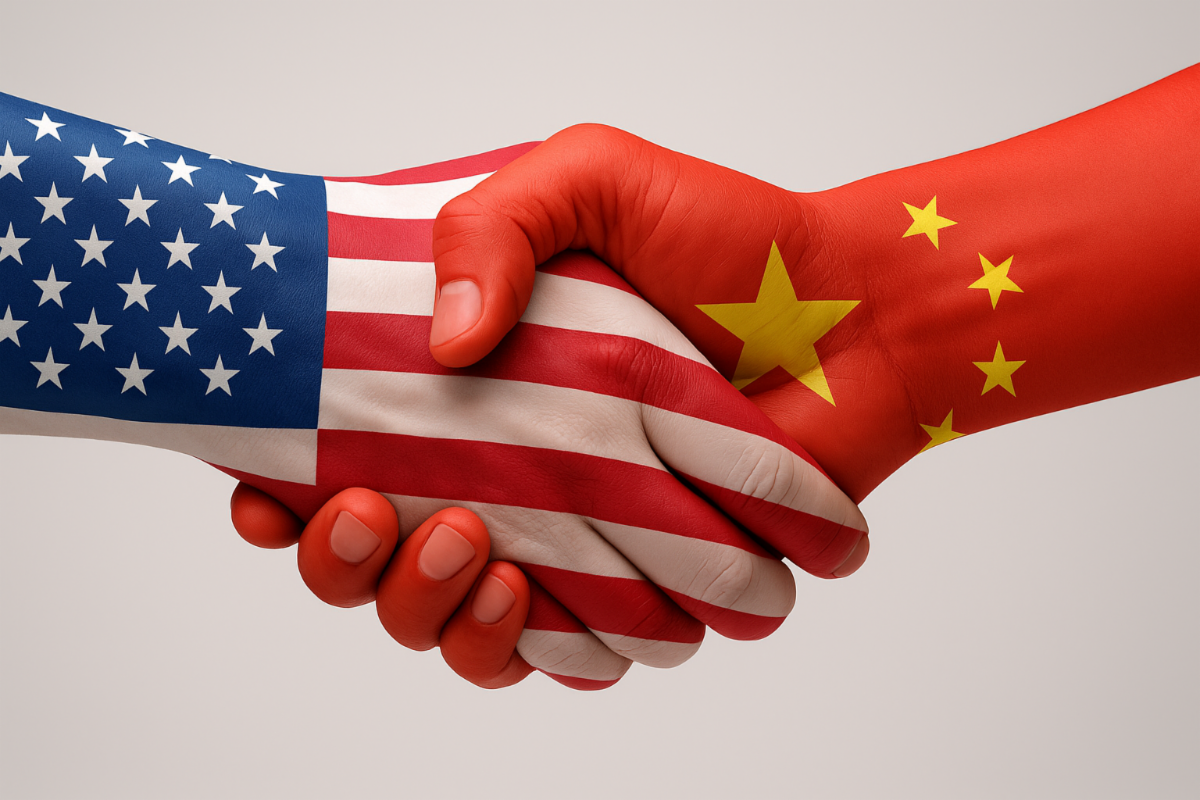
Temporary tariff truce truncates transcendent trade tussle


Remember that video of the guy who approached a kangaroo, punched it in the face, stared at it for a little bit, and then walked away as the kangaroo just stood there absolutely flabbergasted?


That's what the last couple months of the U.S.-China trade war have felt like.


In a move that shocked just about everyone, the two countries have agreed on a temporary rollback of their punishing tariffs, which has this particular writer wondering what the heck I'm supposed to talk about in this newsletter for the next 90 days.


Quick bullet points for people who don't like to read:


  • U.S. blanket tariffs on Chinese goods: slashed from 145% to 30%


  • China’s tariffs on American imports: down from 125% to 10%


  • Time on the clock: 90 days


  • Markets: big stonks


  • Business: boomin'


From Liberation Day to Geneva


In case the word "tariff" has been blissfully removed from your news feed over the last few months, let's get you caught up.


Last month, President Trump rolled out what he dubbed “Liberation Day” tariffs. These blanket rates had business leaders clutching their pearls (and their spreadsheets) and economists warning of a recession.


With supply chains blinking red and the bond market screaming, “oh God please make it stop!” the administration pivoted.


Enter: Treasury Secretary Scott Bessent and U.S. Trade Rep Jamieson Greer. Sent to Geneva for what looked like a long shot, the two came back with what might be the biggest trade ceasefire in years.


“Neither side wants a decoupling,” Bessent said, sounding more like a marriage counselor than an economic negotiator. “We want more balanced trade.”


A plan just crazy enough to work?


Like me explaining why I write a freight newsletter when I went to the University of Georgia for sports journalism, Trump’s inner circle insists this was all part of a master plan.


According to sources close to the administration, this was all a “shock-and-awe” strategy to push the world into accepting a permanent 10% tariff floor.


As one advisor told CNN, “This is a hell of a lot better than the alternative both of us were staring down.”


Cautiously optimistic


Although the stock market partied like Stetson Bennett IV after winning the 2022 National Championship, let’s not pop the Pappy Van Winkle just yet.


After all, this is a pause, not peace:


  • The current blanket 30% tariff on China is still in effect.


  • Sector-specific tariffs on cars, steel, and EVs are still alive and well.


  • Fees for de minimis imports of low-value products are still in effect, although they've been reduced from 120% to 54%.


Evan with a temporary truce, the current tariff rate is projected to reduce US-bound Chinese exports by as much as 36% over the next year.


Shippers: start your engines


Don't be surprised if your warehouse is more chaotic than an anthill that just got stepped on for the next few months.


With 90 days on the clock, importers are already frontloading orders in an effort to beat the potential tariff snapback. Expect volume spikes, rate increases, and some very overworked logistics managers.


“Everyone wants consistency, and that’s been the hard part of this whole thing,” said Mike Abt, a logistics executive in Chicago. “It’s like a game of Risk. You never really know what move’s coming next.”


When the guy from Chicago is telling you there's a risk, you should listen.


So, like, what now?


Clearly, things can change quickly, but here's what we know about the immediate future:


  • The White House says 145% tariffs “aren’t coming back.”


  • Trump claims China has agreed to “fully open” its economy.


  • Negotiators are prepping for more talks.


But as anyone approaching their 30's knows, time goes by fast. If no deal is struck, tariffs could shoot back up. Maybe not to 145%, but “substantially,” per Trump.


Call it improvisation. Call it instincts. Call it a Hail Mary thrown from the Oval Office. Either way, the pivot to diplomacy came after executives, economists, and just about every trade-dependent industry started painting worst-case scenarios in neon red.


“This is the first time it feels like we might actually land this plane without crashing into a recession,” one Republican senator told CNN.


That’s not exactly a ringing endorsement, but hey, it’s a long way from “brace for impact.”

Image: Reuters

Fr8tech makes $2M bet on Trump's meme coin


While some people are still recovering from their investment in $HAWKTUAH coin, one logistics firm is going all-in on another form of cryptocurrency.


In what might be the most 2025 sentence ever written, Houston-based freight tech firm Fr8Tech just doubled down on Donald Trump’s official meme coin as part of a multi-million dollar bet on digital assets and cross-border trade.


Logistics meets blockchain


Fr8Tech is a digital freight service that matches shippers and carriers across the U.S. and Mexico. Now, it’s aiming to make crypto more than just a shiny line item in the treasury.


The company confirmed on April 30 that it locked in a bond agreement to purchase $20 million worth of $TRUMP coins. So far, they’ve made two buys totaling $2 million.


“We’re exploring how participants in the logistics world - carriers, shippers, brokers - can transact, invest, and grow using crypto on our platform,” said a company spokesperson, who I imagine didn't blink once during the entire press release.


What does Mexico have to do with this?


Selgas points to recent comments from Mexico’s president, Claudia Sheinbaum, about working to rebalance trade between the two countries.


“We believe the U.S. and Mexico already have the tools to fix problems like narcotics smuggling and still keep cross-border commerce flowing,” Selgas said.


"[The investment] reflects our confidence in blockchain, and our support for free and fair trade across the U.S.-Mexico border.”

What Else is Happening?

Image: Breakbulk News

👾 Freight on the frontlines of cyber warfare


According to the latest CyberThreat Report from security firm Trellix, cyberattacks on U.S. critical infrastructure are on a serious upswing, and the freight and logistics sector is squarely in the crosshairs.


Between October 2024 and March 2025, the U.S. saw a 136% spike in Advanced Persistent Threat (APT) activity, which is characterized as a highly coordinated, long-term cyber intrusion.


The biggest threat comes from APT29, which is a Russian state-backed group better known as Midnight Blizzard (objectively badass name, btw). Trellix says over half of APT29's activity during this period was aimed directly at transportation and shipping companies.


While APTs are lurking in the background, domestic ransomware groups are still throwing punches on the frontlines. Trellix found that 58% of global ransomware-related activity now originates in the U.S.

⚓️ Import growth in April slowed by tariff concerns


U.S. seaborne imports surged more than 10% year-over-year in April, but the party didn’t last. According to fresh data from S&P Global Market Intelligence, momentum clearly faded in the back half of the month as tariff anxiety (particularly around China) started creeping in.


Capital goods were the first to hit the brakes:


  • Growth slowed to just 0.2% in the last two weeks of April.


  • That’s a sharp drop from the nearly 3% year-over-year pace seen for the month as a whole.


Tech imports took an even harder hit:


  • They dropped 4.8% year-over-year in the second half of April.


  • That comes on the heels of a strong 11.3% jump in March.

📈 Port of NY & NJ takes the crown in March


If there's anyone who benefitted from the tariff announcements, it was the East Coast. The Port of New York and New Jersey just claimed the top spot for loaded TEUs in March, posting big gains across the board in containers, rail, and autos.


By the numbers:


  • Loaded TEUs: 516, 757 - up 9.7% y/y


  • Total TEUs: 783,732 - up 11.7% y/y


  • Q1 Total: 2.2 million TEUs - up 10% from Q1 2024

🚂 Rail keeps on rolling


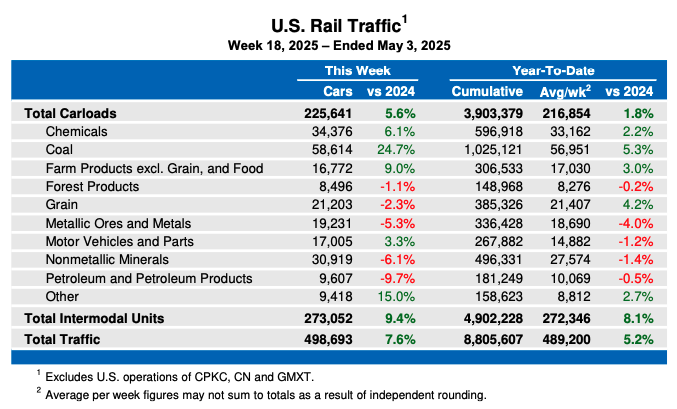
The trains are still chugging, and the numbers prove it. According to the Association of American Railroads (AAR), U.S. rail traffic climbed 7.6% to start the month.


Here’s how it breaks down:


  • Carloads: 225,641 — up 5.6%


  • Intermodal (containers + trailers): 273,052 — up 9.4%


Zooming out to the bigger picture, the first 18 weeks of 2025 show a steady climb:


  • Total carloads: 3.9 million — up 1.8%


  • Intermodal units: 4.9 million — up 8.1%


  • Combined total: 8.8 million — a 5.2% increase over last year

Image: Association of American Railroads

Fuel Update

⛽️ Diesel prices:


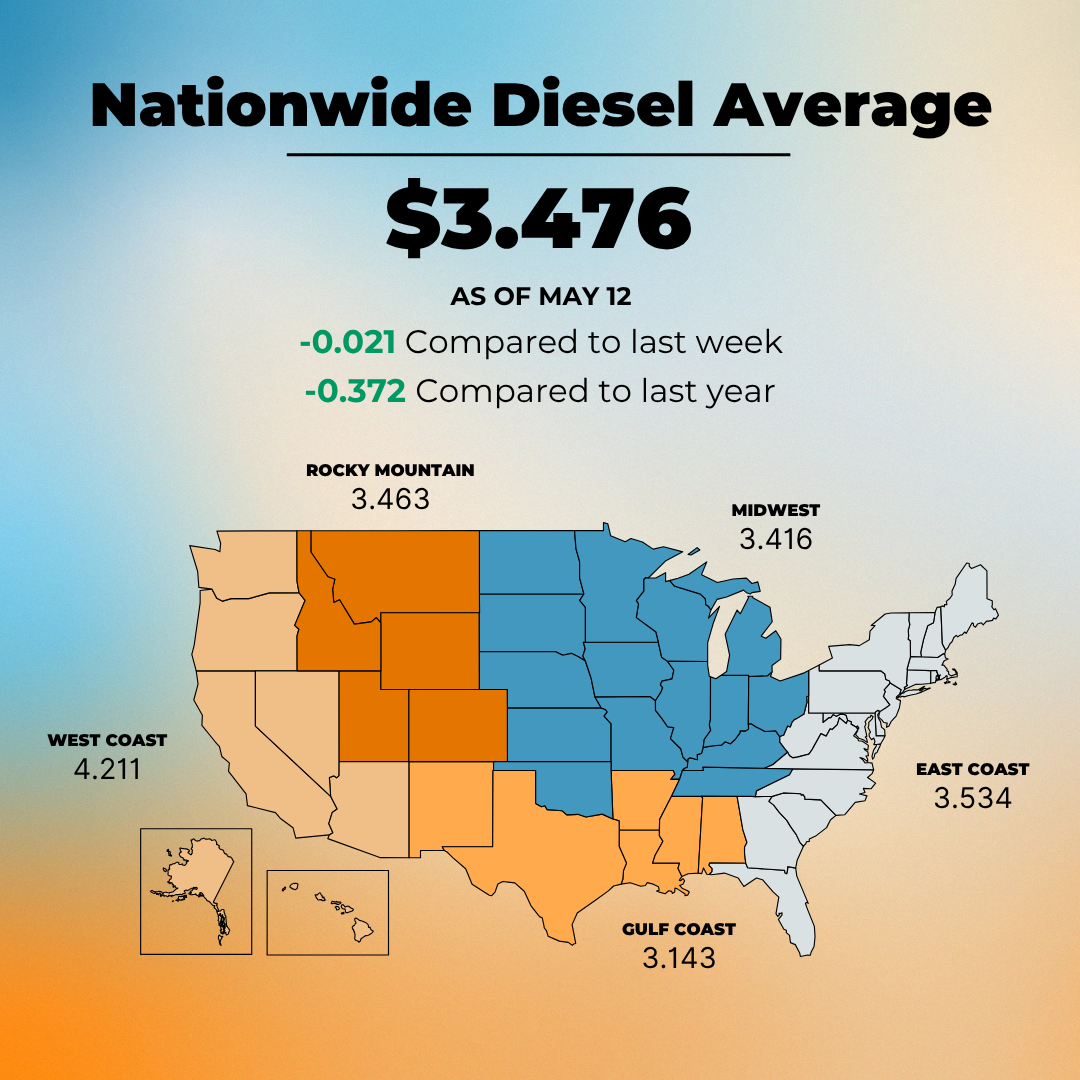
The DOE’s benchmark diesel price, used for most fuel surcharges, fell for the fifth straight week, landing at $3.476 per gallon on Monday. That’s a 2.1 cent drop from last week and a 16.3 cent slide since early April.

In Other News...

Image: Nathan Howard / AP

👶 Liam and Olivia top list of baby names once again


It's 2040. You're at the playground with your son. You yell, "Liam" and 17 children turn around. That's the future we're heading towards.


For the sixth straight year, Olivia and Liam have topped the baby name charts in the U.S., according to fresh data from the Social Security Administration:


  • Liam has now held the No. 1 boys’ spot for eight consecutive years.


  • Olivia has been the top girl name for six years straight.


  • Runners-up for both? The ever-consistent Noah and Emma, also in second place six years running.


We're talking about a dynasty on par with the likes of Nick Saban and Tom Brady.


The boy name rankings reads like the wealthy cast of a Netflix drama:


  1. Liam
  2. Noah
  3. Oliver
  4. Theodore
  5. James


And for the girls, the rankings read like the Women's National Soccer Team:


  1. Olivia
  2. Emma
  3. Amelia
  4. Charlotte
  5. Mia


The SSA also quietly dropped this nugget: 3.61 million babies were born in the U.S. last year, up slightly from 3.59 million in 2023.

🏀 Mavericks defy 1.8% odds to win draft lottery


Like Thanos sacrificing his daughter to get the Soul Stone, Nico Harrison is asking, "I've won, but at what cost?"


In a stunning turn of events, the Dallas Mavericks have secured the No. 1 overall pick in the 2025 NBA Draft, despite entering the lottery with just a 1.8% chance. After trading away Luka Doncic, this is basically the basketball equivalent of tripping, falling, and landing face-first into a pot of gold.


Since the NBA flattened the odds in 2019 to discourage tanking, the team with the worst record still hasn’t won the lottery. This year? Utah, Washington, and Charlotte all had a 14% shot... and none of them cracked the top four.


Instead, Dallas gets the top pick, despite already rostering Anthony Davis, Kyrie Irving, and Klay Thompson. The second pick? That belongs to the San Antonio Spurs, who have Victor Wembanyama and De'Aaron Fox.

🗽 No one's coming to America


According to the World Travel & Tourism Council, the U.S. is about to lose a staggering $12.5 billion in international travel revenue next year.


That’s a 7% drop from 2024 and a 22.5% faceplant from the glory days of 2019, when international spending hit a record $217.4 billion. Of the 184 countries the WTTC tracks, the U.S. is the only one losing ground.


Airports that used to usher in hundreds of thousands of international visitors hoping to catch a glimpse of our natural wonders (such as Buc-ee's and Waffle House) have been hit hard:


  • U.K. and South Korea: -15%


  • Germany: -28%


  • Spain: -24%


  • Ireland: -33%


This is putting a real damper on the U.S. tourism industry. Foreign travelers typically drop $4,000 per trip, according to the U.S. Travel Association. That’s eight times what domestic tourists spend. And all that spending powers 9% of the U.S. economy.

KCH Corner

KCH partners with Navix to upgrade invoicing


We're thrilled to announce that we're teaming up with Navix to seriously improve our invoice processing!


What it means for shippers (and our billing team's sanity)


With Navix in the mix, we're cutting down on days-to-bill, improving cash flow, and giving our billing team more room to breathe.


No more sorting through stacks of PDFs or decoding invoice mysteries. Navix uses AI and machine learning to flag issues instantly and auto-resolve what used to take hours.


Our customers can expect more accurate invoices, less back-and-forth, and quicker turnaround on payments, which means smoother shipping operations across the board.


A shared focus on what matters


"We are excited to partner with KCH, a company that shares Navix’s customer-focused values," said Eric Krueger, CEO of Navix.


"KCH is renowned for its dedication to customer satisfaction and its commitment to delivering maximum value to support its growing partnerships. These same principles have driven Navix’s success as a leader in automation, and it is deeply rewarding to provide this value to KCH who can then pass it on to their own customers.”

LinkedIn  Instagram  Facebook  TikTok

Memes of the Week

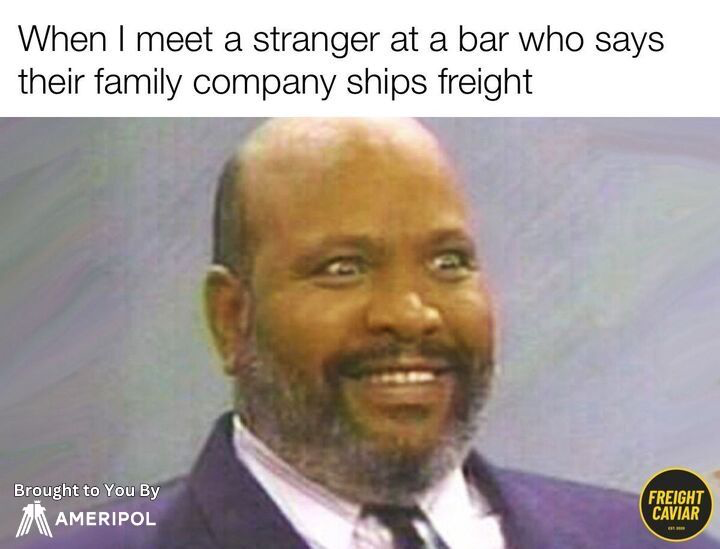
Image: Freight Caviar