Rail & Labor News from RWU
| |
Weekly Digest Number #10 - March 4th, 2025 | |
Welcome to the RWU Rail & Labor News! This news bulletin is produced and emailed out each Tuesday morning. We hope you find each week's news and information useful. If so, please share with co-workers, friends, and colleagues. If you like, you can sign them up to get all the news from RWU HERE. Or forward them the link. Got a hot tip? Please forward the article and a link to raillabornews@gmail.com. Note: If you read over this news bulletin each week, you will be sure to never miss the important news of what is going on in the railroad world from a worker's perspective! | |
THIS WEEK'S RAIL AND LABOR NEWS | |
Editor's Note: A year after Norfolk Southern turned East Palestine into a case study in corporate negligence, Congress is still debating whether rail safety should be a priority or a political inconvenience. The RAIL Act’s reintroduction—now with a two-person crew mandate—is a step in the right direction, but let’s not kid ourselves. Rail carriers and their lobbyists will fight tooth and nail to water it down, delay it, or bury it altogether. The industry has spent decades cutting crews and corners in the name of shareholder profits, and the East Palestine disaster was just the latest casualty. Workers know what’s at stake—now let’s see if lawmakers have the backbone to stand with them instead of the rail barons. | |
Progressive Railroading / February 25th
U.S. Reps. Emilia Strong Sykes (D-Ohio) and Mike Rulli (R-Ohio) reintroduced the Reducing Accidents in Locomotives (RAIL) Act earlier this month.
Sykes first introduced the RAIL Act in 2023 following the February 2023 Norfolk Southern Railway train derailment in East Palestine, Ohio, which released toxic chemicals into the area's air, soil, and creeks.
The legislation introduced this year includes a measure to codify the Federal Railroad Administration's two-person crew rule into law, the lawmakers said in a press release. Rulli's district includes East Palestine, and that train-crew rule was not included in last year's bill.
| |
Editor's Note: Unifor members at CPKC have ratified a four-year agreement, securing wage and benefit improvements for 1,200 mechanical workers across Canada. While any step forward for labor is worth noting, the reality remains: railroads never give more than they have to. Workers have fought too long for too little while carriers rake in record profits. A ratified contract may bring temporary stability, but the larger fight—one for dignity, fair compensation, and real power at the bargaining table—never stops. The railroads will take as much as they can for as little as they’re forced to give. The only question is: how much more will workers demand next time? | |
Progressive Railroading / February 25th
Unifor members employed as mechanical employees at Canadian Pacific Kansas City in Canada have ratified a new four-year collective agreement. The agreement includes improved wages and benefits for the 1,200 mechanics, laborers, diesel service attendants and mechanical support staff across Canada, CPKC officials in a press release.
This is the second new collective agreement ratified this year by Canadian CPKC employees. Teamsters Canada Rail Conference Maintenance of Way Employees Division, with about 2,300 engineering services employees, ratified a collective agreement earlier in February.
| |
Editor's Note: Billions in rail investment are sitting in bureaucratic limbo, and now the FRA faces staff reductions and ideological meddling that could grind the process to a halt. The same politicians who scream about “red tape” when it benefits corporations are now happy to weaponize it against passenger and freight rail improvements. The Rail Passengers Association and other advocates are right to sound the alarm—this isn’t just about efficiency, it’s about whether rail infrastructure will be allowed to move forward at all. The money is there. The need is obvious. The only thing holding it back is a system more concerned with serving political donors than the public interest. | |
Trains Magazine / March 3rd
Disbursement of funds from grants awarded under a variety of Federal Railroad Administration continues to be held up by a lengthy approval process involving FRA personnel.
These investments are threatened by potential staff reductions at the agency, as well as possible vetos by overseers invoking new Trump administration ideological criteria.
Concerned about such a prospect, the Rail Passengers Association and 22 other public transportation advocacy organizations on Friday, Feb. 28, sent a letter to U.S. Transportation Secretary Sean Duffy, urging him to “preserve mission-critical personnel to avoid further delays in the administration of these passenger and freight projects.”
The letter points out that Congress provided $66 billion over five years in advance appropriations. and another $13 billion through 2025. However, much of that funding is mired in the FRA’s drawn-out evaluation process
|
|
Editor's Note: The Trump administration’s gutting of federal agencies isn’t just about bureaucracy—it’s a calculated effort to kneecap transit and passenger rail for ideological gain. Freezing grants, stalling projects, and erasing any mention of climate change or equity isn’t policy, it’s sabotage. Billions in rail investment are now trapped in limbo, not because the funding doesn’t exist, but because an administration hell-bent on deregulation wants to strangle anything that doesn’t serve corporate donors or fossil fuel interests. This isn’t just political maneuvering—it’s a direct attack on the future of rail, infrastructure, and working-class mobility. The question is, how long will we let them get away with it? | |
Ellis On The Rails / February 26th
The Trump administration’s efforts to radically remake the federal government is having a chilling effect upon transit and passenger rail projects around the country.
Even though an executive order freezing grants is under a temporary restraining order, transportation agencies say they cannot proceed with federally funded projects until the issues get resolved. Billions of dollars of grants have been thrust into limbo.
Further, Secretary of Transportation Sean Duffy on January 29 issued a directive that calls for elimination of any reference to “climate change, greenhouse gas emissions, racial equality, gender identity, and diversity” in orders, regulations, funding agreements, rules, policy statements, etc., issued by the Biden administration.
| |
Editor's Note: It is hard to believe but prior to the catastrophic wreck 2 years ago at East Palestine, OH, the rail industry was left on its own to provide protection against faulty moving equipment. There had been no requirement of any hotbox or dragging equipment detectors, no rules on how many and how often, and no guidelines for their maintenance and inspection. Ask the people of that eastern Ohio community how they feel about the lack of "bureaucratic red tape and regulation" that contributed to the destruction of their town! | |
|
Brotherhood Of Locomotive Engineers & Trainmen / Feburary 20th
Members of the BLET State Legislative Board in New Mexico have been working at the state capital to advance rail safety legislation related to wayside detectors and rail worker protection when reporting safety violations.
House Bill 146 would require railroads to install wayside detector systems every 10 miles. The bill also would prohibit railroads from retaliating against workers who report rail safety violations.
| |
Editor's Note: The STB wants credit for clearing its backlog, but let’s not mistake movement for progress. Railroads have spent decades perfecting the art of delay, knowing time favors their bottom line. Directives, reviews, and petitions mean nothing without real enforcement. If the STB wants to prove it’s more than a rubber stamp, it needs to stop issuing paperwork and start delivering consequences. | |
Progressive Railroading / February 24th
Surface Transportation Board Chairman Patrick Fuchs last week announced recent actions taken to speed up the resolution of several long-standing board proceedings:
- On Feb. 10, the board directed Conrail, CSX, and Norfolk Southern Railway to take certain actions related to offers of financial assistance. The agency is actively reviewing associated filings, the most recent of which was submitted last week.
- In a case involving Amtrak and terms and compensation for its use of CN facilities and service, the board on Feb. 19 issued a decision detailing its planned requests for information.
- In a case involving Savage Tooele Railroad's construction and operation of a rail line in Utah, the company filed a petition for exemption in June 2022, and a petition for reconsideration of the board’s final decision was filed in April 2024.
- On Feb. 5, the board declined to grant a request to extend a negotiating period for interim trail use in a case involving an R. J. Corman Railroad Property notice of exemption filed in February 2020 for property in Tennessee. The board encouraged the parties to work diligently on negotiations.
- Fuchs intends to offer a draft action for the full board to consider next month in a case involving Canadian Pacific and BNSF Railway Co., in which New Century Ag filed a petition in December 2018 to reopen or, in the alternative, revoke an exemption granted by the board.
- Fuchs intends to offer a draft action for the board to consider next month in a case involving Union Pacific Railroad's petition related to its proposed construction and operation of a 6-mile rail line in Maricopa and Pinal counties in Arizona.
| |
Editor's Note: Years in the making, a series of key Pennsylvania passenger rail projects may come to a screeching halt - just as they were about to come to fruition - due to the new administration's indiscriminate and irresponsible budget cutting frenzy. | |
|
Trains Magazine / February 23rd
Pennsylvania’s transportation secretary said last week he’s “hesitant to go forward” with projects awarded federal funding — including one to increase capacity for an additional round trip of Amtrak’s Pennsylvanian — in light of the uncertain status of those funds under the Trump Administration.
“Funds that were discretionary awards, that haven’t been obligated, are sort of in question right now,” Transportation Secretary Mike Carroll told the commonwealth’s Appropriations Committee during a Feb. 19 hearing. “It doesn’t mean they’re lost. They’ve been paused, and we would be hesitant to go forward with the use of those funds absent an obligation.”
Carroll cited the $143.6 million grant from the Federal Railroad Administration awarded for infrastructure work announced by Pennsylvania’s U.S. senators in late 2023. The state is obligated to a 20% match of the federal grant.
| |
Editor's Note: North American rail workers and their unions may want to watch this development closely. We North American railroaders have had our share of unnecessary deadly wrecks in recent years due to corporate/government negligence. When will such mass transport strikes and protests develop on this side of the Atlantic? | |
The New York Times / February 28th
A general strike in Greece on Friday halted trains and ferries, grounded flights, and disrupted public services as thousands of workers walked off the job on the second anniversary of Greece’s worst-ever train disaster.
The 24-hour walkout, called by Greece’s two main labor unions, was the latest in a series of public protests over a dragging judicial investigation into the crash, in which 57 people were killed.
The strike involved public- and private-sector workers. A police official estimated that the Athens protest attracted at least 180,000 people, the largest demonstration in the Greek capital in years. All commercial flights to and from Greek airports were grounded, and no ferries or trains were running.
| |
Progressive Railroading / February 27th
U.S. freight railroads hauled 458,513 carloads and intermodal units in the week ending Feb. 22, a 5.1% decrease compared with the same week a year ago, according to Association of American Railroads data.
Carloads for the week totaled 193,252 units, down 13.6%, while intermodal volume was 265,261 containers and trailers, up 2.3%.
One of the 10 carload commodity groups that AAR tracks weekly posted an increase: Chemical carloads rose 0.2% to 33,527. Commodity groups that posted decreases included coal, down 21.6% to 47,852 carloads; grain, down 24.6% to 16,374; and nonmetallic minerals, down 17.3% to 22,827 carloads.
| |
Editor's Note: In case there were any illusions that the AAR or one of its affiliates was ready to electrify, this "study" dispels any such notion. A few things of note: 1 - no one ever suggested electrifying every inch of railroad track in the U.S., just the heavily used mainlines, so the AAR's estimate of $1.1 trillion is a dramatic exaggeration of the cost. 2 - Also, the supposed "strain on the nation's energy grid" ignores that the grid can be gradually expanded to handle capacity as lines are electrified. See Solutionary Rail. 3 - While the rest of the world forges ahead on this front, the U.S. just cannot muster the resources. Time for public ownership and investment in the nation's rail infrastructure! | |
Progressive Railroading / February 27th
The Association of American Railroads yesterday released a study that highlights the financial, operational and infrastructure challenges of transitioning the U.S. freight-rail network to overhead catenary electrification.
The study estimates the cost to electrify the nation’s 139,000-mile freight-rail network at $1.1 trillion, and outlines "significant energy demands, reliability concerns, and other operational challenges that render catenary electrification infeasible for U.S. freight operations," they said.
Key challenges to implementing catenary electrification include reliability risks, a strain on the nation's energy grid, and regulatory and safety hurdles, according to the study.
| |
Editor's Note: In typical fashion, no corporation - neither CP nor MM&A or any other corporate entity - will apparently be found guilty of this needless tragedy in 2013. Despite the willful, wanton negligence of numerous corporate entities, looks like they will all skate. What a surprise. | |
Trains Magazine / February 26th
Quebec’s Court of Appeals has upheld a lower-court ruling that found Canadian Pacific Railway was not legally responsible for the 2013 Lac-Mégantic disaster.
In a ruling on Feb. 26th, a three-judge court panel denied three appeals that sought to require CPR to pay into a compensation fund for victims of the derailment and fire involving a runaway oil train that killed 47 people.
A lower court ruled in 2022 that the railroad was not the “direct, immediate, and logical cause” of the incident, and ruled the train’s engineer, Thomas Harding, and its operator, the Montreal, Maine & Atlantic, bore that responsibility. The appeals court agreed, saying those appealing had failed to demonstrate that Superior Court Justice Martin Bureau had made numerous errors of fact and law.
| |
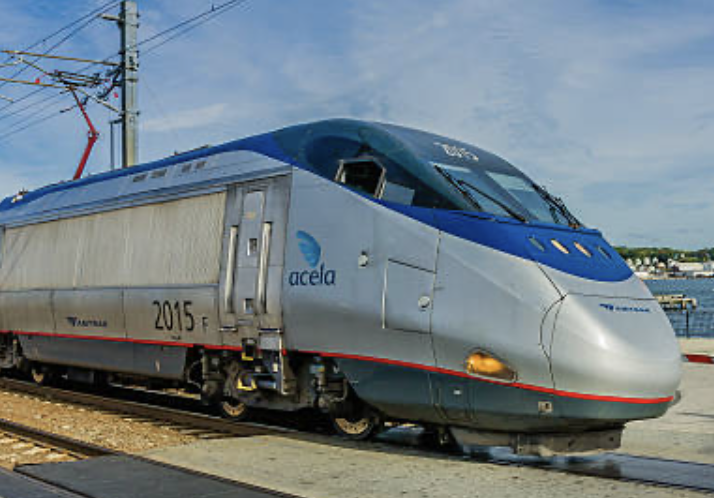
Editor's Note: Amtrak’s high-speed flagship is limping along, held together by borrowed time and whatever spare parts can be salvaged. With next-generation Acelas delayed and the current fleet outliving its intended lifespan, cancellations are becoming routine. This isn’t just a maintenance issue—it’s a failure of long-term investment in passenger rail. Meanwhile, airlines get bailouts, highways get billions, and rail passengers get apologies. | |
Trains Magazine / February 26th
Equipment issues have led to the cancellation of one Acela round trip between Boston and Washington on February 26th, after two round trips were canceled
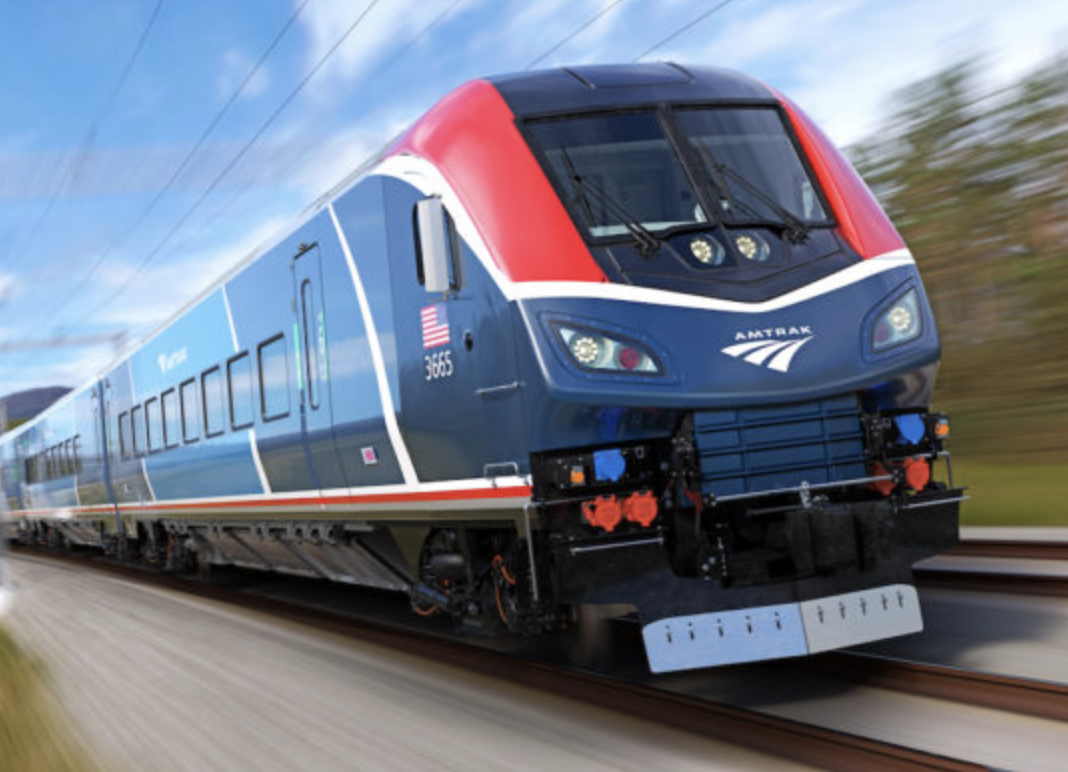
Amtrak lists “equipment unavailability” as the cause of all cancellations. With the continuing delays in launching service with the next generation of Acelas, the use of the current trainsets has been extended beyond their intended lifespan.
More than a year ago, four of the 20 trains were reported to have been parked and were being cannibalized for parts, since parts are no longer being manufactured.
| |
High-Speed Rail Alliance / February 26th
Register for some upcoming events for the High Speed Rail Alliance using the link attached to the title!
Topics will vary, mostly centered around the states of Michigan and Illinois/Chicago Metropolitan area, as well as one conference on California rail development.
More details on these webinars are included in the aforementioned web link in the title. Sign up to attended today!
| |
NEWS FROM AROUND THE LABOR MOVEMENT | |
Each week, RWU includes a few articles about advances and developments in the larger labor movement that are of interest to railroad workers. Got an artcile to submit for possible inclusion next week? Email it along to raillabornews@gmail.com. Thank you! | |
Labor Notes / February 26th
The Trump administration has set its sights on the U.S. Postal Service and its 600,000 workers, 91 percent of whom are union members. The USPS is the nation’s largest unionized employer.
The Postal Service’s role is outlined in the U.S. Constitution. The 1970 Postal Reform Act establishes postal workers’ right to collective bargaining and to file with the NLRB. If the Trump administration thinks it can interfere in this unionized workplace, no worker is safe.
The two largest postal unions, the American Postal Workers Union and the National Association of Letter Carriers are operating under expired collective bargaining agreements. The current agreements are extended by mutual agreement with the current USPS leadership. But the Trump administration might assert that a reformulated USPS allows it to void the existing contracts, cut wages, and fire employees.
| |
Portside Labor / February 28th
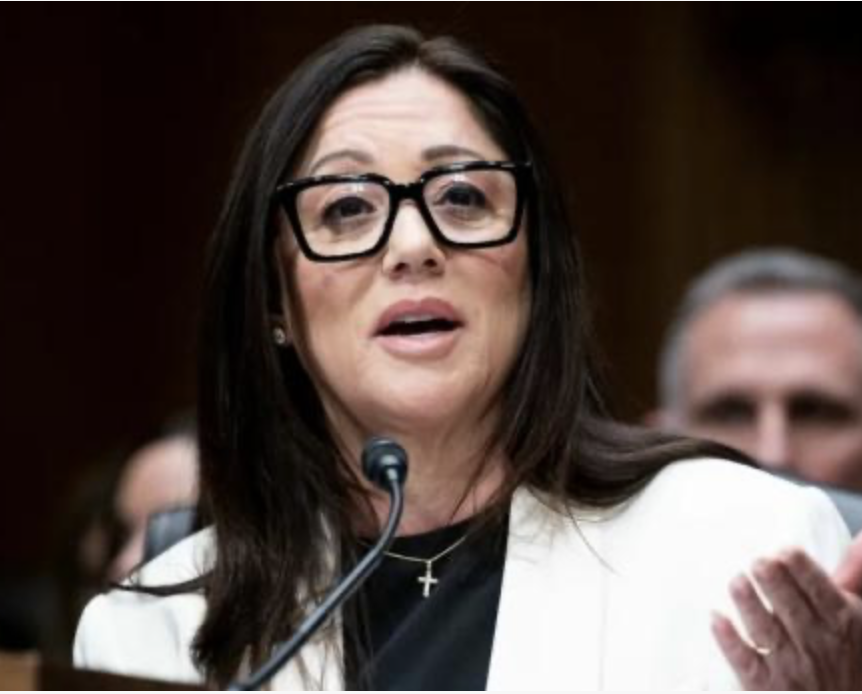
Trump appointee Lori Chavez-DeRemer found herself facing a tight committee vote Thursday morning to head the Department of Labor. The question: was she too pro-worker for the job? Apparently not.
Chavez-DeRemer seemed to allay many of the Republican committee members’ fears during her Senate confirmation hearing last Wednesday—taking pains to demonstrate that she regretted her cosponsorship of the labor-friendly PRO Act, rhetorically turning her back on workers and suggesting that she’d fall in line with Trump’s anti-worker agenda.
To Paul, she called state “right-to-work” laws a “fundamental tenet of labor laws, where states have the right to choose,” and disowned the bill’s limitations on such laws. Chavez-DeRemer said, she only backed the PRO Act to better represent her congressional district—and to be part of the conversation in Congress about labor.
| |
|
USA Today / February 28th
On a Monday night in early February, an aide to President Donald Trump sent off an email firing the head of a board that handles certain complaints with federal workers’ labor unions.
A few minutes later, the aide sent a nearly identical email to a member of a different board that protects federal civil service workers partisan political influence, terminating her, too, “effective immediately.”
Richard Hirn, a labor lawyer who has represented federal workers’ unions, said Trump fired all these officials to make it harder for federal workers to challenge their firings. In three other cases, when unions attempted to go through the courts, judges told them to go back to the proper channels.
| |
WEEKLY DERAILMENT DEPARTMENT | |
Each Tuesday in this news bulletin, RWU does our best to present a picture of what has been happening over the course of the previous week in terms of derailments in North America, and investigation determinations of previous accidents. NOTE: This list is by no means comprehensive. Smaller and less consequential mishaps are generally not reported here. If the wreck results in injury or fatality, or is especially damaging/extreme, a full article will appear as a feature in the dozen or so rail articles above. Know of a train wreck? Please feel free to forward a link to raillabornews@gmail.com for possible inclusion next week. Thanks! |
| | | |