REMINDER: YOUR SUBMISSIONS ARE ENCOURAGED | | |
1. Last week saw a devastating flash flood tear through the Texas Hill Country, taking over 100 lives and leaving 170 still missing one week later. Please keep the people affected by this disaster in your thoughts, and if you are in an area prone to flooding, pay attention to weather alerts, have a plan, and keep yourself safe.
2. There are several species of birds in North America that we may see as common, but are invasive. They were introduced by well-intentioned people, or arrived by hitching a ride on an ocean ship, or escaping captivity. These nonnative species can hurt native species as they compete for resources
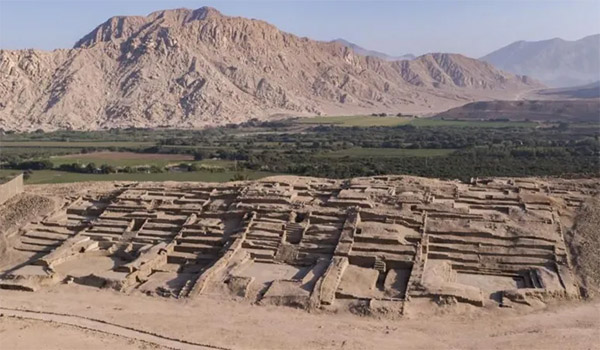
3. In Archaeology, a trading hub that connected the mountain, coastal, and Amazonian cultures of ancient Peru has been excavated, revealing new insight into the America's oldest civilization, the Caral.
4. This week, I'm starting a new series where I'll feature a classic comic character each week, and look at their origin story, background, and social impact. This week, I'm starting with the mumbling sailor who punches above his weight, Popeye.
5. In Wellness, I'm looking at some ways to use the herb rosemary in your kitchen and home.
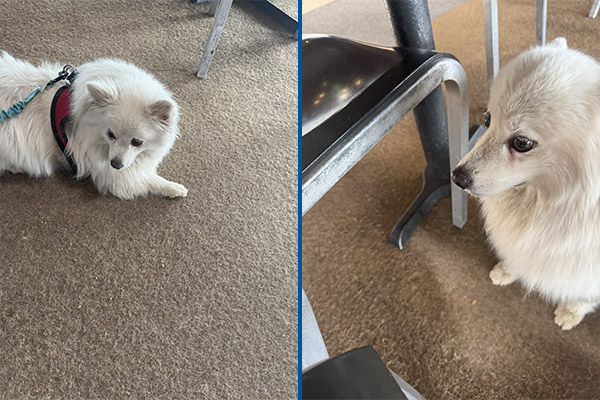
6. In the Pet's Corner this week, I'm showing off my own two little hiking pals, Kong and Sugar.
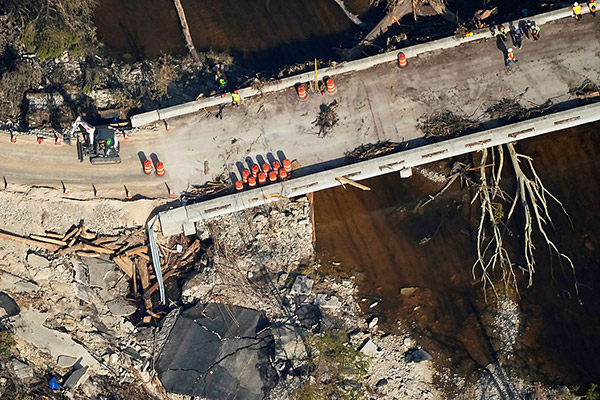
| | Now, to this week's Flock. | | 1. Natural Disaster: Tragic Flash Flood in Texas | | My heart goes out to everyone affected by last week's flash floods in the Texas Hill Country. Heavy rain from the remnants of Tropical Storm Barry combined with tropical moisture from the Gulf of Mexico caused the GuadalupeGuadalupe River to rise 26 feet in less than an hour. The resulting flash flood tore a path of destruction through south-central Texas. The flood resulted in over 100 fatalities, with more than 170 people still missing. In Tucson, we experience seasonal flash floods during the summer monsoon, although nothing on the scale of last week's tragic flood in Texas. Please heed any weather alerts and flood warnings you receive on your phone. Stay off the roads if possible, and never attempt to drive through a flooded wash. | | Breaking down the force of water in the Texas floods | | |
Over just two hours, the Guadalupe River at Comfort, Texas, rose from hip-height to three stories tall, sending water weighing as much as the Empire State Building downstream roughly every minute it remained at its crest.
The force of floodwater is often more powerful and surprising than people imagine.
Comfort offers a good lens to consider the terrible force of a flash flood’s wall of water because it’s downstream of where the river’s rain-engorged branches met. The crest was among the highest ever recorded at the spot — flash flooding that appears so fast it can “warp our brains,” said James Doss-Gollin, assistant professor of civil and environmental engineering at Rice University.
The Texas flood smashed through buildings, carried away cars and ripped sturdy trees out by their roots, dropping the debris in twisted piles when the water finally ebbed. It killed more than 100 people, prompted scores of rescues and left dozens of others missing. The deaths were concentrated upriver in Kerr County, an area that includes Camp Mystic, the devastated girls’ camp, where the water hit early and with little notice.
Water is capable of such destruction because it is heavy and can move fast. Just one cubic foot of water — imagine a box a bit larger than the size of a basketball — weighs about 62 pounds. When the river rose to its peak at Comfort, 177,000 cubic feet — or 11 million pounds of water — flowed by every second.
“When you have that little lead time ... that means you can’t wait until the water level starts to rise,” Doss-Gollin said. “You need to take proactive measures to get people to safety.”
| | Texas floods may trigger wave of giving, but not all help is actually helpful | | |
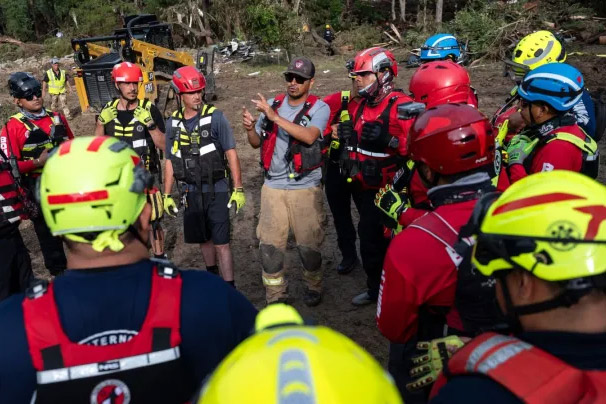
As emergency crews continue search-and-rescue efforts in Central Texas, where at least 119 people have died as a result of catastrophic flooding, local officials are asking people to pause before they pitch in to help. The holiday weekend floods have brought the nation’s attention to the banks of the Guadalupe River, known and loved by generations of Texans as a stretch of serpentine paradise nestled into Texas Hill Country.
Too much of the wrong help
As recovery begins, officials urge the public to support relief efforts through coordinated channels. While community members often respond quickly to help, unplanned donations or volunteer efforts can sometimes complicate emergency operations.
In a recent LinkedIn post, Francisco Sanchez, an adjunct professor of emergency management at the University of Houston, advised the public to refrain from rushing in with unsolicited donations or personal aid.
“Do not self-deploy. Do not send food. Do not send water. Do not send clothes,” Sanchez wrote.
Sanchez, who previously served as an emergency response coordinator in Texas, emphasized that financial contributions are the most effective way to support disaster relief. Giving money, he noted, “makes the most difference.”
Follow the link below for a list of local groups you can assist in helping flood victims.
| |
2. Birds: Invasive Birds in North America
| | I never really thought too much about some species of birds being invasive and harmful to native populations. Nature is always in a delicate balance, and regardless of how good the intentions are, introducing a nonnative species into an ecosystem can hurt native populations as species compete for resources. | | 6 Invasive Birds That Are Nonnative to America | | |
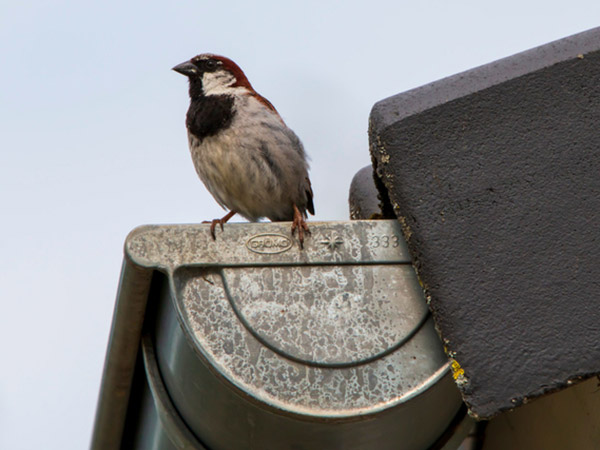
House Sparrow
This sociable bird was introduced from Europe to New York in 1852. It’s common throughout most of North America, although its numbers have declined both here and abroad. The male house sparrow has a gray and rusty crown with pale cheeks and a black bib. It nests in man-made cavities, including streetlights and gas station roofs (and often competes with bluebirds for nest boxes). Birding experts recommend removing house sparrow nests, although it can take multiple attempts because they are notably persistent.
Despite the name, these invasive birds are not actually sparrows but weaver finches, related to other weavers in Africa and elsewhere.
| | |
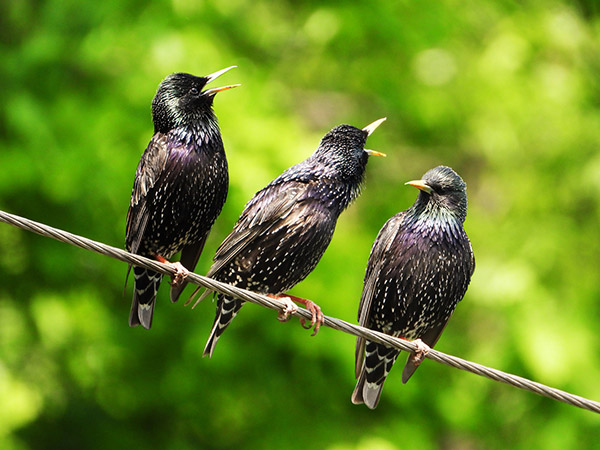
European Starling
Starlings, which are from Europe and Asia, were released into New York City in 1890. They are among North America’s most numerous invasive birds. They’re glossy greenish-black in winter with white feather tips that wear away by summer. Starlings fly in large flocks and create amazing whirling balls in the sky.
In North America, nonnative European starlings and house sparrows are unwelcome squatters in bird houses. NestWatch and the North American Bluebird Society websites both note that humanely euthanizing them is a legitimate management method, since these two species, including their nests, are not protected under the Migratory Bird Treaty Act.
Trivia: It is a common belief that in 1890, an eccentric lover of Shakespeare, Eugene Schieffel, inspired by Central Park's Shakespeare Garden, released a few dozen imported European Starlings into Central Park as part of an effort to introduce all of the bird species mentioned in William Shakespeare's plays to the Park. While it is true that Schieffel did release European Starlings into New York as part of a larger 19th-century movement to introduce European species to America, the connection to Shakespeare has been largely debunked, in part because the Shakespeare Garden was not added to the Park until 1916.
| | 3. Archaeology: Ancient City Found in Peru | | Archaeologists in Peru have uncovered an ancient trading center that connected Andean, coastal, and Amazon communities that was contemporary to civilizations in Mesopotamia, Egypt, South Asia, and China. | | Archaeologists unveil 3,500-year-old city in Peru | | From: BBC, By: Jessica Rawnsley, July6, 2025 | | |
Archaeologists have announced the discovery of an ancient city in Peru's northern Barranca province.
The 3,500-year-old city, named Peñico, is believed to have served as a key trading hub connecting early Pacific coast communities with those living in the Andes mountains and Amazon basin.
Located some 200km north of Lima, the site lies about 600 metres (1,970 feet) above sea level and is thought to have been founded between 1,800 and 1,500 BC - around the same time that early civilisations were flourishing in the Middle East and Asia.
Researchers say the discovery sheds light on what became of the Americas' oldest civilisation, the Caral.
Drone footage released by researchers shows a circular structure on a hillside terrace at the city's centre, surrounded by the remains of stone and mud buildings.
Eight years of research at the site unearthed 18 structures, including ceremonial temples and residential complexes.
| | |
In buildings at the site, researchers discovered ceremonial objects, clay sculptures of human and animal figures and necklaces made from beads and seashells.
Peñico is situated close to where Caral, recognised as the oldest known civilisation in the Americas, was established 5,000 years ago at around 3,000 BC in the Supe valley of Peru.
Caral features 32 monuments, including large pyramid structures, sophisticated irrigation agriculture and urban settlements. It is believed to have developed in isolation to other comparative early civilisations in India, Egypt, Sumeria and China.
Dr Ruth Shady, the archaeologist who led the recent research into Peñico and the excavation of Caral in the 1990s, said that the discovery was important for understanding what became of the Caral civilisation after it was decimated by climate change.
| | Archaeologists in Peru unveil 3,500-year-old city that linked coast and Andes | | 4. Cartoons: Popeye the Sailor | | Cartoonist E.C. Segar of Chester, Illinois, created Popeye at the start of the Great Depression in 1929. Popeye and many of the supporting characters in the comic were modeled on real people from Segar's life, and reflect his self-effacing wit and championing of the underdog. | | |
Popeye is the main protagonist hero of the Popeye franchise, a sailor character created in 1929 by Elzie Crisler Segar for his Thimble Theatre comic strip (subsequently renamed after Popeye himself). Initially introduced into Segar's (then long-established) strip as a minor character, Popeye, throughout his debut storyline, rapidly amassed substantial popularity among the strip's readership, catalyzing his induction into the regular cast in August 1929. Over the following years, Popeye's prominence would significantly increase, eventually outright assuming the strip's lead role by 1931 (at the expense of long-standing original protagonists Castor Oyl and Ham Gravy). The advent of Popeye resultantly boosted Thimble Theatre's popularity exponentially, elevating Segar's strip to the center of a multimedia franchise (many elements of which continue into the present day) by the mid-1930s.
The star of many comics and animated cartoons, he is best known for his squinting (or entirely missing) right eye, huge forearms with two anchor tattoos, skinny upper arms, and corncob pipe. He can occasionally be seen smoking his pipe but usually he toots it like a tugboat and sometimes uses it as a weapon by blowing the smoke in his enemies faces. His strength varies among his portrayals: as per the original comics, he is super-humanly strong and can lift huge objects, while in later adaptations he is not quite as mighty until he gains a boost in strength by eating spinach…
He is known to mutter when he speaks, sing to himself and mangle the English language (e.g, he calls elephants and infants "elephinks" and "infinks", respectively) in his signature New Jersey accent. In addition to his theme song, his catchphrase is "Blow me down!" and he is also noted for saying "That's all I can stand, cos I can't stand no more!". Popeye's creator E. C. Segar characterized him as a violent and impetuous yet introspective and humanitarian free spirit, with particular sympathy towards poverty-stricken individuals and orphaned children.
"Some comic strip characters, just like in other media, sort of rise above what they are. Popeye is a perfect example. Popeye is immortal."
–Charles M. Schultz
| |
Spinach's popularity grew during Great Depression
Children followed Popeye the Sailor’s lead.
| From: University of Missouri Extension, By: Linda Geist, May 11, 2020 | | |
Many unsubstantiated stories exist about why cartoonist E.C. Segar chose spinach to give superhuman powers to his comic strip character Popeye the Sailor during the Great Depression.
“Quite likely, it was his attempt to prompt children to eat more of this nutrient powerhouse,” said University of Missouri Extension horticulturist David Trinklein. “During that era, the diet of the average American lacked essential vitamins and minerals. The nutritional well-being of children was of great concern.”
Spinach sales skyrocketed after Popeye was seen gulping down a can of spinach in the midst of a perilous situation.
“In fact, during the 1930s, spinach consumption increased by 33 percent,” said Trinklein. “Even more remarkable is that children listed spinach as their third favorite food in a survey.”
| | Rosemary is a versatile herb that can be infused in olive oil or used whole or minced to season meats, fish, vegetables, breads, and soups. It also has utility around your home for aroma therapy and as a natural disinfectant. | | 2 genius rosemary tips to transform your daily life | | |
Rosemary is much more than just a fragrant herb to season your grilled dishes or Mediterranean recipes. Used since ancient times for its numerous benefits, it’s a true ally to enhance your well-being and brighten your daily life, from the kitchen to your home. Discover two simple yet powerful tips to unlock the full potential of this aromatic plant.
Rosemary as a natural booster for memory and focus
Did you know that rosemary is often called “the herb of remembrance”? This isn’t just a myth! Scientific studies have shown that its scent can positively impact your concentration and memory. To enjoy these benefits, try placing a small bunch of fresh rosemary on your desk or diffuse a few drops of rosemary essential oil in the room where you work or study.
The camphor-like aroma of rosemary activates parts of the brain linked to alertness and attention. You can also brew a rosemary infusion: steep several sprigs in a cup of hot water for about 5 minutes. Sip this before a long work session or during a break to refresh your mind naturally.
Beyond boosting cognitive performance, this herb also helps reduce stress and mental fatigue. It’s a natural pick-me-up to better manage those busy, overwhelming days! Just a tip: opt for organic rosemary free of pesticides to keep its properties intact. If you use essential oil, always follow safety guidelines—don’t diffuse it for too long and make sure to air out the room well afterward.
Using rosemary to naturally purify and freshen your home
Rosemary’s magic isn’t limited to cooking—it’s also a powerful natural disinfectant. Thanks to its antibacterial and antifungal properties, it helps cleanse your indoor air and fend off harmful bacteria and mold.
One easy trick is to make a concentrated rosemary infusion. Bring a quart of water to a boil, toss in a generous handful of fresh or dried rosemary, and let steep for 15 minutes. Once cooled, strain it and pour the liquid into a spray bottle. Voilà—your all-natural cleaning spray, perfect for wiping down surfaces and deodorizing fabrics or curtains.
For longer-lasting freshness, try filling small sachets with dried rosemary. Slip these into your closets and drawers. They’ll release a lovely Mediterranean scent while naturally repelling insects like moths.
Another simple idea: place a few sprigs in a bowl on your windowsill. As they dry, the rosemary releases its fresh and woody fragrance, helping to neutralize unpleasant odors around your home.
Why rosemary deserves a place in your daily routine
These two clever uses show that rosemary is a must-have around the house. It’s easy to grow in a pot on a sunny window ledge or in the garden, requires little care, and you can harvest it year-round.
Bonus: you’ll also benefit from its natural antioxidants that support your immune system. Some even add rosemary to their bathwater for muscle relaxation after a long day.
Incorporating these simple rosemary rituals into your lifestyle transforms this humble herb into a health, wellness, and home care ally. It’s an affordable, eco-friendly way to live more naturally and reconnect with the age-old wisdom of our grandmothers, who knew how to make the most of every plant.
| |
6. Pet's Corner: Hiking Pals Kong & Sugar
| | This week, I'm invoking my privilege as publisher to feature my hiking pals, Kong & Sugar, in the Pet's Corner. Together, we hiked up the Ajax/Aspen Mountain summit trail. (11,200 ft.) The first time each season is always a workout, but having four legs, the dogs did great! | | The View from the summit of Ajax/Aspen Mountain. | | These Flock regulars are always here for you: | | Don't Be Shy: Share Your Stories! | | I'm looking forward to sharing more of your personal stories - oral, written, or otherwise, as we enter our third year. I'd so love to present them to The Flock, hit a mailbox below to share your story. | | Subscriptions & Idea Submissions
Reminder: Your submissions are always welcomed. | | |
Feel free to forward this email to a friend. If this was forwarded to you and you would like to receive your very own Flock Newsletter, you can sign up here. If you have any questions or suggestions for future Flock resources, don't hesitate to contact me.
Your fan and friend,
Beth
| | | The information and materials contained or referenced in this newsletter are for informational purposes only and not intended to be a substitute for professional medical advice, diagnosis, or treatment. Always consult a physician or other qualified medical professional with any questions you may have regarding a medical condition or treatment and before beginning a new health care regimen. Do not disregard professional medical advice or delay seeking medical advice or care based on anything contained in this newsletter. | | | | |