Wednesday Weblog for December 3, 2025 | | “One of the most glorious messes in the world is the mess created in the living room on Christmas morning. Don’t clean it up too quickly.” — Andy Rooney | | |
Every December, our homes fill with the familiar sights and sounds of Christmas—trees trimmed with lights, stockings over the fireplace, a plate of cookies set out for someone we still hope might show up.
Most of these traditions feel timeless, as if they’ve existed forever, handed down from one generation to the next without question.
But that’s the fascinating thing about traditions: behind even the most ordinary ones, there’s almost always a story. Sometimes it’s ancient. Sometimes it’s accidental. And sometimes it’s the result of a clever marketer, a desperate parent in a cathedral pew, or an inventor tinkering with a new technology.
Over the next three weeks, I will be exploring the origins of some of our favorite Christmas customs—the surprising, quirky, occasionally strange backstories that shaped the holiday we know today.
From the plant the Aztecs once revered, to the song written for Thanksgiving, to the reindeer invented by a department store copywriter on a deadline, these stories remind us that traditions are far more dynamic than we often think.
They grow, travel, and evolve right alongside us.
So, grab some cocoa, settle in, and enjoy a tour through the unexpected history of the holidays.
| | The Stories Behind the Traditions-Part 1 | | |
Christmas: Banned in Boston
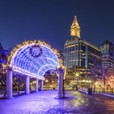
It’s hard to imagine now, Boston with its lighted trees, Swan Boats trimmed in holiday greens, and crowds at Faneuil Hall, but for more than 20 years in the 1600s, Christmas was illegal in the city. The ban wasn’t a quirky regional preference; it reflected a deeply held Puritan belief that Christmas was not only unbiblical, but dangerously indulgent.
When the Puritans arrived in Massachusetts, they brought with them a fierce suspicion of anything that looked like frivolity. To them, Christmas was tied to Old World excess: feasting, singing, drinking, gambling, and a general suspension of order. Worse, they argued, nowhere in Scripture are Christians told to celebrate Christ’s birth—so why honor a day set by the same church authorities they had fled?
By 1659, the Massachusetts General Court passed a law that fined anyone who celebrated December 25th with feasting or any other way. Shops were required to stay open. Schools held regular classes. If you were caught taking the day off, you paid.
And here’s the part most people never hear: ordinary Bostonians didn’t really mind. Many shared the Puritan disdain for the holiday, and some disliked the rowdy behavior that often accompanied it in England—public drunkenness, street mischief, and groups of men demanding food or drink from wealthier families.
The ban was lifted in 1681, but Christmas didn’t immediately bounce back. In fact, Boston schools continued holding classes on December 25 well into the mid-1800s, long after the rest of the country had embraced the holiday.
Boston didn’t just ban Christmas it took nearly 200 years to warm back up to it.
| |
Jingle Bells-Originally a Thanksgiving Song
Few songs feel more Christmas than Jingle Bells—the sleigh, the snow, the jingling rhythm. But one of the most iconic holiday tunes in American history wasn’t written for Christmas at all.
When James Lord Pierpont composed it in the 1850s, he intended it for a Thanksgiving celebration in Medford, Massachusetts. (Pronounced "MEFF-ID" by locals).
Pierpont, a Boston-born songwriter, was living in Savannah, Georgia at the time but returned north often. Medford had a long tradition of rambunctious winter sleigh races along Salem Street, where young men would race horse-drawn open sleighs while bells fastened to their harnesses jingled through the cold. Pierpont captured that energy in a lively tune he originally titled One Horse Open Sleigh.
The song first appeared in 1857 as part of a children’s Thanksgiving program. It had nothing to do with Christmas—no mention of the holiday, no references to Santa or presents, and no moral lesson. It was essentially a catchy piece of 19th-century pop culture about winter fun and courting mischief. In fact, the rarely sung second and third verses get rather cheeky: spilled sleighs, flirtatious escapades, and a driver who can’t quite keep his dignity.
So how did it become a Christmas song? Over time, Americans began associating anything snowy and sleigh-related with Christmas festivities, even if the material wasn’t explicitly about the holiday. As Victorian Christmas celebrations expanded in the late 1800s, Jingle Bells slipped naturally into the seasonal songbooks. By the early 20th century, it was firmly cemented as a Christmas classic.
Ironically, the most famous Christmas song of all time is—technically—not a Christmas song at all.
| |
Here are the original remaining verses:
A day or two ago
I thought I'd take a ride
And soon, Miss Fanny Bright
Was seated by my side,
The horse was lean and lank
Misfortune seemed his lot
He got into a drifted bank
And then we got upsot.
A day or two ago,
The story I must tell
I went out on the snow,
And on my back I fell;
A gent was riding by
In a one-horse open sleigh,
He laughed as there I sprawling lie,
But quickly drove away. Ah!
Now the ground is white
Go it while you're young,
Take the girls tonight
and sing this sleighing song;
Just get a bobtailed bay
Two forty as his speed
Hitch him to an open sleigh
And snap! You'll take the lead.
|
"Xmas"- An Ancient Christian Abbreviation, not a Modern Shortcut
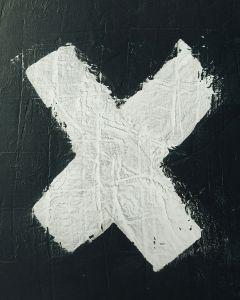
For decades, people have claimed that writing Xmas instead of Christmas is a modern, secular attempt to take Christ out of Christmas. Ironically, the opposite is true. The abbreviation is more than a thousand years old—and completely rooted in Christian tradition.
The X in Xmas comes from the Greek letter Chi, the first letter of Χριστός (Christos), meaning Christ. As early as the 11th century, Christian scribes used Chi (X) as a sacred shorthand. It appeared in church manuscripts, liturgical texts, and inscriptions on altars and vestments.
Over time, as printing spread across Europe, Xmas became a common and accepted abbreviation—practical for saving space and understood by anyone familiar with Christian symbolism. Even writers like C.S. Lewis used it without controversy.
The idea that Xmas removes Christ only emerged in the mid-20th century, largely due to advertising. As Christmas became more commercialized, people began seeing the abbreviation on signs, cards, and storefronts. Without knowledge of its Greek origins, many assumed it was a secular shortcut.
In reality, Xmas is one of the oldest and most explicitly Christian abbreviations we have—an efficient, reverent symbol created by monks, not marketers. It’s a reminder of how languages evolve, how misunderstandings spread, and how traditions often hold deeper roots than we realize. Raise your hand if you knew this one? I didn't think so.
|
Silent Night: The Christmas Hymn Written Because the Organ Broke
Silent Night is one of the most beloved Christmas hymns in the world, sung in more than 300 languages and cherished for its peaceful simplicity. Yet its creation was anything but serene. It was born out of a last-minute crisis.
On Christmas Eve in 1818, in the small Austrian village of Oberndorf, the church organ at St. Nicholas Parish failed—silenced by either rust, mice, or winter flooding (accounts differ). Father Joseph Mohr, the assistant priest, scrambled for a solution. He remembered a poem he had written two years earlier, beginning with the words Stille Nacht, heilige Nacht. Realizing it could work as a song without an organ, he brought it to Franz Xaver Gruber, the church’s schoolmaster and organist.
Mohr asked Gruber to compose a melody that could be accompanied on guitar—a highly unusual choice for a sacred service at the time. Gruber produced a simple, flowing tune, humble enough for a small parish but profound enough to resonate deeply with the congregation.
The hymn premiered that night, performed by Mohr and Gruber with guitar accompaniment. It spread slowly through Austria and Germany, carried by traveling folk singers and church choirs. By the 1840s, it became widely known in Europe; by the 1860s, it reached America.
Silent Night survived wars, translations, and commercialization. In 1914, during World War I’s famous Christmas Truce, soldiers from opposing sides sang it together across the trenches.
What began as an improvised solution to a broken organ became one of history’s greatest songs—born in crisis, carried by peace.
|
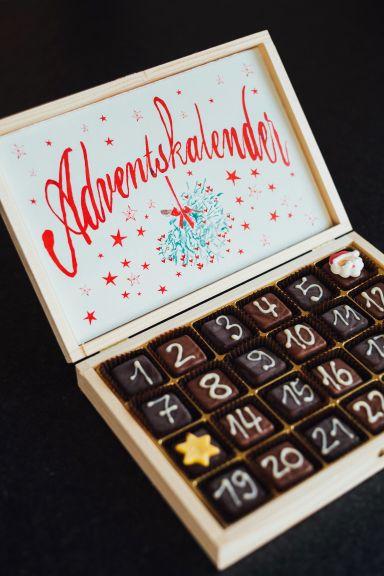
Advent Calendars: From Chalk Marks to Chocolate and Beyond
Advent calendars are a beloved countdown to Christmas, but their origins are humble and surprisingly recent.
The earliest forms appeared in 19th-century Germany, where families marked each December day with chalk lines on a door or wall. Others lit a candle each night or hung a new picture on the wall. These simple rituals helped children understand the progression toward Christmas.
The first printed Advent calendar appeared around 1903, created by Gerhard Lang, who was inspired by a homemade calendar his mother had made using glued candies. Lang’s early calendars featured little doors or windows that opened to reveal pictures or Bible verses.
Chocolate-filled Advent calendars didn’t appear until the 1950s, and they quickly became popular worldwide. Today, Advent calendars have expanded far beyond sweets offering everything from tea to toys to high-end beauty products.
What began as chalk marks on a door has become a global industry and a joyful daily ritual—a reminder that anticipation can be just as meaningful as the celebration itself.
| |
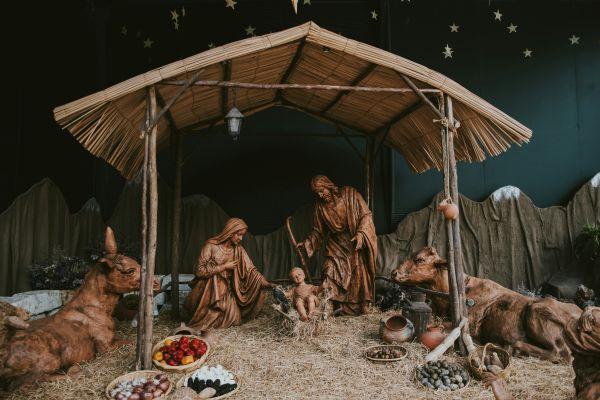
The Nativity Scene
The Nativity scene, also known as a crèche—has one of the most meaningful origins of all Christmas traditions. While depictions of Christ’s birth date back to early Christian art, the tradition as we know it today began with St. Francis of Assisi in 1223.
Wanting people to connect emotionally and spiritually with the story of Jesus’ birth, St. Francis created the first “live Nativity” in the town of Greccio, Italy. He arranged a simple manger scene inside a cave, complete with local villagers portraying Mary, Joseph, shepherds, and live animals to bring the Gospel narrative to life.
The goal was simple but powerful: to allow ordinary people—many of whom were illiterate—to see and feel the humility of Christ's arrival in the world.
The idea spread quickly across Europe. Within a century, churches and town squares all over Italy, Germany, France, and Spain began creating their own Nativity displays, first as live reenactments and eventually as handcrafted figurines.
By the 18th and 19th centuries, artisans began producing elaborate Nativity sets in materials like wood, porcelain, and carved stone. In Naples, entire neighborhoods became famous for their ornate, highly detailed crèche figurines—many including everyday people such as bakers, fishermen, and musicians, symbolizing that Christ’s birth was for everyone.
Today, Nativity scenes range from simple wooden carvings to large outdoor displays to children’s pageants performed in churches and schools. Despite their variety, all Nativity scenes share the same purpose as St. Francis’s original vision: reminding people of the humble beginning at the heart of Christmas.
| | Surprise Photo at the End: | | Joe's Positive Post of the Week | | Join the Smart Subscribers | | If you are reading this on a social media platform, click below and you'll automatically receive a 'different' story every week on Wednesday. | | |
The Roll Call of states and countries where readers reside: Arizona, California, Colorado, Connecticut, Delaware, Florida, Georgia, Hawaii, Illinois, Indiana, Iowa, Kansas, Kentucky, Louisiana, Maine, Massachusetts, Michigan, Mississippi, Missouri, Montana, New Hampshire, New Jersey, New Mexico, New York, North Carolina, North Dakota, Ohio, Pennsylvania, Puerto Rico, Rhode Island, South Carolina, South Dakota, Tennessee, Texas, Vermont, Virginia, Washington and Washington DC, Wisconsin plus Canada, Conch Republic, Australia and the United Kingdom.
| | Refer a friend to Sign Up for the Wednesday Weblog | | |
Ed Doherty
774-479-8831
www.ambroselanden.com
ed-doherty@outlook.com
Forgive any typos please.
| | | | | |