Rail & Labor News from RWU
| | Weekly Digest Number 22 -May 27th, 2025 | | Welcome to the RWU Rail & Labor News! This news bulletin is produced and emailed out each Tuesday morning. We hope you find each week's news and information useful. If so, please share with co-workers, friends, and colleagues. If you like, you can sign them up to get all the news from RWU HERE. Or forward them the link. Got a hot tip? Please forward the article and a link to raillabornews@gmail.com. Note: If you read over this news bulletin each week, you will be sure to never miss the important news of what is going on in the railroad world from a worker's perspective! | | THIS WEEK'S RAIL AND LABOR NEWS | | Editor's Note: No matter how you slice it, federal funding for almost anything that benefits the general public -- including passenger rail -- is going to be tough to gain in the years ahead. But we cannot be reduced to begging for crumbs and celebrating when we win a few. Railroad workers, passengers, shippers, and the general public must go on the offensive and continue to demand the proper and adequate rail transportation we deserve as a nation. | |
Railway Age / May 22nd
Navigating passenger rail funding in a new political landscape was the theme of a May 21 session at Railway Interchange 2025. The Railway Supply Institute (RSI), one of the three associations hosting the event, brought together executives from Brightline Holdings, U.S. High Speed Rail Association (USHSR), American Public Transportation Association (APTA), and Transportation Trades Department, AFL-CIO (TTD) to discuss how companies can adapt.
This fireside chat-style session was moderated by RSI President Jim Riley. Speakers included:
-
Husein Cumber, Senior Advisor, Brightline Holdings
-
Robert Pearsall, Partnerships Director, USHSR
-
Benji Schwartz, Director of Government Affairs and Advocacy, APTA
-
Greg Regan, President, TTD
| | Editor's Note: Obviously, what this all boils down to is the fact that the Class Ones wish to continue to decimate the ranks of maintenance-of-way employees and save millions on labor costs. While rail workers, their unions and RWU have no objection to making use of technology to add an overlay of safety, we vehemently oppose the idea that machines can replace the human eyes and ears of railroad workers to ensure a safe railroad. | |
Trains Magazine / May 23rd
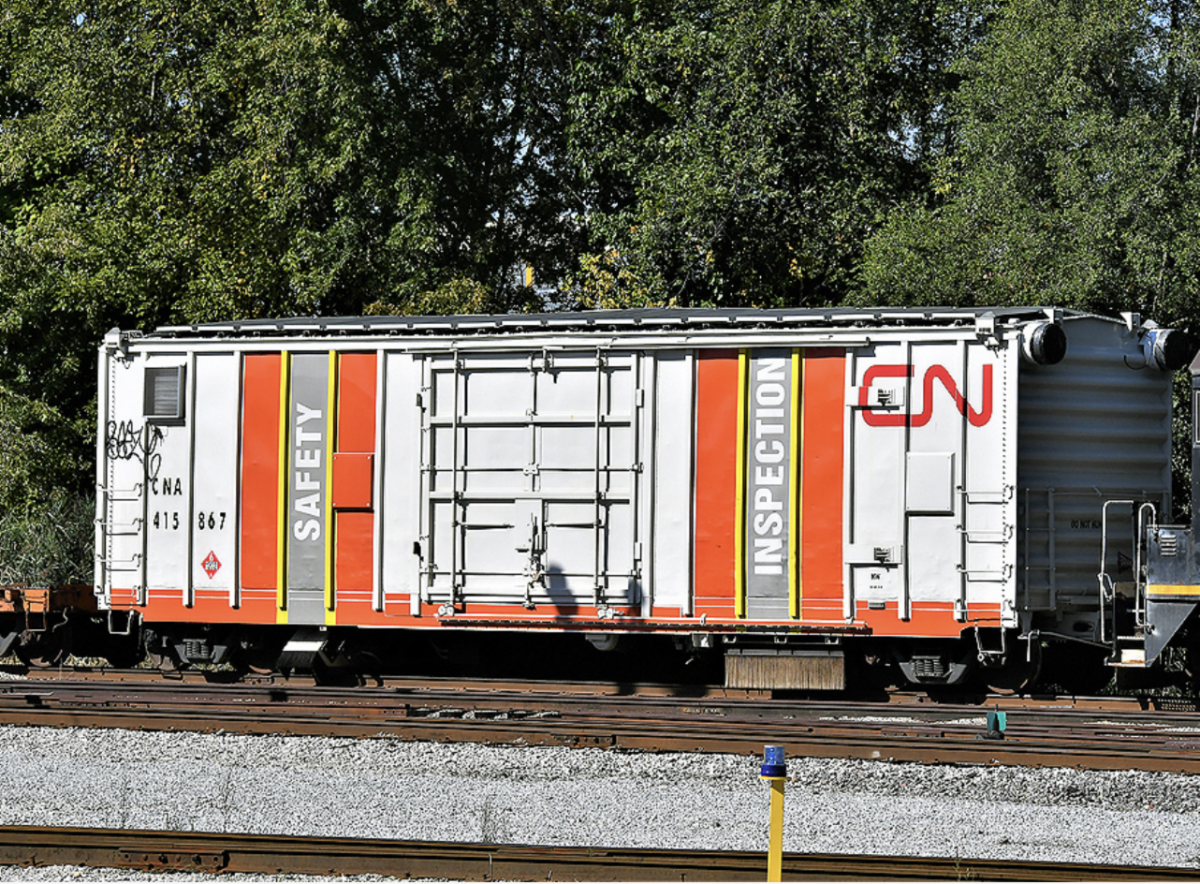
The Association of American Railroads has requested that the Federal Railroad Administration permit less frequent visual track inspections in areas where automated track inspection systems are in use.
AAR said that using track geometry measurement systems in conjunction with less frequent visual inspections allows railroads to redeploy track inspectors to areas where the automated systems have discovered defects and track problems. A reduced visual inspection schedule also enables track inspectors to focus efforts on switches, diamonds, and rail joints.
|
| Editor's Note: Like most new Amtrak and passenger services around the country, ridership on this new service implemented last year has exceeded expectations. The American people want rail passenger service. Build it and they will come! The major hurdle to doing this however is the fact that the rail lines are owned by private for-profit rail carriers that are dead-set opposed to their tracks being used by passenger trains. They are the biggest obstacle for a passenger train revival in the U.S. today. | |
Progressive Railroading / May 20th
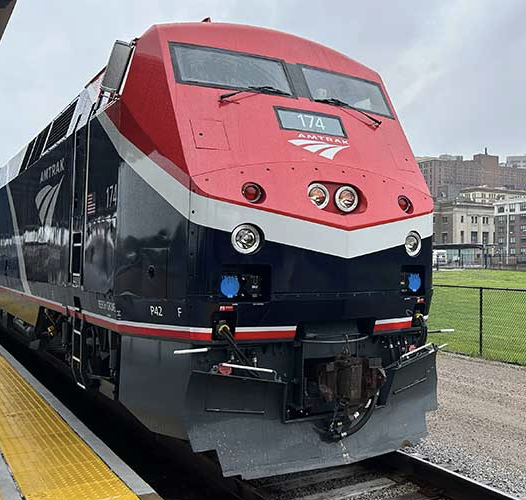
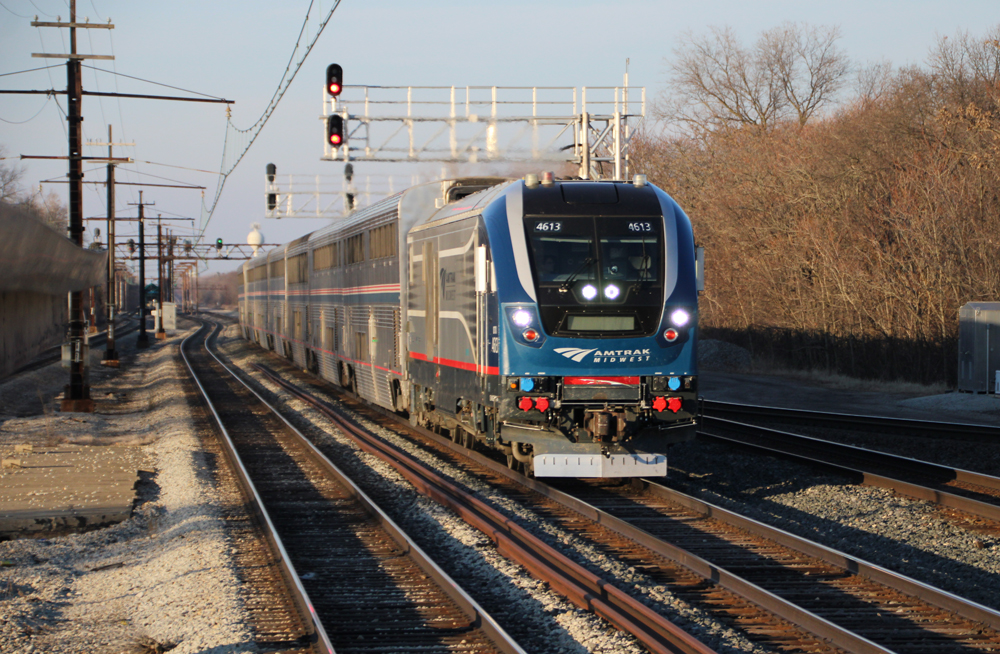
Amtrak's Borealis route between the Twin Cities and Chicago has surpassed anticipated ridership levels for its first year of service. Since it launched on May 21, 2024, the Borealis ridership reached 212,515 passengers through April. A 2015 feasibility study originally estimated annual ridership to be 155,500 passengers.
| | Editor's Note: These crucial commuter routes in question are all former Chicago & North Western territory (now Union Pacific) emanating from the old Madison Street Station in downtown Chicago. Like with Amtrak "long distance" routes, the Class One freight carriers have been completely relieved of their obligation to provide regional (commuter) passenger rail service. In recent years, these carriers are not satisfied with being relieved of that legal obligation to provide common carrier service, but now wish to gouge the passenger operators -- in this case Metra -- with exorbitant rent charges. | |
Progressive Railroading / May 23rd
Union Pacific Railroad on May 21 publicly issued a request for Chicago commuter railroad Metra to accept a financial agreement based on market value for the use of UP's rail lines.
For over 10 years, Metra has paid rates below commercial market value, UP officials said in a press release. UP has attempted to reach an agreement with Metra for nearly six years, submitting offers and attempting to mediate an agreement through a Surface Transportation Board process. Most recently UP offered to enter binding arbitration with Metra to settle the agreement, without success.
| | Editor's Note: The overwhelming need for a complete overhaul of the nightmare known as New York's Penn Station is long overdue. Let's hope the job finally gets done. | |
Trains Magazine / May 23rd
A name both familiar to and well-regarded by New Yorkers will be placed in charge of the remodeling of Penn Station.
Andy Byford, who oversaw the city’s subways to positive reviews as president of the Metropolitan Transportation Authority’s New York City Transit from 2018 to 2020, has been chosen to oversee the station project for Amtrak. The passenger operator and the Federal Railroad Administration were placed in charge of the long-discussed remodeling — replacing the MTA, previously designated as the lead agency —by the Trump administration in April [see “FRA, Amtrak to take over …,” Trains News Wire, April 18, 2025].
| | Editor's Note: Unless and until the nation's railroads come under public ownership, it is unlikely that the Amtrak "on-time performance problem" can ever be solved. With the freight "host" railroads running ever longer trains while refusing to double track (let alone lengthen sidings), the problem will no doubt get worse. The freight rail carriers despise Amtrak, feel no obligation to run its trains on-time, and see any detriment at all to their freight operations as an infringement on their God-given right to make as much profit as they like. | |
Trains Magazine / May 22nd
Amtrak’s overall customer on-time performance improved in the first quarter of 2025, compared to the previous quarter, according to the latest report from the Federal Railroad Administration.
But the 72% overall figure is down from 77% in the same quarter a year ago, and none of the company’s three business segments (long distance, Northeast Corridor, and state-supported) meets, as a whole, the FRA’s minimum 80% standard for arrival within 15 minutes of the scheduled time [see “FRA publishes final rule …,” Trains News Wire, Nov. 16, 2020]. State-supported routes performed the best, with 76% on-time performance, followed by the Northeast Corridor (73%) and long-distance trains (58%). The long-distance figure is down from 66% in the first quarter of 2024 but up from a 49% rate in last year’s third quarter.
| | Editor's Note: While it is true that short lines play a crucial role, much of this trackage was spun off from its original owners in the last 50 years or so, none other than the Class One railroads. Knowing that they could still reap the benefits of the "long haul" of many of these loads, the Class Ones opted out of the first and last haulage miles by shedding this trackage to often non-union start-ups. | |
Railway Age / May 23rd
Norfolk Southern hosted its annual Short Line Conference on May 14, bringing together nearly 200 representatives from its network of more than 270 short line partners.
“Throughout 2024 and into 2025, Norfolk Southern has been working with more than 40 short line partners on the Short Line Improvement Project to enhance tools and daily visibility at interchanges,” the Class I noted. “Alongside participating short lines, we have intensified our two-way communication, improved interchange planning, and eliminated growth bottlenecks. Based on the success at these locations, we’re now scaling the program to all our 260-plus short line connections. Our latest video (view below) features leaders from Norfolk Southern and key short line partners sharing how improved interchange performance is creating growth, customer confidence, and long-term success.”
| | NEWS FROM AROUND THE LABOR MOVEMENT | | Each week, RWU includes a few articles about advances and developments in the larger labor movement that are of interest to railroad workers. Got an artcile to submit for possible inclusion next week? Email it along to raillabornews@gmail.com. Thank you! | | Editor's Note: Legislation that seems impossible to shepherd through Congress at the federal level has been adopted by the Nevada state legislature. | |
NV AFL-CIO / May 23rd
In a monumental win for Nevada’s working families, the Nevada State AFL-CIO and Assemblymember Reuben D’Silva celebrate the passing of Assembly Joint Resolution 11 (AJR11) during the 83rd legislative session, which calls on the U.S. Congress to enact the Richard L. Trumka Protecting the Right to Organize Act of 2025. The passing of AJR1 highlights Nevada’s deep union roots and our state will pioneer in leading the other states in protecting workers rights.
“Nevada has always been a union state, our labor movement built this state’s economy and fought for protections that benefit all workers,” said Executive Secretary-Treasurer Susie Martinez. “Unions help raise standards across entire industries, benefiting all workers by improving wages, ensuring better health and safety standards, and promoting workplace equality.”
| | WEEKLY DERAILMENT DEPARTMENT | | Each Tuesday in this news bulletin, RWU does our best to present a picture of what has been happening over the course of the previous week in terms of derailments in North America, and investigation determinations of previous accidents. NOTE: This list is by no means comprehensive. Smaller and less consequential mishaps are generally not reported here. If the wreck results in injury or fatality, or is especially damaging/extreme, a full article will appear as a feature in the dozen or so rail articles above. Know of a train wreck? Please feel free to forward a link to raillabornews@gmail.com for possible inclusion next week. Thanks! |
| | | |