Faulkner County Agriculture Update
July 31, 2026
| | |
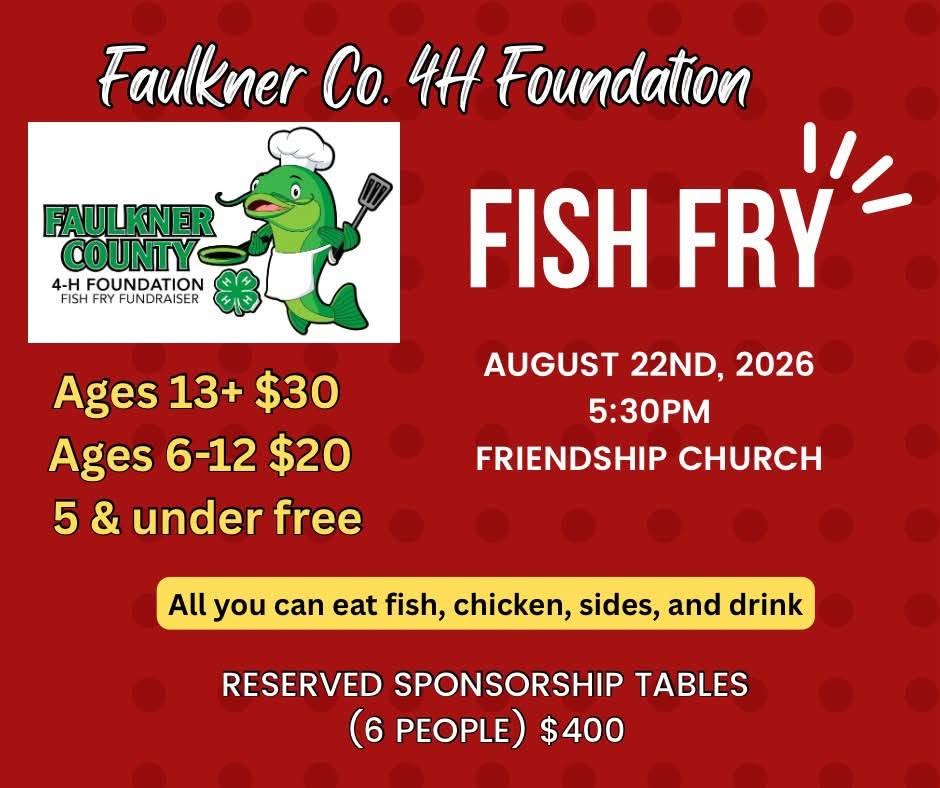
Faulkner County 4-H Foundation Fish Fry
Our Faulkner County 4-H Foundation Fish Fry is coming August 22. This year we will be at Friendship Church just south of 8 Mile Store.
| | |
Weather
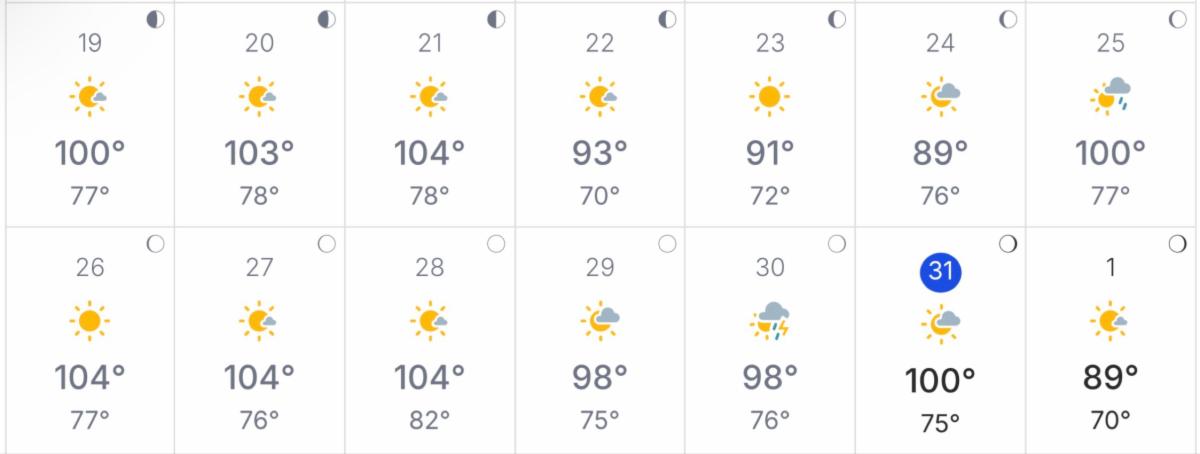
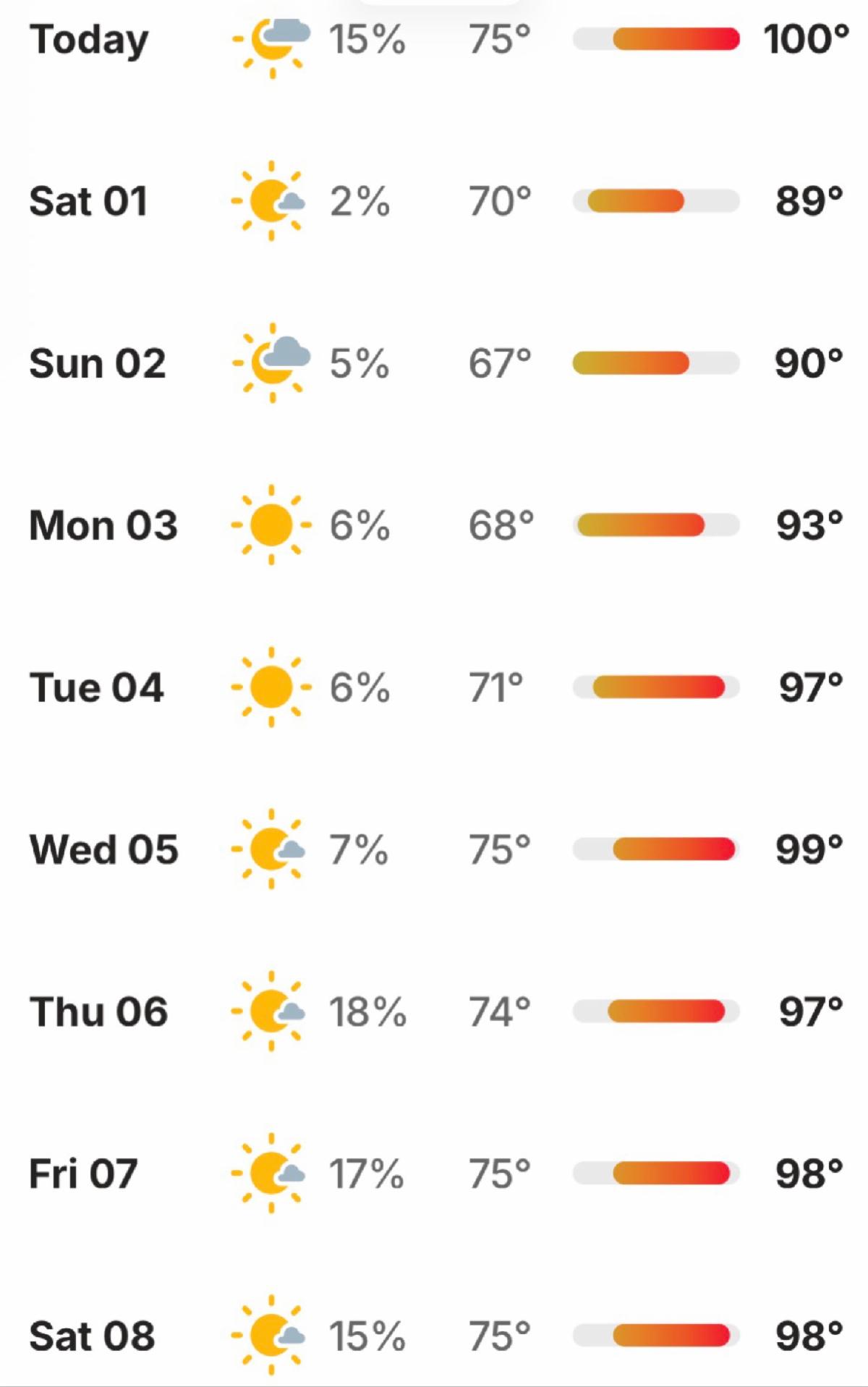
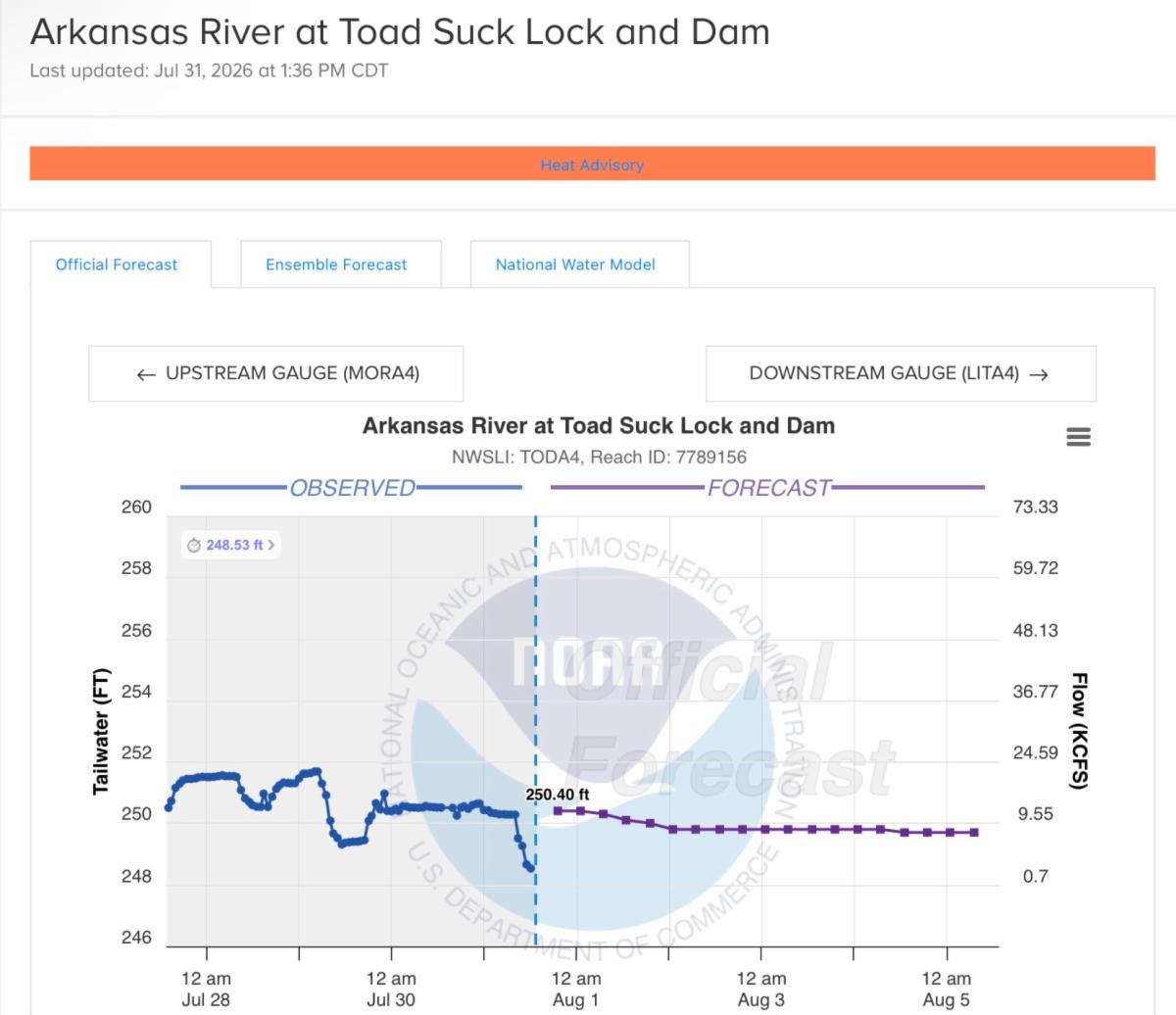
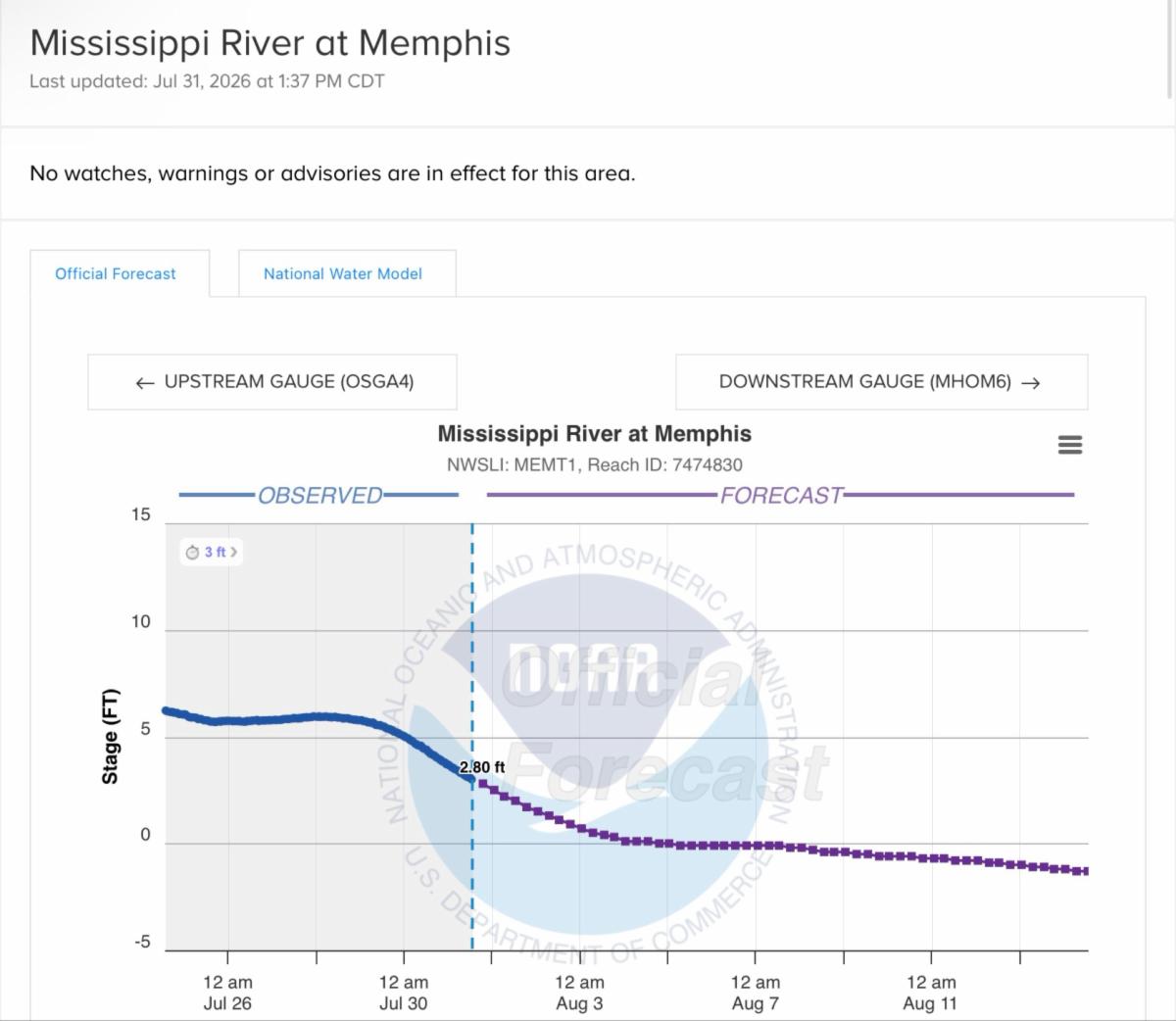
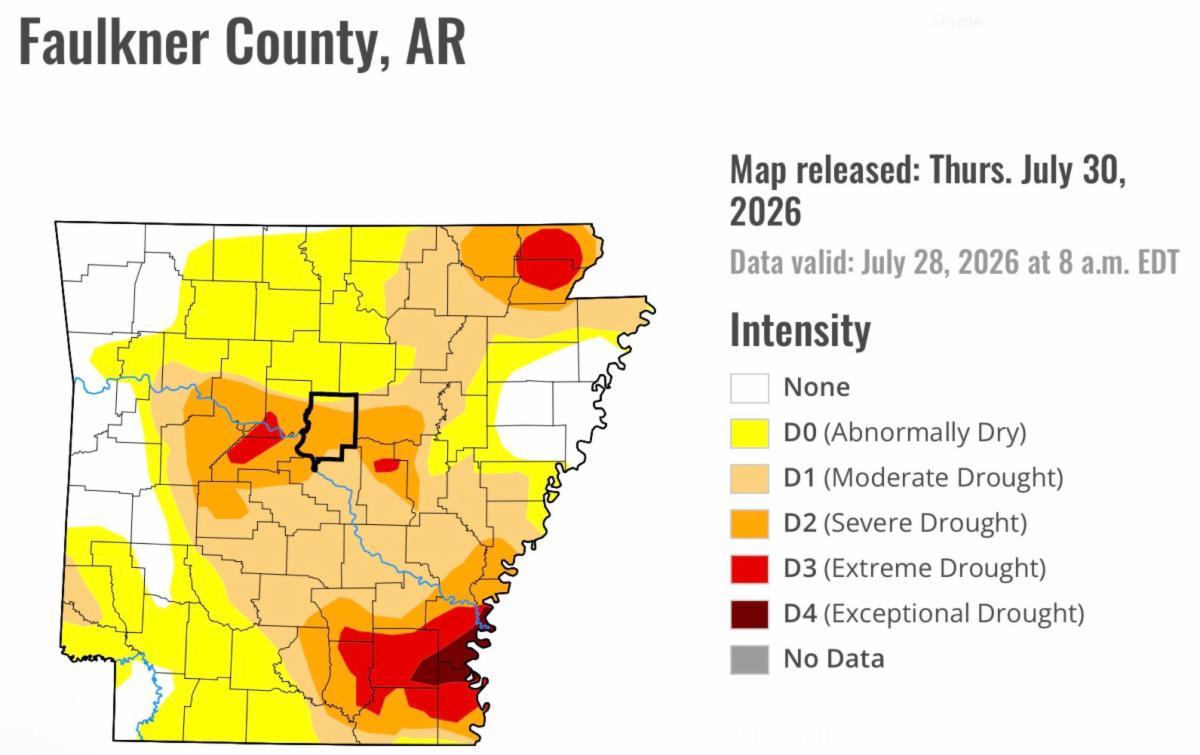
This week was another hot week with a few scattered showers around. There were spots in Faulkner County that got close to 1 inch of rain this week. We have another good chance of rain tonight then we are back to low chances with temperatures in the high 90's.
| | Arkansas and Mississippi River | |
Corn
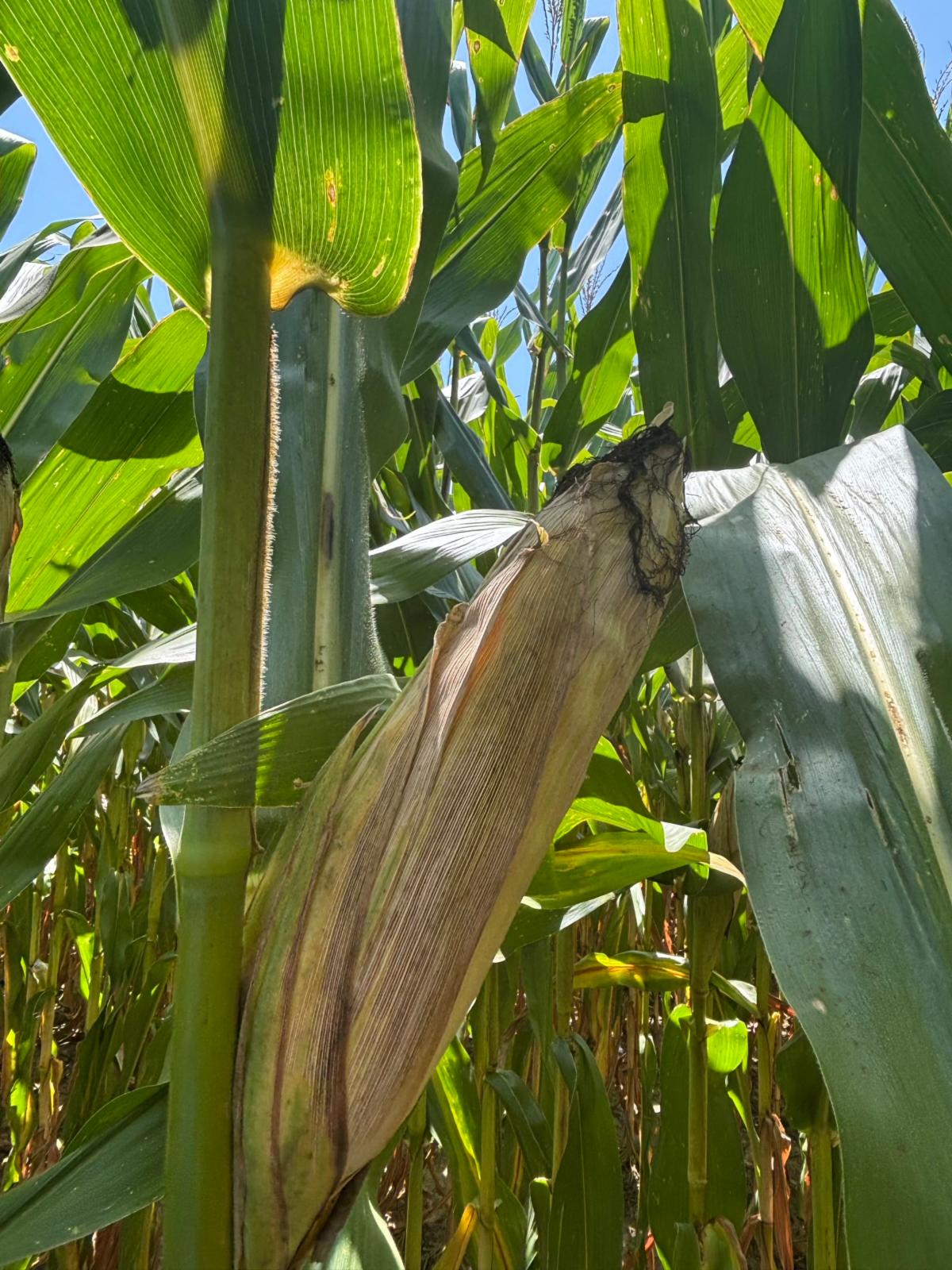
Put a fork in the 2026 corn crop because it is done. With the exception of just a few late planted fields, we are through adding inputs to this crop. I looked at some of the later planted fields this week and recommended one more irrigation then call it good. There should be a few fields that have reached black layer. I am really excited about harvest, I think this is going to be one for the books!
| | |
Rice
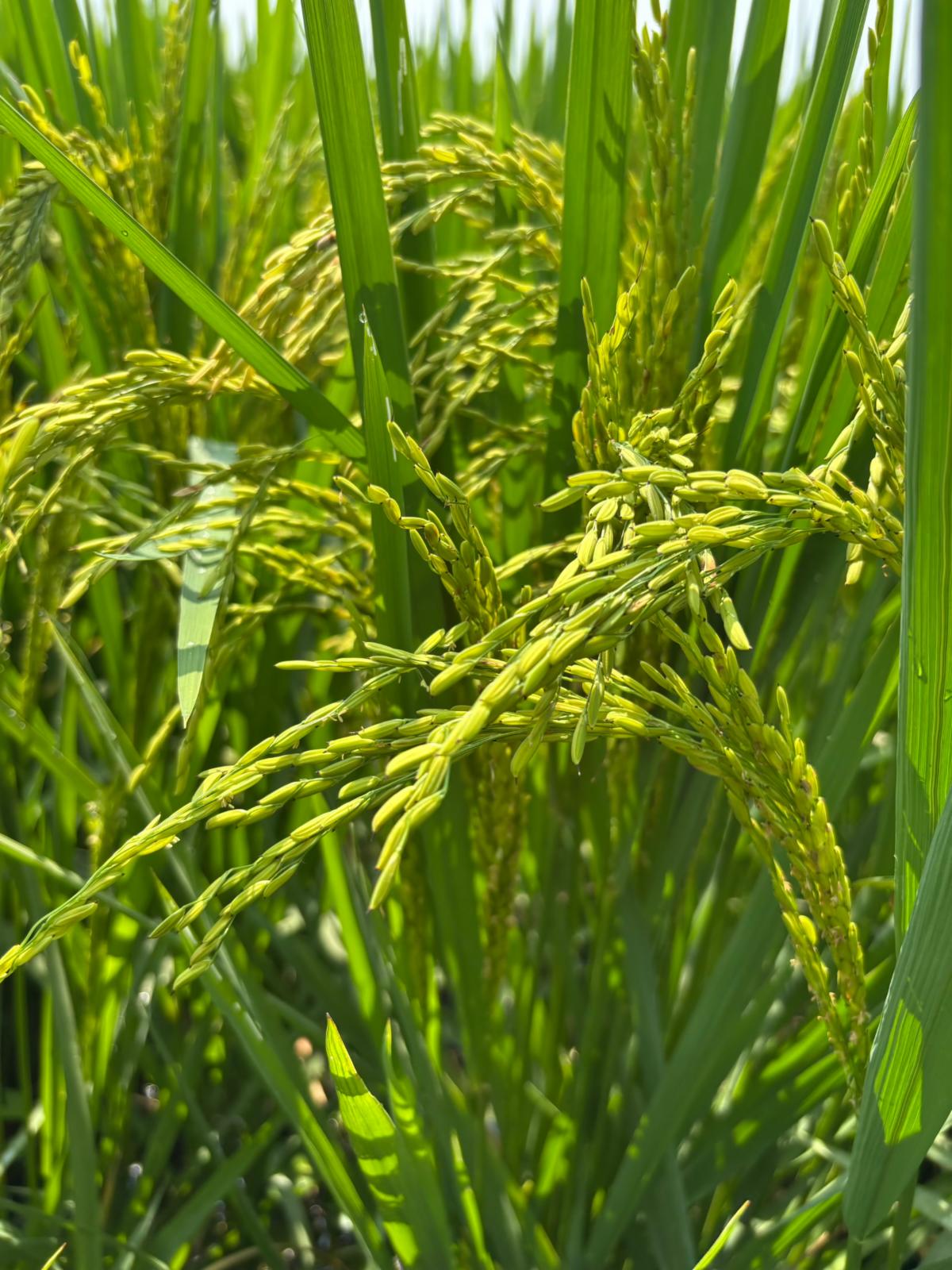
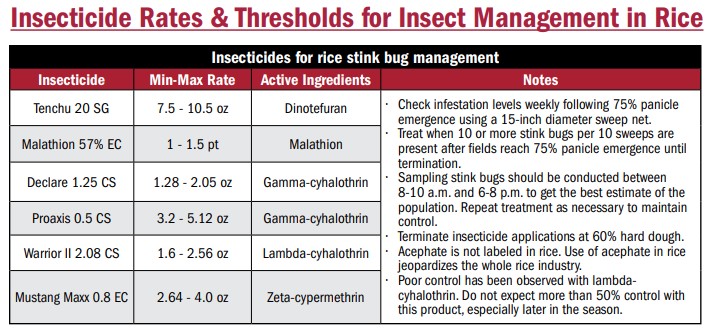
Rice is really looking good around the county. We are getting to the point that the latest planted fields are just about fully headed. Rice stink bug control is all over the place. One field may not have one bug while a field down the road needs treated. Keep scouting!
Now is the time to start thinking about your water management. This is always the toughest call for me. When do you stop pumping and when do you drain. I think we have several fields where we can pump them up and at least stop the power units and save a little fuel. Make sure the flood is as full as you can get it with these temperatures.
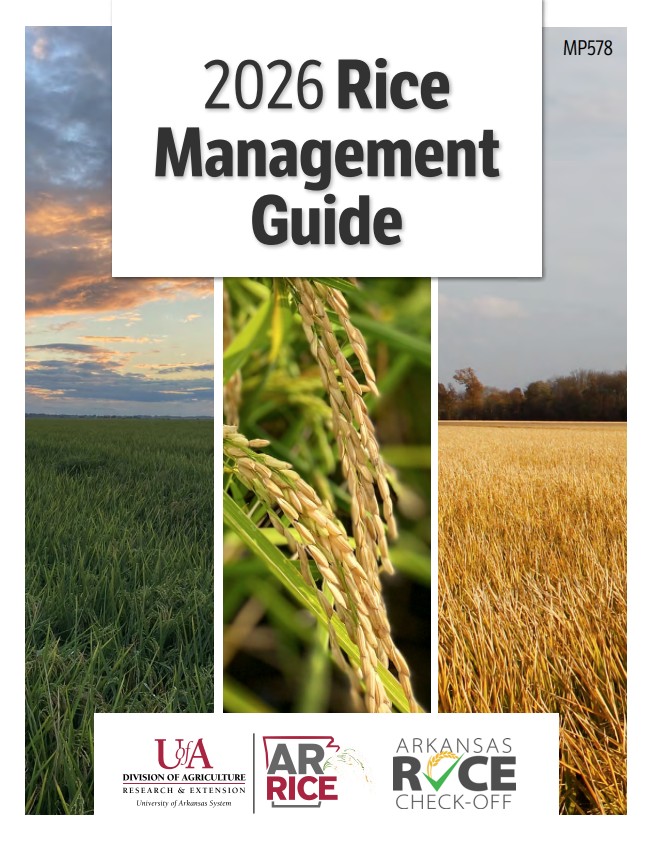
| | 2026 Rice Management Guide | | |
Soybeans
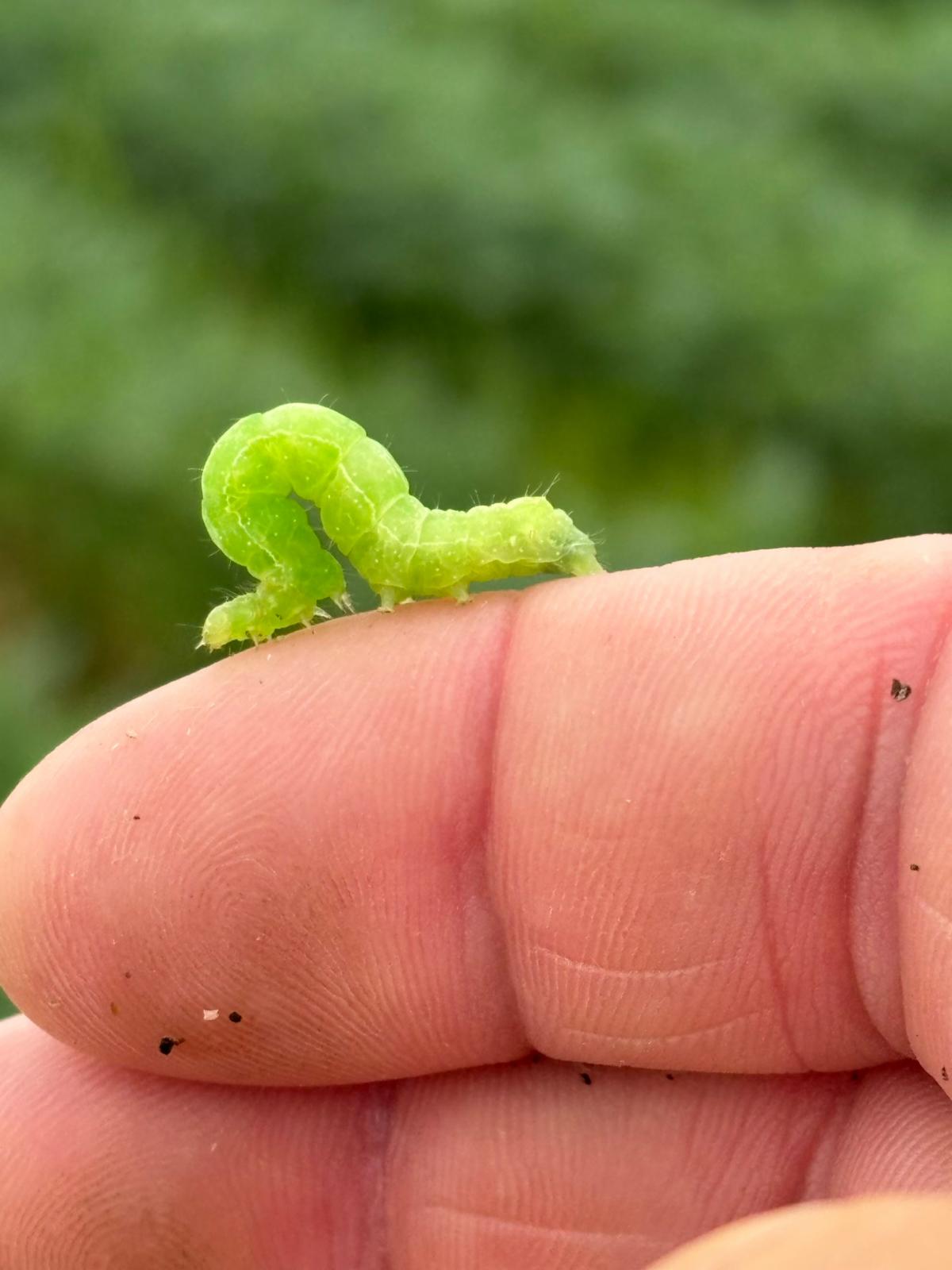
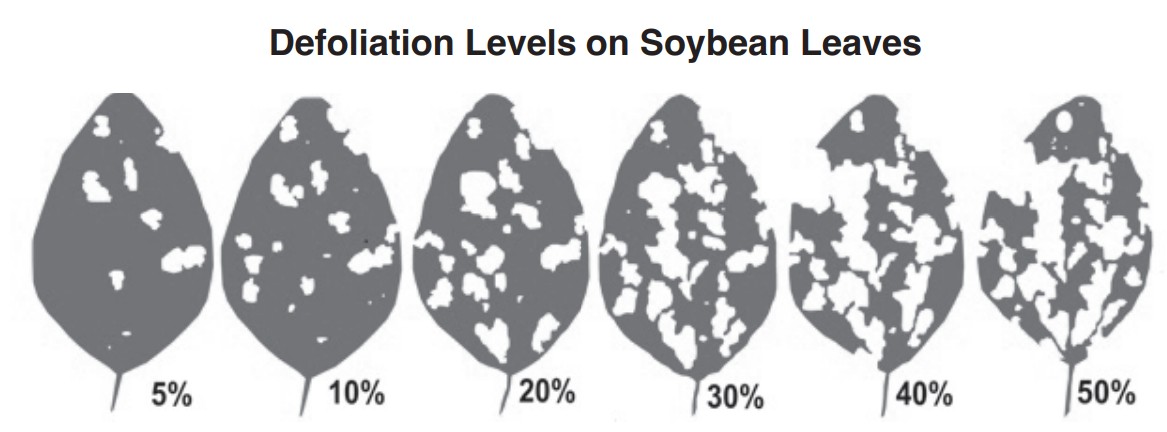
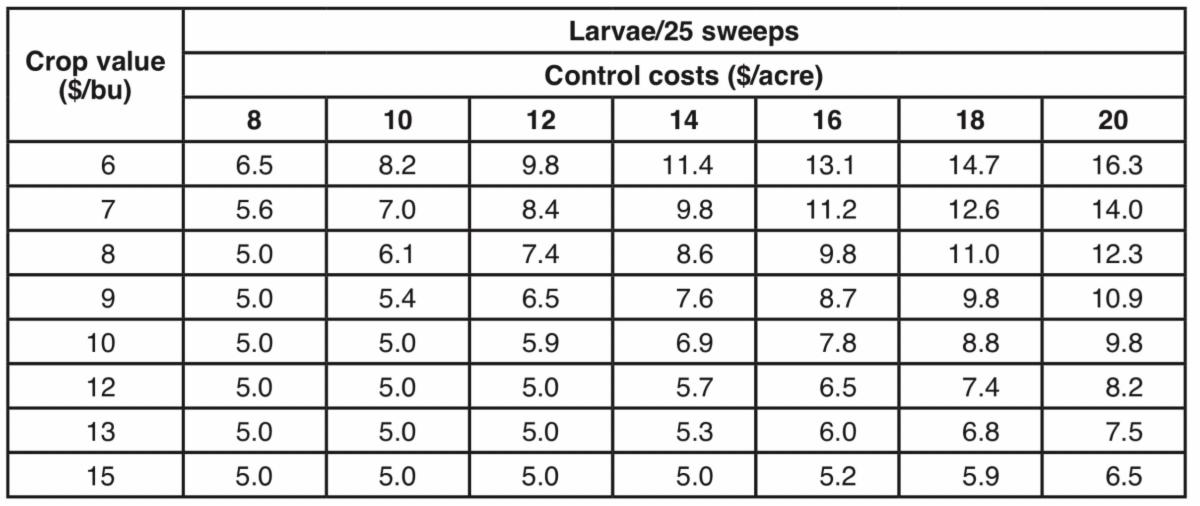
Rice stink bugs aren't the only insect that is all over the place. Worms in soybeans are also all over the place. I can sweep one field and find nothing, then move over to the next one and it is full of worms. It might be corn earworms, it might be cloverworms or it might be loopers. It does seem like the corn earworms are in soybeans that are flowering and you can still see the middles. I am not too concerned about that just yet, but I did find a population that was right on the edge of threshold in some R3 soybeans. When pods are present I get more worried about corn earworms. I also found a field that was being defoliated by cabbage loopers. We had some of those and soybean loopers last year, and they can really defoliate a field fast. Control those when defoliation reaches 25% after bloom.
There have only been a handful of fields treated, but I would be keeping an eye out. They are here.
| | |
Potassium in Soybeans Trial
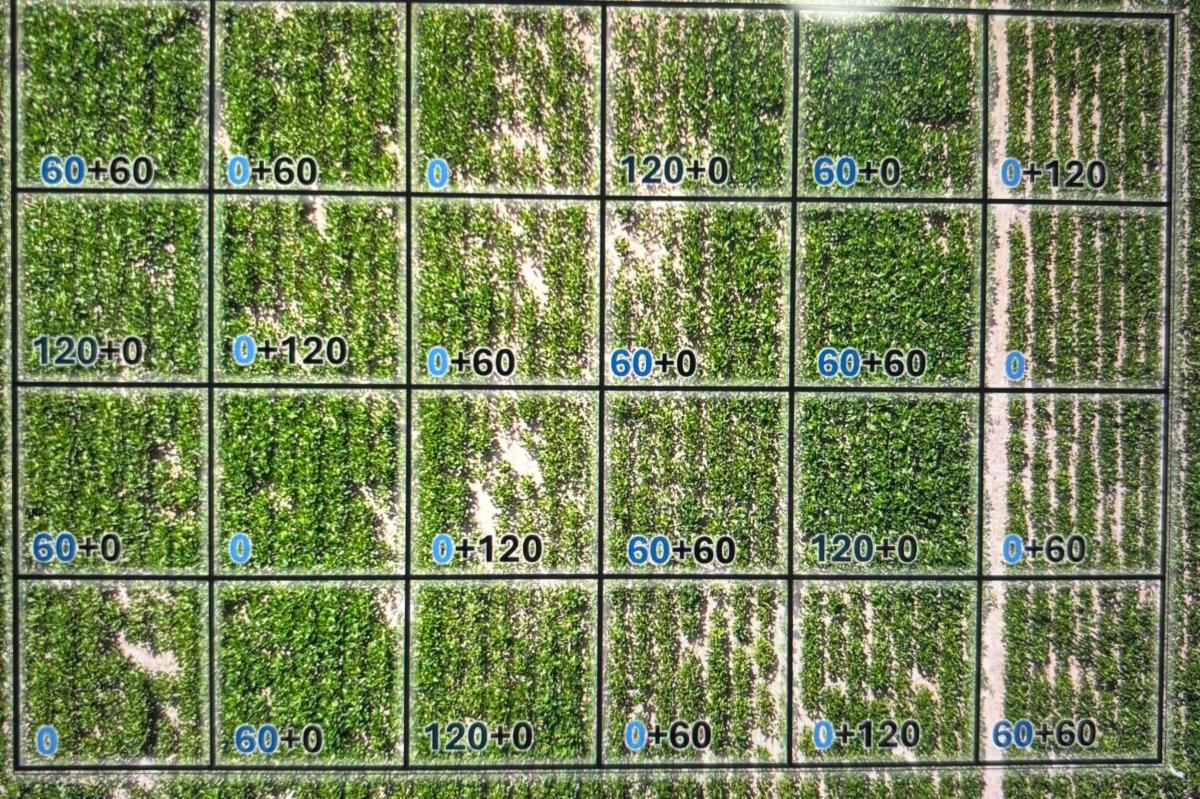
I got to evaluate the potassium trial that I have on Frank Harrell this week. Dr. Ana Morales-Ona Smith who is our row crop soil fertility specialist came down from NEREC and took some leaf samples and some drone images. The trial really showed some differences in certain treatments. If it has a blue number, that was the amount of actual K2O applied at planting (60 is 100 lbs of potassium and 120 is 200 lbs of potassium per acre). The numbers in black are the amount of actual K2O that I applied this week at R1 stage. You can really see a difference in some of the plots where potassium was applied at planting. Deficiencies were starting to show up in some of the plots that didn't receive any potassium. I am real curious what the plants will look like in a couple of weeks with the recent applications of potassium.
| | |
Wheat
The preliminary yields from the Arkansas Wheat Variety Testing program are now available.
To view the results click the link below.
| | |
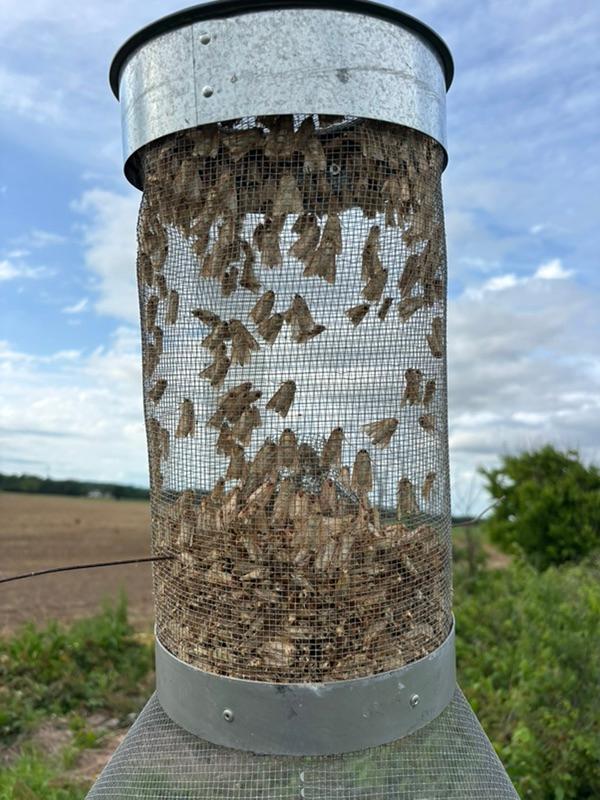
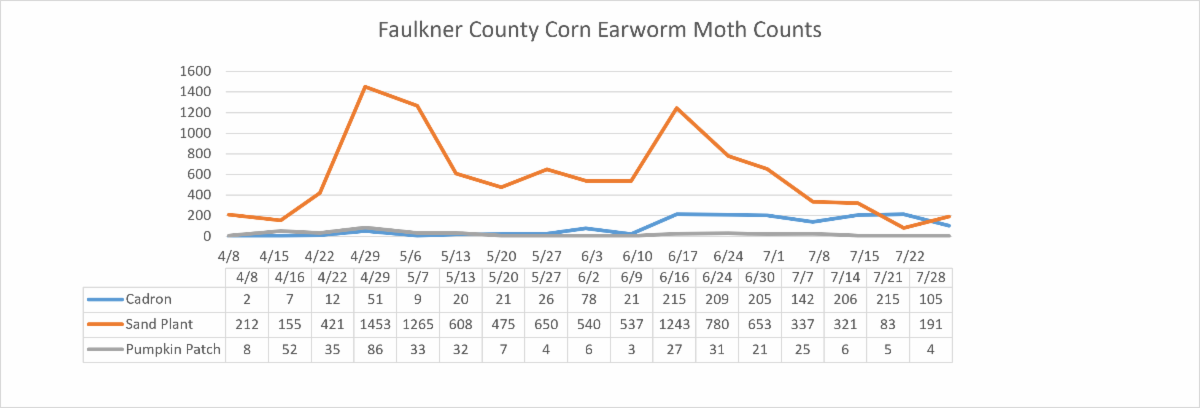
Corn Earworm Moth Traps
Corn Earworm Moth Counts for July 28, 2026
Cadron - 105
Sand Plant - 191
Pumpkin Patch - 4
| | |
The Impact of Long-Grain Rice Share on the Average PLC Payment Rate
Hunter D. Biram, University of Arkansas
The Working Families Tax Cut Act (P.L. 119-21), also known as the One Big Beautiful Bill Act, passed on July 4, 2025, and contained about $60 billion in enhancements to the farm safety net. The farm safety net consists of the Commodity Programs and Crop Insurance titles (Title I and Title XI). The Commodity Programs title authorizes USDA Farm Service Agency (FSA) farm programs, like Agricultural Risk Coverage (ARC), Price Loss Coverage (PLC), and Dairy Margin Coverage (DMC). Notably, for most of the acreage in agricultural production across the U.S., the ARC and PLC programs received increases in revenue guarantees and statutory reference prices, respectively (see Biram and Maples, 2025). A previous newsletter highlighted the importance of these enhancements to ARC and PLC in light of the increase in the number of Chapter 12 Bankruptcy filings for the 12-month period ending March 2026 and the impact of payment limits on per-acre payment rates (see Biram, Loy, and Deliberto, 2025). In this newsletter, I will build on these two analyses by examining the impact of the share of whole-farm long-grain rice base acres on the average PLC payment rate.
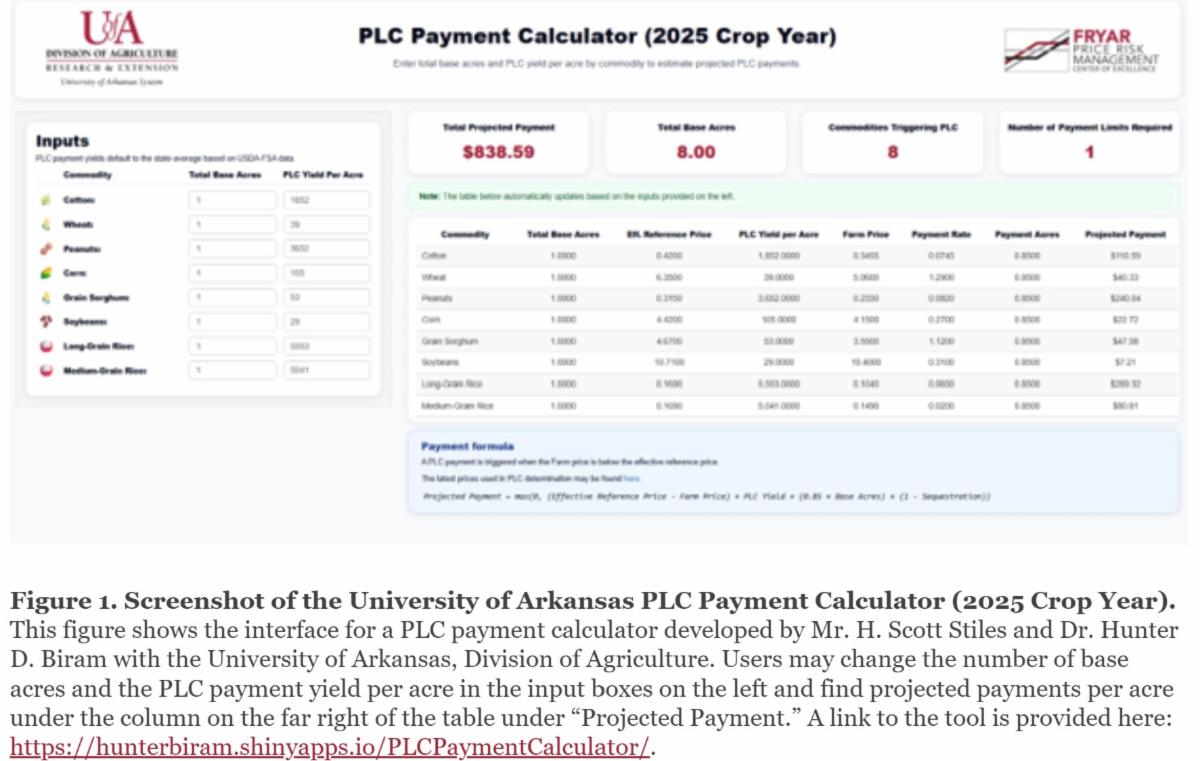
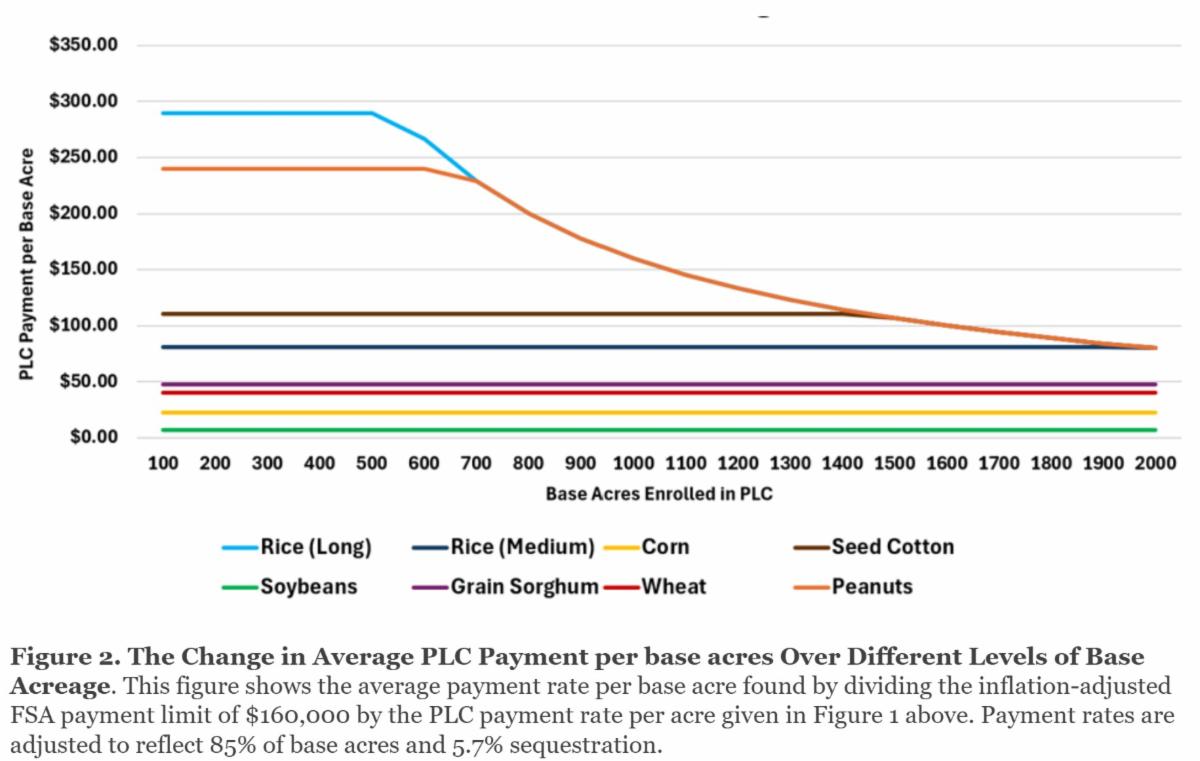
Using the University of Arkansas PLC Payment Calculator (2025 Crop Year), I provide the PLC payment rate, payment yield, and associated payment per base acre for each program crop with base acreage in Arkansas in Figure 1 below. Since FSA program payments are only made on 85% of base acres, the projected long-grain rice payment1 is $289.32/base acre. For reference, the per-acre net return for long-grain rice was a loss2 of $258.84/acre (Biram, Loy, and Stiles, 2025). Assuming all base acres tied to an FSA farm number are for one single crop, the PLC payment rate3 per base acre for long-grain rice is constant until the total number of base acres reaches 618 acres (see Figure 2). The payment rate declines to a level below the estimated economic loss in 2025 at 618 base acres of long-grain rice. The PLC payment per base acre for all program crops approaches a similar payment rate of nearly $50.00 per base acre once the base acreage for one crop reaches 2000 acres.
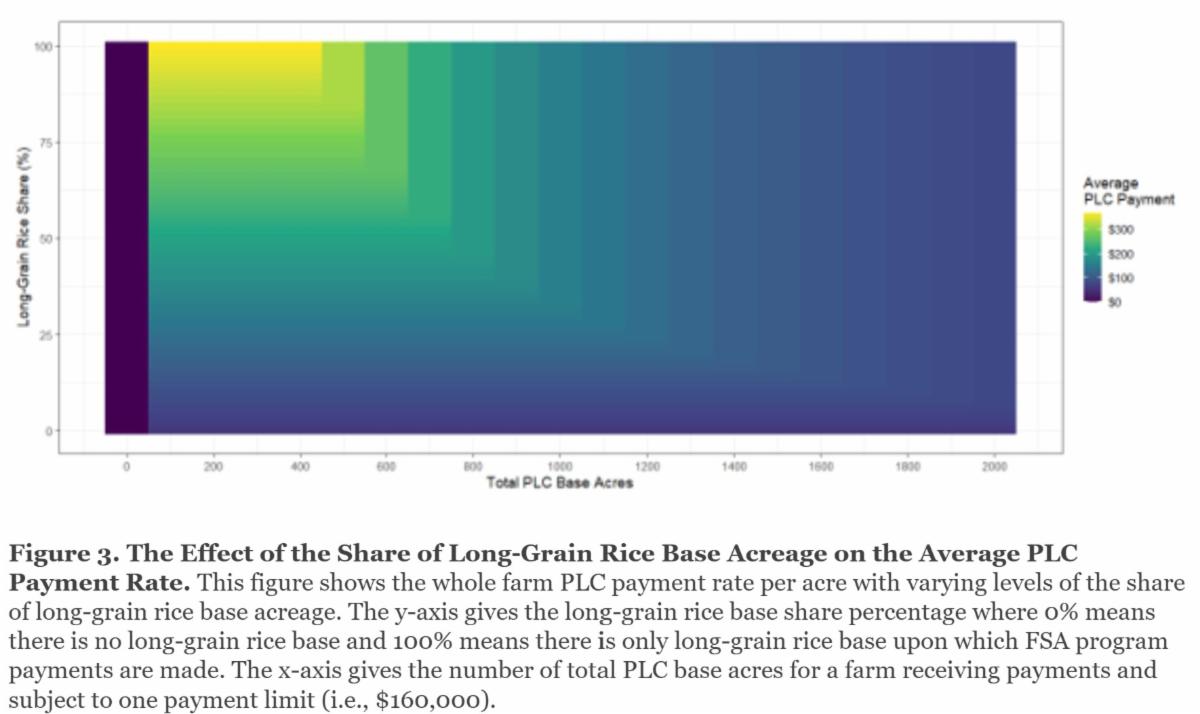
| | Relaxing the assumption that all base acres for a farm are tied to one crop shows how the share of long-grain rice base relative to all other FSA program crops for a farm number influences the overall PLC payment rate per acre. A farm will receive the maximum payment per base acre regardless of the share of long-grain rice base if the total amount of PLC base acres is around 500 acres, or less (see Figure 3). The whole farm average PLC payment per base acre remains mostly unchanged once the total number of base acres reaches 2000 base acres. Thus, farms with relatively fewer base acres will be more insulated from the impact of payment limitations, while farms with 500 or more base acres may face a whole farm average payment rate that may not fully recoup economic losses experienced in the 2025 crop year. It is important farmers visit with FSA to make any changes to their farm operating plan for the 2026 crop year (USDA-FSA, 2026). | | |
1 It is assumed that payments are subject to 5.7% rate of sequestration. The PLC payment per base acre is found by multiplying the payment rate per acre, payment yield per acre, 85%, and 94.3% (i.e., 100% - 5.7%).
2 While ad hoc programs such as the Farmer Bridge Assistance Program (FBA) provided farmers with economic assistance and cash flow during the 2026 loan renewal season, it is important to note that those payments were based on FSA planted acres and will not always match base acres. As noted in a previous newsletter, payments provided by the farm safety net should recoup economic losses apart from any ad hoc disaster assistance program, which have largely been motivated by cash flow requirements (see Biram, Loy, and Deliberto, 2026).
3 The inflation-adjusted payment limit for the 2025 crop year is $160,000 according to USDA FSA (https://www.fsa.usda.gov/tools/informational/payment-eligibility/payment-limitations) and the Federal Register, 2026-00313 (91 FR 1043).
| | Beef, Small Ruminants, & Forages | | |
Forages
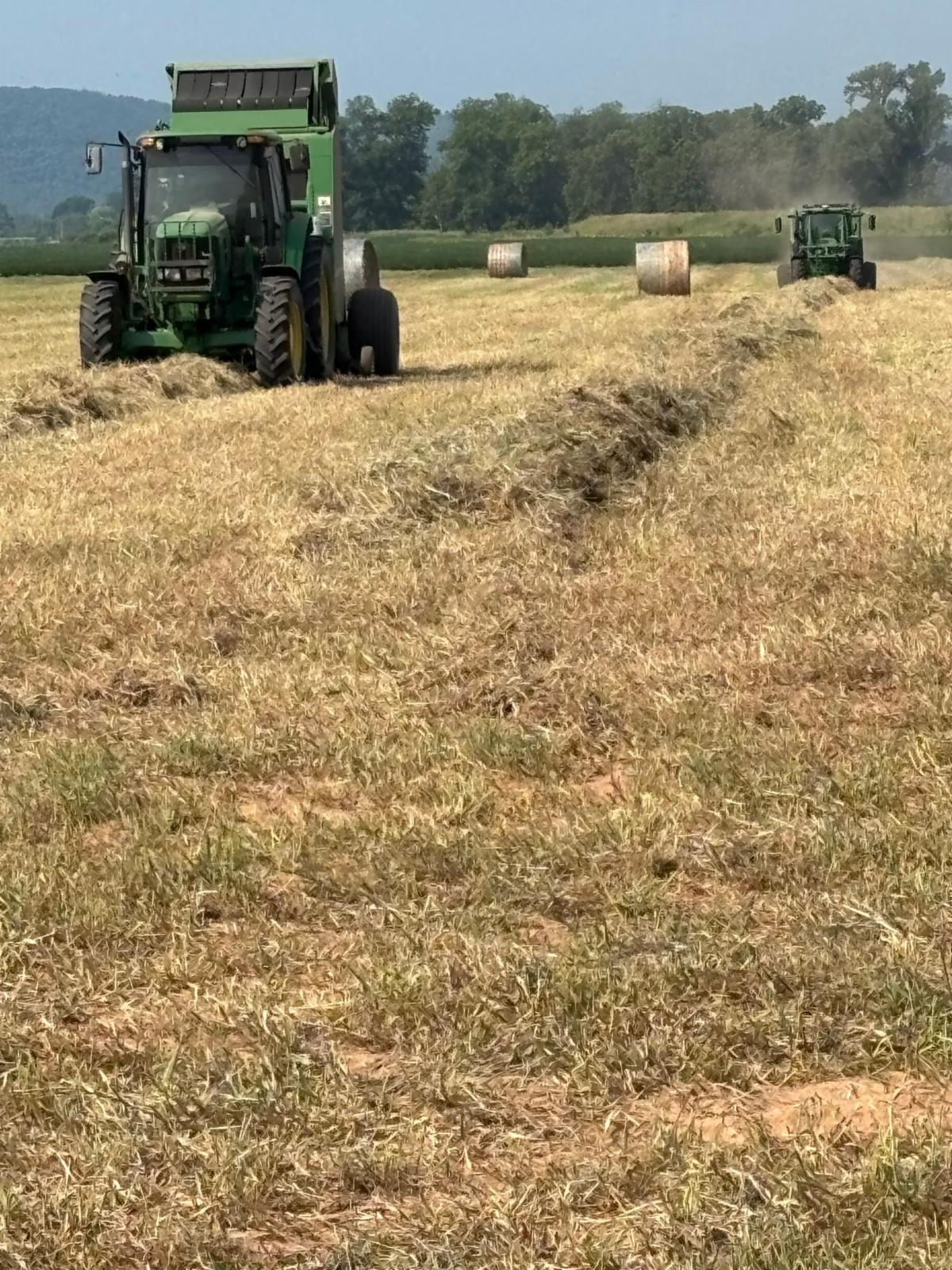
Fields are starting to go backwards as rainfall is spotty across Faulkner County. I have had a few producers tell me they are going to go ahead and harvest fields early while they are still good quality. I think that is a good idea, because you aren't doing anything but losing yield and quality in this extreme heat. The only good thing right now is I think everyone has plenty of hay! I keep telling everyone the number one question I have been getting lately is "do you know anyone that needs any hay?" If we keep going this way, we may have to start feeding some of that hay!
| |
Armyworms
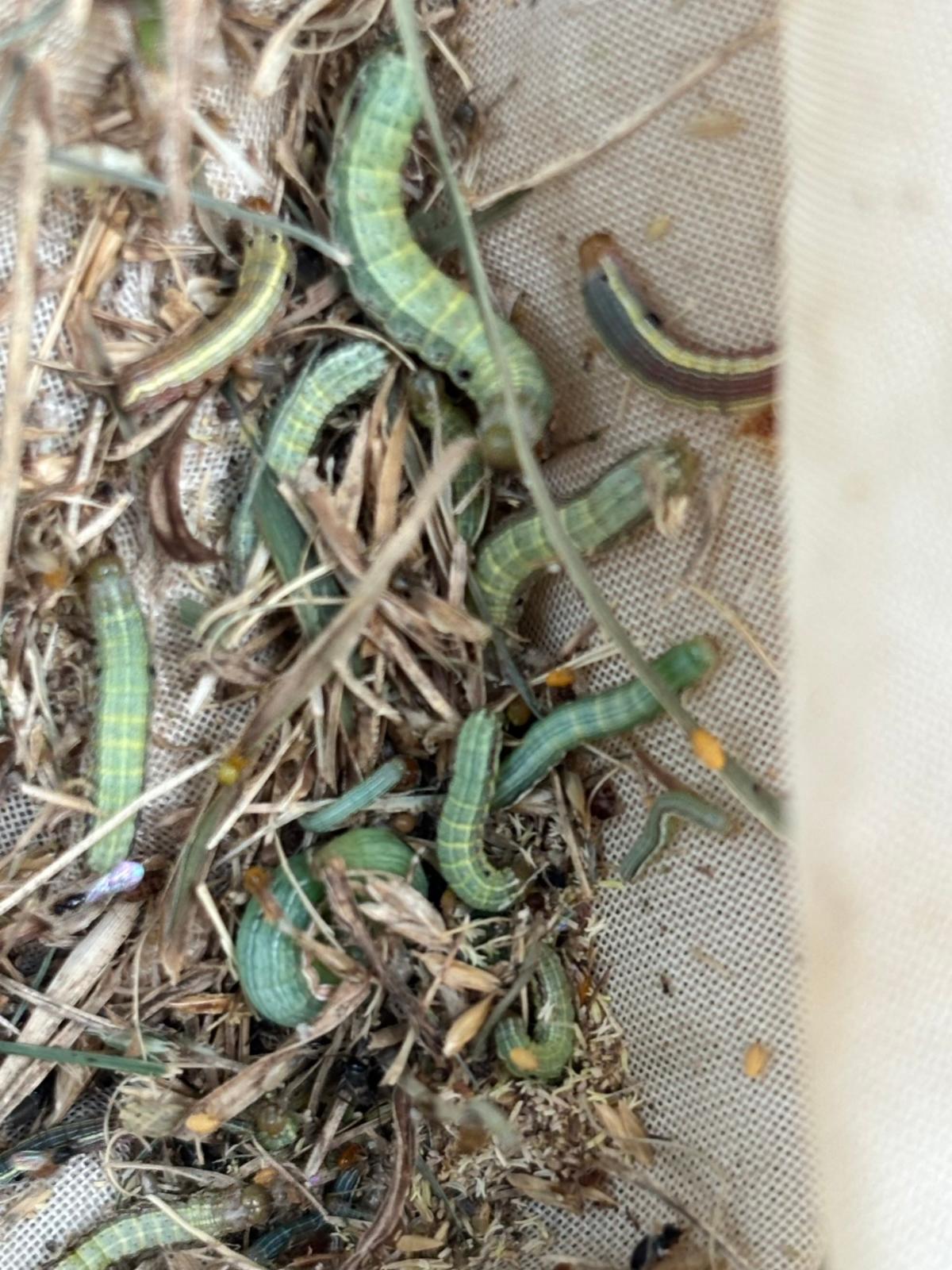
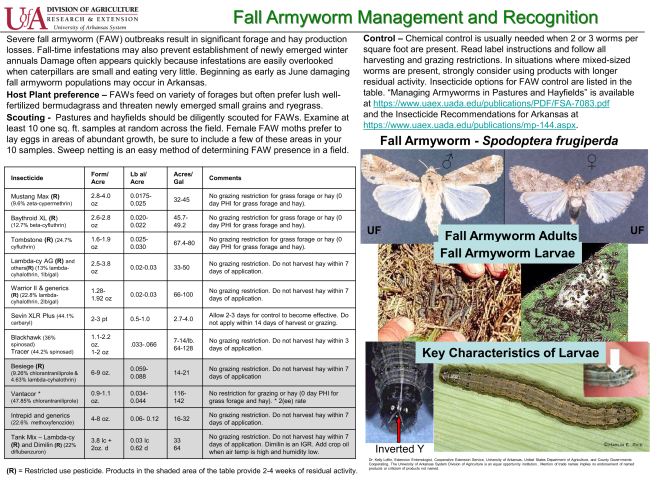
They are here! Armyworms have been found in the county. I found a population in the southwest part of the county earlier this week. The good part of this bad news is I didn't find just a ton of them. It seems like when we find them, they are in huge masses. When I did 10 sweeps I may have had 30 or so worms, but the population was of varying sizes. Maybe the numbers will continue to be low, but I would be scouting.
If you find them, you have some options.
In the case of this field, they were about to cut the hay. If it is time for harvest, I would lay it down and as the hay dries they will stop eating.
Another option that I think a few people may look at is don't do anything. If you have plenty of hay, it may be to the point that you just let them have it.
The third option is chemical control. I do not recommend Lambda Cy by itself anymore. I just don't think we get the control from that insecticide anymore by itself. I would add Dimilin to the Lambda Cy. That does a good job. The best control comes from a chlorantraniliprole insecticide like Vantacor. Besiege is a combination of chlorantraniliprole and Lambda Cy. This is a helpful mix if you are going after stem maggots also. These used to be expensive insecticides but there are several generics out there now.
| | |
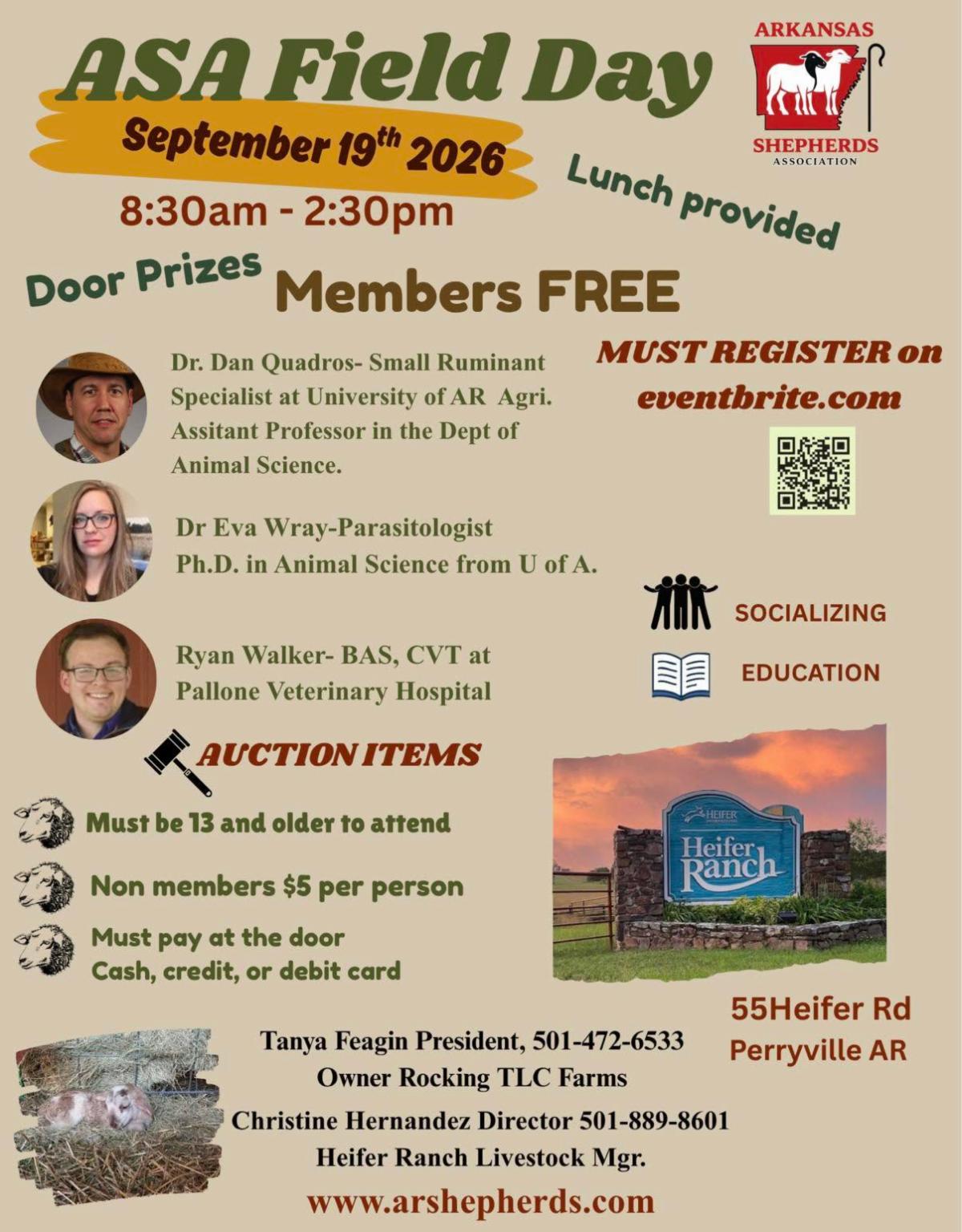
Arkansas Shepherds Association Field Day
ASA Field Day — Saturday, September 19, 2026
8:30am - 2:30pm
Heifer Ranch, 55 Heifer Road Perryville, AR
Join us for a full day of hands‑on learning, great speakers, door prizes, and silent auction items benefiting the Arkansas Shepherds Association.
Members attend FREE.
Non‑members: $5 per person, paid at the door.
Must be 13 and older to attend.
Everyone must register on Eventbrite to attend.
Topics include:
Nutrition
Hoof care and trimming
How to draw blood
How to give shots
Parasites
Signs/Symptoms
Identifying
Treatment
We’re excited to see producers from across Arkansas and surrounding states come together for education, community, and a great day at Heifer Ranch.
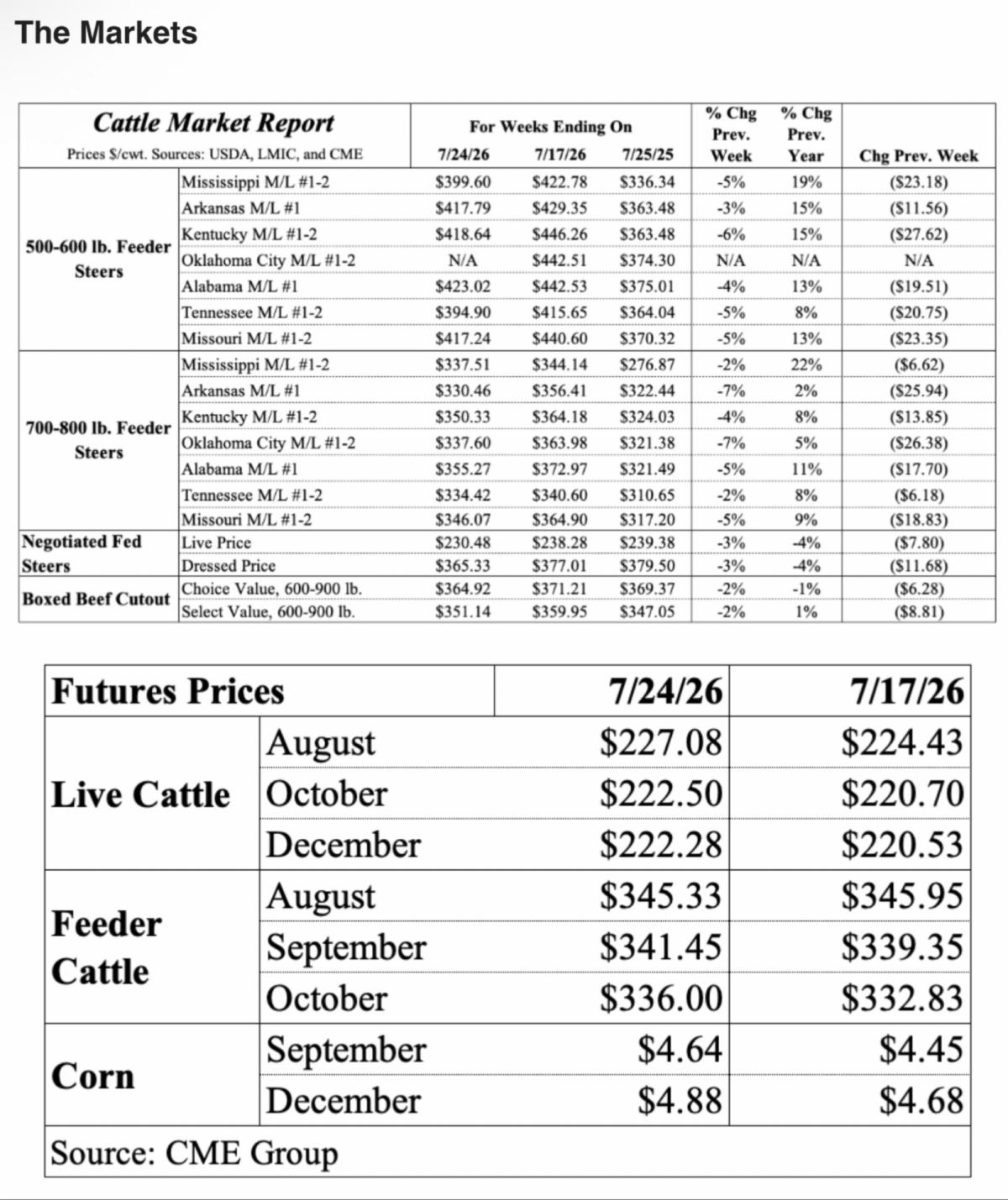
| | Here is this weeks Cattle Market Notes Weekly | | |
Pesticide Applicator Trainings
There will be no more in person Pesticide Applicator Trainings until this winter. If you need a license you can still do the training online. There is a link below for the online training and a link to check your license status.
| | |
Livestock Market Report
The following links are for the weekly livestock market report from the Arkansas Department of Agriculture website and the Livestock Auction Dashboard from USDA. Both sites have marketing data for all livestock sold at Arkansas Sale Barns.
| | |
2025 Faulkner County Agriculture Demonstration Summary
The 2025 Faulkner County Agriculture Demonstration Summary is now available at the link below.
The 2025 Faulkner County Demonstration Summary is a collection of on-site demonstration results conducted in Faulkner County by local County Agents. Demonstrations are the cornerstone of the University of Arkansas System Division of Agriculture Cooperative Extension Service’s mission which is:
“We strengthen agriculture, communities, and families by connecting trusted research to the adoption of best practices.”
On-site demonstrations allow producers and homeowners to see firsthand how Extension recommended varieties and best management practices work in their counties and surrounding area.
| | |
Sign up for Text Alerts
You can now sign up for text alerts from me throughout the year. I have two areas you can sign up for which includes Faulkner Livestock or Faulkner Ag (Row Crop Updates). To sign up you can follow one of these links or use the QR Codes below.
| | Pursuant to 7 CFR § 15.3, the University of Arkansas System Division of Agriculture offers all its Extension and Research programs and services (including employment) without regard to race, color, sex, national origin, religion, age, disability, marital or veteran status, genetic information, sexual preference, pregnancy or any other legally protected status, and is an equal opportunity institution. | | | | |