|
Oil consumption in modern engines explained:
- The importance of proper break-in
- Low tension piston rings
- Low Speed Pre-Ignition issues in GDI Engines
- AOS and its function
- Over-fueling from leaky or dirty fuel injectors
| |
Modern engines have come a long way from those early engines where it was not all that uncommon to have to top off the engine oil frequently. Through the use of modern materials and manufacturing techniques, critical tolerances within an internal combustion engine have become tighter, resulting in increased efficiency, performance, and longevity. Lubrication technology has also evolved significantly since the invention of ZDDP in the 1940s. | |
|
Many factors go into determining what is considered normal oil consumption for any given engine. Oil consumption will be the lowest after initial break-in once the piston rings have fully seated and will increase as the engine wears. How long an engine takes to break in can vary depending on ring material, cylinder bore type and preparation, and whether the piston rings are light tight (light tight describes how well the piston rings seal against the cylinder bores).
In normal operation, there will be some losses through the piston rings and valves. Engine oil exposed to high temperatures and combustion will result in vaporization of the engine oil. As a result, it is normal for oil to be consumed at a slow rate. Cylinder bore surface finishes as well as what piston rings are used contribute to this phenomenon. Older engines with cast iron cylinder bores that were honed rough compared to today’s standards were often paired with soft cast iron rings. Both the cylinder walls and piston ring faces would wear into each other, hence where the term breaking in an engine came from. Cylinder bores in modern engines are for the most part all plateau honed and use harder carbon steel piston rings, many of which use coatings like CrN (chromium nitride) to provide increased durability. This results in less wear during break-in but can also mean engines can take longer to break-in and can be more sensitive to tuning issues during initial run-in. Likewise using the wrong oil during this period can extend the amount of time it takes to seal up the piston rings or even prevent them from seating at all. That is why a break in oil is used and synthetics or any oils with friction modifiers should not be used during the break-in period.
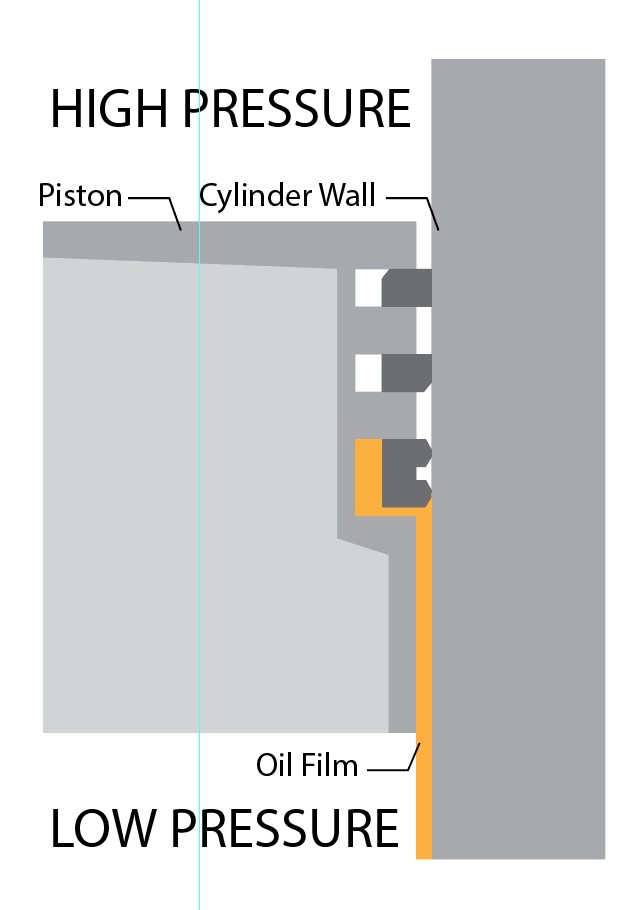
As the engine oil is often referred to as the gasket between the piston ring and the cylinder bore, what oil is used for break-in and afterwards is critical. We all know never to use a synthetic or semi-synthetic oil in a new engine, however using any engine oil with friction modifiers can also negatively affect the ability of the piston rings to break-in, resulting in poor ring seal and increased blow-by. Remember, we need there to be some wear between the rings and cylinder bores to allow everything to seal up properly during this period.
|  | |
|
Unlike older engines, most modern engines use low tension piston rings. It is easy to see why lower tension piston rings are so common now as approximately 20% of the mechanical losses within a piston engine are from piston ring friction against the cylinder wall. It is common for an engine with Nikasil cylinder bores to have piston rings with tensions lower than 10 lbs (as low as 3-4 lbs) where older engines with cast iron cylinder bores may have had ring tensions well over 20 lbs. Lower tension rings reduce frictional losses within the engine, but can lead to increased oil consumption. So the lower the ring tension, the higher the horsepower, but with this also comes higher oil consumption. Oil can and does find its way past the piston rings and into the combustion chamber in normal operation where it is consumed by the engine. In gasoline engines with direct fuel injection and forced induction, a phenomenon called LSPI, or low speed pre-ignition, can be caused if the wrong engine oil when oil enters the combustion chamber.
| |
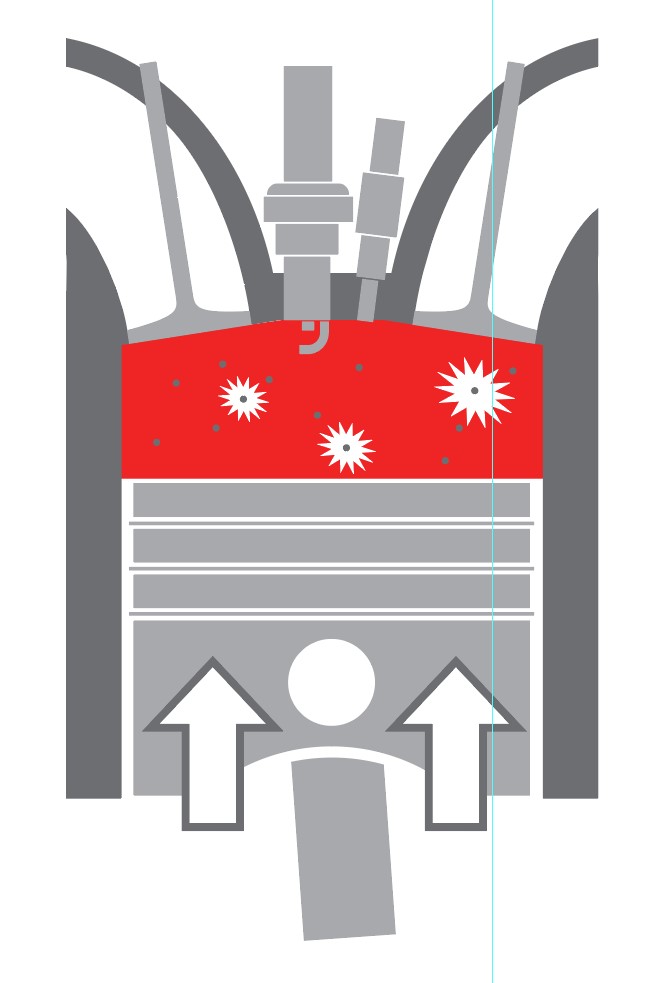
Low Speed Pre-Ignition - air-fuel mixture ignites early, before the spark plug fires as the piston is moving up. This occurs at low speeds under high loads. | |
|
Where permissible, thicker oils, especially those with higher HTHS (high temperature high sheer) viscosities will outperform thinner oils, but sacrifice fuel economy in the process. HTHS occurs in contact areas, such as the ring/liner interface, so that’s why the choice of lubricant is so important. Pistons manufactured with split oil returns or increased oil drain back holes can assist with reducing consumption, as does using an oil with a higher flashpoint. A higher flashpoint means that oil better resists vaporization. Synthetic oils also tend to have lower volatility than conventional oils. Furthermore, engines susceptible to LSPI have to use engine oils that have been formulated to reduce calcium and eliminate sodium detergents. In the case of Porsche, the C40 specification addresses LSPI concerns.
Manufacturers are also now using thinner and thinner engine oils to further improve efficiency to increase fuel economy to aide in meeting ever more stringent CAFE requirements. For example, switching from a 15w40 to a 5w30 can amount to a fuel savings of up to 1.5%. This however requires both changes to engines as well as to the lubricants used to ensure the longevity and durability of the engine is not compromised in the name of increased efficiency. Porsche now uses thinner C20 and C30 oils in their Cayenne, Panamera, and Macan models to reduce fuel consumption where their newest sports car models use the aforementioned C40 oil.
In the past, worn valve guides, valve guide seals, or piston rings were often the source of increased oil consumption, but an engine’s PVC system can also have an effect on oil consumption. In the case of a modern Porsche engine, the air oil separator, also referred to as the AOS, applies a vacuum to the crankcase which helps to improve the performance of the low tension piston rings used in modern Porsche engines. The AOS by design helps to separate the oil from the crankcase windage, however 100% of the oil is not removed, resulting in some oil making its way into the intake, which is then burned by the engine. A weak or defective AOS can result in significant oil intrusion into the intake that can even cause severe engine damage (i.e. hydrolock).
| |
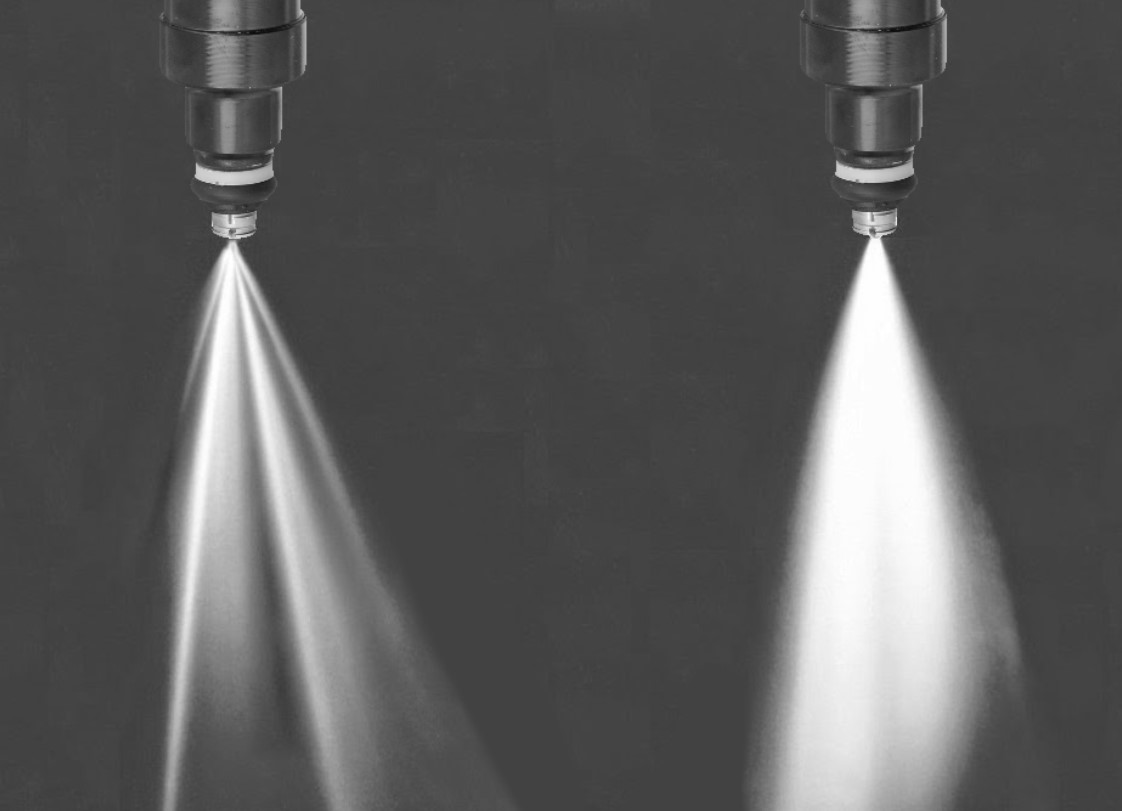
Over-fueling can also have a negative effect on ring seal, especially during the break-in period. Remember - fuel is not a lubricant, so if you are delivering too much fuel into the engine or that fuel isn’t atomizing properly, it will wash away the oil from critical surfaces, causing increased wear as the piston rings and cylinder bore are no longer separated by the required oil film. Leaky or dirty fuel injectors often contribute to this issue, requiring regular use of fuel additives with PEA (polyetheramine) to keep injectors operating properly. In the case of leaky injectors, replacement is the only option to correct this issue. Regardless of the cause, fuel diluted engine oil furthermore has a lower viscosity and flashpoint, making it more likely to be consumed. Degraded oil leads to increased wear. The oil from engines with high oil consumption can become laden with soot, which can cause timing chain stretching and cylinder bore polishing. | |
Fuel Injectors: Bad (clogged) vs good (clean) | |
|
It is common for engines with Nikasil cylinder bores to consume a quart of oil every 1000 miles, where other engines may consume less. According to Porsche, the upper limit for oil consumption for their sports car models is 1.6 quarts per 625mi, however most engines evaluated by Porsche for high oil consumption actually consume less than half a quart per 625 miles. Over-filling the engine oil tends to be the number one cause for increased oil consumption. Porsche did revise oil fill quantities and even changed dipsticks and reprogrammed vehicles to lower the total amount of oil fill for some Porsche Boxster, Cayman, and 911 models as a direct result of reports of high oil consumption and smoking. That is why it is very important to set your Porsche’s oil level correctly.
There are also several other factors that can contribute to consumption. It is worth noting that amount of oil consumption can vary on what fuel is used, specifically winter versus summer blends that even vary by region. The ester content in engine oils can also lead to increased oil consumption in some engines, especially in conjunction with the use of ethanol enriched fuels. How the vehicle is driven and maintained can also have an effect on consumption. High RPM use tends to lead to increased oil consumption, as does elevated engine temperatures, like one would expect to see on track. Lastly, oil consumption is directly tied to fuel consumption; Kolbenschmidt (an OEM supplier to Porsche and many other European automakers) states maximum oil consumption by volume can be up to 0.5% of fuel consumed by an engine, which falls within the typical one quart per 1000 miles most Porsche engines consume during normal operation.
The takeaway from all this is that using the right oil at the right time is critical. Fuel dilution reduces any lubricant’s performance, so more frequent oil changes using a quality oil is a must. This is especially important on engines with direct fuel injection that are prone to high levels of fuel dilution. Lastly, ensuring the fuel and PCV systems are in tip-top shape will ensure improved performance, durability, and longevity for any engine.
| |
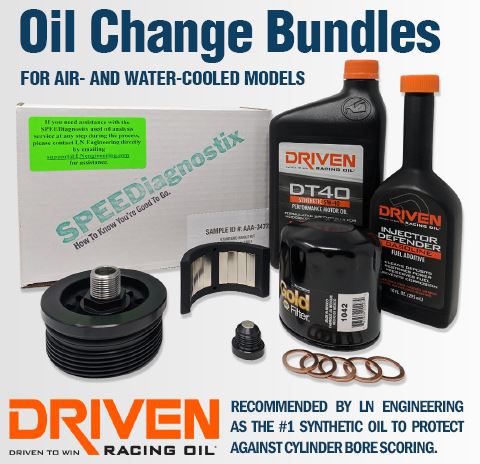
Save Money and Time with our Oil Change Bundles | |
Need help troubleshooting your Porsche engine’s PCV (AOS) or fuel system? Check out Porsche Engine Diagnostics Video Series with Tony Callas. | |
|
|
Tony Callas is the owner and CEO of Callas Rennsport in Torrance, California. He is also the Technical Director for The Porsche Club of America. Callas Rennsport, in addition to service work, restores classic collector cars including vintage Porsche 911s, 914s, and 356s, and is one of two premier shops in the country that service Porsche 959s. | | | | | | |