|
Happy New Year! 2026 will be a fantastic year.
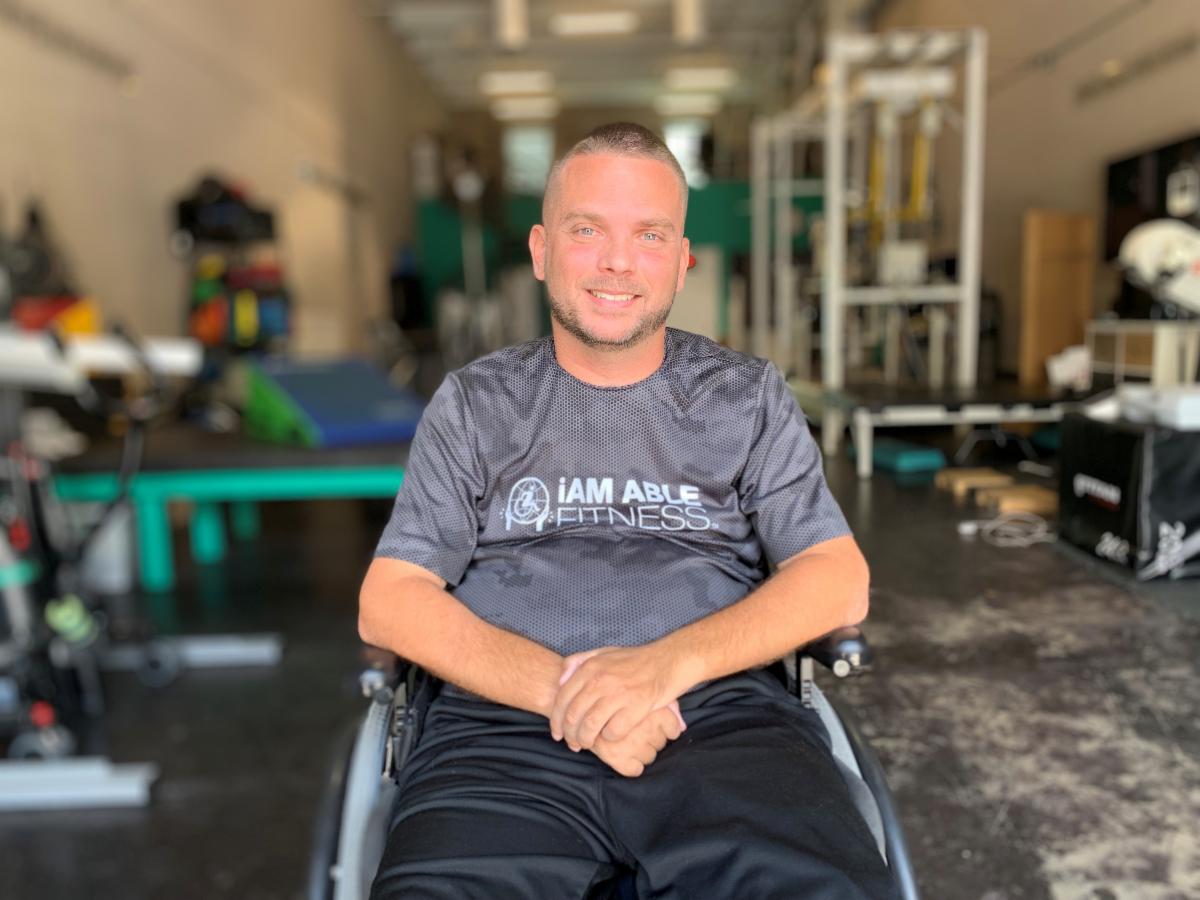
This month, we’re honored to feature a guest author, Alfredo Iglesias, co-founder of iAm Able Fitness. One of the most powerful statements Alfredo shares really stayed with me:
“One of the most common misconceptions I see is the idea that life begins after independence is achieved. People say, ‘I’ll do that when I can walk again.’ But life doesn’t wait, and neither should joy.”
I couldn’t agree more. We can’t wait for perfection to start living our lives. Joy, connection, and meaning are found in the moments we have right now. When we pause life waiting for “someday,” we risk missing the special moments that are happening today.
As we move through 2026, each month we’ll also be talking about voting and advocacy, what it means, why it matters, and what everyone can do to be informed, involved, and ready to vote. This month, we’re starting with the basics: who is eligible to vote and how to check if you’re registered. I’ll share helpful links so you can easily check your voting status and take that first step.
Thank you for being part of our community.
| | |
Alfredo Iglesias is a spinal cord injury survivor, who is the co-founder and president of iAM Able Fitness, a Miami-based nonprofit organization focused on helping individuals with spinal cord injuries (SCI) and paralysis through therapy, exercise, mentoring, and community support.
There were two moments early in my recovery that made something painfully clear: the system I was placed in was not designed for my potential.
In one setting, I attended traditional therapy sessions that were triple booked. A one-hour appointment meant roughly twenty minutes of direct attention. The rest of the time, I waited. Watched. Repeated movements without guidance. The intensity simply wasn’t enough – not for recovery, and certainly not for rebuilding a life.
In another session, I was told that certain technologies and treatments – approaches that could meaningfully stimulate neurological recovery – were not available to me. Not because they didn’t exist, but because insurance wouldn’t cover them.
In those moments, I didn’t just feel frustrated.
I felt alone.
And I felt like the opposite of empowered.
I began to understand that I wasn’t being treated as a person with possibility – I was being managed as a case, a number, a dollar amount.
When Support Comes – and When it Doesn’t
My family carried me through those early days. Their belief in me never wavered, even when the system around us did. What hurt the most wasn’t the injury itself – it was realizing that my recovery wasn’t truly the priority. The system seemed structured to sustain careers and workflows, not to partner with me in my healing.
Recovery felt transactional.
And deeply impersonal.
What I wished then – and what I wish now for anyone newly navigating disability – is that someone with lived experience had told me this:
Your life does not begin again after recovery. It continues now.
READ MORE HERE
| | |
From Miami to Los Angeles: Noticing Accessibility in a
New Place
By: Celeste Mazloum
| |
Hi everyone! It’s so great to be back talking to my DIG family.
As many of you know, back in August, I moved to Los Angeles, California to attend the University of California, Los Angeles (UCLA) after spending my whole life being born and raised in Miami, Florida. Along with this move came plenty of culture shocks. I noticed the popularity of breakfast burritos, beaches with views of mountains, cliffside roads with breathtaking views, but most notably the advancements in disability accommodations in California, as opposed to Florida.
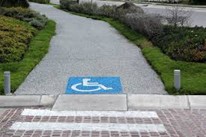
I first noticed physical environmental differences. Truthfully, both Florida and California are too large and widespan to be “walkable”, especially for people with mobility needs. However, both have neighborhoods like Miami Beach or Beverly Hills that could make for sightseeing. The difference is that in California, neighborhoods like Beverly Hills have wide sidewalks, clear curb cuts, and accessible paths that make getting around manageable, something I rarely noticed in Florida.
In California, sidewalks are consistently wide, usually around five feet. Almost every sidewalk has a clear curb cut, or ramp to support physically disabled individuals crossing the street. Additionally, most curb ramps are textured, and cross walks have audible signals for visually impaired individuals.
READ MORE HERE
| | |
Voting has always been important to me. I remember participating in a mock presidential election in elementary school. It had a tremendous impact on me, and I have followed elections ever since. As soon as I was 18 years old and able to vote, I did. I love the election process, and I have always been fascinated by campaigns and the different ways that people can vote. I have been involved in the election process in many different ways, from voting to helping on campaigns to being a poll worker to participating in voting advocacy to training people on the power of the disability vote.
At DIG, voting has always been a priority for us. Over the years, our organization has participated in litigation and done advocacy and education on voting rights and the importance of voting. Last year, we created a series of blog posts titled "Taking Action: How You Can Make a Difference." In this series, we discussed how to find your elected officials, contact them, check your voting status, and stay informed about the issues.
This year, we are having the mid-term elections. These are the elections that happen halfway through a presidential term. I believe these elections will be very important, so we will write about voting every month until the elections. Throughout the year, we will share information and resources. We will discuss issues important to people with disabilities and go over the different ways they can vote.
READ MORE HERE
| | |
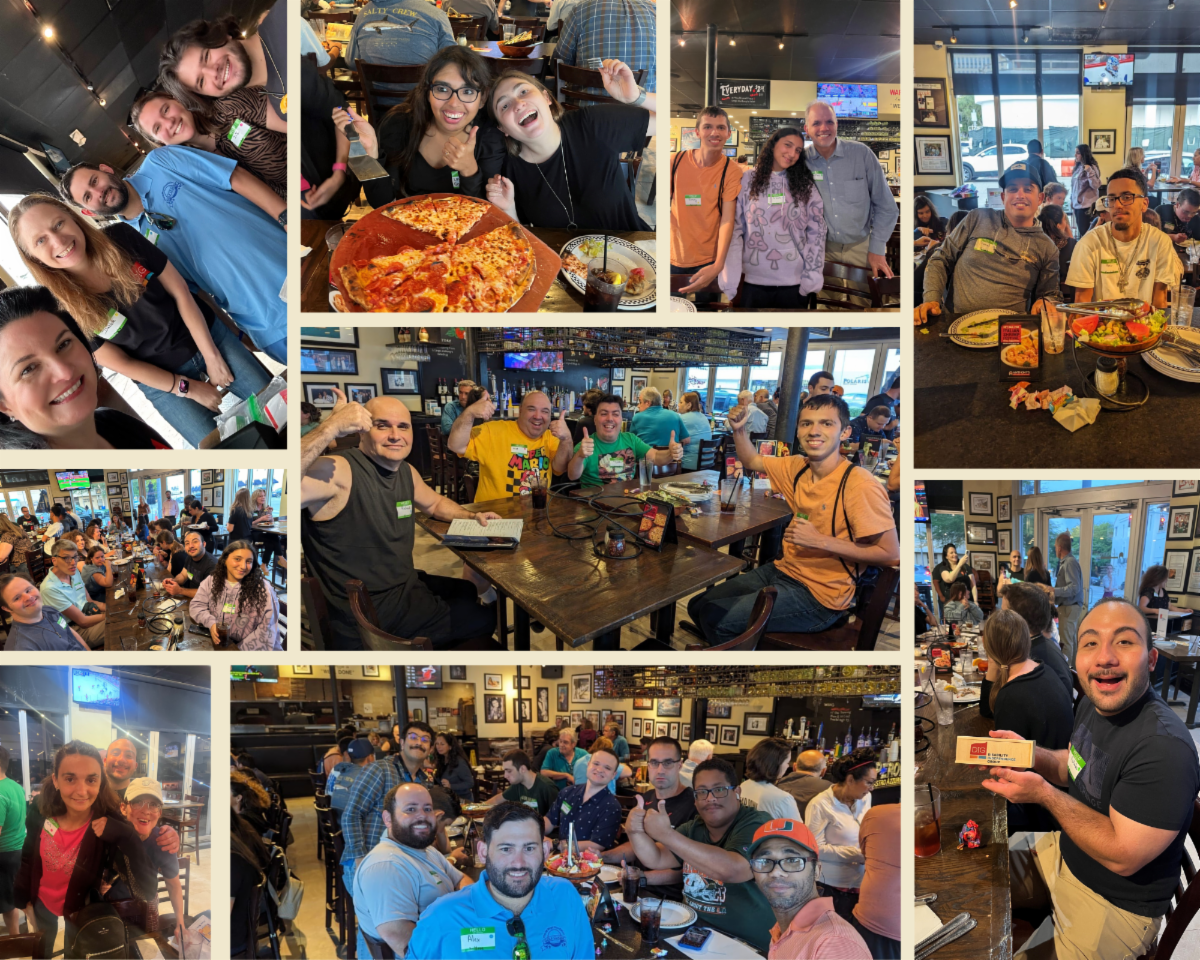
DIG envisioned the Supper Social Club in the summer of 2017 to bring people in the disability community together. Our goal was simple but powerful: to create a welcoming space where people with intellectual and developmental disabilities and autism could go out to dinner, socialize, and enjoy being part of a community without feeling judged.
I worked with our summer interns to design the project from the ground up. Together, we created a logo, discussed which restaurant concept would work best, and ultimately selected California Pizza Kitchen. Matt and I visited the restaurant in advance, met with the manager, and shared our vision. The excitement and support we received made it clear we were onto something special.
Our first Supper Social Club event took place in February 2018. We were a small but mighty group, gathered around a few tables in the back of the restaurant. Many of the young adults who attended were shy and unsure at first; some barely spoke, some kept to themselves, and some needed encouragement just to walk through the door.
What happened over time was truly incredible.
As we continued to meet, we watched people come out of their shells. Those same young adults who were once quiet began starting conversations, forming friendships, and looking forward to each event. Confidence grew. Laughter came easier. The Supper Social Club became more than dinner; it became a place of belonging.
READ MORE HERE
| |
THE NEXT CHAPTER
“Sitting Pretty”
Aided with the permission of HarperCollins Publishers and support from author, Rebekah Taussig, What if Works has the opportunity to develop THE NEXT CHAPTER: “Sitting Pretty” as its inaugural production, creating a platform upon which to introduce authors of major works through a heightened, multimedia theatre experience using literary works that contain “stand alone” chapters.
Rebekah Taussig’s acclaimed memoir represents such a work. The staging will consist of Chapter 1: “What’s the Problem?”, Chapter 3: “More than a Defect” and Chapter 9: “Feminist Pool Party” concluding with the book’s Postscript videotaped by Rebekah Taussig herself. The three chapters will be dramatized, verbatim, word-for-word, each chapter offering its own distinct context.
The three chapters will be delivered fully memorized by three performers with disabilities accompanied by two actors providing supporting characters.
THE NEXT CHAPTER: “Sitting Pretty” is scheduled to open April 2026.
AUDITIONS
What if Works is currently seeking three female actors with disabilities who are also reliant on wheelchair mobility. Actors must be local to the South Florida area.
Compensation: While What if Works is a community-engaged, non-Equity organization, each actor will be compensated with a $1,000 fee.
Rehearsals: March 2025 – 3 weeks.
Production: First two weeks of April, 5 performances. Dates TBA
For anyone interested in knowing more about this project, please contact Phillip M Church at 305-586-3919.
For more information about What if Works, go to www.whatifworks.com
| | |
Ticket to Work and WIPA - What Does That Mean?
By: Lesly Quintanilla Lopez
Many working aged individuals with disabilities (ages 18-64) are not working. The reasons vary, but for some it’s a fear of “If I start working, will my benefits be taken away from me?” The truth is: No. People with disabilities can work without losing their financial security or health care benefits. There are many programs available that make it possible to still collect benefits while working. Here is a brief overview of a few programs available.
Ticket to Work
Ticket to Work is a program that assists individuals, ages 18 to 64, currently receiving Social Security disability benefits who want to work. Through Ticket to Work, people can receive assistance with finding employment, getting job training, and receiving other support services.
Through the Ticket to Work program, individuals are referred to an Employment Network or Vocational Rehabilitation agency, which are agencies that will accept the “ticket” and assist the person with the job search and training.
READ MORE HERE
| | |
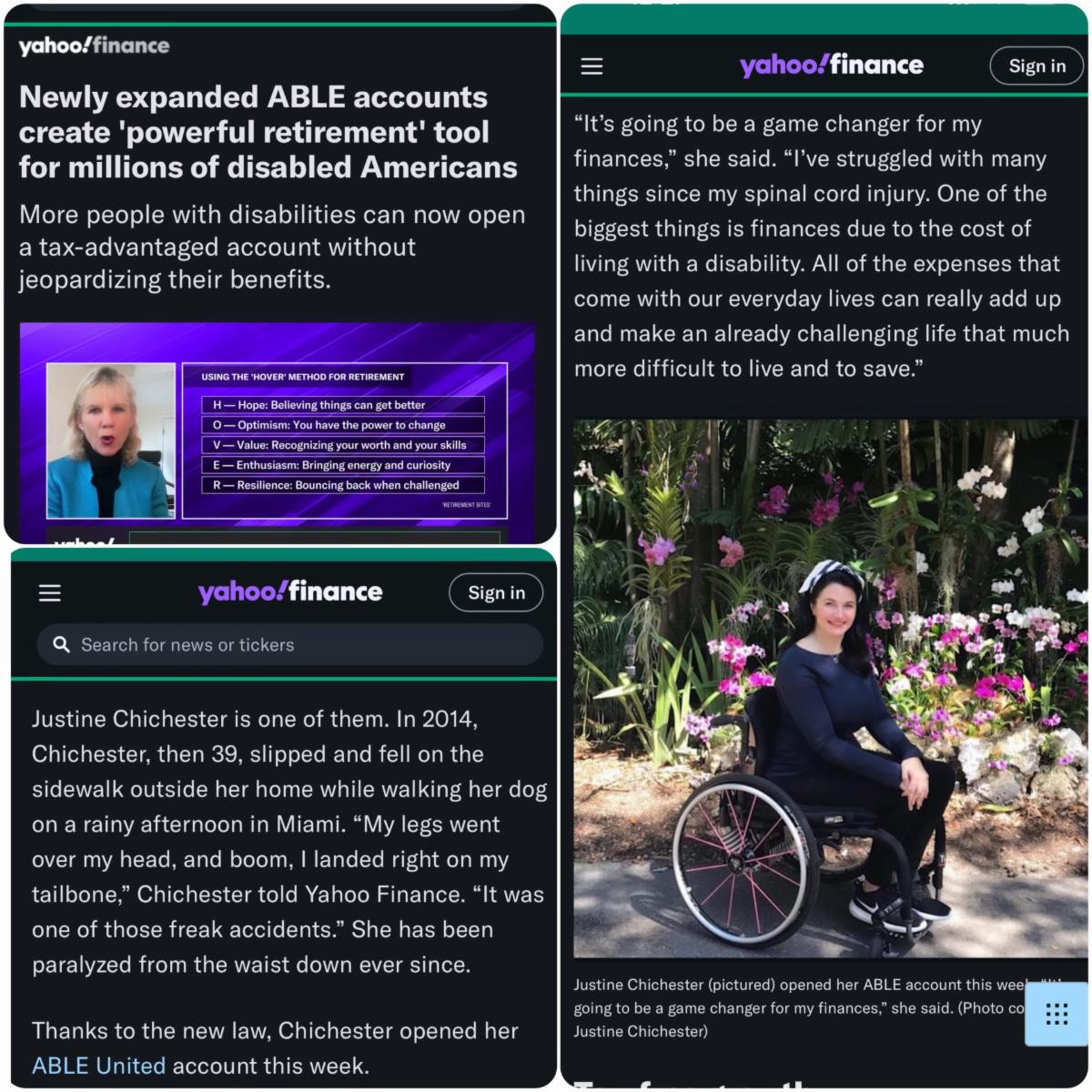
ABLE United and Disability Independence Group were featured in a Yahoo Finance article, discussing the Age Adjustment Act, which went into effect January 1, 2026.
Be sure to check out the entire article HERE!
| |
| | |
Be Sure to Check out Our DIG Blog
for Much More
Important Information and Resources!
| | | | |
Do you have suggestions for future content or articles for our monthly newsletter?
If so, email your ideas and suggestions to our newsletter editor,
Justine Chichester.
| | Follow DIG on Social Media | | | | |