|
The Structural System
Over the next 7 weeks of articles, I will be reviewing the seven systems in your body, what they do, how they work, and most importantly, how to fix them if they are broken. Dr. Pat Luse created the 7 Systems Program. He has successfully used the program to help patients in his practice reverse their health status and has been doing so over the last three decades. I hope you will join me on this seven-week journey to understand better these critical systems that run our bodies.
The structural system consists of muscle, fat, and bone. When these things falter or are not in balance, we start to fall apart like any structure. If you look at a building, you can visibly tell that a building may be in the process of structurally failing. The same can be true of a person’s body. However, in today’s world, the perception of what is healthy may be a little warped.
In last week’s article, I mentioned the obesity epidemic going on in our country. If we look back to 50 years ago, the incidence of obesity in 1970 was around 15%, while the most recent data shows a 42% incidence today. Have we just evolved as a society and accepted that as the new normal? What are we doing to change this trend? It took 50 years to get where we are today, so it is a given that it will take some time to reverse.
Some startling facts:
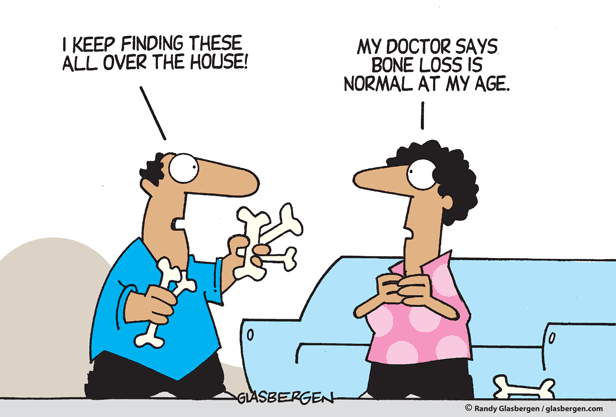
• It is estimated that half of all Americans over 50 are at risk for bone problems. Worldwide, loss of bone density causes an osteoporotic fracture every three seconds.
• Without intervention, you can lose seven pounds of muscle per decade. Muscle loss with aging is the most important indicator of health as you get older.
• The more you overstuff your fat cells, the more they will sabotage your health. One in five death is related to obesity.
Signs that your structural system needs some attention include; weight gain, loss of height, back and neck pain, memory loss, waist larger than hips, osteoporosis, avoiding dairy products, eating more meat than vegetables, and muscle or strength loss.
If you feel like your structural system might be out of whack, the following tests can be used to access and monitor that system:
• Bio-Impedance Analysis or BIA
• Fasting Insulin
• Waist to Hip Ratio
• Waist Measurement
• DEXA Bone Scan
• Vitamin D3 Level
Bones are the infrastructure that gives us our frame. Without bones, we would be a pile of muscle, fat, and tissue, not a pretty sight. Most of us will go through our early adult life with little thought into what is going on with our bones because they, for most, are solid. The main things to consider concerning this structural system are micro-and macro-nutrients, vitamins, and minerals. Making sure you have the necessary nutrients to aid the absorption of calcium and magnesium into your bones.
Hormones play a critical role in forming and maintaining our bones; this is true especially for women. The three primary sex hormones each have a part; progesterone builds bone, testosterone strengthens bone, and estrogens prevent the breakdown of bone. Studies show that women lose about 5% of bone per year in the first five years post-menopause due to a loss of estrogen.
Weight-bearing exercise is critical to improving bone strength. Cardio should not be neglected, but incorporating some resistance training should be a part of everyone’s workout regimen.
Muscles are the second component of the structural system. Having strong muscles makes your life easier because you have the strength necessary for lifting, increased mobility, and the ability to maintain your balance. Once again, resistance training will build muscle. The macronutrient most important for building and maintaining muscle is going to be protein. The general rule of thumb for protein consumption is ½ your body weight in grams of protein daily. You can consume more protein if you want to put more muscle on, but if you are not doing that, the protein can be broken down and converted into fat. It is vital to monitor your protein intake.
Fat is the structural component that we want to have in limited amounts; this is the direct opposite of muscle. There are many reasons that a person may have excess fat; high-calorie intake, low-calorie burning, low basal metabolic rate, hormones not in balance, and stress are a few reasons.
Angry fat, also known as adipose fat, is the fat that surrounds our organs. This type of fat is the worst kind as it causes inflammation and leads to obesity. Fat is the by-product of elevated insulin, which drives glucose into fat cells. How do we stop this increase of insulin and get rid of our fat stores? Decreasing our calorie intake, increase the burning of calories with exercise, and fast mimicking diets are a few ways to make it happen.
Here is a list of things to fix your Structural System:
• Test the above to see where you are at
• Determine your ideal body weight
• Determine your calorie burn per day
• Know your calorie intake and get good at restricting them
• Try time-restricted eating or intermittent fasting
• Get to your ideal body weight
• Gain muscle by exercising, lifting weights, and consuming adequate protein
• Maintain good bone density
• Take care of your support system
I hope that this gave you some insight into the importance of the Structural System, what to look for if you have a faulty structure, and some ways to improve that structure. The next system I will cover is the Digestive System.
Stop by or call (701-483-4858) the pharmacy if you want more information on the 7 Systems Plan to regain your health. Please visit my website at www.irsfeldpharmacy.com to find this and other archived articles in the blog section. Until
|