Green, Yellow, and White Teas
This month, we're going to discuss the orthodox-produced green, yellow, and white teas, how they are classified, and their typical characteristics. These three teas are being discussed together because, even though they are different teas, they are similar in that they are all categorized as unoxidized teas. This means that each of these teas does not undergo a formal oxidation step. The similarities, however, end with the lack of an oxidation step and each of these teas continues to undergo different processing steps that yield their distinct characteristics in the final product.
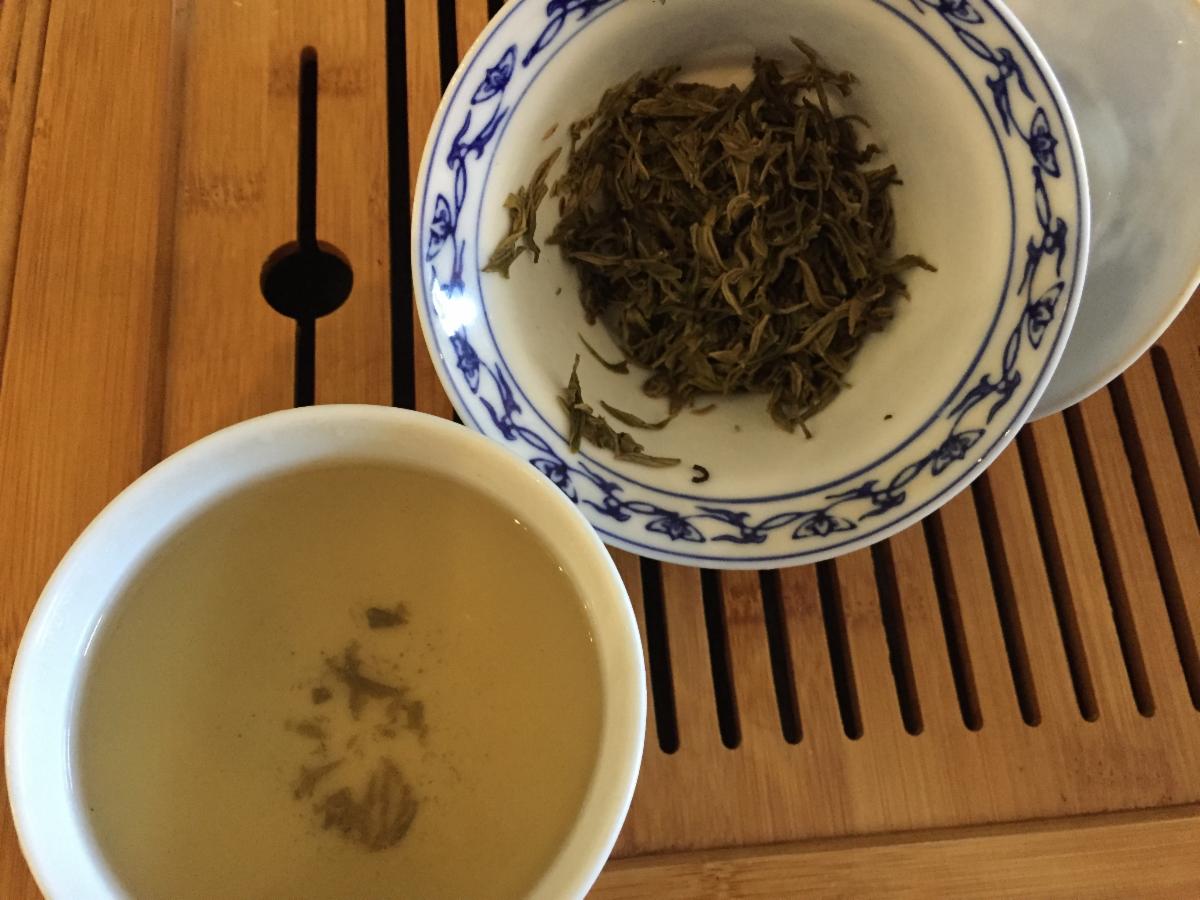
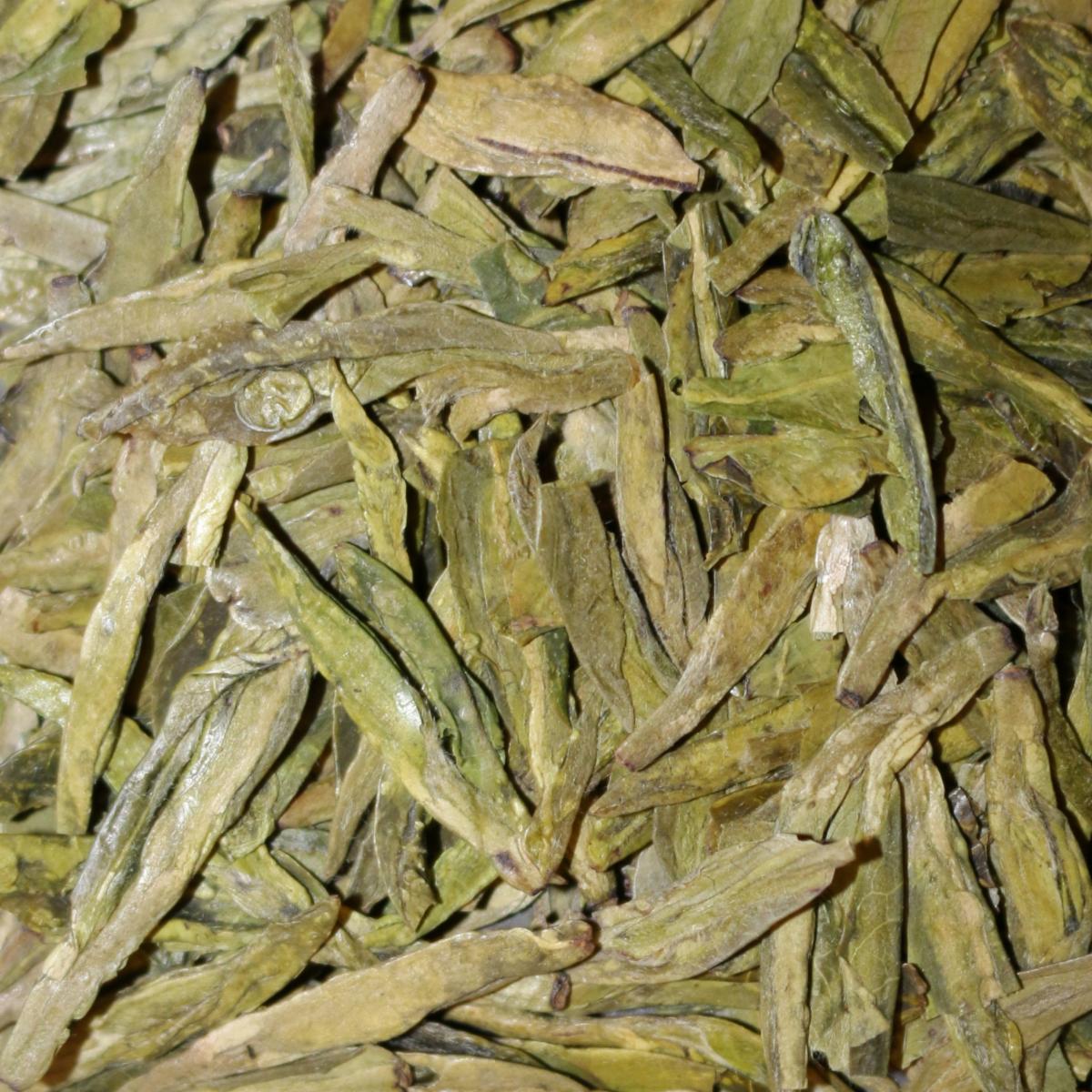
Green tea is the second-most produced and consumed tea around the world, following black tea at a distant ten percent of total production. Even though green tea is classified as unoxidized, it undergoes a step such as steaming or pan-firing that stops any natural oxidation from taking place. The leaves to be harvested depend on the style of tea that the tea maker will craft. Leaf pluck for green teas usually includes two-leaves-and-a-bud or one-leaf-and-a-bud, but occasionally, buds only will be harvested or three-leaves-and-a-bud for teas that will be crafted into a ball, or rolled, leaf style. Leaf styles may include open leaf, twisted leaf, or ball/rolled leaf. The typical characteristics in a green tea tend to be light color and body, and mild fresh taste; however, you will notice that the aroma and taste characteristics will differ from tea to tea. We offer about fifty origin green teas from five continents, seventeen countries, and several tea-producing regions within these countries - some of which are pretty rare.
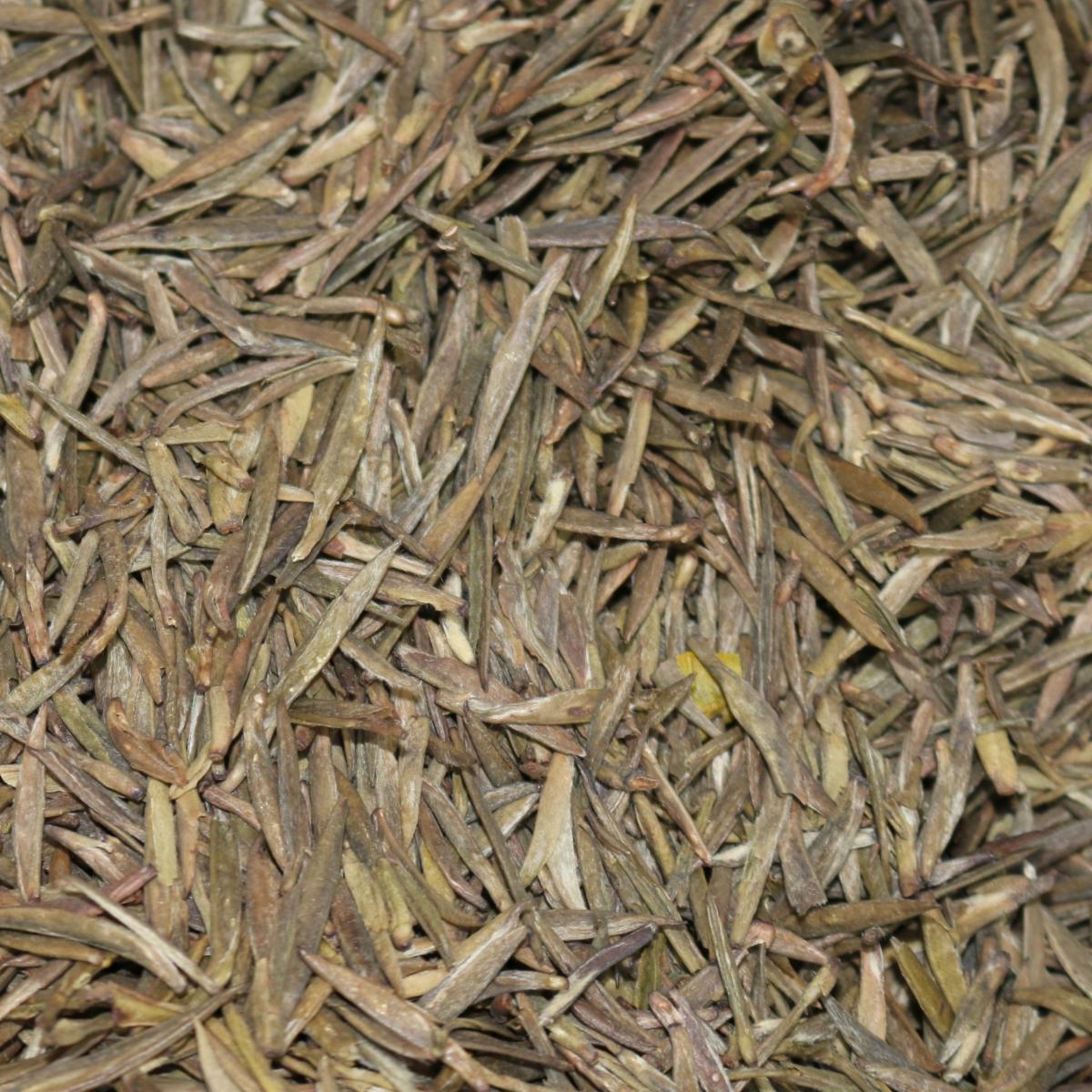
Yellow teas are unique and very labor intensive, hence the reason for their rarity, at less than one percent of total tea production. Many tea purveyors classify them as green tea; however, they are truly a distinct type of tea that undergoes a distinguishing processing step called Men Huang (Sealing Yellow). Yellow teas are usually crafted from the pure bud pluck or a bud and one leaf. After withering, the leaves go through a slight and slow steaming to stop/slow oxidation and warm the leaves in preparation for them to undergo an as-yet-to-be-identified chemical process, the Men Huang step. During men huang, the leaves are piled and wrapped up in a basket with damp cloth or spread out and covered with damp cloth and allowed to rest from 4 to 72 hours. There is debate as to whether or not the leaves undergo slight oxidation. The men huang process yellows the leaves and yields an infusion with a mellow taste and aroma that lacks the astringency, and minimizes the vegetal and grassy characteristics of green tea. Yellow teas are predominantly produced in China and they are usually named after the mountain that is located near where they are produced. We offer two Chinese yellow teas in our menu.
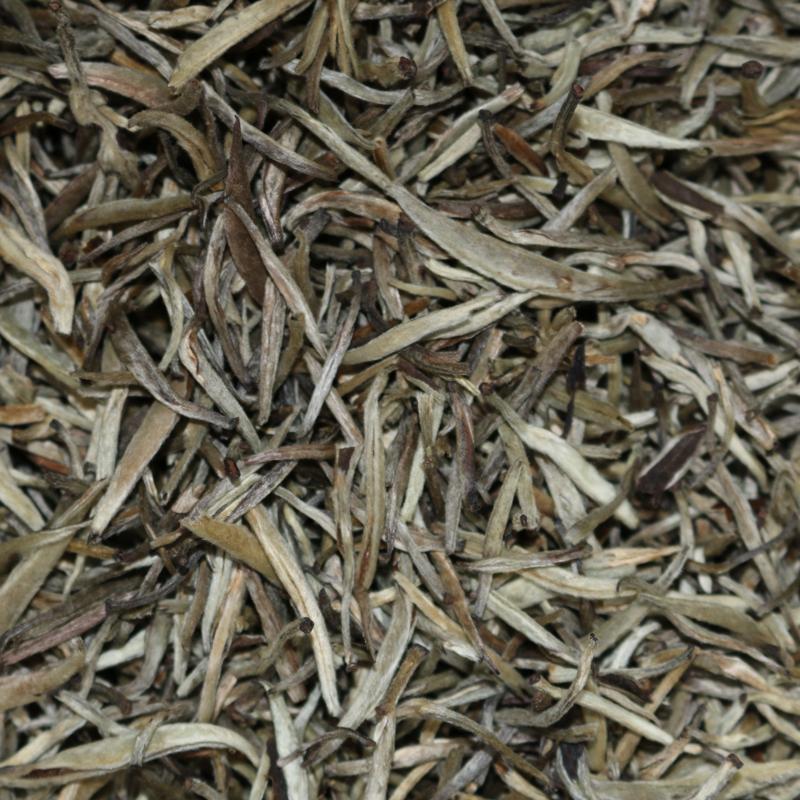
There is much debate within the tea industry about how to classify white teas, so what I am presenting here is my understanding, and the main viewpoint, of white tea based solely on how the leaves are processed. Others may classify white teas solely based on where they originate, time of year they are harvested, specific pluck (bud only), cultivar of the tea plant, etc. My opinion is that we do not utilize these variables in our classification of the other types of tea, so we should not use them for white teas, in order to ensure consistency. White tea production is probably somewhere around two to three percent and this tea generally undergoes the fewest processing steps. The leaves and/or buds are plucked, withered, dried, and packed. White tea is commonly found as pure tea buds, known as Silver Needle, and styles that include leaves are usually dried in a natural style. White tea leaves are sometimes worked by rolling or twisting, but this is not the common leaf style. Unlike green and yellow teas, white teas do not undergo a step to halt oxidation and they may have varying levels of natural oxidation that occur on the leaves as they dry. As a result, they are a rather complex type, especially if there are leaves with varying levels of oxidation that can imbue a richness, depth and complexity in aroma and taste. White teas that originate from the homeland of white tea production, Fuding County in the Fujian Province of China, are crafted mainly from the Da Hao or Da Bai cultivars. They may be graded according to the following, ranging from the most tippy (highest) to the most coarse (lowest), yielding characteristics that generally range from the mildest to the least mild/stronger:
1st grade - Yin Zhen (Silver Needle) - pure bud pluck
2nd grade - Bai Mu Dan - bud & one or two leaves pluck, mostly intact or some broken leaves due to their delicate nature
3rd grade - Gong Mei - bud & two or three leaves pluck, more broken leaves
4th grade - Shou Mei - bud & three or four leaves pluck, very broken leaves
We offer more than twenty origin white teas from three continents and eleven countries.
Typical Production Steps (Green Teas)
Pluck -> Withering -> Pan-Firing/Steaming -> Shaping -> 2nd Pan-Firing -> Drying -> Sorting -> Packing
Typical Production Steps (Japanese Green Teas)
Pluck -> Steaming -> Shaping -> Drying -> Storage -> Firing -> Sorting -> Blending -> Packing
Typical Production Steps (Yellow Teas)
Plucking -> Withering -> Steaming -> Men Huang -> Drying -> Packing
Typical Production Steps (White Teas)
Plucking -> Withering -> Drying -> Packing
The preparation of these teas requires water that is cooler than that used to prepare black tea. These are very delicate teas and the ideal water temperature is around 175 degrees. Certain styles of white tea, however, require a hotter water temperature to bring out their full character, but generally not above 195 degrees. White and yellow teas can be steeped for two to three minutes, but green tea requires a much shorter steep time between one to one-and-a-half minutes. All can be infused multiple times.
Feel free to visit the shop or our online shop to journey through and explore all the countries that produce these fabulous teas - China, India, Sri Lanka, Japan, Taiwan, Vietnam, South Korea, Thailand, Nepal, Indonesia, Georgia (the country in Asia), Kenya, Malawi, Rwanda, Tanzania, Australia, Columbia, and the US. Let us know how your journey goes! :)