News and information to help journalists serve the public and stay safe.
|
|
The conversation will describe how to consistently collect and select compelling details that evoke emotion and help convey the impact of coronavirus on people’s lives. Learn to identify the moments that compel readers toward a story’s purpose, and hear how to connect the reporting & writing process with our collective ability to understand what this pandemic means.
|
|
In a first in Supreme Court coverage, The New York Times this week deployed ten reporters to listen in and
provide live, running commentary
of a rare moment in the history of the judiciary.
The Supreme Court on Tuesday heard arguments on whether the House of Representatives and the Manhattan district attorney can subpoena President’s Trump’s tax and financial records — a case that tests the limits of executive power. Amid COVID-19 strictures, the debate was conducted by phone, giving the public an extraordinary, real-time entry into the justices’ domain.
The Times reporters offered a fascinating give-and-take that not only dissected an historic occasion but illustrated the Times effort to test new ways of reaching its audience.
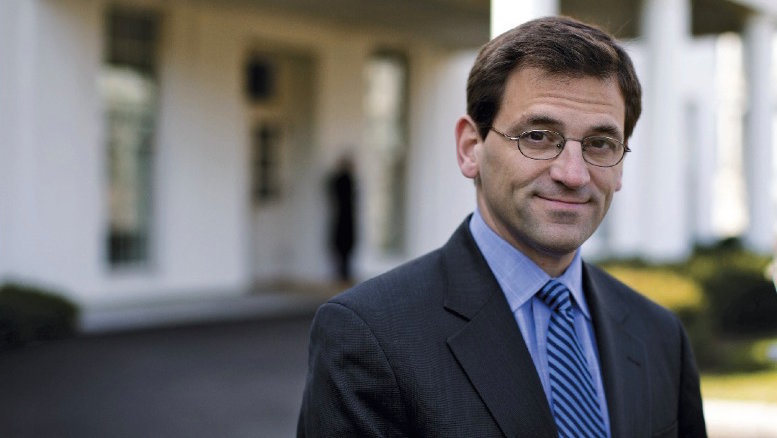
“We had a lot of fun doing it,” said
Peter Baker
(pictured)
, the Times’ chief White House correspondent and one of the 10 live chatting through the proceeding. “And the paper is trying hard to experiment with new and creative ways of engaging with readers on big days like this.”
The Times has live chatted the president’s
State of the Union speech
and most recently offered live commentary during the
House impeachment hearings
. The Supreme Court, however, has been loath to air its arguments live. The virus outbreak changed that, forcing the court to hear its cases via live remote phone-ins. As Times reporter
Maggie Haberman
noted before the hearings began, “today’s cases are by far the most important yet under this new — and likely temporary — approach.”
|
|
|
The National Press Club Journalism Institute is spotlighting
the next generation of journalists
,
students graduating from college or Master’s programs this spring into
a challenging job market
, in hopes they’ll meet future bosses and colleagues here, who will reach out and support them in building journalism’s future together.
School
: Marist College
Location
: Poughkeepsie, New York
Internships
: CBS News, ESPN Radio
If you could meet any journalist and ask for her/his advice, who would it be and why?
Bjarnar
:
John Branch is the first that comes to mind. He falls beautifully in the category of being a storyteller whose reporting practices are so evidently refined and mastered that you can both feel and not feel on the page. That's a complicated thought to have, but it's true. You can tell he's done his due diligence as a reporter first and foremost, and then has the pure ability to put it on paper eloquently and brilliantly. I'd ask him, in particular, on his process in finding such stories. The best piece of journalism ever written, for my money, is
Branch's "Snow Fall."
How did he find that? How did he approach it? At what point did he know how to take information and flip it into a story that people would reference in a class/ marvel at for years to come? Was there ever a realization of that kind? He's a fascinating person and a brilliant writer, one who I've admired for years. I'd want to pick that brain.
John Branch
responds
: Will, Snow Fall began just like every other story begins — a news nugget, a passing mention. An astute editor mentioned the subject of avalanches to me. It felt like a ripe topic, this force that kills dozens of Americans each year, including several top skiers that season, but goes largely unnoticed because they rarely kill more than one or two at a time.
Like every story, reporting began with research and phone calls. I soon focused on the Tunnel Creek avalanche, because there were witnesses and survivors. One call led to another and another — as I like to say, journalists merely pick up stones and look under them. It was months before we involved our graphics team, and even then I couldn't envision what Snow Fall would become. I just wanted to tell a story.
The lesson? It applies to every story, but also every journalism career: Go with an open mind, be insatiably curious, follow your gut, find truth. And don't think you know where things will end up, because none of us do. That's why we report. That's why we live.
|
|
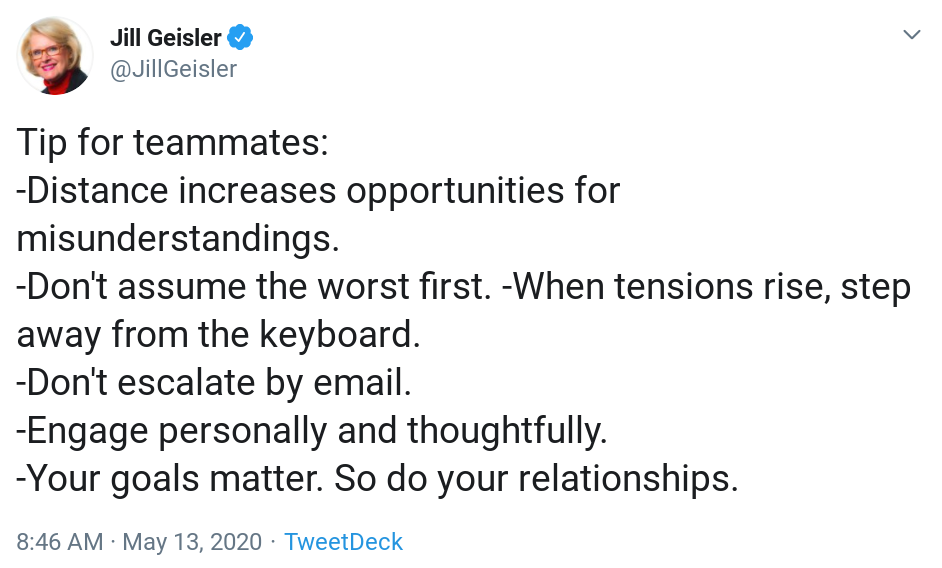
Conflict happens when we perceive someone to be interfering with our goals. It’s easy to lose sight of each other’s needs — and our common goals — when we’re working remotely, so before communicating from frustration when there’s a problem, it helps to assume good intent,
clarify
,
ask how someone is doing
, listen, and then
resolve conflict before it grows
.
Advice from
Jill Geisler
, Bill Plante Chair in Leadership & Media Integrity, Loyola University Chicago, Freedom Forum Fellow in Women’s Leadership
|
|
|
This newsletter is written & edited by the National Press Club Journalism Institute staff: Beth Francesco, Holly Butcher Grant, Jim Kuhnhenn, and Julie Moos.
Send us your questions and suggestions
for topics to cover.
|
|
The National Press Club Journalism Institute promotes an engaged global citizenry through an independent and free press, and equips journalists with skills and standards to inform the public in ways that inspire civic engagement. Support our important work with a tax-deductible contribution today.
|
|
|
|
|
|
|