e-Newsletter | February 26, 2021 |
|
Decoys...Raised to an Artform |
|
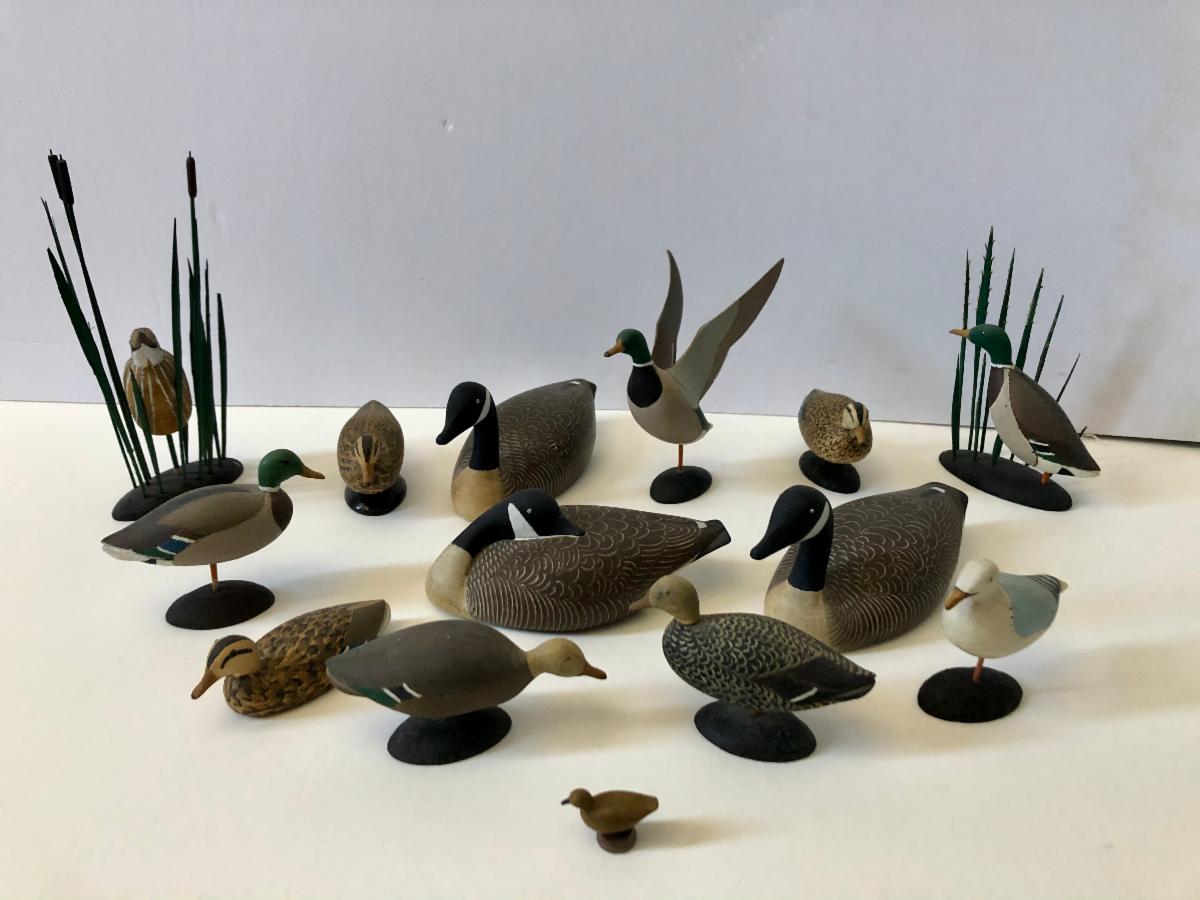
Carefully arranged in a case at the Museum of Old Newbury is a group of small wooden waterfowl, miniature replicas of the ubiquitous life-sized decoys used by bird hunters.
This little flock includes a number of different of species that are carved in a variety of attitudes; most are placidly sitting, one is ready to take off, two are hiding among reeds and one Canadian Goose has its head tucked on its back, sleeping.
They look as though they could be toys, but for their intricate and realistic decoration. These diminutive figures were obviously made by a master-hand, one who had a technical and intimate understanding of the ducks, geese and shorebirds that lived locally in the Great Marsh.
|
|
Miniature decoys. From the collections of the Museum of Old Newbury. |
|
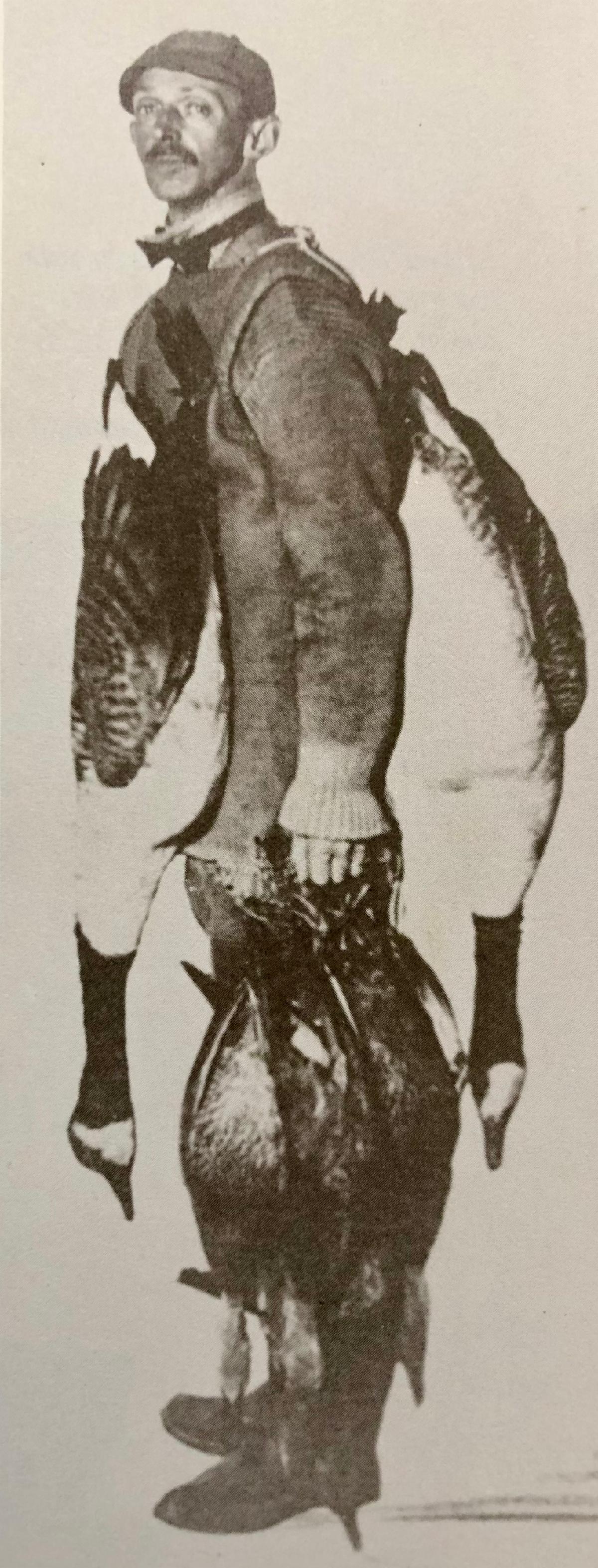
Charles A. Safford, successful market gunner. Photo from Nancy Weare’s Plum Island; The Way it Was, courtesy of Candance Erikson.
|
|
The artist, Charles A. Safford, was born in 1877, the son of Charles and Addie (Pierce) Safford.
By 1890, the family was living in Newburyport and the younger Charles began apprenticing as a cabinet maker on Middle Street, a business started by his great-grandfather.
As his father was a foreman at Towle Manufacturing Company and other branches of the Safford family were watchmakers and jewelers, it was unsurprising that Charles became known for his meticulous craftsmanship and ability to work in a variety of mediums, building everything from coffins to tools to boats. He is listed for much of his young adult life as a silversmith in the City Directories.
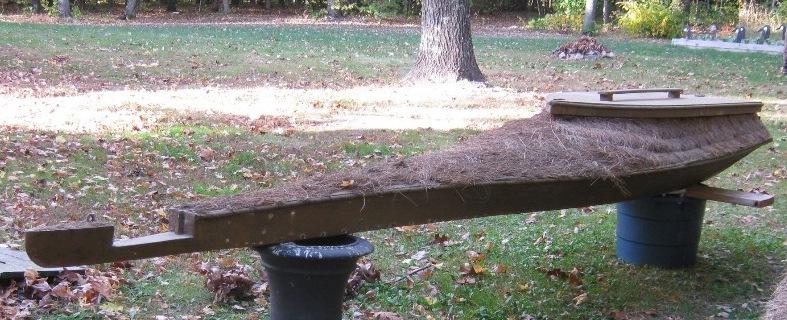
Despite his obvious skill as a craftsman and his family’s elevated social standing in town, Safford “was drawn to the outdoor life; he was a natural at hunting and shooting. He was small, but wiry and strong, and famous for sculling his sneak float (boat) up-current against the mighty Merrimack River” writes Gigi Hopkins, historian and author of Massachusetts Masterpieces, Decoy as Art.
He worked part-time as a gunner, or a market bird hunter, and would send his kills to the Boston restaurants for a tidy profit.
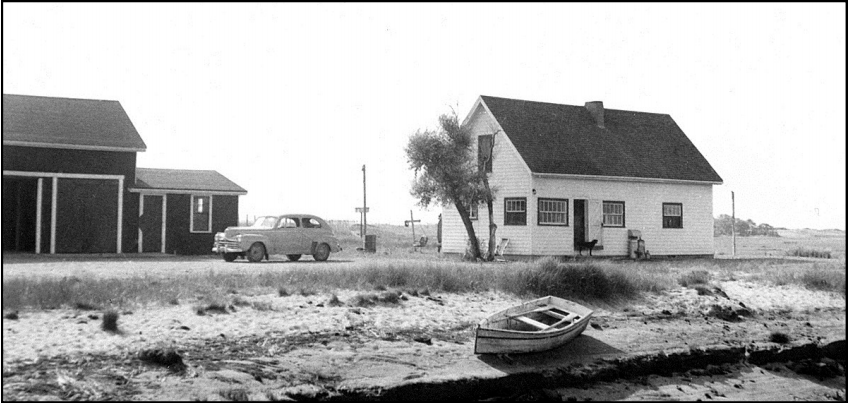
In the 1920 census, Safford is listed as living at 28 Oakland Street with his parents, however he had also built himself a cabin and gunning stand on Plum Island in Hale’s Cove.
As a part of his occupation, the craftsman carved a number of full-sized decoys to sit out in the marsh during hunting season.
|
|
Charles Safford's personal scull or "sneak float." Courtesy photo. |
|
The figures, which were designed to float in small groupings and were attached to metal stays, gave live birds the false sense that it was safe to land there, bringing them unknowingly in range of Safford’s shot gun.
The young gunner and hunting guide would have been shocked to know that his homemade utilitarian decoys would one day end up in museums and selling at auction for thousands of dollars.
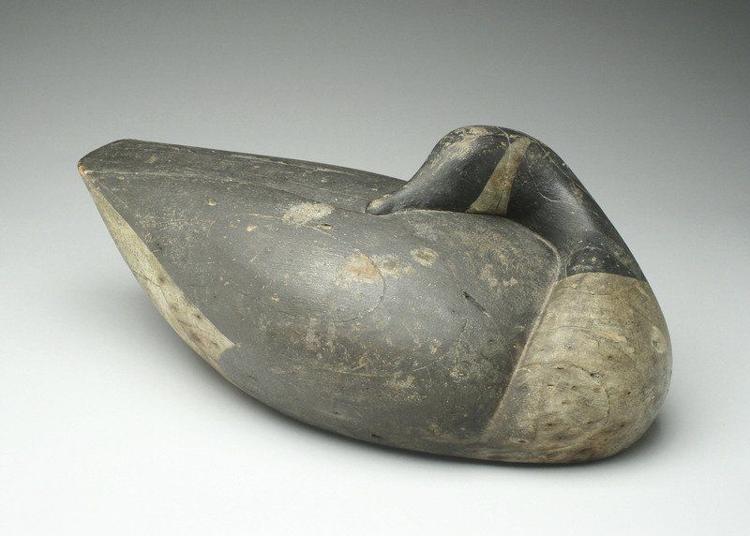
Decoys were made to last, enduring season after season in all manner of weather out on the marshes. Safford, master craftsman that he was, built them out of multiple sections of wood. His most well-known surviving full-size decoy, a Canadian Goose with its head tucked back on its wing, was constructed with a technique “seemingly unique to Safford with numerous laminated layers applied on five planes around the axis of the body’s core block” according to an auction’s website. Even the original painted exterior survived, making Safford’s expertly made decoys highly sought-after collectors' items.
|
|
Sleeping Canadian Goose, full-size decoy, by Charles A. Safford. Photo: Guyette & Deeter, Inc. This goose was found in a Newbury hunting camp, a short distance from Safford’s blind along with a few others straight heads. One of the straight heads was featured on the Massachusetts Duck Stamp. |
|
Plum Island’s beaches and the marshes have always attracted birds in large numbers. It is a natural resting area for migratory waterfowl and a nesting area for shorebirds.
As a result, sportsmen and gunners alike were drawn to the large flocks, and the populations began to decline rapidly. Ornithologists recognized the barrier island as one of the most diverse and significant areas on the New England coast and called to protect it. By the early 20th century, laws and limitations were placed on hunting and selling game birds.
In 1934, the land on which Safford had built his camp and his worth became a protected refuge. Miss Annie Hamilton Brown, a philanthropist and bird lover, had left funds to the Federation of the Birds Clubs of New England to be used in the purchase of “a suitable tract of land in this commonwealth to be used as a separate reservation for the preservation of animal and bird life.” By the time that the Bird Clubs merged with the Massachusetts Audubon Society, the organizations had managed to acquire most of the southern end of Plum Island and name it after their benefactor.
|
|
Charles Safford's house in Hale's Cove, built 1928. Photo, United States Fish & Wildlife Service. |
|
Instead of deserting his land and passion, Safford took on a whole new profession, that of game warden of the Annie H. Brown Wildlife Sanctuary. Instead of hunting, he patrolled up and down the beaches and through the dunes on horseback, cutting a very romantic figure. He staunchly defended his new charges against the very men that he had once hunted alongside, becoming a protector of all flocks on the island.
Safford was an ornithologist at heart and kept detailed logs of all the different species that he observed during his daily rounds. These he sent to the Audubon office, and they were reviewed by Francis H. Allen, who published a series of Plum Island notes in the organization’s Bulletin.
In 1942, the fifteen hundred acres of the Annie J. Brown Wildlife Sanctuary were incorporated into the Parker River National Wildlife Refuge.
Safford retired from his position as warden and moved down the coast to Lynn. Here he continued woodworking and spent time in the last fifteen years of his life carving miniature examples of the decoys he had once placed out the in the marsh, intimately and scientifically replicating the birds he watched for so many years.
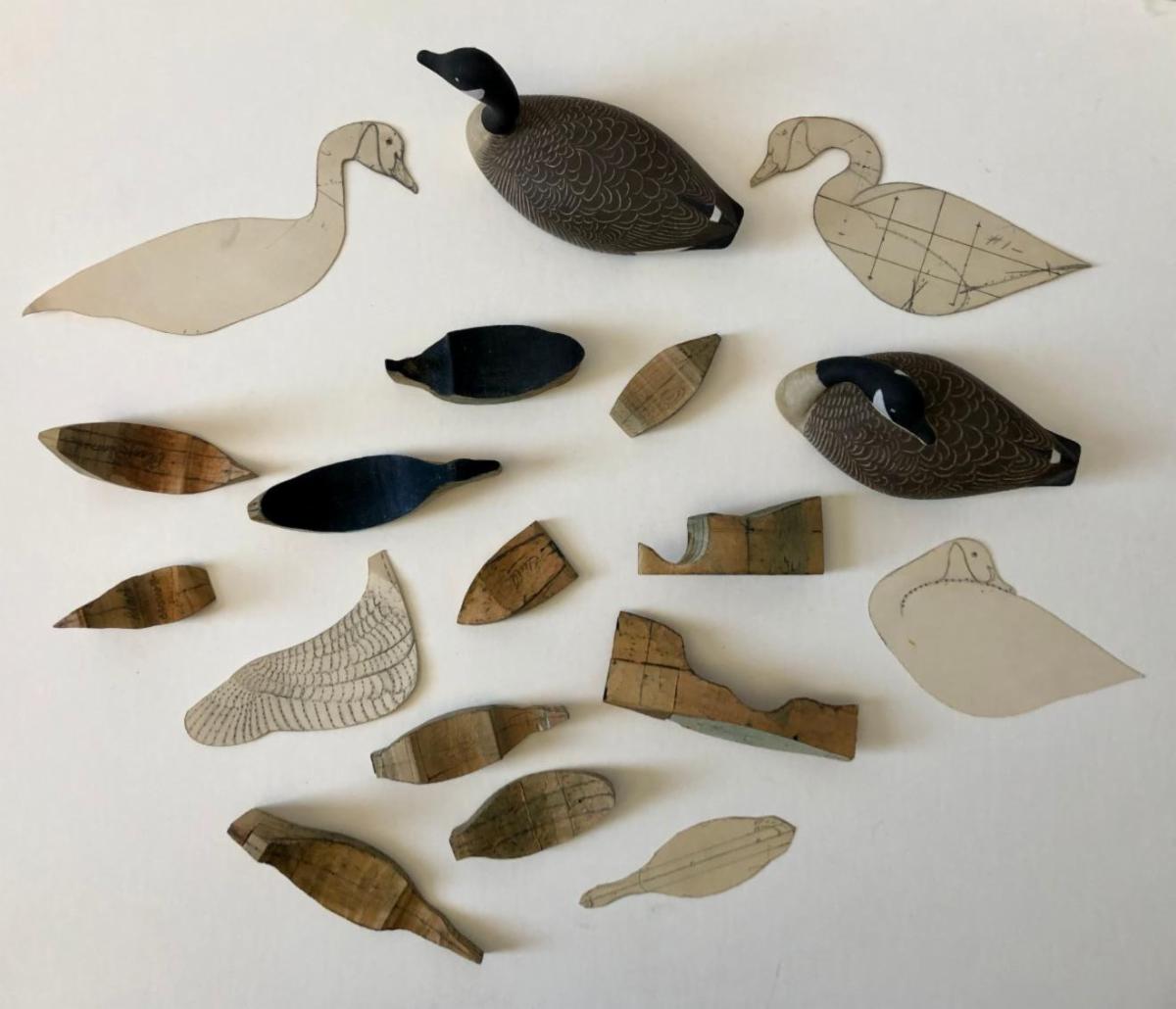
The Museum of Old Newbury is fortunate to have in its collection fourteen of these later figures, as well as the original patterns and wood scraps from their creation (shown in the image below).
|
|
Editor's note: Inconsistencies in spelling of names, etc., are from the historical record and not a typographical error. |
|
Learn about upcoming programs, register, find Zoom links and catch up on previous presentations here. |
|
Miss a Recent MOON Program? Watch here. |
|
Thanks to the wonder of the Zoom platform, all of our programs are recorded and available online shortly after presentation. Visit our website for upcoming events, previous recordings, including the four 2020 Virtual Garden Tours, our Annual Meeting, children's and holiday programs, as well as all episodes of "Yeat Yeat, Don't Tell Me!"
In lieu of a printed program book, we will be featuring monthly events here, as well as maintaining a complete list on our website: www.NewburyHistory.org.
All of our virtual programs are free, however donations are gratefully accepted to help defray speaker fees.
|
|
|
|
Zoom...The Final Frontier
Dr. Steven C. Eames closed February's Museum of Old Newbury program calendar with a presentation that studied the effect of war on soldiers and civilians, focusing on early American history.
|
|
Yeat Yeat, That was Fun!
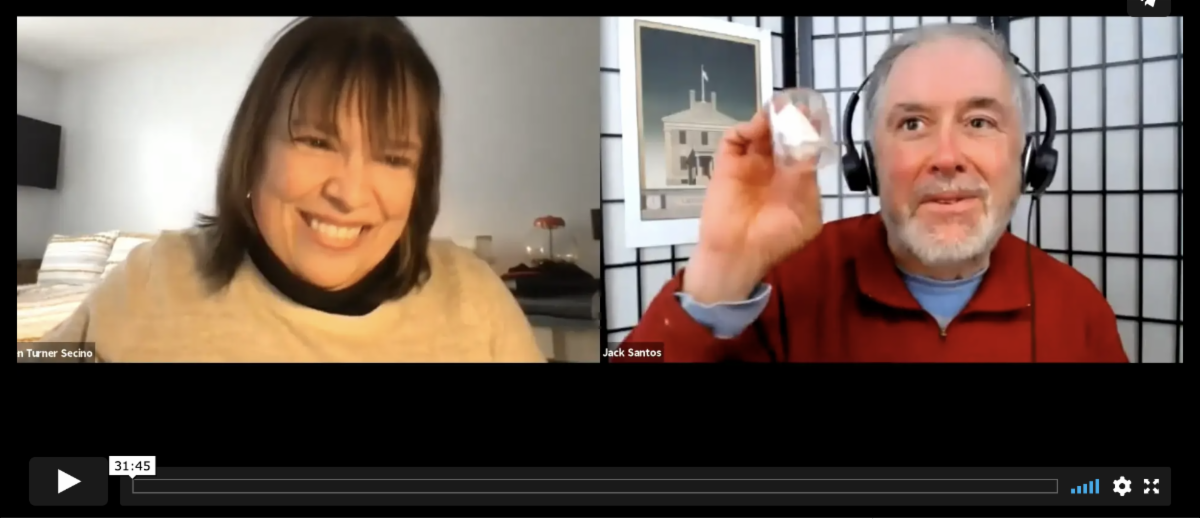
Watch Jack Santos, Custom House Maritime Museum, and Colleen Turner, Museum of Old Newbury, fast-paced, fact-filled episode here: "Yeat Yeat, Don't Tell Me!"
Due to a previously scheduled meeting, Edward Carson, historian, community activist and Dean of Multicultural Education at the Governor's Academy, will now join us
|
|
Register for March Programs Now! |
|
REGISTER: Thursday, March 11, 2021
More than a Tea Party: Tea's Social & Political Symbolism. Talia Jachimowicz, '21, The Governor's Academy, takes a look at tea, taxes and the American Revolution. Register here.
|
|
REGISTER: Thursday, March 25, 2021
Naomi Wade: A British Woman in 18th Century New England. Meet an 18th century woman from London who became a camp follower with a British Regiment during the American War for Independence. Register here.
|
|
Puzzle Me This...
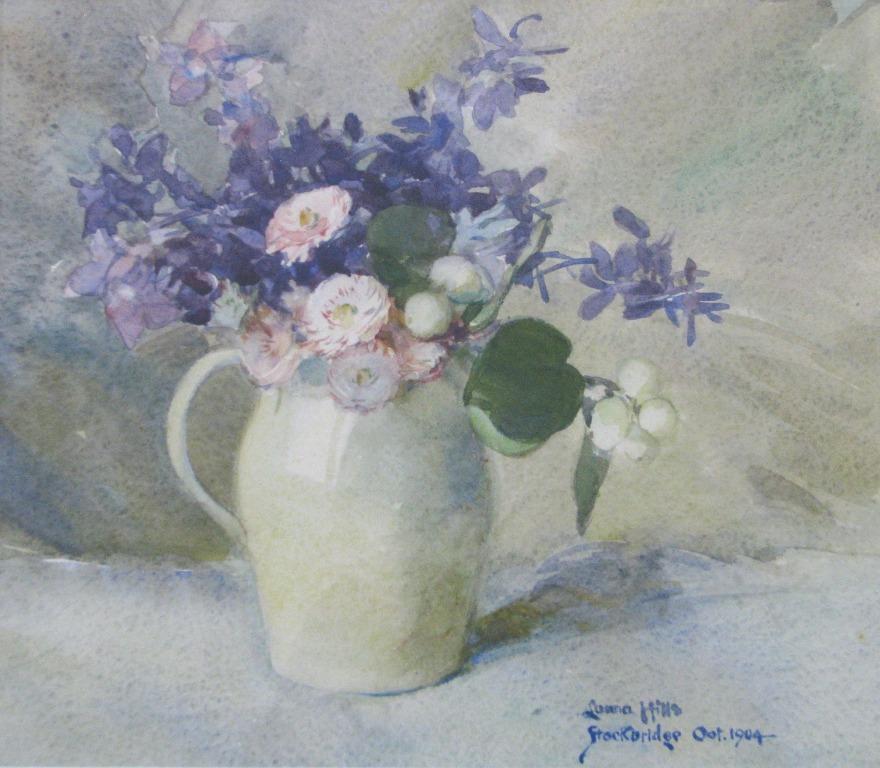
Pastel of flowers in jug. Laura Coombs Hills, Stockbridge, Oct. 1904. From the collections of the Museum of Old Newbury.
Click on the image to begin.
|
|
Something is Always Cooking at the Museum
Cooked or raw, fennel is always a delight. Jane Wild's 4-ingredient side dish is quick, easy and sounds absolutely delicious.
Fennel Gratin
2 medium fennel bulbs
1 cup chicken broth
1 tablespoon olive oil
Kosher salt
Freshly ground black pepper
1/4 cup grated parmesan
Preheat the oven to 375ºF. Cut the green stalks off the fennel bulbs and peel the outermost stringy layer of the bulbs with a vegetable peeler. Slice about 1/4 inch off the base of each bulb, then slice the bulb in half. Cut each half into 4 wedges. Arrange the wedges in a gratin dish large enough to hold them in one layer. Pour the broth over the fennel. Drizzle the olive oil and sprinkle with a little salt. Cover the dish with foil and bake for 20 minutes. Turn the pieces over halfway through the cooking. Uncover and bake for 30 minutes more, or until tender. Sprinkle with ground pepper and parmesan. Serves 4 to 6.
|
|
During this difficult period of COVID-19, we rely on your support more than ever. We are working to reschedule many of the programs that we have had to postpone, as well as develop new, online programs for you to enjoy and keep us connected. We hope, if you are able, that you will consider a donation to the museum. Thank you for your continued support.
|
|
Museum e-Newsletter made possible through the
generosity of our sponsors:
|
|
|
Museum of Old Newbury
98 High Street
Newburyport, MA 01950
978-462-2681
|
|
|
|
|
|
|
|