June 27, 2024

Editor's Note: This newsletter will be taking a short summer break. We'll return to your inboxes on Monday, July 8.

Top stories


Press Freedom


News/Media Alliance: Protecting your creative content and First Amendment rights through communications, advocacy, and research.
CRAFT

Covering the political conventions if you can’t be there

This summer, thousands of journalists are heading to Milwaukee and Chicago for the Republican and Democratic political conventions on July 15-18 and August 19-22, respectively. There are hundreds of events that occur at the political conventions – from breakfasts with state political leaders, to parties with lobbyists – that all culminate on the final evening with the formal nomination of the party’s presidential nominee. 

But what if a reporter can’t attend the conventions, is there still a way to cover these events for a news organization?


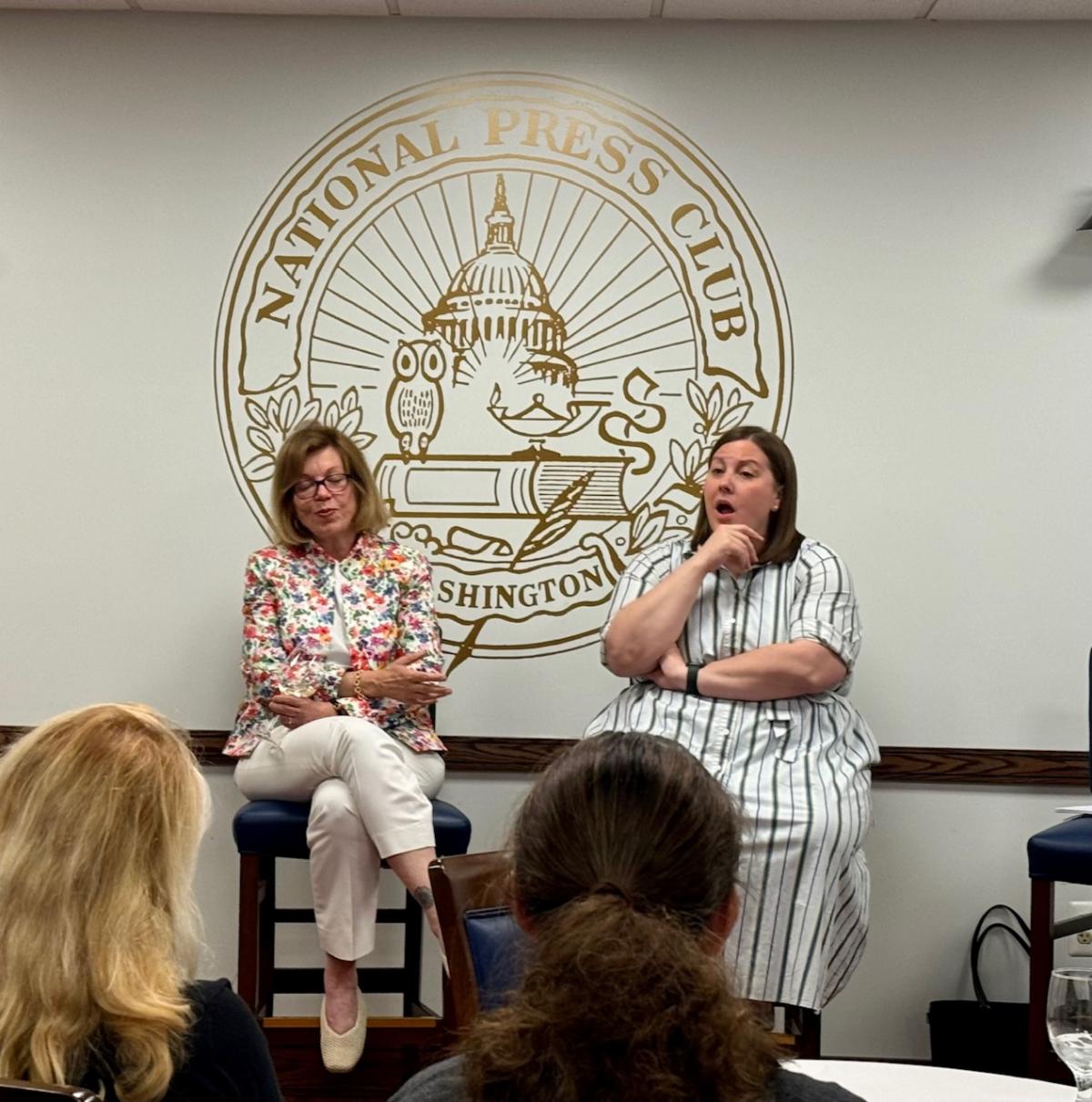
Susan Page, the USA Today DC bureau chief, and Annah Aschbrenner, the senior deputy campaign editor at the Washington Post, both say: ‘Yes!’ 


On June 20, Page and Aschbrenner spoke to National Press Club members who gathered to hear some advice and tips on convention coverage, including what to do if you aren’t on the ground at the conventions. Here are a few of their ideas for remote coverage of the conventions.

  • Get started now with your remote coverage. Find out who among your county, city and state political leaders are attending each of the conventions and get their phone numbers and emails. If you aren’t sure where to start, look for the leaders of the Democratic party and Republican party in your state. Reach out to the county leaders (most counties have a Democratic and Republican party leaders) in your readership. Find out if there are any local business leaders or activists in your readership who might be attending the conventions and get their phone numbers and emails and what convention stories they think are important to your community.


  • Stay in touch with your local political, business, and advocacy leaders during the convention and ask them to describe what is going on and what they are doing.


  • Watch the conventions via live streaming on C-SPAN and on the YouTube channels sponsored by the Republican and Democratic convention committees. You can write stories based on what you are seeing and what you think your readers are interested in learning about. “Tweak your mindset a bit,” said Aschbrenner. “As you watch, you’re having the same experience as your readers and viewers in that they aren’t there either, so you are watching it as maybe they are watching this…and use your own knowledge to interpret what is going on for them.” 


  • The convention committees will have a schedule of events every day. See if there is anything of interest connected to your state. Watch the Democrat and Republican platform committee meetings. These meetings are often under covered and represent the party’s current and future policies. 


  • Not sure what to look for while watching the live stream of the convention events? Consider observing the clothing of attendees, and who people are talking to and how they are interacting with one another on the convention floor. “Something I learned from fashion reporters… is to be really observational about what you are seeing…and really looking at who’s standing next to whom and what are they saying?” said Page. “Turn a weakness, that you aren’t at the convention, into a strength. You are seeing the convention the way most Americans are seeing it… not in the way some convention delegates or political junkies are seeing it.”
 
Structuring Your Story: A master class on organizing narrative &  breaking news. A virtual, half day workshop on Friday, Aug. 16. Tickets on sale now.

A (virtual) master class on organizing narrative & breaking news: Join us Aug. 16


All great stories have a beginning, middle, and end. But organizing a pile of reporting notes, quotes and data can be, well, overwhelming. Just how should journalists tackle story structure, especially with the variety of options? 


Join four award-winning reporters and editors from 1 to 5 p.m. ET Friday, Aug. 16, as they explore story structure and strategies for constructing memorable stories on and off deadline. Hosted by the National Press Club Journalism Institute, this half-day virtual workshop will include tips and tools for building structures that effectively shape breaking news, feature, and investigative stories. 


Register now to learn from: 


  • Lane DeGregory, a Pulitzer Prize-winning staff writer at the Tampa Bay Times
  • Wesley Lowery, executive editor of Investigation Reporting Workshop at American University and a Pulitzer Prize winner
  • Steve Padilla, Los Angeles Times Column One editor
  • Eric Tucker, national security reporter for the Associated Press
GET TICKETS NOW

Participants will:


Whether you are an experienced journalist or new to the business you will develop some new approaches to story writing. Bring your story structure challenges, as instructors will answer questions throughout the afternoon. Give yourself a professional gift and learn from some of the best in the business. 


Tickets are on sale now. Program participants will have access to a recording of the sessions.

 
COMMUNITY

National Press Club news


Resources


This newsletter is written & edited by the National Press Club Journalism Institute staff: Beth Francesco, Bara Vaida, and Holly Butcher Grant. Send us your questions and suggestions for topics to cover.


Get this from a friend? Subscribe, and view the archives.

Facebook  Twitter  Linkedin  Youtube  

DONATE TO THE INSTITUTE


The National Press Club Journalism Institute promotes an engaged global citizenry through an independent and free press, and equips journalists with skills and standards to inform the public in ways that inspire a more representative democracy. As the non-profit affiliate of the National Press Club, the Institute powers journalism in the public interest. The Institute's tax ID number is 52-1750908.