|
A message from Executive Director Johan E. Uvin
Dear Colleagues,
It is fair to say that we are navigating a period of significant change shaped by evolving federal policies, shifts in geopolitical relationships, economic conditions, and broader institutional shifts. These changes are being felt across many nations and in many sectors and communities, with effects extending through employers, universities, nonprofits, healthcare systems, local governments, markets, and households.
This is certainly a moment of transition for communities, nonprofits, workforce, education systems, and public institutions. While the challenges are real, there are also opportunities to strengthen systems, find new ways to expand access to opportunity, and further improve outcomes for the people and communities we serve.
Every day, our team is proud to support that work through research, evaluation, data services, training, and technical assistance that help organizations make informed decisions and strengthen their impact. Through our early learning programs, nonprofit partnerships, public policy initiatives, and direct services in workforce development, we remain focused on creating pathways to opportunity and helping communities thrive.
I remain optimistic about what lies ahead. What gives me that optimism is the commitment we see from our partners, clients, and staff. Their dedication, creativity, and resilience remind us that meaningful progress happens when people work together with purpose, even during times of uncertainty and change. Thank you for being part of this important work.
Best wishes,
| | |
Advancing What Matters Most: Inside the Nonprofit Sustainability Center
After years of development, iteration, and practical
application, the institute’s Nonprofit Sustainability Center (NSC) continues to expand its work helping nonprofits and funders strengthen what matters most: lasting outcomes.
The NSC’s origins date back to 2017, when the institute's role as a national capacity-building provider revealed how quickly shifting funding landscapes can disrupt even strong organizations. That experience shaped the center’s focus on helping nonprofits build the resilience, alignment, and strategic capacity needed to sustain meaningful community impact.
Today, the NSC provides tailored services that build the core capacities organizations need to navigate uncertainty and drive impact. This includes strategic, scenario, and sustainability planning; leadership and board development; and community engagement strategies that cultivate partnerships and trust. The center also offers program and impact evaluation, along with training and coaching to strengthen funding models and long-term resource alignment.
At the heart of this work are four characteristics shared by resilient, high-impact organizations: being visionary, engaged, impactful, and well-resourced. By strengthening these capacities, the NSC helps partners sustain progress toward their most critical goals—ensuring meaningful impact endures beyond any single grant cycle, leader, or program structure.
New online tools for our clients are currently being developed and will be announced in the coming months.
Learn more about NSC.
| Massachusetts Economy: Strong Growth, Emerging Headwinds | |
Massachusetts kicked off 2026 with stronger-than-expected economic growth—but beneath the surface, new challenges are starting to take shape.
The latest MassBenchmarks Bulletin shows the state economy outpacing the nation in Q1, driven largely by productivity gains rather than job growth. Yet stagnant employment, slowing consumer spending, and demographic pressures signal a more uncertain road ahead.
What’s behind this “jobless growth”? And how might global events, workforce trends, and shifting consumer behavior reshape the outlook for the rest of 2026?
Read the full May 2026 Benchmarks Bulletin to explore the data, analysis, and implications for policymakers, business leaders, and communities across Massachusetts.
| | |
Supporting Those Who Support Children: Highlights from the Rise and Renew Wellness Conference | |
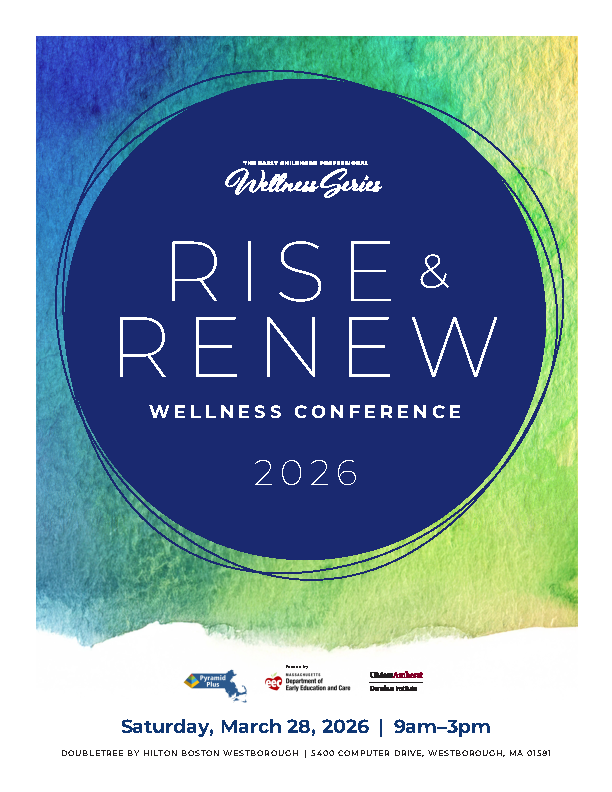
On March 28, early childhood professionals from across Massachusetts gathered in Westborough for the Rise and Renew Wellness Conference, a day dedicated to strengthening educator well-being. Hosted by StrongStart Central Massachusetts—part of the institute’s Connected Beginnings initiative—the event reflects a commitment to building a resilient, supported early education workforce.
The conference opened with remarks from Pyramid Plus and the Department of Early Education and Care, followed by a keynote from psychiatrist and author Dr. Pooja Lakshmin, who shared practical strategies for “real self-care” grounded in boundaries, values, and compassion.
Participants engaged in sessions on burnout, resilience, and adult regulation, alongside immersive workshops such as sound baths, mindfulness, and movement-based practices. Multilingual offerings and a focus on equity created an inclusive space for reflection, connection, and renewal—underscoring the vital link between educator wellness and positive outcomes for children.
See event photos on BlueSky and LinkedIn.
| |
Massachusetts Population Growth Slowing but Still Positive
We reported that Massachusetts’ population grew modestly in 2024–2025, adding about 15,500 residents (0.2%), continuing an increase but at a slower pace than the previous year’s growth.
The report highlights that population trends are driven by three main forces: births and deaths (natural increase), international immigration, and domestic migration. In 2025, natural increase was the largest contributor—births exceeded deaths by about 8,400.
Immigration, historically the state’s main growth driver, remained positive but declined sharply from its recent peak, while ongoing domestic outmigration continued to offset some gains.
Overall, Massachusetts continues to grow slowly, sustained by immigration and births, but tempered by fewer newcomers from abroad and continued net outmigration to other states.
| |
Featured Publications
R&D Economic Impact Study: Massachusetts is a national leader in research and development (R&D), home to one in every ten R&D jobs in the U.S., and regularly a top recipient of federal funding from agencies like the NIH and NSF. However, the report also warns of the potential negative impact of proposed federal funding cuts.
Transfer Fee Study for Nantucket and Martha's Vineyard: An analysis of the potential impacts of local-option real estate transfer fees designed to fund affordable and attainable year-round housing on the islands. This report examines the existing literature on real estate transfer fees, presents a comparable market case study in another resort market, and estimates potential revenue and potential economic impacts of investments in various housing affordability programs.
| | You are receiving this newsletter because your address was shared by one of the institute's business groups. If you would like to be removed from this email list, please follow the "SafeUnsubscribe" link at the bottom of this email. | | | | |