The NAHLN Update 2021
Volume 12, No. 1
|
THE OFFICIAL NEWSLETTER OF THE NATIONAL ANIMAL HEALTH LABORATORY NETWORK (NAHLN)
A STATE AND FEDERAL PARTNERSHIP TO SAFEGUARD ANIMAL HEALTH
|
|
Founding Principles and Features of the NAHLN |
- Operate within a quality management system
- Establish and maintain competency of laboratory personnel
- Use Standardized protocols, reference materials, and equipment
- Use facilities with biosafety/biosecurity levels requisite for testing performed
- Participate in communications and real time electronic reporting systems
-
Evaluate preparedness (identify and prioritize gaps) through scenario testing
|
|
In This Issue:
Recurring call schedule
Upcoming calls/events
News Brief
Farm Bill Update
Getting to know us
One Health: COVID-19/SARS-CoV2 Update
Exercises and Drills Update
ICLN Training Resources Available Online
Laboratory Director Feature:
NAHLN in Action
New ORISE Fellow joins NAHLN
|
|
Recurring call schedule:
NAHLN Coordinating Council (CC) calls occur on the third Monday of each month.
NAHLN Methods Technical Working Group (MTWG) Core group calls occur on the second Wednesday of each month, except for months with quarterly MTWG general membership calls (January, April, July, and October).
NAHLN Exercises and Drills Working Group (EDWG) calls occur on the third Thursday of each month. People interested in serving on this group should email the NAHLN Program Office (NPO) by clicking here.
NAHLN IT committee core group and general membership calls occur bi-monthly on the first Wednesday of the month. People interested in attending either the core or general call can do so by selecting the personnel contact options of either IT Core Committee member or IT General Committee member in the APHIS Laboratory Portal.
Upcoming calls/events:
- July 21, 1 PM CT MTWG General Membership
- July 27-29, MTWG Annual meeting
- August 5, 2PM CT NAHLN Annual Exercise Hot Wash
- August 30-September 1, Coordinating Council Annual meeting
Input Welcome!
We appreciate hearing from you!
Are there other topics that you would like to hear about? Please email your comments to us at NAHLN@usda.gov.
|
|
|
 |
Current Number of Subscribers:
1216
|
|
|
|
-
Highly Pathogenic Avian Influenza (HPAI)
-
Virulent Newcastle Disease (vND)
- and many more useful resources.
|
|
|
|
The National Animal Health Laboratory Network now has 49 NAHLN labs approved for ASF/CSF testing. Ten of these are designated for ASF/CSF active surveillance testing, while all of the approved laboratories can participate in ASF/CSF foreign animal disease (FAD) investigations.
Article submitted by Traci Imlau, Program Assistant, NAHLN Program Office, USDA APHIS VS D & B, NVSL, Ames, IA.
|
|
VS Guidance 7407.2
Procedures for Handling Swine Herds with Brucellosis or Pseudorabies
|
Swine pseudorabies virus (PRV) and swine brucellosis (SB) are serious swine diseases. Their spread through the U.S. commercial herd (all swine that move in commerce) and particularly their spread through commercial production swine, could significantly harm the U.S. swine industry. Federal, State, Tribal, and industry partners have successfully eliminated these diseases from larger commercial production swine herds, but the existence of these diseases in feral swine and, to a lesser extent, smaller scale pasture-raised production and backyard swine, presents a continued risk of disease spread throughout the U.S. commercial swine herd.
PRV is a viral disease (herpes virus) causing neurological clinical signs, such as tremors, paddling, nystagmus (involuntary eye movement), and convulsions in piglets, and reproductive problems and respiratory disease in older pigs. There are no known public health risks due to PRV. SB is a bacterial disease, causing abortions, sterility, orchitis (inflammation of the testicles), lameness, metritis (inflammation of the uterus), and possibly abscesses in swine. It has public health implications.
|
|
|
|
APHIS will make a total of $5 million available to NAHLN. This will include $2.5 million to be provided to the NAHLN laboratories in support of infrastructure needs. Additionally, up to $2.5 million will be provided through a competitive process targeting NAHLN projects focused on increasing capacity for disease testing, increasing capability to handle surge samples and enhancing laboratory emergency preparedness.
The NAHLN Priorities are recommended by the NAHLN Coordinating Council and approved by the NAHLN Executive Committee.
The priorities for 2021 are:
Increasing capacity for disease testing
- focused on currently approved protocols, test development and validation, and on rapid sequencing of emerging threats
Increasing capability to handle surge samples
- focused on sample entry and tracking, LIMS enhancement, and electronic messaging of results
Enhancing laboratory emergency preparedness
- focused on developing local and regional cooperation for regulatory testing through targeted outreach and exercise
The list for 2021 NAHLN Farm Bill priorities will again be provided to the Office of the Secretary for review and approval. An opportunity announcement for a competitive evaluation process was provided in June 2021, with proposals due back 60 days after the announcement.
APHIS is also making funding available in two additional and separate 2021 Farm Bill funding opportunities in the NAHLN and NADPRP programs that eligible entities may consider.
APHIS will make $5 million in funds available to support successful projects that will develop and/ or evaluate point-of-care diagnostic tests that will enhance the nation’s ability to quickly detect high-consequence FADs and accelerate our response and containment efforts. This competitive funding opportunity is open to NAHLN approved laboratories and NADPRP eligible entities. Applicants can find information about this separate funding opportunity on the Grants.gov website by searching CFDA number 10.025 or Funding Opportunity Number USDA-APHIS-10025-VSDB000-22-0001 or by going to the USDA APHIS NAHLN website or the USDA APHIS NADPRP website.
APHIS will also make available up to $10 million in funds to support NADPRP projects in 2021 that will (1) develop and/or enhance FAD vaccination plans to improve response capabilities, or (2) support animal movement decisions during an FAD outbreak, or (3) strengthen outreach and education on animal prevention, preparedness, and response to targeted audiences. Applicants can find information about this separate funding opportunity on the Grants.gov website by searching CFDA number10.025 or Funding Opportunity Number USDA-APHIS-10025-VSSP0000-22-0001 or by going to the USDA APHIS NADPRP website.
Article submitted by Traci Imlau, Program Assistant, NAHLN Program Office, USDA APHIS VS D & B, NVSL, Ames, IA and by Christina Loiacono, Coordinator, M.S., PhD., NAHLN Program Office, USDA APHIS VS D & B, NVSL, Ames, IA.
|
|
|
Getting to know us:
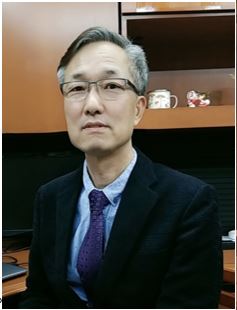
Chungwon Joseph Chung
|
Dr. Chungwon Joseph Chung has been serving as Head of the Proficiency and Validation Services Section (PVSS) in the Foreign Animal Disease Diagnostic Laboratory (FADDL) since January 2020.
He is an experienced Veterinary Virologist/Immunologist/Diagnostician with a history of working in government labs, universities, and industry. In addition to his experience in basic and applied research for a wide range of animal species and microbes, he has a background in Research & Development (R&D), Regulatory Affairs, Quality Control, Validation of veterinary vaccines, and diagnostics.
Before his current FADDL PVSS position, he served at the U.S. Department of Homeland Security (USDHS) Science & Technology (S&T) Plum Island Animal Disease Center (PIADC) as Senior Microbiologist. Before serving at USDA and USDHS, he worked as R&D Division Head (Vice President of R&D) at VMRD Inc. and as a Technical Director for American BioResearch Inc. Other career industry experience was at Fort Dodge Animal Health Division of Wyeth to develop porcine, canine, and feline vaccines. He also worked at National Veterinary Research Institute and Provincial Veterinary Service Laboratory in South Korea before coming to the United States.
Dr. Chung received his Ph.D. in veterinary immunology and virology based on research on immune responses to Equine Infectious Anemia Virus from the College of Veterinary Medicine at Washington State University; DVM and Master’s degrees were obtained from the College of Veterinary Medicine at Kyungpook National University, South Korea.
Dr. Chung enjoys hiking, fishing, and taking family trips with his wife and three children to new places with different food and culture.
Article submitted by Traci Imlau, Program Assistant, NAHLN Program Office, USDA APHIS VS D & B, NVSL, Ames, IA.
|
|
One Health: COVID-19/SARS-CoV2 Update |
In 2020, the NAHLN continued to work as a team to provide ongoing disease surveillance, respond quickly to disease events, communicate diagnostic outcomes to decision-makers in a timely manner, and meet diagnostic needs during animal disease outbreaks. NAHLN laboratories rapidly responded to the threat of COVID-19 by developing the capability to test for SARS-CoV-2 and worked together to build capacity. Many NAHLN laboratories have supported their state’s COVID-19 response by sharing equipment, reagents, and even analysts with their public health laboratories. NAHLN laboratories were the first to identify SARS-CoV-2 in an animal species, Nadia, a tiger from the Bronx Zoo. Currently, there are 38 NAHLN laboratories capable of testing for SARS-CoV-2. Except for dog and cat presumptive positive cases from states that have already had a confirmed positive in that species, all presumptive positive animal samples identified in NAHLN laboratories are sent to the National Veterinary Services Laboratories (NVSL) for confirmatory testing. In addition to testing animal for SARS-CoV-2, there are 25 NAHLN laboratories that are now CLIA certified to test human samples for COVID-19; and they have provided approximately 4.3 million tests. NAHLN is participating in a very successful One Health approach.
Article submitted by Christina Loiacono, Coordinator, M.S., PhD., NAHLN Program Office, USDA APHIS VS D & B, NVSL, Ames, IA.
|
|
Exercises and Drills Update -
Laboratory Initiated FAD Investigation Exercise
|
The annual exercise will have a pre-exercise webinar (date to be scheduled).
-
Information on the lab-initiated FAD investigation process,
- Sample submission to NVSL,
- Use of the National Centers for Animal Health (NCAH) submission portal.
The exercise will be held the week of June 28th. The exercise will only require one day to complete, and labs will have three dates to choose from for participation. Sign up information will be available soon.
Article submitted by Traci Imlau, Program Assistant, NAHLN Program Office, USDA APHIS VS D & B, NVSL, Ames, IA and by John Bare, DVM, Associate Coordinator, NAHLN Program Office USDA APHIS VS D & B, NVSL, Ames, IA
|
|
ICLN Training Resources Available Online |
The Integrated Consortium of Laboratory Networks (ICLN) coordinates federally sponsored analytical laboratory services for chemical, biological, radiological, and nuclear incidents. Additionally, the ICLN featuresa collection of online laboratory courses and training resources available on their website. Several members of the Exercises and Drills Working Group reviewed what is available and felt that many of the courses could be useful to the NAHLN network. We encourage you to check out the training resources at this link: https://www.icln.org/training.cfm
Article submitted by Christina Loiacono, Coordinator, M.S., PhD., NAHLN Program Office, USDA APHIS VS D & B, NVSL, Ames, IA.
|
|
Laboratory Director Feature:
Dr. Radhika Kakani
Laboratory Director, Microbiology Section Head,
Clemson Veterinary Diagnostic Center, Columbia, South Carolina
|
Dr. Kakani obtained her Bachelor of Veterinary Science and Animal Husbandry (BVSc & AH, equivalent of DVM) in 2005 from the College of Veterinary Science, Tirupati, India. She received a Ph.D. in Poultry Science from Texas A&M University in 2013. Dr. Kakani worked as a post-doctoral fellow in food microbiology for almost three years at Oklahoma State University. Dr. Kakani then joined the Clemson Veterinary Diagnostic Center (CVDC) as Section Head of Microbiology in 2017. She accepted the additional duties of Lab Director in 2019. In addition to veterinary diagnostics, her interests include studying antibiotic resistance, poultry nutrition, and food microbiology.
Dr. Kakani is passionate about protecting animal health and public health; and she is a strong believer in the One Health concept. Her interest in veterinary diagnostics was shaped by witnessing the devastating effects of poultry diseases firsthand during her teenage years. She still remembers picking up piles of birds that died from Infectious Bursal Disease on her parent’s poultry farm. Later as a veterinary student, she understood the importance of early, rapid, and accurate diagnosis. Dr. Kakani was very excited (and honored) to join CVDC to support and fulfill the mission of protecting animal health while assuring a safe and adequate food supply to the citizens of South Carolina.
Why is NAHLN important to you?
“NAHLN support enables State veterinary diagnostic labs to enhance their capacities and capabilities to provide surveillance testing, and for emergency preparedness to respond to foreign animal diseases to protect animal health safeguarding nation’s food supply. I appreciate NALHN for providing proficiency testing, standardizing protocols, training activities, and for great communication and coordination efforts. The CVDC is proud to be a NAHLN member laboratory and greatly appreciate the support we received during the LPAI-HAPI event in the Spring of 2020.”
Before working at your current position, what was the most unusual or interesting job you had?
“My Post-doctoral fellowship at Oklahoma State University provided me an opportunity to get additional training in food safety microbiology, molecular immunology, and grant writing. I enjoyed mastering new techniques and acquiring knowledge.”
Are there any random facts about yourself that you want to share?
“Poultry smells remind me of home, as I grew up on a poultry farm in Southern India and my parents still run it.”
Do you have any hobbies that you’d like to share?
“I like reading, cooking, and gardening. I enjoy visiting new places and meeting new people.”
On behalf of the NAHLN Program Staff, thank you, Dr. Kakani!
Article submitted by Traci Imlau, Program Assistant, NAHLN Program Office, USDA APHIS VS D & B, NVSL, Ames, IA.
|
|
VS published their first Tableau dashboards accessible to the public on USDA websites.
The published content for the NAHLN Antimicrobial Resistance (AMR) dashboard is available at https://www.aphis.usda.gov/aphis/dashboards/tableau/amr. The content for SARS-CoV-2 confirmed cases in animals in the U.S. is available at https://www.aphis.usda.gov/aphis/dashboards/tableau/sars-dashboard. To date, several different animal species have been reported to be infected with SARS-CoV-2 worldwide, and most have been in animals that had close contact with a person with COVID-19. The USDA National Veterinary Services Laboratories is responsible for conducting confirmatory testing and for coordinating the numbers of animals tested.
This content is now available after the culmination of three years of effort across different groups, including NAHLN, NVSL, and the Center for Informatics within VS, as well as MRP-IT, the Data Analytics Division, and OCIO.
Link and Dashboard are live.
Article submitted by Beth Harris, Associate Coordinator, NAHLN Program Office USDA APHIS VS D & B, NVSL, Ames, IA
|
|
Abstract submitted: One Health Enteric package v1.0: Expanded and standardized metadata package for the US’s genomic epidemiology network for enteric surveillance. Submitted to the International Association of Food Protection Annual Meetings.
Authors: Ruth Timme, Maria Balkey, Christopher Grim, Michael Batz, Michael, Jessica Hicks, Kim Cook, JoAnne van Kessel, Jim Bono, Beth Harris, Kathleen Fullerton, Lee Katz, Jennifer Adams, Steven Stroika, Lavin Joseph, Brigette Gleason, Beau Bruce, Eleanor Click, Mike Feldgarden, Martin Shumway, John Anderson, Heather Tate, Sarah Nemser, Olgica Ceric, Jennifer Jones, Karen Jinneman, Paul Morin, Jeoffrey Levine, Mustafa Simmons, and Cesar Morales.
Abstract submitted: Use of large-scale genomics to identify the role of animals and foods as potential sources of ExPEC causing human illnesses. Submitted to American Society for Microbiology World Microbe Forum 2021 (virtual meetings)
Authors: Lucas Harrison, Errol Strain, Rebecca Lindsey, Nancy Strockbine, Labeed Ben-Ghaly, Olgica Ceric, Gamola Fortenberry, Beth Harris, Patrick F. McDermott, Sheryl Shaw, Mustafa Simmons, Glenn Tillman, Jamie Wasilenko, Shaohua Zhao, Uday Dessai, and Gregory H. Tyson.
|
|
New ORISE Fellow joins NAHLN |
Dr. Christine Foxx joined the NAHLN Program Office as an ORISE Fellow on March 15. Christine will be working with Beth Harris and Jennifer Rodriguez on the NAHLN AMR pilot project, focusing on whole genome sequencing data analysis.
Dr. Foxx completed her PhD in Integrative Physiology at the University of Colorado Boulder with a research focus on the microbial ecology in the gut-brain axis. Before that, she obtained her MS in Biological Sciences at the University of Northern Colorado researching gut immunology and toxicology.
|
|
Welcome to the new members of the Coordinating Council:
NAHLN Laboratory:
Dr. Bruce Brodersen - University of Nebraska Veterinary Diagnostic Center
Dr. Lisa Murphy – University of Pennsylvania, School of Veterinary Medicine, New Bolton Center
Dr. Hemant Naikare - University of Georgia Tifton Veterinary Diagnostic Laboratory
State Animal Health Official
Dr. Michael Odian from Maryland
Dr. Samantha Beaty from Tennessee
Thank you to the members rotating off the Coordinating Council:
NAHLN Laboratory Level 2:
Dr. Brett Webb – North Dakota State University, Veterinary Diagnostic Laboratory
State Animal Health Official
Dr. Mary Jane Lis from Connecticut - retired
Dr. Boyd Parr from South Carolina – retired
Welcome to the new members of the
Methods Technical Working Group
Dr. Ben Hause, South Dakota, Animal Disease Research and Diagnostic Laboratory
Dr. Kenneth Kim, Tennessee, Kord Animal Health Diagnostic Laboratory
Dr. Kevin Lamhers, Virginia-Tech - Animal Laboratory Services
Dr. Rachel Palinski, Kansas State Veterinary Diagnostic Laboratory
Thank you to the members rotating off the
Methods Technical Working Group
Dr. Laura Goodman, New York, Animal Health Diagnostic Center at Cornell
Dr. Akhilesh Ramachandran, Oklahoma Animal Disease Diagnostic Laboratory
Ms. Donna Mulrooney, Oregon Veterinary Diagnostic Laboratory
Dr. Rebecca Wilkes, Indiana Animal Disease Diagnostic Laboratory
Article submitted by Traci Imlau, Program Assistant, NAHLN Program Office, USDA APHIS VS D & B, NVSL, Ames, IA.
|
|
Abbreviation / Acronym Key |
Click Here for Volume 12, No.1 Acronym Key
|
|
|
NAHLN Facts
The following link show a map and laboratory list of laboratories that have been approved as part of the NAHLN Testing Network.
|
|
|
|
|
|
|