|
||||||||||||
THE SKILLFUL EDUCATORTeaching & Leading with Intention
IDEAS WORTH PUTTING INTO PRACTICE
|
||||||||||||
|
DISCIPLINE
When Less Is More
Responding to off-task behavior without unnecessarily escalating it
|
||||||||||||
|
THE IDEA
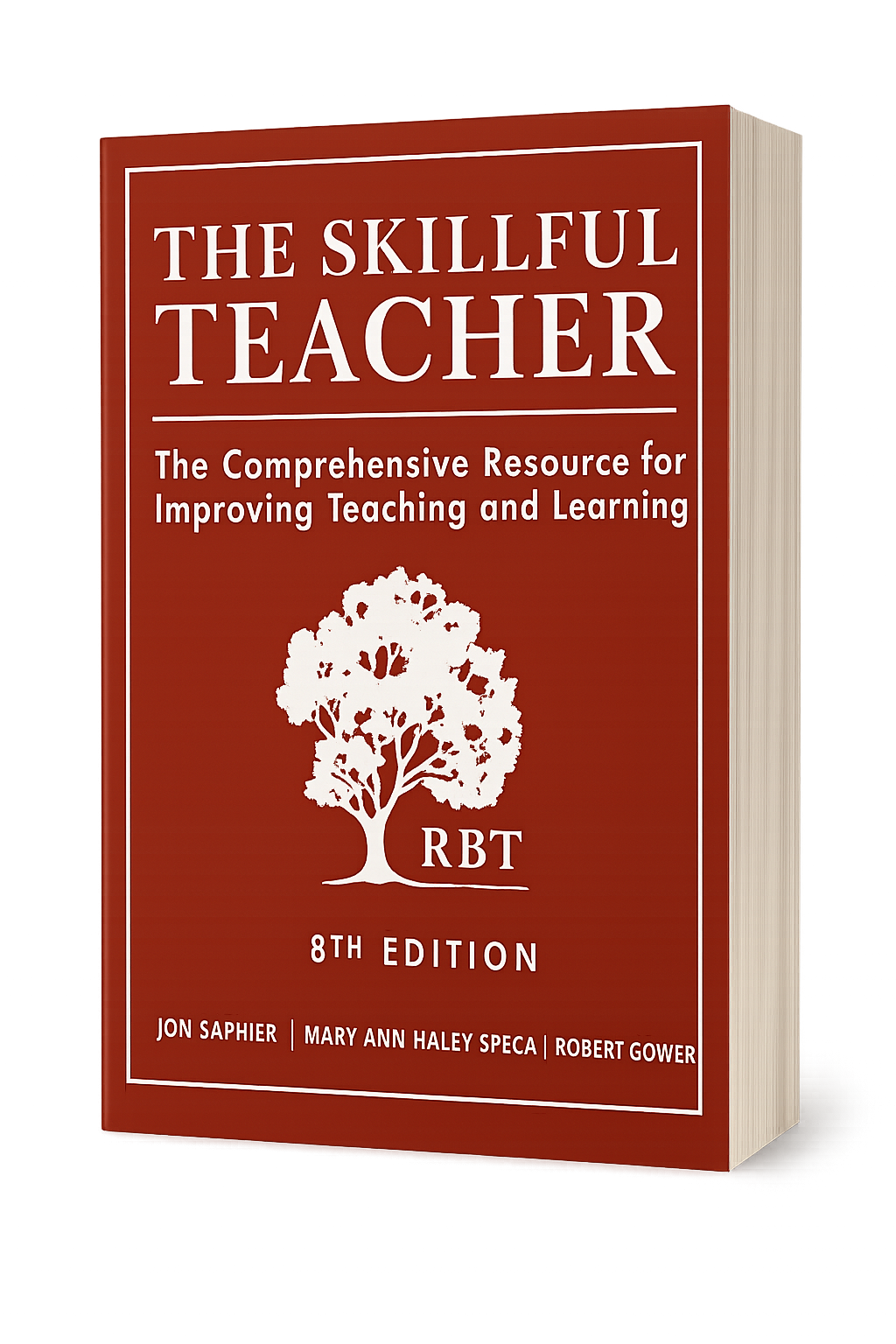
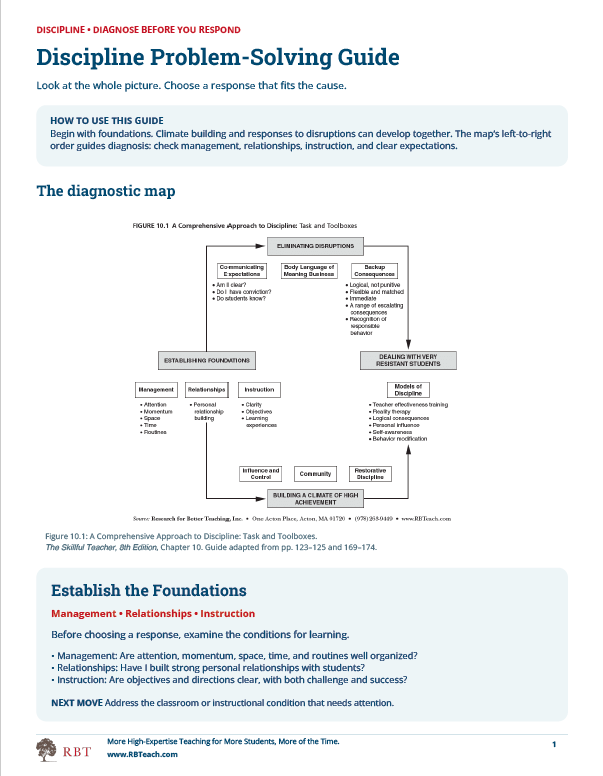
Quelling small disruptions in the big picture of class disciplineSome teachers never have discipline problems because they have a reputation that “you don’t fool around in Mrs. Daniels’s class.” That reputation is not built on fear, but on certainty—the certainty of a withering stare, a move closer, or a consequence of some kind from a respected figure—and the prior establishment of foundations that undergird good classroom management. Mrs. Daniels is a teacher with confidence that is communicated through body language and clarity about expectations and limits established early in the year. We have found this diagnostic map, read from left to right, an invaluable tool for tracing origins and responses when small disruptions are rife in a poorly managed classroom. 
Figure 10.1: A Comprehensive Approach to Discipline: Task and Toolboxes. From The Skillful Teacher, 8th Edition, Chapter 10.
Basic gaps in routines and time management can cause discipline problems. They are the first place to look for remedies. Unclear expectations are the next place to look if they have not been taught and practiced in the first weeks of school, like entry into the class at changes in periods or what “being ready for instruction” really looks and sounds like at the beginning of class. When these foundations are in place (see the Discipline chapter of The Skillful Teacher, 8th Edition), it’s time to practice minimal but clear and certain responses to minor disruptions or off-task behaviors. That’s where the following progression comes in. |
||||||||||||
|
||||||||||||
|
Calm presence. Minimal disruption.
Deliberate follow-through.
|
||||||||||||
|
THE RESEARCH
An enduring principle, viewed through a contemporary lensFred Jones's early work drew attention to something experienced teachers have long recognized: teachers communicate constantly through more than words. Eye contact, facial expression, posture, proximity, gestures, pace, and tone can all influence what happens in a classroom. Contemporary research continues to identify nonverbal communication and calm, respectful teacher responses as important dimensions of classroom interaction. At the same time, today's understanding of effective classroom management places greater emphasis on relationships, student agency, self-regulation, cultural responsiveness, and the individual needs of learners. That makes the principle of least intervention especially useful: respond clearly when necessary, while avoiding unnecessary attention, confrontation, or escalation. |
||||||||||||
That idea is bigger than any single management technique. Students should experience their teacher as someone who notices, responds predictably, and protects the learning environment—without making every small disruption bigger than it needs to be. |
||||||||||||
|
TAKE IT FURTHER
Keep the Diagnostic Map Within ReachOur new Discipline Problem-Solving Guide pairs Figure 10.1 with practical prompts for examining foundations and two connected areas of work: building a climate of high achievement and minimizing disruptions.
KEEP IN MIND
The response should fit the student as well as the behavior. Consider relationships, culture, developmental needs, neurodiversity, trauma history, and the individual student's experience when deciding whether—and how—to intervene. Want to explore Discipline further?Explore the companion resources for The Skillful Teacher, 8th Edition, Chapter 10: Discipline. EXPLORE CHAPTER 10: DISCIPLINE |
||||||||||||
Invite Your ColleaguesKnow an educator or school leader who would find these ideas useful? Help us grow The Skillful Educator: Teaching & Leading with Intention by forwarding this email or sharing the sign-up link. SIGN UP FOR THE NEWSLETTERIdeas worth putting into practice—and worth sharing.Missed an issue? Explore the Newsletter Archive → |
||||||||||||
|
Research for Better Teaching
More High-Expertise Teaching for More Students, More of the Time. |