Welcome to the University of Oklahoma Carceral Studies Consortium Newsletter. The Carceral Studies Consortium strives to build a community for intellectual exploration that includes faculty, staff, graduate students, community members, practitioners, and organizers.
Carceral Studies is concerned with the independent function and nexus of the political and social systems that organize, shape, sustain, and entrench practices of punishment, surveillance, incarceration, and harm.
|
|
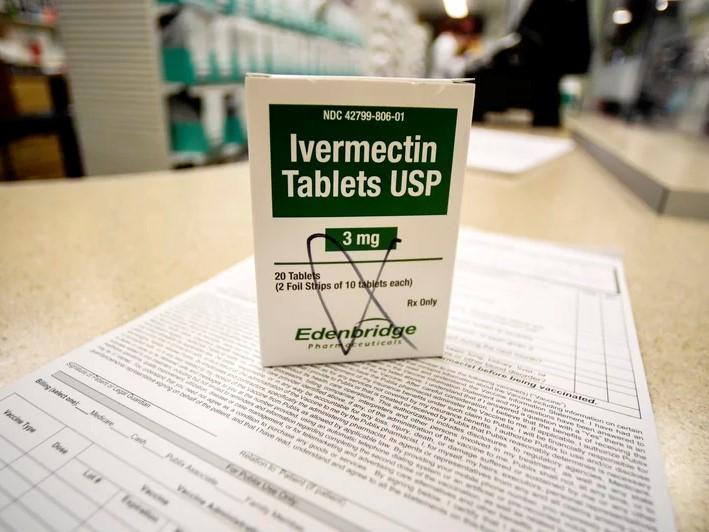
Four people incarcerated at an Arkansas jail are suing after being given ivermectin to treat COVID-19. Those who received ivermectin were told they were being given “vitamins,” “antibiotics,” or “steroids.” Ivermectin, an anti-parasitic drug, has not been approved by the FDA as a treatment or preventative measure for COVID-19. In addition, many health organizations have stated that the drug should not treat COVID-19 outside of a clinical trial. The four plaintiffs claim that as a result of this improper treatment they developed side effects such as “vision issues, diarrhea, bloody stools and stomach cramps.” The medical professional named in the lawsuit, Dr. Robert Karas, claims he has had success with ivermectin as a treatment for COVID-19 but provides no evidence. Gary Sullivan of the ACLU of Arkansas explains that “no one – including incarcerated individuals – should be deceived and subject to medical experimentation.”
|
|
Sunrise Police Department |
|
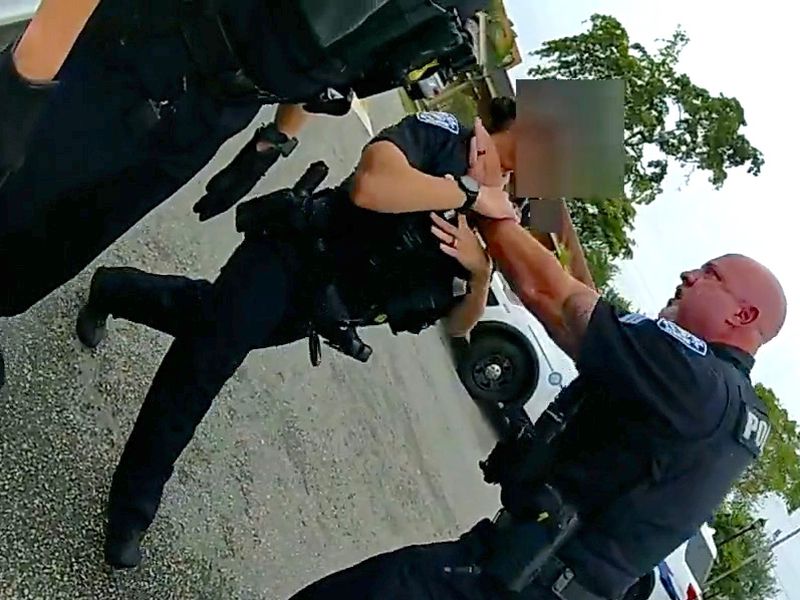
Bodycam footage from the Sunrise (Florida) Police Department shows Sergeant Christopher Pullease threatening to pepper spray a suspect who is sitting in a police cruiser handcuffed. Another officer then pulls Pullease away from the cruiser by his belt to de-escalate the situation. Pullease responds to this other officer by grabbing her throat and pushing her against another vehicle. Police Chief Anthony Rosa placed Pullease on administrative duty. In the aftermath, the union and police chief are debating who was in the wrong: on the one hand, the union argues that Rosa acted unprofessionally by publicly condemning Pullease before an internal investigation concluded. On the other hand, Rosa maintains that Pullease's conduct was inappropriate, endangering both the fellow officer and the public.
|
|
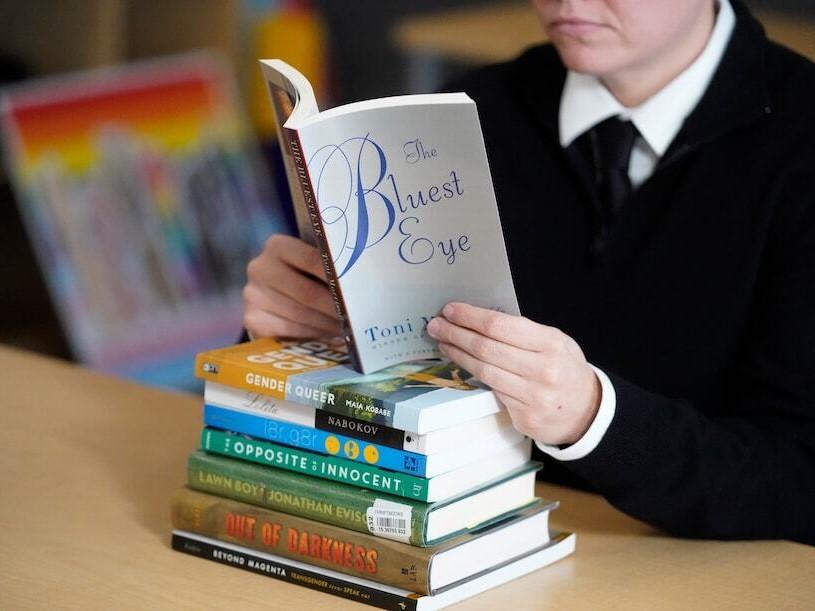
Books in prison are one of the few allowances permitted for many incarcerated persons. Andy Chan and Michelle Dillion provide literature to incarcerated persons through the non-profit organization Books to Prisoners. However, Chan and Dillion explain that the simple task of giving books is made complicated due to the prison banning certain publications. Chan and Dillion believe that the process for banning books in prison is completed out of purely “arbitrary and biased reasons,” in particular against literature that features Black authors or focuses on race and civil rights. Books such as Malcolm X: By Any Means Necessary, The New Jim Crow: Mass Incarceration in the Age of Colorblindness, and Chokehold: Policing Black Men are just some of the many pieces of Black authorship that are banned in different prisons. For example, a Wisconsin committee that allowed Hitler’s Mein Kampf simultaneously banned books about the Black Panthers, claiming the latter could be viewed as gang-related material. Racialized censorship continues to harm incarcerated populations based on subjective prison personnel. PEN America concluded in 2019 that “prisons systems frequently place bans on literature that discusses civil rights, historical abuses within America’s prisons, or criticisms of the prison system itself, often on the grounds that such titles advocate disruption of the prison’s social order.”
|
|
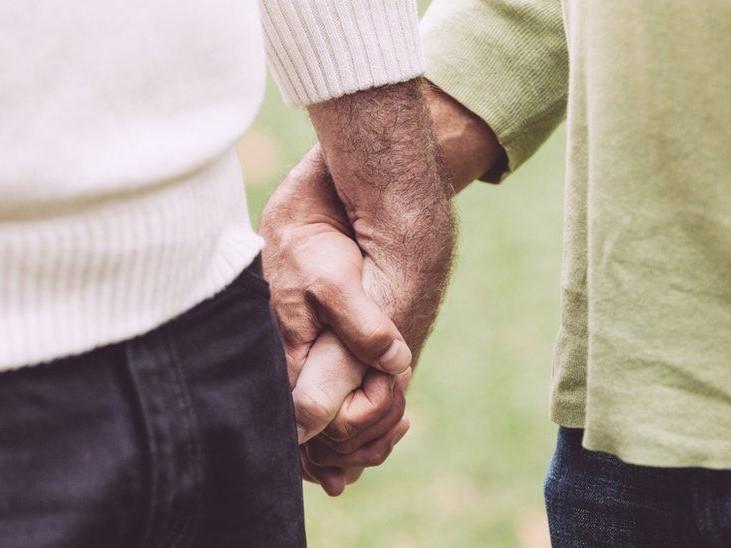
Sanctions on adult homosexual behavior in the United Kingdom were in place throughout the twentieth century. Alan Turing, the famous WWII codebreaker, for example, was charged with gross indecency with another man in 1952. The British government chemically castrated Turing as a punishment for this conviction. He later took his own life. Since Turing, attempts have been made to reduce the policing of homosexual behavior, and this development has expanded pardons to cover all past same-sex convictions. According to the BBC, the new legislation “means that anyone convicted or cautioned for consensual homosexual activity, under now-abolished laws, can apply to have them ‘disregarded’.” In a joint statement by University of Leeds professor Paul Johnson and LGBT Charity founder Lord Michael Cashman, “parliament has a duty to wipe away the terrible stains which they placed, quite wrongly, on the reputations of countless gay people over centuries.”
|
|
Please share recent research you would like to see featured, including your own!
Send it to carceralstudies@ou.edu
|
|
ABSTRACT: How do routine police encounters build or undermine community trust, and how might they contribute to racial gaps in citizen perceptions of the police? Procedural justice theory posits that officers’ interpersonal communication toward the public plays a formative role, but experimental tests of this hypothesis have been constrained by the difficulties of measuring and manipulating this dimension of officer-citizen interactions. Officer-worn body camera recordings provide a novel means to overcome both of these challenges. Across five studies with laboratory and community samples, we use footage from traffic stops to examine how officers communicate to drivers and whether racial disparities in officers’ communication erode institutional trust in the police. Specifically, we consider the cumulative effects of one subtle interpersonal cue: an officer’s tone of voice. In Studies 1A, 1B, and 1C, participants rated thin slices of officer speech. Participants were blind to the content of the officer’s words and the race of their interlocutor, yet they evaluated officers’ tone toward White (vs. Black) men more positively. By manipulating participants’ exposure to repeated interactions, we demonstrate that even these paraverbal aspects of police interactions shape how citizens construe the police generally (Study 2), and that racial disparities in prosodic cues undermine trust in institutions such as police departments (Study 3). Participants’ trust in the police, and personal experiences of fairness, in turn, correlated with their perceptions of officer prosody across studies. Taken together, these data illustrate a cycle through which interpersonal aspects of police encounters erode institutional trust across race.
|
|
ABSTRACT: While research has consistently shown that in-person prison visitation is associated with reduced recidivism, much less is known about the effects of video visits. This study compares recidivism outcomes between 885 inmates who had at least one video visit and a matched comparison group of 885 who did not receive a virtual visit. Video visits reduced two measures of recidivism (general and felony reconvictions) but did not have a significant effect on the other two measures (violent reconviction and technical violation revocations). As the number of video visits increased, so did the size of the recidivism reduction, at least for general and felony reoffending. Despite the generally favorable impact on recidivism, video visitation was used sparingly by Minnesota’s prison population.
|
|
ABSTRACT: The 1847 Inquiry into General Treatment of Convicts in Hulks at Woolwich publicly exposed the prison hulk system as one that used, mistreated, and trafficked convict corpses. By focusing on the treatment of deceased convicts on board British prison hulks, this article enhances our understanding of how both the hulk system and anatomy inspectorate were administered in the years that followed the passing of the Anatomy Act. Assessing conflicts between and weaknesses within these two systems provides a unique perspective on gradual changes in public and parliamentary attitudes towards convicts, medical men, dissection, and death in the nineteenth century.
|
|
SUMMARY: Incarceration is part of the scholarly analysis of crime and inequality, but penal institutions largely remain a black box. Incarceration is often treated as a warehouse that removes people from society, or a diploma mill that confers the negative credential of a prison record. Unlike research on other institutional settings, like schools or hospitals, what happens inside prisons and jails does not figure greatly in the analysis of their effects. This essay will seek to look inside the black box and examine social dynamics inside prisons. What happens inside prisons and jails matters, because of the extreme scale of incarceration and the harsh conditions of penal confinement in the United States.
|
|
Updates, Events & Opportunities |
|
New Carceral Studies Board Member
The Carceral Studies Consortium is pleased to welcome our newest board member:
|
|
|
OU Libraries and Carceral Studies Consortium Assemble “Racial Capitalism” Library Guide
In a collaborative effort between OU Libraries and the Carceral Studies Consortium, a library guide on “Racial Capitalism” is now available for all students, staff, and faculty. Racial capitalism contends that racist oppression is central to how capitalism operates. Racial subjugation is not one specific manifestation of a larger capitalist system, but rather, capitalism itself is a racial system. The guide includes resources (written, audiovisual, and contacts) for information about the carceral state, crimmigration, and race and labor.
|
|
|
2021-2022 Carceral Studies Consortium Student Work Prize
The Carceral Studies Consortium is inviting original student essays or creative works developed as part of any course in any discipline during the 2021-2022 academic year that engages the topic of Carceral Studies, broadly conceived. Submissions are not limited to essays, but may be in any creative or scholarly format, including but not limited to art in any medium, story maps, and more.
|
|
|
ABOUT
The Consortium Newsletter will offer a roundup of a few selected articles that reflect today’s news, organizing, and thinking related to the carceral state. We understand that freedom work is built on education and engagement. Education requires an understanding of contemporary issues informed by their historical context. We hope that these curated articles will help you analyze the issues that we face and understand the community that we strive to construct.
Join the conversation!
We encourage feedback, suggestions, and article suggestions. Please reach out to carceralstudies@ou.edu with any ideas, thoughts, or recommendations.
If anyone you know is interested in receiving this newsletter and other information from the Carceral Studies Consortium, please forward them this email and they may click this link to subscribe.
|
|
Land Acknowledgment
The University of Oklahoma is on the traditional lands of the Caddo Nation and the Wichita & Affiliated Tribes. This land was also once part of the Muscogee Creek and Seminole nations. It also served as a hunting ground, trade exchange point, and migration route for the Apache, Cheyenne, Comanche, Kiowa, and Osage nations. Today, 39 federally-recognized Tribal nations dwell in what is now the State of Oklahoma as a result of settler colonial policies designed to confine and forcefully assimilate Indigenous peoples.
|
|
The University of Oklahoma is an equal opportunity institution. ou.edu/eoo |
|
|
|
|
|
|