|
Friends of St. Marks Wildlife Refuge
Reflections Newsletter - October 2025
| | |
Friends President's Message
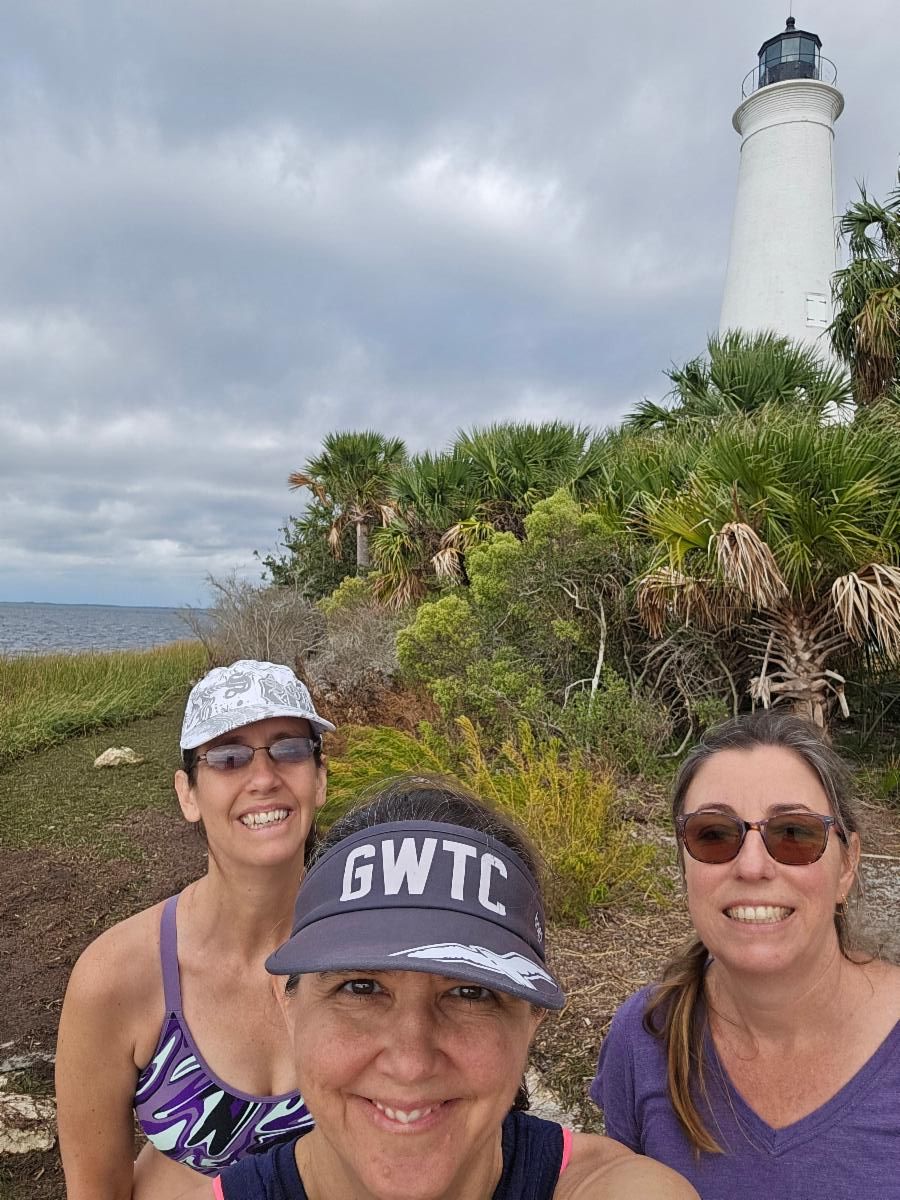
Text and Photos Courtesy Katasha Gruver
Turning Disruption into Opportunity
Lately, I’ve been thinking a lot about disruption. Just when things seem to settle into a “new normal,” something shifts again. It reminds me of our dog’s final months—each stage of decline became the “current normal,” knowing it wouldn’t last. Learning to adjust to these ongoing changes can help us personally, socially, and as an organization.
In a Certified Public Manager course I took years ago, they talked about how change is happening faster than ever. That means disruptions aren’t rare anymore—they’re part of the rhythm. Some are clearly positive, like medical or tech breakthroughs. Others, especially those that affect our personal lives or institutions, can be harder to process and take time to reveal any silver lining.
I’ve been reading up on how people cope with disruption, and a few ideas stood out:
- Disruptions can lead to growth and creativity—if we approach them with intention.
- Eastern philosophies encourage letting go and flowing with life. Western science now supports this, showing that adaptability is key to mental health.
- Active acceptance: facing challenges and responding constructively supports positive mental health outcomes.
- Navigating disruption isn’t about ignoring problems or giving up—it’s about staying curious and resilient. Just showing up matters.
That last point really hits home for me. I keep a quote by runner Des Linden near my door: “Keep showing up.” She won the Boston Marathon after years of various setbacks and disruptions, even during that event (but amid plenty of other successes). I see that reminder every day—whether I choose to run or rest, it’s about staying committed.
Even with recent changes, the Friends of the St Marks National Wildlife Refuge are still showing up. While some events are on hold, we’re continuing to support the biology program, fund port-a-potties, and hosting the Sunday Talks off-site. We’ve had a few volunteers spending their Saturdays removing trash. Thanks to WastePro in Wakulla for providing free drop off.
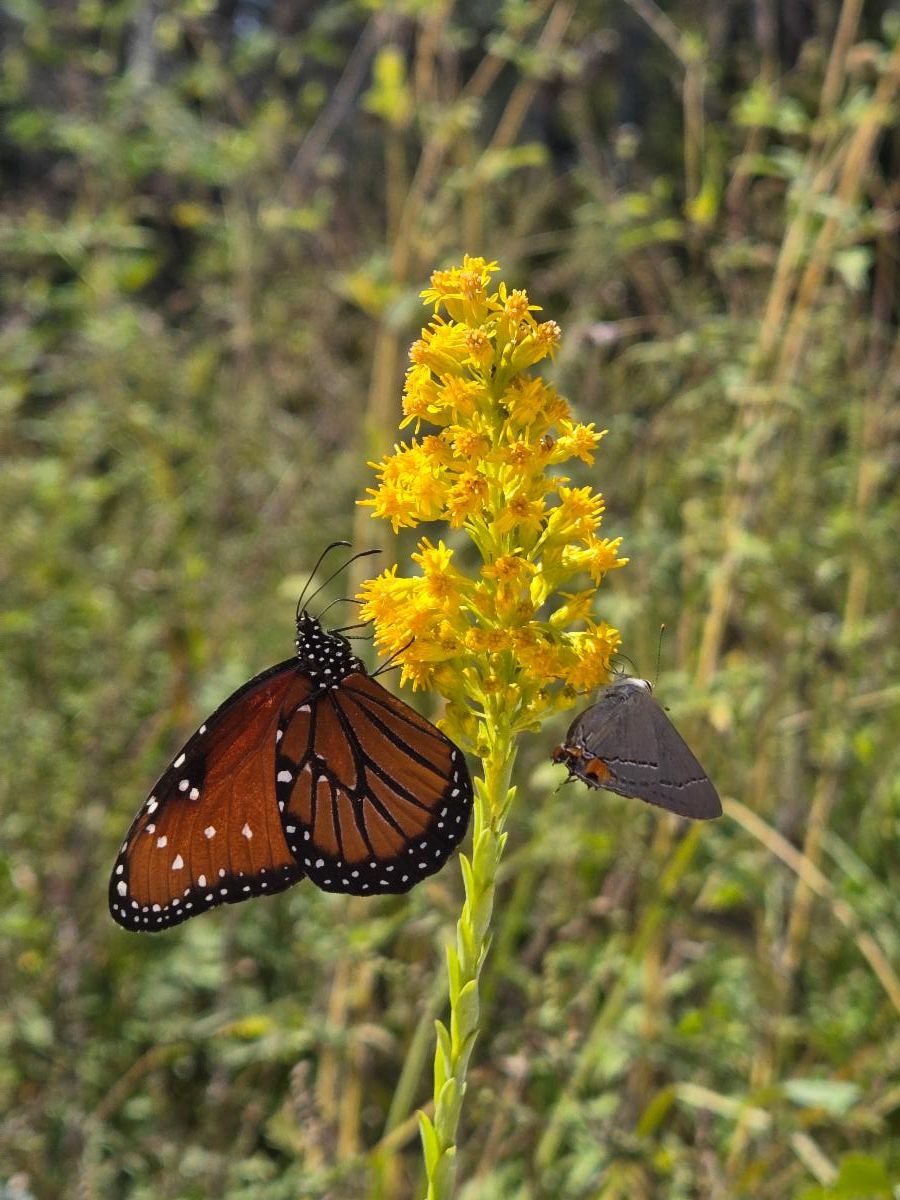
We don’t know what’s next, but we do know we have a strong community that keeps showing up for this beautiful Refuge. Please invite your friends to become our Friends and come down soon to enjoy the monarch butterflies and all the wonderful migrating birds.
References:
http://Turn life’s disruptions into a path forward with this 2-step process
https://pmc.ncbi.nlm.nih.gov/articles/PMC7236744/
| | |
Refuge Report
Summer 2025 St. Marks NWR Internship
Text and Photos Courtesy of Julia Thomas & Sofia Monteiro
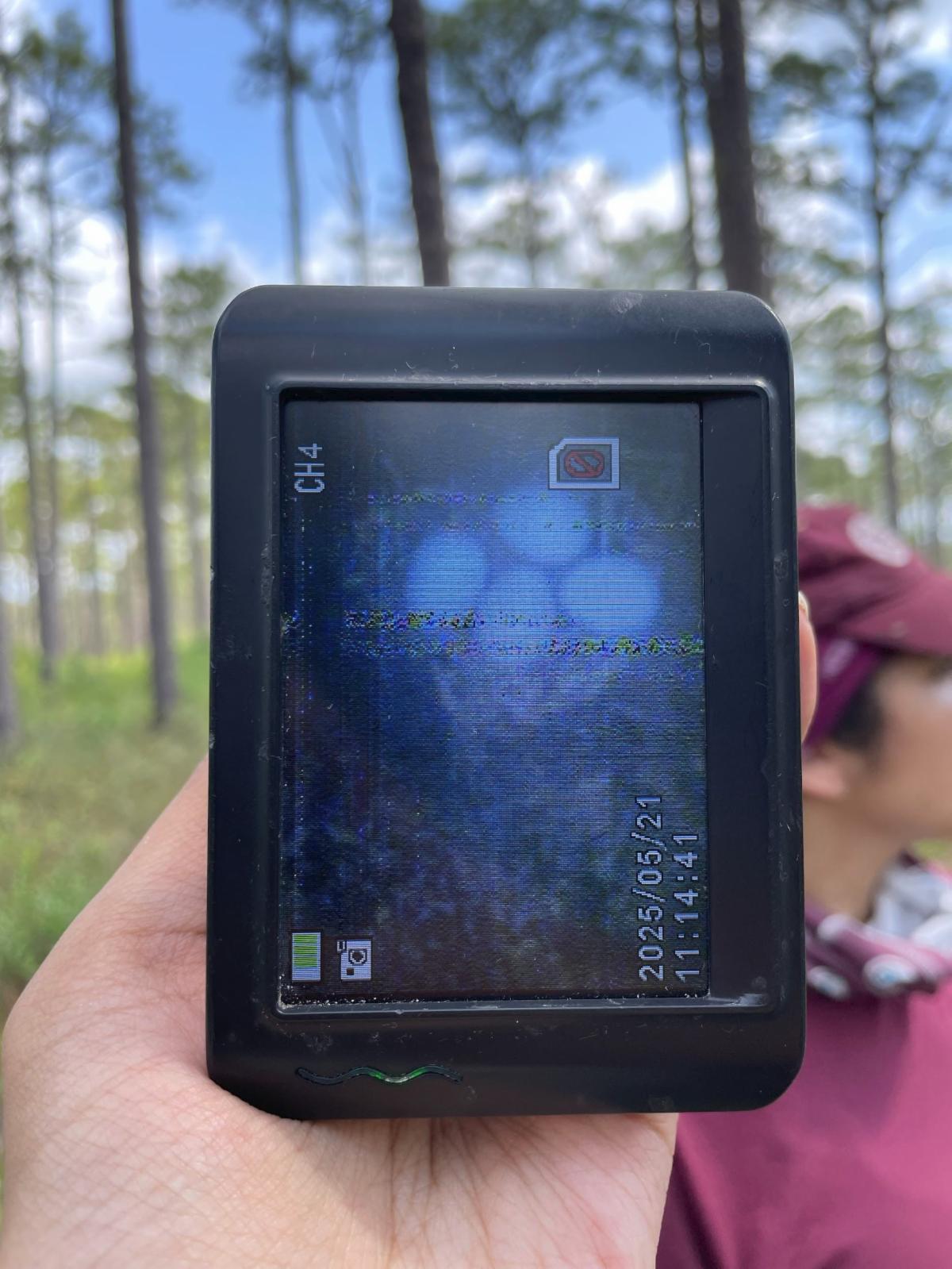
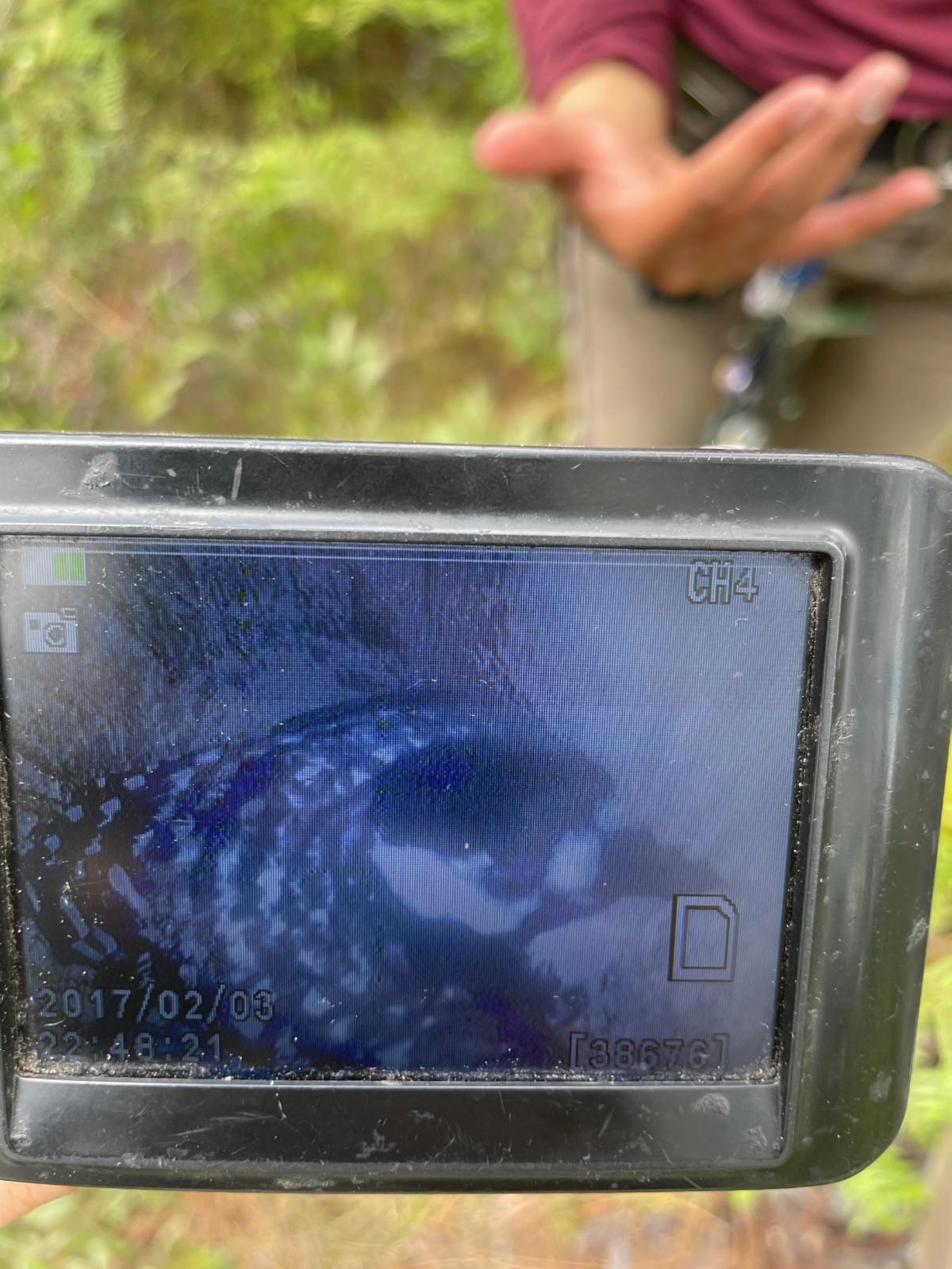
We would like to thank the Friends for the contributions that have allowed us to have this internship. We have gained so much from this opportunity and have been able to become more independent as professionals in this field. The experiences we have had in this position have been once in a lifetime experiences. We both have had an absolute blast working on the refuge this summer and have gotten the opportunity to see so many different species not to mention getting to meet so many amazing people here and other organizations. Below is a small summary of our time here at St. Marks NWR featuring some of our favorite memories and experiences. One of our primary projects for this internship was monitoring the 85 Red Cockaded Woodpecker clusters on the refuge during breeding season. We both spent this time enjoying the beautiful pine flatwoods in the Panacea and St. Marks unit of SMNWR while getting to learn about RCWs. This primarily involved inspecting RCW cavities in search of nesting activity. We had an extremely successful RCW season on the refuge this year and found many active nests.
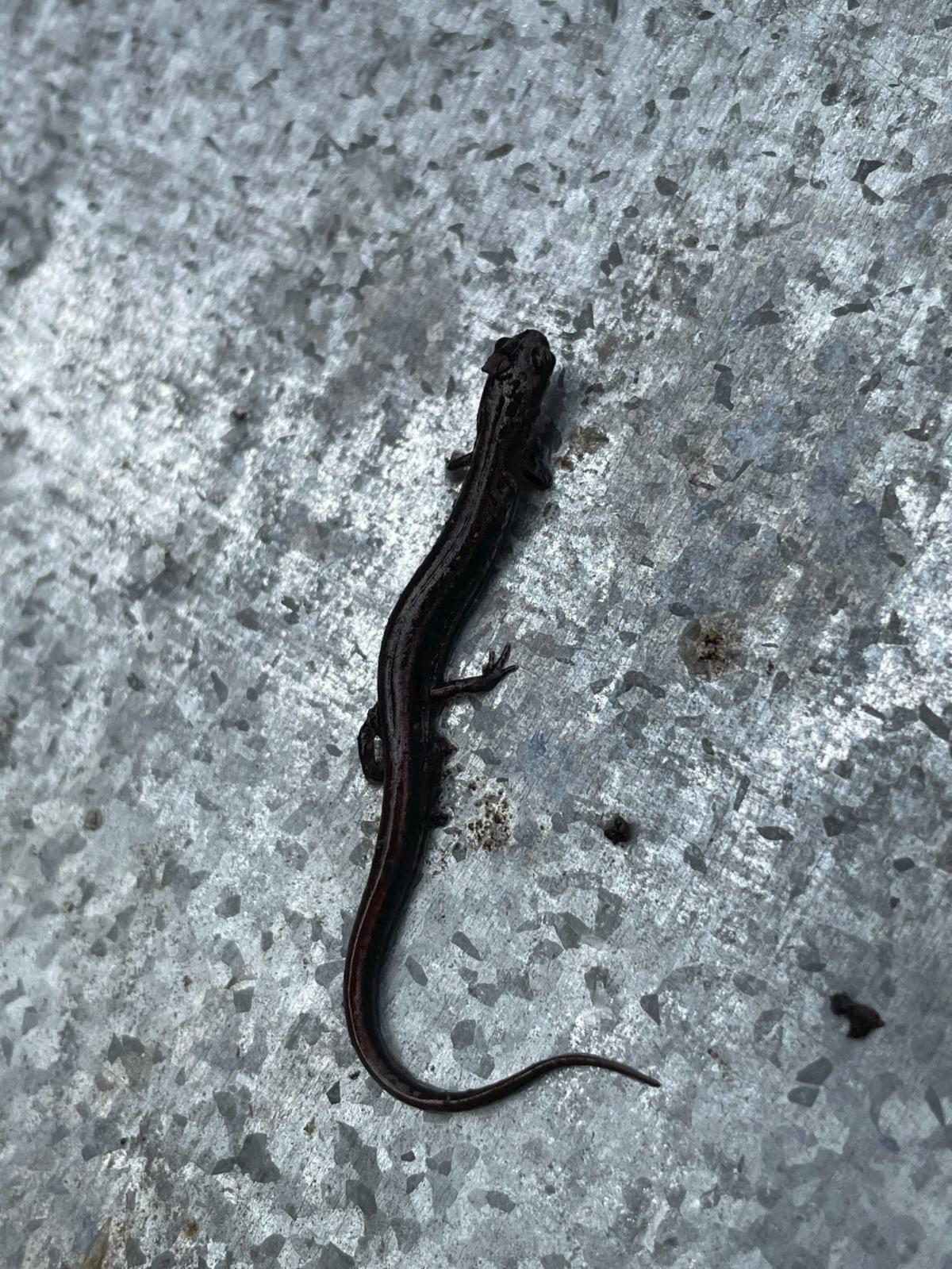
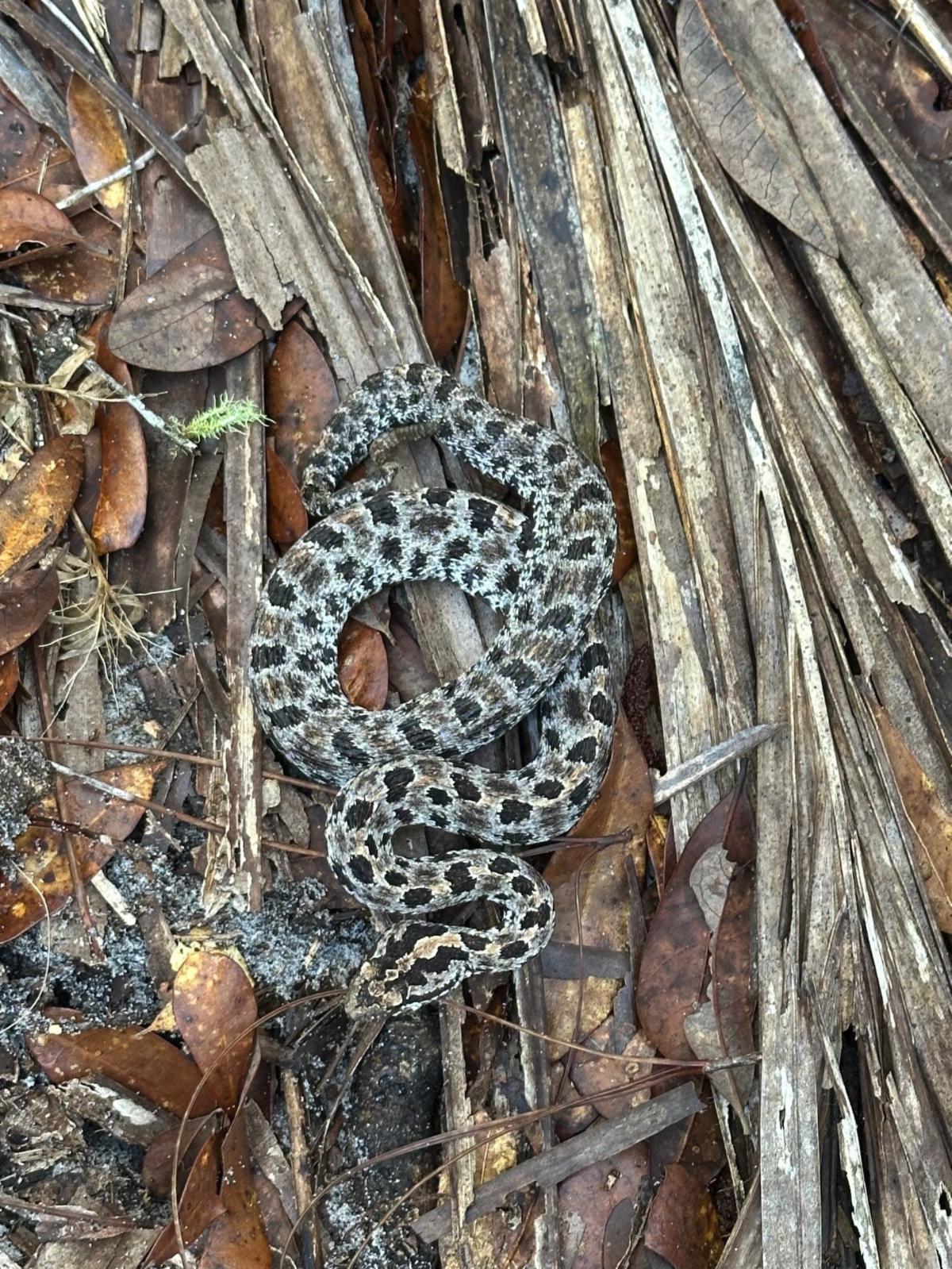
Once the RCW breeding season came to an end, we spent the second half of our summer working on various other projects and got many different amazing opportunities. Habitat restoration in several ponds across the refuge has been our other primary project. This has allowed us to get hands-on experience working with herbicide application and different hand tools. It also taught us a lot about what ideal habitat looks like, how to identify different types of plants, and what exactly goes into restoring a habitat. It was extremely rewarding getting to contribute directly to improving habitat for the endangered Frosted Flatwood Salamander on the refuge. One of our highlights from these experiences was getting to remove the last drift fence from one of the ponds. While it took a long time and we were working primarily in the rain, we found several Dwarf Salamanders (Eurycea quadridigitata), an Eastern Newt (Notopthalmus viridescens), a bronze frog (Rana clamitans), a southern toad (Anaxyrus terrestris), and a Copperhead (Agkistrodon contortrix).
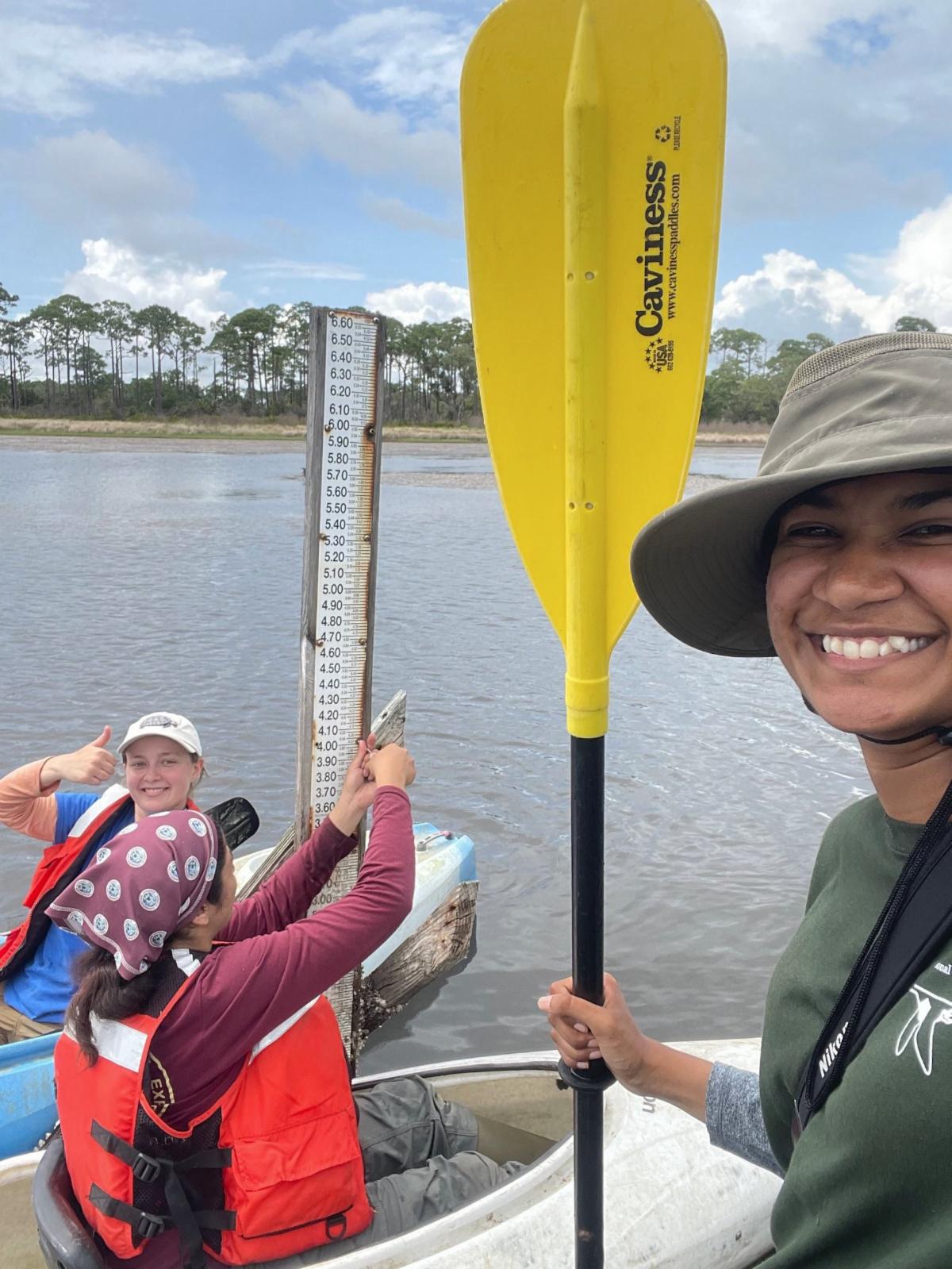
One of our favorite experiences throughout the summer was getting to monitor the impoundments on the refuge and manage the water control structures. This let us see a very different side of the refuge from the forests we worked in while monitoring RCWs and doing habitat restoration. We got to witness firsthand how much wildlife utilizes the freshwater and saltwater in the impoundments and saw so many cool wading birds, shorebirds, and sea birds!
| | |
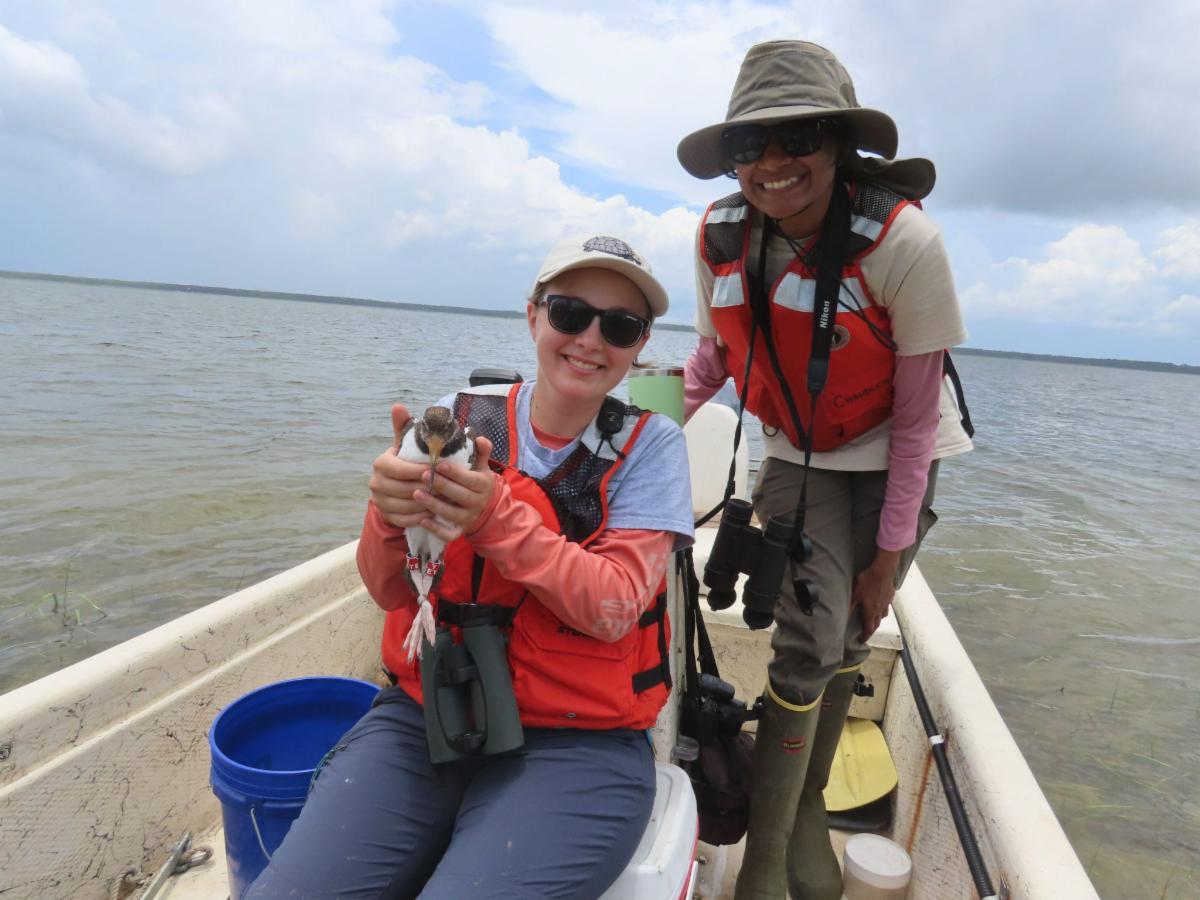
One of the highlights of this internship was being able to see and participate in the collaborative efforts of multiple agencies. Getting to witness the effort it takes for everyone to come together on a common goal is inspiring especially in a time when this field of work is facing a lot of uncertainties. We were able to attend the Southern Range Translocation Cooperative (SRTC) 2025 RCW Meeting and work with several team members from the Amphibian and Reptile Conservancy (ARC) to restore ponds for new salamanders to be introduced to. We were able to assist USDA Wildlife Services in their efforts to trap and eradicate feral hogs on the refuge. We got to help assemble the traps and learn about the methods they use to ensure successful culling in addition to sampling blood to test for African Swine Fever. We both got to practice drawing blood firsthand. We also got the opportunity to help with Least Tern and Wilson Plover surveys on the refuge with Florida FWC biologists Ezra and Caity. They are both extremely knowledgeable and taught us a lot about different shorebirds. We also got to go out with them in their boat to help band American Oystercatcher chicks. This was both of our first times doing a boat survey and getting to see American Oystercatchers and was an unforgettable experience.
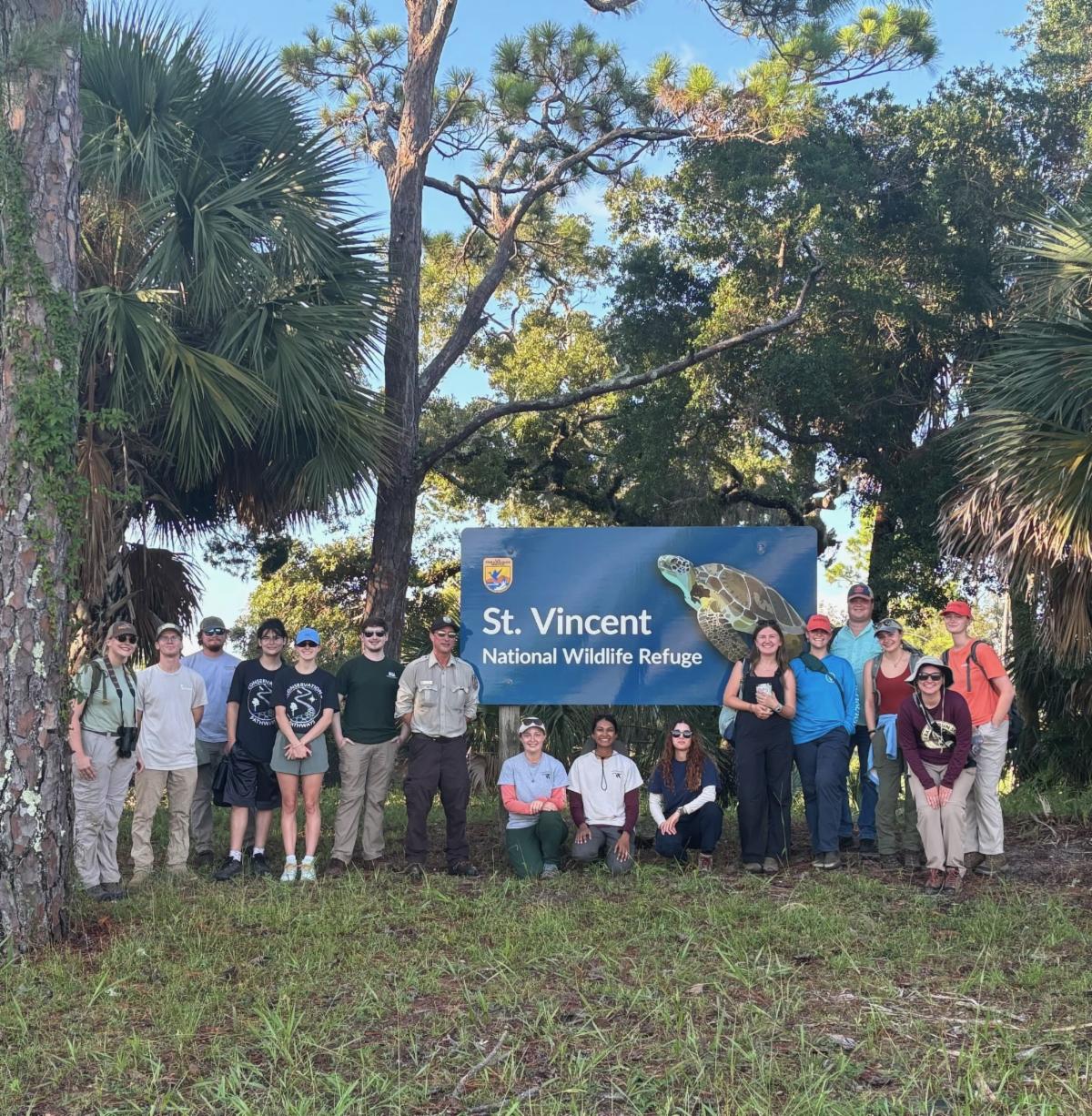
We were also able to go to Tall Timbers and assist with several snake traps. We learned how to safely remove cotton rats and several cottonmouths. We also got the opportunity to go to St. Vincent NWR, which was such a unique experience. We both helped with sea turtle surveys on different occasions and learned about the overall function and history of the island. The intern swaps we were able to attend also allowed us to meet other interns and we both made several connections with fellow interns while at these events.
| | | |
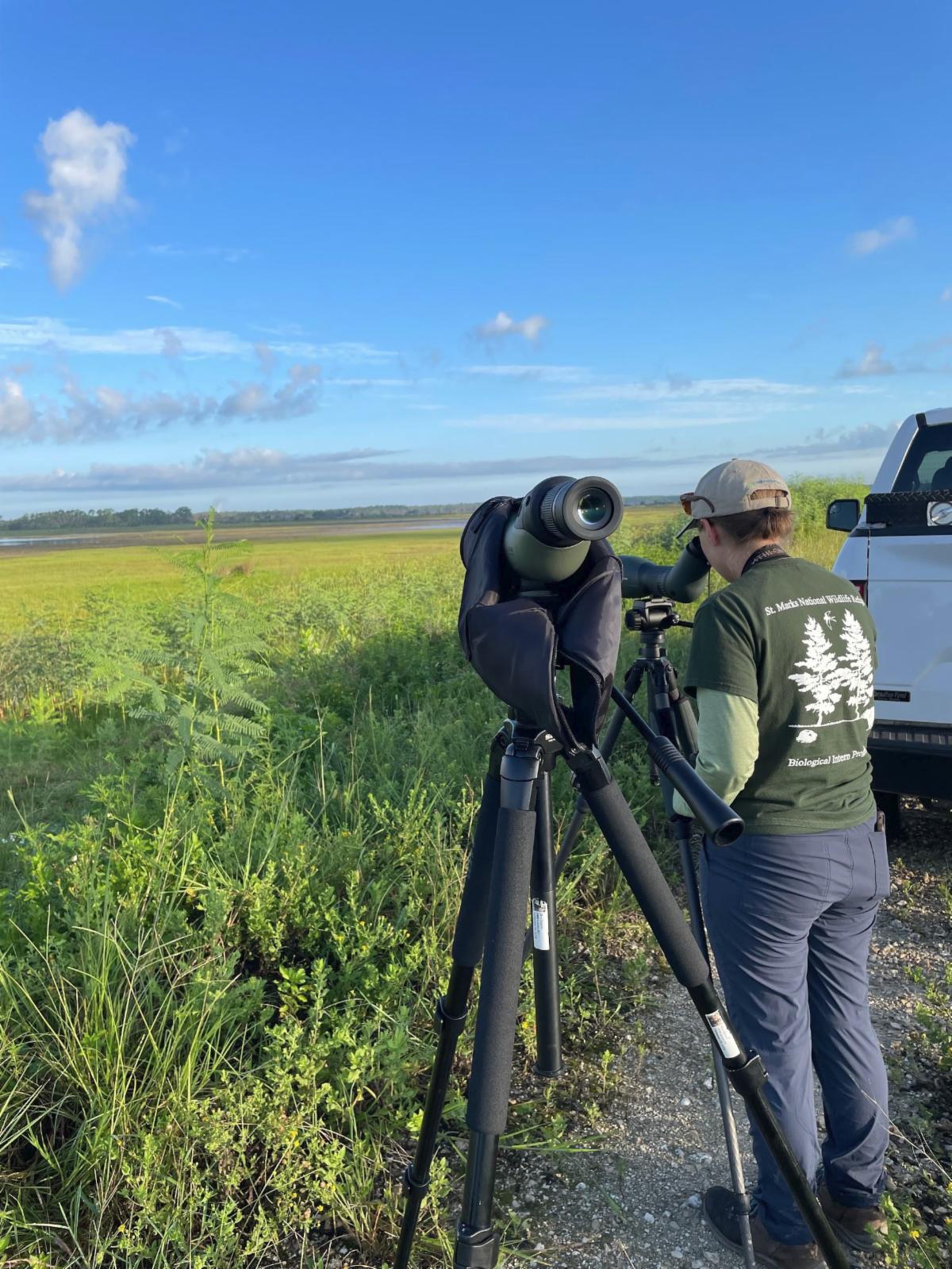
Lastly, Don Morrow let us join him for shorebird surveys on the refuge. We got to see countless species and learned a lot from Don, who was very knowledgeable. It was incredible getting to work with someone so familiar with the refuge and so passionate about shorebirds. We have both gotten much better with our bird ID over the summer and will be able to take these skills with us into our future careers.
This internship was our first federal biology position and has given the both of us an amazing experience that will shape the rest of our careers. Julia is returning to the University of Montana this fall to continue her undergraduate degree and Sofia will be continuing her internship here into November and is currently looking into different masters programs to pursue after her time here. This job has given us countless new experiences and has truly given us a step up into our careers. We want to thank you for giving us the opportunity to develop our skills in the biology field. We learned many practical skills that college alone doesn’t teach, and it will go a long way in helping us have a successful career in biology. Thank you again!
| | |
Seeking Nature Store Manager
Text and photos courtesy Robin Will
If you love St Marks National Wildlife Refuge and helping others, please read on! The Friends are the nonprofit citizen support group for the refuge. The mission of the
Friends is to promote the understanding and conservation of the refuge wildlife, landscape, and historical resources. Volunteers power the engine of the Friends,
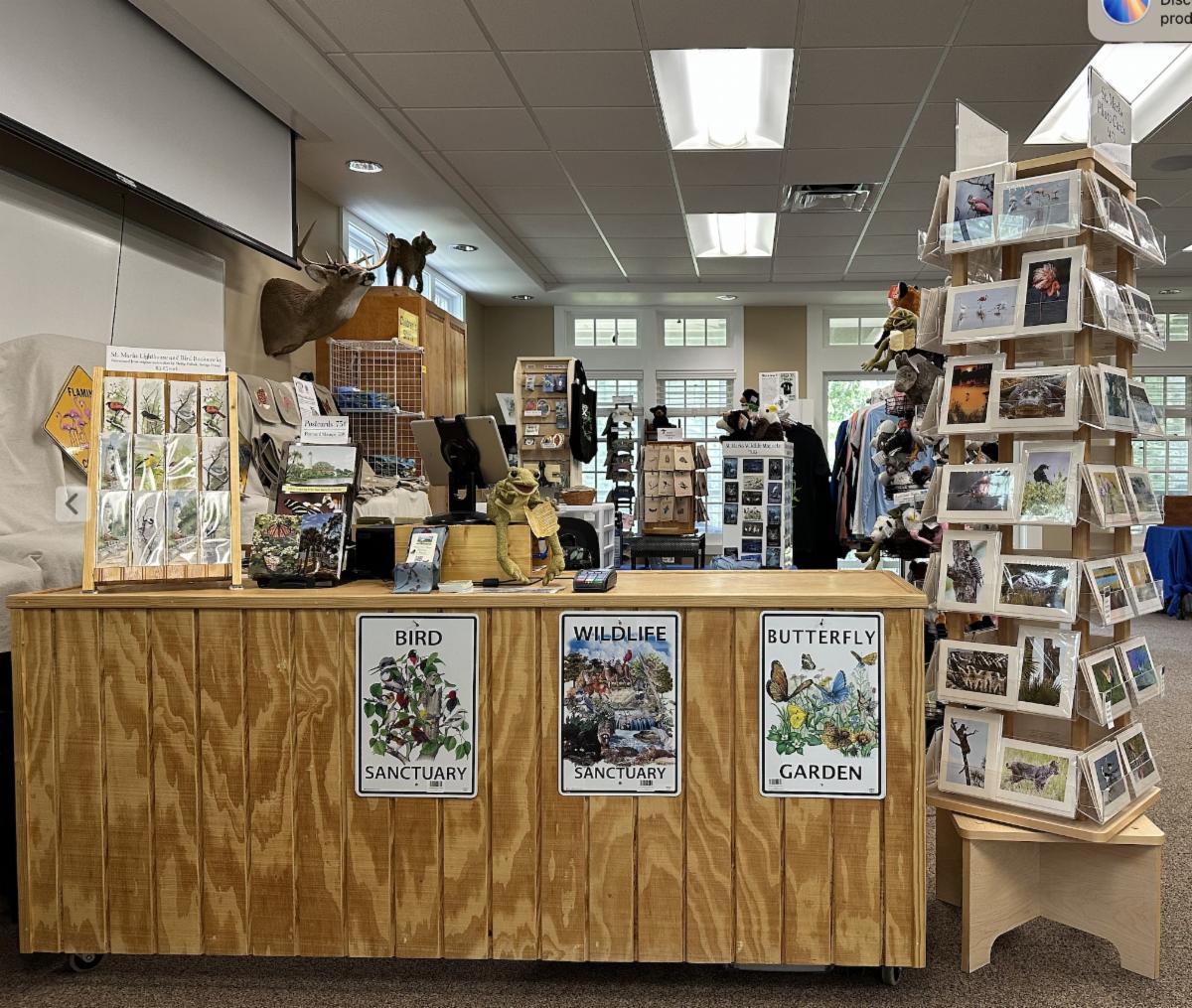
especially staffing its successful Nature Store. Essentials such as insect repellent and caps are available, along with field guides for plants and animals, stunning t-shirts and sunshirts, jewelry, mugs, notecards and much more. Volunteers help visitors with information to enhance their experience hiking, birdwatching, fishing and visiting the historic St Marks Lighthouse along with recommending merchandise. Their friendly greetings welcome folks from all over the world to learn and enjoy our community.
The current store manager Rita LeBlanc is ready to take on other volunteer activities but will be glad to meet with any interested people and introduce the store and provide training and support for a smooth transition. She has enjoyed shopping for new and unique items and has built a wonderful team of volunteers to run the store. For more details about the duties of the Nature Store manager, contact Rita (naturestoremanager@gmail.com) by November 15.
| | |
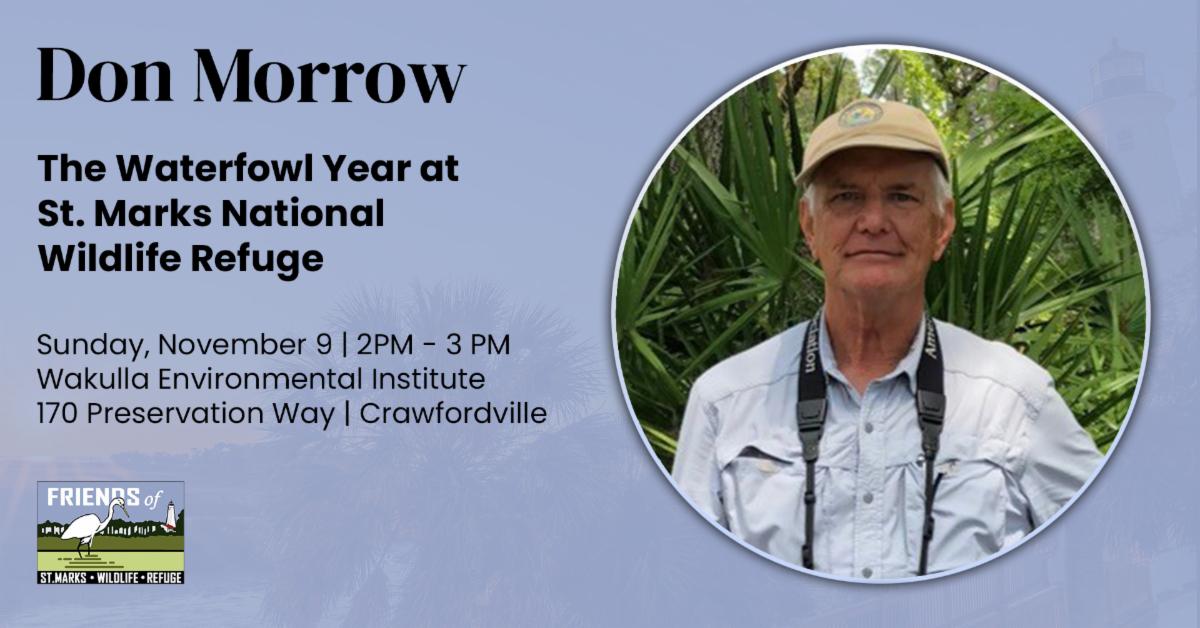
Click on the picture to register for Don Morrow's November Second Sunday Talk. If you haven’t heard Don speak or haven’t read his monthly email posts, below is a flavor from a recent interview on WFSU’s Ecology Blog, and his October email:
Winter birding pro-tips for the Florida panhandle: https://blog.wfsu.org/blog-coastal-health/tag/don-morrow/
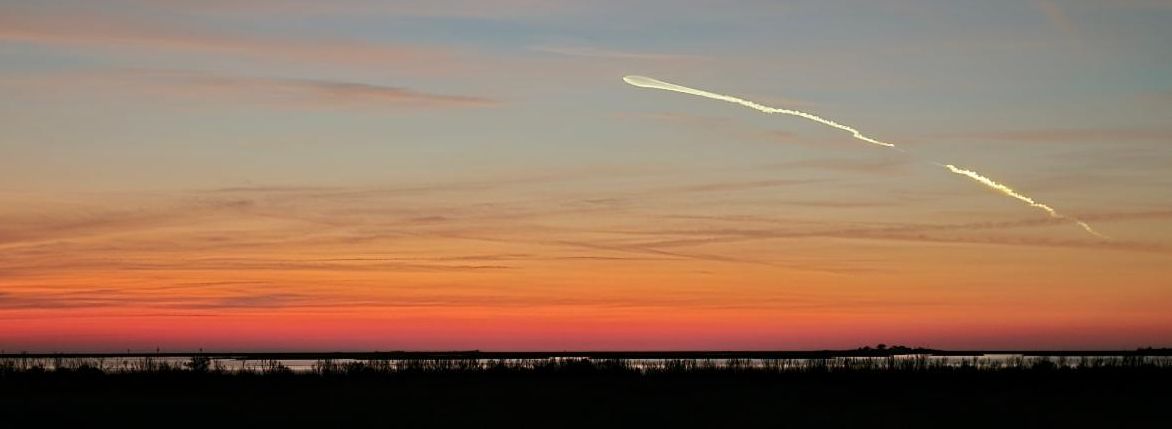
By mid-October sunrise at St. Marks NWR comes late and it was still nighttime as I carefully made my way down the levee under the pale light of a fat crescent moon sitting in a dark star-spattered sky. It was a cool morning, in the upper fifties, but I was still watching the levee surface for any dark shape that might be a gator. When I looked up again, the eastern sky was cut by a luminous wavy white band, which stood out starkly against the night sky.
Space X had launched a Falcon 9 from Cape Canaveral earlier that morning (see photo at top of newsletter for a view of the launch from Bottoms Road courtesy Katasha Gruver). Although dawn was still a half hour away, light from the sun, rising somewhere out in the Atlantic, was hitting the upper atmosphere, illuminating the rocket’s contrail. From the marsh around me, I could hear the squonk of baby gators and from the distant treeline, the hooting monkey call of a Barred Owl. I watched the high-tech pyrotechnics as the contrail slowly shifted colors and faded as the sky lightened.
Mid-October is a transitional time in Fall migration. Transmigrants are still streaming through, but our wintering birds are beginning to arrive. Yellow Warblers are still passing through the refuge and will continue to do so into early November. I saw lots of Palm Warblers down from the boreal forests of western Canada, most are headed to the West Indies. Almost all of our wintering Palm Warblers are the “yellow” subspecies from eastern Canada. They will soon be arriving on the refuge. A large flock of Blue-winged Teal had stopped on Mounds Pool 3. Most will continue on, a few as far as Brazil. With them were a handful of Northern Shovelers that will overwinter in the big islands of the Caribbean, perhaps Hispaniola or Cuba.
October sees not only transmigrants, but also the arrival of the refuge’s wintering species. Eastern Phoebes and Swamp Sparrows are suddenly common and I saw my first Yellow-rumped Warbler of the season. Among the shorebirds arriving for the winter, I found Wilson’s Snipe and the first fifty Dunlin of the season. By next month there may be two thousand Dunlin at St. Marks.
Our current drought has dropped the water levels on most of the ponds and pools, although Stony Bayou 1 still has water. There, I found a large flock of waders; Tricolored and Little Blue Herons, along with twenty dark ibis, a mix of Glossy and White-faced. These two ibis species are common at the refuge in winter. Glossy Ibis breed on the refuge and used to be a regular sight at the refuge in summer before the collapse of the big wading bird rookery on East River Pool. Nowadays, Glossy Ibis are scarce at St. Marks in the warmer months.
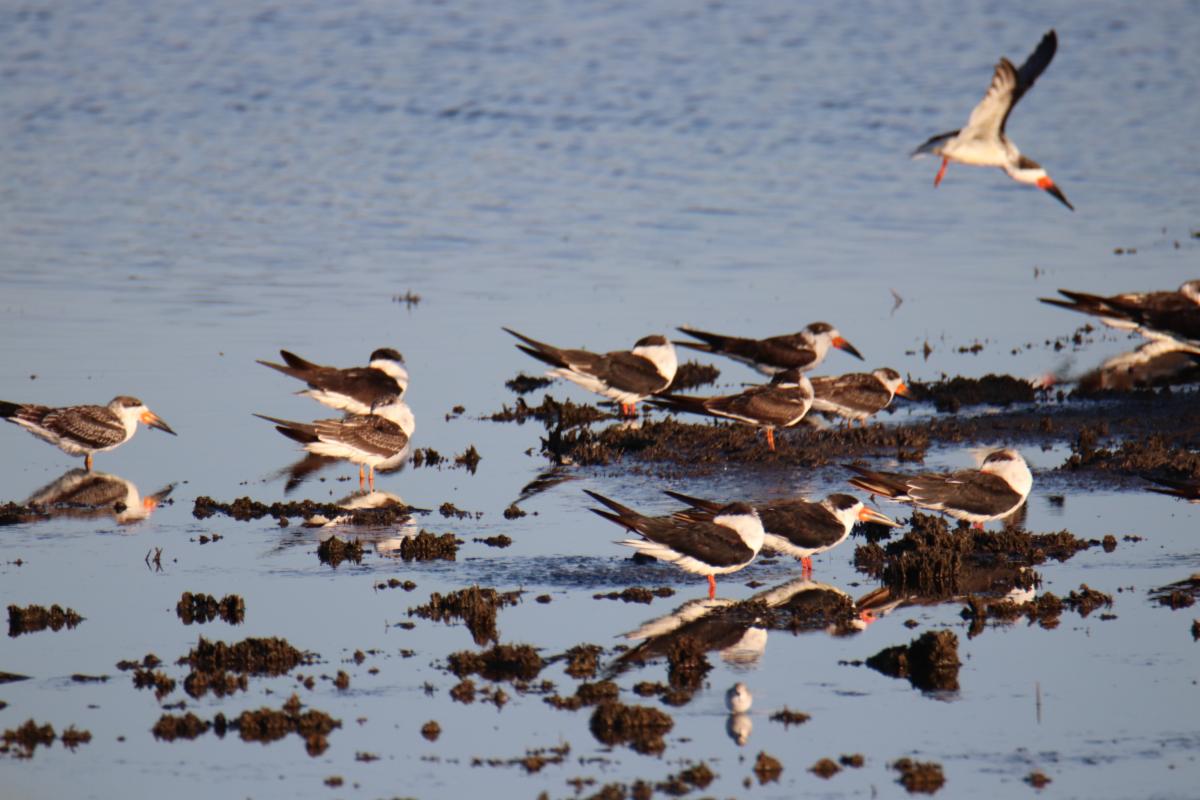
The dropping water on Lighthouse Pond is attracting birds. I had over eight hundred birds, mostly shorebirds. Of the eleven species of shorebirds on the pond, almost half were Short-billed Dowitchers, but there were American Oystercatchers, Marbled Godwits, Willets, and a flock of over a hundred Ruddy Turnstones. Black Skimmers, Laughing Gulls and both Royal and Forster’s Terns were also resting on the pond.
My last stop was at Headquarters Pond, which is now a mudflat spotted with lily pads. Carefully scanning the exposed mud, I found twenty-six Pectoral Sandpipers. These birds are coming from the Arctic, some even from the Siberian Arctic. They are headed to their wintering grounds on the Pampas of South America.
I ended up birding the refuge for seven hours, starting in the predawn darkness and ending on a glorious blue sky Fall day. The government is still shut down, but the refuge is open. Come down to St. Marks. Your very own glorious Fall day awaits you.
| | |
Did You Know:
Fort Williams
Text and graphic courtesy Gail Fishman
🏰 Did You Know? Fort Williams Once Guarded Florida’s Forgotten Coast
Before the Civil War, the sleepy port town of St. Marks, Florida, was a bustling hub—once the fifth largest town in the state. But as shipping routes shifted, its prominence faded… until war reignited its strategic value.
🕯️ Fort Williams: A Fort Without a Fortress Did you know Fort Williams wasn’t a traditional stone fort? Built by the Confederates near the St. Marks Lighthouse, it was more of a wooden stockade—designed to shelter soldiers protecting salt workers and townspeople. Named after Colonel J.J. Williams of the 2nd Florida Cavalry, the fort stood as a brief symbol of safety during turbulent times.
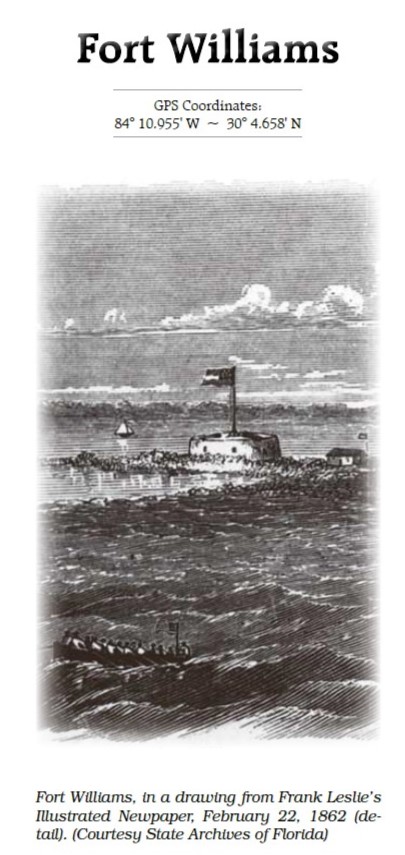
🚢 Gunboats and Blockades In 1861, President Lincoln ordered a blockade of southern ports, including St. Marks. The U.S. gunboat Mohawk clashed with the Confederate Spray, a steam-powered side-wheeler that ferried supplies between the lighthouse and the town. A dramatic drawing from 1862 captures this naval duel, with cannon fire lighting up the coast.
🔥 A Fiery Raid On June 15, 1862, Union Marines landed near the lighthouse and torched the barracks and keeper’s home. The fort was never rebuilt, but its brief existence left behind a legacy—and a few artifacts.
🧭 Lost to Time The exact location of Fort Williams remains a mystery. Historians believe it stood near the end of Cedar Point Trail. Archaeological digs nearby unearthed musket balls, whiskey jug fragments, hand-cut buttons, and glass bottle necks—silent witnesses to a forgotten chapter of Florida’s wartime story.
🌲 Explore the History Trail Want to walk through history? The St. Marks National Wildlife Refuge includes sites like Wakulla Beach, Plum Orchard, and Mounds Station. Each stop reveals layers of Florida’s past—from salt works and shipwrecks to Native shell mounds and Civilian Conservation Corps camps.
| | Become a member of the Longleaf Society today by clicking this graphic. Your monthly giving provides a tremendous boost to the Friends of St Marks Wildlife Refuge to keep providing the programs and services you have come to expect from this award winning organization. | | |
We Encourage our Friends to SHARE!
As almost all of you know, the Friends give 100% of their support to the St. Marks National Wildlife Refuge. An important way for you increase that support is to share our message. Therefore, when you get this newsletter, we encourage you to send it on to a friend. You can share it via email or through various other social media. Here's the link to the Friends Newsletter page. Scroll to the "current" entry and copy the link.
Text Courtesy Phillip Pollock
| | |
Bird Reports Assist Visitors
Don Morrow, St. Marks National Wildlife Refuge volunteer and expert birder, creates concise bird-sighting reports on a week-to-week basis. Read his current and past reports here.
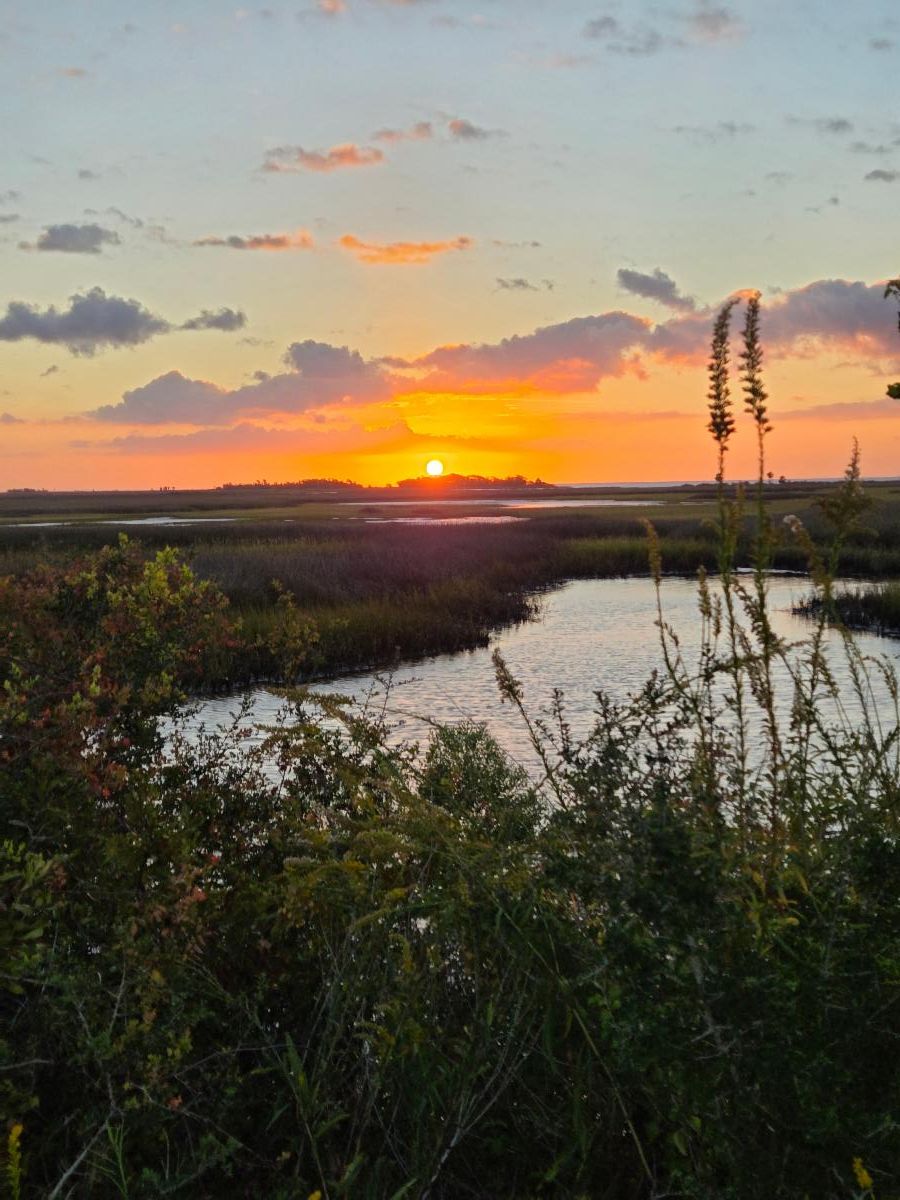
Photo Courtesy Katasha Gruver
| | Have you considered including the Refuge in your will? The Friends of St. Marks Wildlife Refuge can provide information and guide you through the process. Just call the Refuge at 850-925-6121, and ask to be contacted by the Friends Board of Directors, or email us. | | |
Reflections newsletter is a benefit of membership for Friends of St. Marks Wildlife Refuge.
It also serves as an important supplement to
the Friends' website.
Both the newsletter and the web site provide members and the public information about volunteer activities and events at the Refuge.
Reflections editor: Katasha Gruver
| | | | |