Popular programs where RSP-eligible students enrolled in fall 2021 included homeland security, engineering technologies and health sciences ...
In its 64th year of enrollment, NEBHE's Tuition Break, the Regional Student Program (RSP), continued to enhance access and affordability for residents of the six New England states while helping to support enrollment at the region’s public colleges and universities. The 9,101 students enrolled in programs offered through the RSP in fall 2021 saved an estimated total of $63.1 million on their annual tuition bills. A full-time student saved an average of $8,300. Changes in RSP enrollment in fall 2021 compared favorably against changes in overall enrollment. Nationally, total enrollment at public and independent higher education institutions (HEIs) declined by 2.7% in fall 2021, following a 2.5% decrease in fall 2020, according to the National Student Clearinghouse’s (NSC) January 2022 report, Current Term Enrollment Estimates, Fall 2021. Total RSP enrollment in fall 2021 decreased by only 0.4%, and RSP enrollment increased at half of the participating institutions.
|
|
|
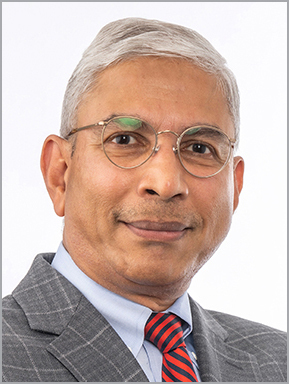
The University of Massachusetts Boston named University of South Dakota business school dean Venky Venkatachalam as the next dean of its College of Management. ... A sad passing to note: Henry Bourgeois, the former CEO of the Alfond Scholarship Foundation and before that, leader of the Maine Development Foundation (MDF) and co-founder of the Maine Compact for Higher Education, died at age 78. While leading the MDF for 21 years, Bourgeois worked to bring together Maine’s business, government, education and community leaders to address state economic development through programs such as the Maine Aspirations Foundation, Leadership Maine and the Coalition for Excellence in Education. He convened heavy-hitters from across Maine in an effort to position "College as a Right and Responsibility for all Maine People." As the Portland Press Herald noted aptly in its obituary, “Henry was a sweet, kind, soft spoken man ..." See more on these and other changes in NEJHE's Comings and Goings tally of new appointments in New England higher ed and beyond.
Pictured: Venky Venkatachalam
|
|
|
Tidbits from the NEJHE Beat ... |
|
|
Brief items from the "NEJHE Beat"—that unique constellation of issues connected to higher education and also to social justice, economic and workforce development, regional cooperation, quality of life, academic research, workplaces and other topics that together say "NEJHE."
|
|
|
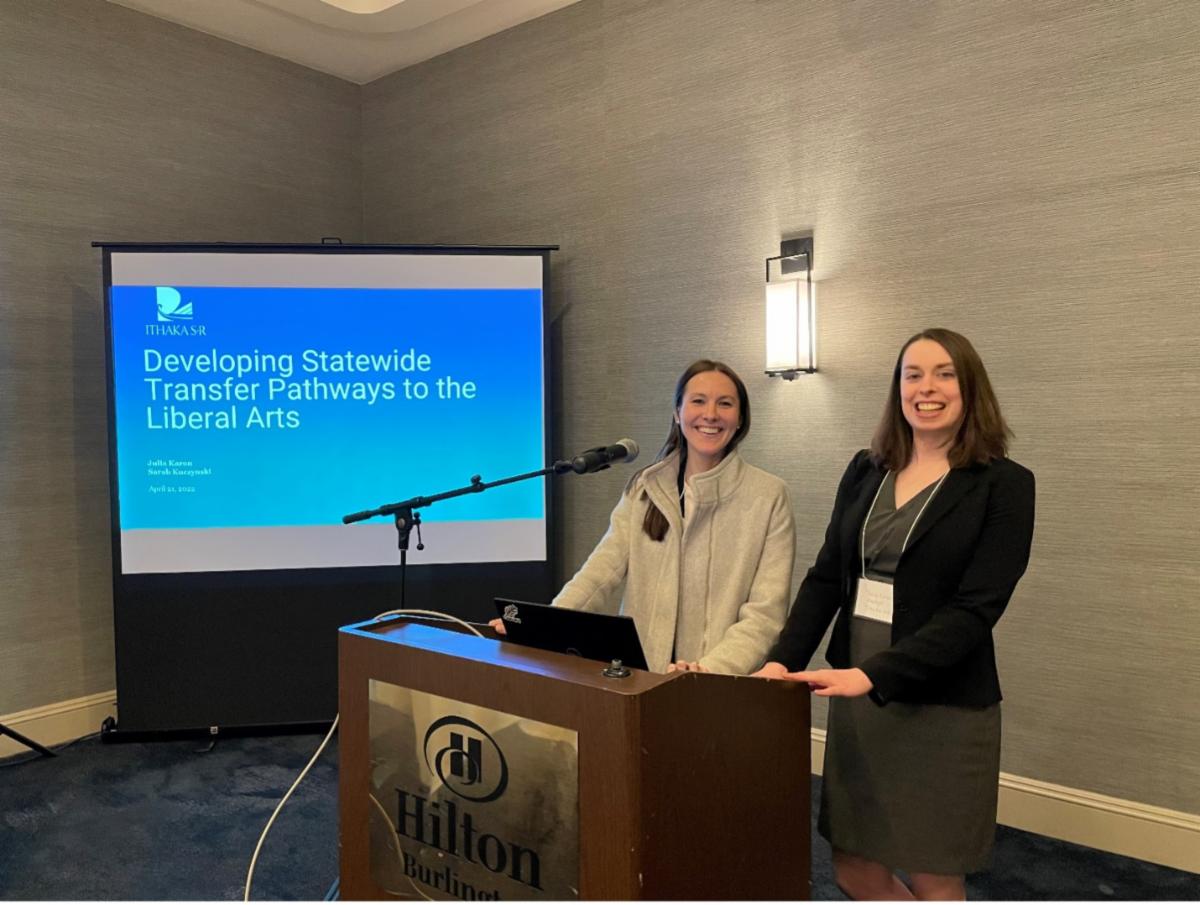
The 2022 annual conference of the New England Transfer Association held last week in Burlington, Vt., featured a presentation by NEBHE’s Transfer Guarantee Consultant Sarah Kuczynski (left) and Ithaka S+R’s Julia Karon (right) on “Developing Statewide Transfer Pathways to the Liberal Arts.” Karon is part of the team that recently released the Playbook for Transfer Pathways to the Liberal Arts. The conference attracted transfer advisors and transfer admissions officials from NEBHE’s institutional partners in the Guarantee. The presentation followed a keynote address by John Gardner, in which the founder and chair of the eponymous Gardner Institute extolled the value of statewide systematized transfer initiatives.
|
|
|
We seek two college students (juniors, seniors or grad students) to work and learn at NEBHE ... one as a Communications Intern and one as a Journalism Intern. Responsibilities will include drafting content posted to the NEBHE website, writing news releases, assisting with soliciting and editing commentary by staff and outside contributors to The New England Journal of Higher Education (NEJHE), creating and editing video clips and helping with social media and email communications. Students with federal work-study funds preferred.
|
|
|
Some Q&As from The New England Journal of Higher Education ...
|
|
|
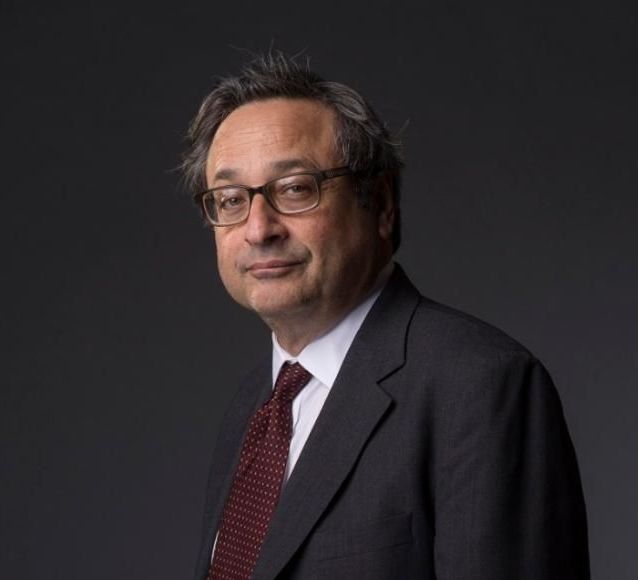
When Lawrence Schall was appointed president of the New England Commission on Higher Education (NECHE), the Covid pandemic was raging. Undeterred, Schall made it a top priority to start with a road trip—to drive out and visit a couple-dozen of the more than 200 higher education institutions in the six New England states that he is in charge of monitoring as head of the region's chief accrediting agency. (NECHE also accredits 12 American-style institutions in other countries). “Because we were in Covid," Schall reflected, "institutions had to turn on a dime. Their resiliency and [an] entrepreneurial spirit that people don’t necessarily associate with higher education in America, was quite evident.” NEBHE President Michael K. Thomas and NEJHE Executive Editor John O. Harney were pleased to talk with Schall recently for this exclusive NEJHE Q&A, exploring the financial and demographic pressures facing New England's postsecondary institutions, some innovations they are forging to address the challenges, the prospect of increased college consolidations and the changing role of accreditation. On the latter, Schall spoke of recently accrediting Rhode Island's nontraditional College Unbound, reminding us: “You want to have the flexibility and the openness to allow new entries into the market and not have barriers that basically keep the same 200 schools.”
|
|
|
NEJHE Executive Editor John O. Harney asks Columbia University professor and Teagle Foundation President Andrew Delbanco about higher education and the state of intellectual life. Among other things, Delbanco warns that the perception of higher education as "a wasteful, inefficient 'industry' with little accountability" is mostly "a grotesque distortion." But it's a hard one to combat, and "overpaid presidents and coaches, admissions bribery scandals and stories of dissolute students don't help." It's time, he argues, to "tell our story better than we have been doing—to convey how hard most faculty work, how modestly most are paid, how little job security they enjoy, and, most broadly, that higher education remains an indispensable public good in a democratic society."
Pictured: Andrew Delbanco
|
|
|
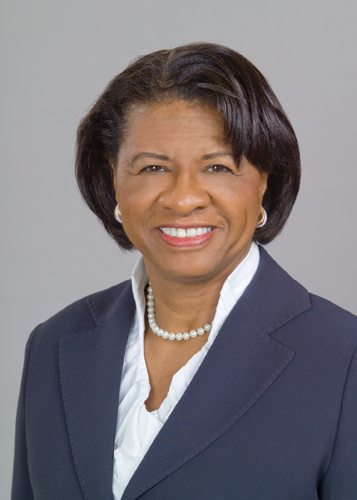
As part of NEJHE's series on New Directions for Higher Education, University of Massachusetts Boston dean Philip DiSalvio interviews Muriel Howard, then-president of the American Association of State Colleges and Universities. "We remain below pre-recession levels of funding for higher education," says Howard. "In addition, campuses have had to take on higher student enrollments without additional funding [because] when the economy is in difficulty, students tend to return to college to re-tool."
Pictured: Muriel Howard
|
|
|
NEJHE NewsBlast is a summary of NEJHE content and other news around NEBHE prepared weekly by NEJHE Executive Editor John O. Harney and emailed every Wednesday to opinion leaders and practitioners. When responding to NEJHE content, please make sure that your remarks are relevant, courteous and engaging. Individuals are responsible for their comments, which do not represent the opinions of the New England Board of Higher Education. We urge commenters to briefly note their occupational or other interest in the topic at hand. Please refrain from offensive language, personal attacks and distasteful comments or they may be deleted. Comments may not appear immediately. Thank you for staying engaged.
|
|
NEJHE NewsBlast is sponsored by
|
|
For more information about partnering with NEBHE, click here
or send an email message to our events coordinator Marla Phippen.
|
|
© 2020 New England Board of Higher Education |
|
|
|
|
|
|
|