11th Annual Psychiatry Update Conference is fast approaching
|
|
The Louis A. Faillace, MD, Department of Psychiatry and Behavioral Sciences is proud to present the 11
th
Annual Psychiatry Update titled “Substance Use Disorders: Opioids and Beyond,” on Saturday, Feb. 8, 2020.
The opioid epidemic is well-established, and the number of overdose deaths related to opioids continues to grow at a rapid pace. The conference takes a closer look at the origins of opioids, what caused the epidemic to start, how the situation is affecting Houston specifically, and examining the latest research in current trends, treatments, and recovery in substance use disorders.
Comprehensive lectures will focus on important topics that have received national attention and are causing significant concern in the Houston area. These include an examination of electronic cigarettes’ safety and what long-term effects they have on your body, as well as a look at who is using Kush. The conference also features a panel discussion on medication-assisted treatments, a look at co-occurring disorders, and an ethics lecture on drugs, prescriptions, and the U.S. Drug Enforcement Administration.
The conference will be held at the Memorial Hermann-Texas Medical Center conference room located at 6411 Fannin Street. Doctors, psychologists, licensed counselors and therapists, nurses, social workers, students, residents, and non-health care professionals are invited to attend. Up to 7.00 CME/Psychology CE credits are available for those who attend.
Early bird registration is open until Saturday, Feb. 1. Online registration closes on Wednesday, Feb. 5. Registration will also be available the day of the conference.
A full list of speakers, topics, and registration information is also available
online
.
|
|
Selvaraj wins inaugural award
|
|
Sudhakar Selvaraj, MD, PhD, received the
inaugural early career award
from the International Society for Affective Disorders at a November conference in London, United Kingdom.
The award is presented on a nomination basis to an individual who has made a significant impact in their contribution in at least one area of advocacy, clinical practice, knowledge translation, or research in mood disorders, and is within ten years of receiving their last degree.
Selvaraj’s research centers around biological mechanisms involved in the cause and treatment of depression to better diagnose and treat patients suffering from this condition. He’s also conducted research in brain imaging of antidepressant mechanisms, which was the main research component he was recognized for.
Since joining UTHealth in 2014, Selvaraj has shown great skill in building and launching clinical programs and research work. He’s greatly impacted student health services, which he manages. He also created a collaborative clinic that focuses on perinatal and postpartum depression. Some of Selvaraj’s other work includes research into biomarkers of antidepressant response, links between inflammation and mood, and involved in the deep brain stimulation and psilocybin clinical trials.
Selvaraj says it’s a great honor to be recognized by his peers.
“It makes you feel like you’re doing the right thing,” Selvaraj said. “It motivates you to continue to work in the field and, most importantly, bring something from the research to our patients in the clinic.”
|
|
Faculty spotlight:
Fernandez focuses on brain function
|
|
Luis Fernandez, MD, is an assistant professor at the Faillace Department of Psychiatry and Behavioral Sciences, where he serves as chief of psychiatry services
at Harris Health Lyndon B. Johnson Hospital.
Fernandez did his undergrad work at Furman University. He went on to pursue his medical education at the Medical University of South Carolina (MUSC). He completed his internship, residency, and chief residency at MUSC and became an assistant professor there.
Fernandez’s passion is studying biological modalities of treatment, which is the effect a type of treatment or medication will have on the brain. He specializes in treating psychiatric conditions that involve an abnormal functioning of the brain.
Fernandez has been with UTHealth since 2016. A project he will start very soon involves electroconvulsive therapy (ECT), a procedure he began studying while at MUSC. ECT involves a brief electrical stimulation of the brain as a form of treatment when other treatment attempts have failed.
As his career progresses, Fernandez calls his position UTHealth a “perfect set-up.”
“It has allowed me to be continually connected with other disciplines and medicines,” Fernandez said. “I’m able to work with surgeons or neurologists and help to decipher really complex cases are that aren’t fully neurologic or psychiatric, it’s more like investigative work.”
|
|
MD/PhD student is accepted into training program
|
|
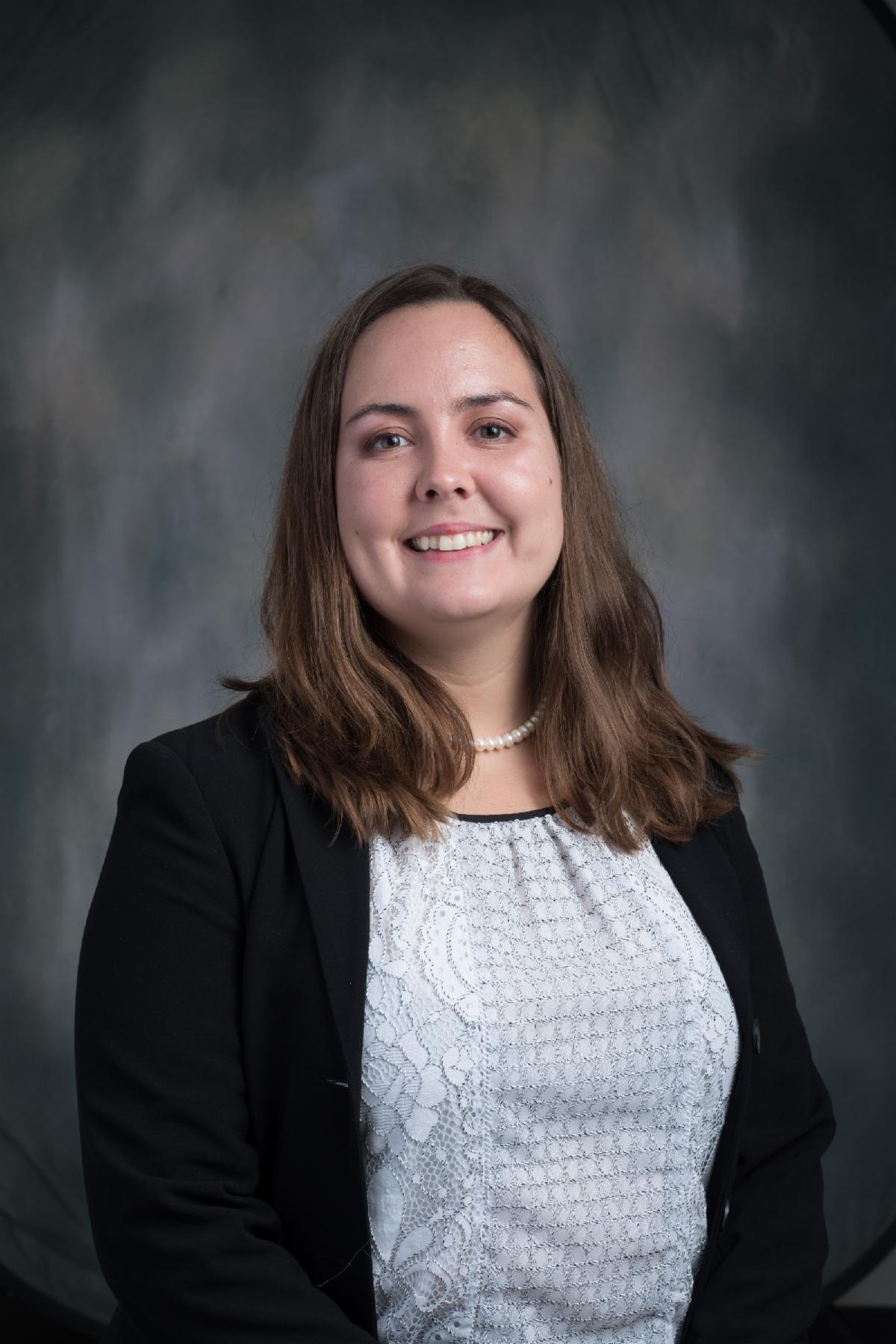
Emily Mendez was recently accepted into the Center for Clinical and Translational Sciences TL1 training program, a part of the NIH Clinical and Translational Science Award program (CTSA), funded by the National Center for Advancing Translational Science, whose mission is to promote both translational and clinical science.
Mendez is an MD/PhD student in the Program in Neuroscience at MD Anderson Cancer Center UTHealth Graduate School of Biomedical Sciences. She is in the laboratory of Consuelo Walss-Bass, PhD, in the Faillace Department of Psychiatry and Behavioral Sciences. Walss-Bass’ lab studies the genetic basis of psychiatric diseases.
As part of the TL1 program, each student must conduct a proposed research study. Mendez’s project studies cocaine use disorder and the toxic effect this drug has on the nervous system. She will create stem cells from test subjects from the
UTHealth Brain Collection for Research in Psychiatric Disorders
and convert those cells into brain cells.
From there, the cells will be exposed to cocaine, giving a visual of what cocaine does to the brain on a microscopic level. She will also compare this data to observations from human brain tissue from the same subjects in the
UTHealth Brain Collection
.
In 2006, UTHealth was one of the first institutions awarded the CTSA. A clinical and translational science collaboration program was started between the six UTHealth schools, along with MD Anderson and Memorial Hermann, composing the CCTS.
Mendez’s passion lies in translational research and finding way to apply pre-clinical research into actual clinical trials to help people in need. Translational science involves taking observations from the scientific laboratory and translating them into interventions that will improve human health, such as diagnostics and therapeutics. The TL1 training program only funds clinical and translational-based research projects and offers a variety of courses in this area.
When she heard about the program, she knew it was a perfect fit for her.
“I really value the translational priority the training program has,” Mendez said. “What’s most important to me is to be able to think about scientific questions and projects in a way that will help my patients in the future.”
|
|
Patient care: year-end review
|
|
In order to best serve patients, 24 total UTHealth locations in the greater Houston area are available for their convenience. These include UTHealth Harris County Psychiatric Center, UT Physicians clinics, Harris Health facilities, Memorial Hermann-TMC, and TIRR Memorial Hermann. Centers expand into Humble, Beaumont, Rosenberg, Baytown, and Katy.
Among all locations, patient visits reach around 80,000 annually. Everything from depression to substance use is treated by UTHealth.
Services are constantly expanding. Exciting changes and expansions going on at UTHealth:
- The Harris Center for Mental Health and IDD – pending to processing for 2 FTEs telemed outpatient
- Expanded telepsychiatry programs, increased from 2 to 10 providers in FY19
- Spring Branch Community Health Centers – expanded to 1 FTE for telemed services.
- OBGYN, Transplant and Trauma Surgery expanded services
- Broke ground on a $125 million building on the UTHealth Continuum of Care Campus for Behavioral Health. The new building, a 240-bed hospital, is a joint project of UTHealth and the Texas Health and Human Services Commission.
For a location near you, click
here
|
|
Education: year-end review
|
|
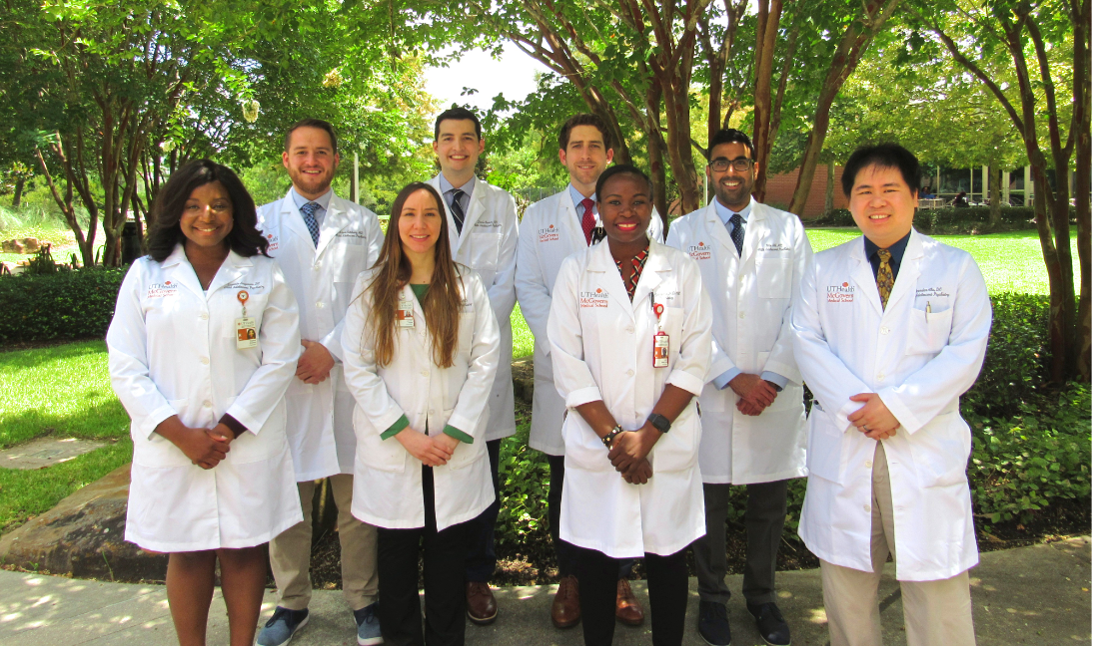
First and second year child and adolescent psychiatry fellows
|
|
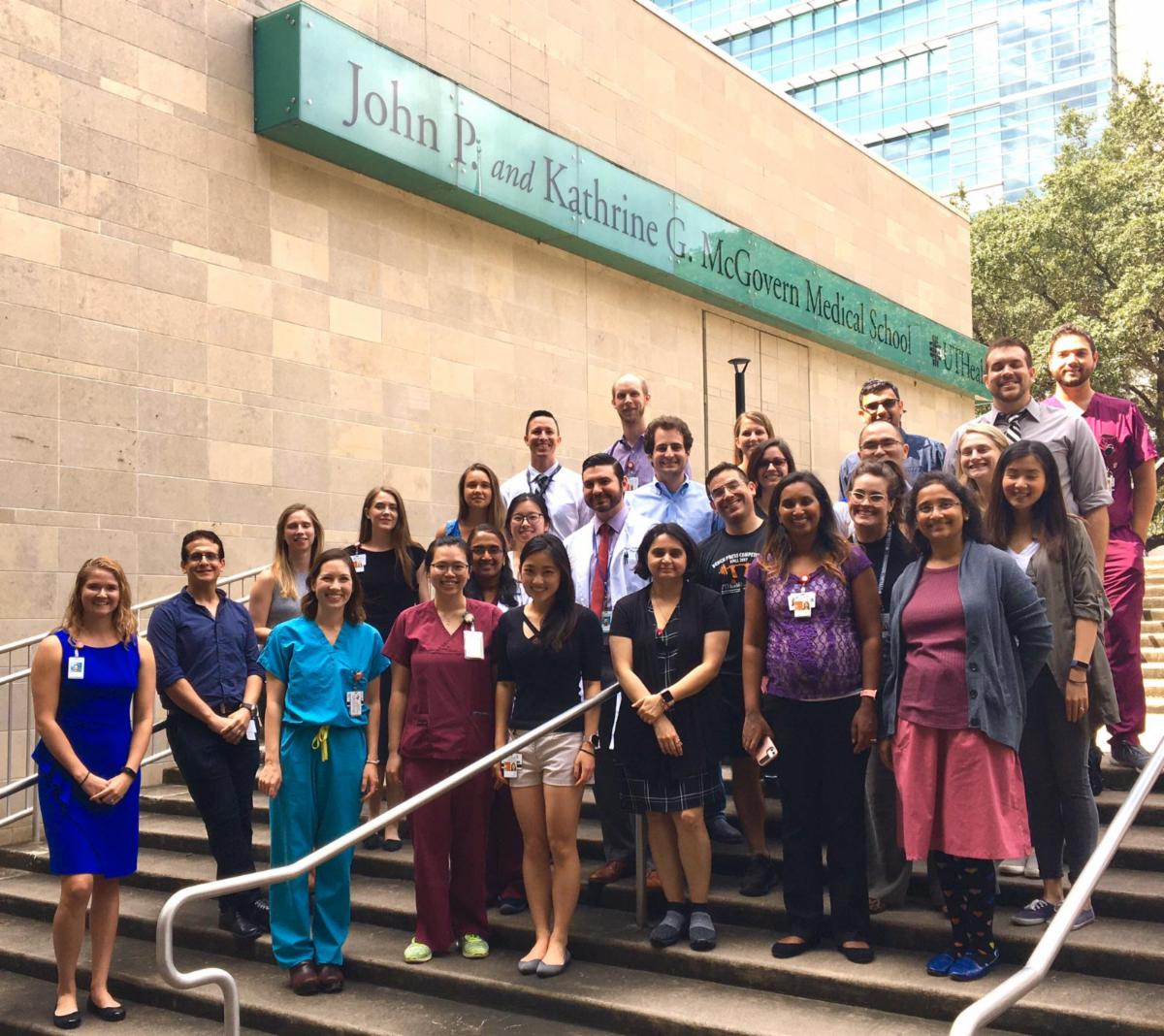
Psychiatry General Residency Training program
|
|
Education saw a number of successes in 2019 at the Faillace Department of Psychiatry and Behavioral Sciences.
In September, the annual mood disorders conference recorded the highest attendance in its history. Battling the unexpected flooding from Tropical Storm Imelda, 230 doctors, psychiatrists, social workers, nurses, students, and other medical professionals attended to hear lectures on the latest research regarding mood disorders and what’s being done to treat them.
The department prides itself in training and producing great doctors who are ready to go into the field once their training is completed. Our interns, residents, and fellows produced some outstanding results:
- Seven psychology doctoral students were recruited as interns last year. Several produced publications and presentations while in our internship and several continue to collaborate on research with mentors here. All seven matched with postdoctoral positions following internship.
- Two former interns from our program, Kendra Anderson, PhD, and Jennifer Bahrman, PhD, joined our faculty.
- Fifteen MS4 students matched into psychiatry, which was 6% of the class.
- The highly prestigious Gold-Headed Cane and Sterling graduation awards were presented to MS4 students who matched into psychiatry.
- Sabrina DaCosta, MD, won the prestigious Laughlin Fellowship Award, awarded to only 12 residents nationally by The American College of Psychiatrists. She is the first psychiatry resident to win the award in our training program's history.
- Caroline McCool, MD, won the prestigious PRITE Fellowship. The nominations were made in August. The American College of Psychiatrists only chooses two residents from a national pool. This is also the first time a resident has won the award from our program.
- APA Research Colloquium winners’ oral presentations: We are the only program represented by three residents at this year's APA meeting. Shweta Kapoor, MD, PhD PGY-3; Jeet Mohite, MD PGY-3; and Sam Salem, MD, PhD PGY-2, all received awards.
- Journal of Psychiatric Practice selected Sam Salem, MD, PhD, as the best paper submitted from all the psychiatry residents in training -- an annual very prestigious and highly competitive national award competition.
- The class size increased to recruit 14 outstanding residents per year: nine categorical, two research track, two child track.
|
|
Research: year-end review
|
|
Research is a huge part of the Faillace Department of Psychiatry and Behavioral Sciences. Discovering new, innovative ways to treat illnesses is what the faculty and staff is passionate about. Our researchers are currently conducting various research projects and studies in anxiety, addiction, autism, mood disorders, PTSD, and more.
The funds have to be available to make these projects happen. For the 2019 year, there were 15 federal grants that totaled $16,718,933. An additional 15 foundation awards were provided to total $6,388,812. A grand total of $25,840,318 was awarded to fund research projects.
In 2019, the department faculty published 136 peer-reviewed articles and submitted 102 grant proposals.
|
|
Healthy volunteers are needed for research projects at the Faillace Department of Psychiatry and Behavioral Sciences. Often an overlooked part of the process, healthy volunteers are needed to accurately study test results. Requirements to be a healthy volunteer vary from case to case but in general, they consist of adults or children who have no existing mental health conditions.
Compensation is available for participants. The following studies are currently accepting healthy volunteers:
- Endophenotypes of Bipolar Disorder
- Genetics of Bipolar Disorder
- Pediatric Bipolar Registry
- Processing of Emotional Information and Mood and Their Impact on Basic Precognitive Processing
- Vaccine Study
- Brain White Matter & Stem Cell Research
More information can be found
online
.
|
|
Richards EM, Zanotti-Fregonara P, Fujita M, Newman L, Farmer C, Ballard ED,
Machado-Vieira R
, Yuan P, Niciu MJ, Lyoo CH, Henter ID, Salvadore G, Drevets WC, Kolb H, Innis RB, Zarate CA Jr.
EJNMMI Res. 2018 Jul 3;8(1):57. doi: 10.1186/s13550-018-0401-9.
Yoon JH, Suchting R, McKay SA, San Miguel GG, Vujanovic AA, Stotts AL, Lane SD, Vincent JN, Weaver MF, Lin A, Schmitz JM.
Williams JL, Racette EH, Hernandez-Tejada MA, Acierno R.
|
|
Jennifer Hughes, PhD, was interviewed by
SurvivorNet.com
, a resource for cancer patients and their families, about what to say during holiday celebrations to family members with cancer.
Michael Weaver, MD, was interviewed by
KTRK-TV Channel 13
for a story on what's known and not known about the health benefits of CBD oil.
|
|
Upcoming grand round speakers
|
|
Join us for the Grand Rounds in January on Wednesdays at noon at UTHealth Harris County Psychiatric Center:
January 1: Holiday break!
January 8:
John Oldham, MD, MS,
Menninger Department of Psychiatry and Behavioral Sciences, Baylor College of Medicine
January 15
:
Christopher Thomas, MD, The University of Texas Medical Branch
January 22
: TBD
January 29: TBD
|
|
Registration is now open!
|
|
Louis A. Faillace, MD, Department of Psychiatry and Behavioral Sciences at McGovern Medical School at UTHealth
713-486-2500
|
|
|
|
|
|
|
|