Reducing how much plastic we use on the farm is one of our main goals. Agriculture relies heavily on single use plastic for growing crops, packing & shipping and making livestock feed to name just a few. We have been experimenting with ways to reduce plastic in our vegetable production but so far none of them have been successful. We set our sights on changing how we make cattle feed instead. Sorry if we get into the weeds with details on how this change is being made. You can skip to the last paragraph for the summary. : ).


We need to make a fermented grass feed for our cattle in order for them to continue to gain weight over the winter. Dry hay just doesn't cut it. For years we have made 350 bales of baleage, wet hay that we wrapped in plastic. This ferments the hay which increases the protein level in the feed and makes it more digestible. We can make baleage when the cut grass is wet; we can cut the grass one day and bale the next. To make dry hay it takes 3 to 4 days for the grass to dry before we can bale it up. It is rare that we have 4 days of dry weather in a row in May and June. So baleage is a much more reliable way to make cattle feed. But to wrap all of these bales in plastic we need 168,000 square feet of plastic. Plastic that then ends up in the dumpster. It feels awful to throw all this plastic away every year. Plus we spend $5000 to $6000 a year on purchasing that plastic.


Last fall we finally decided to make the leap to chopping grass and then packing it in a concrete bunk and covering with just a 40 ft x 100 ft of plastic. It's called haylage. You often see this practice on dairy farms. Kyle spent the winter talking to dairy farming friends and making a plan. We needed a bunk big enough to hold the equivalent of the 350 baleage bales. Plus we needed to gather some "new" to us equipment to make this all possible. Over the winter we collected a chopper, a wagon, and a large truck to haul the grass between the fields and the bunk. Then Kyle did some needed repairs on all that equipment. In April, we put up the bunk. We used large cement block walls supported by piles of dirt and had blacktop floor installed. It's an 8 ft tall by 25 ft long structure.


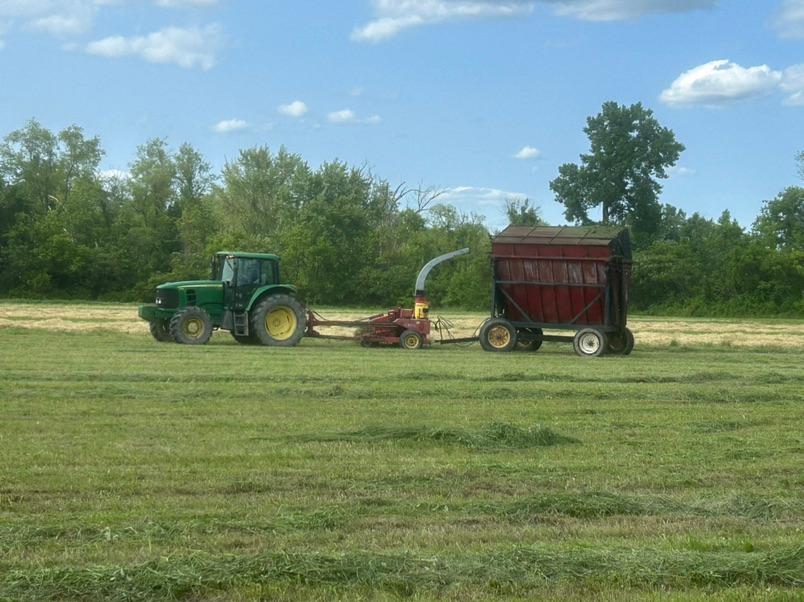
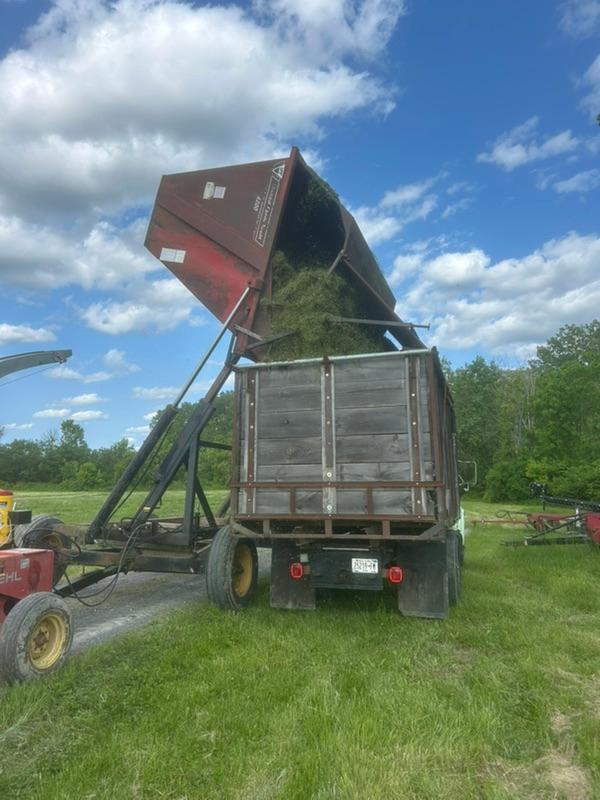
Then we had to wait for the grass to grow and the weather to be ideal. Last Monday, Kyle started the process. First he cut the grass with our regular hay mower. The next morning he drove over the rows of cut grass with the chopper pulled by the tractor. The chopper takes the long strands of cut grass and chops them into smaller pieces and shoots it into the dump wagon. It's quite the long train of equipment behind the tractor. When the wagon is full Kyle drives to the truck and dumps the grass from the wagon into the truck. When the truck is full he drives it to the bunk, dumps out the grass and then compacts it with the tractor to get the air out to create the right environment for fermentation and to make room for the next loads. In two days he cut and chopped enough grass to equal 150 bales of baleage (which would have required a week to do). Then on Thursday, Kyle and Keri covered the bunk with a sheet of plastic and tires to weigh it down. In July, when it it is time to do another round of cutting we will take the plastic sheet and tires off and start the process over again. Then again in September, until the grass pile is up over the top of the cement blocks and full to the front of the blacktop.


In short this new system saves us 164,000 sq. feet of plastic and days of time. Plus fuel we don't use because we are driving over the hay fields fewer times. The cost of the bunk will be paid back after a few years of not buying plastic. Plus the feeling of not putting all of that plastic in the landfill, which is really the driving force behind our switch. We are excited we could make this change and be better stewards of the environment. Hopefully the cows enjoy eating their new haylage this winter, too. ~Jody


Chopping grass for cattle feed

The bunk where we pack the grass to make cattle feed.

IMPORTANT DATES


Fruit Shares Start: Week of July 15

First Beef Shares: Week of June 23

Egg Shares Start: Week of June 15 (next week!)


NO DELIVERIES THE WEEK OF JULY 4 (July 1 to July 4)

Support Farmworkers in NY: Contact Senator Hinchey, Senate Majority Leader Andrea Stewart Cousins, Assembly Speaker Cary Heastie, and Governor Hochul


Farmworker Advocacy groups are asking us to make some phone calls today after what happened in LA this weekend. Farm worker advocacy groups, immigrant rights groups, and civil rights groups are asking the New York Senate and Assembly to vote for the New York 4 All Act before the summer closure on June 12.


The New York 4 All Act would prohibit local law enforcement and state agencies from cooperating with Immigration and Customs Enforcement (ICE). It would prohibit police officers, peace officers and school resource officers, among other agencies, from questioning individuals on their immigrant status, along with other disclosure regulations and prevent federal enforcement activity on nonpublic state and local property without a judicial warrant. These measures would protect everyone's 4th Amendment Rights and would provide more safety for people working on farms across New York.


Calls to Make:

Senator Michelle Hinchey: 518-455-2350 Thank her for co-sponsoring the bill and encourage her to call for a vote for the bill. and to vote yes.


Majority Leader Andrea Stewart Cousins 518-455-2585

Assembly Speaker Carl Heastie 518455-3791

Governor Hochul 518-4474-8390

Call all three and ask them to support, fight for, and call for a vote for New York 4 All to make NY a safer place for everyone.


You can also contact your state representative and assembly member to ask them to get this vote on the floor of both the Senate and Assembly and to vote yes.

Dumping the grass into the truck

COMING NEXT WEEK (our best guess): head lettuce, parsley, basil, scallions, summer squash/zucchini, cucumbers, chard, radishes, kale, garlic scapes, and tatsoi or bok choi

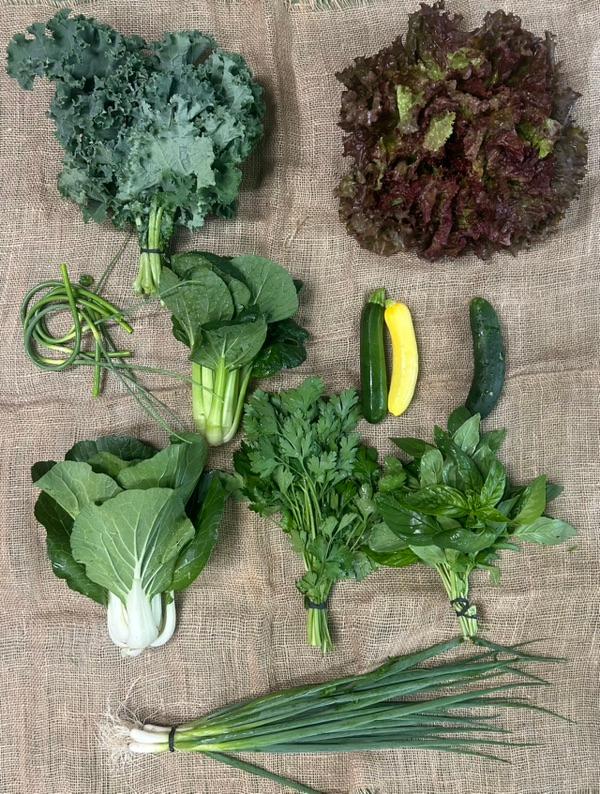
This week's full share: kale, head lettuce, garlic scapes, tatsoi, zucchini/summer squash, cucumbers, bok choi, parsley, basil, and scallions.

(Exact share contents may vary by location based on the day's harvest.)

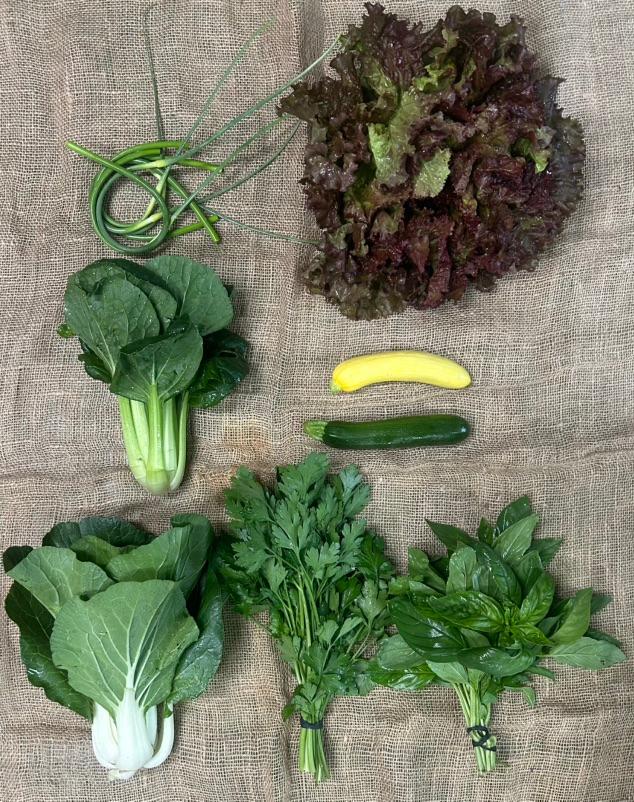
This week's small share: garlic, head lettuce, tatsoi, zucchini, summer squash, bok choi, basil and parsley

(Exact share contents may vary by location based on the day's harvest.)


COOKING TIPS AND RECIPES

Visit the Nerds with Knives website for all sorts of cooking & storage tips and recipes for the veggies in your share.


Bok Choi & Tatsoi: Store with a damp paper towel in a plastic bag in your crisper drawer. Wash before using, dirt collects at the base of the leaves.. The stems and leaves are edible.


Garlic Scapes: Green curly Q's are the flower stems of the garlic. Has a milder flavor than a garlic clove. Use it just like you would garlic. Store them like a bouquet of flowers in a jar of water for a few days or in an airtight container in your crisper drawer for a few weeks.


Basil: trim the ends and store like a flower bouquet in a jar of water. Rinse off right before you cook if there is dirt on it. Make pesto to freeze or add to butter to flavor your foods.


Parsley: trim the ends and store in jar of water tented and with a plastic baggie in the fridge. Or rinse and dry and store in a plastic bag in the fridge. You can keep the stems separate for stocks or soups. Parsley also freezes or dries well for winter cooking.


Head Lettuce: wash and dry when you get home. Store leaves in a plastic bag in your crisper drawer


Zucchini/Summer Squash: Wrap in a plastic bag and store in your crisper drawer for 4 to 5 days. Wash right before cooking.


Kale: wash and spin dry and then store in a plastic bag in the crisper drawer. For curly kale you can remove the inner mid-rib for the dino kale you can chop up the whole thing.


Wilted Tatsoi Salad

  • 12 ounces Tatsoi leaves
  •  1 T sesame seeds, for garnish (see notes)

Dressing Ingredients:

  •  2 T soy sauce (see notes)
  •  1 T rice vinegar (not seasoned)
  •  1 tsp. grated ginger root
  •  1 tsp. sweetener of choice
  •  1/2 tsp. Sriracha Sauce
  •  fresh ground black pepper to taste

Bring a large pot of salted water to a boil, and fill another bowl with cold water and a handful of ice cubes.

Wash Tatsoi leaves and cut into thick strips. I used a salad spinner (affiliate link) for this.


Dump Tatsoi into boiling water, time for exactly one minutes, then drain immediately into colander and dump into bowl with ice water. (I used the salad spinner again for the ice water.)


While Tatsoi is cooling in ice water, get a plastic bowl with a tight fitting lid that’s large enough to hold all the Tatsoi.

Mix dressing ingredients in this bowl, then drain Tatsoi well and add to dressing.


Chill in the refrigerator an hour or more, turning bowl over a few times so Tatsoi remains coated with the dressing.

To serve, use tongs or a slotted spoon to remove Tatsoi from bowl and arrange on serving plates.


Toast sesame seeds for 1-2 minutes in a dry pan and sprinkle over salad. (If using a mixture, the black seeds burn more quickly than the white ones.)

Serve immediately. www.kaylnskitchen.com


Stir Fried Garlic Scapes with Eggs


  • 2 tablespoons vegetarian oyster sauce (or regular oyster sauce)
  • 2 teaspoons soy sauce
  • 1 1/2 tablespoon peanut oil (or vegetable oil)
  • 4 egg , beaten
  • 1/2 thumb ginger , minced
  • 2 green onion , sliced (Reserve a small portion for garnish)
  • 5-6 garlic scapes , sliced to 1” pieces


Mix the oyster sauce and soy sauce together in a small bowl. Set aside.

Heat 1 tablespoon of oil in a large skillet over medium-high heat until hot. Add the eggs. Let cook for a few seconds until the bottom sets. Scramble the eggs lightly until just cooked through, then transfer them to a plate and set aside.

Add the remaining 1/2 tablespoon of oil, ginger and green onion. Stir a few times to release the fragrance.


Add the garlic scapes. Stir and cook for 2 minutes, until it starts to soften if using Asian garlic scapes. Cook for a longer time if using garlic scapes. Pour in the oyster sauce mixture and stir a few times to mix well. Taste a piece of garlic scape. It should be tender but still a bit crisp. You can cook it longer for a more tender texture, if you prefer.

Return the eggs to the pan. Stir and cook for another 30 seconds. Transfer everything to a large serving plate. Garnish with the remaining fresh green onions, if using. Serve hot over rice as a main dish or as a side dish. www.omnivorecookbook.com


Spicy Ginger Noodles with Bok Choi or Tatsoi or both

  • 1 head bok choy
  • 1 ounce ginger root (1 fat 2-inch-thick knob)
  • Kosher salt
  • 8 ounces rice noodles, not too thin
  • 2 tablespoons peanut or safflower oil
  • ¼ cup plus 1½ tablespoons soy sauce
  • 2 tablespoons rice wine vinegar
  • ½ cup thinly sliced scallions
  • 3 garlic cloves, finely chopped
  • 1 fresh Thai or habanero chile, seeded if desired, thinly sliced
  • 2 tablespoons toasted sesame seeds
  • 1½ teaspoons sesame oil, more for drizzling
  • Torn basil, for serving
  • Black vinegar, for serving


Trim bok choy and separate dark green tops from white stems; leave tops whole and thinly slice stems. Peel ginger and finely chop half of it. Slice remaining ginger into thin matchsticks.


Bring a large pot of salted water to a boil. Add noodles and cook according to package instructions. Drain and run under cool water; drain again.


Heat 1 tablespoon peanut oil in a large skillet over medium-high heat. Stir in half the scallions, the finely chopped ginger, the garlic and the chile. Cook until fragrant, about 1 minute. Season with salt, 1½ tablespoons soy sauce and ½ tablespoon rice wine vinegar.


Add bok choy stems and a pinch of salt. Cook until bok choy is almost tender, about 2 minutes. Toss in leaves and return pork to skillet.


Toss noodles, remaining ¼ cup soy sauce and 1½ tablespoons rice vinegar into the pan. Cook until just warmed through.


Transfer to a large bowl and toss with remaining scallions, sesame seeds, sesame oil and herbs. In a small bowl, combine ginger matchsticks with just enough black vinegar to cover. Serve ginger mixture alongside noodles as a garnish. www.cookingnytimes.com