| | |
MSU EDA University Center for
Regional Economic Innovation
E-Update | May 2025
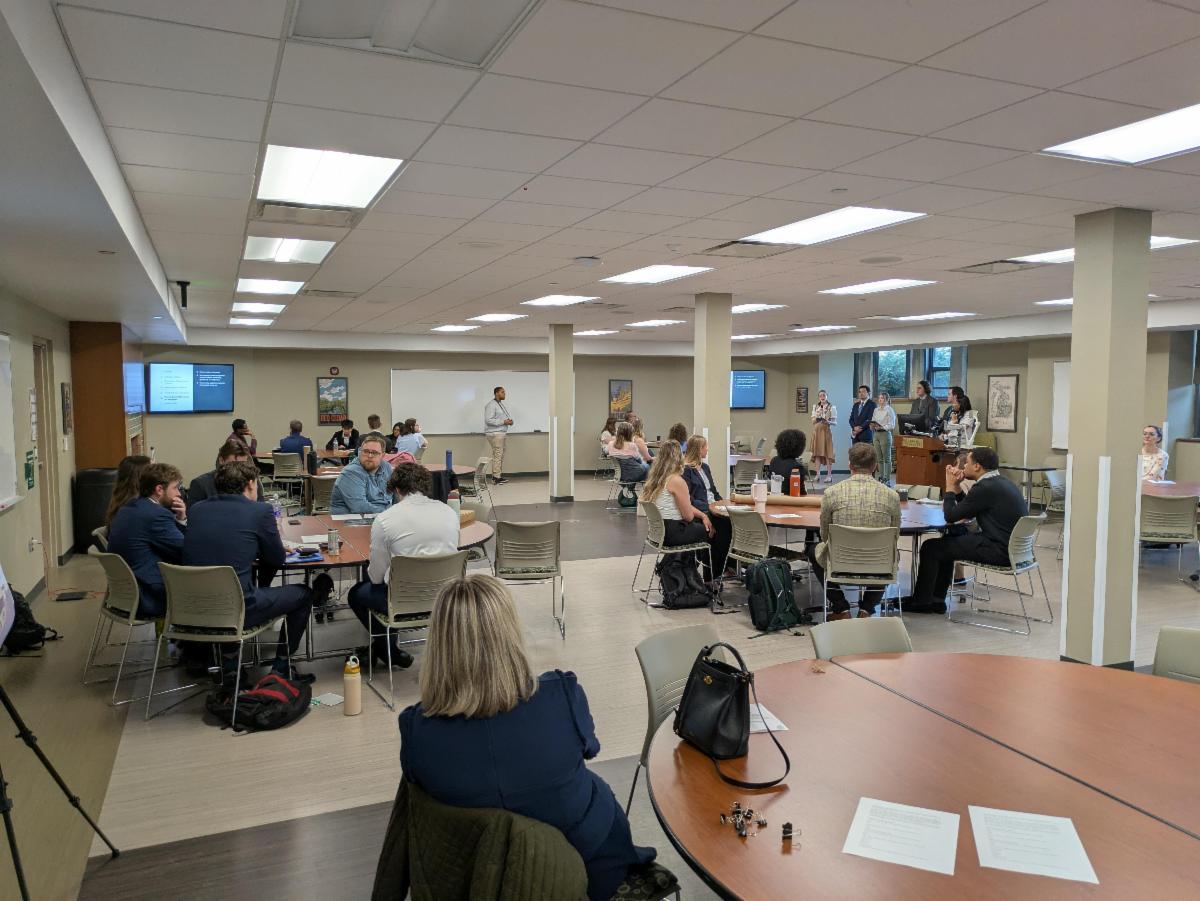
| | Six Student-Led, Faculty-Guided Projects Presented at MSU | | The recent MSU Urban and Regional Planning practicum presentations, led by Dr. Zenia Kotval’s students and hosted at MSU's Union on April 25th, highlighted the power of community engagement and experiential learning. Through these projects, students gain firsthand practical experience applying previously studied theory, while economic development professionals receive technical assistance that might not otherwise be available. Funded by the U.S. Department of Commerce - Economic Development Administration (EDA), and with additional support from the Michigan Economic Development Corporation (MEDC), these projects showcased the dedication of students to addressing real-world challenges in Michigan communities. | | |
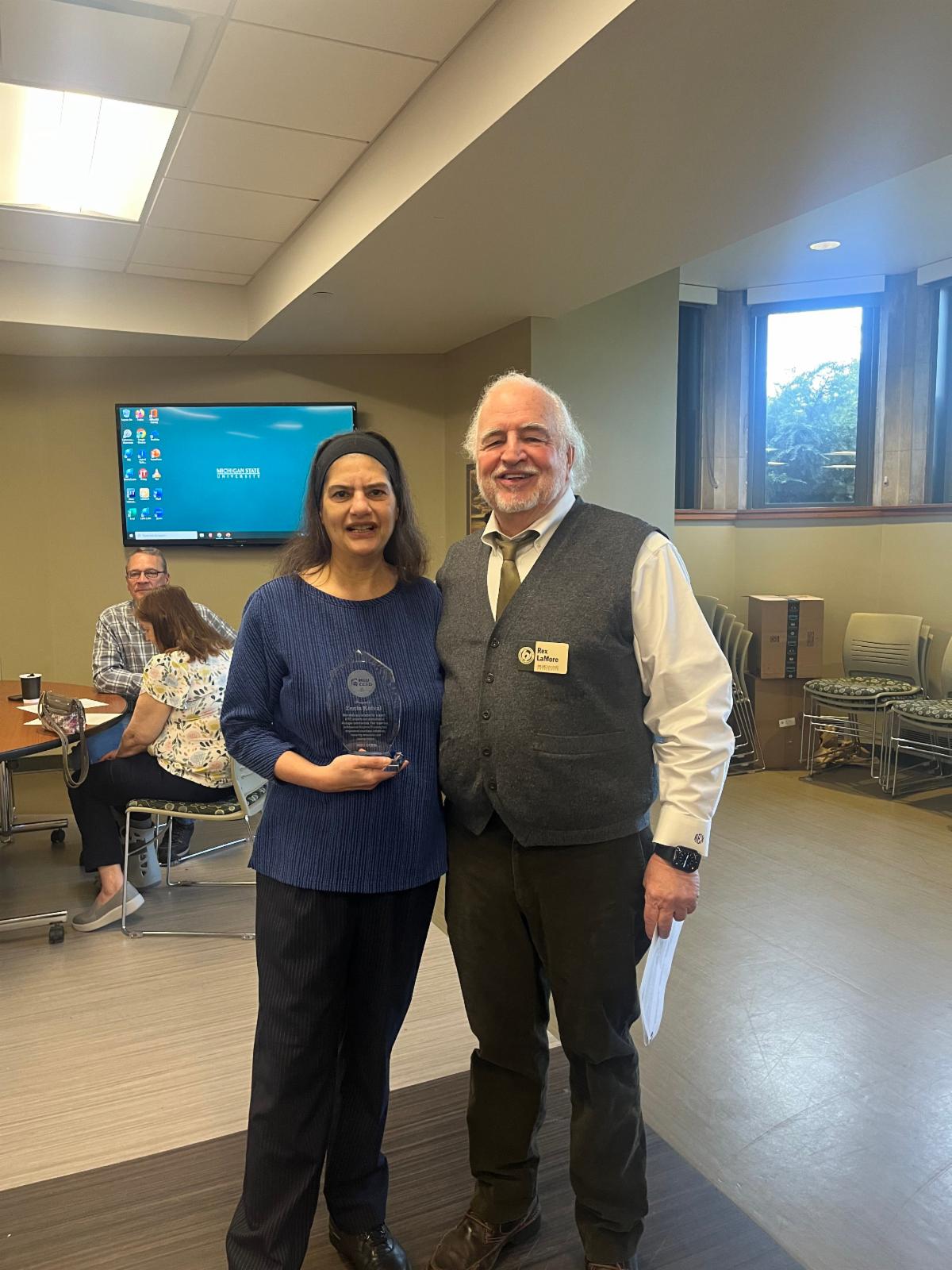
REI also presented Dr. Zenia Kotval with an award to express our deep appreciation for support of REI projects throughout the years - and dedication to future Michigan urban planners and Michigan communities. Her expertise has empowered countless initiatives fostering innovation and lasting impact throughout the state. Thank you, Dr. Kotval, for your valued partnership.
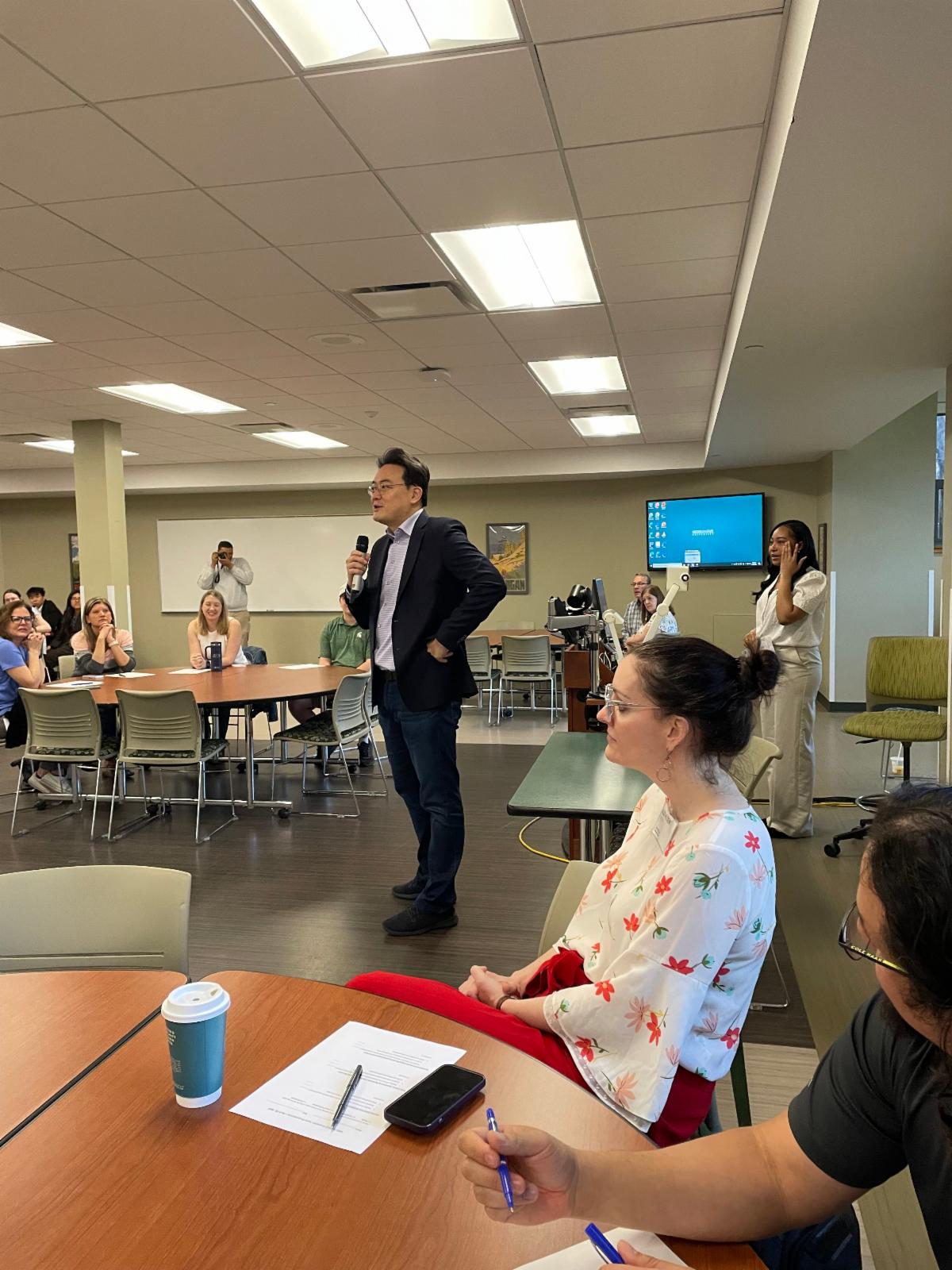
The event also attracted a diverse audience, including student teams, clients, REI/CCED staff, and MEDC's Senior Community Planner. Student-led groups presented a series of dynamic projects focused on actionable solutions for Michigan communities.
| | | |
In Beaverton, students discussed parking inefficiencies in the city’s Central Business District. The team conducted occupancy studies, business surveys, and ordinance reviews to develop recommendations for short-term improvements like refreshed crosswalks and protective signage, mid-term lot redesigns for pedestrian safety, and long-term strategies for infill development and regional connectivity, including a proposed pedestrian bridge.
In Delhi and Watertown Charter Townships, students developed content-neutral updates for local sign ordinances. Their work addressed the constitutional challenges posed by Reed v. Town of Gilbert, offering recommendations to eliminate content-based language, regulate digital signage, and enhance illumination standards while ensuring ordinances remain legally defensible and community-friendly.
| | |
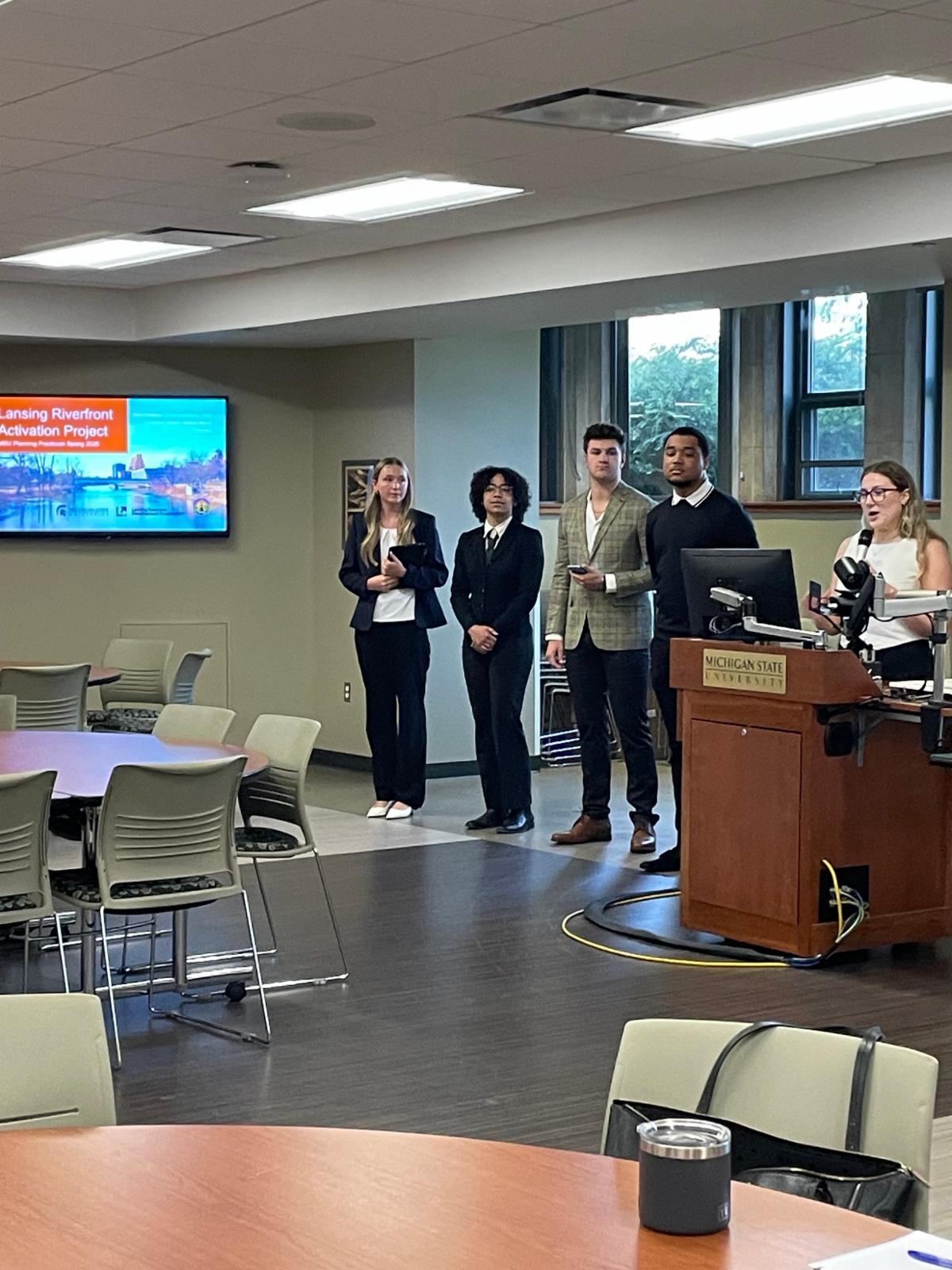
Along Lansing’s riverfront, students created an activation strategy to better connect and enliven key sites. Their recommendations for Dietrich Park, Adado Riverfront Park, and a new pedestrian walkway emphasized trail improvements, ecological restoration, year-round programming, outdoor classrooms, and casual dining areas, all aimed at fostering consistent community engagement and sustained redevelopment.
In Sterling Heights, students reimagined the Van Dyke Corridor with a three-tiered revitalization plan. They proposed immediate placemaking actions such as enhanced crosswalks and public
| | | |
spaces, mid-term investments in sidewalks and streetscape improvements, and long-term land use reforms that promote mixed-use infill development, reduce excess parking, and support a walkable, vibrant corridor.
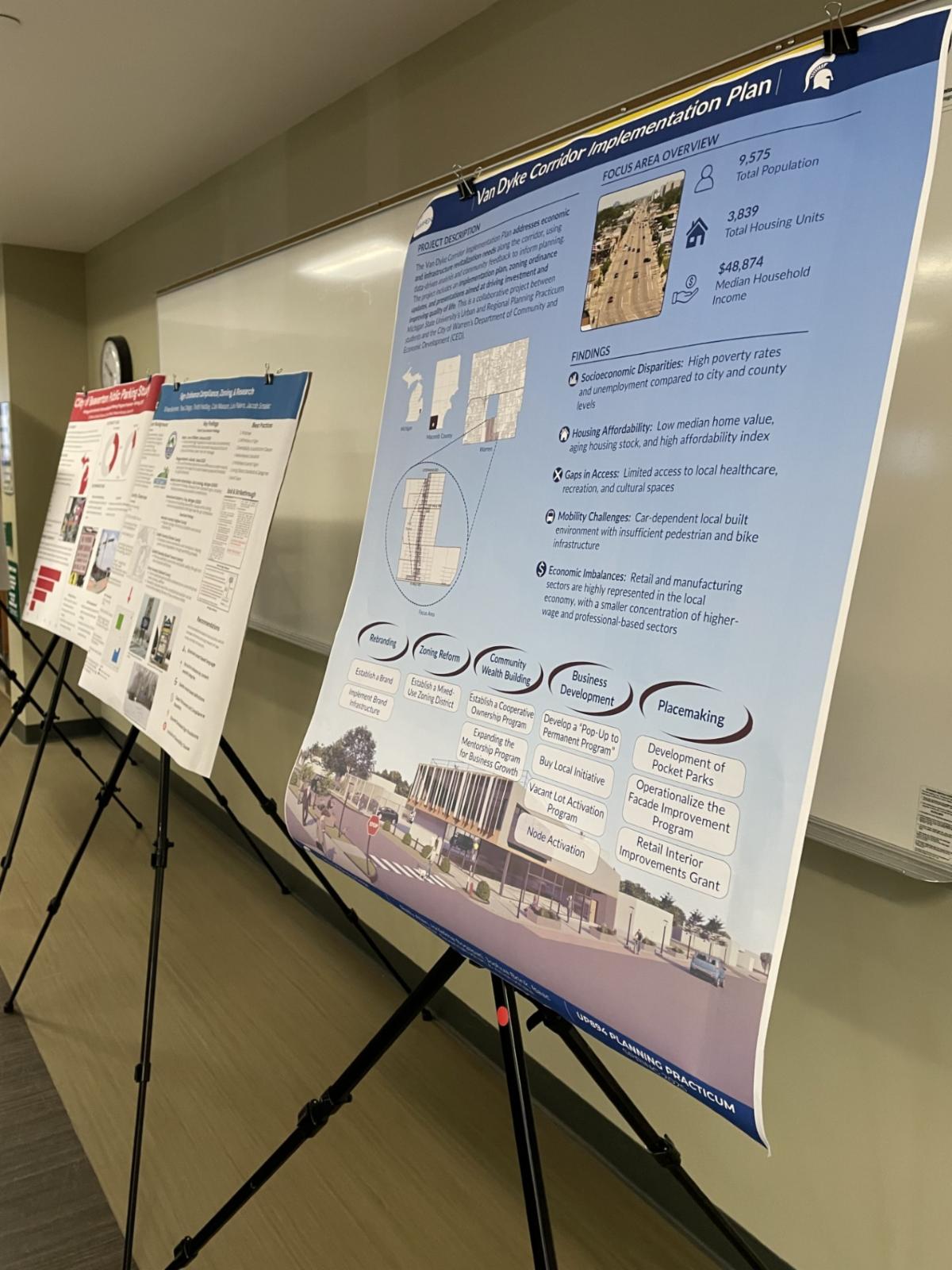
In the City of Warren, students developed a Van Dyke Corridor Implementation Plan with recommendations centered on improving walkability, promoting equitable economic development, and diversifying the local economy. Strategies included rebranding the corridor, introducing zoning reforms to allow higher-density mixed-use development, supporting community wealth-building initiatives like cooperatives and pop-up businesses, expanding placemaking efforts, and improving access to public amenities. Their plan aims to transform Warren’s segment of Van Dyke into a more livable, vibrant, and resilient community.
| | Clients expressed strong appreciation for the thorough case studies produced by the student teams, recognizing the potential for positive change and the range of possibilities. Their feedback highlights the tangible benefits of leveraging higher education assets for technical assistance and sustainable development in Michigan. | | | Overall, the practicum presentations underscored the importance of collaboration between academia, government, and local stakeholders in shaping the future of urban and regional planning. Congratulations to all the student teams for their contributions to community resilience and growth. Completed reports will be uploaded to REI's website, Humanities Commons, and Google Scholar by the end of June. | | | | |