|
NACD is continuing our celebration of 80 years with our 2026 Summer Conservation Forum & Tours! Hosted in partnership with the Michigan Association of Conservation Districts, our meeting will take place on July 17-21, 2026. Join us for meetings, a forum, and conservation tours to continue exploring the theme from Annual Meeting, "Deep Roots, Bold Horizons."
Registration is open! Act now to get an early bird discounted rate, available through June 29.
Get the most out of your time at Summer Meeting by taking advantage of these training opportunities, included in the cost of your meeting registration!
Agroforestry Training Series
Two sessions—Agroforestry Foundations and District Opportunities and Agroforestry Practice Deep Dive—will provide an overview of core agroforestry concepts, practices, and opportunities for conservation district engagement. Participants will explore the five primary agroforestry practices, discuss common resource concerns and landowner goals that agroforestry can help address, and learn how conservation districts can support education, planning, partnerships, and implementation efforts. The first session will also introduce key considerations that influence practice selection and project development. The second session will examine how agroforestry concepts can be translated into real-world projects and how districts can help connect landowners with resources, partners, and technical assistance through discussion, interactive examples, and applied learning activities.
NASA Earth Observations Workshop Series
Hosted by NASA EarthRise Partnerships Specialist & Trainer, Kaitlyn Lemon, this training series will explore NASA Earth Observations (NEO) data products and web tools. One session will be an introductory session to provide an overview tools and how they support agriculture and conservation district needs. The second session will allow participants to explore applications of analysis-ready data products to derive vegetation and water indices within common GIS software. Learn more and sign up for either session here.
Learn more about all offered trainings here and explore the full meeting agenda to plan your days in Grand Rapids.
| LIMITED AMOUNTS OF BULK EDUCATIONAL MATERIALS AVAILABLE FOR SUMMER | |
Planning a summer camp, summer school program, library activity, field day, or community event?
A limited number of NACD's "Soil. Where It All Begins." educational materials are available at discounted bulk printing rates. Approximately 25 sets remain and are available on a first come, first served basis.
Available materials include:
- Educator Guides
- Student Activity Journals
- Activity Placemats
- Bookmarks
- Coloring Sheets
- Themed T-shirts
- Collector edition posters and more!
| |
These hands-on educational resources help students explore how soil supports food production, water filtration, wildlife habitat, and healthy communities. Because the education program materials do not include Stewardship Week dates, they can be used year-round for conservation education, youth programs, camps, fairs, classroom activities, and community outreach events.
Please email stewardship@nacdnet.org or call NACD Education Coordinator, Aimee Figgatt, at 202-595-9096 to place your order, so we can provide the most accurate pricing and shipping estimate for your location.
Looking for just you or a few students in your life? Check out the NACD Marketplace for free downloads of all education materials and to order individual items.
| |
WHAT'S UP IN WASHINGTON?
GOVERNMENT AFFAIRS UPDATE
| |
Federal activity this week centered on Fiscal Year 2027 appropriations, NRCS conservation practice standards, water policy, public lands, and federal program implementation.
The House passed H.R. 8646, the FY27 Agriculture, Rural Development, Food and Drug Administration, and Related Agencies appropriations bill. The bill would provide $26.27 billion in total discretionary funding, including $22.5 billion for USDA. For conservation districts, one of the most relevant accounts is NRCS Conservation Operations, which the House bill would fund at $800 million, including $636.243 million for Conservation Technical Assistance, with requested funding for soil surveys, plant materials centers, snow survey and water forecasting, urban agriculture, and community project funding. These funding levels are not final, as the Senate process is still underway.
The House bill also includes language requiring prior notification and approval from the House and Senate Appropriations Committees before funds may be used to close certain NRCS or Rural Development field offices or permanently relocate field-based employees that would leave an office with two or fewer employees. This is significant for districts that rely on local NRCS staff, conservation planners, and USDA service center access.
NRCS has published a Federal Register notice seeking public comment on proposed revisions to 32 Conservation Practice Standards in the National Handbook of Conservation Practices. Comments on the Federal Register package are due July 6. NRCS is separately seeking stakeholder input on 48 additional draft CPS redlines by July 9. These standards help guide conservation planning and implementation, making this an important opportunity for districts and partners to review proposed changes.
EPA has proposed a PFAS rescission rule related to certain drinking water regulatory determinations and regulations. The proposal is open for public comment, and NACD encourages districts tracking water quality, public water systems, and federal drinking water standards to review the proposed language.
Last week, several hearings were held that may be of interest to districts tracking conservation, water, wildlife, and USDA programs. The Senate Energy and Natural Resources Committee held an oversight hearing on the Colorado River Basin and ongoing negotiations over post-2026 river operations. Fish and Wildlife Director Brian Nesvik appeared before the Senate Environment and Public Works Committee to discuss the U.S. Fish and Wildlife Service’s proposed FY27 budget, including funding related to Endangered Species Act implementation, species recovery, National Wildlife Refuge System access, and refuge maintenance. USDA Secretary Brooke Rollins appeared before the Senate Agriculture Committee for an oversight hearing on current and future programs and policies, though much of the discussion resulted in requests for additional resources and discussion. Hearing archives are available for members who would like to watch back.
Looking ahead, the Senate Energy and Natural Resources Committee will hold a June 17 hearing examining the state of the U.S. Territories. The hearing may be relevant to districts in Guam, American Samoa, the Northern Mariana Islands, Puerto Rico, and the U.S. Virgin Islands.
| CUYAHOGA SWCD ADDS NATIVE PLANTS TO STORMWATER BASINS | |
Driving through Cuyahoga County, Ohio, one can easily spot a network of stormwater infrastructure that spans the landscape. The most recognized feature is the dry detention basin, often a grass depression in the landscape that temporarily holds water and slowly releases it. Cuyahoga Soil and Water Conservation District (SWCD) staff saw the potential to elevate the ecology of the county through a simple enhancement to this specialized infrastructure: replace the grass with native species.
Native vegetation is better adapted to periodic flooding, can improve infiltration, nutrient uptake, habitats, and aesthetics. This simple change can transform the monoculture that has become widely accepted within basins into a landscape overflowing with biological diversity.
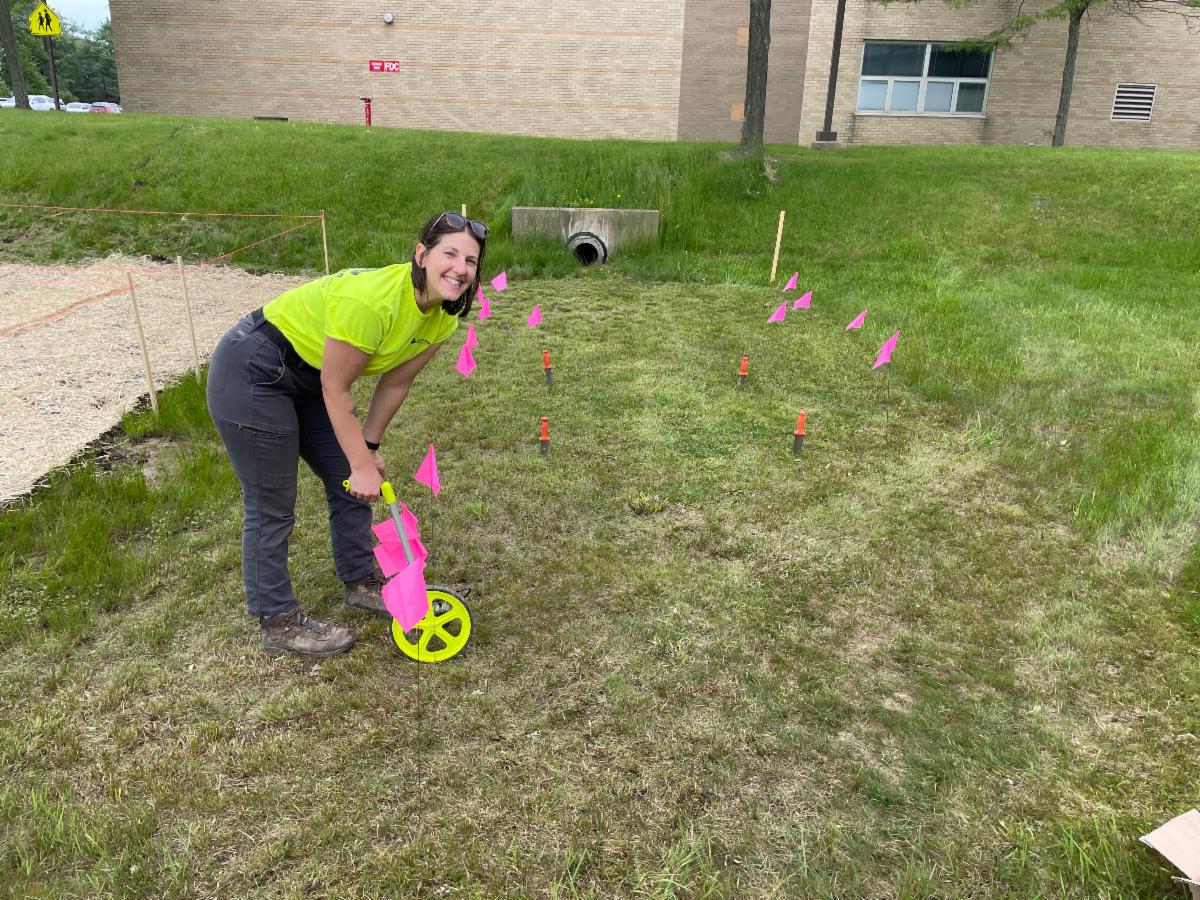
| In 2025, Cuyahoga SWCD secured a Friends of NACD District Grant to support the development of a research project that explored the best native planting practices for stormwater basins. Two sites near Berea-Midpark High School and Mayfield High School were chosen in the hopes of integrating education into the project. With a generous donation of organic material from the City of Beachwood, and enthusiastic partnerships that quickly developed with staff and students at the schools, Cuyahoga SWCD staff were able to install a total of 12 test plots. Each school’s basin contained six plots that tested a variety of planting methods. | |
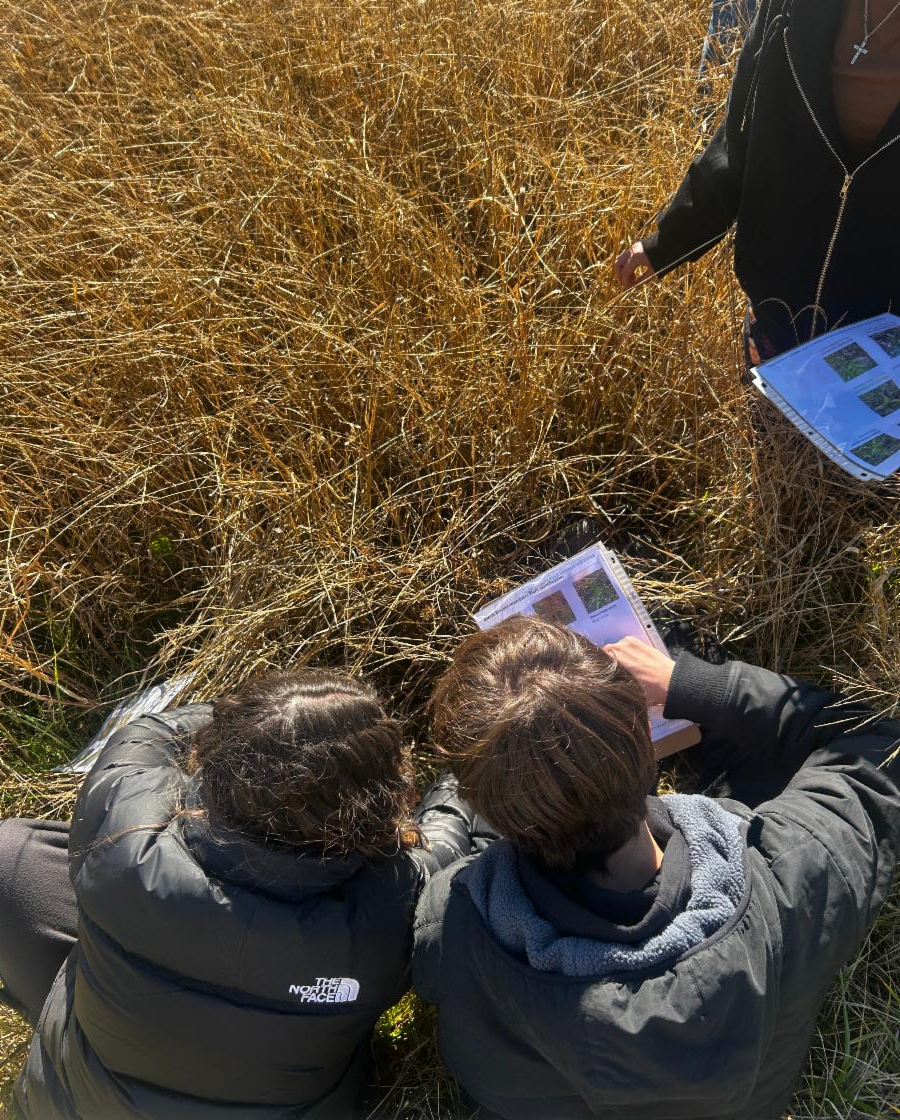
Students were involved in every step of the process, learning about stormwater and native vegetation. Using the information they learned, students became quasi-landscape architects. They even had a friendly competition where they developed planting plans by creating layouts and selecting plant species they thought would thrive within the basins. Students also got involved in the installation process, from prepping the soil to planting the seed. In the fall, they began collecting data and are currently helping to interpret it.
Although the Friends of NACD grant was only a yearlong agreement, the research project will continue. By the project’s third year, staff should be able to observe the full maturity of the native plant populations. These case studies will provide staff at Cuyahoga SWCD with the scientific backing and confidence necessary to provide guidance regarding native plantings within stormwater basins throughout the county.
Read the full story on NACD's blog and support important community engagement projects like the one above by becoming a Friend of NACD.
| | |
NACD Closed
for Juneteenth
| |
NACD offices will be closed this Friday, June 19, in observance of Juneteenth.
As stewards of our land and resources, NACD recognizes and celebrates the contributions of Black Americans in shaping our nation's agricultural heritage.
| NACD Seeks Southeast Region Representative | |
NACD is hiring a Southeast Region Representative!
This full-time position is responsible for providing assistance to NACD's member conservation districts and Board of Directors to advance conservation education, partnerships and membership services, and to assist in the implementation of the association’s policies related to the Southeast Region. This is a service-oriented position with a focus on creating and maintaining relationships and increasing the effectiveness of NACD in supporting conservation districts and their state/territory associations.
This is a telework position based in the Southeast Region (AL, GA, FL, KY, MS, NC, PR, SC, TN, USVI, VA). Read the full position description on NACD's website and apply by June 26 for priority consideration.
| |
NACD Water
and Climate Subcommittee
Seeks Insight
| |
The NACD Water & Climate Subcommittee seeks your input on the urgency of several issues.
Each shares a common theme: the need for legislative support and funding to bolster community resilience amidst rapidly changing land use and more frequent and severe weather events.
Please complete the survey by June 26 to share insights on these critical issues in your district, state, or region.
| NCDEA Hosts Training Webinar on Reaching Your Target Audience | |
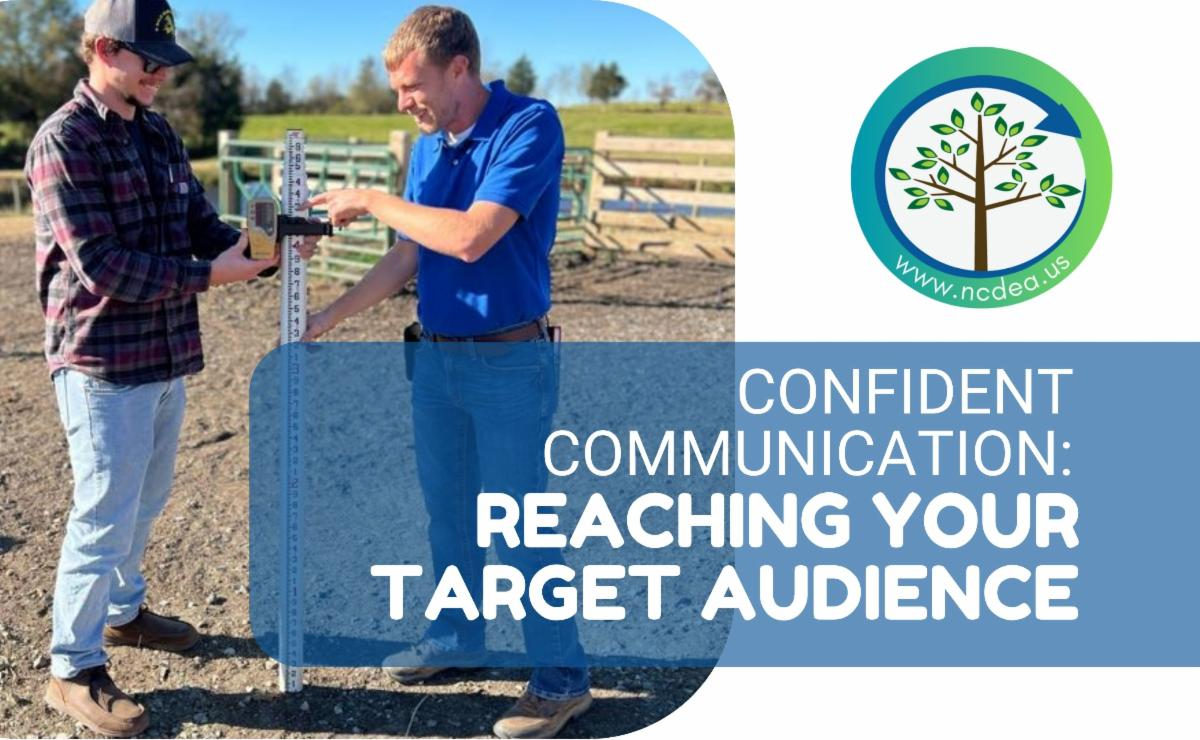
Join the National Conservation District Employees Association (NCDEA) for a professional development training webinar, "Confident Communication: Reaching Your Target Audience," on June 24 at 12:00 p.m. ET.
Hear from Brandy Myers of the NC Department of Ag - Soil & Water Division and Celia Miller of Madison County SWCD in Mississippi on tailoring your communications and presentations to meet the needs of your audience. Gain insight into what motivates learners, common barriers to engagement, and techniques for creating learning experiences that support your district's outreach and education efforts.
Register for free here.
| Join SWC's Upcoming Webinar | |
Join a Source Water Collaborative (SWC) and Southeastern Partnership for Forests & Water webinar on using Clean Water State Revolving Funds (SRF) for source water protection tomorrow, Wednesday, June 17, from 2–3:30 p.m. ET.
This webinar is part of the “Stronger Together” series. During the webinar, speakers will provide an SRF program overview, including an explanation of the relevant differences between Drinking Water and Clean Water SRFs.
For more information, view the webinar flyer and register for the webinar here.
| NRCS Hosts CEMA 216 Info Session | |
NRCS's Conservation Evaluation and Monitoring Activity (CEMA) 216 Soil Health Testing provides financial support for specific soil health indicators to be evaluated using specific testing methods and requires that a Qualified Individual (QI) facilitates the process. If you are a Technical Service Provider, Certified Crop Advisor, Certified Professional Agronomist, Certified Professional Soil Scientist, Associate Professional Soil Scientist, or possess an Associate’s degree or higher in agriculture or soil science with at least two years of experience collecting soil for laboratory analysis, you may serve as a QI to deliver services to fulfil CEMA 216.
If you possess the above-mentioned qualifications and are interested to learn more about providing your services in support of CEMA 216, you are invited to join the informational session on Monday, June 29, at 10:30 a.m. ET.
Learn more and join the session here.
| |
Looking to improve your district's offerings this summer? Take a look at our Members Only webpage! The page is split into four sections—Learn More about NACD and Our Advocacy, Grow Your District, Optimize Your Outreach and Communication Skills, and Improve Your District’s Programs and Operations—each designed around a specific use and full of resources tailored for conservation districts.
If you have any questions about this webpage or need help accessing it, please reach out to us!
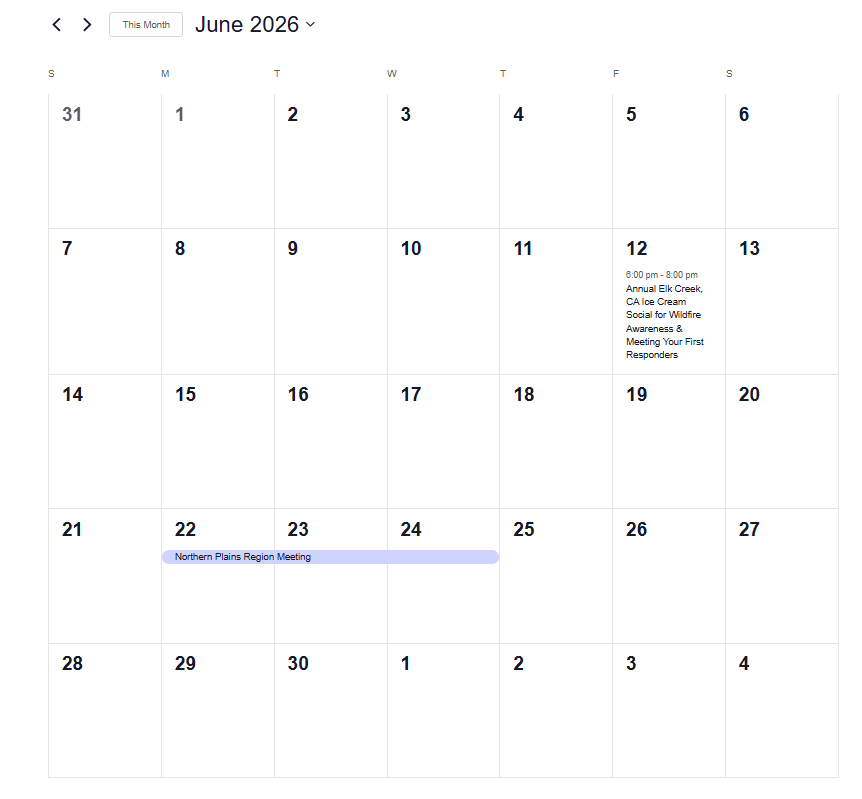
| Promote your conservation district or state association's tree sale, annual meeting, webinar, field day, or other events on NACD's Calendar of Events! | |