It’s Budget Season:
Make Sure Your Voice Is Heard
|
|
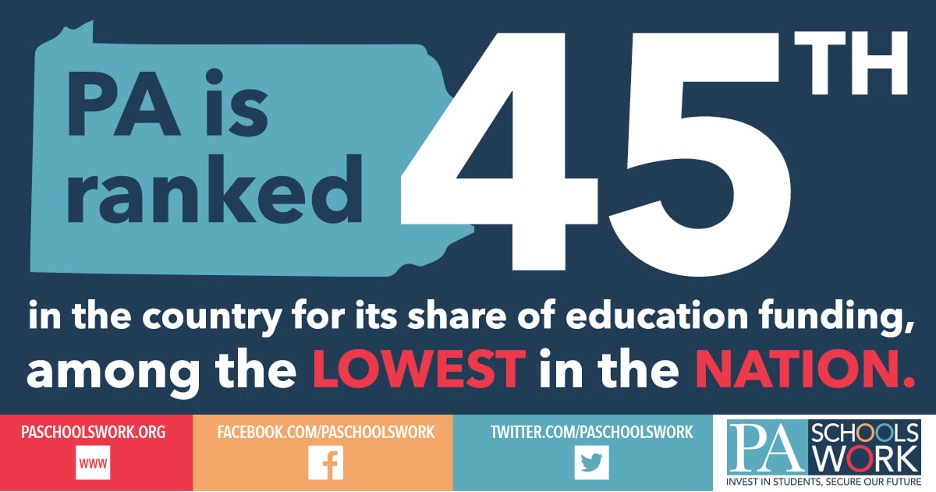
As Pennsylvania legislators prepare to hammer out a new budget before a June 30 deadline, we see a new indication of the state’s chronically regressive school funding policies. In just-released data from the US Census, Pennsylvania sank closer to the bottom among states in the proportion of school spending that is funded by the state. Only five states do less. As a result, local wealth ends up determining whether public school students get to attend adequately resourced schools, and we see huge disparities between school districts. |
|
ELC also helps lead a campaign to “level up” school funding in Pennsylvania, by creating a funding stream that is targeted exclusively to boosting the 100 most deeply under-resourced school districts in the state using the Basic Education Funding Formula. House Bill 1167, introduced by State Rep. Mike Schlossberg (D-Allentown) would write this approach into law. Please support these efforts!
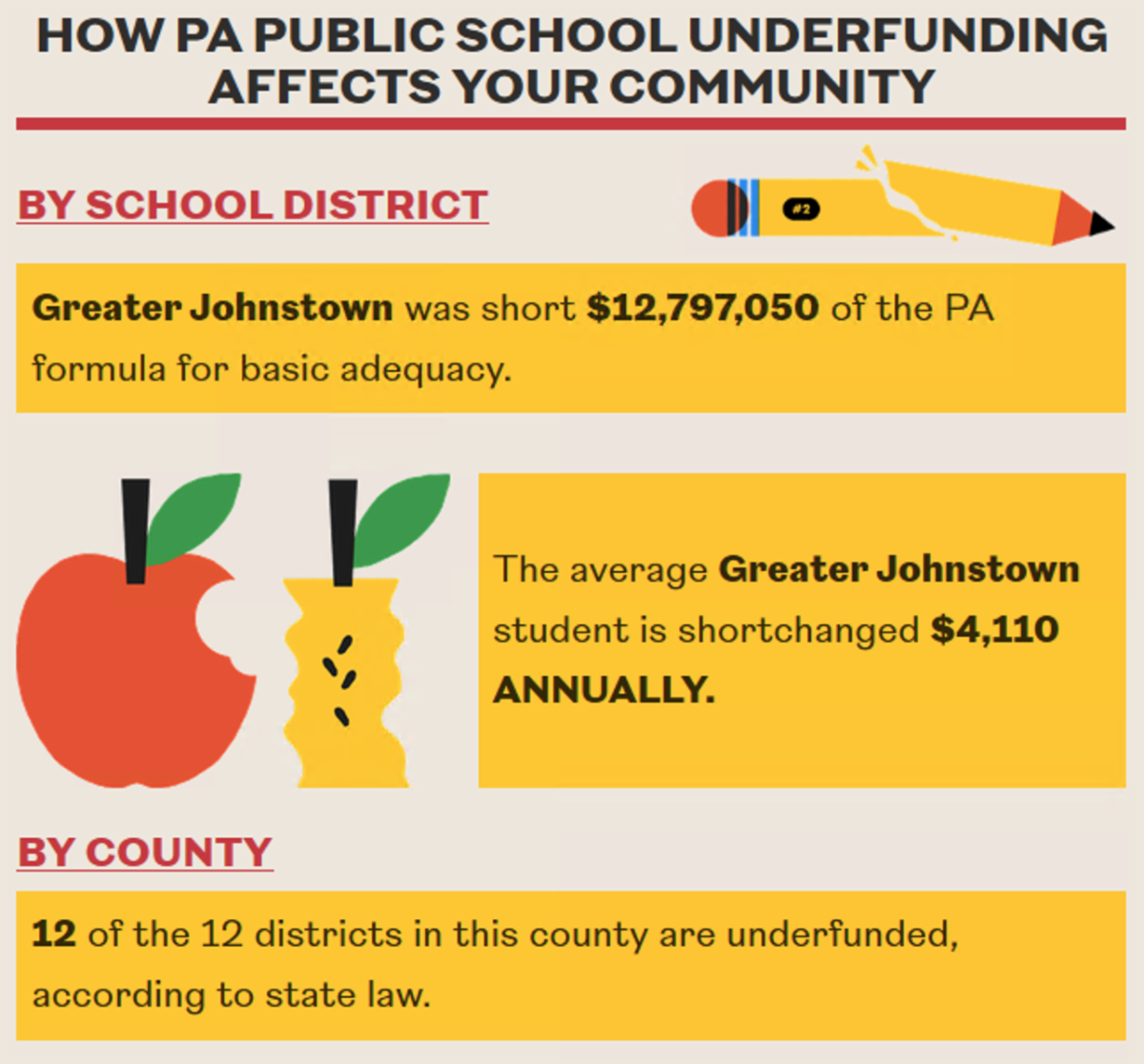
Get the details about how underfunded your PA school district is, then create and share a graphic like this one with that information, using our interactive map.
|
|
Separate and Unequal: Still a Reality in PA |
|
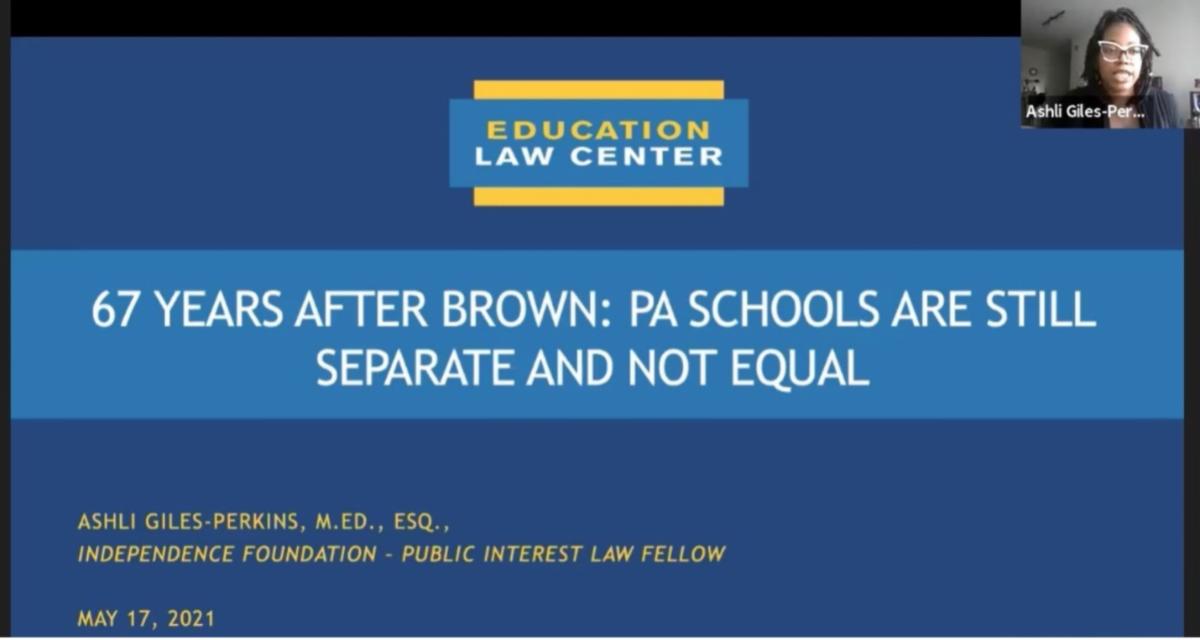
In two presentations on May 17, ELC staff highlighted important parallels between our current lawsuit challenging the constitutionality of Pennsylvania’s school funding system and the Brown v. Board of Education case decided 67 years earlier.
ELC Public Interest Law Fellow Ashli Giles-Perkins spoke at the Philadelphia Student Union's public hearing on school funding, connecting the dots between that historic ruling that racial segregation in schools is unconstitutional and this current historic moment where across the state, schools that serve students of color and low-income students largely remain segregated and underfunded. She addressed how the funding case, coupled with advocacy, can help our state finally reach the intentions of the 1954 decision and more, ensuring that Black and Brown students, who are disproportionately living in low-wealth communities, have the resources they need to thrive.
to commemorate the Brown decision, ELC executive director Deborah Gordon Klehr decried separate and unequal schooling: “Across Pennsylvania, we can point to school district borders that sort students into districts of haves and have-nots.” She emphasized that if the lawsuit is successful, “it will still be up to all of us to ensure that the legislature delivers on their constitutional obligation.”
|
|
PA Senate Bill 324: “Fostering a
Smooth Transition for Graduation"
|
|
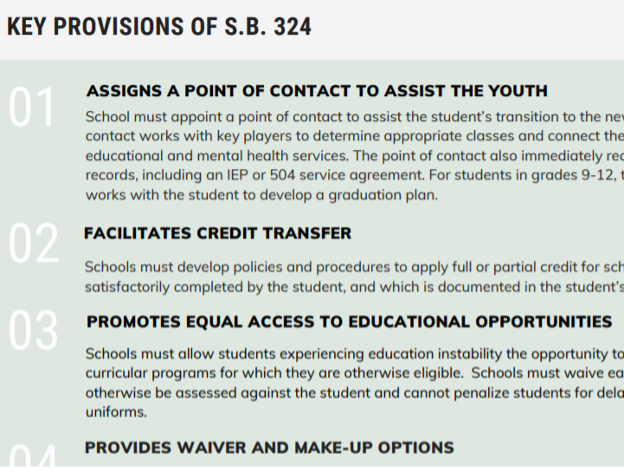
Please join ELC in advocating for the passage of important legislation, S.B. 324, to advance the educational rights of Pennsylvania students with experience in the foster care and juvenile justice systems and students experiencing homelessness. The bill, “Fostering a Smooth Transition for Graduation,” ensures these highly mobile youth receive credit for academic work completed, obtain an individualized graduation plan, are assigned a point of contact, and have expanded options to access a high school diploma. Learn more from our fact sheet or the bill’s text.
Show your support by adding your sign-on to a letter in support of this important legislation, which will bring high school graduation within reach for highly mobile students. Please sign on as an organization or individual by 12 p.m. on Wednesday, June 2, by using the form here. Thank you for standing with our students!
|
|
Fostering a Welcoming and Safe Climate Requires Resources |
|
ELC attorney Hetal Dhagat provided written testimony on mental health resources for high school students on May 24 to the Pennsylvania House Human Services and Education Committees. ELC advocated for schools to allocate resources to support the social and emotional well-being of students and to create safe and welcoming spaces. These supports in particular would foster a welcoming and safe climate for Black girls to thrive.
We emphasized the need for mental health resources that are both culturally competent and trauma-informed. Our testimony also highlighted the benefits of integrating social and emotional learning into curricula to help students manage emotions, build healthy relationships, and make decisions that lead to safe and inclusive school environments.
|
|
PA Juvenile Justice Task Force
Recommends Key Reforms
|
|
ELC is pleased to report that on May 26 the statewide Pennsylvania Juvenile Justice Task Force adopted important recommendations to overhaul Pennsylvania’s juvenile justice system, including key recommendations relating to education that ELC advocated for.
The task force voted unanimously to recommend the passage of legislation to require the Pennsylvania Department of Education to develop a licensing, oversight, and monitoring process for education programs in placement facilities and to increase oversight and accountability of all out-of-home placements for youth. The Task Force also voted to ensure school stability for youth in the juvenile justice system, which can often prevent youth from falling deeper into the criminal justice system.
ELC will continue to work towards the effective implementation of these and other critical reforms. The report is forthcoming and will be available on the task force's website.
|
|
Webinar: Dismantling the
School-to-Prison Pipeline
|
|
Last chance to register! As part of an effort to better address the needs of people of color with disabilities, FISA Foundation, The Heinz Endowments, and The Pittsburgh Foundation are co-sponsoring a June 8 webinar, “Dismantling the School to Prison Pipeline.” Do not miss this opportunity to hear from ELC and our southwest PA partners on the urgent need to end disproportionate punishment of students of color and students with disabilities. Register for this free event here.
|
|
New Resource on Confronting
COVID-19-Related Harassment
|
|
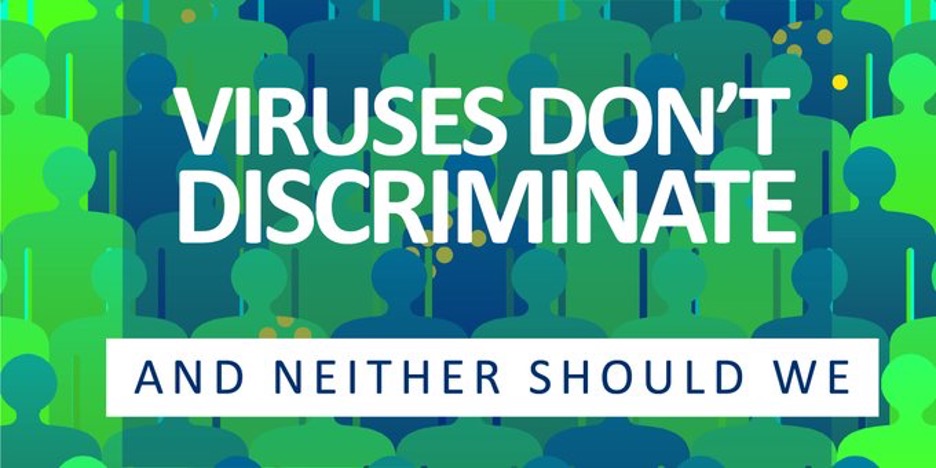
The U.S. Departments of Education and Justice have released a timely fact sheet for students and families: Confronting COVID-19-Related Harassment in Schools. Schools have a responsibility to address the spread of false information and harmful statements about Asian American and Pacific Islander communities, which have led to increasing acts of intolerance across the nation during the pandemic. This resource is available in 13 languages in the “race and national origin discrimination” section of the Office for Civil Rights Reading Room.
|
|
Virtual Instruction Inappropriately
Used as Disciplinary Tool
|
|
ELC represented “Jackson,” a student with disabilities whose charter high school required him to return to full virtual instruction because of his behavior when the rest of the school was attending in-person. In addition, the school notified Jackson’s mother that he would be expelled at the end of the year without determining whether his behavior resulted from his disabilities and without holding an expulsion hearing.
As a result of ELC’s negotiations, the school rescinded Jackson’s impending expulsion and agreed that he could receive in-person support for learning and an appropriate school placement to support his educational needs. A May 4 NBC News story featured comments by ELC staff attorney Margie Wakelin about a growing practice of inappropriately confining students to virtual instruction as a disciplinary action.
|
|
Welcome Our Summer Interns! |
|
ELC is pleased to welcome our first three summer law student interns to our team in Philadelphia, which continues to work remotely. They bring a wide array of talents and interests to our team.
Psalm Brown is a rising second-year student at Yale Law School. He participated in the Worker and Immigrant Rights Advocacy Clinic and volunteered with the Civil Rights Project’s Law for Black Lives project. Prior to law school, he worked as an admission counselor at Claremont McKenna College and a college counselor at a charter high school in Chicago.
Eshan Dabak is a rising second-year student at Yale Law School. He participated in the Free Exercise Clinic and is an editor of the Yale Law and Policy Review and Yale Journal of International Law. Prior to law school, Eshan received his M.A. in comparative religion and completed internships at Legal Aid of Northwest Texas and Mosaic Family Services in Dallas.
Makayla Reynolds is a rising second-year Toll Public Interest Scholar at University of Pennsylvania Law School. She is also pursuing an M.A. in education policy at Penn. Prior to law school, she worked as an elementary teacher in Tulsa and interned with the Tulsa County Public Defender’s Office. While in college, she served as a tutor and mentor for West Philadelphia students.
|
|
ELC released two new resources in May:
|
|
Act 110: Rights of Students Convicted or Adjudicated of Sexual Assault – our factsheet explains a new law known as Act 110, which became effective in January 2021. The law requires a student convicted or adjudicated delinquent of sexual assault against a student in the same school to be transferred to another school, placed in AEDY, or expelled. Students in this context still have due process rights. Learn more in this factsheet.
|
|
Seeking Post-Graduate Legal Fellows |
|
Are you a law student graduating next year and in search of an impactful postgraduate fellowship? ELC is accepting applicants for legal fellows to begin in fall of 2022. Ideal candidates will have a demonstrated commitment to racial justice and public interest law. Preference will be given to fellowship applicants who submit their applications by July 2, 2021. Learn how to apply here.
|
|
See our website for a full description of two job opportunities in ELC’s Philadelphia office: a staff attorney position and a policy director position.
|
|
Education Law Center | 215-238-6970 (Philadelphia)| 412-258-2120 (Pittsburgh)| |
|
A copy of the official registration and financial information of the Education Law Center may be obtained from the Department of State by calling toll-free, within Pennsylvania, 1-880-732-0999. Registration does not imply endorsement. |
|
|
|
|
|
|