|
Suspected IS Militants Set Fire to an SDF Oil Tanker in Ayn Issa
On 13 October 2025, suspected Islamic State (IS) militants conducted an arson attack targeting a Syrian Democratic Forces (SDF) oil tanker in Ayn Issa, Raqqa, marking the second such attack within three days in the same province. Earlier, on 10 October 2025, IS gunmen ambushed another SDF-operated oil tanker using machine guns on the road to al-Manakher, near al-Karamah, roughly 30 km east of Raqqa city. These consecutive incidents underscore the group’s renewed focus on energy infrastructure, particularly targeting SDF-controlled logistics lines essential for fuel distribution in northern Syria.
Ayn Issa, strategically located along the M4 highway, has long been a high-risk zone due to its proximity to major supply routes and its symbolic importance as a former IS stronghold. The area’s terrain and sparse security presence make it highly vulnerable to hit-and-run attacks by IS motorcycle cells, a hallmark of the group’s asymmetric warfare strategy. IS has repeatedly attacked Ayn Issa since its territorial defeat in 2019, with the last recorded assault in August 2025, when militants detonated an IED targeting an SDF patrol vehicle. The persistence of such operations indicates that IS maintains both freedom of movement and localised intelligence networks in rural Raqqa, allowing it to strike logistical convoys with relative ease.
This latest incident must be understood within IS’s broader oil warfare doctrine, which has evolved into a strategic campaign to destabilise the post-caliphate economy in northeastern Syria. Since July 2024, TRAC has recorded at least 87 oil-related attacks, including arson, IEDs, and small-arms ambushes on tankers, pipelines, and refineries across Raqqa, Deir Ezzor, and Hasakah. Although IS Central Command has not formally branded this effort as a unified operation, the systematic pattern of targeting oil assets strongly suggests a de facto campaign designed to undermine the SDF’s financial autonomy. Oil revenue remains a critical source of funding for both local governance and SDF counterterrorism operations; by sabotaging this sector, IS aims to weaken local institutions, strain civilian livelihoods, and reassert itself as a persistent insurgent threat.
Moreover, the timing and tempo of these attacks reflect IS’s broader post-territorial adaptation, moving from symbolic, mass-casualty bombings to economically disruptive guerrilla tactics. These operations are low-cost yet high-impact, serving propaganda purposes by demonstrating operational reach and resilience despite intensified counter-IS raids in Raqqa and Deir Ezzor. The choice of oil transport targets, rather than heavily fortified installations, also highlights IS’s pragmatic approach: hitting soft, high-value assets that erode public confidence in SDF control.
| | | TRAC Incident Report: Deadly Clash Erupts Between Hamas and Dughmush Clan in the Neighborhood of Sabra, Gaza, Palestine | | |
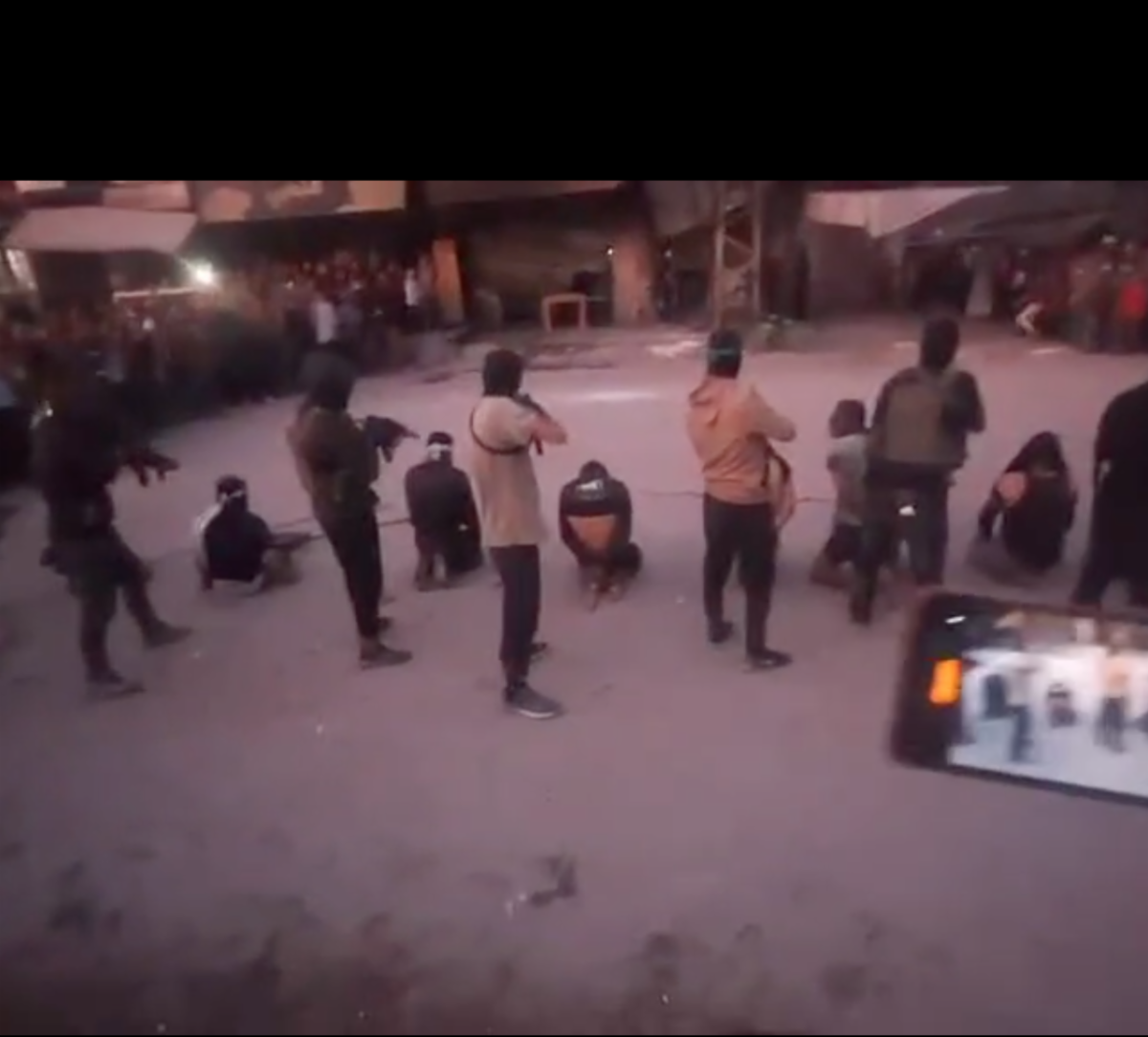
On 13 October 2025, violent clashes erupted in the Sabra neighbourhood of Gaza between Hamas’s Al-Sahm forces and the powerful Dughmush clan, one of Gaza’s most entrenched families. The confrontation left at least 27 people dead, 19 Dughmush members and 8 Hamas fighters, and marked one of the bloodiest episodes of internal fighting in recent months. Hamas claimed the violence began after the Dughmush clan killed members of its Qassam Brigades, while the clan accused Hamas of exploiting the ceasefire with Israel to launch an assault on their territory. Reports indicate that 200 to 300 Hamas fighters stormed the Dughmush-controlled residential zone, using heavy weapons and armoured vehicles, in what appeared to be a large-scale operation to crush clan resistance.
Among the dead were Saleh al-Jafrawi (known online as “Mr. FAFO”), a prominent pro-Hamas social media influencer and the son of senior Hamas official Bassem Naim, and Muhammad Imad Akl, a member of Hamas’s military wing. The Dughmush clan, however, denied involvement in Akl’s death, issuing a statement blaming Hamas for using “fabricated accusations” to justify aggression. The timing of the violence, just eleven days after Hamas’s confrontation with the Al-Mujaida clan, suggests rising internal instability, as rival families begin testing Hamas’s grip on power amid the current ceasefire and partial Israeli withdrawal.
Hamas conducted a public execution of eight suspected collaborators with Israel following the fighting, highlighting their intent to reassert control through fear and coercion. Meanwhile, the Al-Mujaida clan announced on 14 October that it would surrender its weapons to Hamas, signalling the group’s success in intimidating smaller families. Local sources report that Hamas has recalled roughly 7,000 security personnel to reestablish dominance in areas vacated by Israeli forces, particularly in central and southern Gaza. The sequence of events reveals a power vacuum forming as Israel’s military presence contracts, with Hamas scrambling to suppress tribal militias that could challenge its authority.
The Dughmush clan, centred in Gaza’s Sabra neighbourhood, has long operated as a quasi-mafia network, blending tribal loyalty, armed power, and illicit enterprise. In 2006, Mumtaz Dughmush, the clan leader, founded Jaysh al-Islam (Army of Islam), serving as the militant wing of the clan. Jaysh al-Islam gained international notoriety for high-profile kidnappings, including BBC journalist Alan Johnston (2007) and Israeli soldier Gilad Shalit (2006). Initially, Hamas and Jaysh al-Islam cooperated, but relations deteriorated as the Dughmush clan’s ambitions clashed with Hamas’s dominance. Over time, the Dughmush adopted increasingly anti-Hamas rhetoric, framing the movement as corrupt and insufficiently Islamic, while seeking alignment with transnational jihadist networks.
The latest clashes illustrate how Gaza’s post-ceasefire environment is rapidly fracturing along tribal, ideological, and territorial lines. The Dughmush clan, like several others, perceives Hamas as weakened after prolonged war and views the current lull as an opportunity to reclaim lost autonomy. Hamas, for its part, has justified its crackdown by accusing the Dughmush of receiving covert Israeli support—a recurring narrative used to delegitimise rivals. There are unverified reports that Israel has quietly encouraged certain clans, such as the Popular Forces led by Yasser Abu Shabab, to undermine Hamas’s monopoly on power. However, any such strategy carries enormous risks. Arming or tolerating local militias with jihadist inclinations could destabilise Gaza further and potentially empower actors even less controllable than Hamas itself.
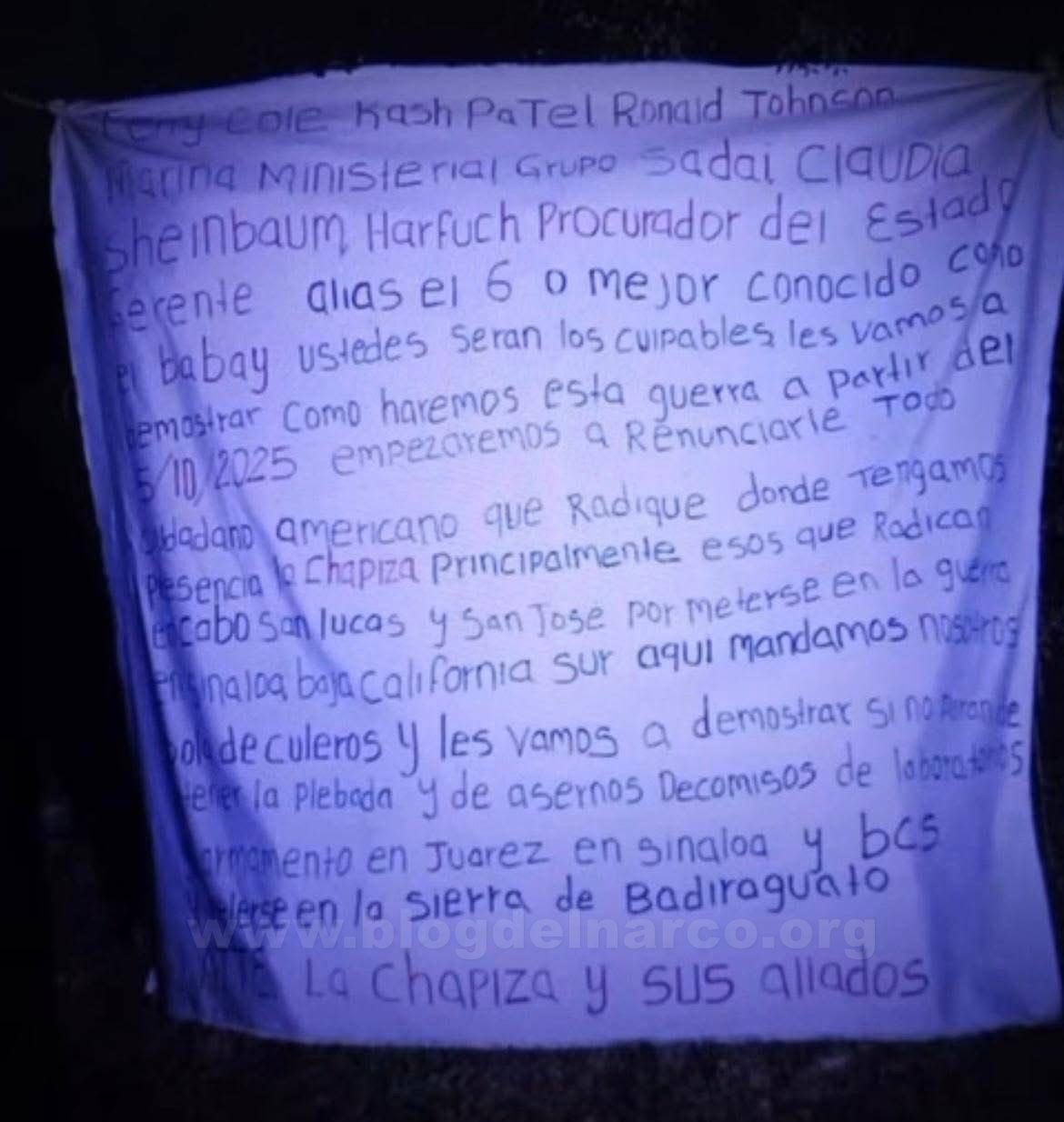
| | (Photo) La Chapiza Threatens FBI Director Kash Patel with Murdering US Citizens in Los Cabos, Baja California Sur, Mexico | | |
On 5 October 2025, narco-banner attributed to La Chapiza (a faction of the Sinaloa Cartel loyal to the sons of Joaquín “El Chapo” Guzmán) appeared in Los Cabos, Baja California Sur, Mexico. The message threatened a “war” and directly named U.S. officials and agencies, including the FBI, DEA, former U.S. ambassador Ronald D. Johnson, Kash Patel, and Terry Cole, as well as Mexican politicians Claudia Sheinbaum and Omar García Harfuch. It warned of attacks on American citizens living in Cabo San Lucas and San José del Cabo, claiming retaliation for recent arrests, seizures of drug labs and weapons, and government operations in Sinaloa, Baja California Sur, and Ciudad Juárez. The banner declared that La Chapiza and its allies would respond violently to perceived U.S. and Mexican interference, specifically citing actions beginning from 5 October.
This narco-message represents a classic act of cartel intimidation: a low-cost, high-impact psychological tactic to deter government pressure and demonstrate territorial control. However, its explicit naming of U.S. officials and threats against American residents mark a sharp escalation in rhetoric, likely designed to draw attention and showcase La Chapiza’s defiance amid ongoing crackdowns. While such messages are often intended more for propaganda than for execution, the threat environment in tourist-heavy Baja California Sur is likely to heighten, particularly for U.S. citizens and foreign nationals. The banner also serves as an internal signal to rivals and local communities that La Chapiza remains strong despite intensified law enforcement.
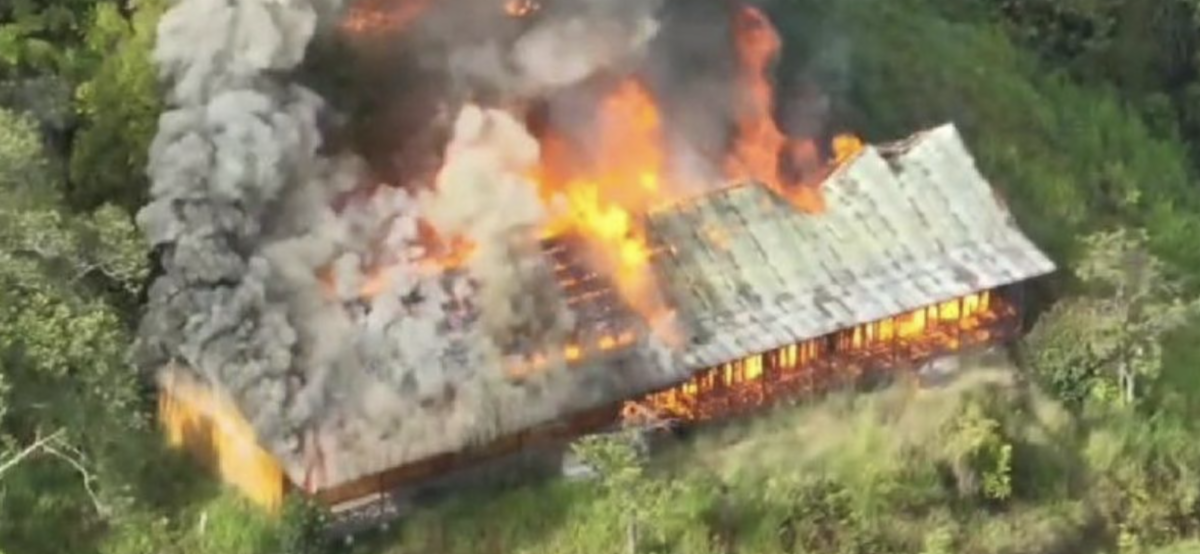
| | TRAC Incident Report: Free Papua Movement (OPM) Insurgents Target the Kiwirok State Middle School in an Arson Attack, Sopamikma Village, Kiwirok District, Pegunungan Bintang Regency, Papua Highland, Indonesia | | |
On 13 October 2025, around 7:00 a.m. local time, Free Papua Movement (OPM) rebels conducted an arson attack on the Kiwirok State Middle School in Sopamikma Village, Kiwirok District, Pegunungan Bintang Regency, located in Indonesia’s Papua Mountains Province. The assault, led by fighters from the OPM’s Kodap XV Ngalum Kupel faction, destroyed the school building, which served as the only educational facility for children in this isolated and mountainous region. Following the attack, Indonesian security forces responded with gunfire and heightened security across the district, fearing further rebel action.
This incident occurred less than a week after another school was burned down in Kiwirok, underscoring a pattern of deliberate targeting of educational institutions by OPM militants. The attacks appear to be part of the group’s broader strategy of rejecting Indonesian state presence and disrupting symbols of government-led development in Papua. The OPM often perceives schools, clinics, and administrative offices as extensions of Jakarta’s control, representing what the rebels view as cultural and political indoctrination efforts against Papuan identity. Teachers and health workers, many of whom are non-Papuan civil servants, are frequently accused by insurgents of being government collaborators or intelligence operatives.
The destruction of the Sopamikma school has a particularly severe local impact, as it was the sole educational centre serving several remote highland communities. Its loss effectively halts formal education for dozens of students and further isolates the population. OPM’s consistent attacks on educational facilities are part of a broader campaign to delegitimise Indonesian governance in Papua by denying local populations access to public services that symbolise state authority. These acts of destruction not only aim to erode state influence but also serve as psychological warfare, instilling fear among civilians and discouraging cooperation with government programs.
Notably, just three days prior, OPM militants in Yahukimo Regency, another area of the Papua Mountains, stabbed to death a female teacher while she was supervising students during an outdoor activity. That killing, followed by the burning of the Sopamikma school, demonstrates an escalating trend of violence against educators and government personnel. The repeated assaults indicate that the OPM, particularly the Ngalum Kupel faction, is intensifying its insurgency in response to recent Indonesian military operations and development projects in the region.
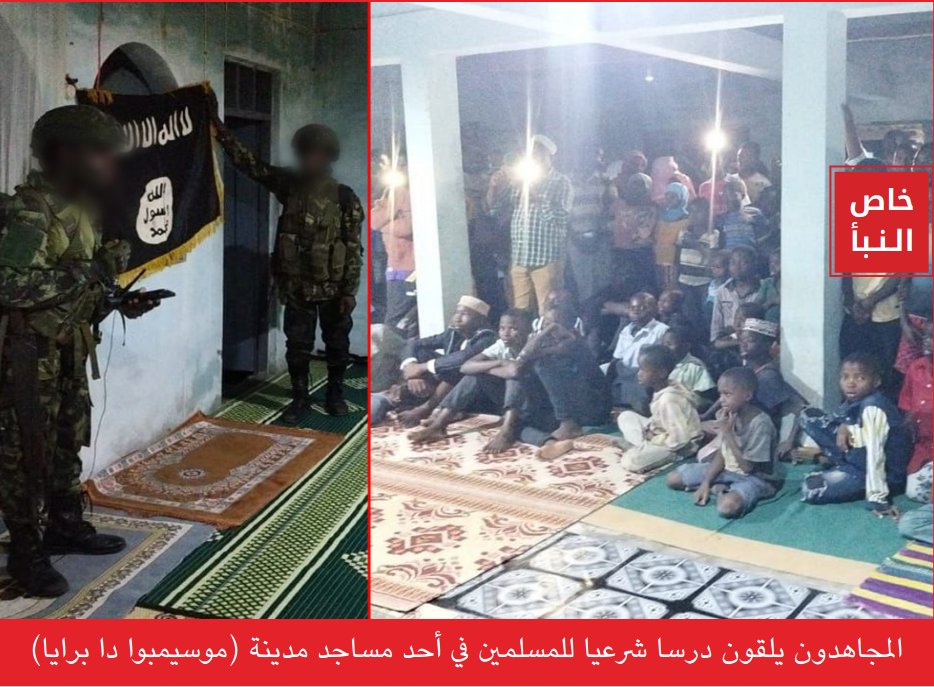
| | (Video) Islamic State Mozambique (IS-M/Shabaab Cult/Wilayat Muzinbik) Militants Enter Mosque and Proselytize in Mocímboa da Praia, Cabo Delgado, Mozambique | | TRAC Incident Report: Jama’at Nusrat al-Islam wa al-Muslimin (JNIM) Threatens to Impose a Total Blockade on All Roads Leading to Bamako, Mali | | TRAC Incident Report: Islamic State West Africa (ISWA/Wilayat Gharb Afriqiyah) Militants Led an Armed Assault/IED Double Tap Attack in Ngamdu, Borno State, Nigeria | | | | |