|
Volume 2026 Number 3
Autumn Edition for All Clients
| | | | |
Steven L. Cox, CPA
Telephone: (919) 469-1773
Online at: carycpa.com or stevenlcoxcpa.com
Cary Office: 1135 Kildaire Farm Road
Suite 200
Cary, NC 27511 (year round)
Pictured Staff :
Steve Cox, CPA
Kathy Ashworth, Admin Assistant
| | Miscellaneous Tax Practice Topics / Welcome Kathy Ashworth !! | | |
I spent a significant amount of time in prior newsletters discussing whether the NC legislature would "conform" to the provisions of the federal "Big Beautiful Bill" for 2025 and, for example, give NC taxpayers a tax benefit for tips, overtime, being over age 65, etc. In the end, our legislature did not extend these federal benefits to the state level.
On a related topic, I will note that tax breaks under the Big Beautiful Bill such as the ones mentioned above expire at the end of 2028 (3 more tax seasons). Just to clear up something where politicians often spread misinformation, there is a $6K tax deduction for each senior taxpayer over age 65 that will expire as noted above. This deduction is based on age only - a person over age 65 who does not draw Social Security still gets the credit. Nobody has actually reduced or eliminated income taxes on Social Security benefits. Even if they did, that would be detrimental to American retirees because federal income taxes collected that are attributable to Social Security benefits go back into the Social Security funds. On top of that, there are income limits where this age-related deduction phases out, which wouldn't be the case with a true elimination of income taxes on Social Security.
Many taxpayers may be wondering how close we may be to pressing a button and having A.I. generate an accurate tax return in the blink of an eye. I would note a few facts as follows: the federal tax code for U.S. taxpayers is over 70,000 pages and constantly changing, the 42 states that have a state income tax also have a unique and massive tax code that constantly changes, most A.I. models are language based and often struggle with math-related queries, and finally, I have found it to be quite common that when asking a tax code amount (such as a maximum IRA contribution amount, for example), the A.I. agents will often give you the amount for the wrong year unless you specifically mention the year in your inquiry. As I often say, the internet contains an infinite wealth of outdated information.
There may be a day when all personal income tax calculations are automated and accurate. Until that year/decade comes, I would recommend proceeding with caution regarding reliance on A.I. accuracy for tax returns.
I would like to welcome and introduce Kathy Ashworth to my tax practice and to my wonderful client base. Kathy moved here from Virginia and recently retired from one of the national financial advisor operations. She will be assisting me with my tax practice in several areas, and her vast experience with financial matters and providing excellent customer service will be a true asset to my practice. Kathy and I reconnected after not having seen each other since college over 45 years ago. Welcome Kathy!!
My tax practice is currently at a place where I am only accepting a very limited number of new clients, and they must be referrals from either existing clients or from known referral sources. I am gradually but slowly reducing my client base numbers as I do a long, steady glide toward eventual retirement. At this point, I still plan to continue practicing for several more years, especially now that I have wonderful administrative help with Kathy!
----------------------------------------------------------------------------------------------------
| | | |
2026 Government Update
Tax Proposals / Law Changes
Status of Student Loans
Trump Accounts / Social Security
NC Updates
| | |
Beginning January 2027, the provisions of the "Big Beautiful Bill" will force states to impose work requirements or other qualifying activities for Medicaid recipients, more frequent Medicaid eligibility checks, higher cost‑sharing, shortened retroactive Medicaid coverage, all of which reduce federal spending and will remove beneficiaries from coverage. Also beginning in 2027, the Big Beautiful Bill provisions will shrink the enrollment window for Affordable Care Act insurance enrollments, make formula changes that will push ACA premiums much higher, and remove certain employee benefit tax-free status. The department of Health & Human Services estimates that there will be 2 million fewer ACA Marketplace insurance enrollees in 2027.
The Big Beautiful Bill also eliminates many student loan options for Americans. Effective July 1, 2026, Graduate Plus loans (the primary loan system for medical, law, and graduate education) are eliminated. New borrowing caps and loan restrictions are phased in during 2027. Student loan repayment options have been consolidated and almost all income-based options have been eliminated.
New Trump accounts started being set up beginning July 4, 2026. Investment options for custodian parents are very limited, and basically include only equity market index funds. These accounts are being praised by some in the administration as an eventual alternative to the Social Security system, but parents should note that Trump accounts can lose value with the market, while Social Security funds are invested in U.S. Treasury bonds and they have never lost money.
STATE TAXATION NEWS:
The NC legislature has added a ballot initiative to the November 3rd ballot to lower the maximum income tax rate in NC from the current 7% down to 3.75%. Opponents point out that this proposal would limit the state's flexibility to respond to recessions, natural disasters, infrastructure needs, public education and Medicaid cost growth, and other factors. When this flexibility is removed, states & municipalities typically end up increasing sales taxes, fees & service charges, and property taxes. The proposal, if passed, would constrain opportunities for raises in teacher salaries, police & fire salaries, and also money for new schools and school renovations.
| | This Quarter's Brain Teaser - | |
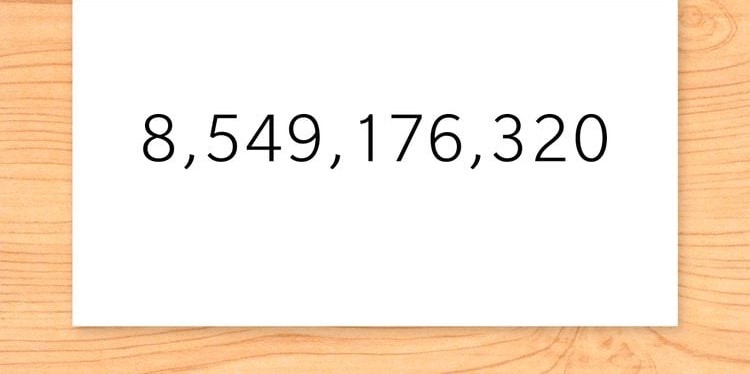
Can you spot what is unique to this number only?
Answer at the bottom of the newsletter
| |
By The Numbers
1. JOBLESS JACKPOT - A New York data center project highlights the extreme economics of modern tech infrastructure: a $77 million tax break was approved for a JPMorgan Chase facility expected to create just one permanent local job, making it the largest subsidy‑per‑job deal of its kind in the U.S. Watchdogs note the incentive primarily covers sales taxes on hundreds of millions in equipment, with roughly $40 million coming from state revenue. The project may generate temporary construction work but underscores a broader trend—data centers require massive capital investment while employing very few workers. [source: nysfocus.com]
2. AISLE BE DAMNED - Maryland last week became the first state to prohibit grocery stores and delivery systems like DoorDash from using “surveillance pricing” (also known as “dynamic pricing”). The AI‑supported algorithmic practice changes the price of goods based on where you live, browsing history, purchase history, income and demographic estimates, time of day, and local demand, attempting to determine the highest price a particular individual is likely to tolerate before deciding not to make the purchase. The Maryland bill, called the Protection From Predatory Pricing Act, takes effect October 1 and stipulates fines of $10,000 for initial offenses and $25,000 for repeats. The legislation also requires grocery stores to maintain fixed prices for at least one full business day to prevent price hikes driven by factors such as higher and lower demand at differing times of day. Similar legislation is currently being considered in Colorado, California, Illinois, and New Jersey. [source: nytimes.com]
3. SLIM PICKINGS - The rapid growth of GLP‑1 weight‑loss drugs such as Zepbound, Ozempic, and Wegovy is increasingly impacting the restaurant industry as users eat less, order smaller portions, skip alcohol, and dine out less frequently. More than 12% of Americans reported using GLP‑1 drugs last fall, up from 6% in early 2024, with estimates that more than 30 million Americans could be using the drugs by 2030. A Cornell University study found households with at least one GLP‑1 user reduced spending at fast‑food chains, coffee shops, and quick‑service restaurants by 8% within six months of beginning treatment. Restaurant chains including McDonald’s, KFC, Panera Bread, Chipotle Mexican Grill, Olive Garden, and The Cheesecake Factory are responding with higher‑protein foods, lighter portions, customizable meals, and smaller serving sizes to appeal to GLP‑1 users, while investors increasingly view healthier fast‑casual concepts as better positioned than chains centered on fried or highly indulgent foods. [source: wsj.com]
4. NAME OF THE GAME - According to newly released data from the 2020 U.S. Census, Michael is the most common first name in the United States, followed by John, James, David, and Robert. The Census Bureau noted that male names dominate the rankings because there is less variety in male first names than female names, despite women slightly outnumbering men nationally. Mary and Maria ranked as the most common female names, placing seventh and eighth overall, respectively. The report also identified several gender‑neutral names, including Harley, Emerson, Quinn, and Kerry, which are used in nearly equal numbers by males and females. Olivia and Liam top America’s most popular baby names for the seventh straight year. [source: census.gov]
5. ARTIFICIAL AFFECTION - 62% of girls ages 5–13 view AI assistants and chatbots like Siri, Alexa, and ChatGPT as their friends, according to a survey from The Girl Scouts of America. Friends, that is, who are cooler, smarter, and funnier than their parents—according to the survey, roughly half of little girls prefer AI over the people who raised them when it comes to homework help, pop culture recommendations, and making them laugh. But the relationship goes far beyond entertainment. Many girls are increasingly turning to AI for emotional support, advice, and companionship, with more than half of girls ages 11–13 reporting they have asked AI for help when feeling sad, anxious, or lonely. Others use AI for music, movie, and TV recommendations, answering personal questions they may feel uncomfortable asking adults, brainstorming social situations, and helping them navigate friendships and everyday problems. The findings suggest AI is evolving from a simple tool into a trusted digital confidant for a growing number of young users. [source: fortune.com]
6. POWER PLAY - California—whose economy would rank as the world's fourth largest if it were its own country—is quietly proving that renewable energy can power a modern economy at scale. In 2024, renewables supplied a record 52.3% of the state's electricity, with solar providing abundant daytime power and rapidly expanding battery storage shifting excess energy into the evening hours. California isn't alone. Wind now generates more than one-third of North Dakota's electricity and about 57% of South Dakota's. Across Europe, countries such as Spain are increasingly relying on combinations of solar, wind, and battery storage, while France remains an exception because of its extensive nuclear fleet. The growing adoption of renewables in large, diverse economies suggests the technology has moved well beyond the experimental stage and is becoming a mainstream source of reliable electricity. [source: spglobal.com]
7. SILVER LININGS - Gray hair is no longer something many people are rushing to hide. Instead of scheduling root touch-ups every few weeks to cover every silver strand, a growing number of people are embracing "gray blending"—a coloring technique that uses highlights and lowlights to soften the transition to natural gray while dramatically reducing maintenance. Searches for gray blending salons have surged 905% over the past year, reflecting a shift away from full gray coverage toward a more natural look. Stylists say many of their clients are Millennials and Gen Z, often with only a few gray hairs, who want to enhance them rather than hide them. At the same time, younger people with no gray hair at all are requesting silver, smoky gray, and platinum-gray shades purely as a fashion statement, continuing the "granny hair" trend in a softer, more natural style. In both cases, the “gray” movement is part of a broader cultural shift away from negative stereotypes about gray hair. [source: vogue.com]
8. OUTTA SITE, OUTTA MIND - Here's a trend few people saw coming: phone-free social events are exploding in popularity. According to Eventbrite, the number of "phone-free" experiences worldwide jumped an astonishing 567% between 2024 and 2025, with attendance rising 121%. Some events simply ask guests to cover their cameras with stickers, while others require phones to be locked away until the evening ends. The appeal is simple: people want to be fully present instead of performing for social media. Imagine dancing, laughing, and having conversations without worrying about ending up in someone else's viral video. Ironically, in an age where we're more connected than ever, disconnecting may have become the newest luxury. [source: eventbrite.com]
9. COMING AND GOING - Many of 2026's largest layoffs aren't happening because companies are struggling—they're happening because profitable firms are using AI, automation, and restructuring to accomplish the same work with fewer employees. While headlines focus on AI replacing workers, many large companies are actually hiring more AI specialists than they are laying off other workers. Researchers estimate that only about 11% of S&P 500 companies have deeply integrated AI into their core operations, suggesting the AI revolution is still in its early innings. [source: businessinsider.com]
10. LASTING IMPRESSIONS - U.S. charitable giving rose 3% in 2025, surpassing $600 billion for the first time as Americans donated a record $617 billion to causes ranging from churches to animal rescues. While the total was the second highest ever after adjusting for inflation—trailing only the pandemic-driven surge of 2021—it outpaced the long-term annual growth average of 2.7%, supported by a relatively strong, albeit mixed, economy. Individual donors remained the backbone of philanthropy, contributing approximately $394 billion, or about 64% of all charitable giving, far exceeding the combined contributions of foundations, corporations, and estates. Meanwhile, bequests were the fastest-growing source of donations, rising nearly 17% after inflation, a trend that researchers believe may represent the early stages of the long-anticipated Great Wealth Transfer as Baby Boomers begin passing wealth to both heirs and charitable organizations. [source: nicenews.com]
| | |
Winter Wolf Howl
NEWS YOU CAN USE:
- Finding a new passion in retirement can be a significant challenge. One retirement coach suggests that retirees ask themselves the following questions: 1. What feels timeless when I do it? 2. What can I relentlessly pursue without ever growing tired of it? 3. What is a constant source of energy in both my words and actions? Once a passion is identified, then ask 4. How can I use this passion/purpose to connect with others? and 5. How can I use this passion/purpose for the good of others?
- Looking to do some home remodeling? The five home renovation projects that typically offer the highest return on your investment are 1. Garage door replacement, 2. Steel door replacement, 3. Stone veneer, 4. Fiber-cement siding, and 5. Minor kitchen remodel.
- A friendly reminder that the beneficiaries listed on your retirement accounts, life insurance policies, annuities, and some bank & investment accounts need to be reviewed on a regular basis and updated as needed.
- This newsletter is always looking to add some additional tips to save on the grocery bill during these challenging times - 1. Keep a "use first" bin in the fridge so nothing gets lost or wasted, 2. Buy whole produce, not pre-cut - cheaper and lasts longer with proper storage, 3. Cook in bulk and freeze portions for quick, budget-friendly meals, 4. Use digital coupons in store apps and supplement with sale prices when possible, and 5. Shop discount and clearance sections for near-date pantry items you can freeze or cook this week.
-
The Medicare annual enrollment period is approaching soon - October 15th through December 7th. Changes can be made to your traditional Medicare coverage, Medicare supplement coverage, and Medicare Part D drug coverage, or to your Medicare Advantage plan if you choose to go that route instead. The latest data shows that 55% of Americans on Medicare are enrolled in Advantage plans, with 45% on traditional Medicare. Many Part D drug plans now offer a monthly installment option to give you roughly equal payments based on your anticipated total annual expense. Many people are surprised to learn that the government spends 14% more for Medicare Advantage enrollees than for traditional Medicare. Federal officials are now increasing oversight of the "freebies" offered by Advantage Plans to entice enrollees, including debit cards for groceries, medical appointment transportation, as well as typical items such as dental and vision coverage.
-
Boosting college financial aid eligibility - It is generally best to limit assets held in a child's name as the % of assets expected to be available for college expenses is much higher for child assets than parental assets. Note that a 529 plan generally counts as a parental asset if used to fund a dependent child's education. In addition, a 529 plan owned by a grandparent to cover a grandchild's educational expenses isn't reportable at all on the FAFSA financial aid application form, so it has no effect on the student's aid eligibility. Also note that distributions from a grandparent 529 no longer count as part of the student's income, so this is a great planning opportunity.
- Best Purchase I Made Since Last Newsletter: I would have to say an engagement ring!! Kathy and I are getting married in October and we will live in Cary (and go to the beach often)!
| | | |
Client Travel Guide:
Share some of your favorite getaway places !!
Send photos & descriptions to carycpa@nc.rr.com
This edition highlights the "ABC's" of great getaways in the Caribbean - Aruba, Barbados and Curacao
| | | | Aruba - Aruba delivers zero‑stress Caribbean travel with exceptional safety, year‑round sunshine, and a location outside the hurricane belt. Its beaches at Palm Beach and Eagle Beach offer calm water, soft sand, and easy access to restaurants, making it one of the most reliable warm‑weather escapes. | | | | |
Barbados - Barbados blends high safety, friendly culture, and world‑class west‑coast beaches, giving travelers a refined but relaxed island experience. With excellent dining, calm turquoise water, and a strong reputation for stability, it’s a standout choice for couples and families seeking quality without the luxury‑island price tag.
| | | | Curacao - Curaçao is the Caribbean’s best value in the southern islands, known for colorful Dutch‑Caribbean architecture, protected snorkeling coves, and a welcoming, low‑stress vibe. Its location outside the hurricane belt and reasonable hotel and dining costs make it a smart pick for travelers who want beauty, culture, and affordability in one stop. | | Answer to brain teaser: The number contains all ten digits, 0 through 9, in alphabetical order. | | | | |