|
What Every Therapist Should Know About Insurance
By Barbara Griswold, LMFT
Author, Navigating the Insurance Maze
August 11, 2026
| | |
Hello!
Summer usually means moving at a slower pace, but I never quite got the hang of that. In fact, I've been busy creating new resources to make your life easier!
I’m excited to share my new Clinical Review Preparation Question List, with 22 sample questions an insurance case manager might ask if they contact you to review treatment. It’s designed to help you feel prepared—whether you’re getting ready for a phone review or fighting a care denial. With this “cheat sheet” in hand and your answers thought out ahead of time, you will go into conversations with the health plan feeling calmer and more confident. And preparation can make a real difference in getting sessions approved.
Don’t need it right now? Purchase it anyway and keep it handy for when you do in the future. Check it out here.
Stay cool,
Barbara
| | |
ARTICLE
Using Your Social Security Number on Claims and Superbills?
6 Reasons to Get an Employer ID Number (EIN)
Are you using your Social Security number (SSN) on claims, superbills, and other practice documents? You might want to rethink this.
Using your Social Security Number on practice forms carries a risk of identity theft. There is also the risk of financial fraud if the form is lost or stolen, or if the database where your SSN is stored is hacked.
So, is there an option to using your Social Security Number?
The Lowdown on Tax IDs
There are two main types of tax ID numbers: Social Security Numbers and Employer ID Numbers (EIN). There are many reasons why clinicians might want to use an EIN instead of their SSN on all practice forms where a tax id number is required.
You may think “I’m not eligible for an EIN – I’m not an employer.” But you are! Even if your business only has one employee -- you -- you can get an EIN.
What are the benefits of getting an EIN? How do you get one? How much does it cost? And what are some important things you need to know before you use an EIN on your claims and superbills? Read the rest of the article here
| | |
ARTICLE
Most Medicaid Clients Unaware of Upcoming Work Requirements
Do you work with Medicaid clients?
Over 80% of Medicaid clients don’t know they’ll need to report work, education or volunteer hours starting in 2027 to maintain coverage, according to a survey from the Health Management Academy.
The new requirements
The enactment of the 2025 federal budget reconciliation bill, popularly known as the One Big Beautiful Bill, introduced new Medicaid work requirements.
Beginning January 1, 2027, these requirements will apply to 44 states, and mandate that able-bodied adult Medicaid enrollees document 80 hours of work, school, or volunteer community service each month to retain coverage.
Many clients are still in the dark
The potential consequences of a lack of awareness or inability to comply with these new rules are alarming, as they could lead to care denials and cause thousands to lose their health insurance.
According to the survey, a staggering 55% of Medicaid clients are completely unaware of the new work requirements, while 27% have only heard vague mentions of these changes, but don't know any specifics.
There are exceptions for certain groups, such as individuals under 19 or over 64, those enrolled in Medicare, pregnant or postpartum individuals, caregivers of children 13 or younger (or disabled dependents), and individuals who are medically frail, disabled, or in substance use disorder treatment. But millions of working individuals still face the risk of losing coverage due to complex bureaucratic hurdles and the daunting task of paperwork required to prove eligibility. An analysis by the Urban Institute and the Robert Wood Johnson Foundation projects that 3 million to 7 million people could lose coverage due to these requirements.
Impact of the new requirements
- Some clients may struggle to meet the 80 hours per month requirement due to caregiving responsibilities or personal health challenges.
- States may not have the administrative structures in place by January to efficiently check for compliance.
- The Bill requires Medicaid eligibility verification every 6 months, so clients must repeatedly go through this extra layer of bureaucracy.
-
37% of survey respondents said if they lost coverage they would wait until health concerns became urgent and go to the emergency room (ER). 28% said they would use the ER for routine care. Yet due to 2026 healthcare subsidy cuts, ERs are already reporting increased usage, and an increase in patients not paying for care.
- 41% of survey respondents reported they would ration their existing medication if they lost coverage.
The takeaway
Let's help our clients retain their coverage. Talk to your Medicaid clients (or clients with family members using Medicaid) to ensure they know about the new requirements. For more information, click here
| |
|
WEBINAR: "WHAT'S MISSING FROM YOUR CHARTS: WRITING GREAT NOTES"
This recorded webinar is aimed at all therapists, since we all can have charts reviewed by insurance, disability, and licensing boards. Includes 8 note examples, 3 note templates, and telehealth note requirements. For info, click here
| |
WEBINAR: "TELEHEALTH LAW & ETHICS: WHAT YOU NEED TO KNOW ABOUT APPS, AI, AND OTHER ADVANCES IN CARE"
While applicable nationwide, this recorded course meets the mandatory telehealth course requirement for all California MFTs, LCSWs, & LPCCs. We discuss the latest technology and how it can be safely used, including Artificial Intelligence (AI), email, texting, seeing clients in another state & HIPAA compliance. For info, click here
| |
PRACTICE FORMS PACKET
Get 24 essential forms Easy to customize. Designed to meet legal, ethical, and insurance expectations. For info, click here
| |
WEBINAR: "COUPLES THERAPY: BILLING, DOCUMENTATION,
& ETHICAL DILEMMAS"
Working with couples involves navigating complex billing, documentation, and ethical issues. This recorded webinar answers all your questions such as when can you ethically bill insurance? Who really is your client? Do you need two charts and treatment plans? What does insurance expect? For more info, click here
| |
WEBINAR:
"ARE YOU COMMITTING INSURANCE FRAUD?"
This recorded webinar answers all your questions about fraud and contract violations, including the ethics of billing two plans for a couples session, sliding fees, waiving copayments, and how to avoid common types of fraud. For info, click here
| |
RAISE REQUEST TEMPLATE
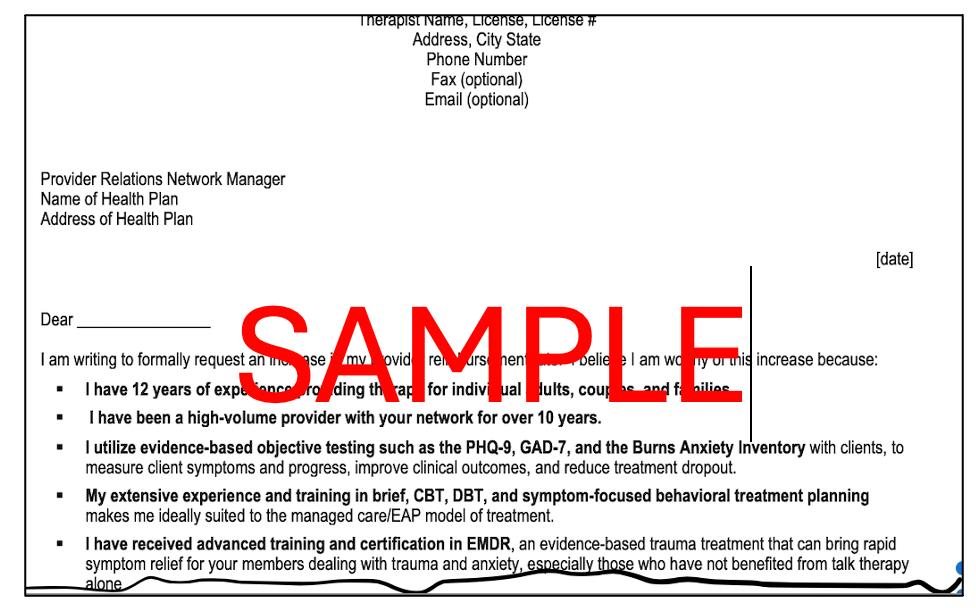
Did you know 40% of therapists in one survey had received a raise from a health plan? This template will help you understand how to format your request and what to say when asking for a raise. For info, click here
| |  | |
WEBINAR:
"AUDITS AND RECORDS REQUESTS: WHAT EVERY THERAPIST SHOULD KNOW"
This recorded webinar is for all therapists, since even out-of-network therapists can have their notes requested by an insurance plan or other agency -- and can be asked to pay back monies already collected. Learn to prevent this. For info, click here
| |
WEBINAR: "HOW TO WRITE A 10-MINUTE TREATMENT PLAN"
Do you hate writing treatment plans, worry about the ones you write, or don't write them at all? This recorded training will teach you how to write brief plans that satisfy legal, ethical, and insurance expectations, so you feel confident if you receive a records request, and won't have to pay money back if audited. For info, click here.
| |
PROGRESS NOTES TEMPLATE
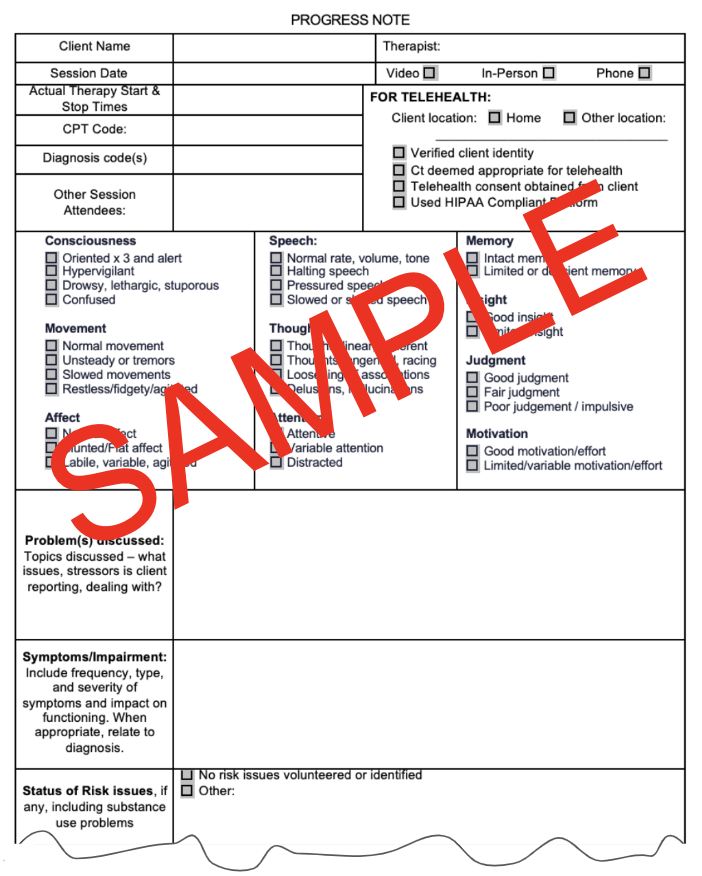
This progress note template has been designed to pass an audit by the toughest insurance plans or licensing boards. Available in fillable PDF format, Word format, and Pages format. Have confidence in your session notes. For more info, click here
| |
WEBINAR: "THE FIRST SESSION: Juggling Clinical & Administrative Tasks"
This recorded webinar gives tips on juggling all those intake tasks -- building rapport and taking a history, doing a diagnostic assessment, while handling paperwork, payment and insurance issues. For more info, click here
| |
WEBINAR:
"SHOW ME THE MONEY: Understanding Rates, Raises, and Resigning"
This recorded course tells you how to increase your chances of getting a raise from a health plan, and gives both clinical and practical steps for asking for a raise. It also outlines the practical and clinical steps to take when resigning. For more info, click here
| |
WEBINAR: "WHAT OUT-OF-NETWORK THERAPISTS SHOULD KNOW ABOUT BILLING"
This recorded webinar covers what every therapist should know about billing and insurance -- even if you have never signed an insurance plan contract. We'll discuss common errors made by out-of-network providers, sliding scale fees, and helping self-pay clients afford treatment. For info, click here
| |
|
MY BOOK!!!
Navigating the Insurance Maze: The Therapist's Complete Guide to Working With Insurance -- And Whether You Should -- 10th EDITION
Get the digital version only or both the paperback and digital versions
Click here for info. Please buy direct from us - Amazon keeps 55% of profits!
CALIFORNIA LMFTs, LCSWs, LPCCs, and LEPs: You can now get 10 CEs for reading my book, and 2 can count as Legal and Ethical CE credits. Buy my book here and buy the CE test here to get your CEs. You can even take the test if you have already read any edition of my book.
| | |
Know a colleague who might appreciate this newsletter?
Forward it!
Did someone forward this to you? Subscribe here
| |
|
Barbara Griswold, LMFT
Author, Navigating the Insurance Maze: The Therapist's Complete Guide to Navigating Insurance -- And Whether You Should
theinsurancemaze.com 408-985-0846
| | | | |