|
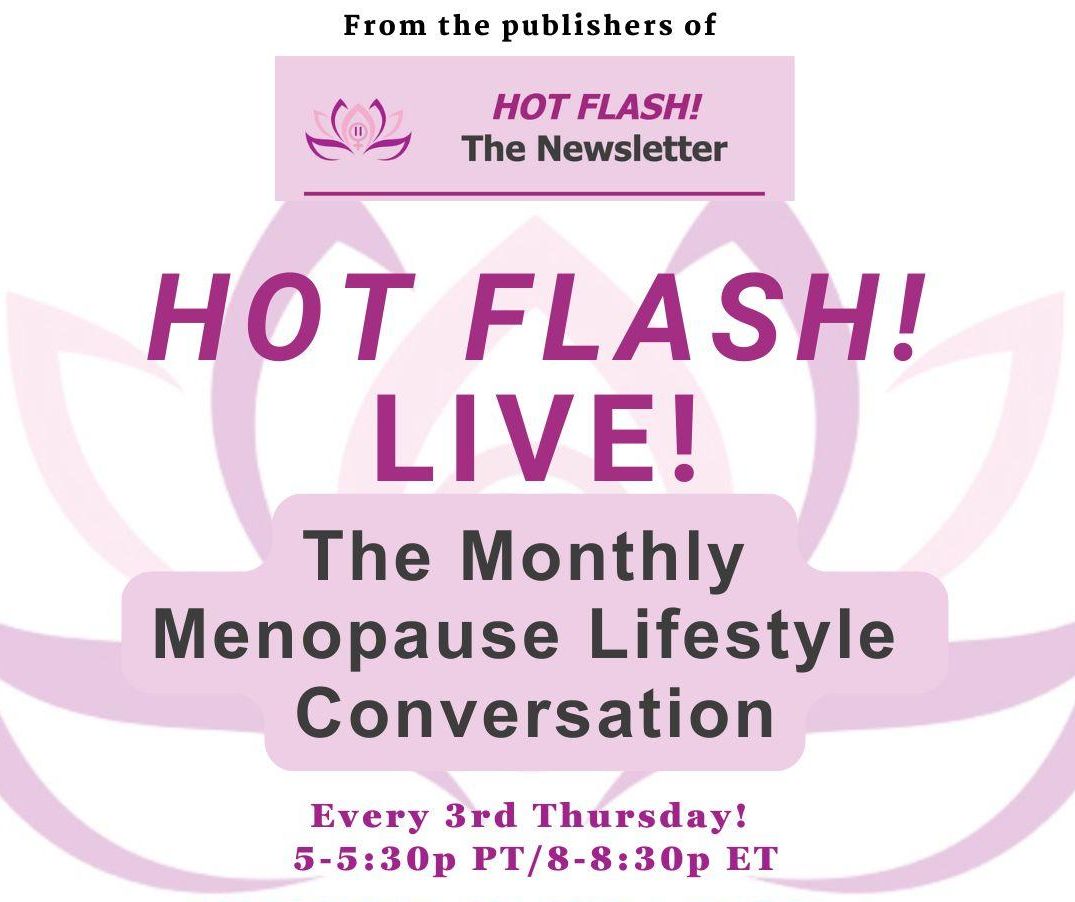
Join the next conversation LIVE! ...
HOT FLASH! LIVE!
monthly 3rd Thursdays at 8pm ET
| |
HOT FLASH!
The Newsletter! XXVIII
| |
Offering research-rooted lifestyle coaching to elevate the menopause journey
Building a menopause empowered community one study at a time
Helping you thrive through menopause and beyond!
| |
Why Every Woman Needs a Menopause (or Aging) Coach |
Welcome back to the HOT FLASH Newsletter, your source for menopause-related lifestyle research to help you thrive!
Menopause and aging bring changes—some expected, some surprising—but one thing is certain: the menopause transition is about more than just what you eat, how you move, or when you sleep. The way you feel is equally important. In fact, the emotional shifts during menopause and aging may be even more significant than the physical changes.
With research suggesting that 60-90% of doctor’s visits have a stress-related source, your level of stress during through the menopause transition (peri to post) is not a side concern—navigating potential areas of stress related to the transition is foundational to thriving through this phase of life. A menopause or aging coach can help you with the emotional adaptation you may need to step into your next chapter with confidence and ease.
REMINDER: If you find this newsletter helpful, don’t keep it to yourself—use the buttons below and share it with someone who could benefit from it too!
| |
The Difference Between Coaching & Therapy
Before we go further, let's talk briefly about the difference between coaching and therapy. While they both offer valuable support, they serve different purposes (and can be complementary approaches). Specifically,
-
Therapy focuses on past experiences, emotional healing, and addressing mental health diagnosis and treatment for conditions such as anxiety or depression. Because of the emotional risk of opening old wounds and processing past hurts, it requires a licensed mental health professional with specific skills to navigate specific conditions.
-
Coaching focuses on building resilience, clarity, and action steps for navigating and sustaining your wellbeing into the future. A certified coach doesn’t diagnose or treat physical, mental or emotional conditions; certified coaches (e.g. with ICF or NBHWC), with skills such as motivational interviewing, positive psychology and navigating the phases of change, focus on collaborating with you (and your inner wisdom) to cultivate the tools, mindset shifts, and strategies to help you step into your future vision for yourself successfully.
Now that you know the difference between coaching and therapy, let's discuss cases when coaching might be a good next step!
| | |
The Role of The Menopause Coach
Although it’s common to focus on external factors like diet, exercise, and sleep during menopause, while these are crucial, limiting your focus to these areas misses an important part of the menopause story.
It is important to realize that, at its core, menopause is a new life stage which is accompanied by a seismic shift in identity resulting from physical, mental and emotional changes, as well as changing roles in our personal and professional lives. And, unfortunately, menopause (and aging) is still framed by society in mostly negative terms. Most women experience reinforced societal messages about menopause as a time of decline, invisibility, and loss of value that can really challenge our self-confidence. Combined, all of this can add multiple layers of stress.
The reality? Menopause can be a powerful time of growth, self-discovery, and renewal. A coach can play a key role in helping you recognize this and embrace your new chapter by shifting perspectives, cultivating resilience, and embracing this new chapter with confidence.
If you would like to understand more about how you can optimize and empower your menopause journey with practical lifestyle research, schedule a chat with me to discuss!
| |
|
Key Takeaways for Managing Menopause with Coaching
While changes in hormones may drive physical discomfort, it’s often the emotional and mental adjustments that feel most overwhelming. Menopause isn’t just a physical transition—it’s a profound psychological shift as well.
Understanding and addressing these psychological aspects is just as important as managing physical changes. When the potentially significant mental and emotional impact of menopause are acknowledged, women can develop strategies to move through this transition with greater clarity, self-compassion, and confidence. Here are some key insights on how menopause coaching can support this process.
-
Reducing Stress - Stress is a major driver of health challenges, and coaching helps you develop the mindset and strategies to minimize menopause stressors, improving both physical and overall well-being.
-
Shifting the Story - Society has historically bombarded women with messages that aging is something to “fix” and menopause is a “deficiency.” Coaching creates space to reframe these negative perspectives, empowering you to embrace aging with a positive mindset.
-
Embracing Identity Changes - These pervasive societal narratives can undermine confidence and self-esteem, making it challenging to adapt to the personal and professional shifts that often accompany the menopause journey. Coaching supports self-discovery, helping you embrace an evolving sense of self and identity—one that reflects your experience, growth, and the new opportunities this stage of life brings.
-
Building Confidence - Combined with menopausal changes, these same narratives can also can erode confidence and self-esteem. Coaching facilitates rediscovery of belief in yourself, your capabilities, your capacity for change, and growth and to take advantage of new possibilities.
-
Empowering A Menopause Vision - Research shows that a sense of purpose contributes to overall happiness. A coach can help you envision and shape your post-menopause life with meaning, direction, and fulfillment.
By reframing menopause as a powerful transition rather than a problem to solve, menopause coaching provides the guidance, support, and tools to approach menopause and aging with confidence, clarity, and resilience.
For more on reframing menopause, check out our previous newsletters on related topics: Is Menopause a Burden or an Opportunity?, Mental and Emotional Menopause Changes and Layers, Motivational Interviewing and Sexual Quality of Life. If you would like support in your approach, schedule a chat with me to discuss!
| | | |
|
The Power of Coaching AND Community
Menopause and aging can feel isolating, but you don't have to navigate this transition alone. Research shows that community-based approaches can significantly enhance well-being and resilience. In The Community Cure, author James Maskell highlights the transformative power of group support for healing, growth, and overall health. See below for how you can tap into group coaching support offered by EmBODY WELL partnered with GYNConnect!
| |
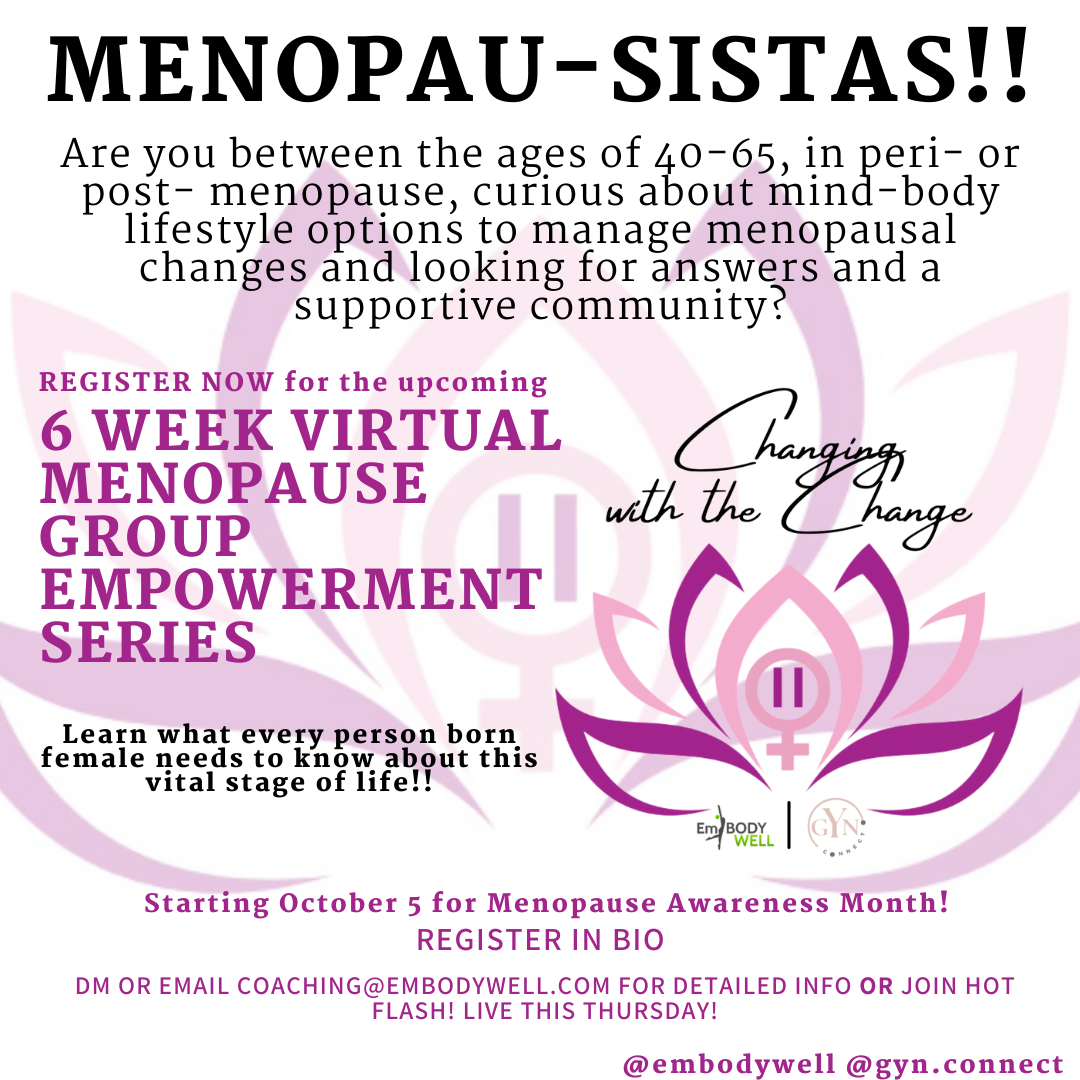
Coaching in a group setting, as we do in Changing with the Change, adds another layer of support, connection, and accountability. When women share experiences, strategies, and encouragement, the impact of coaching is amplified. Community fosters empowerment — when one woman reclaims her confidence, it ripples through the group, strengthening everyone’s journey. | |  |
Mark your calendar for the 3rd Thursday of every month and join us for HOT FLASH! LIVE!, where you can connect with a community of women embracing menopause and aging with knowledge, power, and support. | | |
Use code CWC25 for 25% off! | |
If you found this email valuable, please share it with a friend and spread the knowledge! | |
-
Interested in starting your own menopause empowerment and lifestyle group? Send an email to admin@embodywell.com to learn your options, including the presale list for the Changing with the Change Peer Group Guide.
| |
|
HOT FLASH! DISCLAIMER
This newsletter is intended for informational and educational purposes only, aimed at supporting but not substituting professional medical advice, diagnosis, or treatment. It is highly recommended that you discuss any information provided herein with your healthcare provider to assess its relevance and potential application to your specific health conditions and medical history. The content shared by HOT FLASH does not replace consultation with qualified healthcare professionals.
HOT FLASH and its contributors are not liable for any decisions made based on the information provided, nor for any adverse effects, damages, or consequences that may arise from the use of the information presented in this newsletter. Always seek the advice of your physician or other qualified health providers with any questions you may have regarding a medical condition.
| |
*GYNPeople - GYNConnect's inclusive term for people born female that have not experienced gender-affirming care. | |
|
Did you know that the estimated average time between (conclusive) medical research and (widespread) medical practice is 16 years?
As a partnership with GYNConnect, HOT FLASH! aims to close the gap by providing information and education regarding research that can support improved conversations with your healthcare providers about this important topic.
Each HOT FLASH! newsletter summarizes one recent research study related to the signs, risks and options for menopause. Remember, research is only one of several inputs you can use to support shared decision-making in your healthcare partnership with your provider team.
(If you are new to research and the terms used in this newsletter, we recommend reviewing the NIH's guide to "How to Make Sense of a Scientific Article" available here.)
| | | | |