April 6, 2026

Facebook  X  Instagram  Email  Web

Trump’s New Executive Order on Mail Voting Raises Questions for Arizona and Beyond


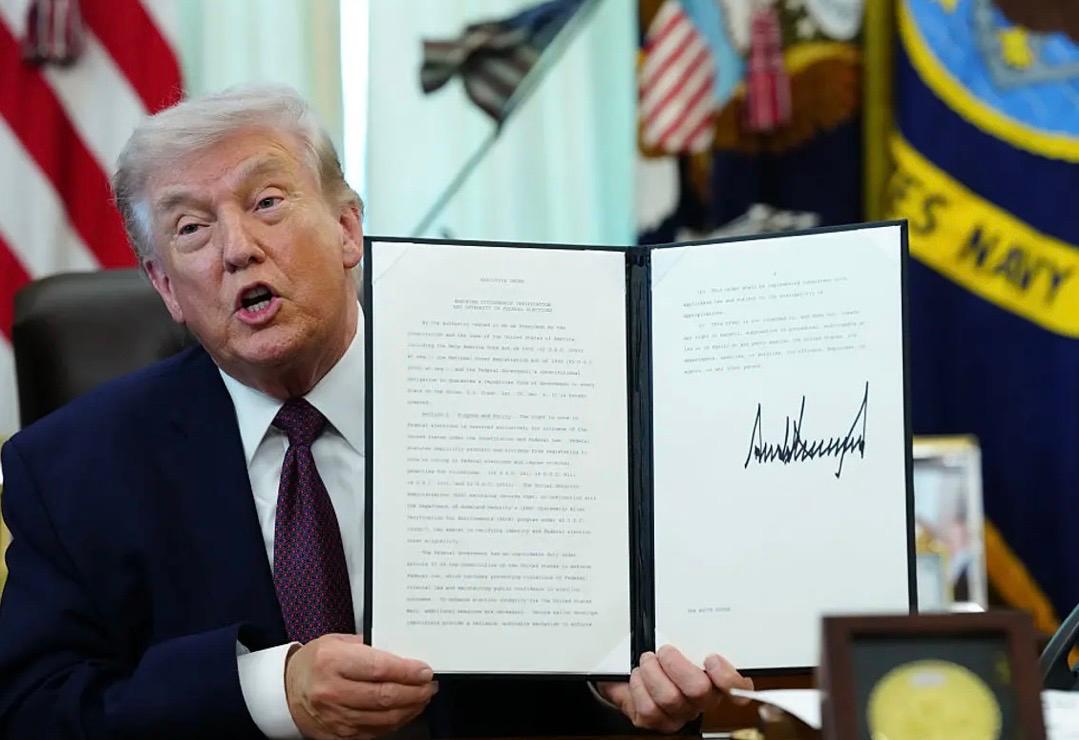
President Donald Trump has issued a new executive order aimed at reshaping how mail-in voting works across the country. Titled “Ensuring Citizenship Verification and Integrity in Federal Elections,” the order introduces significant changes—particularly involving the role of the U.S. Postal Service—and is already sparking intense debate.


At the heart of the order is a requirement that states provide the Postal Service with a list of voters who will receive mail ballots at least 60 days before an election. Only those on the approved list would be allowed to receive and return ballots. The order also directs federal agencies, including the Department of Homeland Security, to work with Social Security data to help states identify eligible voters.


Supporters argue the goal is simple: ensure election integrity. As President Trump stated, “We want to have honest voting in our country, because if you don’t have honest voting, you can’t trust the results.”


However, the practical and legal implications are far more complex.


⚠️ Immediate impact on Arizona

Arizona relies heavily on mail-in voting—nearly 90% of voters use it. Importantly, many Arizonans request ballots 30 to 40 days before an election, well inside the proposed 60-day federal deadline.


If implemented as written, this order could mean:


  • Counties would be prohibited from sending ballots to late requesters
  • Thousands of legitimate voters could be impacted
  • Established election timelines would be disrupted


Arizona officials have already sounded the alarm. Adrian Fontes called the order a “disgusting overreach,” while Kris Mayes pledged to use “every legal tool available” to fight it. Not all republicans support this order.


✅ What Arizona Already Does Right

What’s often missing from the national conversation is this: Arizona already complies with much of the spirit behind this executive order.


Citizenship Verification:

Arizona voters passed Proposition 200 in 2004, requiring documented proof of citizenship to register to vote—such as a passport, birth certificate, or naturalization papers. Following the 2013 U.S. Supreme Court case Arizona v. ITCA, this requirement applies to full-ballot voters.


As of January 2026, approximately 99.3% of Arizona’s 4.3 million active voters are full-ballot voters who have provided documented proof of citizenship. The remaining 0.7% may vote only in federal races after attesting under penalty of law that they are U.S. citizens.


Ballot Tracking:

Arizona already has a robust ballot tracking system. In Maricopa County, voters can track their ballot at BeBallotReady.Vote, while voters in other counties can use My.Arizona.Vote. Intelligent barcodes allow voters to follow their ballot every step of the way, while also ensuring election officials can verify that each voter returns only one ballot. If a ballot is lost or stolen, it can be canceled and replaced.


Mail Voting is Opt-In:

Arizona does not send ballots to every registered voter. Contrary to what Reecorder Justin Heap tried to do in 2025 until AZGOP Chair Gina Swoboda threatened to sue. Instead, voters must request a ballot or sign up for the Active Early Voting List (AEVL). About 80% of voters are enrolled in this system, which has been in place since Arizona adopted no-excuse mail voting in 1991.


In short, Arizona already has safeguards in place that align closely with the goals outlined in the executive order.


⚖️ Legal concerns and constitutional limits

Election law experts across the political spectrum agree on one key point: the order faces serious constitutional challenges.


Under Article I, Section 4 of the Constitution, states—and Congress—have authority over elections, not the president. Critics argue this executive order attempts to bypass that structure.


Legal experts say:


  • The president does not have authority to direct how states administer elections
  • Federal courts have already blocked similar efforts
  • This order will likely face immediate legal challenges


One reporter summed it up bluntly: the courts will likely strike it down “faster than a cheetah.”


My comment was - He can try but it won't fly.


🗳️ Logistical hurdles

Even if the order were allowed to proceed, implementation would be extremely difficult to out in place by the upcoming election.:


  • Many states allow ballot requests close to Election Day
  • Local election offices often lack the resources for major system changes
  • Ballot design, tracking, and mailing systems vary widely


Even supporters of ballot tracking noted that while barcodes are a best practice, mandating them nationwide without funding or infrastructure is unrealistic.


🧭 Bigger picture: a broader election debate

This executive order appears to be part of a larger effort to reshape election law nationally. While Congress has debated legislation like the SAVE Act, federal changes have stalled, leading to increased use of executive action.


For states like Arizona and Oregon—where mail voting is the norm—this order represents a potential fundamental shift in how elections are conducted.


🧾 Bottom line

President Trump’s executive order aims to increase oversight and standardization of mail-in voting. But in doing so, it raises major questions:


  • Can the federal government override state election systems?
  • Will voters be disenfranchised by new deadlines?
  • And can such sweeping changes realistically be implemented in time for upcoming elections?


For now, one thing is certain: this issue is headed for the courts, and the outcome could have lasting implications for how Americans vote.

Melendres Case Update Raises New Concerns Over Transparency and Taxpayer Costs


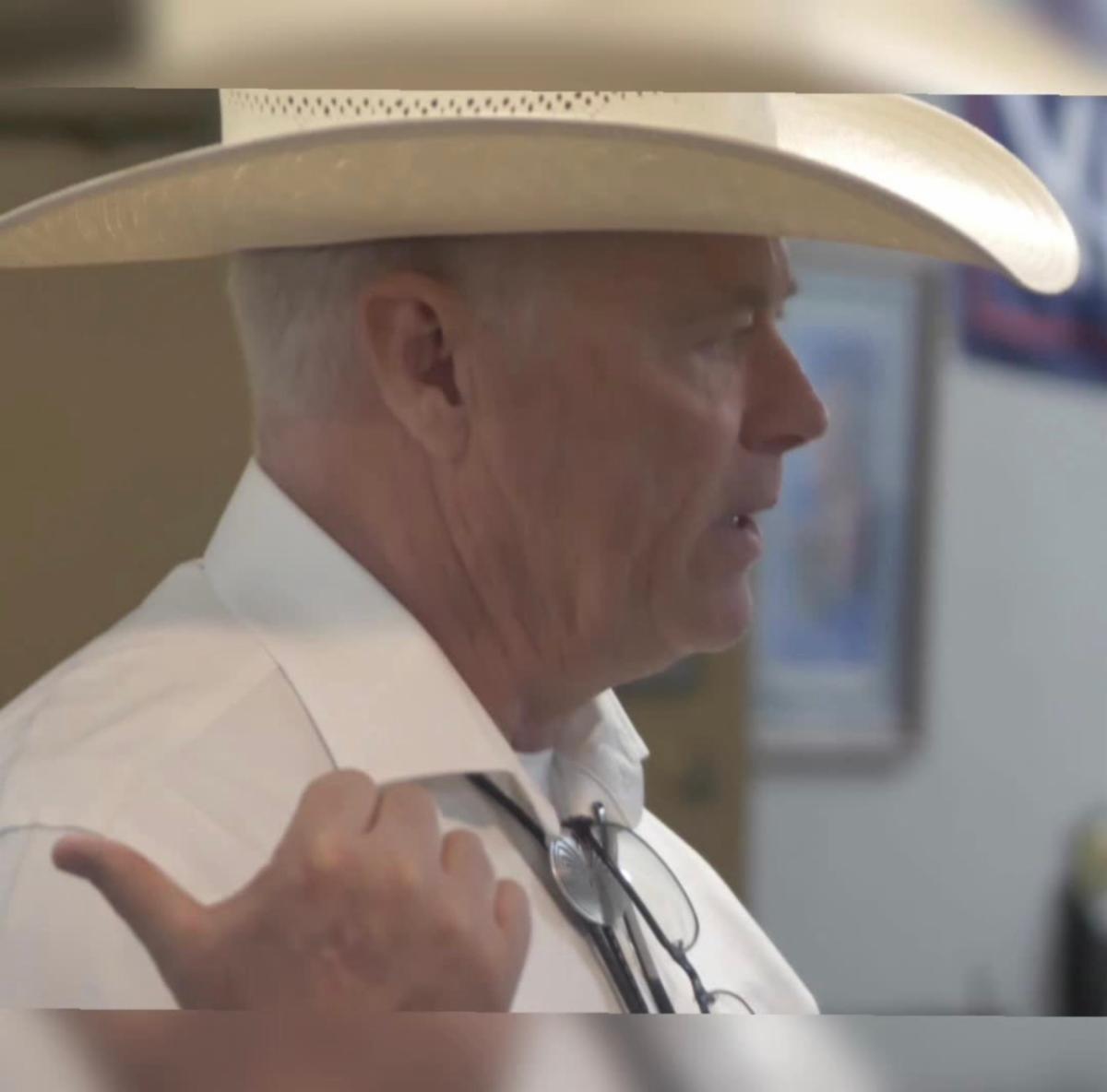
Last week, I had the opportunity to hear Sheriff Jerry Sheridan speak about the ongoing Melendres case—litigation that began well over a decade ago and has now cost Maricopa County taxpayers more than $350 million.


As part of the federal oversight tied to this case, quarterly community meetings are required between the court-appointed monitor, the Sheriff’s Office, and the public. For years, these meetings were typically held in heavily left-leaning areas, and attendance largely consisted of individuals who supported the monitor’s position. In many ways, these meetings became one-sided forums critical of the Sheriff’s Office.


That dynamic changed dramatically last July.


For the first time, more than 300 citizens showed up in support of the Sheriff. The shift was impossible to ignore—and it appears it was not well received by those overseeing the process. Since that meeting, there has been a noticeable increase in media attention, additional legal activity, and even a federal judiciary hearing.


In response, U.S. District Judge G. Murray Snow and court-appointed monitor Robert Warshaw—both of whom are compensated through taxpayer dollars—made the decision to move the next community meeting into Judge Snow’s courtroom at the Sandra Day O’Connor U.S. Courthouse. The stated goal was to “control” the environment.


The result spoke volumes.


Rather than an open dialogue, the meeting felt tightly managed. Public participation was nonexistant, and many attendees left with the impression that the process had become more about authority than transparency. However, those in attendance still made their presence known—silently wearing Maricopa County Sheriff’s Office stars to show their continued support.


Despite the attempt to control the setting, public support for the Sheriff remained visible, and media coverage following the meeting reflected a broader range of perspectives.


Many in the community knew the Sheriff’s Office has been in compliance for years and that the continued federal oversight no longer reflects current realities. Instead, concerns are growing that the prolonged monitorship has become a costly and unnecessary burden on taxpayers.


Now, a new approach is being introduced: the next community meeting is expected to be held via Zoom, with final details likely released at the last minute. Critics argue this limits public participation and reduces accountability, making it harder for community members to engage in the process.


At its core, this issue raises an important question: how long should federal oversight continue, and at what cost?


Every dollar spent on monitoring is a dollar not spent on public safety. As this case moves forward, it is critical that the voices of Maricopa County residents continue to be heard—and that transparency remains at the forefront of the process.


The public should stay engaged, informed, and ready to participate—because this conversation is far from over. Stay tuned for more details as soon as they are available.

Why BNSF Is Targeting Wittmann—and What It Could Mean for Rural Arizona


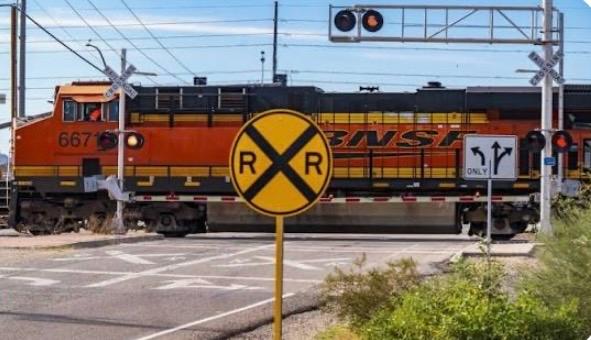
The proposed BNSF intermodal hub in Wittmann is not happening by accident. It is the result of a deliberate shift in how freight moves across the western United States—and more importantly, where companies can operate with fewer restrictions and lower costs.


Understanding why Wittmann has been chosen helps explain what could come next.


🚆 Why Wittmann? Follow the regulations—and the money

BNSF Railway is one of the largest freight rail companies in North America, and like any business, it makes decisions based on efficiency, cost, and long-term growth.


Arizona offers several advantages that California no longer does:


  • Fewer trucking regulations – Unlike California, Arizona does not impose strict emissions mandates or independent contractor restrictions, allowing trucking companies to operate more cheaply and flexibly
  • Lower operating costs – Fuel, labor, compliance, and permitting costs are all significantly lower
  • Faster development timelines – Projects can move forward more quickly without the lengthy regulatory hurdles seen in California
  • Strategic location – Wittmann sits in a growing corridor that connects rail freight to regional distribution across the Southwest


In short, freight can be brought in by rail, transferred to trucks, and distributed efficiently—all at a lower cost than in neighboring states.


That is why Wittmann is attractive.


🚛 But at what cost to the community?

While the project may make business sense for BNSF, the impacts on Wittmann and surrounding communities could be significant—and long-lasting.


🚧 Traffic and congestion will increase dramatically

An intermodal hub is not just trains—it is trucks.


  • An estimated 22,000 semi-trucks moving in and out daily
  • Increased congestion on already strained roadways
  • Higher risk of accidents and delays


What is now a rural road network could quickly become a heavily trafficked freight corridor.


🌫️ Noise, pollution, and industrialization

Wittmann is valued for its quiet, rural lifestyle—open land, horses, and clean air.

That changes with an industrial rail hub:


  • Constant train activity
  • Diesel truck emissions
  • Dust, debris, and industrial runoff
  • Round-the-clock noise from loading, unloading, and idling equipment


This is not light industry—it is large-scale logistics. The environment will become noisier, dirtier, and more industrialized.

💧 Risk of spills and groundwater contamination

With increased freight activity comes increased risk.


  • Trains routinely carry hazardous materials
  • Accidents, leaks, or spills can occur
  • Contaminants can seep into Arizona’s already fragile groundwater system


In a desert environment where water is one of our most precious resources, even a single

incident can have long-term consequences.

🚨 Public safety concerns: derailments and longer trains

Rail operations across the country are changing—and not always for the better.

  • Train lengths are increasing, often exceeding two miles
  • Longer trains are harder to manage and stop
  • Industry pressure to “keep freight moving” can lead to corners being cut

There are growing concerns that:

  • Conductors and engineers are often pushed to “get the job done”, even under difficult conditions
  • Safety protocols can be strained under operational pressure

As a result:

  • Derailments could increase, especially under extreme heat and heavy loads common in Arizona

🚔 Limited policing and growing crime concerns

Rail infrastructure is not heavily policed on a local level.


  • Railroad police forces are small and spread across multiple states
  • Local law enforcement will carry much of the burden

At the same time:

  • Cargo theft—modern-day train robberies—is on the rise
  • Organized groups like the cartels target freight trains, especially in remote areas


With limited enforcement presence, large rail hubs can become targets for theft and criminal activity

.

🏡 The erosion of rural Arizona

Perhaps the most significant impact is not one single issue—but the transformation of the community itself.


Wittmann is not an industrial zone. It is a rural community where people:


  • Value peace and quiet
  • Raise families and animals
  • Live away from the congestion of the city


This project represents a shift from:


➡️ Rural lifestyle → Industrial logistics corridor

Once that change happens, it cannot be undone.


⚖️ The reality: local control is limited

Despite strong opposition from residents, there is a hard truth:


  • Railroads operate under federal authority
  • Local governments have limited ability to stop or control these projects


That leaves communities like Wittmann in a difficult position—facing major change without having had a meaningful voice in the decision.


🧭 Final thoughts

BNSF is choosing Wittmann because it is easier, cheaper, and faster to operate here than in more heavily regulated states. From a business standpoint, the decision is logical.


But for the people who live in Wittmann and surrounding areas, the concerns are real:


  • Increased traffic and congestion
  • Noise and environmental degradation
  • Risk of spills and groundwater contamination
  • Rising crime and limited policing
  • Longer trains and potential safety risks
  • The permanent loss of rural character


This is not just a project—it is a turning point.


The question facing the community is not just whether this hub should be built, but whether the long-term consequences are worth the short-term economic gain.

Time to Step Up: Precinct Committeemen Renewal Deadline Here


If you are currently serving as a Precinct Committeeman (PC) and have not yet turned in your signatures, there is still time—but the window is closing quickly. If your precinct is not full, you still have an opportunity to renew and continue serving your community.


The deadline to submit your renewal form is Monday, April 6th by the close of business. Completed forms must be turned in in person at the Maricopa County Elections Department:


510 S. 3rd Ave.

Phoenix, AZ 85003


This is not something that can be mailed or submitted online—please plan accordingly to ensure your paperwork is received on time.


Across Maricopa County, many Legislative Districts are facing internal challenges. To be blunt, the disrupters have taken over. Some have been impacted by disruptive factions that have made it difficult for dedicated volunteers to continue their work. My own Legislative District, LD29, is currently experiencing this firsthand.


However, I remain hopeful.


The truth is, we are strongest when we are united. While disagreements will always exist, we must remember that our focus should be on advancing conservative values and winning elections—not fighting amongst ourselves. The real opposition is not within our own party, but across the aisle.


Despite the challenges, there is encouraging news. I am proud to share that the entire previous board of LD29, who had resigned, has stepped up and renewed their PC status. That speaks volumes about their commitment, resilience, and belief in the bigger picture.


There are still good people willing to do the work. There are still leaders who care deeply about their communities. And there is still reason to believe that better days are ahead.


If you have not yet renewed your PC status, I encourage you to reconsider. Your voice, your effort, and your presence matter—now more than ever.


Let’s stay engaged. Let’s stay committed. And most importantly, let’s move forward—together.

Surprise Faces Federal Reality on ICE Detention Facility


Last week, the City of Surprise Mayor held a press conference addressing the upcoming ICE detention facility planned within city limits. Like many residents, I have serious concerns about this project and what it means for our community.


From the beginning, this proposal has raised valid issues. The facility is located in close proximity to nine schools. It sits in a warehouse district not zoned for residential housing. Perhaps most concerning, the people of Surprise had no meaningful voice in a decision that directly impacts their neighborhoods and quality of life.


Beyond location concerns, there are broader policy questions. Expanding detention facilities is not a long-term solution. Deportation—not prolonged detention—is what resolves immigration cases. Currently, many detainees are being held for extended periods because some countries are not providing the necessary travel documents for deportation. As a result, individuals are often detained indefinitely, which raises both legal and financial concerns.


In fact, 300 - 600 habeas corpus petitions are being filed weekly, as the U.S. Supreme Court has made clear that detainees generally cannot be held longer than six months without significant legal justification. Which means detainees are being released back into the community if they do not have a criminal background. The action of detaining them was merely symbolic. What we are seeing is a system under strain—and one that is not functioning efficiently.


There is also a financial reality. Many of those detained were previously supporting themselves—paying for their own housing, food, and medical care. Once in detention, those costs shift to taxpayers. Throwing more money at a broken system does not fix it.


However, despite these concerns, it is important to understand one key fact: under the Supremacy Clause of the U.S. Constitution, the City of Surprise does not have the authority to block this federal facility. This decision was made at the federal level, not the local one.


To their credit, the Mayor and City Council worked to engage with Homeland Security Investigations (HSI) and secure important commitments. According to the press conference, the facility will house a maximum of 542 detainees, with HSI stating individuals will only remain there for 3 to 5 days. The City will have the ability to inspect the facility to ensure proper treatment of detainees. Additionally, the federal government has agreed to reimburse the City for lost tax revenue from the property purchase and cover any increased costs related to police, fire, or other city services.


HSI has also committed to maintaining open communication with the City, and a citizen advisory board will be created to provide ongoing community feedback. The City has called for the creation of a community relations board.with city-appointed representation.


For some, no agreement will ever be acceptable—and that frustration is understandable. But it is important to direct those concerns where they belong: to federal authorities, not local leaders who were not given a seat at the table when this decision was made.


Residents have spoken—at multiple City Council meetings and Dysart School Board meetings—and will likely continue to do so. That is how our system should work.


While this is not the outcome some hoped for, I am proud of how the City of Surprise leadership has responded. Faced with a situation beyond their control, they worked to secure transparency, accountability, and protections for our community. Given the circumstances, they have achieved the best possible outcome.


Just a Day Later DHS made an Announcement


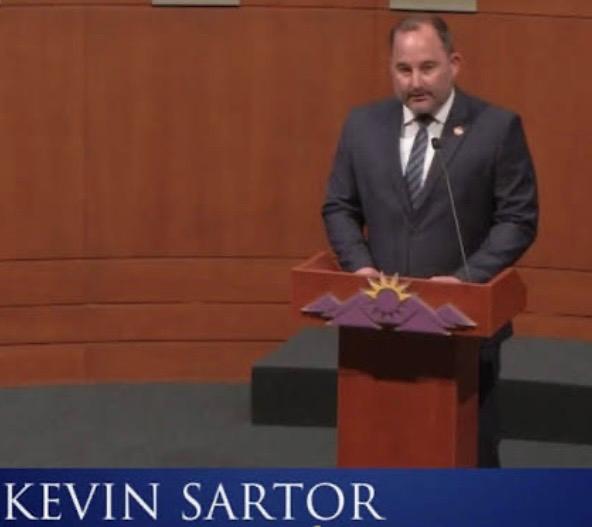
The announcement of a federal pause on new ICE facility acquisitions adds an important new layer to the conversation that unfolded at Mayor Kevin Sartor’s recent press conference. For many residents who have expressed frustration over the lack of transparency, this pause validates a key concern: major federal decisions with significant local impact were moving forward without meaningful coordination with the communities affected. The fact that even newly purchased facilities are now under review suggests that the process itself—not just the policy—may have been rushed or incomplete.


Mayor Sartor highlighted that the originally proposed 1,500-bed facility in Surprise has already been scaled back to a maximum of 542 beds. While that reduction may ease some immediate concerns, it does not resolve the larger issue of how and why the project was introduced with no local input. Residents and city leaders alike were left reacting to decisions rather than participating in them. The Department of Homeland Security’s acknowledgment that it wants to “work with community leaders” moving forward is a step in the right direction, but for many in Surprise, that collaboration should have happened from the beginning.


Equally important are the practical concerns that were raised during the press conference—issues that go beyond politics. Infrastructure capacity, including water, sewer, traffic, and public safety resources, remains a legitimate question. As Secretary Mullin himself noted during his confirmation, many municipalities simply do not have the existing infrastructure to absorb large-scale facilities without careful planning and investment. These are not abstract concerns; they directly affect the quality of life for residents and the financial responsibilities of the city.


Ultimately, the pause presents an opportunity. It allows federal officials, local leaders, and the community to reset the conversation and ensure that any future decisions are made with transparency, accountability, and collaboration. The people of Surprise are not asking to be ignored or overridden—they are asking to be heard. And if this process moves forward, it must do so with the understanding that strong communities are built through partnership, not surprise announcements.

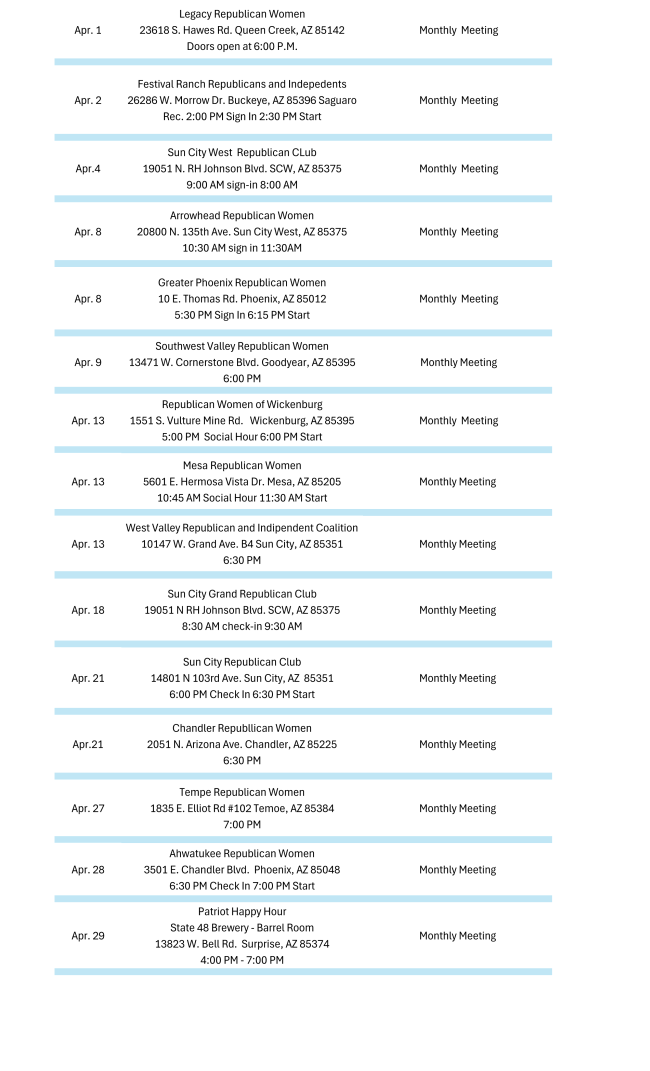
PATRIOT HAPPY HOUR WITH FELLOW REPUBLICANS!


Join Us for Another Great Evening!


Due to overwhelming demand, we’re bringing back our Patriot Happy Hour at State 48 in Surprise! Last month’s gathering was a fantastic success, with great food, drinks, and, most importantly, meaningful conversations with fellow conservatives. Let’s do it again!


 Where: State 48 Brewery - 13823 West Bell Road, Surprise, AZ 85374

 When: Wednesday, April 29, 2026

 Time: 4:00 PM – 7:00 PM


This is the perfect opportunity to connect with like-minded individuals, get to know fellow PATRIOTS, and strengthen our local Republican community. Whether you're a seasoned PC, new to our LD, or simply want to make new friends everyone is welcome!


Bring a friend and join us for an evening of camaraderie, networking, and fun. Let’s keep the momentum going!


Patriot Happy Hour is always the last Wednesday of the month.


Remembering Little Bit


Last week, you may have noticed a few typos in the newsletter. I want to sincerely apologize—my mind and heart were somewhere else. Please allow me a moment to share something very personal.


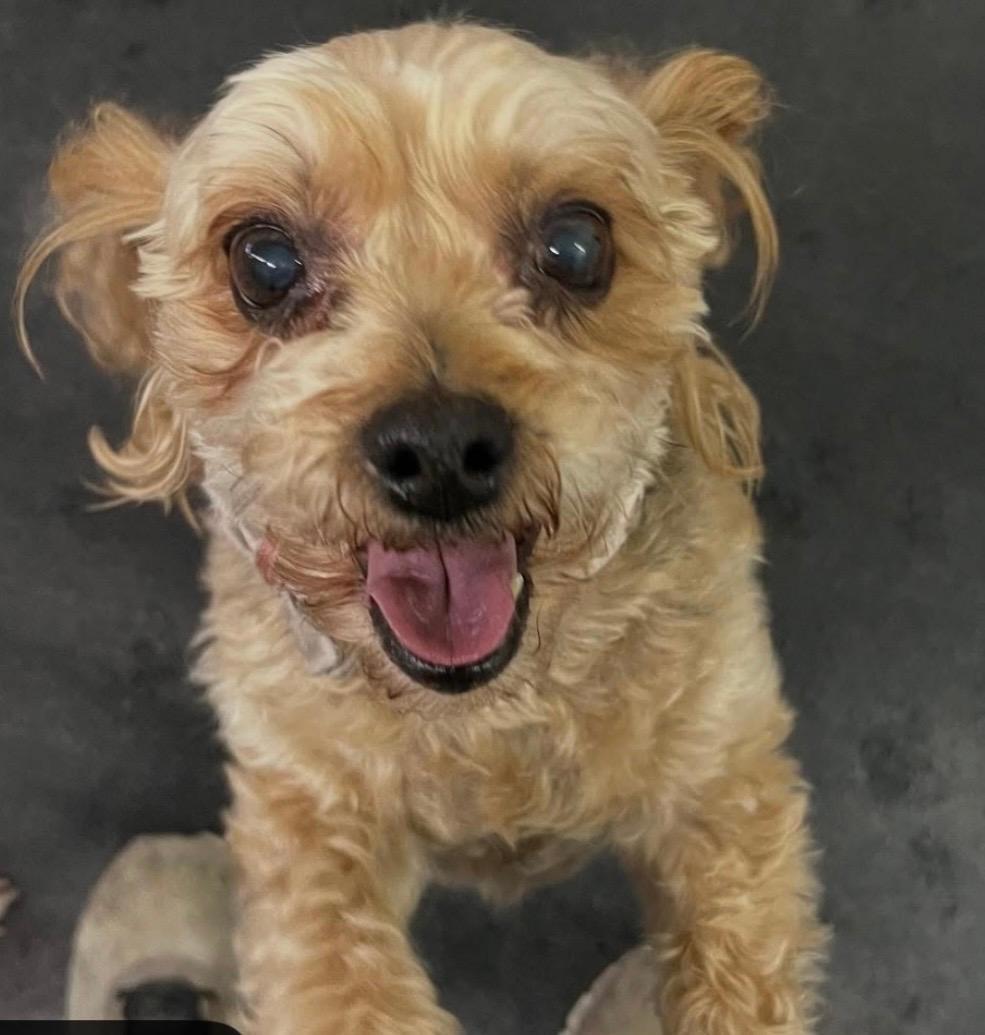
About three years ago, a tiny dog named Little Bit came into my life. After her elderly owner passed away, kind neighbors made sure she found a new home—and I was blessed that home was with us. From the moment she arrived, she filled our house with personality, love, and just the right amount of sass.


Little Bit quickly made herself the center of our world. She was, without question, spoiled. She even had her own set of stairs to climb onto the couch—but why use them when her daddy was always ready to scoop her up and carry her wherever she wanted to go? The man who once said he didn’t want another dog became her biggest softy.


Last week, everything changed. Little Bit suffered a stroke, followed by several more. The vet told us she would not recover. Faced with that reality, I had to make one of the hardest decisions of my life. Letting her go was heartbreaking—but it was also an act of love. She is no longer hurting.


If you’ve ever had to say goodbye to a beloved pet, you understand the depth of that loss. These aren’t just animals—they are family. They love us unconditionally, comfort us without words, and leave paw prints on our hearts that never fade.


I loved her so much. And I always will.


My thoughts and prayers are with anyone who has had to make this same difficult decision. We are truly blessed to have these amazing companions in our lives, even if our time with them is never long enough.


Rest easy, sweet Little Bit. You were deeply loved. Teddy Bear (my other pup) misses you very much too!

IF YOU WOULD LIKE YOUR CLUB LISTED PLEASE CONTACT ME

Thank you,

Lisa Everett


www.patriotnheels.com


Follow me on:

X - @patriotnheels

Facebook - @patriotnheels

Instagram - @patriotnheels