Faulkner County Agriculture Update
October 31, 2025
| | |
|
4-H Fundraisers
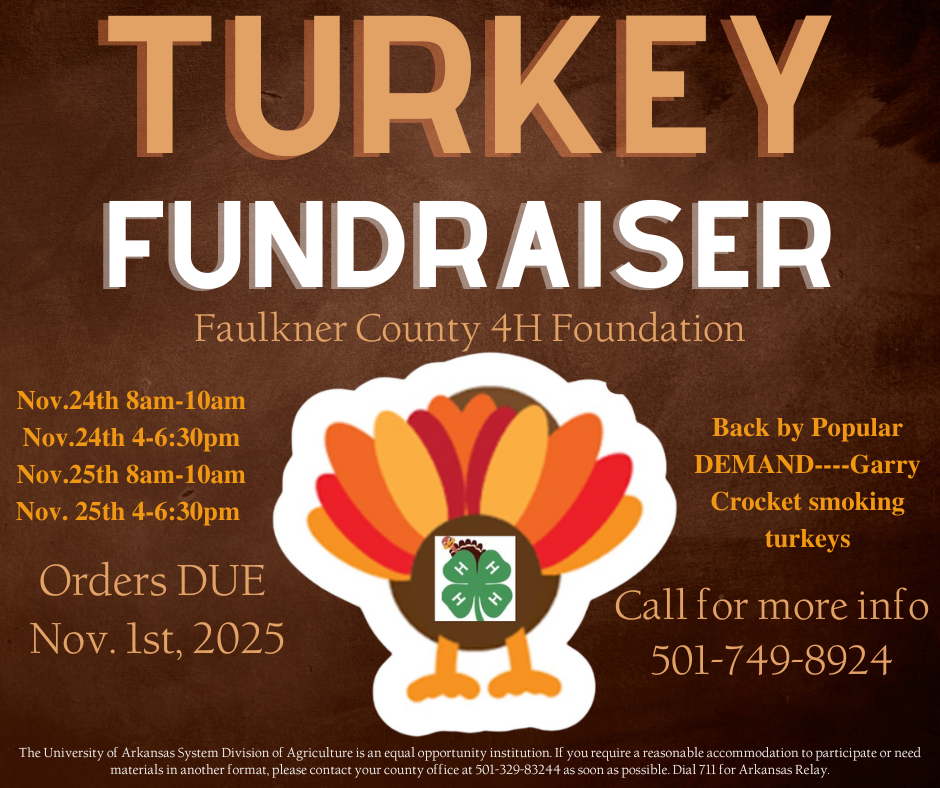
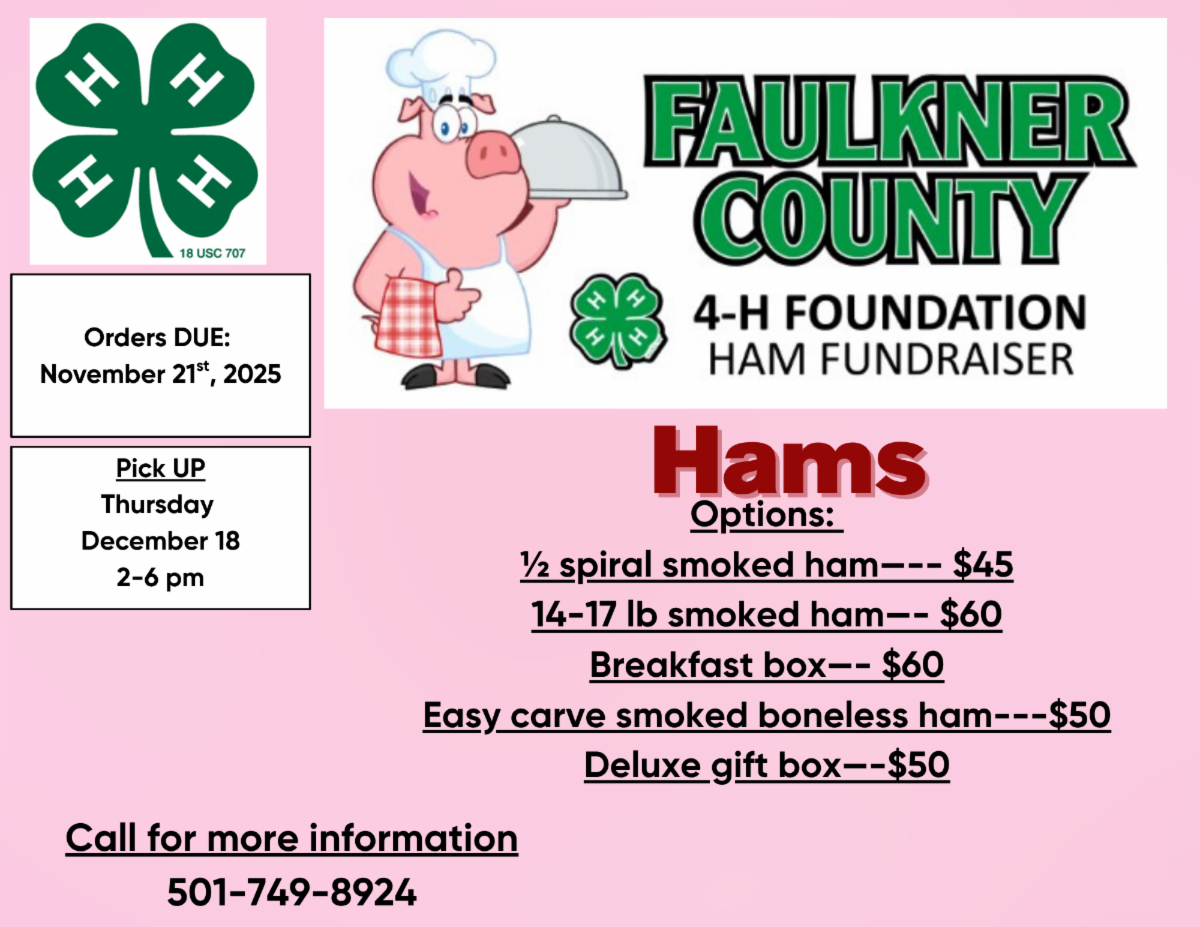
Our yearly turkey and ham 4-H fundraisers are back. Turkey orders are due TODAY, and hams are due November 21. There are links to the order forms below each picture.
| | |
Weather
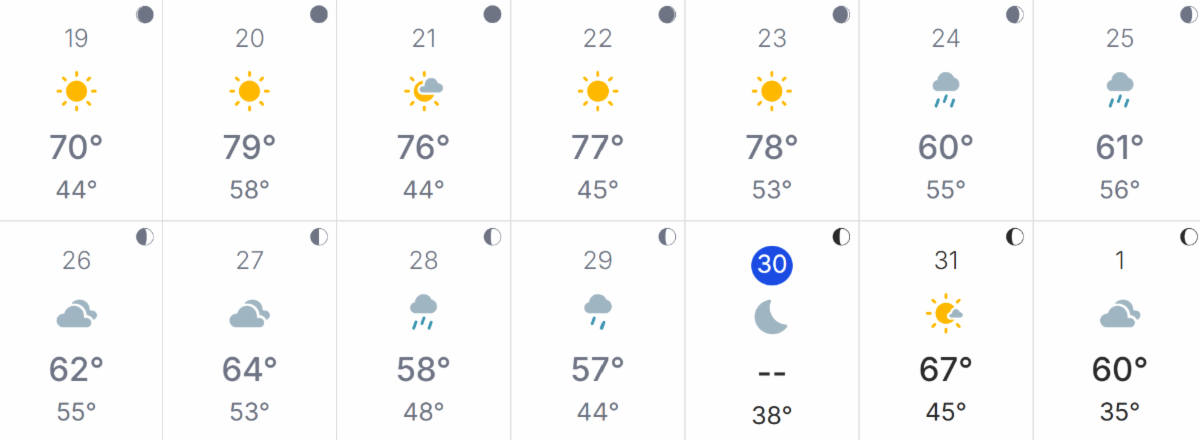
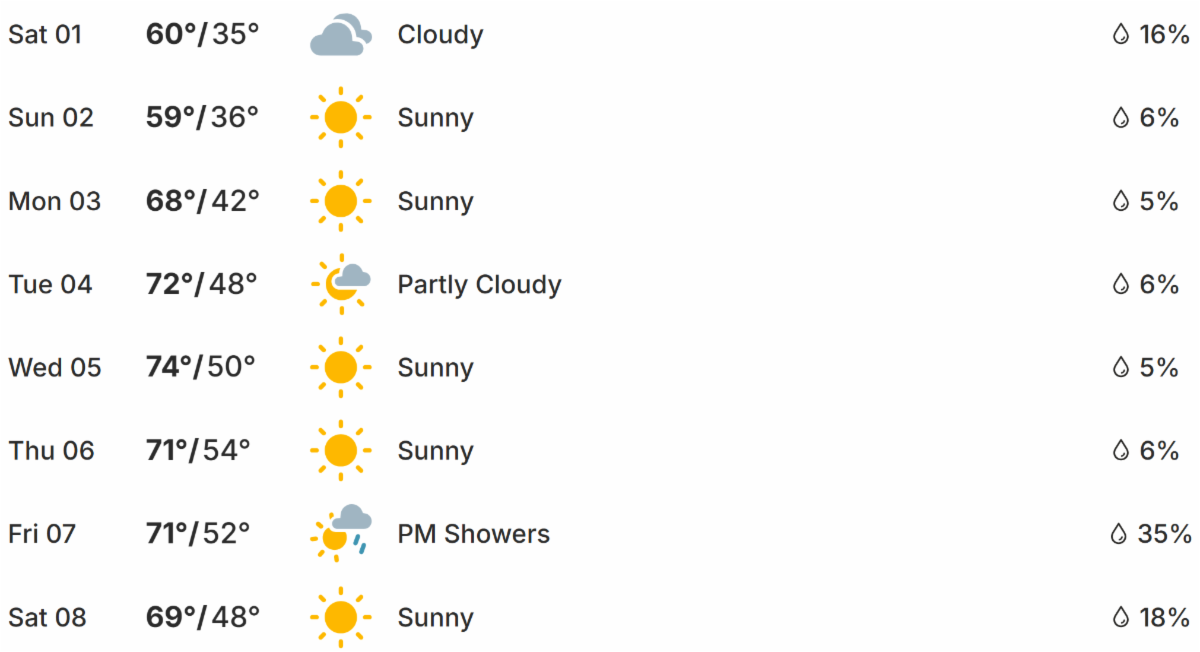
This was a wet, nasty, cool week. We got around an inch of rain on Tuesday and Wednesday and we saw low's hit the high 30's. There is another chance of rain tomorrow then it looks like it will warm up some with another round of rain next Friday.
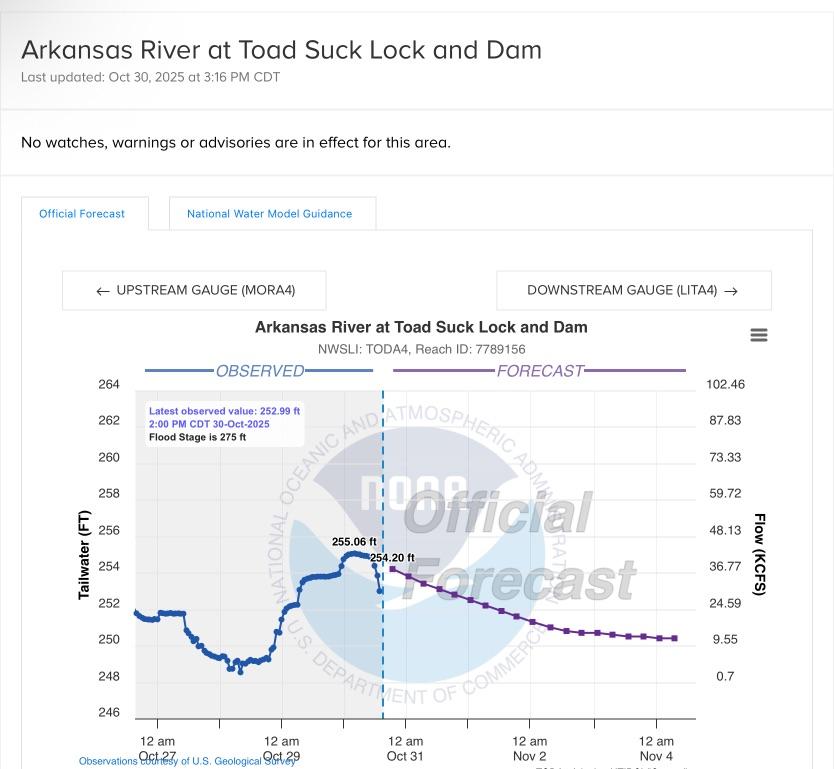
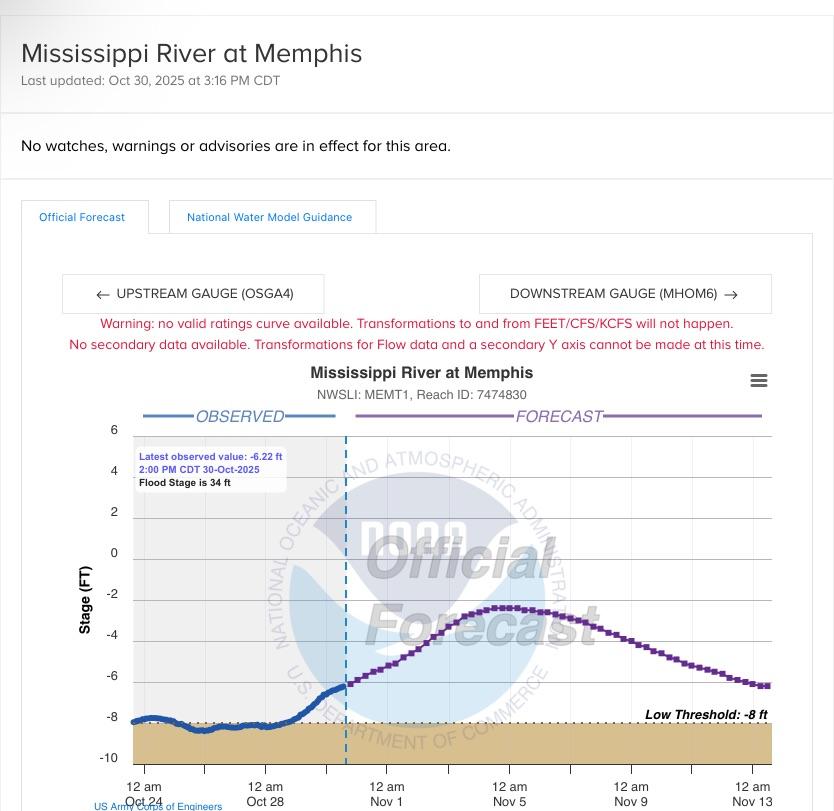
| | Arkansas and Mississippi River | |
Wheat
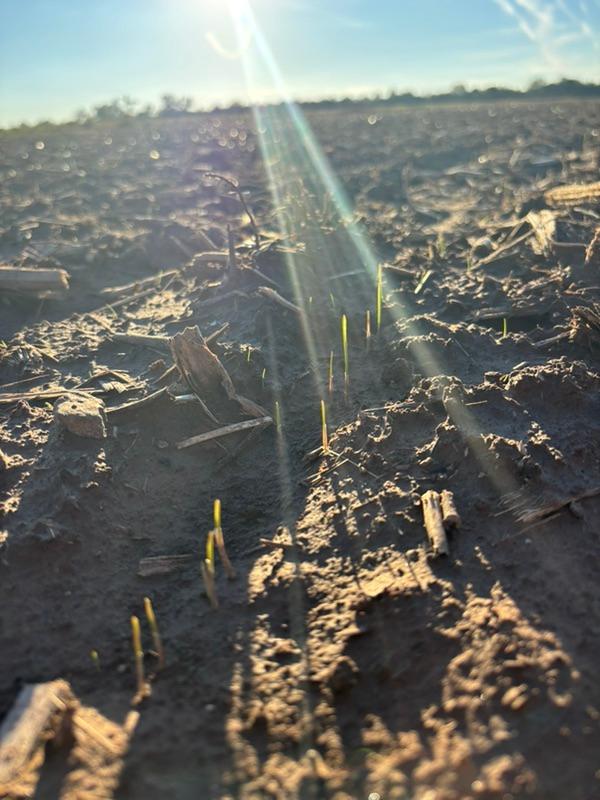
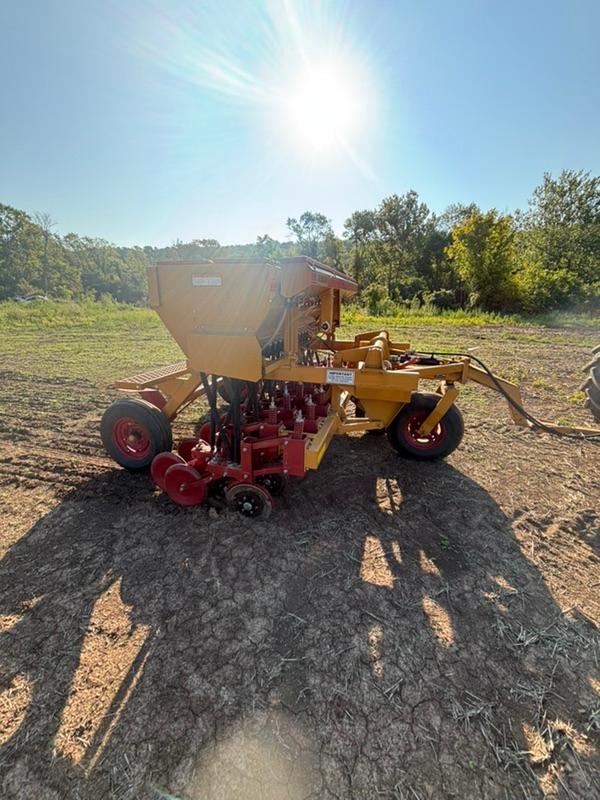
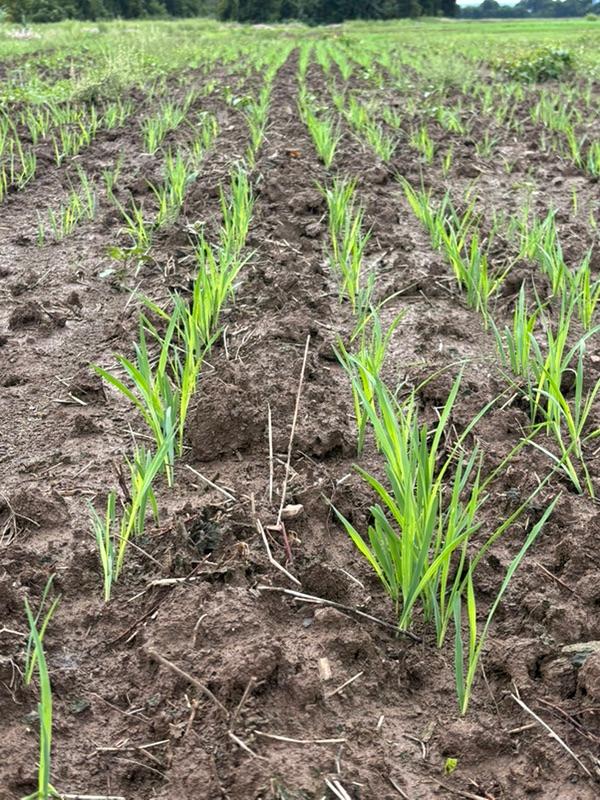
Wheat planting continued right up until we got the rain. It looks like fields that were planted last week are starting to spike through the ground.
We still have time to get wheat in the ground, but this weather pattern doesn't look promising. Hopefully we can get it all in the ground in the next couple of weeks.
| | |
2025 Arkansas Corn Performance Tests Preliminary Results
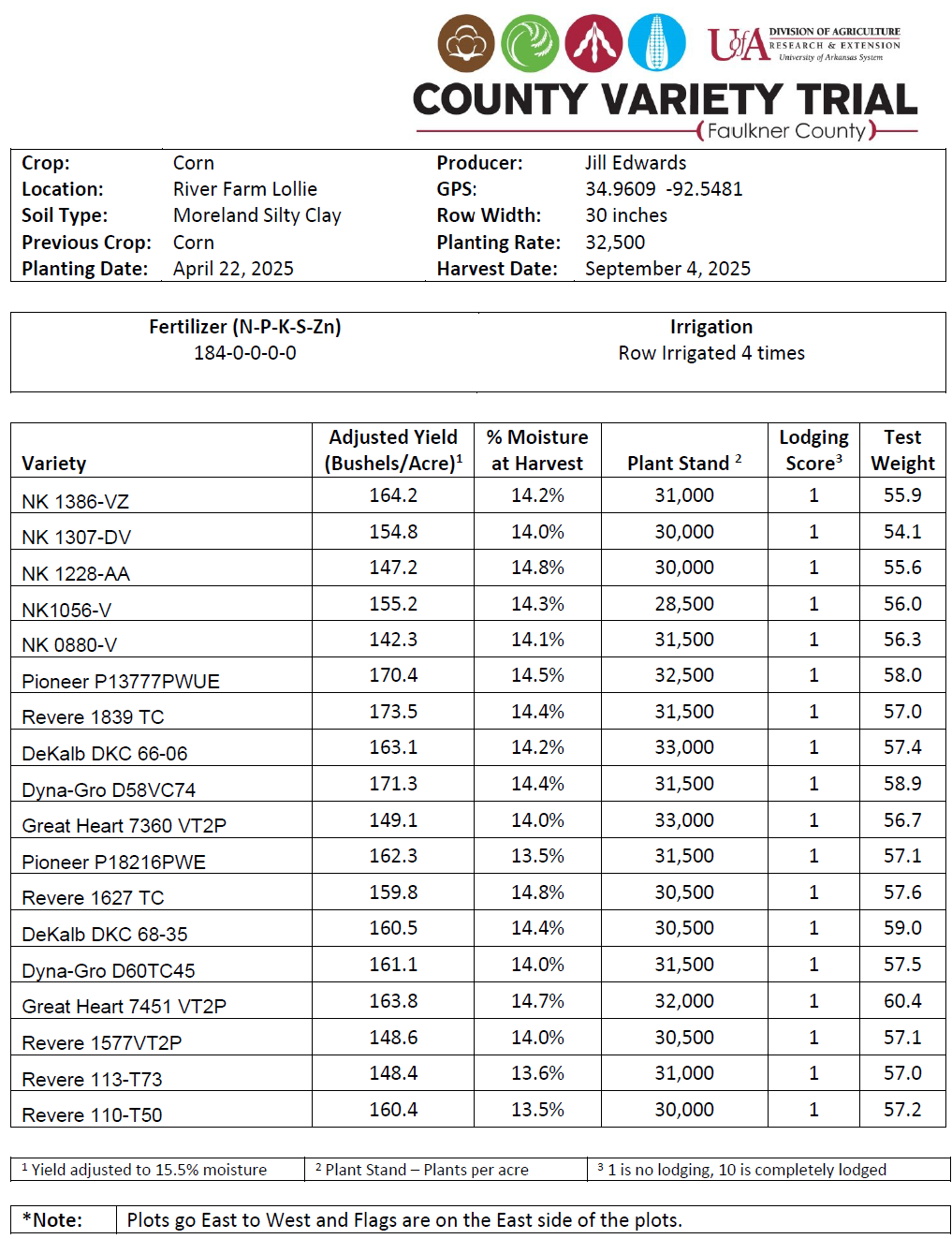
One of the ways you can save money in this row crop economy is booking seed early. You may still be trying to figure out what hybrids you want to grow in 2026. To help with that I have attached a link to the 2025 Arkansas Corn Performance Tests Preliminary Results. If you go to the Variety Testing link below and click on corn you can bring up the 2025 preliminary results. I have also included the results from the Faulkner County Hybrid trial below. If you have questions about picking out a hybrid let me know and I will be glad to help.
| | |
Managing Row Crop Operating Expenses Webinars
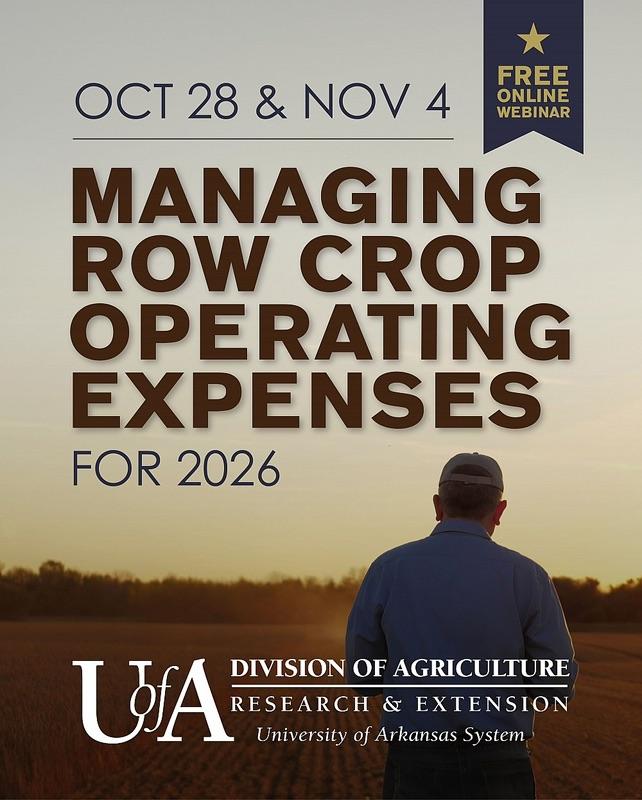
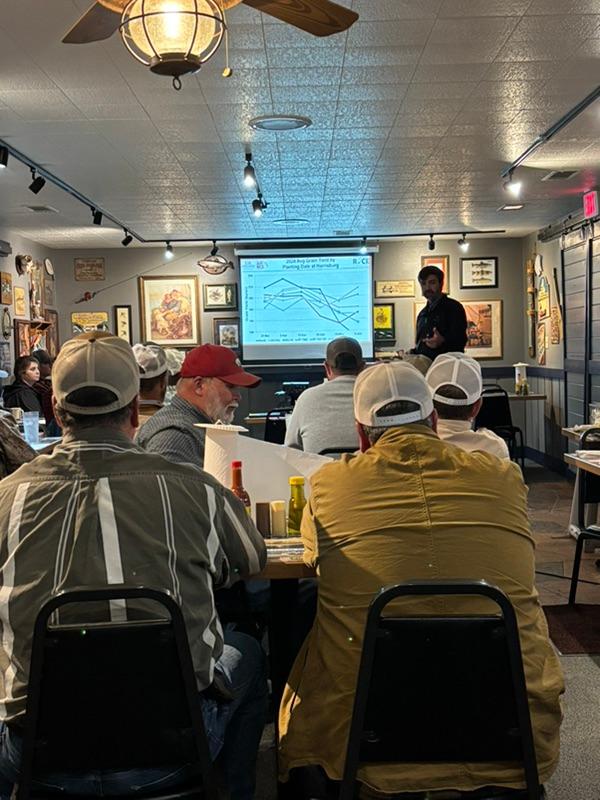
The first webinar was very informative. The second one will be November 4th starting at 9:00. I would suggest everyone register and watch. If you want to come to the Extension office and watch I will have a room available.
November 4th
Weed management, soil moisture sensors, IPM in rice, new insects of concern, and farm financial web tools. – Dr. Bob Scott-Dr. Chris Henry, Dr. Nick Bateman-Dr. Ben Trash and Dr. Ryan Loy.
Topic: Managing Row Crop Operating Expenses - Part 2
Date: November 4, 9:00 AM
Registration: https://uada.zoom.us/webinar/register/WN_BL-LKCOkSRyf3x8kUwwqjw
| | |
Row Crop Production Meetings
Our annual row crop production meetings will be coming up in early 2026. Save theses dates and I will share more information as we get it.
Corn and Soybean Production Meeting - January 22, 2026 - Morrilton (Place TBA)
Rice Production Meeting - February 24, 2026 - The Barn at Lollie
| | |
The State of the Arkansas Crop Economy in 2025
Dr. Hunter D. Biram, Assistant Professor and Extension Economist, University of Arkansas
Dr. Ryan Loy, Assistant Professor and Extension Agricultural Economist, University of Arkansas
Mr. H. Scott Stiles, Program Associate and Extension Agricultural Economist, University of Arkansas
The purpose of this newsletter is to provide a summary of a report recently released by extension economists at the University of Arkansas, Department of Agricultural Economics. This newsletter is not intended to be a substitute for the original document but rather highlights key takeaways from the report. We encourage readers to read the report in its entirety to receive the full picture of the condition of the Arkansas crop economy in 2025. We provide a link to the full report here and at the end of the newsletter.
Historical Overview and Current Conditions
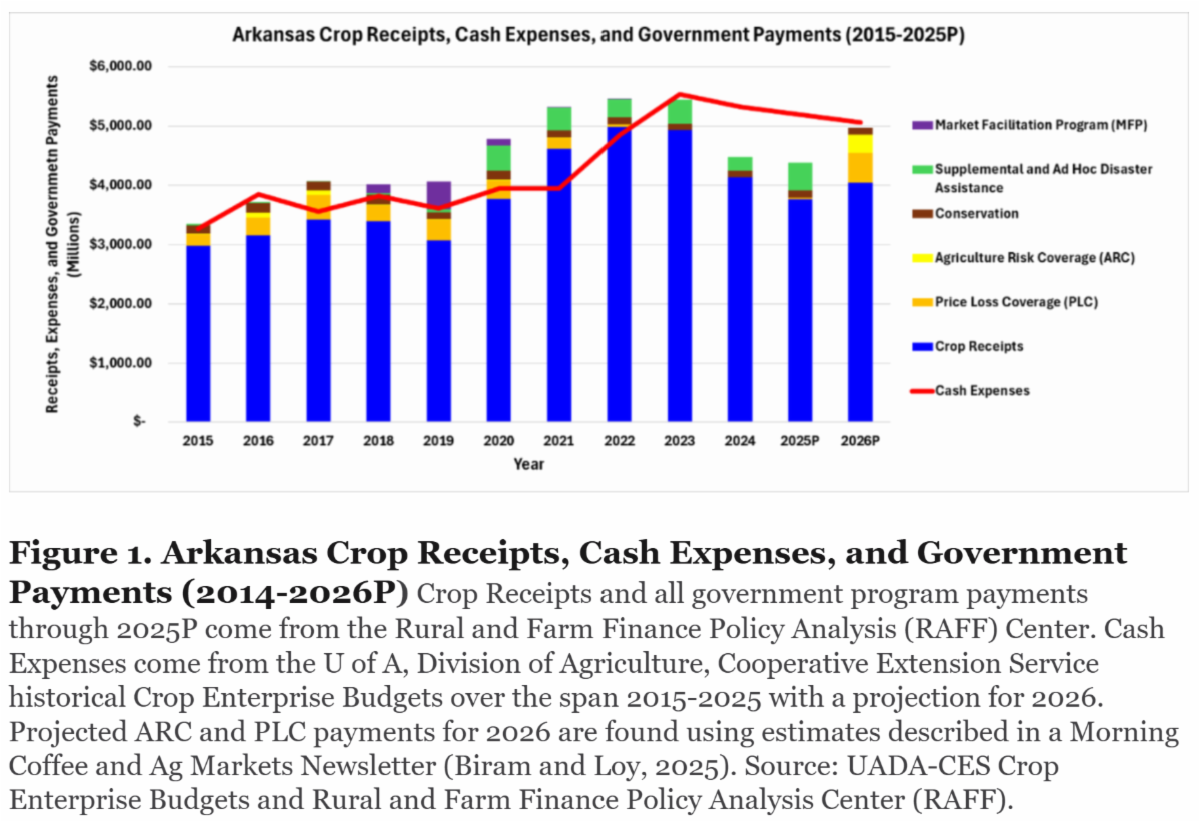
Like the United States agricultural economy, the Arkansas agricultural economy has experienced a sustained cost–price squeeze, with production expenses exceeding total cash income for the second straight year in 2025P (see Figure 1). After roughly breaking even in 2022, prior to receiving ad hoc government assistance, expenses rose above all crop cash income in 2023, 2024 and have remained elevated through 2025, despite a projected record in a supplemental and ad hoc disaster additional disaster assistance in 2025. Using projected commodity program payments triggered in 2025 to be received in 2026, all cash income for Arkansas crop farmers is expected to remain below all cash expenses into 2026. This multiyear gap implies negative operating margins, tighter working capital, and greater reliance on short-term credit for many crop operations.
| | |
Arkansas Crop Receipts and Expenses in 2025
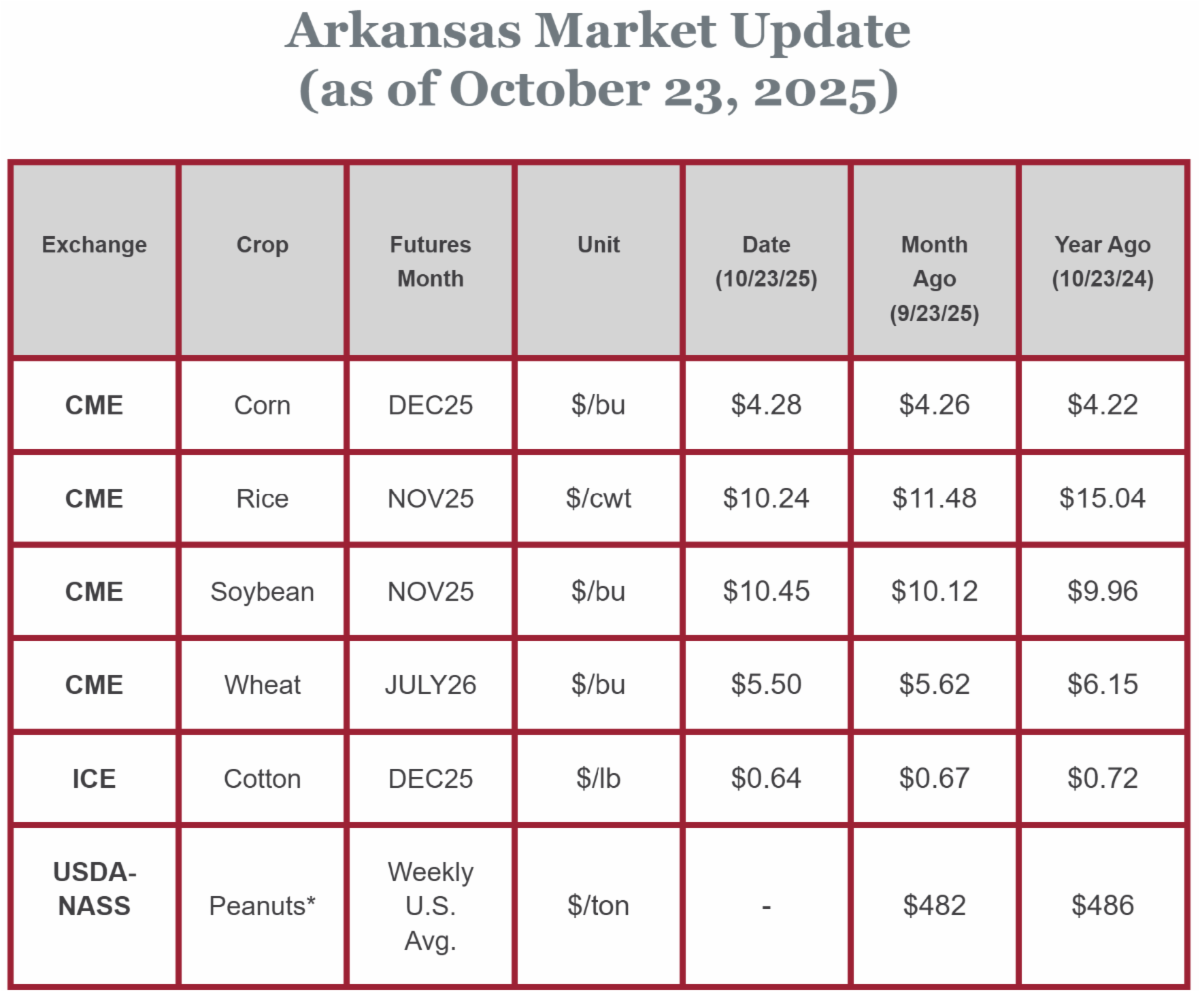
Row crop economics remain challenged in 2025, in what looks to be a third consecutive year of losses for Arkansas growers. Crop prices are under pressure from ample supplies of all commodities. The U.S. is expected to harvest a record-large corn crop in 2025 and the second largest soybean crop in five years. Cotton prices remain under pressure from ample global stocks and increasing export competition from Brazil. Rice prices have fallen to 5-year lows largely on pressure from lower-priced Asian and South American exports.
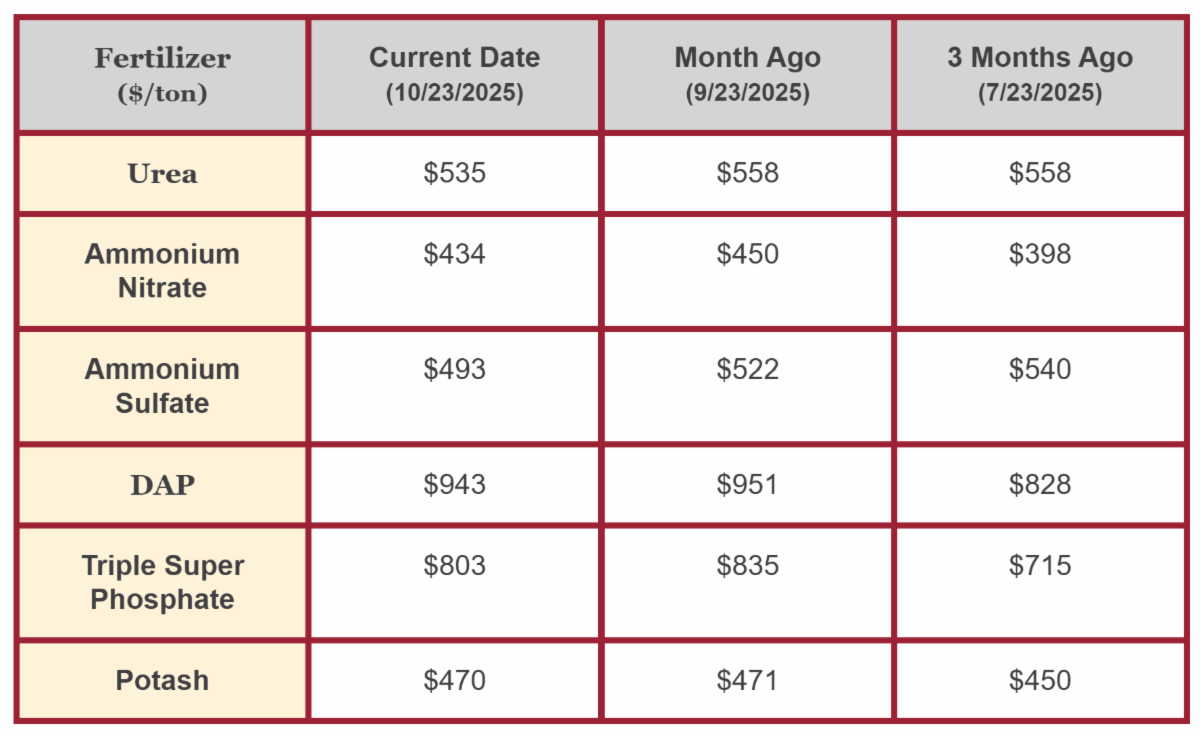
Elevated crop input costs continue to squeeze margins for farmers during this period of lower commodity prices. Fertilizer expense remains elevated, having trended higher for most of this year. Phosphates have been particularly strong, with affordability at record lows for U.S. farmers. Following respective 15% and 20% increases in 2021 and 2023, seed expenses have largely held firm in 2025. Farm labor costs are set to reach a record levels in 2025. However, with some softening in rates, interest expense is expected to fall back to 2023 levels. Some softening in farm rental expense is occurring with declining crop prices.
Macroeconomic Influences and Chapter 12 Bankruptcy Filings in Arkansas
The Federal Open Market Committee (FOMC) lowered the target federal funds rate on September 17, 2025, to a range of 4.0–4.25%, marking the first cut since December 2024. Chairman Powell cited weakening labor market conditions as a key reason for this policy shift, signaling the Fed’s move from inflation control toward broader economic support. After nearly two years of restrictive monetary policy, slower hiring and rising unemployment have prompted the Fed to ease rates. Two additional quarter-point cuts are expected before year-end, which would lower the rate to 3.50–3.75%.
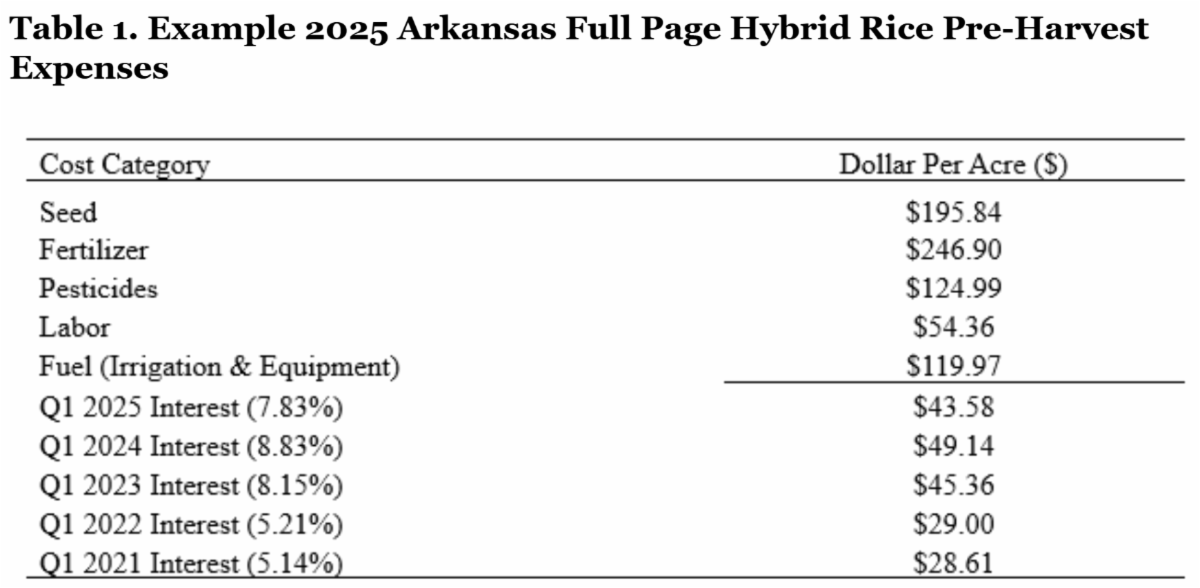
At the same time, Chapter 12 bankruptcy filings have increased in the southern region, particularly in Arkansas, where filings rose from four in 2023 to twenty-five in 2025. This contrasts with relatively steady trends in neighboring states such as Mississippi and Louisiana, suggesting uneven financial pressures across the region. Crop prices have sharply declined, and the spread between the price received and price paid index has continued to widen since the 2014 Farm Bill. Although crop prices spiked in 2022–23, the same supply chains also drove fertilizer and input costs significantly higher, offsetting most gains from stronger commodity prices. The gap between crop and input price is now the widest it has been in at least 25 years, underscoring the rarity and severity of current economic conditions for agricultural producers in 2025. Combined with elevated borrowing costs, such as a $15 per acre increase in pre-harvest interest expenses for Arkansas rice producers since 2021, these factors have strained farm profitability and contributed to rising financial stress across the region (see Table 1).
| | |
Projected Government Assistance in 2025
Since the marketing year average price determination for the 2024/2025 crop year ended, we project PLC payment rates for peanuts and seed cotton of $0.0065 per pound and $0.0269 per pound, respectively. This translates into $28.7 million in projected total PLC payments to be received by Arkansas farmers in 2025. We project $1.64 million, $0.25 million, $0.29 million, $0.20 million, and $1.83 million in ARC payments for winter wheat, corn, seed cotton, grain sorghum and soybeans, respectively (see Figures 9-13 in MP588). This results in $4.21 million in 2024 ARC-CO payments. In total, we project Arkansas farmers to receive $31.08 million in ARC and PLC payments based on losses triggered in the 2024/2025 marketing year.
Summarizing Arkansas Crop Receipts, Expenses, and Government Assistance in 2025
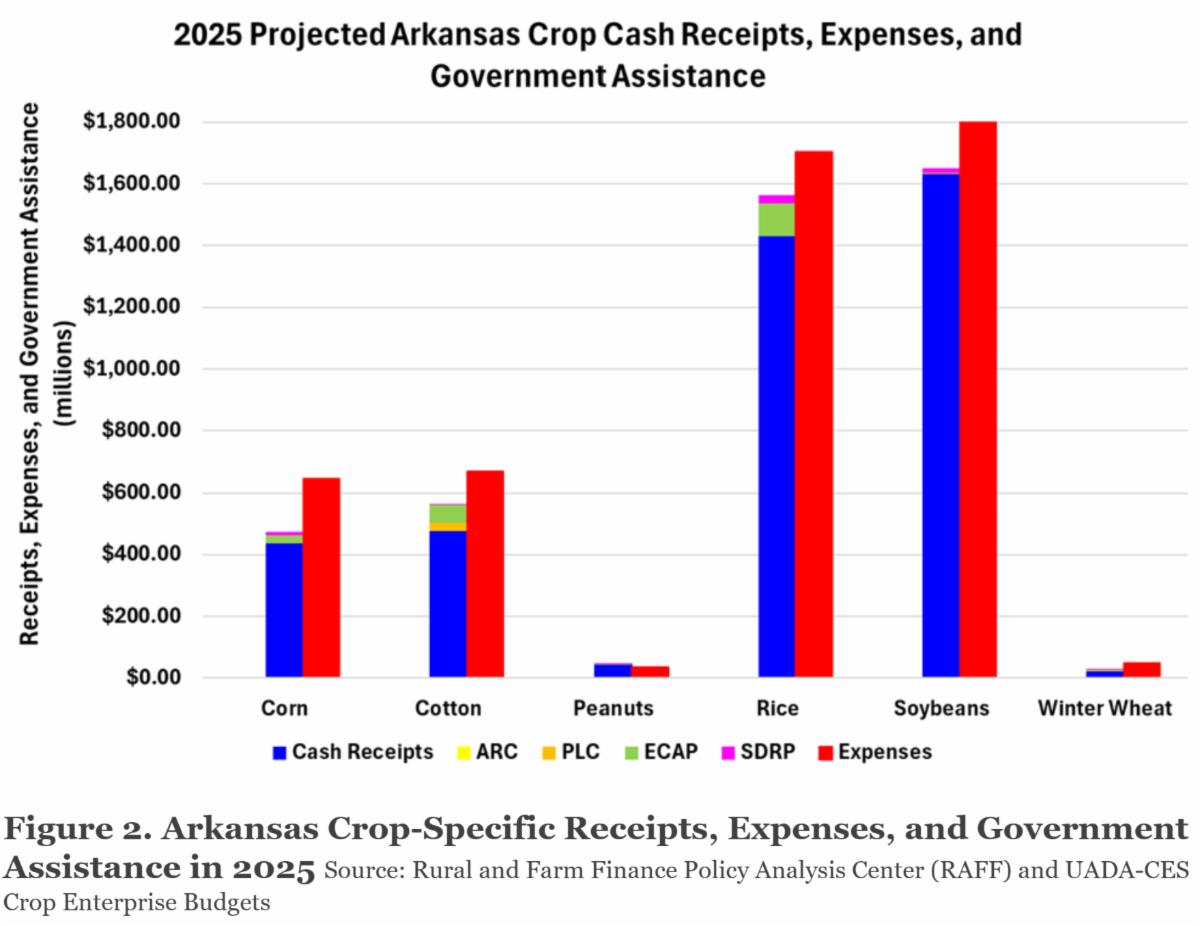
Arkansas crop receipts are projected to decline — for the third year in a row — to $4.46 billion ($465 million year-over-year), largely driven by low commodity prices across all principal crops and reduced acreage in cotton, soybeans and winter wheat (Plastina et al., 2025). Cash expenses less feed and livestock purchases will remain relatively unchanged for the third year in a row, at nearly $5.6 billion. Government assistance will range from $431.84 million to $916.31 million driven largely by ad hoc and disaster assistance through Emergency Commodity Assistance Program (ECAP) and Supplemental Disaster Relief Program (SDRP). A crop- specific breakdown of state-level net farm income by income category and expenses is given in Figure 2 below. Without including government assistance, Arkansas net farm income for the crop sector is projected to be a net loss of $1.15 billion for the 2025 crop year. Including the range of government assistance provided above, Arkansas net farm income for the crop sector is projected to decline between $0.72 billion and $0.23 billion.
| | Beef, Small Ruminants, & Forages | | |
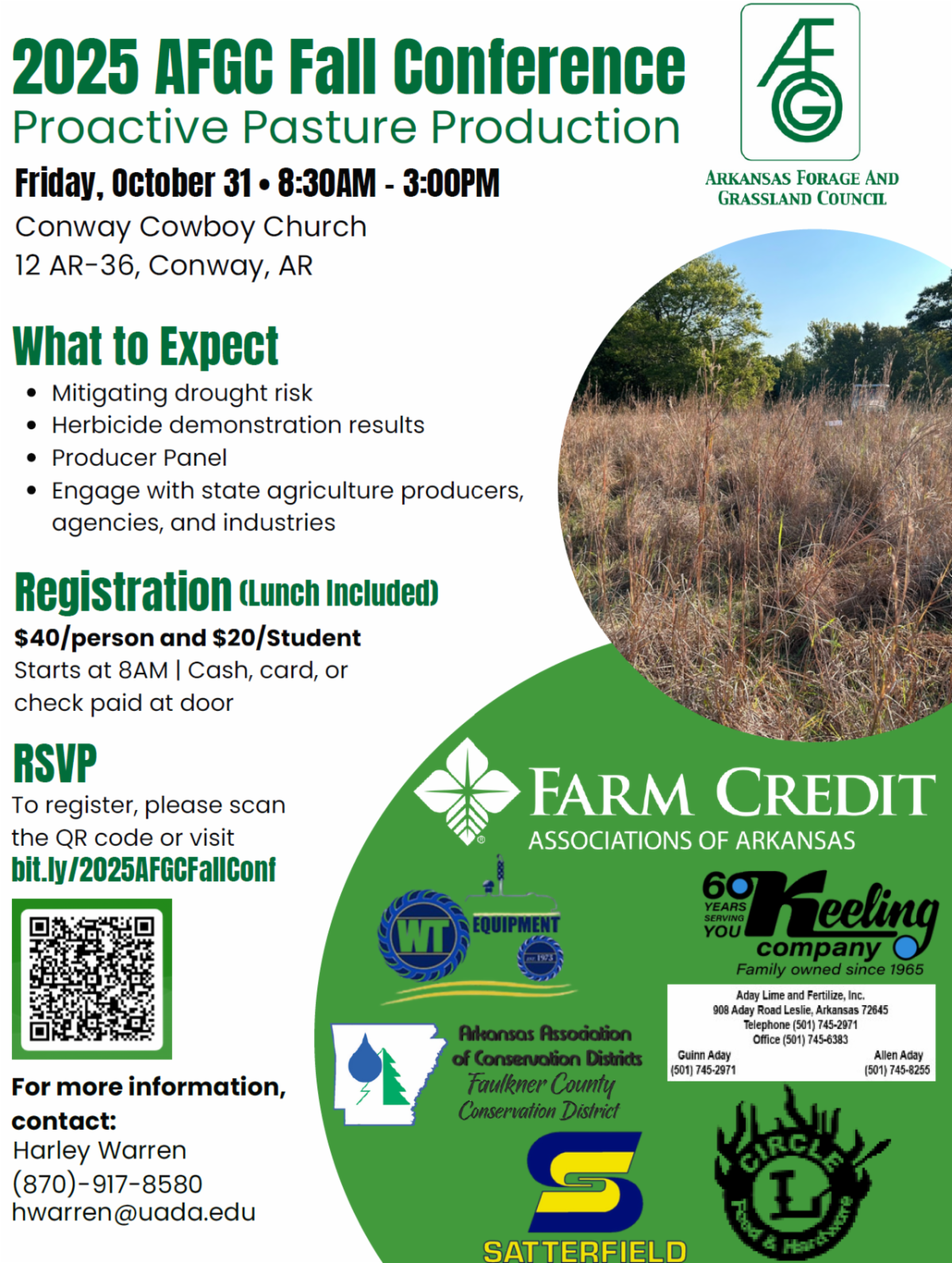
2025 AFGC Fall Conference
The 2025 AFGC Fall Conference is today starting at 8:30!! Come on out to gain some forage knowledge!
| | |
Brucellosis Vaccinations
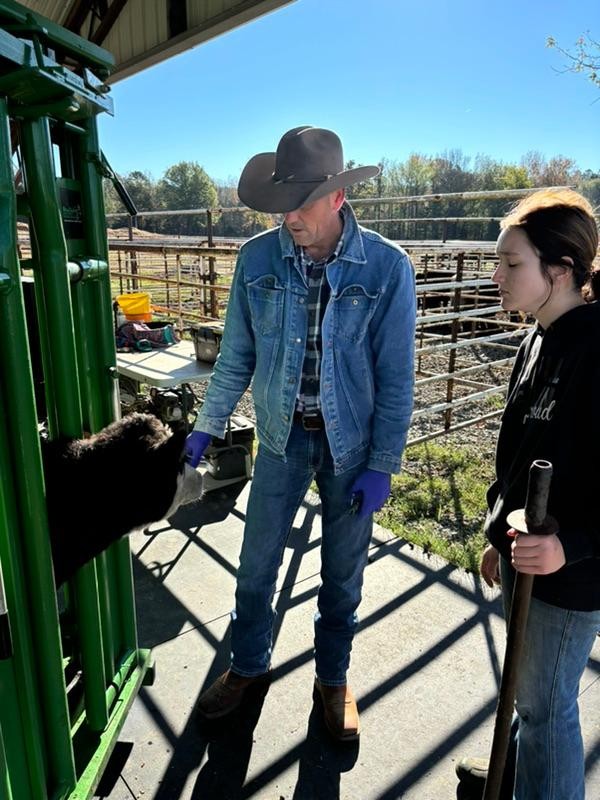
Faulkner County’s Brucellosis (Bang’s) Vaccination Program will be held Friday November 14.
Even though it’s no longer a state law, it is highly recommended to have your heifers vaccinated between the ages of 4 and 12 months against Brucellosis to keep brucellosis eradicated in Arkansas.
A representative from the Livestock & Poultry Commission and the Faulkner County Cooperative Extension Service will offer an on-farm vaccination program at no cost to all Faulkner County cattle producers. If you are interested please CALL the office at 501-329-8344, by Friday November 7 to be added to the schedule. After the registration deadline, a schedule will be put together and producers will be notified.
Producers must have a premise ID. You can apply for a premise ID at the Livestock & Poultry website.
The Livestock & Poultry Commission has stated that each farm where cattle are to be vaccinated MUST have a chute or squeeze chute with a head gate where cattle can be subdued. Even with good facilities, the chances of someone getting hurt are possible. If the proper facilities are not available or safe, the vaccinator has the right to refuse to vaccinate your calves. Calves will not be vaccinated unless the owner or someone representing the owner is present.
| | |
Faulkner County Conservation District Office Shutdown
This message was on Facebook and for anyone looking to rent the county equipment please take note!
Our office is closed due to the government Shutdown. If you're needing to rent equipment. Call me at 501-450-2858. LaDonna Taylor District Coordinator.
| | |
Emerging Bovine Disease Update: New World Screwworm
Rosslyn Biggs, DVM, Oklahoma State University Extension Beef Cattle Specialist
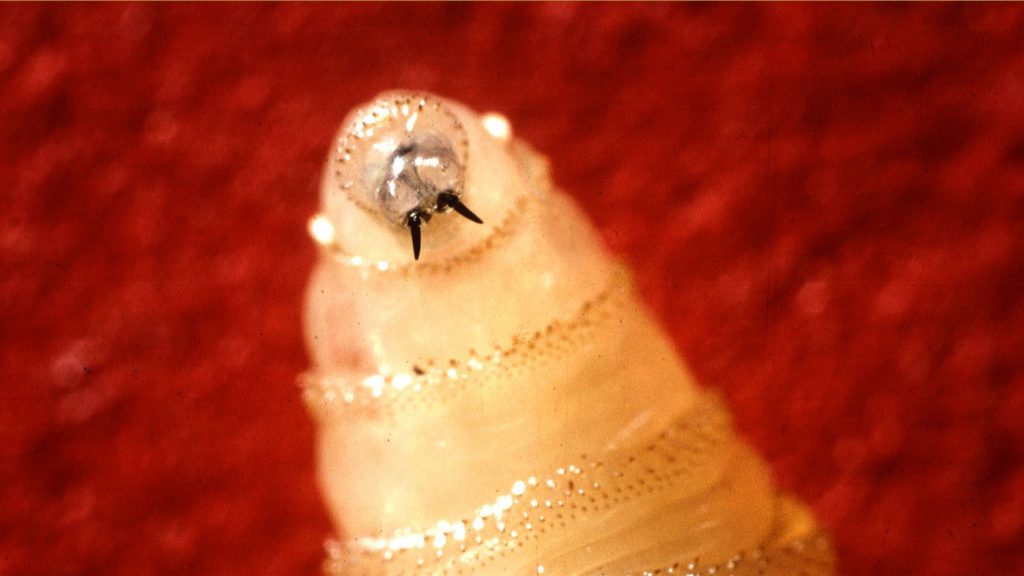
The threat of New World Screwworm (NWS), Cochliomyia hominivorax, continues to impact cattle producers in Mexico. Although eradicated from the continental U.S., this parasitic fly still poses serious risks to livestock, wildlife, pets, and humans as its infestation front advances northward.
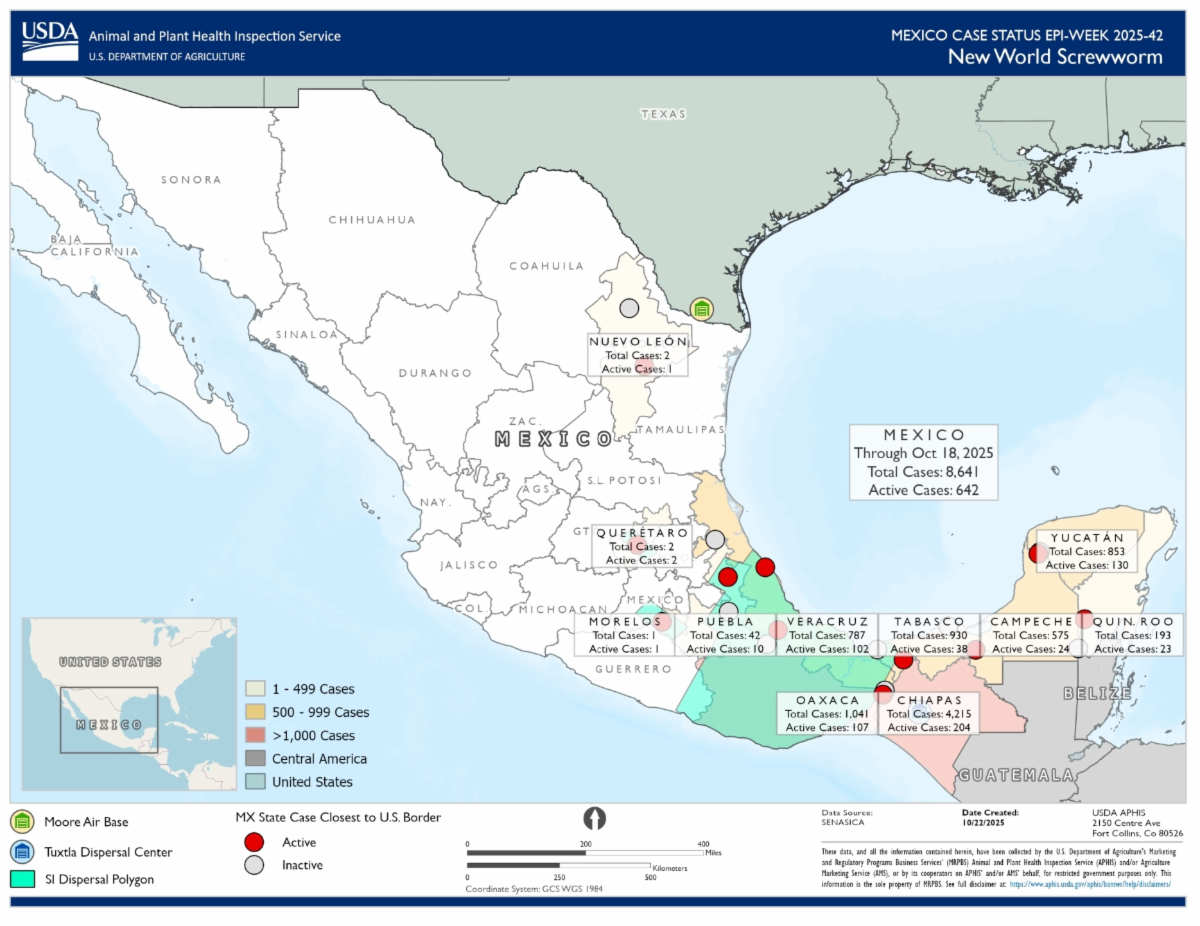
In August 2025, U.S. public health authorities confirmed a human case of NWS in the United States in a patient returning from El Salvador. This case appears to be isolated case with no further human or animal spread detected domestically. In September 2025, Mexico confirmed a detection of NWS less than 70 miles from the U.S. border. The infected animal was an 8-month-old calf in a herd moved from southern Mexico. The USDA continues to work closely with Mexican authorities supporting sterile fly release across Mexico.
Although risk to livestock and wildlife remains low, surveillance measures have been elevated across the southern border in Texas, Arizona, and New Mexico. Thousands of traps have been dispersed with over 13,000 surveillance samples testing negative for NWS.
Treatment options have also been evaluated with the U.S. Food and Drug Administration conditionally approving Dectomax-CA1 (doramectin) injectable solution for the prevention and treatment of NWS larval infestations, and prevention of NWS reinfestation for 21 days in cattle only. To reduce the risk of parasite resistance development, producers and veterinarians have been encouraged to use antiparasitic drugs like Dectomax-CA1 only when medically necessary, in accordance with the product labeling, and as part of a strategic parasite management.
Producers and veterinarians are encouraged to remain vigilant by:
- Examining animals daily, especially after any handling or procedures.
- Cultivating a solid veterinary relationship and maintain a response plan for suspected cases.
- Observing biosecurity and minimizing unnecessary animal movement or exposure.
- Watching for disease notices in your region.
- Reporting any clinical signs consistent with NWS (lesions, maggots, odor, extreme irritation) to your veterinarian or State Veterinarian.
This column reflects the latest information available as of October 15, 2025. These are evolving situations. Animal owners are encouraged to stay informed and watch for updates as new information becomes available.
A link to resources with current New World Screwworm information is available at: https://extension.okstate.edu/programs/livestock-entomology/new-world-screwworm-info.html
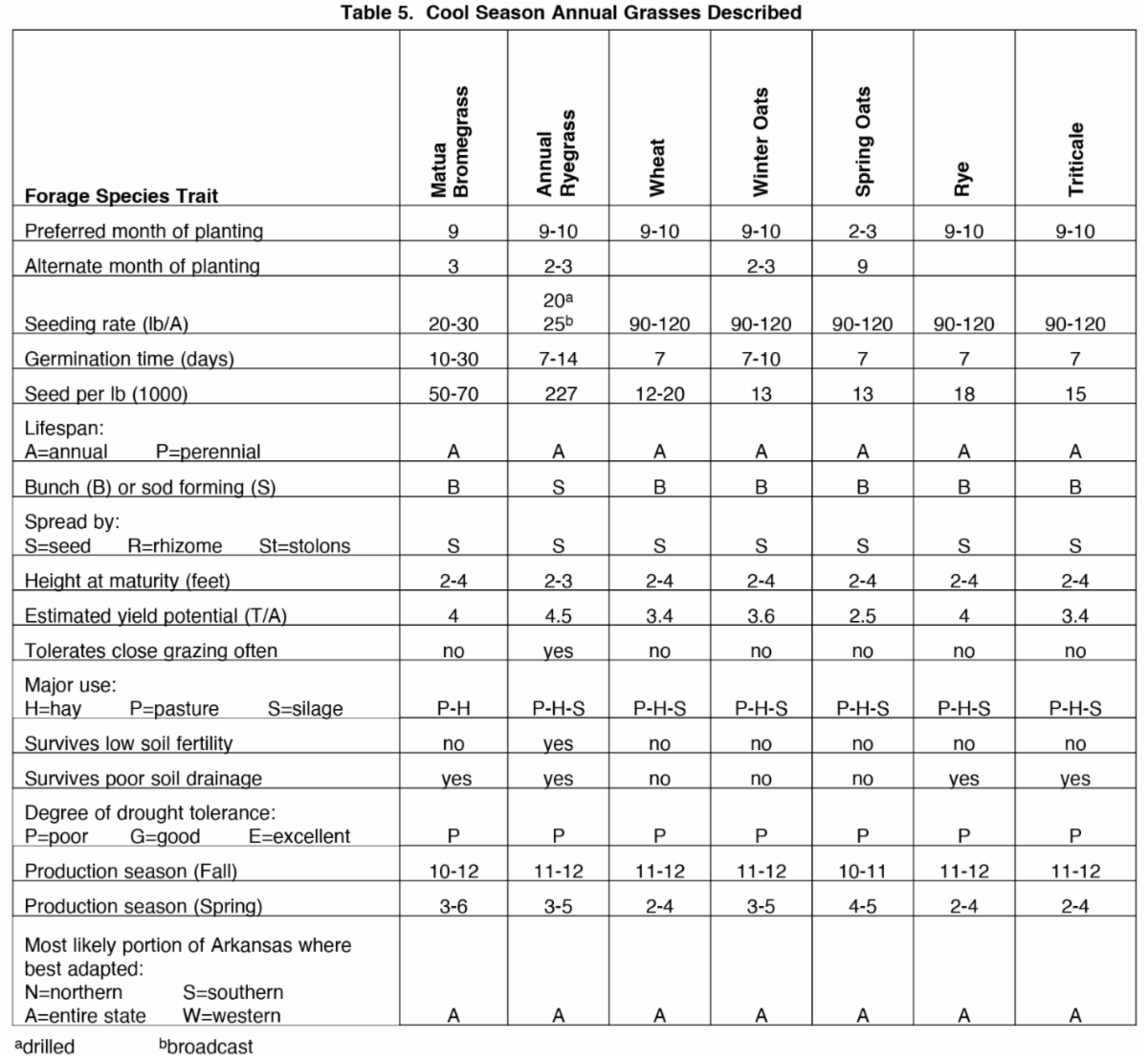
| | Cool Season Annual Resources | | |
Sheep & Goat Genetic Improvement Field Day
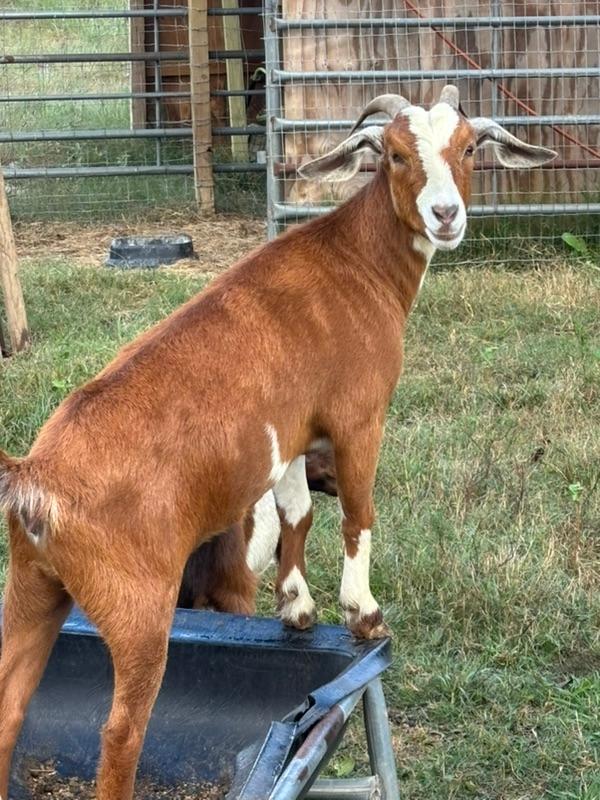
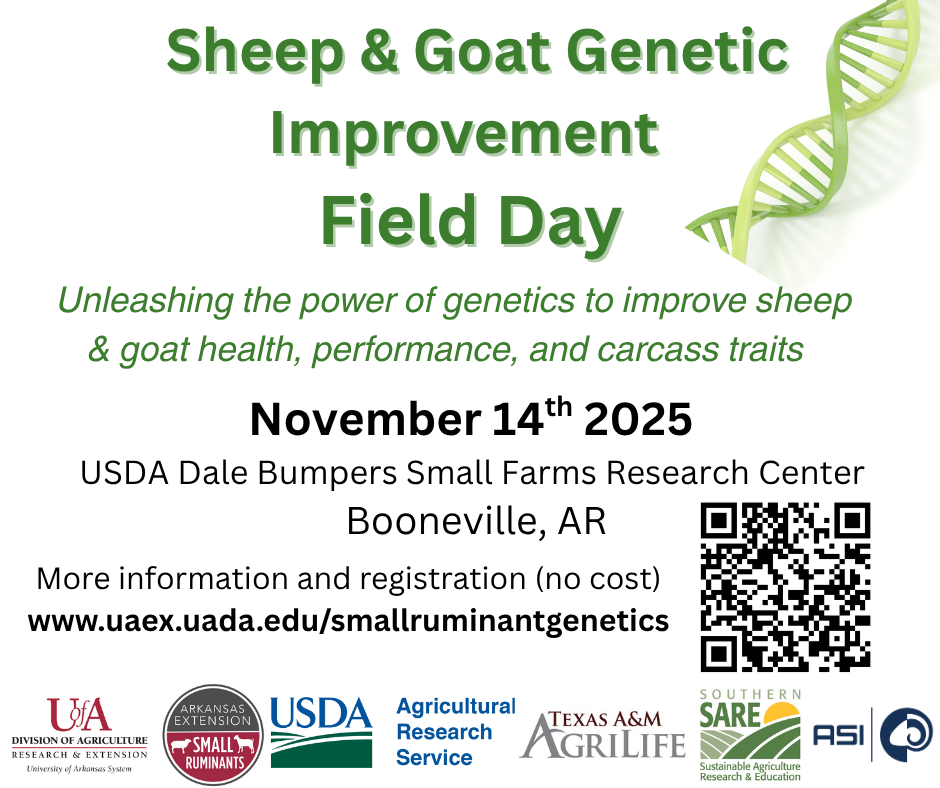
Unleashing the power of genetics to improve sheep & goat health, performance, and carcass traits is the theme of the "Sheep & Goat Genetic Improvement Field Day", the best event about small ruminant genetics that has ever been held in Arkansas. Do not miss this opportunity: great speakers, hands-on opportunities, and lamb burgers! On November 14th at the USDA/ARS Dale Bumpers Small Farms Research Center (6883 South State Highway 23, Booneville, AR), from 9:30 am to 3:30 pm. In person only, lunch included, and no cost to attend; please register by November 11. More information and registration at: www.uaex.uada.edu/smallruminantgenetics
Tentative agenda
9:00 am: On-site registration, coffee and donuts
9:30 am: Welcome, Dr. Joan Burke, USDA/ARS
9:45 am: Economic benefits of using rams/bucks with EBVs, Dr. Murphy, USDA/ARS
10:30 am: Breakdown sessions I: Collecting and recording data
Parasites: FAMACHA system, Dr Joan Burke, USDA/ARS
Parasites: Collecting and submitting fecal samples, fecal egg counting methodology, body condition scoring, Dr. Dan Quadros, UADA and Dr. Susan Rohila, USDA/ARS
12:00 pm: Lamb burgers
12:30 pm: Implementing an on-farm genetic improvement program, Dr. James Morgan, Round Mountain Consulting
1:00 pm: Breakdown sessions II: Collecting and recording data
Growth performance: types of ID and RFID, number of lambs born/weaned, birth weight, weaning weight, postweaning weight and collecting tissue, USDA/ARS and Texas A&M University
Buying rams with good genetics: visual assessment vs. EBVs, Dr. Joan Burke, USDA/ARS
Using ultrasound for pregnancy check and carcass evaluation, Dr. Jake Thorne, Texas A&M AgriLife
2:30 pm: The future development of the NSIP, Dr. Murphy, USDA/ARS and Dr. Jake Thorne, Texas A&M AgriLife
3:00 pm: Producer Panel: Using Estimated Breeding Values (EBVs) to improve economically important traits
Christine Hernandez, Heifer Ranch
Lauri Cellela, Rockwall, TX
Tia Broderick, The Farmhouse on Persimmon Hill
Zac Vann, Rafter V Ozark Farms
3:30 pm: Adjourn
Optional, 3:30 p.m - 4:30 pm: Learn more about the National Sheep Improvement Program (NSIP)
Dr. Joan Burke, USDA/ARS
Dr. Jake Thorne, Texas A&M AgriLIfe
Dr. James Morgan, Round Mountain Consulting
Dr. Murphy, USDA/ARS
| | Upcoming Meetings and Field Days | | |
Pesticide Applicator Trainings
In order to purchase restricted use pesticides (herbicides, insecticides, fungicides, etc) you must have a private applicators license. The license is good for 5 years.
To obtain a license you must first attend a certification training. Certification trainings are done in person by a County Extension Agent or you can go online and be certified. Below is a link to the online training.
In person trainings this year will all be at the Faulkner County Extension Office and will be on:
December 11 - 2:00 PM
January 29 - 6:00 PM
March 12 - 6:00 PM
April 30 - 2:00 PM
A certification training costs $20 and is due the day of the training.
Once a producer is certified, they will go through the Arkansas Department of Agriculture to obtain the license which is $45.
Please call the Extension office at 501-329-8344 to sign up for one of these dates.
There will be other opportunities for trainings in Perry and Conway County and I will post those as soon as those dates are available.
If you have a question about your license, please follow the License Search and Verification link below to find your license.
| | |
Livestock Market Report
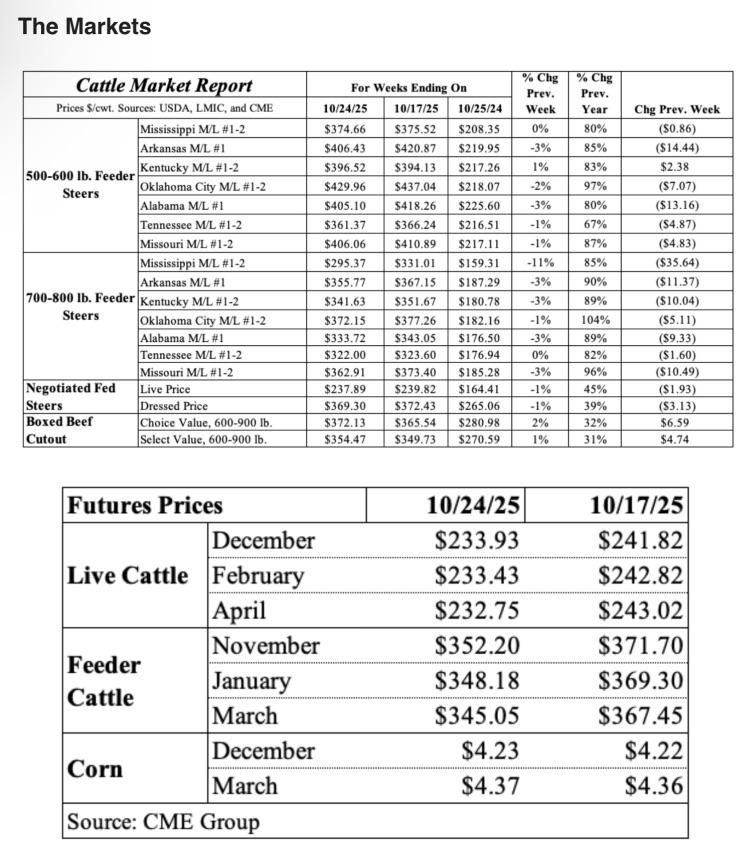
The weekly livestock market report is available on the Arkansas Department of Agriculture website.
| | |
Sign up for Text Alerts
You can now sign up for text alerts from me throughout the year. I have two areas you can sign up for which includes Faulkner Livestock or Faulkner Ag (Row Crop Updates). To sign up you can follow one of these links or use the QR Codes below.
| | Pursuant to 7 CFR § 15.3, the University of Arkansas System Division of Agriculture offers all its Extension and Research programs and services (including employment) without regard to race, color, sex, national origin, religion, age, disability, marital or veteran status, genetic information, sexual preference, pregnancy or any other legally protected status, and is an equal opportunity institution. | | | | |