A Message from the Center | | |
To our partner businesses, colleagues, technical assistance partners and friends across the Northwest and Rocky Mountain region, since July 2023 it has been our honor to work with you to support local and regional supply chain development. Although we are remiss to close this chapter of our work together, we are excited to announce the formation of the Western Food Business Collaborative (WFBC), a multi-state initiative that will continue to serve food and farm businesses in our region and beyond (leaning into the strong network of mission-minded organizations that came together under the former Center).
As a first step in continuing our work at connecting and informing, the Western Food Business Collaborative (WFBC) asks you to join us at our upcoming webinar on October 20 and review our first WFBC newsletter to learn more about partner events and how we envision carrying on our collective food systems and business development work.
Dawn Thilmany, Colorado State University
Martha Sullins, Colorado State University
| | Wrapping Up the Business Builder Grant Program: Creating Lasting Impact Across the Region | | |
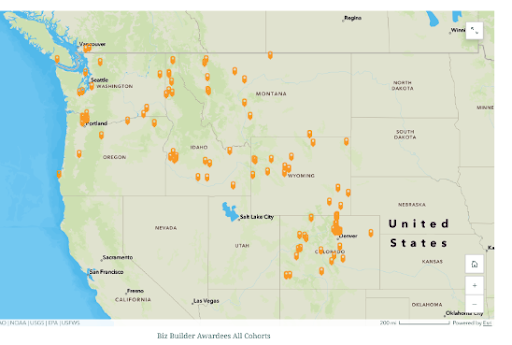
Over the course of the Business Builder Grant Program, the Northwest and Rocky Mountain Regional Food Business Center invested more than $2 million directly into 131 farms, ranches, and food businesses across our six-state region. But the impact of those investments reaches far beyond the grant dollars themselves.
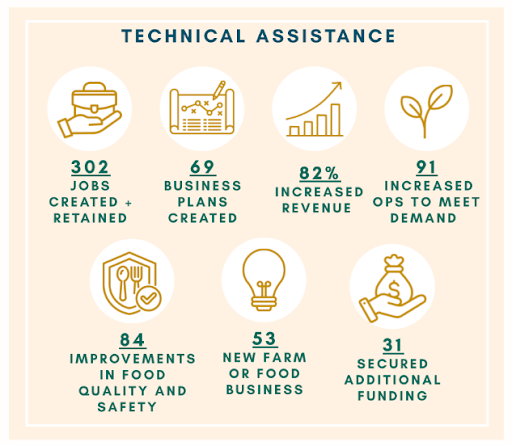
Together, Business Builder awardees generated an estimated $5.4 million in total economic impact throughout the region. Grant-funded activities and investments also helped businesses create or retain approximately 302 full-time equivalent (FTE) jobs, strengthening local economies and creating new opportunities within agricultural and rural communities.
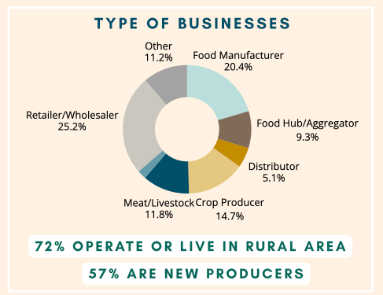
A key goal of the Business Builder program was to direct resources toward producers and food businesses that have historically faced barriers to accessing capital and other business resources. Fifty-seven percent of awardees were new producers, while 72% were located in rural areas. For these businesses, Business Builder funding provided an opportunity to make investments that could accelerate growth—from equipment and infrastructure to product development, marketing, and market expansion.
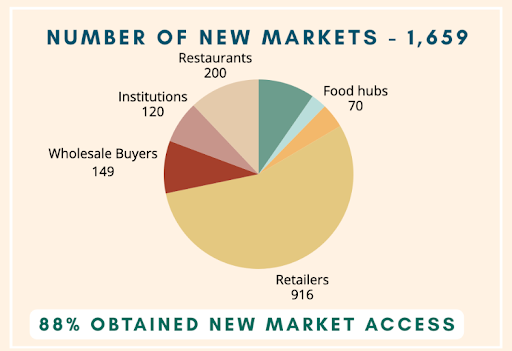
The program also helped businesses reach new customers and markets. Eighty-eight percent of awardees reported accessing new market channels within their region as a result of their Business Builder-funded activities. For some, that meant expanding into new retail markets. For others, it meant attending trade shows, developing new products, building new relationships, or finding opportunities to take their products beyond their local communities.
Perhaps the most meaningful measure of the program's impact comes directly from the businesses themselves. Through more than 100 post-award interviews, awardees shared stories of new opportunities, expanded markets, job creation, and investments that are continuing to shape the future of their businesses.
One awardee shared:
“We now have specialty stores carrying our product in 8 states, because of the scholarships and support from the Center that allowed us to attend events and showcase [at] trade shows. The Purple Barley Bites with Oregon hazelnut was named top specialty for the trend from the Fancy Food Show last year. This year the Specialty Food Association featured our purple barley breakfast cereal in their outlook for 2026 as ‘sense maxing.’”
Stories like this demonstrate what can happen when food businesses have access to the right resources at the right time. The Business Builder program was an investment not only in individual businesses, but in the people, communities, and regional food systems that make our food economy stronger.
As the Business Builder program comes to a close, we are proud to celebrate the 131 businesses that turned these investments into new jobs, new markets, new products, and new possibilities—and grateful to have been part of their growth.
| | The Pig & the Plow: The Ripple Effect of Local Food Investments | |
What’s the Ripple Effect?
A dollar invested in a local food business can go a long way. The Local Food Impact Calculator helps communities, organizations, and food businesses estimate the broader economic impact of investments in local food.
Curious about the impact of your own local food investments? Explore the Local Food Impact Calculator below.
| | |
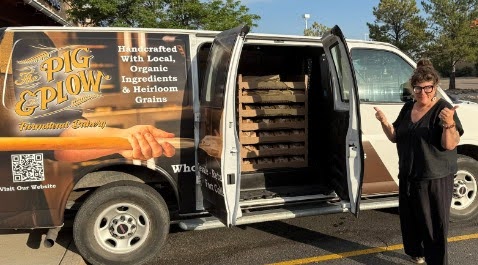
For Fort Collins-based farmstead bakery The Pig and the Plow, the right equipment opened the door to new markets and new opportunities.
Through the Center’s Business Builder Grant Program, The Pig and the Plow received $31,488 to invest in refrigerators, proofing racks, crates, and a delivery van—critical infrastructure that helped the growing bakery expand its production and distribution capacity.
The investment paid off. The Pig and the Plow gained access to 6 new farmers markets, 7 new restaurants, and 1 new institutional buyer, while creating 2.5 FTE jobs. The business also attributed $17,423 in increased sales directly to its grant-funded equipment.
The impact extended beyond the bakery itself. The Local Food Impact Calculator estimates that the grant generated $121,688.79 in economic impact in Colorado during its first year, with the potential for continued impact as the purchased equipment serves the business for years to come.
The Pig and the Plow's story is a powerful example of how strategic investments in local food businesses can create ripple effects throughout the regional food system.
| |
The Stories Behind the Impact
The impact of the Business Builder Program is best understood through the businesses themselves.
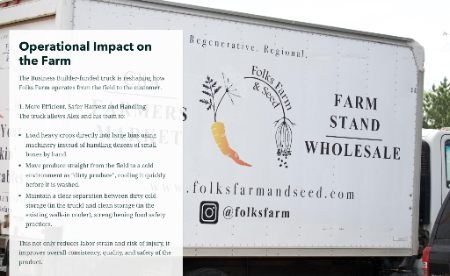
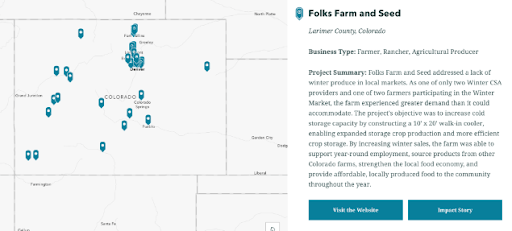
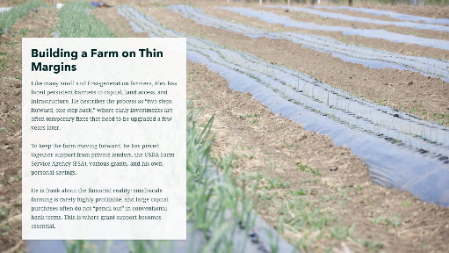
Explore our complete, interactive StoryMap to discover the 131 awardees and see how grant investments supported food businesses across our six-state region.
| |
| | |
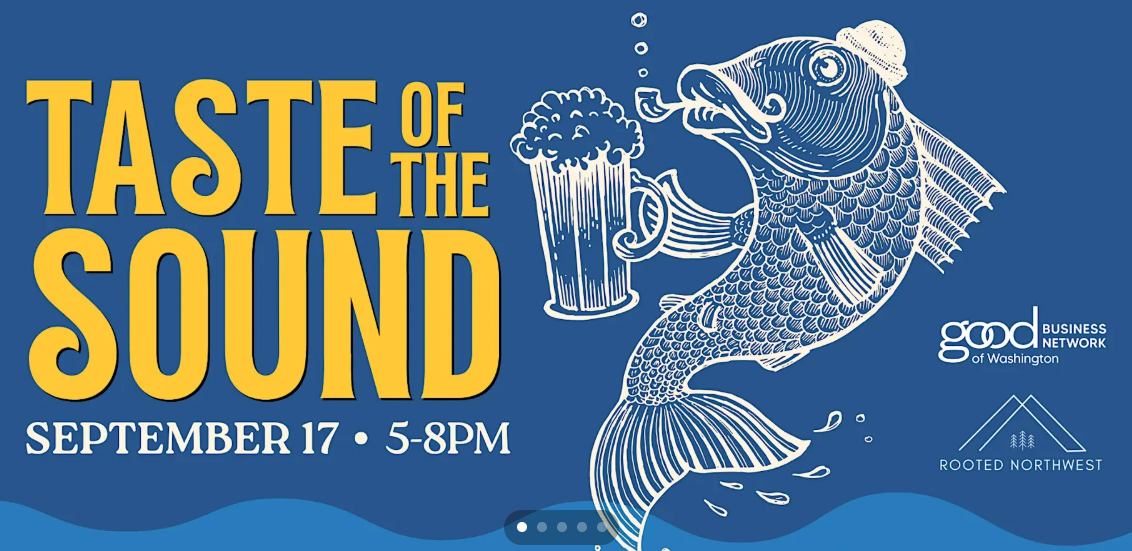
Taste of the Sound
September 17 , 2026
5:00-7:00 PM PT
Seattle, Washington
Taste your way through 75+ local food and beverage makers, then stock your kitchen and bar with the products you love. Sample everything from seafood and artisan charcuterie to locally crafted beer, wine, spirits, specialty foods, and more—all while meeting the makers behind your favorite local brands.
Now in its 2nd year, Taste of the Sound is an outdoor waterfront celebration of Washington's food and beverage community, featuring local makers from across the region, including members of the Seattle Made and Eat Local First communities and a Native Grown & Gathered Market presented in partnership with Feed Seven Generations.
| | | |
| | |
IMPACT Pitch Business Pitch Competition
October 1, 2026
4:30-8:30 PM PT
Seattle, Washington (virtual option)
IMPACT Pitch is a multi-round business pitch competition for entrepreneurs at any stage who are ready to refine their business, strengthen their approach, and demonstrate the value they bring to their communities.
Over four months, participants receive coaching, feedback, and support to strengthen their business, leading up to a live pitch event in front of judges and the community for a chance to win cash prizes totaling $46,000.
| | | |
| | |
Summit to Shelf: Scaling Food and Ag Businesses on the West Slope Workshop
October 5, 2026
11:00-4:00 PM MT
Durango, Colorado
Summit to Shelf is a two-part program designed to support agriculture, food, and beverage entrepreneurs across the West Slope, from early-stage ideas to growth-ready value-added agricultural and consumer packaged goods (CPG) brands. This program combines a hands-on business workshop and a live founder showcase.
| | | |
| | |
Regenerative Food Systems Investment Forum 2026
October 7-8, 2026
Denver, Colorado
The 2026 RFSI Forum is the premier gathering for understanding the why, how, and where to invest across agriculture and food systems for long-term value and resilience.
It’s the only event that brings together key decision-makers from investment, finance, farming, and food — alongside leading-edge investment strategies, real-world and actionable case studies, and curated deal flow across agriculture, natural capital, agtech, and food.
| | | |
| | |
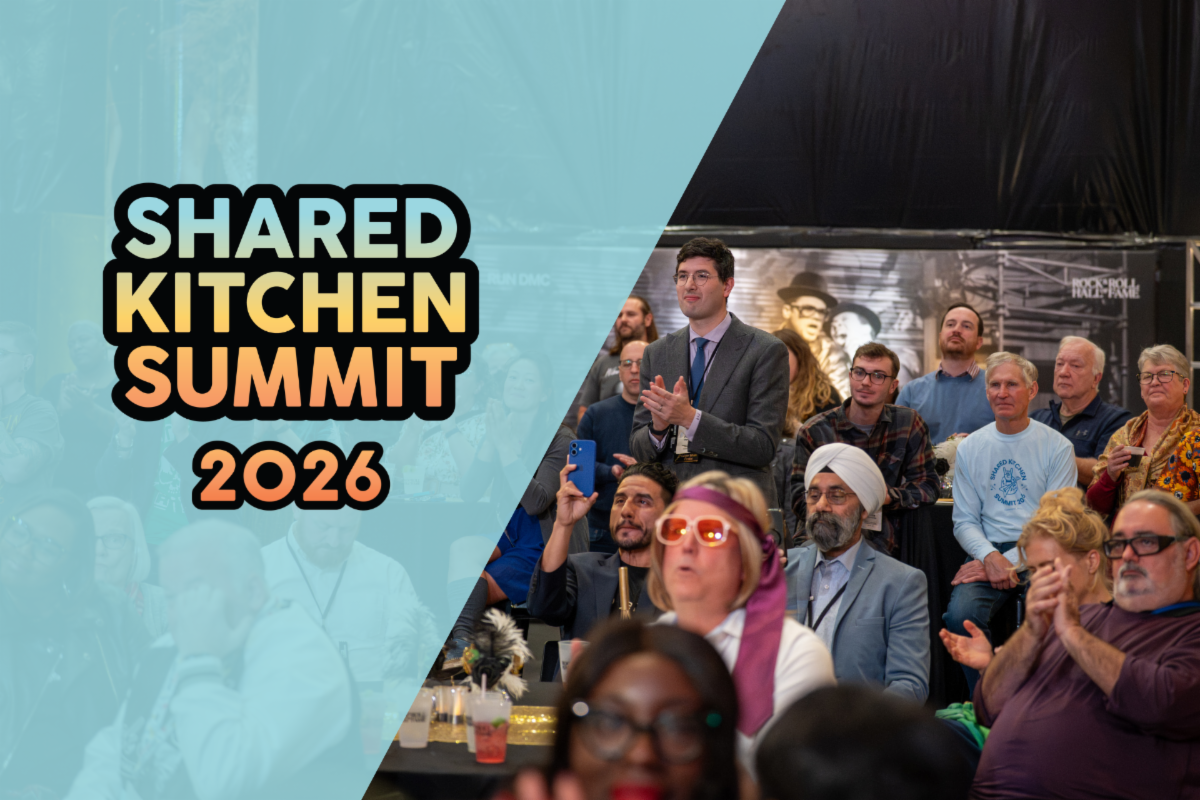
2026 Shared Kitchen Summit
October 12-14, 2026
Providence, Rhode Island
Shared kitchen operators, food hub leaders, and food business support organizations should mark their calendars for the 2026 Shared Kitchen Summit. Hosted by The Food Corridor, the Summit brings together shared kitchen operators, industry experts, and partners from across the country for networking, professional development, peer learning, and collaboration.
| | | |
| | |
Webinar: Deep Dive into the Impacts of the Northwest and Rocky Mountain Regional Food Business Center
October 20, 2026
11:00 AM MT
Virtual via Zoom
Join the Northwest and Rocky Mountain Regional Food Business team as they discuss the impacts of their work and launch the Western Food Business Collaborative.
| | | |
| | |
46th Food Safety & Sanitation Workshop
November 3-4, 2026
Portland, Oregon
The Food Safety & Sanitation Workshop addresses basic sanitation as well as cutting edge issues related to food sanitation and food safety. Topics having broad interest are covered in the general sessions. There are more specific subjects discussed in small breakout sessions, with basic and advanced tracks available.
| | | |
| | |
Montana Agritourism Annual Conference
November 5-6, 2026
Lewistown, Montana
The Montana Agritourism Conference is the only statewide gathering dedicated to the intersection of working lands and visitor experiences. Whether you're a farmer, rancher, tourism professional, educator, or community leader, this event is designed for those who believe in the power of agritourism to strengthen rural economies, build connections, and share Montana’s story.
Over two days in Lewistown, you’ll engage with peers and pioneers across the agritourism spectrum—through hands-on learning, real conversations, and practical takeaways you can bring home to your business or region.
| | | |
| | |
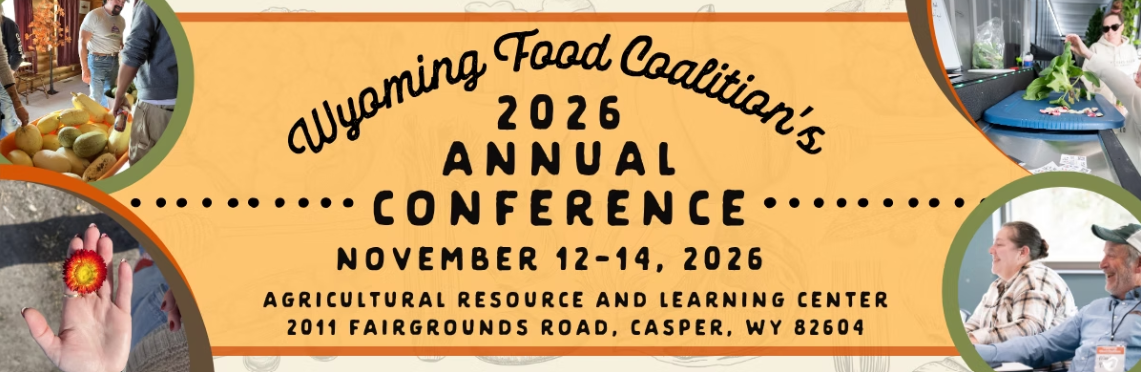
Wyoming Food Coalition's 2026 Annual Conference
November 12-14, 2026
Casper, Wyoming
The Wyoming Food Coalition’s 2026 Annual Conference brings together producers, food businesses, advocates, and local food system leaders for hands-on learning, networking, and community building. Topics include whole carcass breakdown, food safety and the Wyoming Food Freedom Act, cooperative business models, producer storytelling and social media, rural resilience, and local food policy.
| | | |
| | |
Tilth Conference 2026
November 16-18, 2026
Bellingham, Washington
This year’s Tilth Conference will bring together hundreds of farmers, organizations, food system activists, researchers and educators to learn, work and play in Bellingham, Washington. Tilth Alliance and the Tilth Conference work to create and support a sustainable, healthy, and equitable food system.
| | | | Resources & Opportunities | |
| | |
Montana Specialty Crop Multi-State Program
The Montana Department of Agriculture is accepting applications for the Specialty Crop Multi-State Program (SCMP), which supports projects that strengthen the marketability and competitiveness of specialty crops. Eligible applicants include producer associations, community organizations, government entities, academic institutions, and other specialty crop stakeholders.
Funding can support projects focused on food safety, research, seed development, pest and disease management, nutrition, distribution efficiency, and sustainability. Specialty crops include fruits and vegetables, peas, lentils, horticultural crops, and nursery crops.
Application deadline: September 30, 2026, at 5:00 p.m.
Applicants must complete a pre-application discussion with Montana Department of Agriculture staff before applying.
| | | |
| | |
Cultivating Success Whole Farm Planning Course
Cultivating Success™: Whole Farm Planning will walk you through a step-by-step process, to help you prepare a well thought out plan for your land, life, and farm business. Learn how to use a whole system lens to create a living plan for your small farm future. Classes will meet weekly through Zoom, in an online classroom environment and you will be able to connect with a statewide community of other aspiring farm planners.
- Course dates: Mondays 6-8pm Sept. 21st – Nov. 2nd, 2026
- Online course classroom through Zoom with regional in person opportunities
- Cost: $200 per farm (up to 3 participants)
- Spanish interpretation provided
-
Scholarships are available for anyone for whom the course fee is a barrier
| | | | |
Partners and Collaborators: |
| |
Center Leads: Colorado State University, Oregon State University
Regional/multi-state: Tahoma Peak Solutions, Network of Incubators and Community Kitchens (The Nick), Niche Meat Processor Assistance Network, Rocky Mountain Farmers Union, Luna Bird, The Food Corridor
Colorado: Colorado Department of Agriculture, Colorado State University
Oregon: Oregon Department of Agriculture, Oregon State University Food Innovation Center, Oregon Community Food Systems Network, Oregon Food Hub Network
Idaho: University of Idaho, Idaho Department of Agriculture, Future Roots, Arrowleaf Consulting Group
Montana: Montana Department of Agriculture, Montana State University
Washington: Washington State University, Washington State Department of Agriculture
Wyoming: University of Wyoming, Central Wyoming College
USDA: Ag Marketing Service Collaborators and NW-Rocky Mountain Regional Coordinator
| | |
In accordance with Federal civil rights law and U.S. Department of Agriculture (USDA) civil rights regulations and policies, the USDA, its Agencies, offices, and employees, and institutions participating in or administering USDA programs are prohibited from discriminating based on race, color, national origin, religion, sex, disability, age, marital status, family/parental status, income derived from a public assistance program, political beliefs, or reprisal or retaliation for prior civil rights activity, in any program or activity conducted or funded by USDA (not all bases apply to all programs). Remedies and complaint filing deadlines vary by program or incident.
Persons with disabilities who require alternative means of communication for program information (e.g., Braille, large print, audiotape, American Sign Language, etc.) should contact the State or local Agency that administers the program or contact USDA through the Telecommunications Relay Service at 711 (voice and TTY). Additionally, program information may be made available in languages other than English.
To file a program discrimination complaint, complete the USDA Program Discrimination Complaint Form, AD-3027, found online at How to File a Program Discrimination Complaint and at any USDA office or write a letter addressed to USDA and provide in the letter all of the information requested in the form. To request a copy of the complaint form, call (866) 632-9992. Submit your completed form or letter to USDA by: (1) mail: U.S. Department of Agriculture, Office of the Assistant Secretary for Civil Rights, 1400 Independence Avenue, SW, Mail Stop 9410, Washington, D.C. 20250-9410; (2) fax: (202) 690-7442; or (3) email: program.intake@usda.gov.
USDA is an equal opportunity provider, employer, and lender.
| | | | |