|
|
|
Infant & Toddler
Connection of Virginia
January 2026
| |
| |
Test your Knowledge with our Poll Feature
Pick your answer and scroll below to find the correct answer and explanation!
| |
| Can a provider make-up visits in advance (vacation/medical leave, pending bad weather, etc.)? | | | | | | |
ITCVA Monitoring Community of Practice (MCoP)
The next ITCVA monthly monitoring community of practice (MCoP) call will be held on February 4, 2026, at 3PM. Thank you to all who have been able to join us for our monthly monitoring calls and for the positive feedback shared!
| | |
ITCVA MCoP calls are held on the first Wednesday of each month beginning at 3:00PM. These calls are open to anyone who may be interested in the topic(s) being discussed. Calls are recorded for those who are unable to attend.
Please visit the Monitoring Community of Practice page of the ITCVA website for a list of upcoming topics, the Microsoft Teams meeting link and session resources.
February 2026
SPP/APR and Public Reporting
March 2026
TRAC-IT Reports Overview
April 2026
CIMV; Structured and Supervised Local Monitoring
Family Survey and Family Outcomes
| |
|
CADRE (Center for Appropriate Dispute Resolution)
Online Course - Supporting Families to Engage in the IEP/IFSP Process and Resolve Conflicts
The Center for Appropriate Dispute Resolution in Special Education developed this self-paced online course to support Parent Center staff, advocates, and others who assist families in engaging effectively in the IEP and IFSP process and resolving conflicts constructively.
The course introduces core topics—communication, conflict engagement, parental rights to dispute resolution, and responding to dispute resolution calls—by leveraging CADRE’s trusted tools and materials. Real-life scenarios and short knowledge checks with feedback support practical, real-world application. A final module focuses on using CADRE resources to extend and reinforce learning, making this course a strong onboarding and refresher tool.
| | |
Social Emotional Development of Young Children
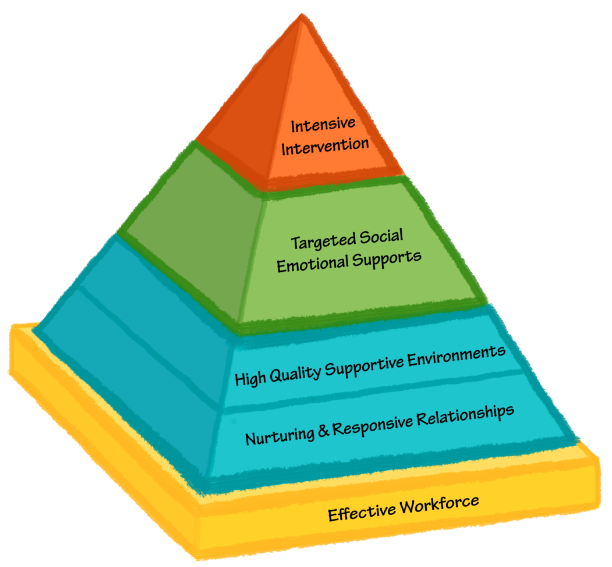
This module was developed as an introduction to social emotional development, also known as infant mental health, for children birth to age five. Topics covered in this module include: social emotional development, evidence-based research including a framework for infant child mental health, and reflection on the impact of past experiences, family, and culture on healthy social emotional development.
| | A GEM YOU MIGHT HAVE FORGOTTEN? | | WHAT YOU MIGHT HAVE MISSED? | | | |
Trauma and Early Childhood, Part I & II
This two-part Talks on Tuesday set provides critical information how adverse childhood experiences (ACEs) and toxic stress change brain structure and impact global development. In Part I, participants will learn how chronic stress impacts brain development and creates pathways built for survival. We will discuss how these newly formed pathways affect children's ability to learn and regulate. In Part II, participants will learn functional strategies they can implement with the families they serve. Participants will learn how to address trauma within their roles as early interventionists as well as practical strategies to use with the families.
| | |
VEIPD released an important two-part tool for EI practitioners in January on trauma-informed care:
Part I: Checklist of Early Childhood Practices that Support Social Emotional Development and Trauma-Informed Care
This reflective checklist supports early interventionists in applying trauma-informed practices that promote social-emotional development. It emphasizes safety, regulation, caregiver partnership, and understanding behavior through a trauma- and development-informed lens.
Part II: Action Plan: Strengthening Trauma-Informed Practice in Early Intervention
This companion action plan helps early interventionists translate reflection into intentional action. Designed to be used alongside the trauma-informed checklist, it supports goal-setting, collaboration, and ongoing reflection to strengthen everyday practice.
| | |
Registration is now open for the Spring 2026 Kaleidoscope training for Service Coordinators.
We now offer the synchronous/real-time training portion in two half-day sessions (rather than one full-day session). Please register here.
| | |
Kaleidoscope Training
March 24th - 25th, 2026
8:30 am - 12:00 pm EST
Registration is open!
Kaleidoscope, New Perspectives in Service Coordination is an introductory level training program for new early intervention (EI) service coordinators. The training program includes the completion of three components:
-
The Many Facets of Service Coordination online module (available here)
- Kaleidoscope Training - two virtual training days
- Kaleidoscope Community of Practice - three monthly web-based meetings with the cohort who attended the training day to support implementation of the concepts learned from the module and training
| |
| |
Early Child Development Issues Associated with Covid-19 Social Distancing
Lockdown and social distancing measures are associated with increased developmental concerns among toddlers, new research suggests. An extensive Scottish study of nearly 258,000 children shows that those exposed to longer periods of social distancing measures between March 2020 and August 2021 experienced greater increases, with up to almost a 7% increase in development issues.
Read More
| | | |
Are You Looking for Resources on
Writing High-Quality IFSP Outcomes and Goals
Developing strong Individualized Family Service Plan (IFSP) outcomes and goals is essential for supporting infants and toddlers with developmental needs and their families. In Virginia, IFSP outcomes are designed to be functional, family-centered, and measurable, ensuring that they reflect what is most important to the child and family in their everyday routines. High-quality outcomes help teams focus on meaningful progress, promote collaboration, and provide clear direction for intervention strategies.
Our quick reference cards have a new look! Here are some that you may find useful for outcome and goal writing:
| | POLL ANSWER AND EXPLANATION | | |
Can a provider make-up visits in advance (vacation/medical leave, pending bad weather, etc.)?
a. Yes
b. No
The correct answer is “yes” as long as the family agrees and the reason for the make-up visit is clearly documented. Chapter 9, pg. 202 of the Practice Manual provides guidance for documenting make-up visits or documenting increased length for make-up time.
Document the reasons for cancellation (whether cancelled by the provider or the family) any time a contact was scheduled and did not occur. When a make-up visit is provided, clearly document that the visit is a make-up and state the date of the missed session regardless of whether the make-up occurs before or after the regularly scheduled visit. The more specificity provided, the more helpful the documentation is for monitoring and billing. Document the reason for any difference in the frequency, length, intensity or location of a service provided compared to what is listed on the signed IFSP. If a visit is lengthened to provide make-up time, it must be clearly documented in the contact note.
| | |
|
EMPLOYMENT OPPORTUNITIES
The Employment Opportunities page on the ITCVA website receives nearly 5,000 visits each year!
Practitioners: Early intervention needs you! Influence the future of infants and toddlers with developmental delays or disabilities and their families by putting your skills and expertise to work today! Please visit the Employment Opportunities page on the ITCVA website for links to current job openings.
LSMs and local contracted agencies: Let us help connect you to qualified applicants! Are you a Local System Manager (LSM) or the director of an agency that contracts with one or more local early intervention systems in Virginia? Are you looking to find qualified applicants to fill vacant positions? Please visit our Employment Opportunities page for instructions on how to submit a job posting.
| | |
| INFANT & TODDLER CONNECTION OF VIRGINIA | Looking for the most up-to-date version of the Part C Practice Manual...upcoming meeting dates...or even a new career opportunity? You'll find plenty of helpful information on the Infant & Toddler Connection of Virginia's early intervention website! Be sure to visit and bookmark itcva.online. | | |
MEDICAID ENROLLMENTS
If you have questions about enrollments for children with Medicaid please
contact Brenda Ayala.
| | |
| |
EARLY INTERVENTION CERTIFICATION
For questions about certification of practitioners, contact Anne Brager- 804-664-2462.
For questions related to completing the online application, contact VATRACITsupport@ssg-llc.com or from 8AM-5PM ET by calling 804-508-7229.
| | | | |
Infant & Toddler Connection of Virginia is part of the Department of Behavioral Health and Developmental Services
ITCVA Staff
1220 Bank Street, 9th Floor, P.O. Box 1797, Richmond, Virginia 23219-1797
Main Office: (804) 786-3710 • Main Fax: (804) 371-7959
| | Do you have colleagues who aren’t getting the Monthly Part C Update? Ask them to check their spam folder. If they're still not receiving it, have them email anne.brager@dbhds.virginia.gov. | | |
1220 Bank Street
Richmond, VA 23219
(804) 664-2462
| |
| | | |