News and information to help journalists serve the public and stay safe.
|
|
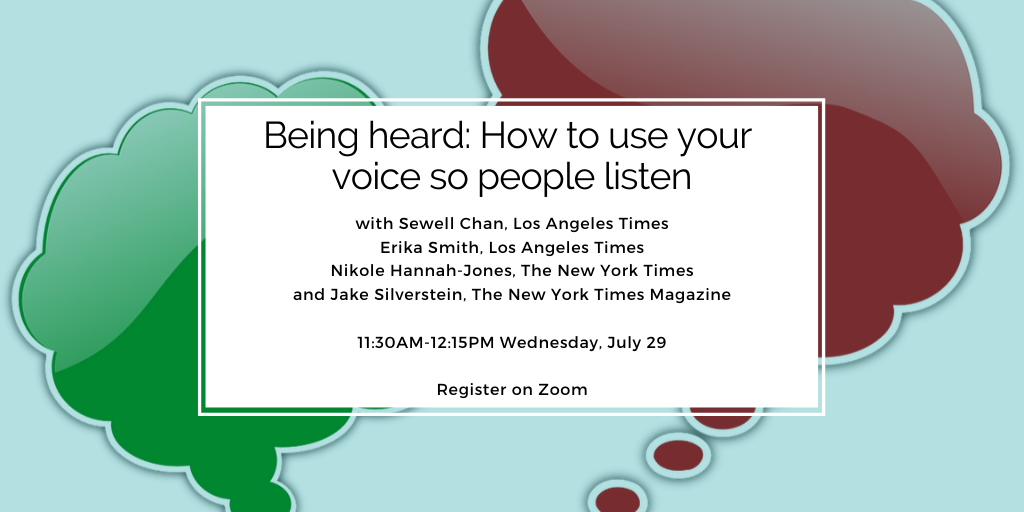
Everyone has an opinion, but not everyone expresses their views with power and impact. Some voices rise and echo, and others never penetrate the noise that surrounds us. Having an important platform — like the New York Times or L.A. Times — can amplify perspectives. In this program from the National Press Club Journalism Institute, L.A. Times editorial page editor
Sewell Chan
, L.A. Times columnist
Erika Smith
, Pulitzer Prize-winning New York Times reporter
Nikole Hannah-Jones
, and New York Times Magazine editor-in-chief
Jake Silverstein
will describe:
- How to make yourself heard
- How to work with an editor or writer to hone a point of view
- How to pitch (& catch) a column or opinion piece
|
|
To a sports writer, covering Major League Baseball during a pandemic-shortened season means fewer journalistic scoops, less access to players, and the fear that baseball writers roaming a clubhouse in search of stories may be a thing of the past.
“It’s changed our jobs drastically,” Sullivan said. “A beat writer, his whole thing is to have a good relationship with players and managers, and trying to gather information that your competition doesn’t have….You want to do one-on-one reporting that no else can do. But that’s gone, at least for this year.”
Sullivan described reporters in joint Zoom interviews with players, waiting in line to get temperature checks before entering stadiums, and sitting in hot unairconditioned press boxes writing game stories while cleaning crews disinfect the premises.
“I'm afraid that the Zoom thing is here to stay,” he said. “And I know that they say it's just for this season, but I don't know. I just see not just baseball but other sports closing down their locker rooms in the future and saying this is your only access.”
“That'll have a negative effect on writers’ relationships with players because they won't get to know them in the future like we did.”
Other top takeaways from Sullivan’s conversation with Freedman:
- The recent positive COVID-19 tests experienced by the Miami Marlins will weaken their roster and make them the equivalent of a Triple A minor league team.
- Photographers should have more freedom to photograph inside ballparks.
- The recent embrace of social justice by baseball players and owners was late but “here to stay.”
- He learned his writing skills from Pulitzer Prize-winning Chicago columnist Mike Royko.
- He cheered at the Chicago Cubs 2016 World Series championship but misses no longer being able to write about a historic championship drought.
|
|
|
Join moderator
Michael Days
of the Philadelphia Inquirer,
Libor Jany
of the Minneapolis Star Tribune, and
Jamiles Lartey
of the Marshall Project for a conversation with practical suggestions for “Covering Justice: Reimagining the cops, crime, courts beats.”
Registration is now open
for this program co-hosted by the National Press Club Journalism Institute and the News Leaders Association, on July 31, from 11:30 a.m.-12:30 p.m. EDT.
The conversation will help journalists and the public understand:
- Daily decisions newsrooms could make differently, including the use of suspect descriptions, mug shots or coded language like ‘unarmed black man’
- Short-term considerations, for example eliminating the crime blotter, explaining how police are funded or what it means to ‘abolish’ or ‘defund’ police'
- Long-term questions of who the audience is for justice coverage, whose authority we seek/trust, how we can re-envision routines and what we should be tracking & investigating.
|
|
The National Press Club Journalism Institute is spotlighting
the next generation of journalists
, students who graduated from college or Master’s programs this spring into
a challenging job market
. We hope they’ll meet future bosses and colleagues here, who will reach out and support them in building journalism’s future together.
School
:
Arizona State University
Location
:
Tempe, AZ
What have you learned from your internship experience(s)?
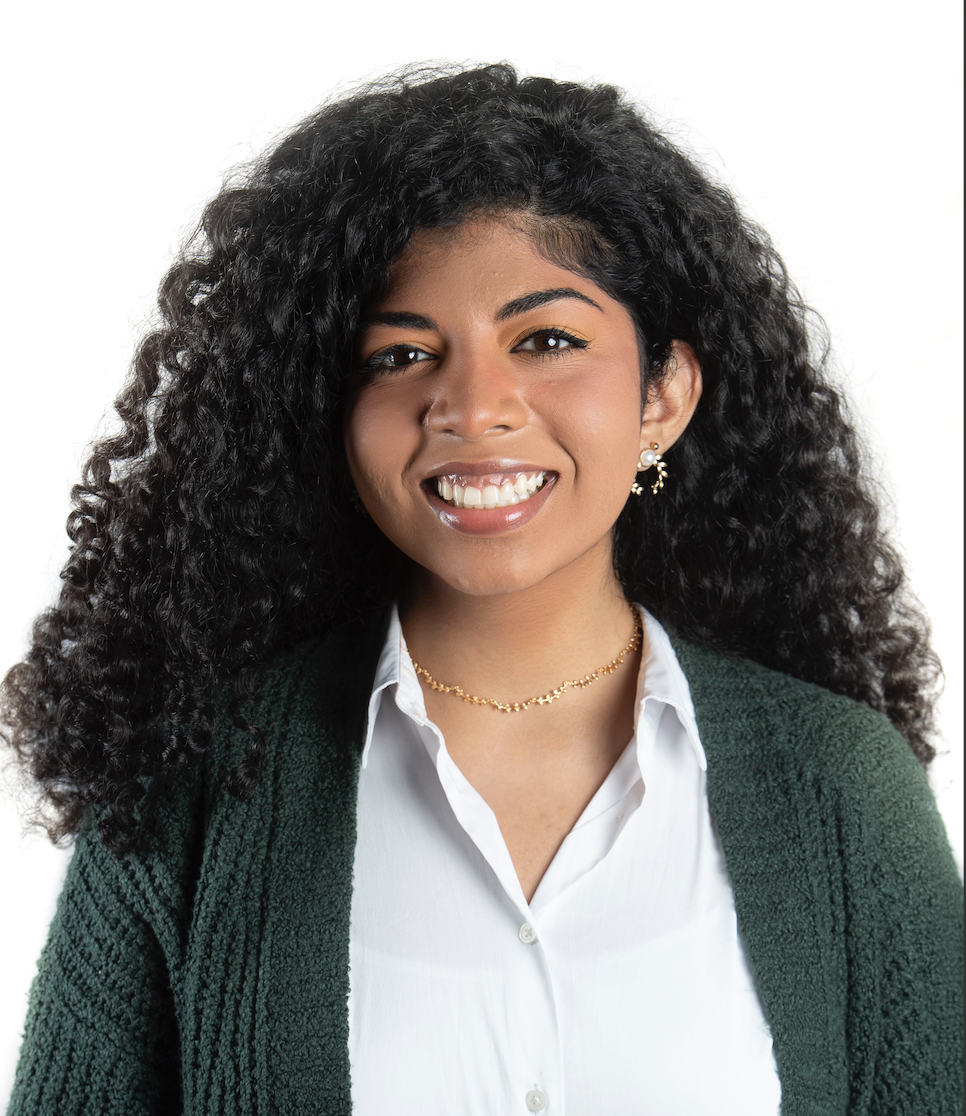
Ravikumar
:
My internship experience has taught me how to be a nimble reporter and an effective team player. I spent the summer after my junior year as a breaking news intern for
USA Today
in Los Angeles, California, where I covered breaking national news and wrote the occasional enterprise story. One of the stories I helped cover was that of the shooting at the
Gilroy Garlic Festival
in California. I had covered breaking news before, but I think that particular story taught me the value of going the extra mile as a reporter and communicating with reporters in other newsrooms to serve audiences all over the country.
What's the wackiest story you've worked on?
Ravikumar
:
I had a lot of fun writing this story. I noticed that this Facebook event to "raid" Area 51 was getting a lot of attention, and I asked my editor at USA Today if I could
write a quick story
about it. As I started writing it, I realized that my perspective as someone who grew up in Nevada helped me add in extra details that others might have missed — for example, this story noted that the Area 51 Travel Center about 90 miles outside of Las Vegas isn't just a combination diner and convenience store, but a brothel as well. It was such a weird and funny story, and I'm glad I got to write it.
|
|
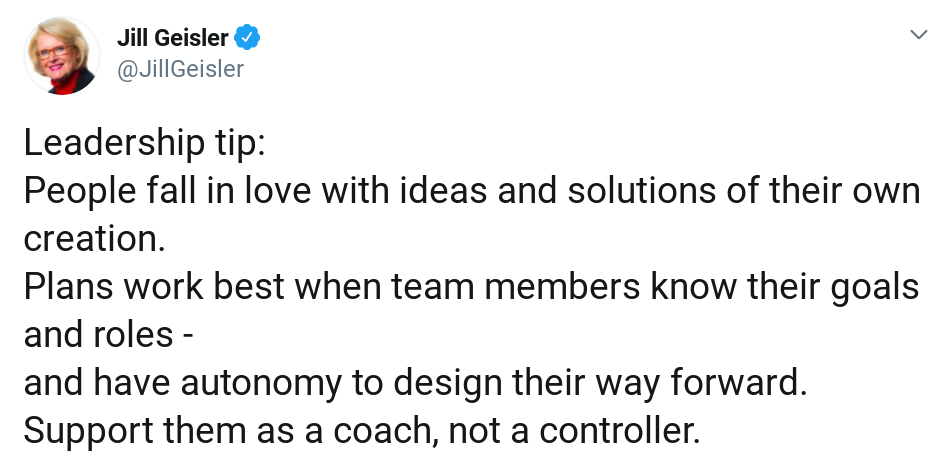
Advice from
Jill Geisler
, Bill Plante Chair in Leadership & Media Integrity, Loyola University Chicago, Freedom Forum Fellow in Women’s Leadership
|
|
|
Reaching for your phone first thing in the morning may be how you check in to your day. But
checking in with yourself
first thing should be part of your routine, experts say. How you do that will be specific to you, and
consistency is key
.
Among the health benefits to having a solid morning routine?
Less stress
. Here are a few tips for
focusing inward
for a few minutes.
|
|
RESOURCES
Other upcoming conferences include:
- NABJ/NAHJ, August 5-8
- AEJMC, August 6-9
- AAJA, August 9-15
- SEJ, Sept. 16, 17, 23, 30
- SND, September 18-October 1
- IRE, Sept. 21-25
- ONA, October 1-16
- ACP/CMA, Oct. 21-25
- NLGJA, October 23-25
- NAJA, Postponed until 2021
|
|
|
This newsletter is written & edited by the National Press Club Journalism Institute staff: Beth Francesco, Holly Butcher Grant, Jim Kuhnhenn, and Julie Moos.
Send us your questions and suggestions
for topics to cover.
|
|
|
|
|
|
|