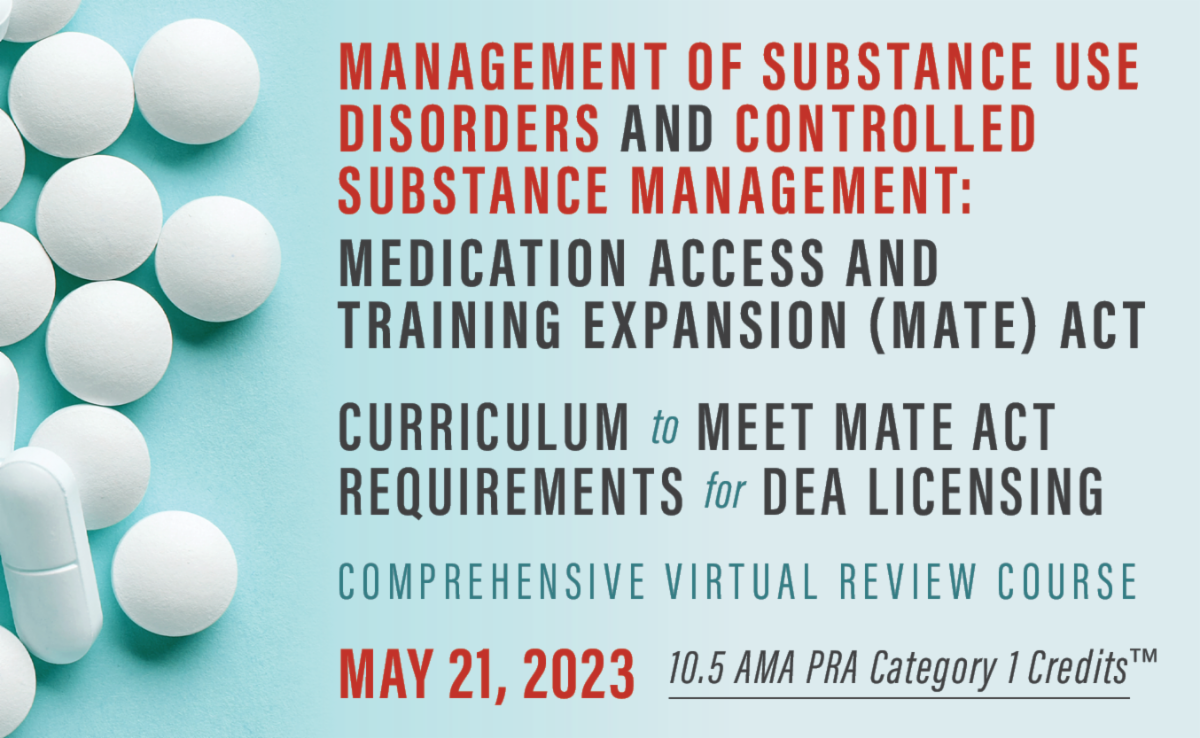
On December 29, 2022, the Consolidated Appropriations Act of 2023 enacted a new one-time, eight-hour training requirement for all Drug Enforcement Administration (DEA)-registered practitioners on the treatment and management of patients with opioid or other substance use disorders (Medication Access and Training Expansion (MATE) Act).
Beginning on June 27, 2023, practitioners will be required to check a box on their online DEA registration form—regardless of whether a registrant is completing their initial registration application or renewing their registration—affirming that they have completed the new training requirement.
The deadline for satisfying this new training requirement is the date of a practitioner’s next scheduled DEA registration submission—regardless of whether it is an initial registration or a renewal registration—on or after June 27, 2023.
This one-time training requirement affirmation will not be a part of future registration renewals.
In response to this need, ASIPP has developed the virtual review course Controlled Substance Management Virtual Review Course: Medication Access and Training Expansion (MATE) Act. This virtual review course will be held on May 21, 2023.
In addition to covering the required Curriculum to Meet MATE Act Requirements for DEA Licensing, it will also provide 10.5 AMA PRA Category 1 Credits™.
|
|
*Please note: Discounted room rate ends May 17, 2023* |
|
Recently, Dhruva, et al published an article on Long-Term Outcomes in Use of Opioids, Nonpharmacologic Pain Interventions, and Total Costs of Spinal Cord Stimulators Compared with Conventional Medical Therapy for Chronic Pain, showing no difference (click here to read the full article).
In response Drs. Manchikanti, Sanapati, and Hirsch sent a Letter to the Editor pointing out various issues related to this study and potential reasons (click here to read the letter).
|
|
The Office of Inspector General for the United States Department of Health and Human Services has conducted yet another audit on facet joint interventions, this is the third audit. There have been extensive audits from UPICs, SMRC, Nordian, and RAC, and MAC contractors.
In this study (click here to read), OIG looked at 120 sample sessions, with only 54 complying with Medicare requirements.
The overall estimated overpayments appear to be $29.6 million for facet joint interventions for an audit period of August 1 through October 31, 2021, with new LCDs in effect.
Obviously, there will be even more audits and there will be recoupment from multiple providers on these claims.
It is crucial that we follow appropriate algorithmic approach and utilize checklists to avoid such issues.
|
|
Evaluators gave chatbot the better rating for responses to patient queries by a nearly 4:1 ratio
The artificial intelligence (AI) chatbot ChatGPT outperformed physicians when answering patient questions, based on quality of response and empathy, according to a cross-sectional study.
Of 195 exchanges, evaluators preferred ChatGPT responses to physician responses in 78.6% (95% CI 75.0-81.8) of the 585 evaluations, reported John Ayers, PhD, MA, of the Qualcomm Institute at the University of California San Diego in La Jolla, and co-authors.
The AI chatbot responses were given a significantly higher quality rating than physician responses (t=13.3,P<0.001), with the proportion of responses rated as good or very good quality (≥4) higher for ChatGPT (78.5%) than physicians (22.1%), amounting to a 3.6 times higher prevalence of good or very good quality responses for the chatbot, they noted in JAMA Internal Medicine.
|
|
Overdoses involving heroin and oxycodone fell during this time
Drug overdose death rates involving fentanyl, methamphetamine, and cocaine increased from 2016 through 2021, CDC researchers said.
The age-adjusted overdose death rate involving fentanyl rose by 279%, from 5.7 per 100,000 standard population in 2016 to 21.6 per 100,000 in 2021, reported Merianne Rose Spencer, MPH, an epidemiologist in the Division of Analysis and Epidemiology at the CDC's National Center for Health Statistics, and colleagues.
Rates of overdose deaths involving methamphetamine more than quadrupled, from 2.1 per 100,000 in 2016 to 9.6 in 2021, and those involving cocaine more than doubled, from 3.5 to 7.9, respectively, they noted in Vital Statistics Rapid Release.
|
|
Virtual
ABIPP Part I; ABIPP Path - Combined DCCPM/CSM virtual exam; ABIPP Competency Exam in IPM; ABIPP Competency Exam in Regenerative Medicine
Memphis, TN
ABIPP Part II - Practical Portion; ABIPP Competency Exam - Practical Portion; ABIPP Regenerative Medicine Competency Exam - Practical Portion
|
|
Advisors said outcomes from an enriched enrollment study would not be broadly generalizable
FDA advisors recommended that the agency reconsider its planned postmarketing trial design to evaluate the long-term efficacy and tolerability of opioids in chronic pain patients.
"I don't think this really tells us anything about the most clinically meaningful question for this population, whether opioids are a better treatment than non-opioid analgesics or other approaches to treatment," said committee chair Brian T. Bateman, MD, MSc, of Stanford University School of Medicine in Palo Alto, California. "I think that's really where the agency's attention should be focused."
|
|
Physical activity (PA) is a promising intervention for substance use disorder (SUD), new research suggests.
Investigators reviewed 43 studies encompassing over 3000 patients with any SUD (excluding tobacco), and 75% reported a decrease in substance use following a PA intervention.
In addition, close to three-quarters of studies also showed improvements in aerobic capacity, and a little over 25% reported a drop in participants' depressive symptoms.
"The majority of studies show that physical activity during SUD treatment increases physical fitness, improves psychological health in terms of depression and anxiety, and decreases substance abuse, and no negative consequences were observed in any of the studies," study investigator Florence Piché, MSc, a doctoral candidate at the University of Montreal, told Medscape Medical News.
|
|
The suffering caused by exorbitant drug prices is all too clear for doctors to see
A large proportion of US adults who are prescribed Schedule II stimulants are simultaneously receiving other CNS agents including benzodiazepines, opioids, and antidepressants — a potentially dangerous practice.
Investigators analyzed prescription drug claims for over 9.1 million US adults over a 1-year period and found that 276,223 (3%) had used a Schedule II stimulant, such as methylphenidate and amphetamines, during that time. Of these 276,223 patients, 45% combined these agents with one or more additional CNS drugs and almost 25% were simultaneously using two or more additional CNS-active drugs.
Close to half of the stimulant users were taking an antidepressant, while close to one third filled prescriptions for anxiolytic/sedative/hypnotic meditations, and one fifth received opioid prescriptions.
|
|
ASIPP has been actively addressing recent coverage issues through letter correspondence to various agencies. The issues and letters include the following:
AIM published new guidelines effective 04/09/2023. Owned by Anthem, Inc (ANTM), the AIM guidelines are utilized by multiple insurers. ASIPP has addressed the guidelines with a comment letter on the guidelines for Appropriate Use Criteria: Interventional Pain Management. Our comments were related to paravertebral facet joint injection/medial branch nerve block/neurolysis/therapeutic facet joint interventions.
We are requesting LCD reconsideration requests to all of the Medicare Contractors for the LCD covering Facet Joint Interventions for Pain Management.
ASIPP immediate past president, Amol Soin, sent a letter to Cigna on February 7 addressing their Medical Policy Update on Peripheral Nerve Block Procedures (for trigeminal and occipital neuralgia) which considering them experimental, investigational, or unproven, with an efficacy date of April 18th, 2023. In the letter, we ask that the policy update restricting the use of peripheral nerve blocks be re-evaluated and modified. We recommended that these procedures continue to be covered and we find the characterization of these procedures to be experimental or investigational to be inaccurate.
|
|
- ASIPP Members Only Site Information - |
|
-
To log in for the first time you will need to click “forgot password” at the bottom of the login window.
- Check your email and then log in as directed.
-
If you have problems logging into your account, click here.
|
|
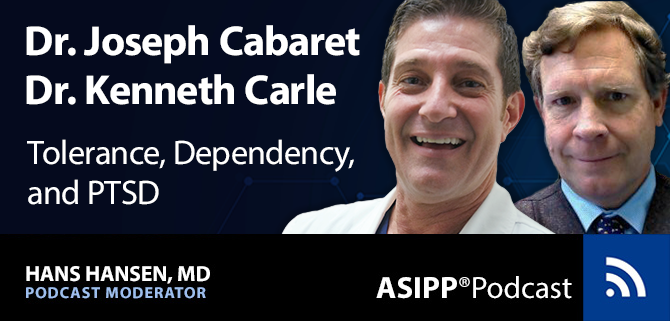
It is a pleasure to have Dr. Joe Cabaret return to the podcast because it’s not every day you get to hear from someone who is triple-boarded in anesthesia, pain, and addiction. The practice of pain medicine always has its difficulties—sometimes those difficulties involve simultaneously balancing pain, tolerance, and dependency. When you’re really trained and qualified to make the distinction between these three things, you’re better at balancing all of them. Dr. Cabaret not only understands pain, but he really understands addiction, so his approach to dealing with complex pain problems is especially effective. We also discuss central pain and its processing because, like it or not, most pain is processed through the central nervous system. That’s why we use so many different classes of medication—the Buprenorphines, Gabapentinoids, Pregabalins, and the like—we want to work in the central nervous system to help reduce the opioid load. Finally, we share some thoughts on the 2023 ASIPP (American Society of Interventional Pain Physicians) Annual Meeting.
We’re also welcoming a new guest to the podcast, Dr. Kenneth Carle, from Baltimore, Maryland. Dr. Carle is a practitioner of Interventional Pain Medicine who brings up several interesting talking points about the strategies we can use to help patients with PTSD.
|
|
Nearly 90% of brands were mislabeled, lab analysis shows
Nearly nine of 10 melatonin gummy brands were mislabeled, a laboratory analysis showed.
Of 25 gummy products analyzed, 22 (88%) were inaccurately labeled, with only three products containing an amount of melatonin within 10% of the quantity declared on the label, according to Pieter Cohen, MD, of Cambridge Health Alliance, in Somerville, Massachusetts, and co-authors.
One product did not contain any detectable level of melatonin but did contain 31.3 mg of cannabidiol (CBD), Cohen and colleagues reported in a JAMA research letter.
|
|
"BMI is trash. Full stop." This controversial tweet, which received thousands of likes and retweets, was cited in a recent Medscape perspective by one doctor on when physicians might stop using body mass index (BMI) to diagnose obesity.
Body mass index (BMI) has for years been the consensus default method for assessing whether a person is overweight or has obesity, and is still widely used as the gatekeeper metric for treatment eligibility for certain weight-loss agents and bariatric surgery.
But growing appreciation of the limitations of BMI is causing many clinicians to consider alternative measures of obesity that can better assess both the amount of adiposity as well as its body location, an important determinant of the cardiometabolic consequences of fat.
|
|
Pain Medicine Case Reports (PMCR) and Editor-in-Chief Alaa Abd-Elsayed, MD, PhD would like to invite you to submit case reports and case series to the PMCR journal. Your article will be published free of charge.
Open access journals are freely available online for immediate worldwide open access to the full text of published articles. There is no subscription fee for open access journals. Open access journals are no different from traditional subscription-based journals: they undergo the same peer-review and quality control as any other scholarly journal.
Interested in becoming a member of the PMCR Editorial Board?
Editorial board members are asked to review 2-6 manuscripts per year. Please submit your most up-to-date CV to sgold@asipp.org for consideration.
For more information or to submit your articles, click here.
|
|
| CASE REPORT |
Jordan Norris, BS, Nathan Esplin, MD, Rosh Bharthi, BS, Daniel Altman, MD, and Nestor d. Tomycz, MD
Abstract
BACKGROUND: New technologies for sacroiliac joint fusion (SIJF) have demonstrated improvements in pain and function. Sacral radiculopathy is a reported complication. We present a unique case of S1 radiculopathy after lateral transiliac minimally invasive SIJF. The patient provided Health Insurance Portability and Accountability Act (HIPAA)-compliant consent for the inclusion of their clinical information in this report.
CASE REPORT: A 40-year-old woman with SI joint dysfunction underwent right-sided SIJF. She reported resolution of her preoperative symptoms but developed new pain radiating to the leg. A revision procedure provided initial relief, but her pain returned. Further imaging demonstrated displaced bone, rather than a misplaced implant, causing a narrowed S1 foramen. An open S1 foraminotomy was performed to further decompress the foramen, improving symptoms, allowing her to return to her previous activity level.
CONCLUSION: This case describes a previously unrecognized cause of S1 radiculopathy after minimally invasive SI fusion and supports open foraminotomy with neuronavigation as a potential method for treatment.
KEY WORDS: Case report, chronic pain, complications, sacroiliac joint dysfunction, sacroiliac joint fusion
|
|
| RETROSPECTIVE STUDY |
Kai-Uwe Lewandrowski, MD, Alvaro Dowling, MD, Juan Carlos Vera, Eng, Jorge Felipe Ramirez Leon, MD, Albert E Telfeian, MD, PhD, and Morgan P. Lorio, MD
Abstract
BACKGROUND: Treatment of intermediate-stage painful degenerative disc disease is controversial, with few reliable options. Allogenic mesenchymal stem cells (MSCs)are an alternative to autologous stem cell transplantation. Allogeneic MSCs in the treatment of discogenic low back pain have some practical advantages, ranging from availability to ease of treatment in a procedure-room setting.
OBJECTIVES: To assess the efficacy and safety of allogenic MSC injection into painful lumbar intervertebral discs and associated clinical outcomes.
STUDY DESIGN: Retrospective observational cohort study.
SETTING: Private practice.
METHODS: There were 33 patients: 15 women and 18 men with an average age of 47.6 years. The patients’ average follow-up was 26.88 months Patients were treated with intradiscal injection of approximately 5 million allogeneic polyclonal MSCs in 1% hyaluronic acid derived from immunoselected umbilical cord stem cells. Patients were monitored for adverse event reactions. Clinical outcomes were assessed with reductions in the reported Visual Analog Scale (VAS) for back pain, the Oswestry Disability Index (ODI) scores, and the use of the modified Macnab criteria.
RESULTS: No patient required any additional treatments for low back pain stemming from the level treated with MSC injections. At a 2-year follow-up, the average VAS low back score reduction was 6.565 ± 1.619 and 38.333 ± 14.865 for the ODI (P < 0.001). Reported Macnab outcomes were excellent in 11 patients (33.3%), good in 19 (57.6%), and fair in 3 (9.1%).
LIMITATIONS: Our observational study is limited by patient selection, hindsight bias, and low patient numbers.
CONCLUSION: The results of our feasibility study suggest that the injection of allogeneic MSCs to treat patients with painful intermediate-stage degenerative disc disease has merit. No adverse reactions were observed. The authors recommend further study in a randomized prospective study setting with a placebo control group or a natural history study group of patients to solidify this research.
KEY WORDS: Allogeneic, mesenchymal stem cells, low back pain, degenerative intervertebral disc disease
|
|
| RETROSPECTIVE ANALYSIS |
Peter S. Staats, MD, Ricardo Vallejo, MD, PhD, Nicolas C. Gasquet, MPH, and Christine N. Ricker, MA
Abstract
BACKGROUND: Poorly managed chronic spinal pain encumbers medical resources and drives healthcare costs, suggesting a target for improvement.
OBJECTIVES: To determine how specialist-care pathways influence healthcare costs in the first year after a referral for chronic spine pain.
STUDY DESIGN: This was a retrospective cohort analysis of administrative claims from a large commercial health insurance provider, analyzing a 6-month baseline, a variable “pre-referral period,” and a one-year period of specialist care.
SETTING: US patients covered by private commercial insurers.
METHODS: Adult patients diagnosed with chronic, spine-related pain between July 2016 and February 2018 and under the active care of a specialist were eligible. Patients with neurological deficits or cancer-related pain were excluded. Patients were categorized based on sequence-dependent exposure to a pain specialist, a surgeon, or both specialties. Key measures were pain-related and all-cause medical resource use and costs and opioid prescription fills.
RESULTS: Of 306,080 eligible patients (mean age 61.6; 61.5% women), 13% saw a pain specialist, 71% a surgeon, 7% a pain specialist then a surgeon, and 9% a surgeon then a pain specialist. Referral to a pain specialist alone was associated with lower resource use and per-patient adjusted cost savings of $3,311 (pain-related) and $6,447 (all-cause) compared to patients referred to a surgeon alone. The pain specialist pathway was associated with increased indicators of prescription opioid use.
LIMITATIONS: Cohort design constraints temper the results’ generalizability, given the need to simultaneously examine specialty pathway and medical resource incurred over the same time period.
CONCLUSIONS: We observed meaningful savings in cost and resource use when chronic spine-pain patients were managed by pain specialists. Pain-management referrals should be an element of a thoughtfully designed care pathway.
KEY WORDS: Chronic spinal pain, pain management, care pathway, spine surgery
|
|
ASIPP is now in collaboration with Curi Medical Liability Program
Since this malpractice insurance program officially launched in November 2018, ASIPP has signed up hundreds of providers with an average savings of 30%. This is professional liability insurance tailored to our specialty and will stand up for us and defend our practices.
Curi is a full-service advisory firm that serves physicians and their practices. Their valued advice is grounded in your priorities and elevated in your outcomes. They are driven by a deep understanding of your specific circumstances in medicine, business, and life. To read a few important points to keep in mind about the program, including discounts, administrative defense, cyber coverage, aggressive claims handling, and complimentary risk management CME activities, visit our website.
|
|
ASIPP® has formed a partnership with Henry Schein and PedsPal, a national GPO that has a successful history of negotiating better prices on medical supplies and creating value-added services for independent physicians. Working with MedAssets, PedsPal provides excellent pricing on products like contrast media that alleviate some of the financial pressures you experience today.
|
|
ASIPP® is now offering our members the benefit of a unique revenue cycle management/ billing service.
We have received a tremendous amount of interest in the ASIPP® billing and coding program.
Click here to learn more about the negotiated rate for practices and more!
|
|
|
up-to-date news related to you, your practice, and your patients!
|
|
|
|
|
|
|