|
Written by Kieran Delamont, Associate Editor, London Inc. | |
EDUCATION
Abolish the business school?
A professor’s viral call to shut down business schools sparks a global academic debate
| | |
THERE IS AN oft-repeated form of joke among humanities majors (of which I was one) poking fun at the curriculums of our business school colleagues. The most repeated version might be something like this 2019 tweet: “Sometimes on campus you accidentally walk by a business class and the professor is writing ‘profit = revenue – costs’ on the board, and everyone is taking notes like it’s actual school.”
Everyone chuckles. Back to real book learning for the humanities and STEM students; the comparatively healthy salaries awaiting the biz school grads will more than comfort any bruised egos.
The haters got a boost this month, though, with a provocative essay in The New York Times from University of Cambridge business school professor Chris Marquis, who made a straightforward argument. “I teach at a business school,” the headline read. “It’s time to shut them down.”
Marquis’ argument was not that far off from the kernel at the centre of the campus joke — the premise that while all other disciplines of the academy have loftier, heady goals, business school puts profit at the heart of the curriculum, to the detriment of students and, argued Marquis, society at large.
The backdrop to his argument is that business schools are growing in popularity: nearly one in five U.S. undergrads majors in business. He then points to a 2022 study that found firms that appoint managers with business degrees tend to engage in more cost-cutting and wage reduction than firms without.
“Again and again, I have watched students abandon their altruistic intentions, instead becoming consumed by whether to choose careers in consulting or finance and who will land a summer internship at McKinsey or Goldman Sachs,” Marquis wrote.
He points out that before it was widely derided as a scandal, Enron was a popular Harvard Business School case study subject, still the most common teaching tool. “Rather than being vehicles for disinterested learning, as one might expect at a university, the case studies end up as instruments of reputation management.”
The argument had a lot of business types talking over the past couple of weeks, with some coming to Marquis’ defence, and many defending the institution. Queen’s University’s Wren Montgomery chimed in on LinkedIn, saying she now teaches a required sustainability course.
“I always say I feel like I am rescuing [students] from a cult,” she says about teaching the course, “and giving them permission to be themselves again.”
Others pushed back. Professor Christopher Stevens wrote in a letter to The New York Times that Marquis may just hate his business school. He assumes that “his experience as a faculty member at three of the most elite (and elitist) institutions in the world reflects the experience of professors and students at schools that look nothing like Harvard, Cambridge or Cornell.”
Of course, business schools are huge draws for some of the bigger schools in North America, and in Canada especially. Which is to say, they ain’t going anywhere anytime soon.
So perhaps the better discussion is about reform, as Franz Heukamp, dean of IESE Business School, wrote: “For me, the question is not whether business schools should exist, as Mr. Marquis suggests, but what kind of leaders they should educate, and how.”
| |
RECRUITMENT
The most prestigious role in AI has no job description
Everyone from Anthropic to tiny startups is hiring for the ‘member of technical staff.’ But does anyone know what it means?
| | |
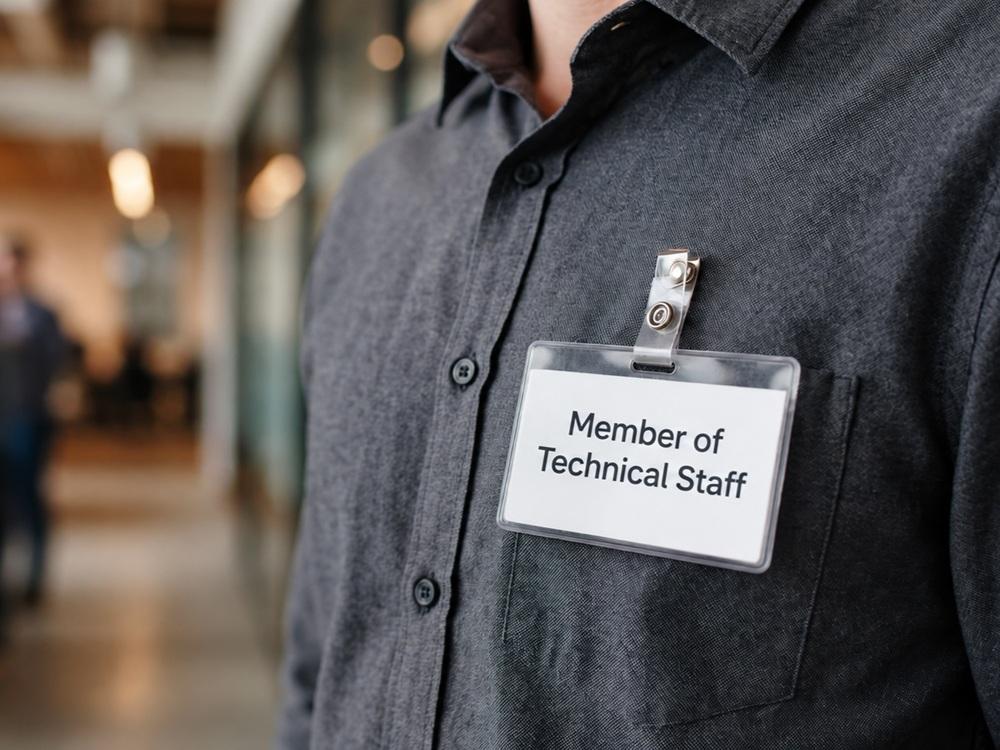
WHAT’S OLD IS new again in frontier AI labs — at least on the job title front, where an increasingly common new moniker is being handed out to what seems like just about everyone who works at a major AI company: ‘member of technical staff.’
The vague, not really illuminating job title has exploded in use at AI firms recently. Stanford researchers Nick Bloom and Gideon Slocum Moore ran some numbers and found that the phrase “member of technical staff” showed up on the LinkedIn pages of 39 per cent of employees at Anthropic, 31 per cent of employees at OpenAI and 26 per cent of xAI.
LinkedIn says their own data shows that hiring into ‘MTS’ roles grew 38 per cent in 2025, and is on pace to grow another 58 per cent this year. (It’s a well-paid title, too — typical base pay, LinkedIn said, is USD$223,000.) Other companies lean even harder on it, noted Revelio Labs: at Thinking Machines Lab, 75 per cent of the company have this same title.
The title originated at Bell Labs in the 1920s as a flat, egalitarian designation intended to highlight collective expertise rather than rigid hierarchical ranks like ‘junior engineer’ or ‘principal engineer.’
Similarly, many companies today are doing it for what they view as cultural reasons — creating a job title that “does not confer your seniority,” said Caelan Wilkie-Rogers, an economic analyst at Revelio Labs, speaking to HRD America. “I think part of it is to promote a culture where it’s like, we’re all just working on this product. It’s not about me. It’s kind of minimizing the self so you can focus on building the machine gods or whatever.”
Some, however, see corporate chicanery at work.
“What’s distinctive about it is that it’s not distinctive at all,” noted Elizabeth Eley, assistant professor of organizational behaviour at McGill University. “It’s hard for just anyone to understand what it is — which I think, frankly, [employers] kind of want. They want people to not really know exactly what the job title is. If you’re in the know, or you love the company, then you will apply.”
Others see it as a method to obfuscate salary transparency, since with the same title one can only guess at what your coworkers are making. Still others still see it as a flattening of the kinds of hierarchies that, whatever else you think of them, play a role in accountability.
Maybe, as historian Margaret O’Mara puts it, the job title is really of our time. “[It’s] coming at a time when the actual products that these companies are creating are undermining engineering skills and value,” she told The New York Times. Elsewhere, she notes the title “emphasizes collaboration, but it also de-emphasizes accountability.”
But, on the pro side, it also gives you one less thing to stress about. “Job titles can be a distraction,” wrote one staffer at ElevenLabs. “They remove attention from the outcomes of the work.”
| |
| |
Terry Talk: Will AI take our jobs? History says it’s the wrong question
| In this week’s Terry Talk, Ahria Consulting CEO Terry Gillis takes a longer look at the AI and jobs debate. Everyone seems worried that AI will take all our jobs. But haven’t we seen this movie before? When automation hit manufacturing in the early 1900s, people made the same prediction: machines would replace workers and jobs would disappear. AI is the next chapter of that transformation. And with an aging workforce and a persistent shortage of skilled people, it may arrive right on time. The role of leadership isn’t to protect every job that exists today. It’s to figure out what work humans should be doing tomorrow, and to make sure we all change with it together. | | | |
WORKFORCE
How political uncertainty is shaping hiring decisions
The political landscape has always been a part of doing business. But lately, Canadian employers have had a few more variables to consider
| | |
BLAME THE POLITICAL climate for the lack of new jobs out there, sates a new poll from Express Employment Professionals and Harris Poll.
According to the survey, some 60 per cent of hiring managers say the political climate affects their company, with two thirds of those saying it does so negatively, and around 14 per cent of companies that aren’t adding staff say they’re waiting to see what government policy does.
“Political instability creates an uncertain hiring environment and an unpredictable economy,” said Express CEO Bob Funk Jr. “While businesses can’t control these external pressures, thoughtful planning gives leaders the flexibility to make difficult decisions today while protecting the people and investments that drive future growth.”
What ‘political uncertainty’ means here is anybody’s guess, though. The survey was taken in late May of this year, about 90 days into the Iran war, so perhaps that climate was weighing heavily on Canadian businesses. Whatever the cause, the climate it describes is pretty much in line with what other business sentiment surveys are showing: there’s some sense of stability out there, but lots of confusing external factors are acting as a giant brake on growth.
“Most firms anticipate keeping staffing levels unchanged, often commenting that current levels are sufficient to meet expected demand. Several firms also expect automation and other efficiency improvements to raise productivity, allowing them to meet increases in sales without adding workers,” reads a more recent Bank of Canada survey. Businesses are dealing with both labour shortages and spare capacity, and tariffs are making it all a lot harder to navigate.
But not all are complaining. About 20 per cent of the businesses surveyed by Express said the political climate has affected their business positively. There are, it suggests, a decent number of businesses out there with a bit of a tailwind. And the BoC found much the same: the firms that do plan to add staff “generally reported improved demand, often linked to public spending or natural resources.”
| |
REMOTE WORK
The boss is in
Meta’s massive deal for Mark Zuckerberg sends a clear message: even tech billionaires aren’t above showing up for work
| | |
|
MARK ZUCKERBERG, OF Facebook/Meta fame and notoriety, has had an interesting relationship with remote work. He largely ran the company from his compound home in Hawaii through the pandemic, even when Meta employees were required to be in the office three days a week.
Now, with a potential billionaire’s tax being voted on by California voters, he’s been talking about leaving again to live out of state, hoping to avoid what could be an estimated one-time $10-billion tax bill — much to the chagrin, it seems, of Meta’s board of directors, which said in securities filing it wants his “continuing presence at the company’s headquarters.”
And how did they resolve it? They cut him a deal giving him roughly $20 billion in stock he can sell right away to keep him in the office. (Actually, it only requires him to live in the same state as Meta’s headquarters, but still.)
The deal, as many tech founder compensation deals are, is complicated, and tied to stock values and other financial manoeuvres generally designed to offset tax burdens (officially, Zuck gets a $1/year salary). But the general gist of it — a big fat payout — is, in light of the in-person work aspect, being read by some as a bit of a statement on remote work.
The deal, wrote Business Insider’s Sarah Needleman, “speaks to a common belief that has driven return-to-office mandates: the best work happens when people — including senior leaders — are physically together.” Some executives are recognizing that leaders can’t be seen imposing one set of rules on the grunts while they run their companies from Hawaii.
According to the filing, Zuckerberg recognized this himself, telling the board that a move out of state “would be public and inevitably noted and commented upon by company employees,” and might “raise questions for management of the company going forward.”
If anything, it proves that executives, who seem to mostly be very serious about RTO, are at least going to have to walk the walk they’re making everyone else walk.
“You’re not going to question why you’re working long hours if you actually can see the leader doing the same,” said co-founder of FanFeed Cole Rubin. Or, as Bill George, former CEO of Medtronic, put it, “You’ve got to be there if your employees are there.”
Sure. But as you might be thinking as you’re pushed back into office, a cool $20 billion wouldn’t hurt either.
|
| | | | |