May is National Bike Month, promoted by the League of American Bicyclists and celebrated in communities from coast to coast. Established in 1956, National Bike Month is a chance to showcase the many benefits of bicycling — and encourage more folks to giving biking a try.
Bike to Work Week will take place May 17-23, 2021 and Bike to Work Day is on Friday, May 21.
|
|
|
|
|
May is National Motorcycle Safety Awareness Month |
When spring is in the air, motorcycles are everywhere. Do you long for the freedom that comes with riding on the open road? Then it's critical to respect your machine and improve your skills throughout your lifetime.
But that's only half the story. Motorists interested only in four-wheeled vehicles still have a major responsibility in keeping motorcyclists safe on the road.
|
|
|
Projects Start with People
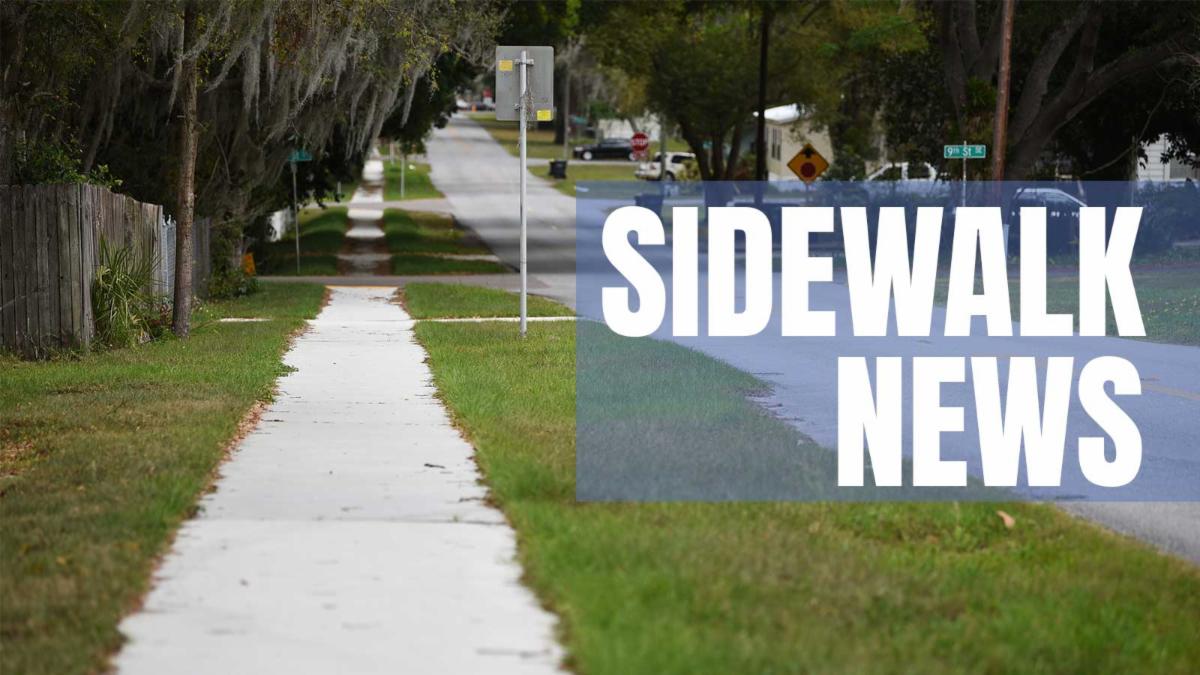
Polk County’s Sidewalk Advisory Committee started with one person. A teenager died after being struck by a van while walking to school one morning. There was no sidewalk along the road. The grieving family asked Polk County for a new sidewalk to give students a safer route to school. Their request prompted the Board of County Commissioners to establish the Sidewalk Advisory Committee with resident appointees from each commissioner district working with county staff to prioritize new sidewalk projects for funding.
Most public requests for a new sidewalk reflect a personal experience or need. Frequently, people tell stories of “near-misses” and “close-calls.” Just as often, requests are suggested with the safety of other people in mind.
Pick a sidewalk anywhere in Polk and you’ll see a story about people. People who wanted to give kids a better, safer walk to school. People who needed access to a transit stop to get to work, a doctor’s appointment or the grocery store. People looking for recreation and walking routes to parks and athletic fields.
Sidewalks are needed where people live, learn, work and play.
Need a sidewalk? We have people for that. Call Polk County at (863) 535-2230.
Sidewalk Advisory Commitee Facts:
- Since April 2015, the Sidewalk Advisory Committee has evaluated 319 requests for 161 miles of new sidewalk across Polk County.
- In that time, 55 sidewalk projects totaling 19 miles and have been constructed at a cost of $7.3 million.
- 13 new sidewalk projects (about 18 miles and $4 million) are still pending construction and are among the most complicated and costliest projects funded to date.
- The average new sidewalk project is about 0.34 miles long and costs approximately $133,000.
- Many SAC projects require extensive and costly new drainage installations or modifications to site new sidewalk in the available right-of-way area.
- SAC project drainage costs frequently exceed the cost of the new sidewalk installed.
- Curbing, ADA features, transit stop pads, aluminum handrail, pedestrian crosswalks and push-button beacons are among other costs associated with new sidewalk projects.
|
|
TENOROC HIKING TRAIL
Did you know that the name Tenoroc spells Coronet backwards? The Tenoroc hiking trail is the site of a former Coronet Mining operation that began in the 1950s. The Tenoroc Fish Management area spreads over 1,000 acres and includes both unreclaimed and reclaimed mining property. The mostly flat trail extends 39 miles throughout this vast area. This multi-use trail can be enjoyed for hiking, bicycling and horseback riding. The trail begins at Picnic Lake and travels past ponds and restored habitat, offering opportunities to see numerous birds, reptiles and mammals.
The property was last mined in 1977 and donated to the Florida Department of Natural Resources in 1982. The large borrow pits have been converted into deep water fishing areas. East of Lakeland, the trail is located at 3829 Tenoroc Mine Road, off SR 659 (Combee Road), 3.5 miles north of US 92, or 2.5 miles south of I-4 in the Tenoroc Fish Management Area.
Watch the video below to learn more!
|
|
PROJECT HIGHLIGHT - LAKE ALFRED |
There are several construction projects either underway or about to start in the Lake Alfred area.
The Florida Department of Transportation has begun the resurfacing of Interstate 4 between State Road 33 (Exit 38) and CR 557 (Exit 48). In addition to resurfacing the highway, improvements will be made to the guard rails, roadway signage and pavement markings, as well as upgrades to the road shoulders and the installation of traffic monitoring systems. Construction is expected to be completed by early 2023.
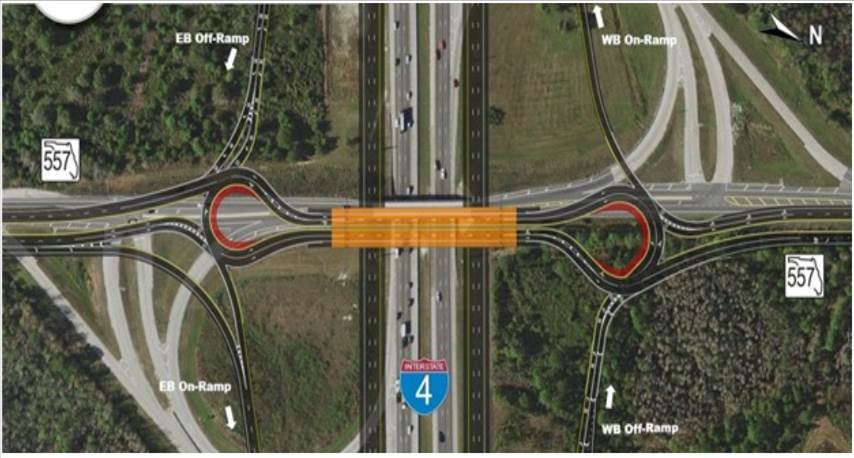
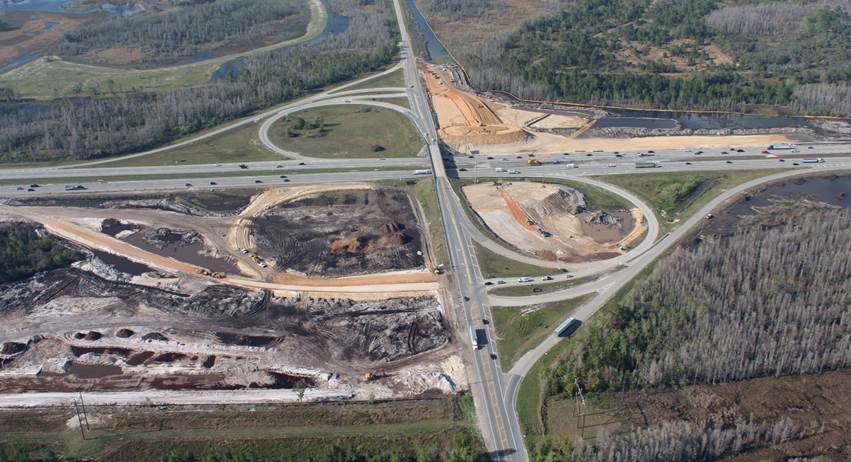
FDOT has started reconstructing the Exit 48 interchange at Interstate 4 and CR 557. The current configuration dates back to when I-4 was constructed in the mid-1960s through Polk County when the interstate was only four lanes. The $70 million project will replace the existing figure-eight pattern with a new diamond design which will include teardrop roundabouts instead of traffic signals. The new exit ramps will be much longer. This will allow for a more gradual decrease in speed when exiting the Interstate.
The existing two-lane bridge over Interstate 4 will be replaced with a new four-lane overpass and will be wide enough to accommodate the planned widening of I-4 from six to 10 lanes. A wildlife crossing will be added underneath the Interstate, on the east side of CR 557, in the 15,000-acre Hilochee Wildlife Management Area that lies on both sides of I-4. FDOT anticipates that construction will be completed by 2023.
Still a few years away, Polk County will be widening CR 557 between Lake Alfred and Interstate 4. This six-mile project will tie into FDOT’s project underway at exit 48. Traffic has nearly tripled on this road in the last 15 years, and the road’s level-of-service is currently failing in the evening peak hours. More frequently the road is used as an alternative to US 27 to access Interstate 4 from the Winter Haven area. The county is currently purchasing right-of-way and construction is planned to begin in 2023 at a cost of approximately $88 million.
|
|
|
 |
Name: Julia Davis
Title: Senior Transportation Planner - Transit
What do you do at Polk TPO?
I write plans and reports which help Citrus Connection apply for grant funds so they can provide service. And, I take aerial photos.
How long you have been with the TPO:
Four years
The best job you ever had (prior to coming to the TPO) and why: I worked with the Southwest Florida Regional Planning Council under the direction of an amazing executive director and learned so much about urban planning and diplomacy and fine-tuned my public speaking skills there.
Greatest professional achievement: Winning the Florida Commission for the Transportation Disadvantaged’s 1996 Designated Official Planning Agency of the Year award, on behalf of the SWFRPC, for my efforts to preserve the Florida Transportation Disadvantaged Planning Program.
Hobbies: Traveling, homesteading in Alaska, camping, hiking, nature photography, making costumes, attending festivals and watching movies.
Favorite movie: I was a film-making major in college until I switched to Urban Planning, so I have a lot of favorites.
Serious Film: The Good the Bad and the Ugly
Great Movie: The Sting
Funniest Movie: (short clip) Cat massaging/hypnotizing the dog so cat can steal the dog’s biscuits.
Favorite transportation-themed movie: Planes, Trains and Automobiles
Last book read or currently reading: Just read: “Love in the Time of Cholera,” by Gabriel Garcia Marquez. About to start: "The Broken Earth Trilogy," by N. K. Jemisin
How or why did you get into the transportation planning field?
I used public transportation while growing up and wanted to plan transit routes. It took a while to find a major which would support that. I switched from film making to urban planning.
|
|
|
|
What is SunTrax?
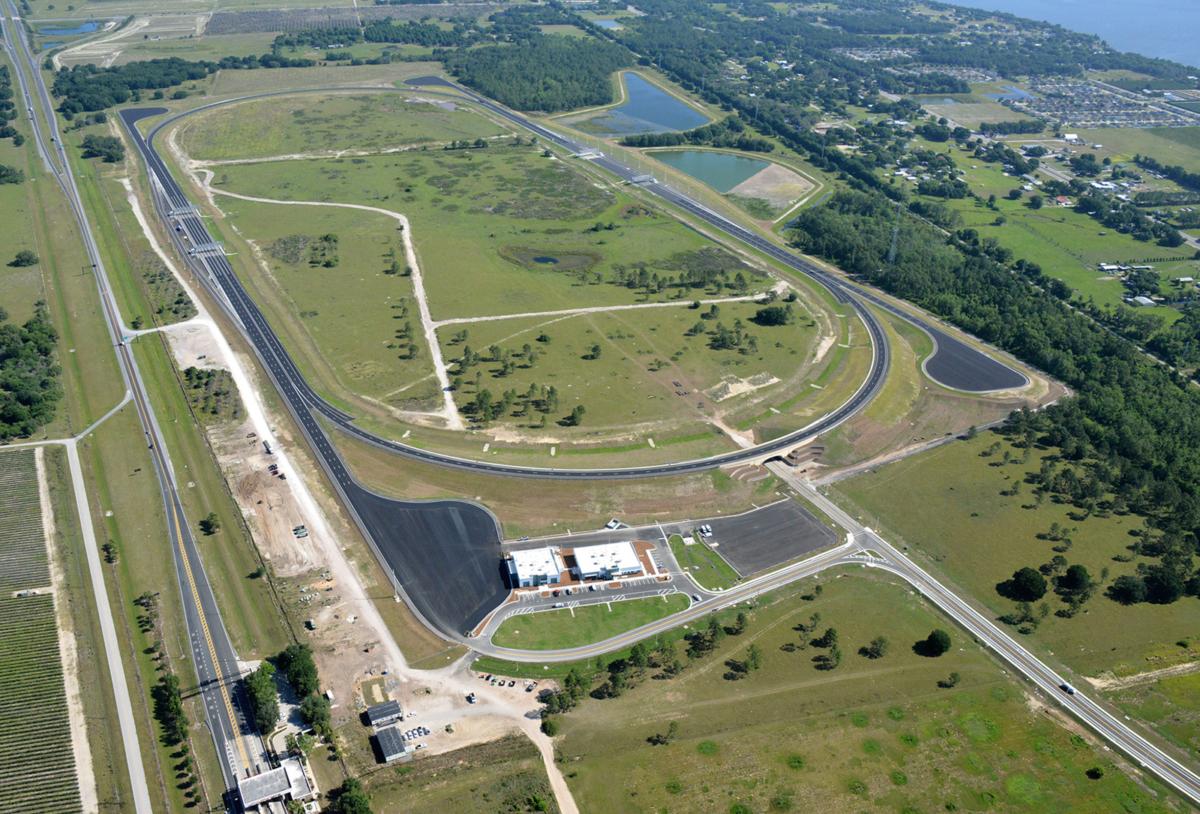
SunTrax is a large-scale, cutting-edge facility being developed by the Florida Department of Transportation and Florida’s Turnpike Enterprise, dedicated to the research, development and testing of emerging transportation technologies in safe and controlled environments. Situated on a 475-acre site, with a 2.25 mile oval test track around a 200 acre infield, the facility will be the only autonomous vehicle testing site with multiple simulated transportation environments in the southeastern United States.
Transportation technology continues to evolve at a rapid pace. The Polk TPO anticipates that the means of mobility considered to be automated, connected, electric and/or shared-use (ACES) will have an impact on the TPO’s existing and future transportation systems.
Individuals and businesses alike are using more advanced technology in their transportation modes, whether it be higher levels of automation in personal vehicles, bike or scooter share programs, or app-based rideshare networks. The Polk TPO considers these advancements and their affects on the existing transportation system to plan for and support them in the future.
The FDOT developed guidance for ACES planning in September, 2018 that the TPO is using for guidance throughout the community and region. Polk is among national leaders in the space of ACES technology as the home of SunTrax.
|
|
|
|
New Infrastructure Plan Could Expand Amtrak Services in Florida
Amtrak is seeking $80 billion of the funding proposed by President Joe Biden as part of his American Jobs Plan. That plan seeks to shore up America’s aging infrastructure system. Amtrak would use the funding to facilitate rail line growth to 2035 including providing more connectivity and an affordable travel option for Floridians. Amtrak currently has twice daily train service from Central and South Florida to New York City. Its popular Auto Train, which allows passengers to bring their vehicles, runs daily from Sanford, Fla. to Lorton, Va.
Amtrak hopes that by securing federal funding it can grow its infrastructure out from the Jacksonville, Miami, Orlando and Tampa hubs. Expansion could also include the reopening of a portion of the suspended Sunset Limited route which ran from Los Angeles, Calif. to Orlando. It now ends in New Orleans but was suspended in 2005 due to damage incurred by hurricane Katrina. Stops along the route included Mobile, Ala.; Pensacola, Tallahassee and Jacksonville. A 2016 inspection trip between New Orleans and the east coast of Florida indicated massive support from communities and elected officials for reopening the route. A 2017 Amtrak ridership report indicated reestablishing the line could produce an annual roundtrip ridership of 153,900 between New Orleans and Orlando with a stop in Mobile.
A partnership with the state is needed to make this expansion a reality as well as a working relationship with The Southern Rail Commission, Gulf Coast Rail Service Working Group, Florida Gulf and Atlantic Railroad and CSX Transportation.
|
|
|
REASONS FOR PAVING ROAD SHOULDERS
AN ODE TO THE PAVED SHOULDER
A few weeks ago, I had a flat tire at night, in a rainstorm and on a high-speed road curve. Like many roads in Polk County, it didn’t have paved shoulders. The average driver will have five flat tires in their lifetime. For me, no paved shoulder within sight meant that there was no place to put the car jack without it sinking into the mud. Had it been on the driver’s side, it would have meant squatting in the roadway to jack up the car. We have roadside service, but they were two hours away and would have the same issues.
This is the first installment on why we should require paved shoulders. Next’s month’s column will continue with my very lucky end to my unlucky, although not atypical, story.
Paved shoulders provide the following benefits:
- 71% reduction in crashes between autos and pedestrians walking along the roadway
- 15 to 75% reduction in head-on crashes
- 15 to 41% reduction in sideswipe crashes between vehicles
- 23% fewer single vehicle crashes by widening paved shoulder from 3 to 8 feet
- Fewer rear-end collisions at side streets and commercial driveways
- Lower car insurance rates due to fewer total crashes
- Traffic at intersections can move out of the way of emergency vehicles, improving emergency response times.
- Lower homeowners’ insurance rates due to faster emergency response times
- Roads with shoulders need fewer repairs, which results in savings on road maintenance.
- Roads with shoulders have fewer potholes, which results in less repairs to personal vehicles.
- Freight trucks have more room to turn.
- Less abrupt right turns off busy roads onto side streets and commercial driveways
|
|
|
Polk Transportation Planning Organization | www.PolkTPO.com |
|
|
|
|
|
|