Spotlight on Quebec Ambassadors:
Seeking Access to Innovation
|
|
It is with great pride that Myeloma Canada was at Quebec’s National Assembly on November 28, along with several members of our community, to meet with eight MPs from all parties.
The purpose of this Awareness Day was for Quebec MPs to recognize the policy issues surrounding clinical trials initiated by researchers in hospital settings. This constraints negatively affect access to trials for Quebec patients.
|
The members of our community that joined us, all of whom have myeloma, had personal reasons for wanting to participate.
Whether it was to talk about myeloma’s impact on their lives, their hopes for the future of myeloma research, or the importance of treatments in their lives, each shared their story with passion.
|
|
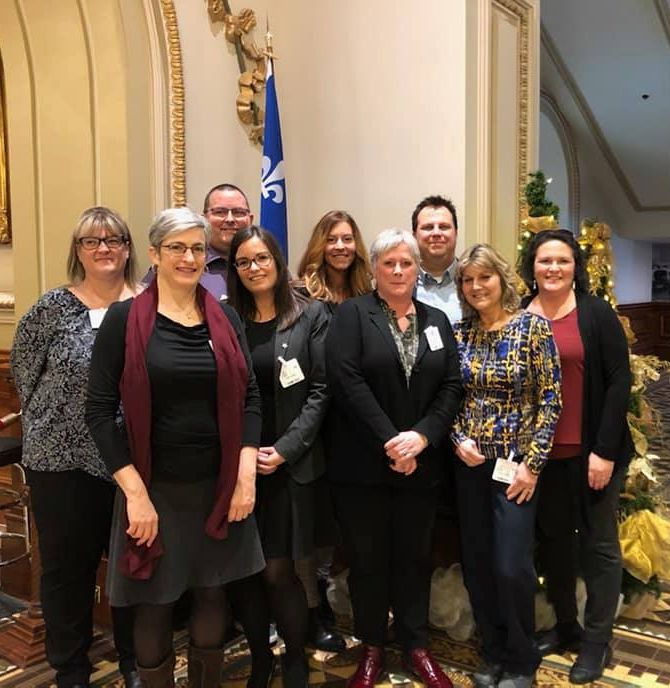
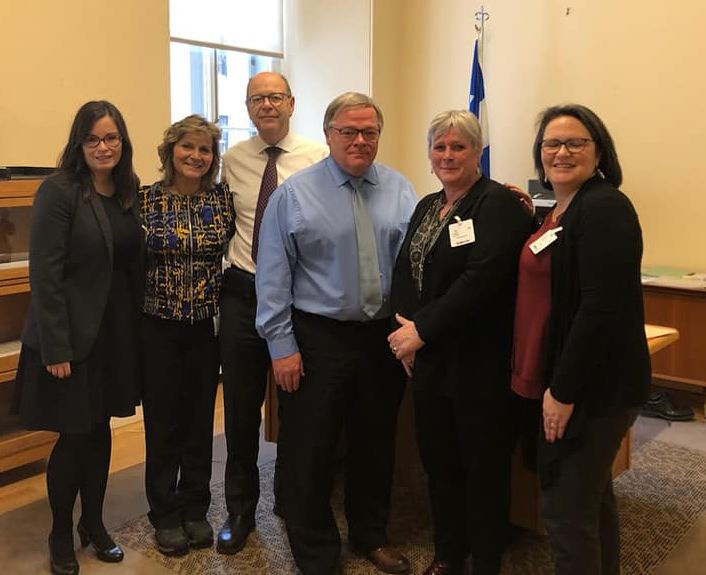
From left to right: Chantal Tardif, Véronica Gill, Daniel Sarrazin, Jessy Ranger (Communications Coordinator, Myeloma Canada), Vénus Bélanger, Martine Elias (Executive Director, Myeloma Canada), Jean-François Couture, Manon Veilleux, and Julie Martel.
|
|
Keep reading to discover why some of our Quebec ambassadors participated in this Awareness Day:
|
|
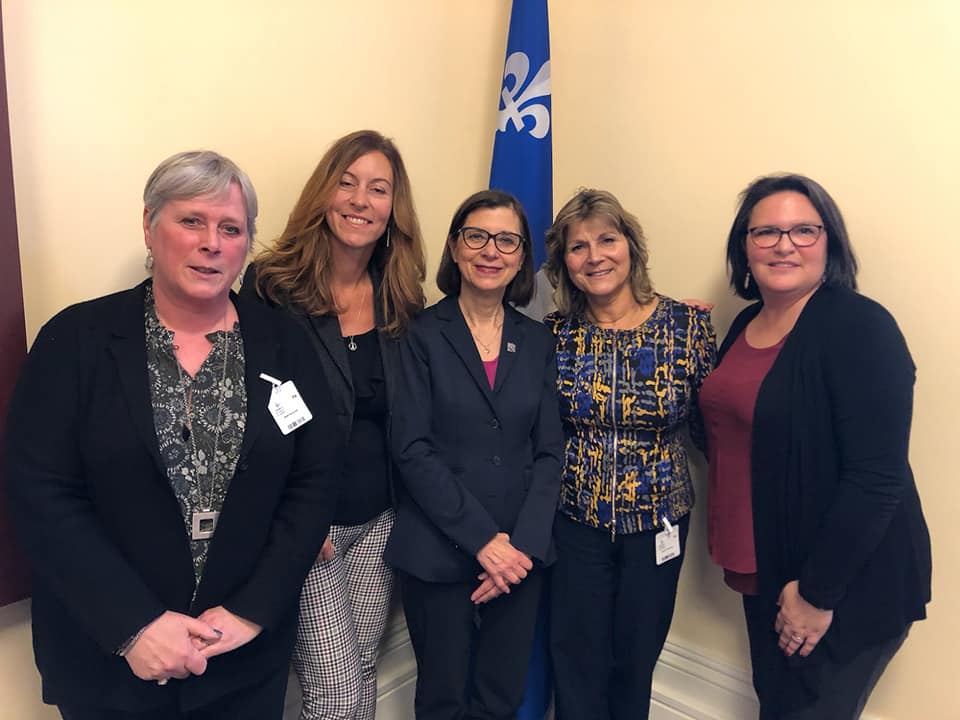
From left to right: Martine Elias (Executive Director, Myeloma Canada), Vénus Bélanger, Danielle McCann (Minister of Health and Social Services), Manon Veilleux, and Julie Martel.
|
|
"I have been living with myeloma and its impact since 2003. My diagnosis was confirmed in 2005, after two years of analysis and testing. At the time of the diagnosis I was given between 1 and 4 years to live. I was young and had to stop working so I could put all my energy into healing. I do everything I can to stay in shape, but myeloma remains present in my body and has taken its toll. I’ve been lucky up until now, but I know the time will come when chemo treatments will be required again.
My oncologist reminds me that there is a good chance that with research, a cure may be found for this disease. I know that my life expectancy depends on the number of available treatments. Each myeloma case is different. What will be the right treatment for me?
My only wish is that we have access to all possible treatment options. It’s unfortunate that we have to fight for proper care."
|
|
"Father of two daughters aged 9 and 12, I have been living with myeloma since April 2017. While my cancer is related to my profession as a firefighter (recognized as an occupational disease by the CNESST in 2016), people from all walks of life can be affected by this cancer.
An early diagnosis program can, and should, be put in place to detect multiple myeloma more quickly. This would increase the positive response rate to treatments, as well as the survival rate for this cancer that remains incurable.
An early diagnosis program and an increase in funds allocated to research could help us find a cure for this disease.
My involvement within the myeloma community and with all Quebec firefighters is my way of supporting patients until we find a cure."
|
|
From left to right: Christine St-Pierre (National Assembly member, Quebec Liberal Party), Jessy Ranger (Communications Coordinator, Myeloma Canada), Jean-François Couture, Chantal Tardif and Daniel Sarrazin.
|
|
From left to right : Jean-François Couture, Vénus Bélanger, André Fortin (National Assembly member, Quebec Liberal Party, Official Opposition Group Critic for Health and Social Services), Véronica Gill, Martine Elias (Executive Director, Myeloma Canada).
|
|
"I am a single mom of two young adults and was back at work one year after my autologous stem cell transplant. Experiencing significant mental and physical fatigue since my treatments, I am currently working part-time, and the financial burden weighs heavily.
I am fortunate to have tremendous support from my family, my parents (even if they are getting older), my kids, my circle of friends and my colleagues. It is not easy to live with an incurable disease, which is at times aggressive, unpredictable and inevitably recurrent. Some treatment combinations are not possible for me (I have an intolerance to bortezomib) and so, it must be replaced by others.
For the well-being of patients, it is imperative that we act on the inequities that remain between provinces. Access to treatment is essential."
|
|
"If I could be granted one wish, it would be to streamline bureaucracy surrounding oncology and for decision makers to remember the human being behind every cancer.
Knowing that each cancer is different, and every person is affected by cancer differently, why do we insist on giving everyone the most popular and least expensive "recipe"?
Seeing how quickly I am going through available treatments, I understand that one day research protocols will be the best, and maybe only option, for me to stay by my family’s side as long as I can... I would like to see the most promising protocols implemented in Quebec as is the case in other provinces. I don’t ever want to be faced with the decision of having to move to another province simply because Quebec did not earn its place in oncology. I want to be able to focus on healing and spending as much time as possible with my family."
|
|
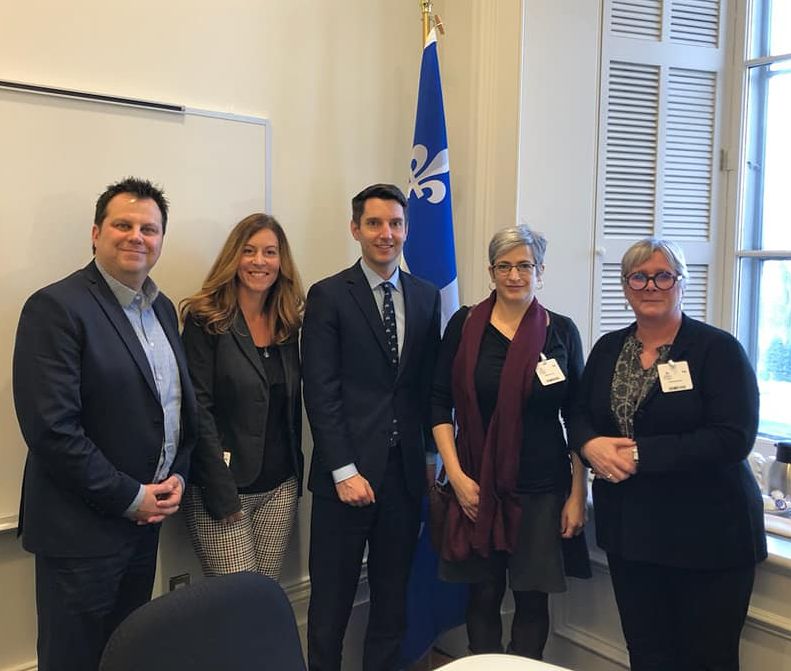
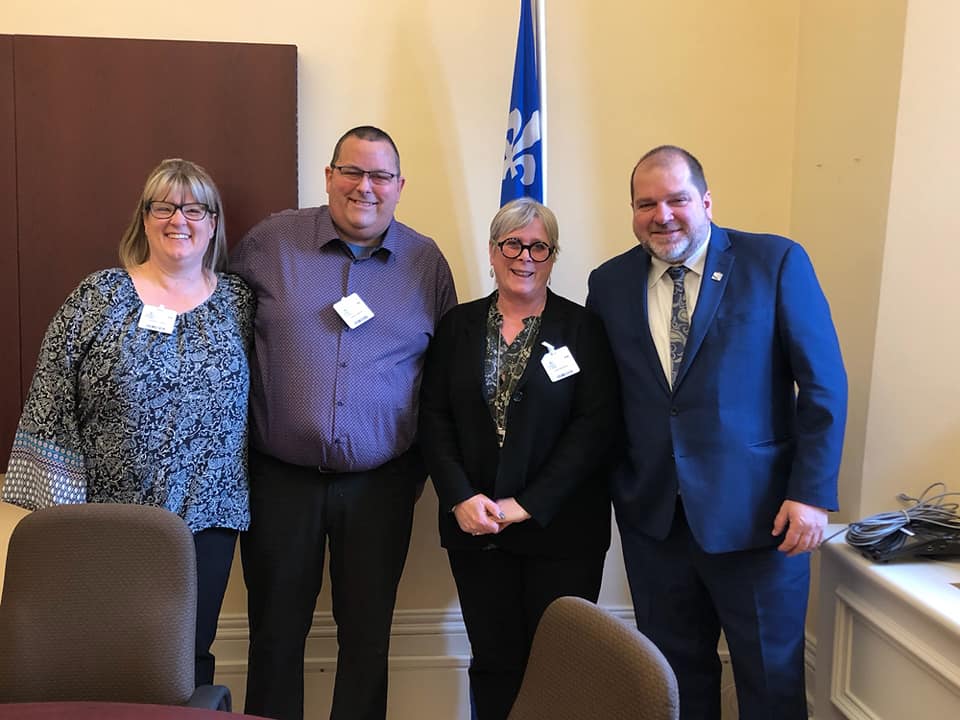
From left to right: Jessy Ranger (Communications Coordinator, Myeloma Canada), Manon Veilleux, Richard Campeau (National Assembly member, Coalition Avenir Québec), Luc Provençal (National Assemble member, Coalition Avenir Québec, Chair of the Committee on Health and Social Services), Martine Elias (Executive Director, Myeloma Canada) and Julie Martel.
|
|
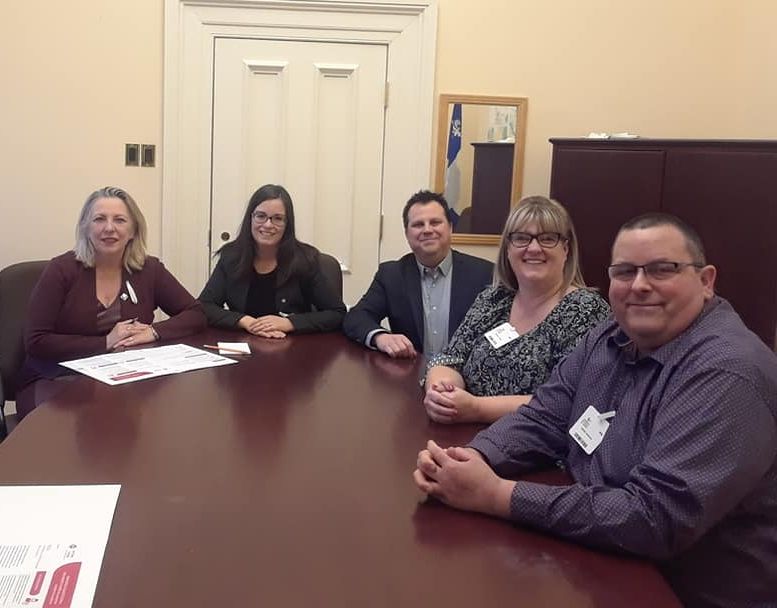
From left to right: Chantal Tardif, Daniel Sarrazin, Martine Elias (Executive Director, Myeloma Canada), and Harold Lebel (National Assembly member, Parti Québécois, Third Opposition Group Critic for Seniors and Informal Caregivers).
|
|
"Myeloma completely changed our lives. Diagnosed at the age of 43, I had to quit my job because of the side effects of treatments on my brain and my inability to concentrate. My wife Chantal took care of all the paperwork and medical follow-ups and so, she also had to stop working. Chantal was by my side every step of the way, supporting me when I was unable to take care of myself, as was my daughter, who showed great strength of character by being brave.
Healthcare professionals do as much as they can with the means available to them.
Great efforts are being made to support myeloma patients, but more needs to be done to support their loved ones. The caregiver is ESSENTIAL to a patient’s healing process. No one takes care of
their
health and we must help them. Without caregivers, patients would quickly become a burden on the healthcare system."
|
|
Regardless of the reason, it’s so important to speak up
and defend your rights.
Your reason is your cause! Never hesitate to share your story!
You never know where it might lead.
|
|
We would like to thank Véronica Gill, Julie Martel, Vénus Bélanger, Manon Veilleux, Jean-François Couture, Daniel Sarrazin and Chantal Tardif for making this day a success. A special mention for Danny Wade who unfortunately wasn’t able to join us, but was definitely present in spirit!
|
|
Follow us on social media for the most up-to-date information and resources:
|
|
|
|
|
|
|