Please circulate this Update to all Governors. Thank you. | | |
In this edition:
- A message from the Director of Education
- Senior Leaders' Briefing
- Inspection Updates: SIAMS
- New to the SIAMS Framework
- Governor Briefing: SIAMS Update
- Inspection Updates: Ofsted
- New Chair of the Diocesan Board of Education
- Enhanced Service Plan 26/27
- Restrictive Interventions and Reasonable Force: Updated DfE Guidance
- Chair of Governors' Network
- Making Changes in Church Schools and Academies: Diocesan Guidance Update
- Parental Complaints
- Right of Withdrawal from RE and Collective Worship
- Admissions
- Governor Briefing: The Academy Strategy
- Sustainability of School Leadership
- Heads and Chairs Working Together for Strong Governance
- Working Together to Safeguard Children 2026 – Key Changes
- School Leaders' Conference 26
- Additional Updates
| | |
A message from Simone Bennett,
Diocesan Director of Education
Dear Governor Colleagues,
As we begin the spring term, I hope the Easter break offered some time to rest and reflect. Spring is a season of renewal and steady growth. Across our schools, this is often seen quietly as routines settle, confidence builds and attention returns to the daily work of education.
As volunteers within our Diocese, your role is central to this shared work. Much of what you do is not always visible, but it makes a real difference. Your time, judgement and care help ensure our schools remain places where children and young people are supported and able to flourish. Thank you for all you continue to offer at a time when the pressures on schools and those who govern them remain significant.
This Governor Update brings together key information for the term ahead along with opportunities to stay connected and strengthen practice. I would particularly encourage you to note our forthcoming Senior Leaders’ Briefing on Wednesday 23rd April, which remains an important way of keeping in touch with national and diocesan developments.
The Enhanced Service Plan for 26/27 has now been launched and we encourage governing boards to ensure their school is signed up. The plan reflects what schools and governors across the Diocese tell us they value; trusted support and timely advice. In a context of financial challenge and growing complexity, our commitment to working together continues to matter greatly.
Planning is also underway for the School Leaders’ Conference in November, hold the date or book now. We look forward to sharing more details in due course.
Thank you for the integrity and dedication you bring to your governance roles. We deeply value your service and look forward to continuing to work alongside you this term.
I hope to see many of you at the Senior Leaders’ Briefing.
With every blessing,
Simone
| |
| |
Senior Leaders' Briefing
Thursday 23rd April 5 pm - 6 pm
FREE to schools in the ESP
A termly meeting for senior leaders, including governors, to update them on national, local and diocesan matters. An excellent opportunity to keep up to date and network with colleagues from across the diocese.
Please note that you will need to enrol even if you booked last time.
| | | | |
Inspection Updates
SIAMS
As we move through the academic year, a clear picture is emerging from SIAMS inspections carried out so far across the diocese. Evidence from inspections between autumn 2025 and spring 2026 points to some strong practice in our schools, with the best schools demonstrating the daily lived impact of being a church school.
Common strengths identified across inspections
Inspectors most frequently note the following strengths:
-
A clearly articulated Christian vision that is theologically grounded and actively shapes decision making, curriculum design and daily practice. In the strongest examples, this vision is well understood by pupils, staff and governors, and clearly enables both adults and pupils to flourish.
-
Strong and nurturing relationships rooted in Christian values. Inspectors consistently describe calm, respectful school communities where pupils feel known, valued and included, and where behaviour is values led rather than compliance driven.
-
Highly inclusive practice, particularly for pupils with SEND and those who are vulnerable. Inclusion is often described as exceptional, embedded and vision led rather than reactive.
-
High quality collective worship that is central to school life. Worship is most effective where it is clearly linked to the Christian vision, inclusive in approach and provides space for reflection, prayer and pupil leadership.
-
Strong leadership and governance, where leaders demonstrate moral purpose and governors understand and support the school’s Christian distinctiveness.
-
Well-led Religious Education, with clear curriculum sequencing, confident pupil engagement with big questions and effective use of diocesan training and networks.
-
Meaningful engagement beyond the school, including strong links with the Diocese and local churches, community partners and opportunities for pupils to serve others as an expression of the school’s Christian vision.
Common emerging areas for development
Where inspectors identify development points, these tend to reflect next steps rather than fundamental weaknesses. The most common themes include:
-
Developing a shared and coherent approach to spirituality, so that pupils can recognise spiritual moments and articulate their experiences of meaning, purpose and reflection with greater confidence.
-
Deepening pupils’ understanding of justice and injustice, moving beyond participation in charitable activity towards clearer theological understanding and a stronger sense of personal agency.
-
Strengthening monitoring and evaluation, particularly the role of governors in using the Christian vision as an explicit lens to evaluate impact rather than activity.
-
Broadening pupils’ understanding of diversity within Christianity and other worldviews, especially lived expressions of faith across cultures.
-
Helping pupils understand their progress in Religious Education, including clarity about assessment and next steps in learning.
Questions that may be helpful for governing boards to consider
- How do we know our Christian vision is making a difference to adults' and pupils’ daily experiences?
- Can pupils and adults articulate what spirituality means in our school and recognise it in their own lives?
- How well do our monitoring systems focus on evaluating impact rather than monitoring provision?
- Where might governors need further development to evaluate Christian distinctiveness with confidence?
By engaging with these questions, governors can support leaders in being the best Church school they can be each and every day.
Will your school be inspected in 26/27?
The list of schools likely to be inspected in 2026/27 has been published. All schools on the list have been emailed personally but you can access the list below. Do take care to look under the right heading, they are organised under Diocesan headings not local authority headings. Published list of schools that are likely to be inspected in 26/27.
If your governing board would like help to prepare for your SIAMS inspection, please don't hesitate to contact your named adviser. Remember many of our team are serving SIAMS inspectors. You might also want to attend one of the following sessions:
| |
| |
New to the SIAMS Framework
Thursday 25th June 1 - 3.30 pm
Online via Zoom
£95 for schools in the ESP
Join us for this half-day exploration of what this means to schools. This session is for all those new to the SIAMS framework and is suitable for all school leaders and governors.
Please note that much of the content is a repeat of the course earlier this year.
| | | |
| |
Governor Briefing: Siams Update
Thursday 25th June 6 - 7 pm
FREE to schools in the ESP
Being a good church school goes far beyond the outcome of a SIAMS inspection. In this briefing for governors, we’ll share key insights from inspections across the diocese and our national work to help inform and strengthen your governance of a church school.
| | | | |
OFSTED
Inspections Update
Since the introduction of the revised Ofsted inspection framework, a small number of inspections across the Diocese have begun to provide early indicators of how the new model is being applied in practice. Whilst not all inspections have had their reports published, the evidence available so far offers some helpful themes for governing boards to note.
It is important to approach these early findings with care. As inspectors and schools become more familiar with the new framework, reporting timelines and emphases may continue to evolve. Whilst there have been a range of outcomes, the schools inspected sit largely at the “expected standard” with some schools gaining a 'strong standard'. There is some system wide concern, played out in our inspections too, about attendance and behaviour being tied into a single judgement.
Emerging strengths
Across reports published to date, several consistent strengths are evident:
-
Safeguarding is consistently described as effective and firmly embedded. Inspectors highlight strong cultures of vigilance and care, with pupils feeling safe and well supported.
-
Pupils typically experience calm, respectful learning environments underpinned by strong relationships with adults. Pastoral care is a clear strength, even in the schools facing significant challenge elsewhere.
-
Leaders demonstrate a strong commitment to inclusion and to supporting vulnerable pupils. Needs are identified promptly, and there is a clear moral drive to do the right thing for all pupils, even where systems or practice are still developing.
-
Schools have invested significant time in strengthening curriculum design. Inspectors recognise clearer sequencing and increased ambition, particularly in reading, phonics, oracy and mathematics. Leaders generally articulate well what pupils should learn and why.
-
In many reports, inspectors explicitly reference Christian ethos and values shaping behaviour, relationships and personal development. Collective worship, pupil leadership roles and links with local churches have also been recognised as contributing positively to school culture.
Common areas for development
Alongside these strengths, several recurring development themes are emerging:
-
While curriculum intent is often secure, inspectors note that teaching does not always build precisely on pupils’ prior knowledge. Assessment information is not consistently used to identify and address gaps or misconceptions quickly enough.
-
Writing, handwriting and spoken language are frequently identified as areas needing further development. In some schools, these aspects are not yet embedded or secure enough to raise outcomes, particularly for disadvantaged pupils.
-
Reports commonly highlight the need for sharper evaluation of improvement strategies. In particular, inspectors are looking for clearer evidence of impact, rather than activity, especially in relation to disadvantaged pupils and personal development.
Taken together, these early findings suggest that the new framework is placing strong emphasis on:
- consistency between intent and implementation.
- depth of learning and sustained impact.
- governors’ role in evaluative challenge rather than descriptive assurance.
Questions that may be helpful for governing boards to consider
- How consistently is the school’s curriculum intent translated into classroom practice?
- How well do leaders use assessment and monitoring to identify gaps in learning and address them promptly?
- How confident are we, as governors, in evaluating impact rather than activity, particularly for disadvantaged pupils?
- Where do we see clear evidence of depth and security of learning, especially in writing and communication?
- How visible is the school’s vision and values in day to day teaching and learning, not only in relationships and culture?
- What evidence do we have that the school’s approach to attendance is improving outcomes and how do we know this is making a tangible difference for pupils?
Further updates will be shared as more reports are published and patterns become clearer.
| |
New Chair of the Diocesan Board of Education
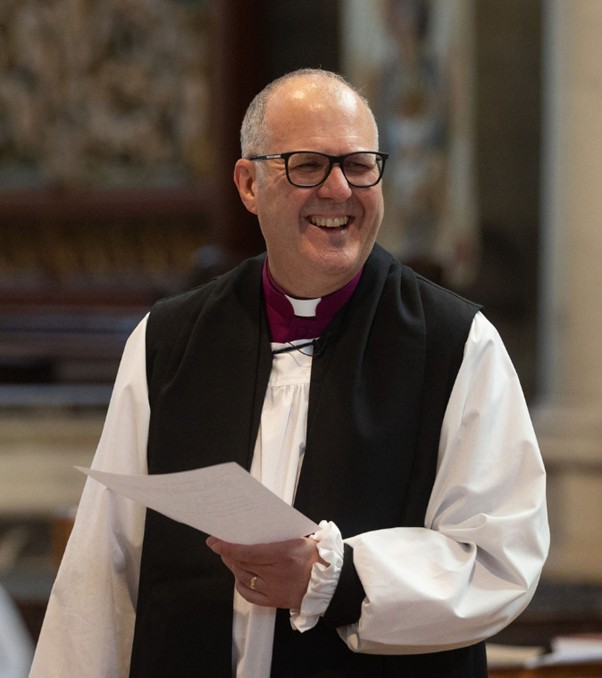
We are delighted to welcome the Bishop of Wakefield as the new Chair of the Diocesan Board of Education (DBE). The DBE provides strategic oversight and direction for the Diocese’s work with Church schools, working closely with the education advisory team to support schools. With significant experience of ministry in diverse and often hard‑pressed communities, Bishop Malcolm brings a deep understanding of the role Church schools play at the heart of local life and place.
He brings to the role both enthusiasm and attentiveness to the challenges and opportunities schools are currently facing. We look forward to his leadership, encouragement and advocacy for Church schools across the Diocese as we continue to serve our communities in faithful and distinctive ways.
| | |
Enhanced Service Plan 26/27
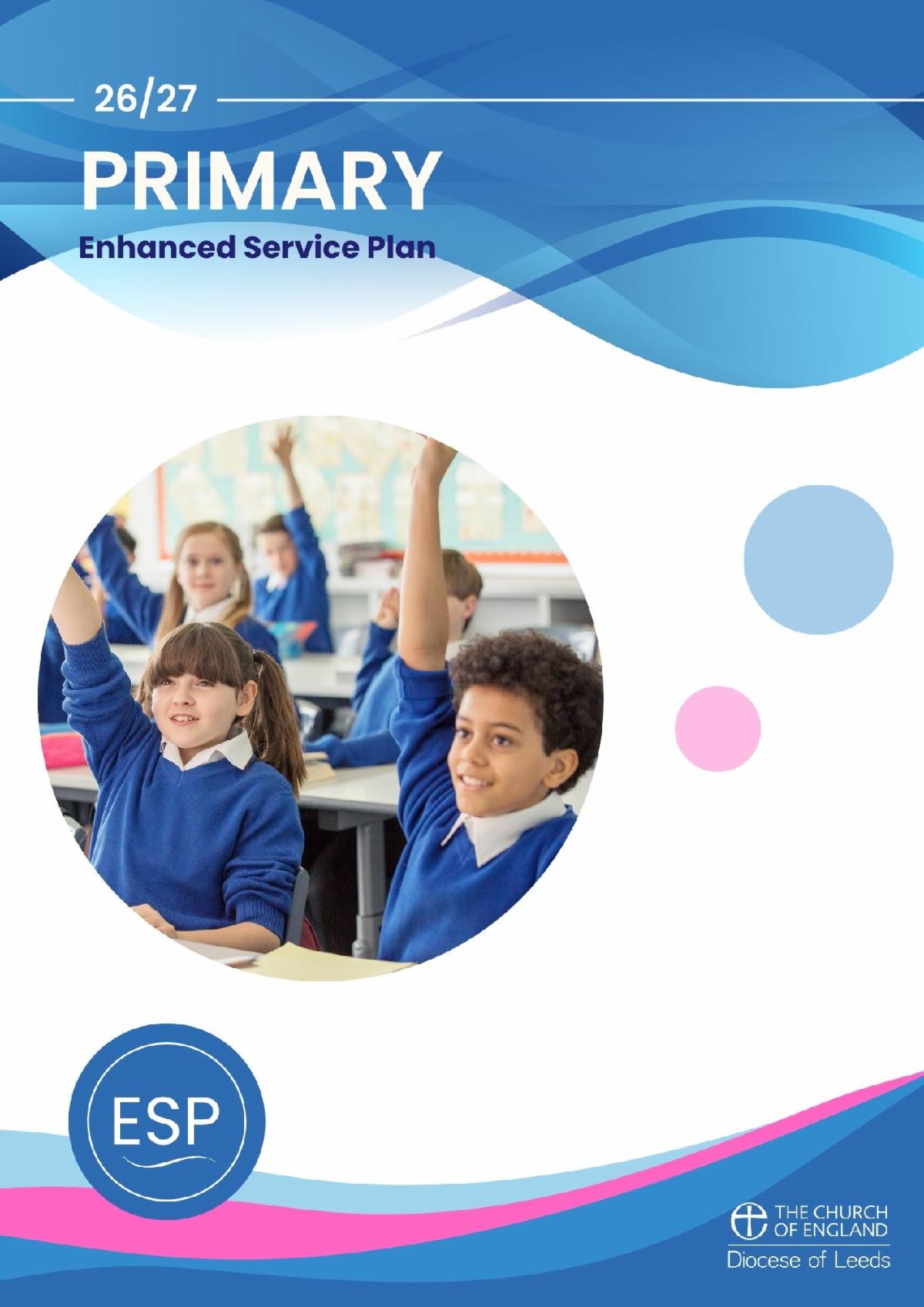
We are pleased to launch the Enhanced Service Plan (ESP) for the 2026/27 academic year. If you haven’t yet explored it, simply click on the image to view the full details, including options such as headteacher performance management, career pathways, and governor training, all offered at reduced rates for schools subscribing to the ESP.
The ESP represents far more than a set of services. It reflects a shared commitment to one another as a family of schools. Thanks to the strong take-up from schools each year, we’re able to provide additional, cost-free support during times of greatest need. From headteacher recruitment and emergency pastoral support, to guidance when inspection outcomes don’t go as hoped. We were delighted that over 99% of our schools subscribed last year, and we hope that same strength of partnership continues.
We also recognise the financial pressures schools are under, which is why we’ve worked hard to keep the SLA cost for 2026/27 as low as possible, with a below inflation rate increase. We've also held the pricing for training, including our career pathway programmes, and our well-regarded annual conference.
At a time when every budget decision is difficult, the role of governing boards is more important than ever in helping to ensure that this partnership with the Diocese is sustained and prioritised. Continuing to invest in the ESP is a tangible way of safeguarding the distinctive ethos, leadership and support that underpin our Church schools.
We are grateful for your continued support. Sign up for the ESP 26/27 here.
| |
Restrictive Interventions and Reasonable Force: Updated DfE Guidance
New statutory guidance from the Department for Education on restrictive interventions, including the use of reasonable force, came into effect on 1 April 2026. While the legal power to use reasonable force remains broadly unchanged, the expectations around safeguarding, recording and governance oversight are now significantly stronger.
What has changed
- Reasonable force is now positioned within a wider category that includes physical restraint, non‑physical restraint and seclusion. This reflects a shift towards prevention and safeguarding, rather than response alone.
- Schools must now record significant incidents involving the use of force, seclusion or non‑physical restraint and report these to the child's parents. This is no longer guidance but a statutory requirement.
- Seclusion, meaning a pupil being placed alone in a space from which they cannot freely leave, must only ever be used to prevent harm and never as a punishment. Pupils must be supervised at all times and all incidents must be recorded and reported.
- The guidance gives much greater attention to the disproportionate use of restrictive interventions for pupils with SEND and other vulnerabilities. Schools are expected to recognise triggers early and use reasonable adjustments and personalised support plans.
For governing boards, this guidance strengthens the expectation of active oversight. Boards should be confident that policies have been updated, recording and reporting systems are robust and leaders are reviewing patterns and impact with a clear focus on safeguarding, prevention and equity. Governing boards are now expected to actively review and interrogate data on restrictive interventions to identify trends, disproportionality and areas for improvement. They should regularly review restrictive intervention data and ensure appropriate action is taken to reduce reliance on such measures.
Further information can be found in the DfE guidance: Restrictive interventions, including use of reasonable force, in schools.
| |
| | |
Chair of Governors' Network
Thursday 21st May 6 pm - 7 pm
FREE to schools in the ESP
A termly opportunity for those in the role of Chair of Governors to share ideas and resources and discuss matters relating to the leadership of the board. You may wish to invite your vice-chair of governors as part of your succession planning process.
| | | | Making Changes in Church Schools and Academies: Diocesan Guidance Update | |
We have recently introduced new diocesan guidance titled Making Changes in Church Schools and Academies, designed to provide clarity and consistency at a time when many schools are considering significant structural or organisational change.
This is particularly relevant as schools and trusts explore developments such as the introduction of nursery provision, reductions to published admission numbers or the establishment of specialist SEND provision. Each of these changes require early engagement with the Diocese.
The guidance sets out clearly when diocesan input is required, the rationale for that involvement and how schools, academy trusts and local authorities can work together constructively through the process. Our intention is to remove uncertainty, support better planning and ensure that proposals are shaped carefully and lawfully from the outset.
For governing boards and trustees, this guidance provides an important reference point. Early consultation with the Diocese can prevent delay, strengthen proposals and ensure that changes align with the school’s foundation, legal status and long‑term sustainability.
The guidance can be accessed here.
| |
Parental Complaints
We are aware of the volume of complaints coming into schools and there is increasing national attention on how parental concerns escalate into formal complaints and, in some cases, to Ofsted. Over 16,000 complaints were made to Ofsted in the most recent reporting year, that's 45 per day, yet around nine in ten do not meet the threshold for formal investigation. In most cases, information is retained and considered at the point of an inspection rather than triggering immediate action.
Guidance published last term, supported by the Department for Education, reinforces the importance of clear, respectful communication and encourages parents to follow a staged complaints process, beginning with resolving issues directly with the school wherever possible. It is explicit that escalation through social media and the uncritical use of AI‑generated complaints can make matters harder to resolve, rather than easier.
Planned reforms to the complaints system aim to create a clearer and more accessible digital route and to reduce duplication by preventing the same concern being pursued through multiple channels at once. While this direction of travel has been welcomed, there is broad recognition that process alone cannot replace strong relationships and effective communication.
Our experience across the Diocese reflects this national picture. Where concerns escalate, it is rarely because a process is absent, but because expectations were unclear or communication broke down early. Our consistent advice to schools is to trust and use the process, ensuring it is clear, accessible and well understood by families and staff from the outset.
Clear signposting, early listening and calm, measured communication can prevent many issues from becoming formal complaints. Where concerns do progress, a well‑understood process protects pupils, families and staff and enables governing boards to exercise their role with confidence and fairness.
From a governance perspective, this is an appropriate time to reassure yourselves that the school’s complaints procedure is clear, proportionate and well communicated, and that leaders are supported to prioritise early resolution wherever possible.
The government- and Ofsted-backed parent guidance on complaints can be read here.
| |
Right of Withdrawal from RE and Collective Worship
Following a Supreme Court ruling in Northern Ireland last term, the Church of England education office has revised their advice on a parent's right to withdraw a child from religious education or collective worship. Parents continue to have the legal right to withdraw their child, and from this point on, schools must allow this request without challenge or delay. Schools may wish to invite parents to discuss their reasons, but this cannot be insisted upon and should only be offered once the request has been granted.
Schools must provide simple, supervised alternative arrangements that support the child’s wellbeing, without creating additional cost or disruption. This can include reading a book in class, as the right of withdrawal is from the activity, not the space.
Withdrawal can be full or partial (for example, only from church‑based worship or some aspects of RE). If parents share responsibility for a child and disagree, the school must accept a withdrawal request from any person with parental responsibility.
Overall, the school’s role is to respect parents' legal rights, minimise the burden and ensure pupils still feel they belong as part of the school community. Do reach out to your named adviser if you have any questions.
| | |
Admissions
For those schools that are responsible for their admissions:
We have updated all of our Admissions Guidance, and whilst nothing has changed in content, the guidance is hopefully clearer and more usable for schools. It now includes a termly checklist for boards. You can access all the latest Admissions Guidance on the Admissions page of the Diocesan website. You can access the Admissions page here.
Please ensure that you have officially agreed and minuted at a full governing board meeting your admissions arrangements for the academic year 2027/28. The deadline for this was 28/2/26. These should then have been published on your school website by 15/3/26. These are statutory deadlines set out in the Admissions Code.
The Diocese continues to advise that governing boards review their admissions arrangements annually, with the summer term providing an appropriate opportunity to do so. This includes checking compliance with the School Admissions Code, ensuring policies remain clear and up to date, and carefully reflecting on how vulnerable and disadvantaged pupils are prioritised.
To support this, governors are encouraged to use the newly updated diocesan guidance on reviewing admissions arrangements, available here.
| |
School Admissions and Inclusion
A recent report from the Sutton Trust, Selective Inclusion, highlights continuing concerns about how far school admissions systems support access for pupils from disadvantaged and vulnerable backgrounds. The report raises questions about fairness, transparency and the cumulative impact of admissions arrangements on pupils, including those with SEND, who already face barriers to opportunity.
For our Church schools, this is a timely reminder of our shared responsibility. Admissions arrangements are not merely administrative processes. They are an expression of the school’s vison and values and should reflect a clear commitment to inclusion, dignity and service. Consistent with diocesan guidance, governing boards are reminded that admissions policies should always give careful consideration first to the needs of the most vulnerable and disadvantaged pupils. Admissions decisions and policies are a significant expression of a school’s Christian vision and foundation.
Diocesan Guidance on Admissions can be found here.
The Sutton Trust report can be found here.
| |
| |
Governor Briefing: The Academy Strategy
Tuesday 19th May 6 - 7 pm
FREE to schools in the ESP
One of the headline announcements in last month’s white paper was the government’s desire for all schools to be part of a multi-academy trust (MAT). Governors of maintained schools are invited to this FREE briefing on the Diocesan Academy Strategy and expectations on our church schools as a result. This session provides a general overview of academies and the academisation process and is a repeat of previous sessions.
| | | | Sustainability of School Leadership: Three Recent Reports | |
Last term saw the publication of three important reports which, taken together, paint a consistent and sobering picture of the sustainability of school leadership. While each approaches the issue from a different angle, they arrive at a shared conclusion.
The Annual TES Wellbeing Report 26 has highlighted the scale and persistence of wellbeing pressures across the profession, particularly among senior leaders. Alongside this, the Headrest Annual Headteacher Wellbeing Report 2026 offered stark insight from those seeking confidential support. Of particular concern, national survey evidence cited in the report shows that over 80 per cent of school leaders experienced abuse from parents in the past year, including threatening behaviour and online harassment. A third report, Sustainable School Leadership, adds important depth to this picture. Drawing on UK‑wide research, it argues that leaders are stepping into headship, but many are doing so at high personal cost. The report highlights how the role has widened markedly in recent years, with leaders increasingly engaged in pastoral care, safeguarding, inclusion and community support, often at the expense of time for teaching and learning.
This national picture strongly reflects what we see across the Diocese. Our advisers regularly encounter leaders who carry a deep sense of vocation and responsibility, compassionately sustaining their communities, often while setting aside their own needs. Church schools, we know, are relational, purposeful and grounded in care for the whole person. But the reports are clear that goodwill and vocation alone are not enough to sustain leaders indefinitely. We would like to remind governors that our advisers are available to walk alongside leaders with care. Time within the Enhanced Service Plan can be used proactively for pastoral support and we would always encourage schools and governing boards to see this as a legitimate and timely use of diocesan support.
For governing boards, these reports offer a clear invitation. Church schools are called to be places of human flourishing, and that calling extends to those entrusted with leadership. Boards have a vital role in ensuring that challenge is balanced with trust, that expectations are humane, and that headteachers are not isolated in the weight that they carry. Supporting leadership sustainability is therefore integral to strong governance.
Links to the reports:
| | |
Feedback from heads and chairs:
'The impact of this course was better than expected, it was good to have a safe space to work 1 to 1 with the headteacher'
'Excellent ideas and strategies to further improve our work '
'...lots of practical ideas to take back and implement...useful and valuable!'
| |
Working Together to Safeguard Children 2026 – Key Changes
| |
The Department for Education published an updated version of Working Together to Safeguard Children in March 2026, replacing the 2023 guidance. The revisions reinforce safeguarding as a shared, whole‑system responsibility and place stronger emphasis on inclusive, anti‑discriminatory practice.
The guidance sharpens focus on the needs of babies and unborn children, the impact of domestic abuse and children experiencing multiple and overlapping harms, including links between online and in‑person harm. Expectations around safeguarding for children in care and kinship arrangements are also clearer.
It further develops a more joined‑up approach, describing Family Help as a coordinated offer bringing together early help and statutory support, with consistent relationships and clearer multi‑agency accountability.
For governing boards, this update reinforces the importance of strong safeguarding culture, clear oversight and confident challenge.
You can read the updated guidance here or read the NSPCC Summary of the changes here.
| | School Leaders' Conference 2026 | |
We are delighted to be planning our next annual School Leaders’ Conference, which will take place on Friday 13 November 2026 at The Met Hotel, central Leeds. Under the theme Creating a New Story, the conference will invite school leaders to step back from the immediate pressures of the system and reflect on the stories shaping leadership, curriculum and culture in our schools, and which stories may now need to change.
Feedback from last year’s conference was overwhelmingly positive, with leaders particularly valuing the quality and variety of speakers, the opportunity for reflection and discussion, and the sense of inspiration and renewed purpose they took back into school. Many commented on how well timed the conference felt, offering space to pause, think and reconnect with why we lead.
Further details, including speakers, will be shared in due course, but we wanted to give an early heads‑up and encourage schools to save the date. Or you can even book your place now by clicking on the image below.
| | Other items of news which may be of interest... |
-
The government has published new guidance for parents on screen use for children under five, setting out practical advice on screen time limits, content and shared use. Read the guidance here.
-
Sweden is one of the most digitally advanced education systems in the world. But their government is now championing a renewed focus on physical books, paper, and pens in classrooms, aimed at reversing declining literacy levels. You can read the story here.
-
A January 2026 national survey reported a further decline in levels of school readiness, with increasing numbers of pupils starting Reception without basic life skills such as toileting, language or emotional regulation. You can read the report here.
-
The British Council has announced a further expansion for two years of its Learning Sectors programme with Formula 1, which aims to encourage more young people globally to get involved in STEM learning. Read more here.
| | |
© Anglican Diocese of Leeds, 2026
Diocesan Education team
Church House, 17-19 York Place, Leeds, LS1 2EX
0113 200 0540
info.ed@leeds.anglican.org
www.leeds.anglican.org/education/home
Why am I receiving this email?
This email from the Diocesan Education Team is sent to those who have asked to receive it by 'subscribing' or who receive it because they have a relationship with the diocese, holding an office or position in a church in the diocese, a church school or access our services through the Enhanced Service Plan. However, if you do not wish to continue to receive these emails, simply use the 'Unsubscribe' button below.
Under no circumstances are email addresses shared with third parties.
| | | | |