RETIREMENT SECURITY MATTERS
A forum for retirement innovation information sharing focused on
states, supporters, and service providers.
Vol 32 | July 1, 2021
|
|
Greetings! welcome! to Retirement Security Matters – where we talk about retirement readiness innovation by states, supporters, and service providers.
|
It's the 4th of July 🎆 here in the US and a snappy week around the office. We got good stuff for you, read now or read on holiday!
-
The inimitable Joel Metlen Gets Creative with Stakeholder Engagement
-
Fresh state stats – get a good look, California’s about to blow these numbers away, we suspect
-
Highlights from states in action: Maine, Hawaii, Virginia, Illinois, California, Oregon, Connecticut, New Mexico, and North Carolina
-
Mid Year States Roundup from Grant Boyken – special!
-
Hot Stuff – 3 new pieces and a spritzer for your brain
-
And some very refreshing, slightly sporty Pix!
|
|
Getting Creative with Stakeholder Engagement |
|
Joel Metlen, Senior Associate, Massena Associates
|
|
Joel Metlen is a pioneer of the state facilitated retirement savings space, joining OregonSaves in September of 2016. That was just after the program had issued its administrative services RFP, and nine months before the targeted go-live date of July 1, 2017.
Stepping into a very entrepreneurial space within the Treasurer’s office, Joel helped establish the program’s marketing plan and direction, shaped its outreach and engagement approach, and worked tirelessly in the early days to ensure the program would get off the ground in good shape with both employers and employees. Joel is one of our Senior Associates, joining us as a regular columnist starting this month. We talk with Joel here about best practices around outreach and engagement.
|
|
Joel Metlen, you led public engagement for the country’s first Auto IRA program. How did you think about it?
Great question. Well, any program meant to serve the community can only truly succeed if the community has a say in its development and implementation. While I wore many hats during the startup of the first state-sponsored retirement plan, OregonSaves, my initial title was “Public Engagement Manager,” because it was clear that the program wouldn’t work if we created it in a silo, without the help of stakeholders and potential participants.
You had a small budget and a big state to cover. What was your strategy?
You’re right! The key to working with stakeholders is to engage folks early and often, mapping out who is interested and figuring out inroads to start the right conversations at the right time. Within just a few months of starting, I put thousands of miles on my car and made hundreds of presentations. I sat down with workers, business owners, chamber of commerce directors, financial services professionals, community partners, financial literacy organizations, and anyone else willing to let me in the door or pick up the phone. I met folks in coffee shops, automotive garages, golf clubhouses, and factory floors, and for the most part, I just listened.
Tell us – how did those conversations go?
Some folks were thrilled by the idea of a new retirement option. Others were skeptical or opposed the concept. I distinctly remember one phone call where a business owner … (this story gets spicy – more here).
Joel Metlen, we appreciate your unique insights. Thank you! For more of Joel’s insights, stay tuned as he joins us as a regular columnist right here in Retirement Security Matters.
|
|
*Fresh!* State Program Metrics - Auto IRAs |
|
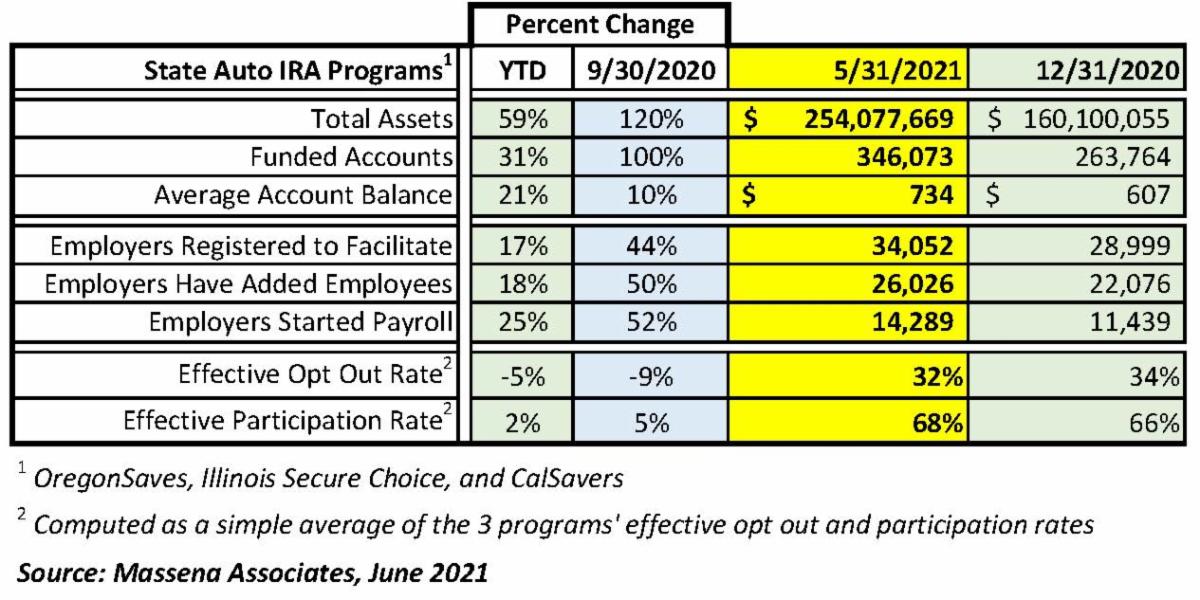
“Read this for me please”: In a few days we’ll have figures that reflect the month of June, but for the moment let’s take a look at May 31. Combined assets are now over $250 million – a quarter of a billion dollars saved across the three programs. Program assets are up almost 60% since the start of the year. Funded accounts are over 346,000 – up 31% year to date double where they were at the end of September 2020. Average account balances are at $734. Recall that this includes many new accounts. Average contributions in each of the programs are running at or over $100 a month.
Employer facilitation numbers are up. Across the three programs, more than 34,000 employers have now registered to facilitate. Over 14,000 have started payroll deductions for their employee savers. The number of new facilitating employers has grown by 50% since September 2020, and by 25% since the start of 2021.
Employee opt out rates are running at about 32%, with participation rates at 68%. Opt outs have been trending gradually but consistently lower.
|
|
State Facilitated Retirement Programs - Fresh Highlights |
|
Maine (workforce .7 million) – Maine becomes *the latest state* to pass retirement security legislation as Governor Janet Mills signed SP515 / LD1622 into law on June 23, 2021. The program is accompanied by a funding allocation of $1.6 million and will be operated within the office of Treasurer Henry Beck. Congratulations to Senator Eloise Vitelli and her colleagues for their fine and thoughtful work with this piece of legislation. The program is intended to be implemented for employers of 25+ by April 1, 2023. (See our September 2020 interview with Treasurer Beck for more!)
|
|
California (workforce 17.9 million) – The deadline for California employers with more than 50 employers who do not sponsor a plan to register with CalSavers was yesterday, June 30, 2021. On June 15 the Ninth Circuit denied Howard Jarvis Taxpayers Association’s request for rehearing en banc and no judge requested a vote for consideration. If the case is pursued further, it would be via a petition to the U.S. Supreme Court. In between these two dates the CalSavers Board met June 22. Of interest, Executive Director Katie Selenski reported that more than 50% of Wave 2 employers had responded ahead of the upcoming deadline. The program is currently averaging $12 million in cash flow monthly from existing savers. The program now sweeps saver assets into their target date funds rather than leaving the first $1,000 as a “cushion”. The program’s money market fund holdings have fallen from 76% of assets to just 4% of assets.
|
|
Connecticut (workforce 1.6 million) – The Connecticut Retirement Security Authority and its committees met twice this month as the program prepares to enter its pilot phase later this year. The Program Design and Investment Subcommittee meets today, July 1 to review proposed wave schedule options for program launch.
|
|
Illinois (workforce 6.2 million) – A legislative proposal to expand the Illinois Secure Choice Retirement Savings Program to include businesses with at least 5 employees was sent to the Governor on June 23 with signature expected. This will extend workplace-based retirement savings cover in the state significantly. The current lower boundary for the program is 25 or more employees.
|
|
New Mexico (workforce 1 million) – Led by Chair Lynn Hoffman and Executive Director Claudia Armijo, the New Mexico Work and $ave Board met June 30. The Board focused on a discussion of the “plan-build” timeline and recommendations for the Work and $ave programs in the state – both Marketplace and Auto IRA. The plan indicates a July 2024 implementation for both programs. NM’s three active committees reported out next steps. Finance and Funding expects to focus on an updated demographic report and financial blueprint modeling. Education and Outreach is working to identify stakeholders. Rules expects to begin with informal rulemaking activity, which will begin with review and rough draft based on existing state rules for equivalent programs.
|
|
Oregon (workforce 1.9 million) – The OregonSaves Board held a special meeting on June 30 in readiness for its upcoming provider transition. Discussion covered approvals of changes to the program’s Administrative Rules and Investment Options. The Board also reviewed and approved the agreement with the intended incoming Program Administrator, BNY Mellon Sumday. Forward-going participant fees under this new agreement will be $18 a year plus 15 basis points on assets. If our math is correct, this will be financially beneficial for savers once they accumulate $2,500, which currently occurs after about two years in savings for the average participant. Up to that level participants will be paying more under the new arrangement. You can download the agenda here.
|
|
Virginia (workforce 3.8 million) – On April 15, 2021, Virginia’s Governor Northam signed HB 2174 which establishes for Virginia an auto-IRA state-facilitated retirement savings program. The eligibility threshold for the program is employers with 25 or more employees; eligible employees will be those who work 30 hours a week or more. The program’s implementation deadline is July 1, 2023, and the effective date for work to begin is July 2021. The program will be operated within Virginia 529 organization, led by CEO Mary Morris. Organizing activity will begin shortly.
|
|
A C T I V E - U P D A T E S |
|
Hawaii (workforce .7 million) – on June 21 passed Senate Resolution 76, a study bill requesting the convening of a retirement savings program task force. The task force is requested to submit a report of its findings, recommendations, an implementation plan of a retirement savings program model deemed feasible for Hawaii, and any proposed legislation, to the Legislature no later than forty days prior to the convening of the Regular Session of 2022.
|
|
North Carolina (workforce 5 million) – NC’s HB 899 enabling a small business retirement savings IRA program is pending the House Appropriations Committee, to which it was sent on June 22 with a favorable recommendation.
|
|
Meetings on Deck.
-
Connecticut (workforce 1.6 million) – The next scheduled board meeting of the Connecticut Retirement Security Authority is July 16, 2021.
-
Illinois (workforce 5.7 million) – The next meeting of the Illinois Secure Choice Board is scheduled for August 19, 2021
-
California (workforce 17.9 million) –The next meeting of the CalSavers Board is scheduled for September 13, 2021.
|
|
Grant's Go-To's: Mid-year State of the States
|
|
At Massena Associates, we keep close tabs on retirement savings initiatives across the U.S. 2021 has been a particularly busy year. By my count, we’ve seen 23 state (and municipal) legislative proposals for State-Facilitated Retirement Savings Programs (SFRPs).
Some proposals have already been enacted. Some have passed the legislative process and are awaiting a Governor’s signature. Other proposals are still making their way through the legislative process, and some appear to be on ice for this year. What follows is a mid-year summary of the current status of the proposals we’ve been following.
|
|
Want to know more? Give us a ring!
In our next edition, you’ll get some fresh updates on best practices and continued progress in the retirement savings innovation space.
Stay tuned! / Grant
|
|
Columnist and Senior Associate Grant Boyken is based in California. You’ll see his Golden State perspectives reflected here – along with 50-state insights into retirement security innovation around the country. He’s also a good sport when we mess with his head shot.
|
|
Do state Auto IRA programs impact retirement coverage? The answer is a resounding “yes,” two ways. In addition to covering uncovered employees, it appears they spur employers to start plans. New research from Pew analyzes data from annual plan returns filed with the US Dept of Labor (the 5500 forms) to see if states with auto-IRAs differed from other states in terms of new employer plans. – “Availability of State Auto-IRAs Appears to Complement Private Market for Retirement Plans.” Oregon’s new plan formation rate is now one of the highest in the nation (we were recently a middling performer state for this metric). Illinois has also seen a marked increase since the launch of their program in 2018.
T. Rowe Price has just published the annual Reference Point report. Key findings include that plans have continued to increase the use of auto-enrollment, now at 62.2% in 2020. Plan participation increased to 67% in 2020 from 66% - (more auto-enrollment, please). Savers are saving more (the average is now 7.8%) and average balances are up, to about $113,000.
From the Center for Retirement Research at Boston College, reporting that workers overestimate their Social Security with a related effect of undersaving and a reduced overall retirement benefit. The average figure was 3.5% overall “welfare loss” or worker wealth loss. One reason people mis-estimate is that they’re not looking at their actual SSA estimates, which are available online but require awareness and action to view. Another reason is that they have a tough time assessing the impact of an earlier or later retirement. Original working paper here, thank you University of Michigan Retirement and Disability Research Center (MRDRC) team.
This one’s a critical read, Universal Pre-K as an Investment, if only to understand this specific quote about the Perry Preschool Program. The Perry Preschool Program is a 1960’s-initiated study of 123 disadvantaged, low SES, Black children. “Of non-participants, 65 percent of women and 95 percent of men were arrested at least once by age 40.” Bolding added. Thank you Geoff Sanzenbacher for bringing this thinking to our attention. And for your spicy writing style. Why do we care about this? It’s a precursor of later retirement security.
What We’re Reading:
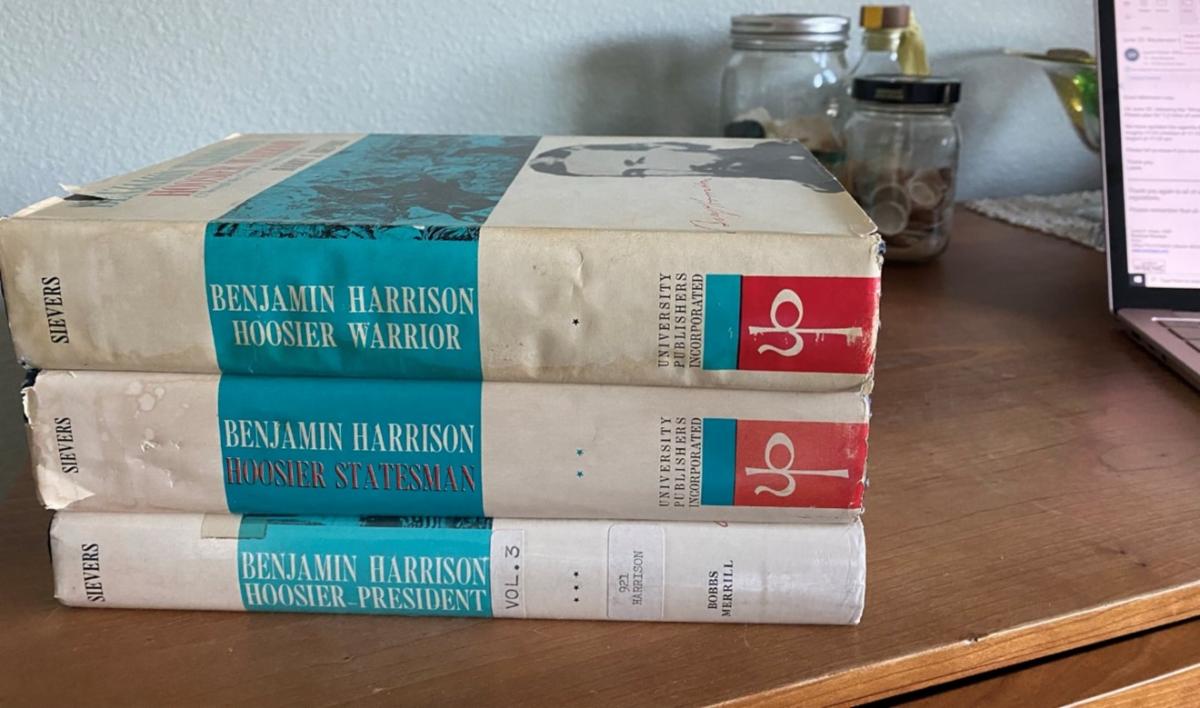
So this is what real books look like …
|
|
And yes, we are reading them. Thank you to a good friend for sharing a few volumes from his collection. Why there are three books on a one-term president, we’re not sure. But as we noodle our way through Benjamin Harrison: Hoosier Warrior, it’s turning out to be an entertaining read. At the moment, young Ben is getting an education at Farmer’s College in Cincinatti. Grandson of president #9 and great-grandson of founding father Benjamin Harrison V, he’s off to a good start.
And, do we seem calmer? We’ve just completed the Ten Percent Happier 10-day Meditation Challenge. Meditation, hey, there might be something to this.
Summer reads? How about this classic from 2012? We found it in a neglected corner of our kindle app and it’s holding our attention. It’s The Dirty Parts of the Bible by Sam Torode.
|
|
... and, finally, Pix of the Week! |
|
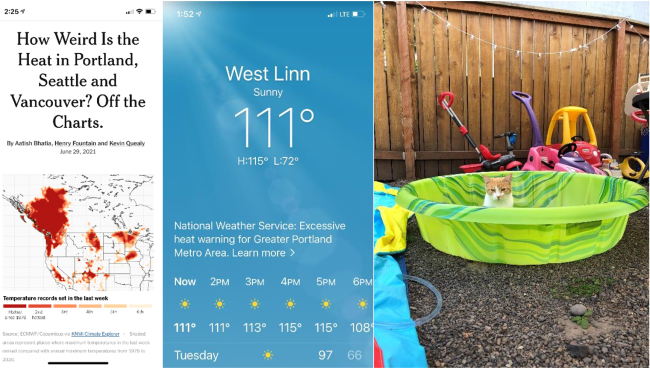
It has been very hot here on the West Coast. Very hot. Just ask Rosie Meowcat. The high temps were actually 116o. Very normal for Phoenix and Palm Springs, but us Northwesterners are not sure how to do this heat thing. Maybe swimming?
|
|
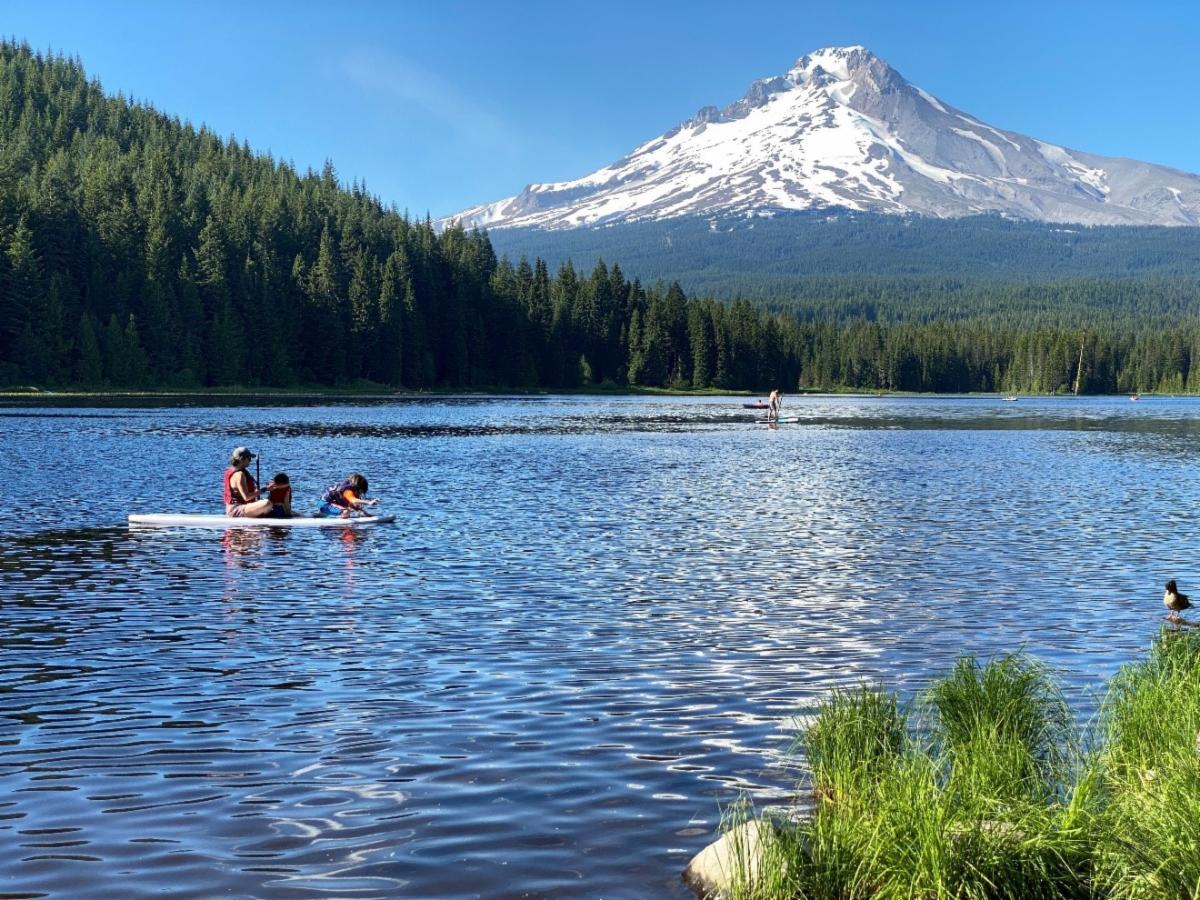
Rosie llives with Joel Metlen, who had better ideas about ways to beat the heat. Hello Metlen Family Sarah, Leo and Willa! Love your Lake Style! Pretty sure Dad is behind the lens there.
|
|
Trillium Lake. That’s the way to go. No Rosie, you cannot go camping. Sorry, girl. (Rosie dreams of cooler seasons on Mount Hood).
|
|
If you like baseball you could escape to LA for the weekend to watch Dodgers slugger Cody Bellinger belt a walk-off home run over the wall in the bottom of the 9th inning – 2 outs and the game tied 2-2. We love you too, Cubs fans, but this was fun to see!
|
|
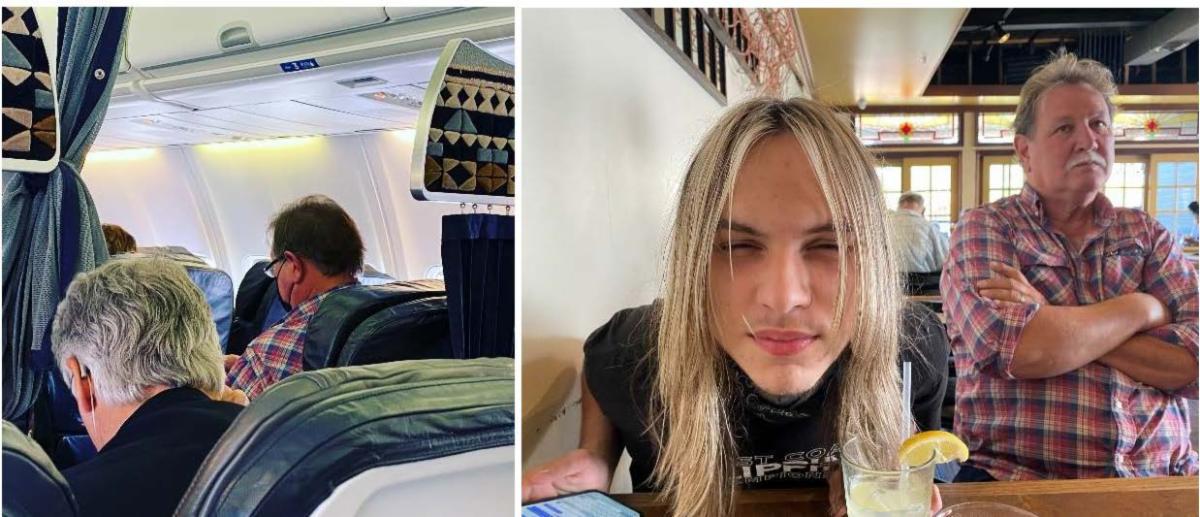
If you’re a nice person, you may let your husband sit in first class on the way home. |
|
And if he’s a nice person he may take you out for a birthday lunch at the beach with your offspring. That offspring may feel a need to make fun of your picture-taking at the table … Nice hair, Buddy!
|
|
That’s it for this edition! ❤ Hug your people and change the world.
If you like this piece, please stick with us. We’ll be back in about two weeks. If you don’t like it, please unsubscribe below. Comments for us? Please let us know. Want your own subscription? Request one here. All information shared is from public sources or used with express permission.
|
|
Massena Associates provides process, policy, and implementation consulting on retirement savings programs and products.
Our clientele includes states, governments, policy organizations, and private sector providers. Our specialty – efficient, targeted results. We are an active speaker on retirement security topics, including state-facilitated programs, MEPs and more.
If you’d like to explore working together, we welcome the conversation. Connect with us here, and at 339-236-0684. |
|
Looking for a great retirement savings innovation resource? Led by Dr. Alicia Munnell, the Center for Retirement Research at Boston College develops and hosts terrific content and proprietary research related to states, financial security, social security, and more.
Pew’s Retirement Savings Project studies the challenges and opportunities for increasing retirement savings and is another great resource - check out the work of John Scott and his terrific team.
|
|
|
|
|
|
|