Weekly Digest - December 13th, 2022 - Week #50 |
|
Welcome to the RWU Rail & Labor News! This news bulletin is produced and emailed out each Tuesday morning. We hope you find each week's news and information useful. If so, please share with co-workers, friends, and colleagues. If you like, you can sign them up to get all the news from RWU HERE. Or forward them the link. Note: If you read over this news bulletin each week, you will be sure to never miss the important news of what is going on in the railroad world from a worker's perspective!
|
|
(Editor's Note: A dozen or more fine articles could have served as the lead for this week's News Summary. Confined Space gets the nod for its comprehensiveness and advice going forward. Thanks Jordan Barab!) |
|
Hard Lessons of the Rail Dispute |
|
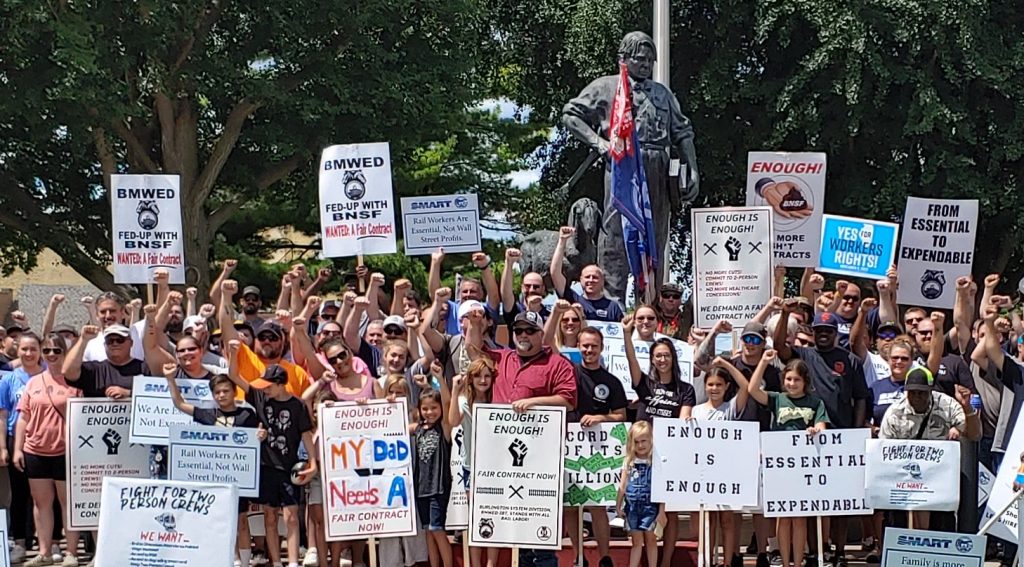
Today is December 9, where in an alternative world America’s rail workers would be walking off the job and setting up picket lines, fed up with greedy corporations who put profit above their employees’ welfare.
Or, in that world, the strike would not have happened because the U.S. Congress, supporting rail workers’ rejection of an unjust contract, would by now have voted to provide them with a few days of well-deserved paid sick leave.
But we don’t live in that world. Today, rail workers are on the job, supplying the county’s needs, without a day of paid sick leave, and those at home fear that at any moment they could be called into work, regardless of any plans, personal illness, family crisis, funerals or all of the other emergencies that workers should be able to call out of work for without fearing discipline.
Now that the dust has settled and Americans are apparently good with the proposition that some of the most important and profitable companies in the United States can’t possibly afford to give their employees a single day of paid sick leave without threatening their business plan and wreaking havoc on the American economy… let’s see what we’ve learned about life for workers in these United States.
I’ve taken a breath since my initial rant, about the semi-regular screwing of rail workers — and I’ve been reading and listening to everything I can to see if we can draw some lessons — or at least insightful observations — from what we’ve witnessed over the past few weeks. Actually over the last few years. Or decades.
|
|
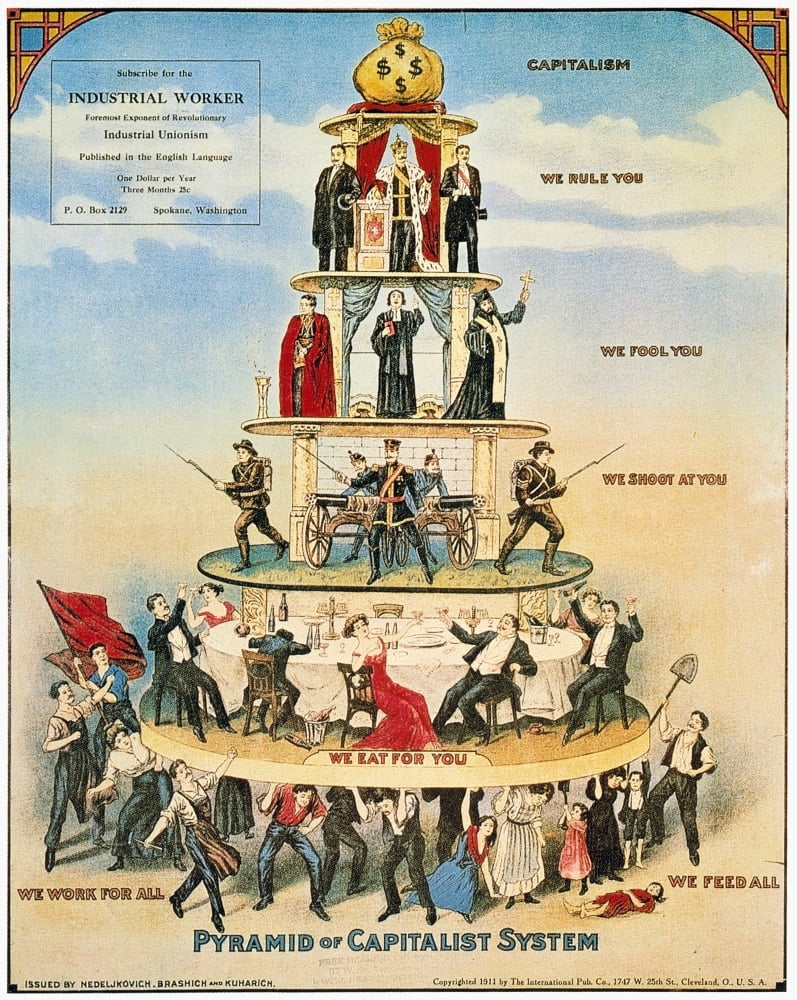
(Editor's Note: Biden broke the strike! The Republicans voted against sick leave! The Democrats betrayed us! All true. Well, what did you expect? The whole absurd exercise began when the craft union officials - instead of putting their faith in the membership to fight for a good contract - instead put their faith in the RLA, the PEB, the White House and Congress - the very institutions designed to thwart the struggle. Hence, the article below. Did you really expect the ruling class to change its spots? The capitalist system functioned as designed.) |
|
The Ruling Class Broke the Railway Strike -Because That's What It Means to Be the Ruling Class
The expedited legislation passed by Congress to avert a strike by railroad unions dealt one more blow in the decades long war waged by the two ruling parties against the working class.
|
|
The Congressional decision to prohibit railroad workers from going on strike and force them to accept a contract that meets few of their demands is part of the class war that has defined American politics for decades. The two ruling political parties differ only in rhetoric. They are bonded in their determination to reduce wages; dismantle social programs, which the Bill Clinton administration did with welfare; and thwart unions and prohibit strikes, the only tool workers have to pressure employers. This latest move against the railroad unions, where working conditions have descended into a special kind of hell with massive layoffs, the denial of even a single day of paid sick leave, and punishing work schedules that include being forced to "always be on call," is one more blow to the working class and our anemic democracy.
The rich, throughout history, have subjugated and re-subjugated the populations they control.
The rage by workers towards the Democratic Party, which once defended their interests, is legitimate, even if, at times, it is expressed by embracing proto-fascists and Donald Trump-like demagogues. Dating back to the Clinton administration with NAFTA, the greatest betrayal of the working class since the 1947 Taft-Hartley Act, the Democratic Party has become a full partner in the corporate assault on workers. The cloying feel-your-pain rhetoric, a staple of the Joe Biden White House, is offset by a hypocritical subservience to the billionaire class.
In 1926, the havoc wreaked by rail strikes led to the federal government passing the Railway Labor Act to give itself the power to impose labor settlements on the rail industry. The Biden administration used this authority to broker a tentative labor agreement that would ensure a 24 percent pay increase by 2024, annual $1,000 bonuses and a freeze on rising health care costs. But workers would be permitted only one paid personal day and no paid sick leave. Of 12 unions voting on the deal, four of them—representing 56 percent of union membership in the industry—refused to ratify it. Biden signed the legislation into law on Friday.
The railroad barons refuse to permit sick days because they have stripped the railroads down to skeleton crews in a process known as precision scheduled railroading, or PSR. In essence, no spare labor is available, which is why the reduced labor force is subjected to such punishingly short periods of time off and onerous working conditions.
Class struggle defines human history. We are dominated by a seemingly omnipotent corporate elite. Hostile to our most basic rights, this elite is disemboweling the nation; destroying basic institutions that foster the common good, including public schools, the postal service and health care; and is incapable of reforming itself. The only weapon left to thwart this ongoing pillage is the strike.
|
|
(Editor's Note: It came down to "sick days" because that was the "compromise", and it was something easily understood as being a pretty damn important and reasonable demand by all, something we might just be able to win. But for those who labor in the freight rail industry, we all know it has been about a lot more than that. ) |
|
The Freight Rail Labor Dispute Was Never About ‘Sick Days’
Workers were not threatening to shut down the nation’s rail system over a few sick days. They were sounding the alarm on a broken system that affects us all.
|
|
On December 2nd, President Biden put an end to the freight rail labor dispute by signing a law that forces the 12 unions involved to accept the terms of the tentative agreement his office brokered back in September. It was a law he called on Congress to pass earlier this week, even though four of those unions rejected those very same terms. Biden urged Congress to pass this legislation—which did so with overwhelming majorities in both chambers in just a few days—in order to avoid what he predicted would be “an economic catastrophe at a very bad time in the calendar.”
Biden tried to sound a hopeful note for the future. “But we still have more work to do, in my view, in terms of ultimately getting paid sick leave not just for rail workers but for every worker in America. That is a goal I had in the beginning, and I’m coming back at it,” he said.
This has been the general narrative around the freight rail labor dispute since September, that workers were unhappy with the tentative agreement because it did not have enough sick leave. In the last few days, virtually all of the nation’s leading publications ran explainers about why paid sick leave became the point of contention in negotiations and why workers didn’t get it. Progressive legislators introduced an amendment that would tack on seven paid sick days to the agreement, which passed the House along party lines but failed in the Senate. But as I wrote on September 15, “While not factually incorrect, this drastically oversimplifies why freight rail workers want to strike and why they may vote against the tentative agreement.”
In my experience talking to hundreds of freight rail workers over the past 18 months, the issue of paid sick leave was rarely brought up. Yes, people talked about having to show up to work sick. Yes, workers talked about not being able to go to doctor appointments or receive needed medical care. But they also talked about a lot of other issues that have been minimized in the last several months, issues that matter to the entire American public. What was once the beginnings of a grassroots worker uprising against corporate greed narrowed to a grievance about sick time. Ironically, this fed back into the negotiating process. By the time Biden got involved in mid-September, his goal, by his own admission, was getting workers more sick time, a contractual provision many rank-and-file union members are deeply skeptical would actually improve their lives in practice.
|
|
(Editor's Note: The media outlet called "The Lever" has done a fine job with the little video.) |
|
Help Shame Biden Into Giving Rail Workers Paid Sick Leave |
|
"The most labor-friendly President" just signed a bill forcing railroad workers to go to work without sufficient paid sick days. He has previously claimed that ALL workers must have proper sick leave, but will he live up to that promise? Click here - https://levernews.com/rail - to sign an open letter to President Biden, urging him to use his executive powers to ensure railroad workers get at least 7 days of paid sick leave
|
|
(Editor's Note: While this has been in the works for some time, it is quite likely that the uprising south of the border may have catalyzed the Canadian Government to finally make it the law. Biden, take note, this law includes ALL RAIL WORKERS!) |
|
Canada Mandates Paid Sick Leave for Regulated Businesses |
|
Canadian Minister of Labor Seamus O'Regan Jr. last week announced 10 days of paid sick leave is now a reality for workers in the federally regulated private sector.
Federal legislation and final regulations for medical leave with pay went into effect Dec. 1. O'Regan met with workers at the VIA Rail Canada station in Ottawa to mark the announcement.
The legislation is a significant milestone and a permanent change to the Canada Labor Code, federal government officials said in a press release. Having access to paid sick leave is expected to reduce the number of days employees work while ill and reduce the spread of illness in the workplace, they said.
Workers who’ve been employed for at least 30 days will have access to their first three days of paid sick leave as of Dec. 31. Starting Feb. 1, 2023, workers will acquire a fourth day of paid sick leave, then will continue to accumulate one day of paid sick leave on the first day of each following month, up to a maximum of 10 days per year.
The federally regulated private sector comprises workplaces in a broad range of industries — including interprovincial air, rail, road and marine transportation — that employ about 19,000. In Canada's rail industry, federally regulator private sector employers include railroads that cross provincial or international borders and some short lines.
The Canadian government announced the paid sick leave the same day that the U.S. Senate rejected a legislative amendment that would have granted U.S. rail workers seven days of paid sick leave as part of their contracts with the major U.S. freight railroads. The day before the Senate acted, the U.S. House passed a measure that would have mandated paid sick leave for rail workers.
READ THE FULL ARTICLE HERE ...
|
|
(Editor's Note: This is a lengthy but worthwhile deep dive into the life and times of your average U.S. Train and Engine service worker on a Class One railroad. For many of you this will be simply yeah, "been there, done that" a thousand times or more. But for others not in the craft or industry, it is well worth the read to gain a deeper understanding of what we are facing daily.) |
|
Railroad Workers’ Lives Revolve Entirely Around Their Jobs
We spoke with a longtime BNSF conductor about the labor agreement recently imposed on railroad workers by President Biden. He says he feels betrayed by a president he thought was pro-labor and explains how his job has gotten worse over time.
|
|
Rob Kufalk is “always at the mercy of the railroad,” as his wife Mona puts it. “Our life only functions around the railroad.”
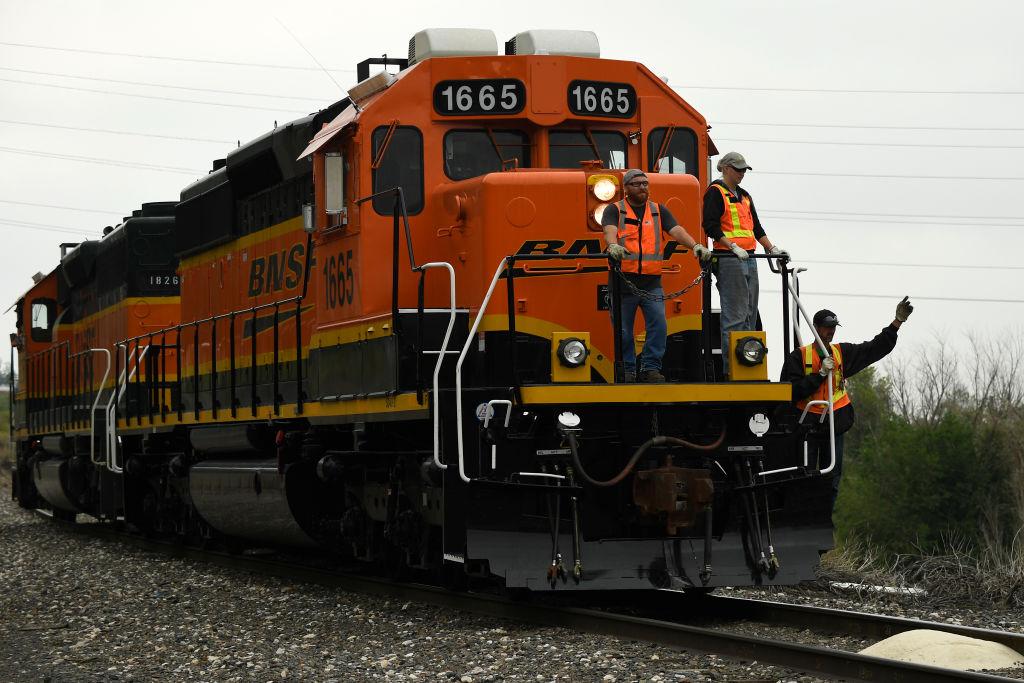
A longtime conductor for BNSF Railway, Kufalk is virtually always on call. He must be ready to get to work within ninety minutes from when the company says they need him — which can happen any time, day or night. The family lives forty-five minutes away from the terminal in La Crosse, Wisconsin, that serves as his home base. He spends a lot of time away in hotels in Chicago and Galesburg, Illinois.
Kufalk said the demands on his time have gotten worse over the years, with the industry shedding jobs to cut costs as part of its so-called “precision scheduled railroading” strategy. The situation, he said, has become unbearable since BNSF implemented a new points-based attendance policy, under which employees can be disciplined or fired for missing a call to come into work or taking an unplanned day off.
“They want us available for duty 95 percent of the time now — 24/7/365,” said Kufalk. “I try to plan for doctor’s appointments and other things and it’s almost impossible. Sometimes you just have to lay off and take the hit on the points.”
The lack of paid sick time afforded to workers was at the center of the high-stakes labor dispute between unions and giant railroad companies that came to a head last week. Through more than three years of contract negotiations, the railroads flatly refused to budge and give workers any paid sick days. The companies knew they didn’t really have to negotiate, because politicians in Washington wouldn’t risk allowing rail workers to strike and slow shipments — especially now during the holiday season — at an estimated cost to the economy of $2 billion per day.
President Joe Biden’s administration first intervened in the labor dispute this summer, convening an emergency board to broker a recommended deal that included just one paid sick day for rail workers. Last week, at Biden’s urging, Congress passed a law to block a strike and impose the administration’s labor deal over workers’ objections. A measure offered by progressives to add seven sick days to the deal won some Republican support but still failed in the corporate-controlled Senate.
But as the story of Kufalk and his family demonstrates, the number of sick days granted to railworkers — and the way politicians just helped railroad barons railroad them — isn’t just some political issue. The matter strikes at the systematic devaluing of the people who literally keep the country rolling, who have seen their benefits deteriorate and their schedules get far more extreme as railroad companies have decimated their workforce to juice corporate profits and executives’ payouts.
Kufalk wishes the lawmakers who voted down the sick leave proposal last week would “take the time to learn more about the railroad lifestyle,” in order to balance what’s best for businesses and the economy with the needs of railworkers who sacrifice to make the economy run. If lawmakers spent some time working on the railroads, Kufalk wagers, “they’d be more than happy to go back home to Congress.”
He and Mona both said they voted for Biden in the 2020 presidential campaign based on his promises to be pro-labor. Kufalk clarified he would never have considered voting for Trump; he voted for Sen. Elizabeth Warren (D-MA) in the Democratic primary (“She’s my girl”), while Mona said she voted for Sen. Bernie Sanders (I-VT).
|
|
(Editor's Note: In the face of this development, if Biden fails to act now, he will no longer be taken seriously by working class constituents. Well Joe, whazup? And if you do fail to act, will you at least please have the common courtesy to explain why you simply cannot execute this order? Or is this asking too much?) |
|
70+ Lawmakers Tell Biden 'You Can and You Must' Provide Rail Workers Paid Sick Leave
"As president, you and your administration have a number of tools at your disposal to make sure rail workers are guaranteed paid sick leave," wrote the lawmakers.
|
|
Progressive lawmakers including Sen. Bernie Sanders and Rep. Alexandria Ocasio-Cortez led dozens of their colleagues Friday in calling on President Joe Biden to take executive action to ensure railroad workers are afforded the paid sick leave they have long called for, but which was left out of a contract brokered by the White House.
"While this agreement was much better than the disastrous proposals put forward by the rail industry, it still does not guarantee a single paid sick day to rail workers who work dangerous and difficult jobs, have risked their lives during the pandemic to keep our economy moving, and have not received a pay raise in over three years," the Democratic lawmakers wrote of the agreement which freight rail workers were forced to accept even though four unions that represent the majority of the workforce had rejected it.
"That is unacceptable and must be rectified," they wrote.
More than 70 lawmakers signed the letter, including Sens. Ed Markey (D-Mass.) and Elizabeth Warren (D-Mass.) and Reps. Pramila Jayapal (D-Wash.), Ilhan Omar (D-Minn.), and Katie Porter (D-Calif.).
At Biden's request, Congress last week prevented a rail strike with a resolution forcing the contract upon workers. Progressives in Congress had attempted to add seven paid sick days to the legislation, but right-wing Sen. Joe Manchin (D-W.Va.) joined 42 Republicans in blocking the provision.
"It is literally beyond belief that rail workers are not guaranteed this basic and fundamental human right," reads the letter. "Therefore, we urge you and your administration to do everything within your authority to guarantee rail workers the seven paid sick days that they desperately need through executive action."
The letter sent to Biden Friday noted that in 2015, former President Barack Obama signed an executive order requiring companies with federal contracts to grant a minimum of seven days of paid sick leave to workers—but excluded rail workers from the protections, leaving them with a contract that provides zero paid sick days.
"As president, you and your administration have a number of tools at your disposal to make sure rail workers are guaranteed paid sick leave," wrote the lawmakers. "You can and you must expand this executive order."
Rail workers have reported in recent months that the workforce has grown increasingly strained under rail carriers' stringent and arcane attendance policies, as their employers have forced many to work while fatigued or sick—potentially putting themselves and customers at risk.
"We have heard terrible and tragic stories from rail workers who have been penalized for spending the day in the hospital with their sick children," said the lawmakers. "A locomotive engineer, who, out of fear of being fired, was forced to skip his doctor's appointment after experiencing unusual symptoms, suffered a heart attack and died in an engine room just weeks later."
"There is absolutely no reason why these workers should have to deal with these conditions in the richest country in the history of the world," they wrote, noting that providing paid leave to workers would cost rail companies "$321 million—less than 2% of their annual profits."
Friday's letter noted that the Occupational Safety and Health Act (OSHA) authorizes the U.S. secretary of labor to set mandatory safety and health standards for businesses that affect interstate commerce.
|
|
(Editor's Note: In typical fashion, the rail industry (AAR) always has something/someone external to blame for this or that week/month traffic decline. Here, note that the stats are year-over-year for the month of November ... as if we did not celebrate Thanksgiving last year or something. On the other hand, note that when there is say, a bumper crop of grain, due to absolutely nothing the railroad was responsible for, the industry can hardly contain its self-congratulatory back-slapping of how the rail industry - or specific carrier - made this phenomenon possible.) |
|
AAR: Thanksgiving Holiday a Drag on U.S. Freight-Rail Traffic |
|
U.S. railroads hauled 2,393,027 carloads and intermodal units in November, a 3.3% decrease compared with November 2021 volumes, according to Association of American Railroads data.
Last month, U.S. railroads logged 1,162,736 carloads, down 0.9%, and 1,230,291 containers and trailers, down 5.4%, compared with year-ago levels. AAR Senior Vice President John Gray attributed the decrease in part to the impact of the Thanksgiving holiday.
"Thanksgiving week is one of the lowest volume weeks of the year for rail traffic, which means November rail volumes frequently do not clearly demonstrate underlying sequential trends," said Gray in a press release.
Eight of the 20 carload commodity categories tracked by the AAR each month posted carload gains versus a year ago. They included crushed stone, sand and gravel, up 9.2%; motor vehicles and parts, up 8.3%; and all other carloads, up 10%.
|
|
(Editor's Note: Railroad workers need to read this contract to truly understand just how badly we are getting ripped off. We have the power, and we should easily be able to win contracts like this. Not only is the pay increase 10% more, but the "bonus" is 22% of the total wages from the previous 3 years, perhaps 10 times or more what the rail workers bonus is (a flat $5000). The deal also provides for 10 weeks of paid maternity leave, two weeks of paid parental leave and reduced health insurance premiums. We can get this too, but we have to organize, unite all crafts, democratize our unions, and fight!) |
|
Delta, Pilots Reach Labor Deal With 34% Pay Hike |
|
Delta Air Lines has offered a 34% cumulative pay increase to its pilots over three years in a new contract, demonstrating the bargaining power aviators are enjoying in a short-staffed industry with booming travel demand.
If the deal is approved by Delta (DAL) pilots, it is widely expected to act as a benchmark for contract negotiations at rivals United Airlines (UAL) and American Airlines (AAL).
Delta pilots will get a raise of at least 18% on the date the contract is signed, another 5% after one year, 4% after two years and 4% after three years, according to a draft contract seen by Reuters.
They will also get a one-time payment equivalent to a cumulative 22% of their earnings between 2020 and 2022 after the deal is ratified.
The Atlanta-based carrier’s pilots have been working without a new contract for nearly three years after their old contract became amendable in December 2019, fueling frustration.
They voted overwhelmingly in October to authorize a strike if negotiators could not reach an agreement on the new contract.
The hefty pay raises are expected to further worsen cost pressures for carriers just as concerns over a US recession spark worries about consumer spending.
Although ticket sales remain strong, investors fear travel demand could slip, making it harder for a debt-laden industry to repair its balance sheet. They fear carriers might be forced to borrow even more money to fund operations.
A scramble, however, among carriers to staff up to capitalize on booming consumer demand has enhanced the bargaining power of pilots. With the industry returning to profitability, pilots argue airlines can pay them more to cover their increased costs of living.
Airlines, thus far, have been relying on strong demand and higher fares to mitigate inflationary pressure. The demand for airline seats is still high compared to supply, meaning that customers are likely to continue to pay higher ticket prices. But if the United States falls into recession and that hits demand, it will be more difficult for airlines to cover those increased labor costs.
In the draft agreement, Delta promises that pay rates for its pilots will exceed those at United and American by at least 1%.
READ THE FULL ARTICLE HERE ...
|
|
(Editor's Note: The author of this article - Patrick Mazza - is a longtime environmental activist who RWU made the acquaintance of in 2015 when we set about organizing a series of Rail Safety Conferences. Rail labor needs to meet and work with hundreds more like him.) |
|
Imagine having no set schedule at your workplace, and instead having to report to work within 2 hours of receiving a call from your employer. You could be working 12 hour days for weeks before your next day off.
If you happen to be sick, you still better report in or lose wages. If you are injured on the job, you may be inclined to cover it up because your employer will do everything in their power to put the blame on you. If there are unsafe working conditions, you better keep your mouth shut, because if you speak up your employer is going to look for a pretext to fire you.
Those are the conditions under which railroad workers live, and the backdrop of the current labor dispute in which workers once again were shafted. This time it was by the Biden Administration and Congress, which just voted to forbid railroad unions to strike, and imposed a settlement that unions had voted against. An overwhelming majority on both sides of the aisle voted days before a cooling off period ended, which could have resulted in a strike during the holiday shipping period. The politicians said they feared damage to the economy. They had another option to extend negotiations another 60 days, but voted it down.
Though the settlement does provide a 24% wage increase over 5 years, that pales in comparison to inflation running around double that rate. Meanwhile, the railroad industry is making record profits. In 2001 the 4 major railroads had profit margins around 15%. By 2021 that soared to 41%. Railroads are the most profitable industry in the U.S. Though it actually carries less freight than a few years back, the ultra-concentrated industry has monopoly pricing power in many parts of the country. And it has cut workforces to the bone. Class One railroads, on which most freight is carried, cut 45,000 workers or 29% of jobs over the last 6 years. This combined with new scheduling techniques has led to supply chain bottlenecks over recent years, as well as an overworked labor force more prone to injuries and sickness.
The denial of a union demand for 7 days paid sick leave is at the core of the current labor dispute. Railroads were unwilling to give up the estimated $321 million it would cost each year, less than 2% of their profits. Congress voted for a separate bill to provide that leave, but it did not gain enough Senate votes to reach the 60 votes needed to stop a filibuster. The bill was a fig leaf to cover Democratic Party politician betrayal of the unions because it was obvious a separate bill would go down to defeat. It was of a piece with Democrat politician backstabbing that goes back to 1990s free trade agreements that undermined the working class, setting up the current reactionary backlash.
“This one-two punch from the two political parties is despicable,” said Jason Doering, general secretary of Railroad Workers United. Rail has no industry union, so RWU acts as a bridge between the craft unions that represent rail workers. “Politicians are happy to voice platitudes and heap praise upon us for our heroism throughout the pandemic, the essential nature of our work, the difficult and dangerous and demanding conditions of our jobs. Yet when the steel hits the rail, they back the powerful and wealthy Class One rail carriers every time.”
Working on the railroad
|
|
(Editor's Note: If you ignore the rhetoric, the generalizing, the inaccuracies, the hyperbole, profanity, inside jokes and "inside baseball", you might notice that they quote RWU extensively, and they actually do arrive at a number of basic truths. NOTE: RWU's suggestion that rail workers "explore all options" does not quite equate to a "Call for Third Party." And BTW, we are not a union. Anyway, maybe they will invite us on one of these days... ) |
|
Railroad Union Calls For Third Party After Dems Break Their Strike |
|
Fresh off an extraordinary betrayal from Democrats, railroad workers are beginning to rethink the longstanding but increasingly unidirectional alliance between labor and the Democratic Party. In a press release the Railroad Workers Union (sic) indicated that the union (sic) needed to explore options outside the two-party system with one organizer saying railroad workers had been “played for well over a century by politicians and union officials alike.” |
|
(Editor's Note: The situation on the railroads today apparently makes for some great humor. Thanks to the working railroader who came up with this home-made piece below. Maybe it's time for some of the nation's top comedians to jump aboard!) |
|
If Normal Companies Were Run Like Railroads |
|
(Editor's Note: Here we go again. The rail carriers have been turning away freight for the last 16 years and cannot handle what they still have left, but we need to make room for this hazardous product. "Oh, think of the lost jobs if we do not immediately grant permits to haul this, or LNG, or anything else for that matter!" The hypocrisy of it all wears thin. But rail workers are getting wise to this game of pitting workers against enviros when it is just more of their usual divide-and-conquer tactics.) |
|
PHMSA: Special Permit Sought to Ship Cryogenic Ethane By Rail |
|
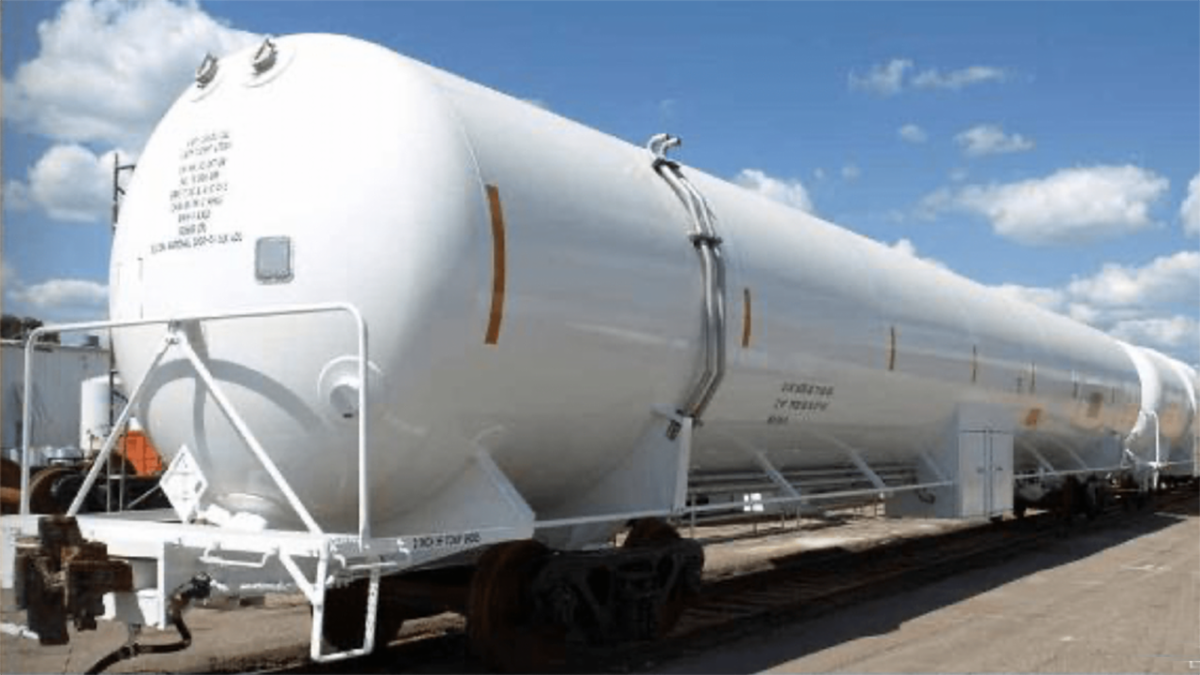
Gas Innovations LNG Refrigerants Inc. is seeking authorization to transport cryogenic ethane via rail in DOT-113C120W9 and DOT-113C120W tank cars, according to the Pipeline and Hazardous Materials Safety Administration (PHMSA). PHMSA, in consultation with the Federal Railroad Administration (FRA), is reviewing the special permit application and requesting comments on it, since it “raises issues similar to the transportation of liquefied natural gas (LNG) by rail, a matter for which multiple rulemakings are currently pending at the agency.”
“Cryogenic ethane is not currently allowed to be shipped in DOT 113 rail tank cars,” PHMSA reported in the Dec. 5 edition of the Federal Register (download below). The Hazardous Materials Regulations (HMR; 49 CFR parts 171-180) only allow for transport of cryogenic (or refrigerated) ethane in cryogenic truck trailers designated MC 331 or MC 338 under 49 CFR 173.315 and in UN T75 portable tanks in the 49 CFR 172.101 Hazardous Materials Table (special provisions column), according to the agency. ...
Because the proposed special permit “raises similar considerations as the transportation of LNG and the subject of PHMSA’s Notice of Proposed Rulemaking: Suspension of HMR Amendments Authorizing Transportation of Liquefied Natural Gas by Rail (Docket No. PHMSA-2021-0058),” PHMSA is requesting comments on the application and, if it were to be approved, “any specific operational controls which should be added to enhance safety and environmental impacts.”
Comments are due by Jan. 4, 2023, but PHMSA reported it would “consider late-filed comments to the extent possible.”
|
|
(Editor's Note: And as we have suggested in The RWU Rail & Labor News a number of times in recent years, workers in this country have a few things to learn from our brethren overseas, especially in the UK.) |
|
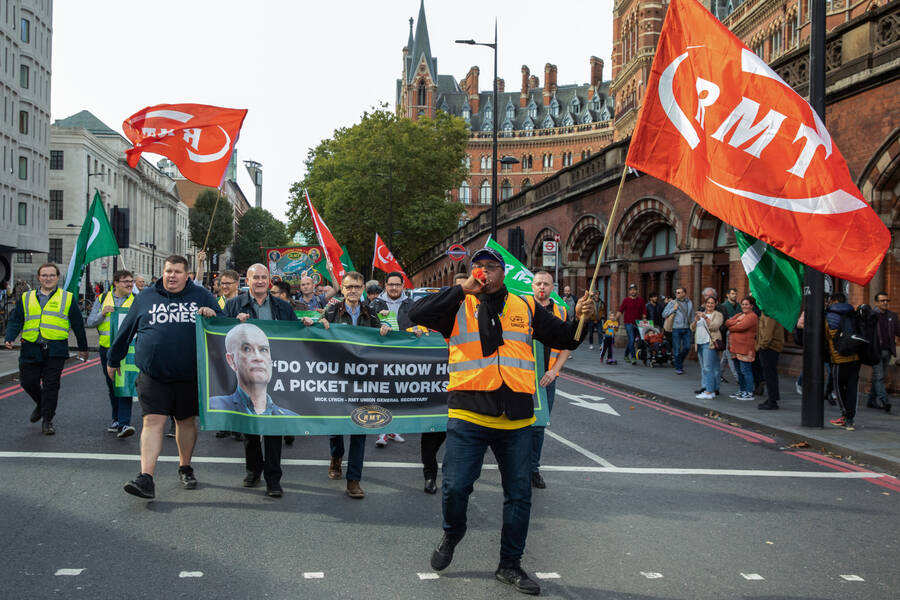
Britain May Be Headed Toward a "De Facto General Strike"
Unions representing British postal, rail, education and communication workers are rediscovering the workplace as a battleground.
|
|
In Britain today, anyone asking a worker about the direction the country is headed will be unlikely to receive a printable answer. Stumbling from crisis to crisis, the country is on its third prime minister of the year. Energy bills have skyrocketed by 96% since last winter, and rent has shot up by as much as 20%, while inflation — which currently stands at 12.3% — has been predicted to rise as high as 18% by the first few months of 2023.
This is happening in a country which was the first in Western Europe to register 200,000 deaths from the coronavirus and has already been subject to brutal austerity measures that have wrecked the social fabric. An analysis by the Trades Unions Congress (TUC, the British equivalent of the AFL-CIO) released earlier this year found that British workers earned £60 ($70) less per month in real wages in 2021 than at the start of the financial crisis in 2008 — the longest wage slump since the Napoleonic Era.
Where employers have offered any wage increases to combat inflation, they have still represented significant pay cuts in real terms. Not that the same rules apply to them; while pay offers to workers have generally veered between 2% and 6%, the average pay of a chief executive at the largest companies on the London Stock Exchange shot up 23% this year, with record bonuses being dished out.
One such recipient was Philip Jansen, the CEO of BT Group, Britain’s largest provider of internet and phone services. BT reported £1.3 billion in profits this year, while Jansen netted a £3.5 million pay package — a 32% increase. He now makes 86 times more than the average BT employee. Yet after six brief meetings with representatives of the Communication Workers Union (CWU), Jansen called off discussions and unilaterally imposed an insulting £1,500 ($1,770) increase to annual base salaries — which amounts to a pay cut in real terms for the company’s 40,000 call center workers and field technicians. The call center workforce is paid so poorly that some have become increasingly reliant on workplace food banks.
Another was Simon Thompson, CEO of Royal Mail Group, the U.K. postal service (which was privatized a decade ago under the Conservative-Liberal coalition government). In June, Thompson — who earns £62,750 a month — awarded himself a “short-term” bonus of £142,000. Shortly afterward, the company informed its 115,000 workers it would be unilaterally raising wages by just 2% — a drastic pay cut in the context of the country’s cost-of-living crisis. That’s despite Royal Mail workers generating record annual profits of £758 million for the company.
|
|
|
|
|
|
|