View as Webpage

https://multipleapplicationstable.com/wp-content/uploads/MAT_SingleImage_240x190.png

Long COVID Recovery: A Three-Year Success Story

After a three-year journey marked by periods of remission and challenging flare-ups, we have a fantastic update to share about a patient battling Long COVID and Postural Orthostatic Tachycardia Syndrome (POTS).

Physical Therapy Treatment for Post-COVID, Long Covid/ Post-Acute Sequelae SARS CoV-2 (PASC) with POTS Style Approach

Patient History - Previously healthy and active individual who developed POTS symptoms after a COVID infection.


Symptoms - Dizziness, nausea, “coat hanger pain,” overwhelming fatigue.

Hamstring isolation exercises

The Big Wins

We are thrilled to report that this patient is now feeling 75% better overall and has successfully achieved her major functional goals.


The Challenges (2023)

  • Unable to work, with symptoms progressively worsening
  • Severe dizziness and nausea when leaving the house
  • Overwhelming fatigue triggered by simple daily tasks
  • Driving triggered severe autonomic symptoms


The Successes (Today)

  • Feeling 75% better and functioning well day-to-day
  • Shops for an hour entirely symptom-free
  • Walks for 30+ minutes without experiencing an energy crash
  • Safely drives 20+ minutes to visit family

The Treatment Strategy: Start Low and Go Slow

Following an initial COVID infection, this previously healthy and active patient developed severe POTS symptoms. For two years, her condition progressively worsened despite trying various standard treatments. Standing up caused her heart rate to spike, which immediately triggered overwhelming fatigue, dizziness, and intense neck pain.


To make actual progress, we had to rethink traditional physical therapy. Our physician-directed approach focused strictly on horizontal exercise to keep her heart rate and blood pressure stable while rebuilding tolerance.


The Recovery Protocol

Throughout treatment, we continuously monitored heart rate variability—ensuring her heart rate did not exceed 70% of her maximum—alongside regular blood pressure checks.


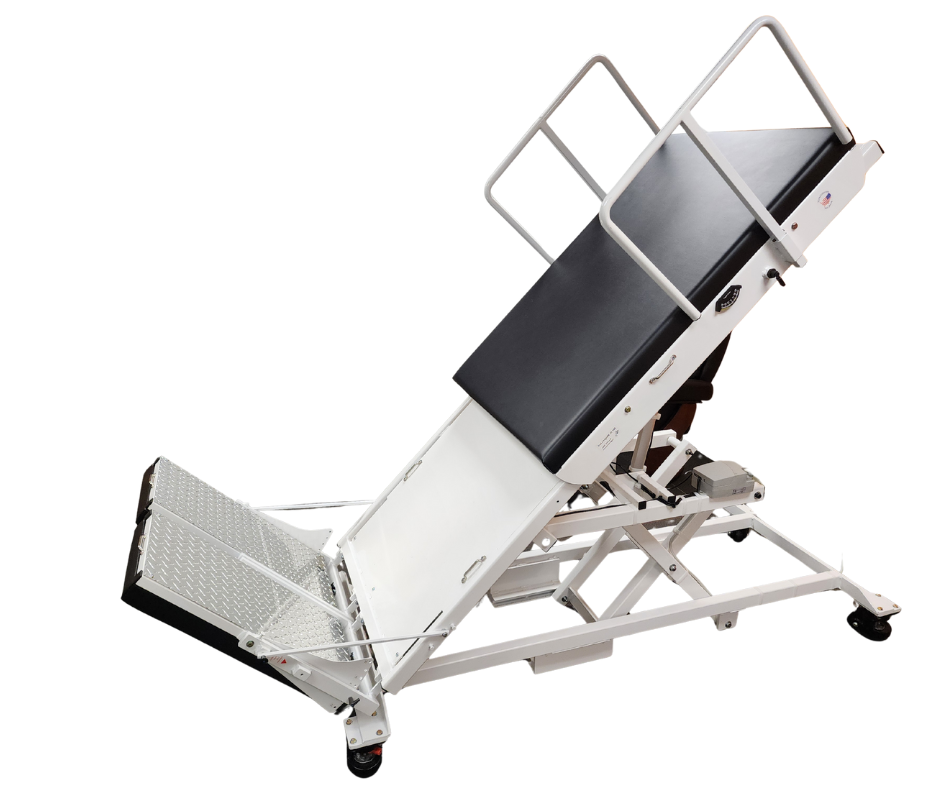
  • To minimize symptom spikes, we progressed the patient using a single, versatile piece of equipment: The MAT Treatment Table. Completing all therapeutic exercises on one surface proved vital, as frequent standing transfers consistently exacerbated dizziness, nausea, "coat hanger" neck pain, and profound fatigue.

Core Components of the Protocol


1. Avoiding Standard Cardio

Low-level cardiovascular work was performed on the MAT table in near-horizontal positions using both arms and legs. Exercise intervals were carefully timed with deliberate breaks to prevent heart rate spikes.


2. Horizontal Strength Training

We focused heavily on targeted lower-body and core movements while keeping the body lying down to manage orthostatic stress.


Key Exercises for Long COVID Strength & Endurance

To safely rebuild strength and stamina without triggering post-exertional malaise, the following exercises proved most beneficial:

  • Lower Body Foundations: Bridges, Four-Direction Straight Leg Raises (SLR), Clamshells, and Short Arc Quads (SAQ)
  • Core Stability: Mini crunches, Prone Planks, and Side Planks
  • Gradual Upright Progression: Partial incline squats, along with single-leg ankle plantarflexion and dorsiflexion
  • Flexibility & Mobility: Targeted hamstring and quadriceps stretches

Together, we can deliver Excellence in Rehabilitation at every stage of the recovery process.


Learn more about the MAT Table building process at these links:


For purchasing information, or for a one-on-one virtual demo of the MAT Table, click here and schedule time with the inventor! Or call 269-569-4414 or email Brian Scherff.


Click HERE to read more about this case and my treatment outcomes.

Email  Facebook  LinkedIn  Web  YouTube
LinkedIn Share This Email