Dear Angelenos:
The Filipino American Library in Los Angeles was the first and largest collection of Filipino and Filipino American titles in the United States, assembled by a remarkable Filipina. Helen Agcaoili Summers Brown spent over three decades working for the Los Angeles Unified School District, not counting her stint as a welder for the California Shipbuilding Corporation in Wilmington during World War II. After she retired from LAUSD, she devoted her energies to her library documenting the Filipino American experience.
As a Pasadena City College student working on a paper about the Spanish influence on Manila, Brown found nothing on the topic in any local library, so she began collecting material that grew into a library of its own over the following decades: books, pamphlets, periodicals, maps, and clippings, but also musical instruments, games, dolls, and cooking utensils. “Auntie Helen'' moved her home library into space donated by the Filipino Christian Church in 1985. Originally named the Pilipino American Reading Room and Library (PARRAL), the library moved to Luzon Plaza in 1994. It reopened as the Filipino American Library in its final location in 2000.
Earlier this month, the City held a ribbon-cutting ceremony for the new Historic Filipinotown Eastern Gateway monument. “Talang Gabay: Our Guiding Star,” an arch designed by artists Eliseo Art Silva and Celestino Geronimo Jr., now spans Beverly Boulevard at Belmont, marking the neighborhood’s eastern entrance. I invite you to explore the Filipino American Library Collection online and read more about the Filipino American experience in Los Angeles in the Filipino Americans in Los Angeles, 1903-1980 Historic Context Statement prepared by the Department’s Office of Historic Resources.
Happy Asian American and Pacific Islander Heritage Month.
Sincerely,
|
|
Vince Bertoni,
Director of Planning
|
|
|
|
New Budget for Fiscal Year 2022-2023 Adds Positions to Meet City Planning’s Goals |
On May 18, the Los Angeles City Council adopted the City’s budget for Fiscal Year 2022-2023. The Department was successful at securing positions and funding for 50 additional staff, bringing its total number of authorized positions to 546—an overall increase of 10% in staffing resources. These positions will be instrumental to the Department in addressing issues of housing, environmental justice, and sustainability.
The 50 positions secured for City Planning include:
- Nine positions for the implementation of the Housing Element Update and corresponding programs that focus on increasing housing capacity
- Ten positions to augment staffing levels at the Development Services Centers to support pre- and post- entitlement consultations
- Seven dedicated positions to assist with the review of affordable housing projects
- Seven positions to establish a Health and Environmental Justice Unit, plus funding to conduct a Climate Vulnerability Assessment in order to center issues of environmental justice and sustainability at the forefront of future planning and land use considerations
- Two positions for the Wildlife Pilot Study to replicate the existing work program and expand it to other parts of the City
- Eight positions for oil regulation to aid the City in the amortization and eventual ban of oil drilling and production across Los Angeles
- Three positions for the Office of Racial Justice, Equity, and Restorative Planning to assist City Planning in crafting its Racial Equity Action Plan and guide citywide discussions on outreach and engagement
- Four positions to add capacity to Major Projects to strengthen the review of complex projects across the City that require a high degree of proficiency with the California Environmental Quality Act
|
|
|
|
‘Working with Tribal Governments’ Speaker Series |
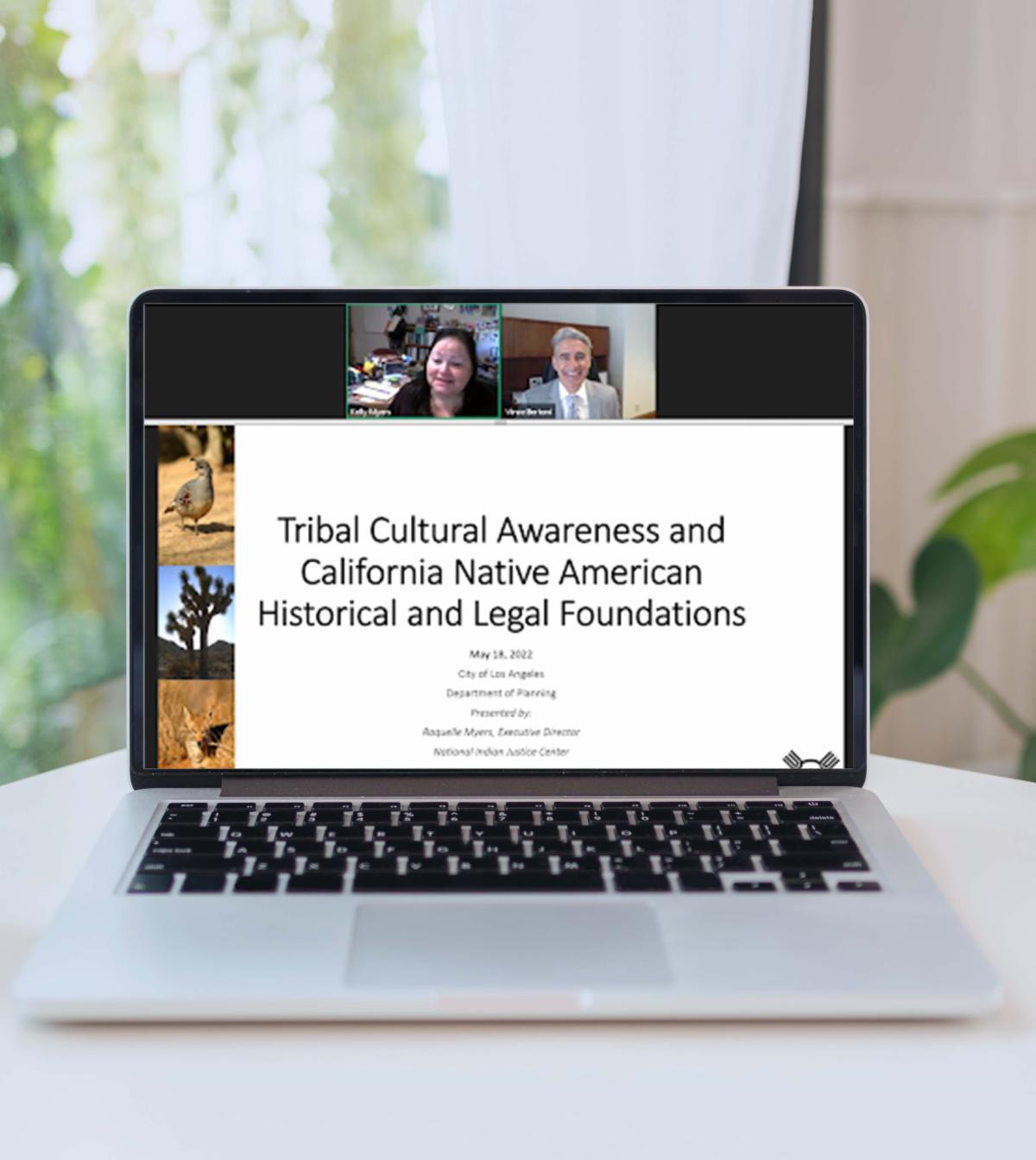
On May 18, City Planning kicked off its "Working with Tribal Governments" Speaker Series. This first-of-its-kind training aims to expand the staff’s cultural sensitivity to, awareness of, and understanding of tribal governments and Native American communities in Los Angeles.
As Department staff consult with Native American tribes under Assembly Bill (AB) 52 and AB 168, and as part of the broader outreach to Black, Indigenous, and People of Color (BIPOC) communities, City Planning seeks to understand and learn from past events and policies that have been detrimental to Native Americans throughout California’s and Los Angeles’s history.
Trainer and Executive Director of the National Indian Justice Center, Raquelle “Kelly” Myers, discussed California’s history and the State’s treatment of Native Americans to establish a baseline understanding, and provided expertise on thoughtful community engagement, particularly with tribal governments. City Planning leadership and staff will continue strategic efforts to expand opportunities for authentic and inclusive engagement with tribal governments.
|
|
|
|
Revisions to the 2021-2029 Housing Element Update |
On May 19, the City Planning Commission (CPC) unanimously voted to recommend that the City Council approve the targeted amendments to the 2021-2029 Housing Element. The proposed amendments were prepared in response to a February 22 letter from the California Department of Housing and Community Development (HCD), informing the City that additional revisions were needed to the Housing Element's programs to ensure compliance with new Affirmatively Furthering Fair Housing (AFFH) requirements in state law. HCD notified the City in a May 11 letter that, upon adoption, the proposed revisions would meet all statutory requirements.
The Housing Element is a part of the City’s General Plan that lays out how Los Angeles will meet its obligations for housing, based on the City’s Regional Housing Needs Assessment (RHNA). Under State law, the City must update the Housing Element every eight years. The 2021-2029 Housing Element, also called “The Plan to House LA,” is a bold response to the housing crisis that proposes to add nearly 500,000 units by 2029.
In its letter, HCD praised the revised draft of Los Angeles’s Housing Element as a model for other cities to follow: “HCD applauds the City’s approach to the housing element update, including the tremendous effort in planning for nearly half a million homes between now and 2029, and the bold and meaningful set of strategies put forth in pursuit of that goal.
|
|
|
|
Restaurant Beverage
Program Implementation
|
On May 10, the City Council’s Planning and Land Use Management (PLUM) Committee approved seven proposed City Council Resolutions related to the Restaurant Beverage Program (RBP). These resolutions will activate the general provisions of the RBP to apply throughout the entirety of Council Districts 2, 3, 4, 5, 10, and 11, allowing for qualifying restaurants within these boundaries to obtain administrative approvals for the sale of alcohol.
The program is designed to offer new investment pathways for brick-and-mortar establishments, balancing business interests with community desires for stronger enforcement measures. To that end, a separate but related City Council Resolution was introduced to establish an Alcohol Sensitive Use Zone (ASUZ) in portions of Council District 15. The ASUZ version contains additional standards, including a one-year provisional period that limits the program to only beer and wine for the first year and allows the City Council to opt out of designated areas.
These resolutions will now be considered by the City Council for final approval. To participate in either version of RBP, a qualifying restaurant must be located within an eligible neighborhood. The RBP requires the City Council to designate specific geographic areas by City Council Resolution in order to activate either the general or ASUZ provisions of this ordinance.
|
|
Southwest Valley Community Plans Update Team Holds Virtual Office Hours |
|
On May 18, City Planning released updated draft land use designations for the Canoga Park-Winnetka-Woodland Hills-West Hills, Encino-Tarzana, and Reseda-West Van Nuys-Lake Balboa Community Plans. Accompanying these drafts are a StoryMap that presents the proposed changes in detail and a three-part video series explaining the background and aims of the new proposals. The updated proposals include a discussion on the initial vision and concepts around planning for the future of the Ventura-Cahuenga Boulevard Corridor.
The Department’s aim is to engage the community around two key goals: planning for projected population and employment growth in the Southwest Valley over the next 25 years, and applying the City’s new Zoning Code across the proposed plan areas. To schedule a one-on-one conversation about the draft land use designations with a planner, RSVP here.
|
|
Harbor LA Community Plans Update |
|
The Preliminary Draft Plans for the Wilmington-Harbor City and the Harbor Gateway communities are now available for public review and comment at planning4la.org/harborlaplans. The Harbor LA Community Plans Update is a multi-year program that began in Fall 2018. Interested parties are invited to review the revised documents and share their thoughts with the Harbor LA planning team. Comments can be sent to planning.harborlaplans@lacity.org.
To date, the Department has conducted several rounds of outreach, collecting important community feedback at every step. In the summer of 2021, the Harbor LA planning team released the draft policy document for public review. To access the summary of comments, please click on the respective plan area link: Harbor Gateway, Wilmington-Harbor City. |
|
'Low Rise, High Stakes' Panel Discussion |
|
Senior City Planners Matt Glesne and Sarah Molina-Pearson joined a recent panel discussion co-sponsored by Third LA and the Huntington-USC Institute on California and the West entitled, “Low Rise, High Stakes: What New State Laws Mean for Housing Policy, Residential Architecture, and Neighborhood Development in Los Angeles.”
The event, moderated by Christopher Hawthorne, Chief Design Officer for the City of Los Angeles and Director of the Third L.A. Series at USC Dornsife, featured the perspectives of architects and housing experts on the impact of Senate Bill 9, which allows single-family lots to be subdivided to hold up to four residential units, and other new state housing legislation. The discussion focused on strategies to promote affordability, neighborhood cohesion, and multigenerational living as the City works to locate housing closer to transit lines and job centers. Video of the April 28 event is available here. |
|
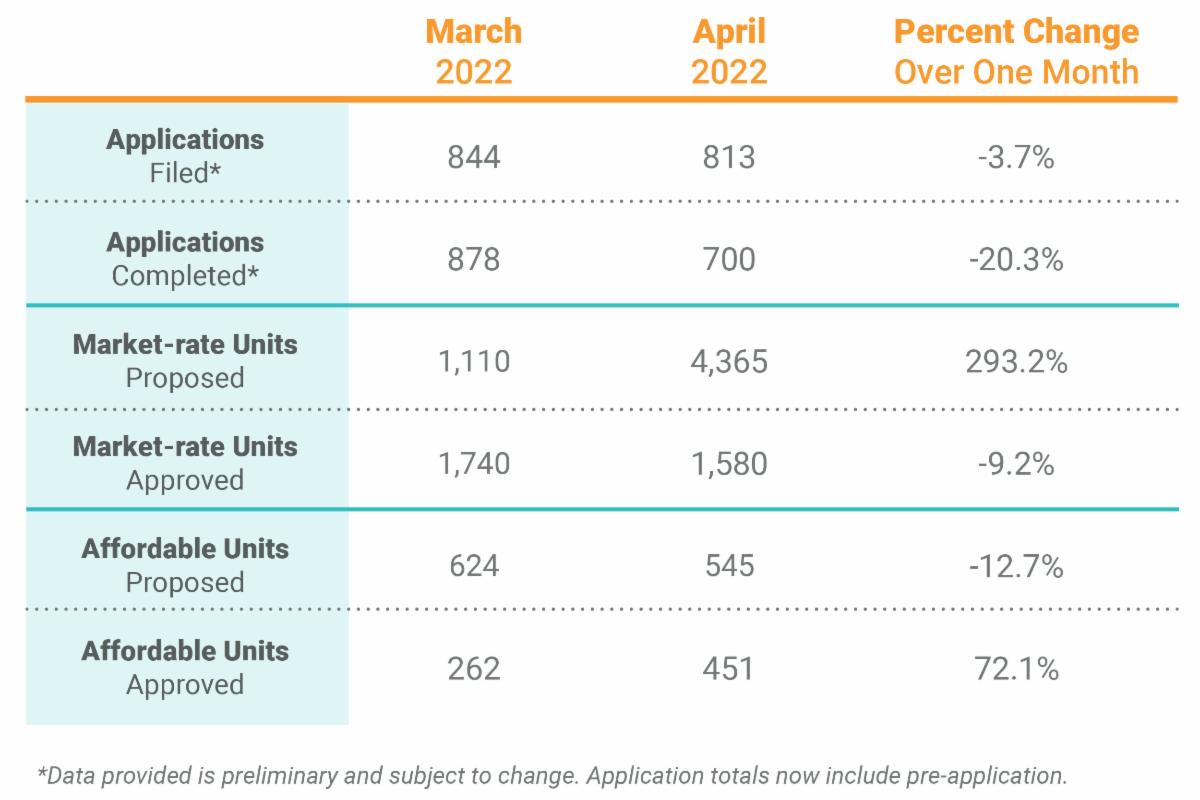
The number of applications for ministerial or discretionary approvals filed with LA City Planning remained relatively flat between March and April of this year. However, the number of Market Rate units proposed for construction jumped from 1,110 in March to 4,365 in April—a nearly 300% increase. While the number of affordable units proposed fell by 12.7%, the number of affordable units approved rose from 262 to 451 units, continuing the trend of growth in the number of affordable homes added to the development pipeline through LA City Planning action. |
|
|
|
- Preparing final Letter of Determination (LOD) and the Final Environmental Impact Report (EIR) to be transmitted to the City Council later this summer of 2022
- Plan and New Zoning Code Recommended for Approval by the City Planning Commission in September 2022
- Released revised materials in advance of City Planning Commission hearing, including Zoning, Plan Text, Land Use Map, and Community Benefits Program in June 2021
|
|
|
|
- Released the Preliminary Draft Plans (updated policy documents) for Harbor Gateway and Wilmington-Harbor City in May 2022
- Preparing Draft Zoning and EIR for the Harbor LA Community Plans Update
- Released Harbor LA StoryMap with new zoning information in December 2021
- Released the text-only draft policy documents for the Harbor LA Plans in Summer 2021
|
|
|
|
- Conducting outreach for Ventura-Cahuenga corridor in Spring 2022
- Releasing General Plan Land Use Map in Winter 2022
- Initiating EIR in Spring 2023
|
|
|
|
- Review the Updated Proposed General Plan Land Use Design4144ations Video Series and Storymap released in May 2022
- Sign Up for Virtual Office Hours to meet with Southwest Valley Community Plan Update Planners in June 2022
- Preparing draft Zoning and EIR for the SW Valley Community Plans Update
|
|
|
|
- Reached out to Westside Community Plan Update Neighborhood Council land use committee chairs to inform them of the Westside Community Plan Advisory Group (WCPAG) roll-out
- Released application and promoted opportunity to join the WCPAG, now reviewing submitted applications with selected members (and their alternates) to be announced by June 30
- Preparing orientation materials and status of draft zoning and policies to onboard advisory group members
|
|
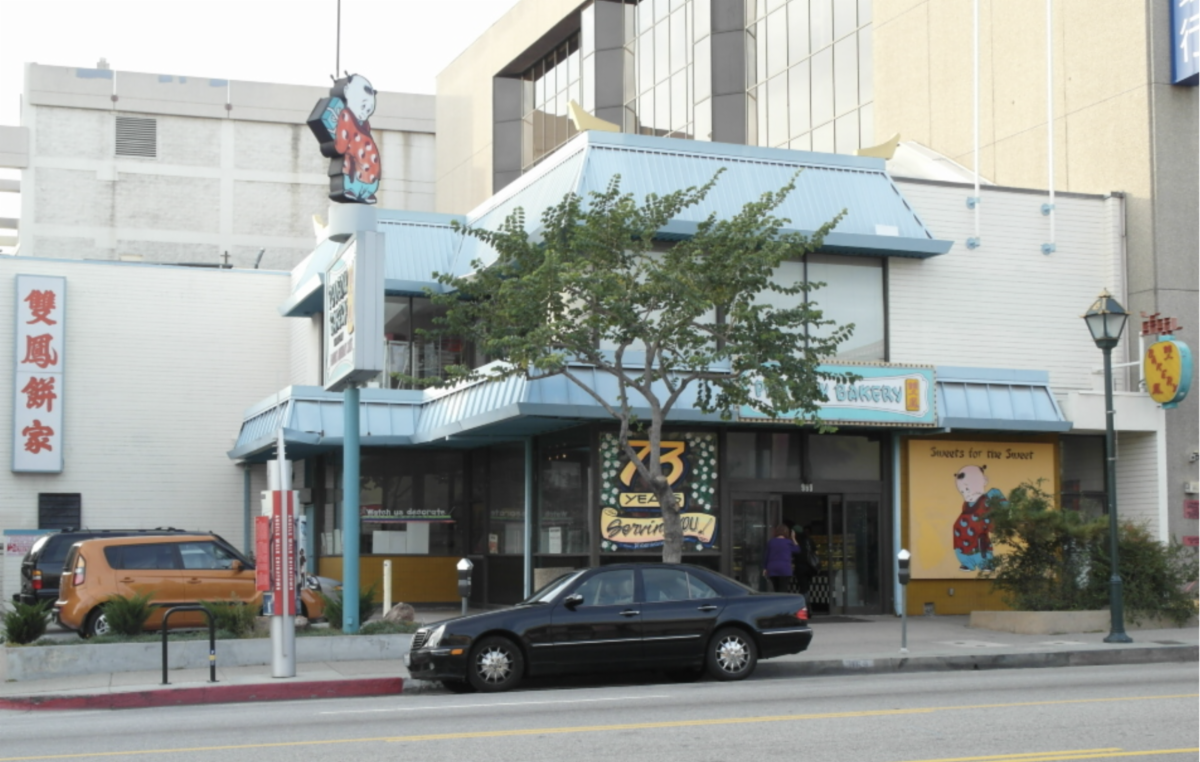
Phoenix Bakery is an iconic Los Angeles institution specializing in Cantonese-style pastries and sweets. They are best known for their signature fresh strawberry whipped cream cakes, a mainstay of birthday and wedding celebrations for generations of Angelenos.
Phoenix Bakery was opened in 1938 by a local Chinese American couple, F.C. and Waihing Chan. Still owned and operated by fourth-generation members of the Chan family, the bakery is one of a small handful of surviving inaugural businesses from New Chinatown’s founding in 1938. Old Chinatown had been razed in the preceding years to make way for Union Station.
Originally located at 951 N. Broadway in Chinatown’s Central Plaza, Phoenix Bakery moved to its current location at 969 N. Broadway in 1977. The bakery’s famed logo of a boy hiding a pastry box behind his back was created in the 1940s by Chinese American artist Tyrus Wong (1910-2016), best known for his work as lead production illustrator on Disney’s 1942 film Bambi.
Phoenix Bakery is an example of a legacy business that has contributed significantly to the cultural fabric of Los Angeles, enduring for nearly 85 years despite waves of change and development. For more information on Chinese American historic places in Los Angeles, explore the Chinese Americans in Los Angeles, 1850-1980 Historic Context Statement. |
|
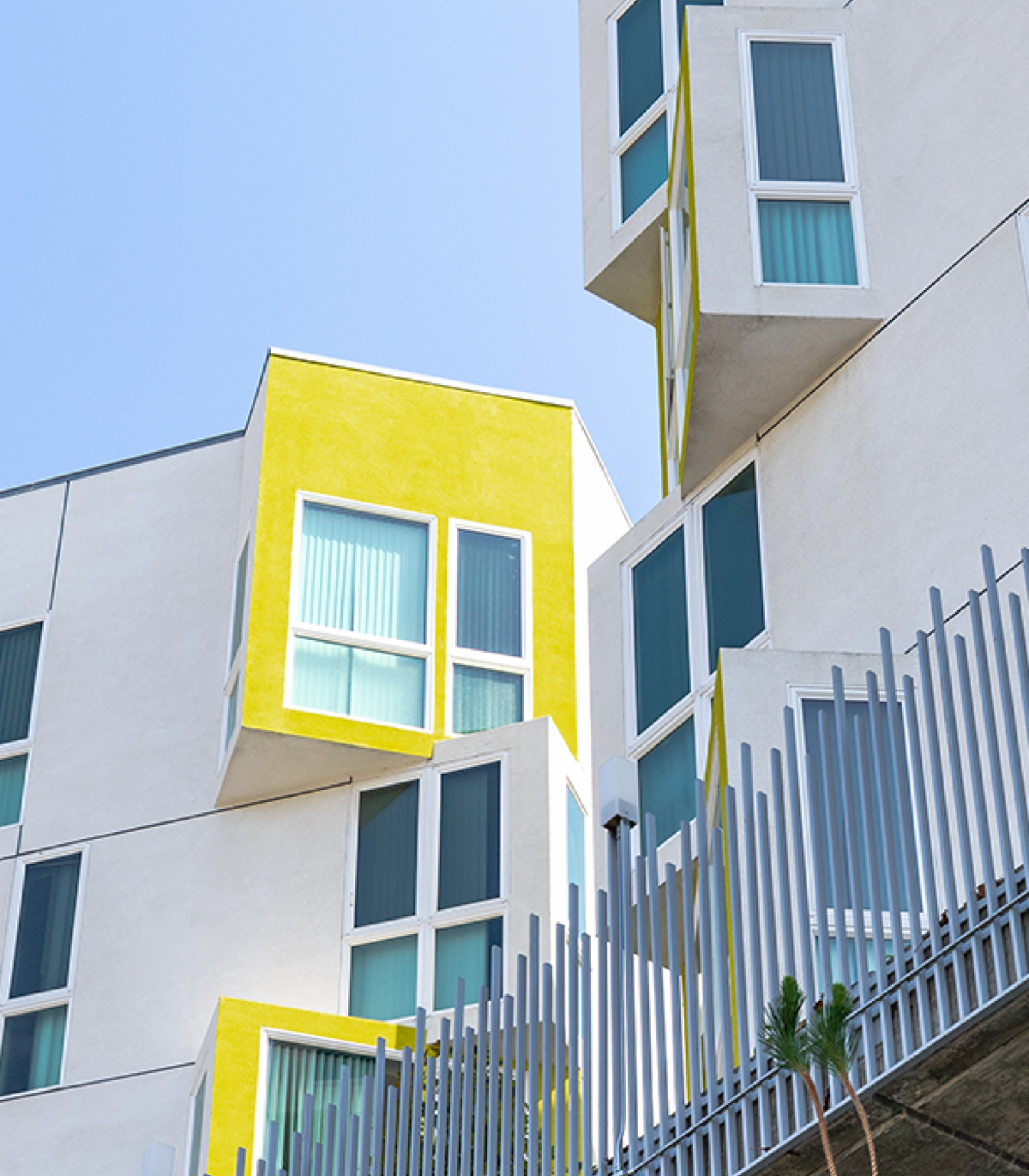
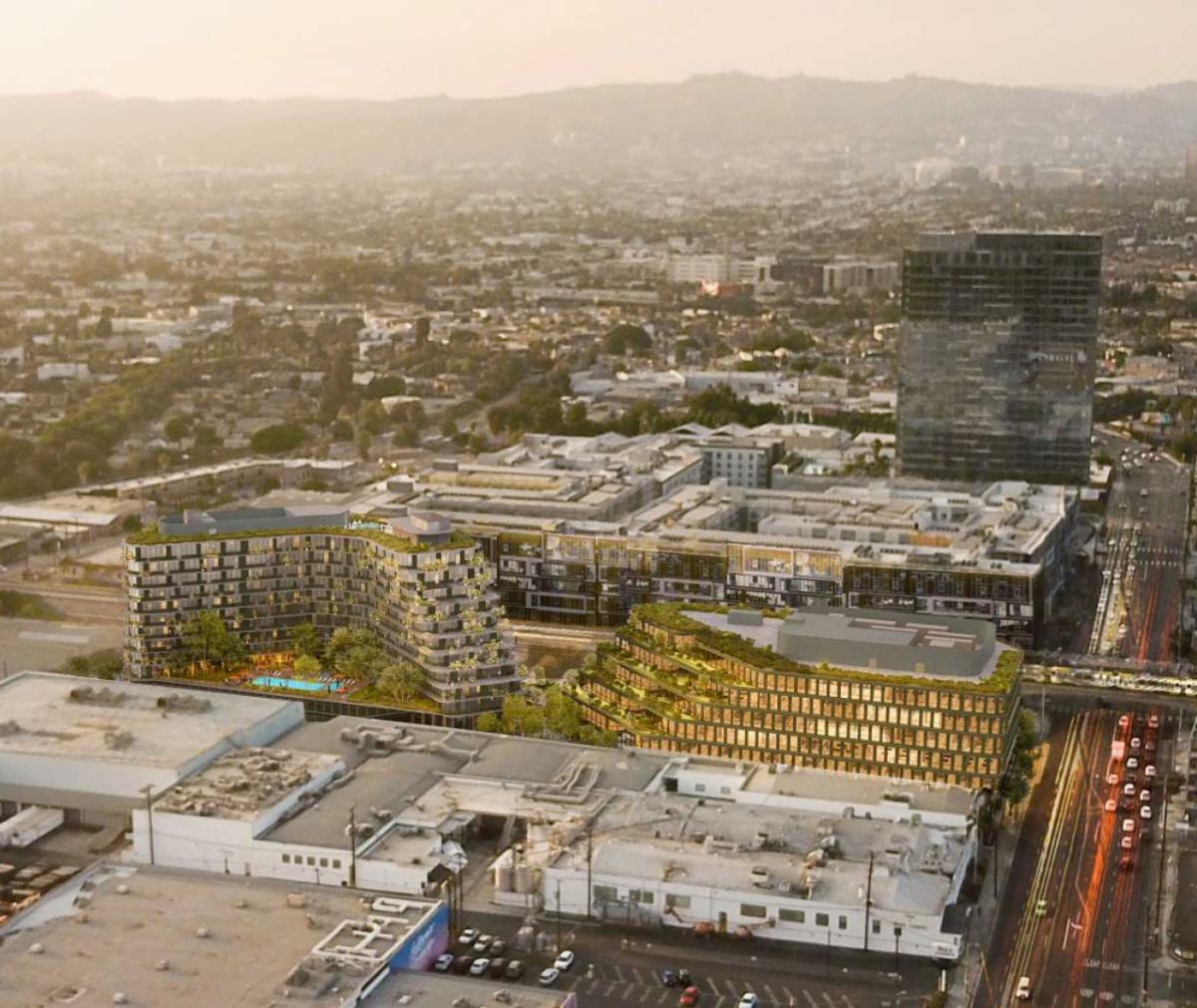
This month, the City Planning Commission approved a mixed-use residential and commercial development that will include up to 260 housing units on a 3.53 acre site at 3401 South La Cienega Boulevard, near the intersection of La Cienega and Jefferson Boulevard, and within the West Adams–Baldwin Hills-Leimert Community Plan Area of Council District 10. The new 13-story structure will include 22 units reserved for “very low income” households and seven units set aside for workforce housing. The project will also include 2,869 square feet of ground-floor retail within a six-story commercial office building located on the eastern end of the project site. In addition, the project will provide approximately 28,000 square feet of publicly accessible open space adjacent to the Metro bike path and neighboring Expo Station.
|
|
June City Planning
Commission Meetings
|
|
|
June Area Planning
Commission Meetings
|
|
Central: June 14, 28
South Los Angeles: June 7, 21
South Valley: June 9, 23
West: June 1, 15
East: June 8, 22
Harbor: June 7, 21
North Valley: June 6, 16
|
|
June Cultural Heritage
Commission Meetings
|
|
|
LOS ANGELES
CITY PLANNING
|
|
Sign up to receive citywide planning updates by email
|
|
|
|
|
|
|
|
|