|
Good morning, Saints, I pray that your Lenten journey and preparation for Palm Sunday have been blessed. Today’s devotion continues to explore the journey and actions of our Lord, Jesus Christ in Matthew 26, through the lens and theme that God's timing is always perfect.
Last Sunday, my pastor explored Jesus’ raising of His friend Lazarus from the dead and the grief responses of both Mary and Martha, among other aspects of the story recorded in John. While Matthew does not record the miracle of bringing Lazarus back from the dead, Matthew does mention in chapter twenty-one that Jesus went to Bethany, and if we compare it to John’s recordings, we know why - to raise His friend Lazarus back to life. Something in the sermon, and references in John’s account of the miracle, caught my attention: both Martha and Mary accuse Jesus of being late. “Lord,” Martha said to Jesus, “if you had been here, my brother would not have died.” John 11:21; and later, when Mary reached the place where Jesus was and saw him, she fell at his feet and said, “Lord, if you had been here, my brother would not have died.” John 11:32. More interestingly, the crowd even engaged in this belief, “but some of them said, 'Could not he who opened the eyes of the blind man have kept this man from dying?’” John 11:37.
This questioning of Jesus’ being late and of God’s perfect timing got me thinking about how, as humans, it is against our nature to trust God’s perfect timing. How? Our nature is inherently sinful: “For we know that the law is spiritual, but I am of the flesh, sold under sin.” Romans 7:14. We tend to want to trust our own timing and planning over God’s perfect timing. Like Mary and Martha, we have our own idea and understanding of timing.
In Matthew 26, the theme of God’s perfect timing is a powerful undercurrent that shapes the narrative of Jesus' final hours in His journey to the cross. Throughout the chapter, we see that humans believe they are in control. Still, as Martha, Mary, and the crowd witness Jesus raising his friend Lazarus from the dead, every event aligns precisely with a divine schedule set by our Heavenly Father. Here are only a few in Matthew 26 for your consideration and exploration during your Lenten journey:
The Divine Appointment over Human Strategy. At the start of the chapter, the religious leaders plot to kill Jesus, but explicitly state, "Not during the feast, lest there be an uproar among the people." Matthew 26:5. However, Jesus had already declared that He would be delivered up during the Passover. The fact that He was crucified exactly when the leaders tried to avoid shows that God’s "appointed time" overruled human plotting and scheming. God’s timing overrules our planning, too.
The Preparation for the Burial. The anointing of Jesus at Bethany (Matthew 26:6-13, discussed in Saturday’s devotion two weeks ago) is another poignant example of timing. While the disciples viewed the expensive ointment as a waste, Jesus was at peace with it and recognized it as a timely and significant preparation for His burial. This act of devotion happened at the precise moment to signify His transition from a living teacher to the sacrificial lamb. What seems like a waste of time and insignificant to us may not be the case to Jesus.
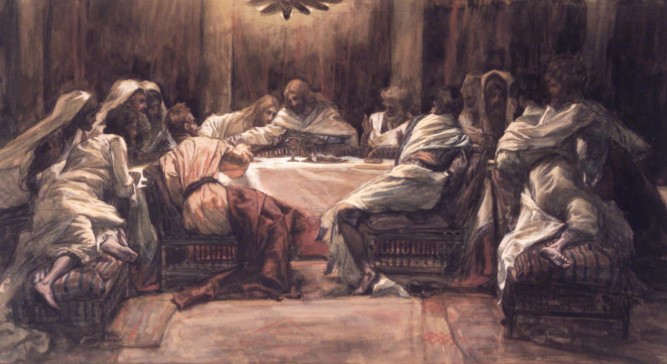
The Controlled Disclosure of Betrayal. Jesus managed the timing of His own betrayal so that His final teachings would be uninterrupted. There were no social media posts. Jesus communicated by giving only important and selective information. He did not disclose the location of the Last Supper to all the disciples at once, leaving Judas with "little time to lay plans" for a premature arrest. His timing was God’s divine timing. The "Hour is at Hand;" at the Last Supper and in Gethsemane, Jesus repeatedly references "the hour." His awareness of this divine "hour" underscores that He was not a victim of circumstance but a willing and obedient participant in a perfectly timed redemptive plan prepared ahead of time by the Father — Jesus, an obedient Son, obedient even through death.
Obedience and submission in Gethsemane. In the Garden of Gethsemane, the struggle between human desire and divine timing is perhaps the most evident. Jesus' own prayer, "Yet not as I will, but as you will" (Matthew 26:39), is the ultimate act of obedience and perfect alignment with God's will, perfect timing, and purpose. Even when the disciples fell asleep and failed to "watch" with Him, Jesus’ own internal clock remained perfectly synchronized with the Father’s will.
Final fulfillment of prophecy. Every small detail. For example, the 30 pieces of silver for Judas. In the Old Testament (Exodus 21:32), thirty pieces of silver were the legal compensation for a slave who was killed. By accepting this amount, the religious leaders unintentionally fulfilled prophecy by "valuing" the Son of God as nothing more than a common slave. Beyond this betrayal, we see Peter’s triple denial before the rooster crowed; this, too, was foretold. Separately, at the Last Supper, Jesus identified His betrayer as one who "dipped his hand with me in the bowl" (Matthew 26:23). This echoes Psalm 41:9: "Even my close friend, someone I trusted, one who shared my bread, has turned against me". These fulfilled prophecies in Matthew 26 serve as "spiritual time-stamps," proving that God’s plan was unfolding exactly as it had been written centuries before by an all-knowing and all-loving God. For God so loved the world, that he gave his only Son, that whoever believes in him should not perish but have eternal life. For God did not send his Son into the world to condemn the world, but so that the world might be saved through him. Whoever believes in him is not condemned, but whoever does not believe is condemned already, because he has not believed in the name of the only Son of God. John 3:16-18.
We find ourselves just like Mary, Martha, and the crowd observing Jesus bringing His friend Lazarus back from the dead - skeptical, uncertain, and believing that Jesus was just too late. We have a stubborn sense of our own timing - a “Lazarus moment,” and fail to trust in God’s perfect timing. Praise God that through the eyes and ears of faith, we believe God’s divine timing is perfect, and our ways and beliefs on timing and planning are imperfect. Our lives and calendars may feel chaotic, yet we serve a God who is never rushed and never late. It is through Christ's sacrifice and love for us that we are made perfect, “For by grace you have been saved through faith. And this is not your own doing; it is the gift of God, not a result of works, so that no one may boast. For we are his workmanship, created in Christ Jesus for good works, which God prepared beforehand, that we should walk in them.” Ephesians 2:8-10. Amen!
Blessings to you, dear Saints, and may you worship the Father who created you, the Son who saved you, and the Spirit who guides and strengthens your faith daily. Have a blessed Holy Week.
In His love, and mine.
jb
~ Reflection for the Road Ahead ~
- A "Lazarus" Moment: Is there a situation where you feel God is "late?" How does Matthew 26 help you trust His "Divine Schedule" today?
- Surrendering the Calendar: What personal plan or deadline are you holding onto that you need to surrender to the Father’s perfect timing?
- The Power of the Hour: Amidst the busyness of Holy Week, how can you pause to recognize the work God wants to accomplish in this specific hour of your life?
|