Virginia - North Carolina: Thursday, October 27, 2022 | |
|
Oregon Inlet Campground is located on the southern tip of Bodie Island. Bodie Island is actually a long narrow barrier peninsula that forms the northernmost portion of the Outer Banks. These barrier dunes are shape-shifters, constantly moving. The bottom quarter of the peninsula was an island until 1811, when sand shifted and closed the gap.
Highway 12 runs down the spine of the Outer Banks, hopping from sand-spit island to sand-spit island. Highway 12 starts at a town called Corolla, near the top of the peninsula, 45 miles from our campground. We are going to stay for three days at Oregon Inlet Campground. Today we will explore the top 1/3 of the peninsula, so the plan is to drive up to Corolla to start there.
The shifting sands of the Outer Banks barrier islands hints at shifting shoals just offshore of the Outer Banks islands. Called the ‘Graveyard of the Atlantic’, there are an estimated 3,000 shipwrecks laying off these innocent looking dunes. In places, the shoals jut out for many miles. With yesterday’s fog developing so quickly and completely, I can see the danger.
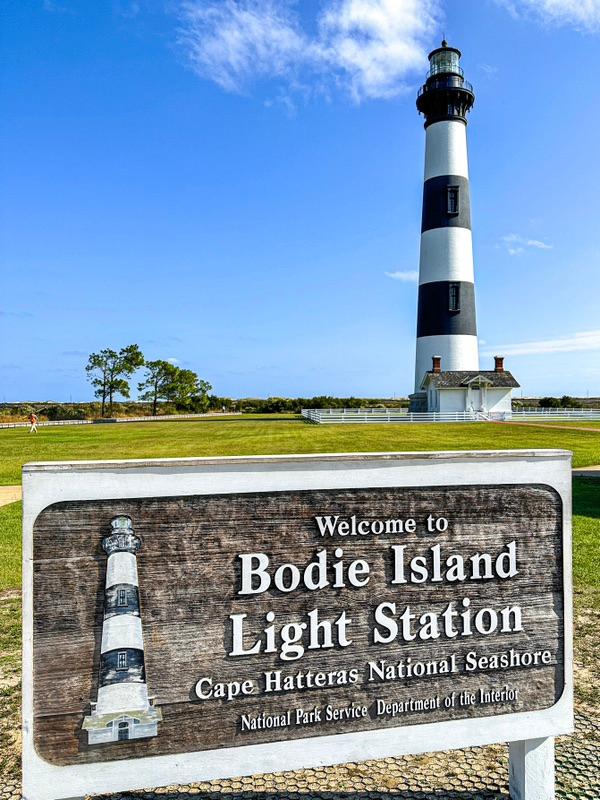
To help, a series of lighthouses were built along the Outer Banks, one every 40 miles. The Currituck Beach Lighthouse in Corolla is the northernmost lighthouse. It was our second lighthouse stop. Our first stop was the Bodie Island Lighthouse, just across the highway from our campground.
Each lighthouse on the Outer Banks has a unique style to help ship captains know where they are, at least before GPS. One lighthouse tower has horizontal stripes, another has vertical stripes, one has diamond shapes, etc. The light in each lighthouse pulses at a different rate, allowing ships to know which lighthouse they are seeing at night.
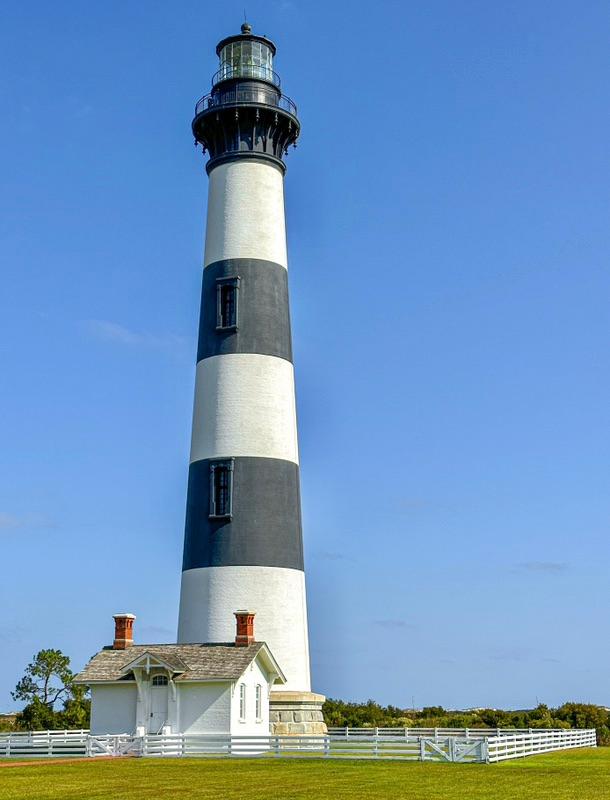
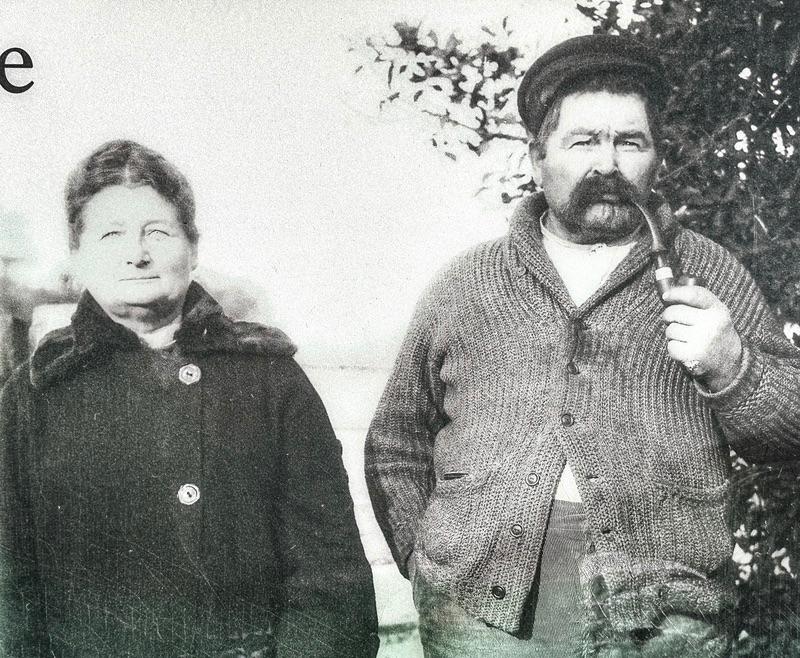
The Bodie Island Lighthouse has alternating white and black horizontal stripes. It turns out that before automation, each lighthouse employed three families to tend the light. The head keeper and family had a house all to themselves. The two assistant keepers and their families shared a duplex. I read that it took three families to cope with the isolation.
Well, I don’t know ‘bout dat! All the lighthouses on the far-more remote Great Lakes only had one keeper at a time. Now, that’s what you call isolation - alone on a tiny island, in the dead of winter……. Yikes!!
| |
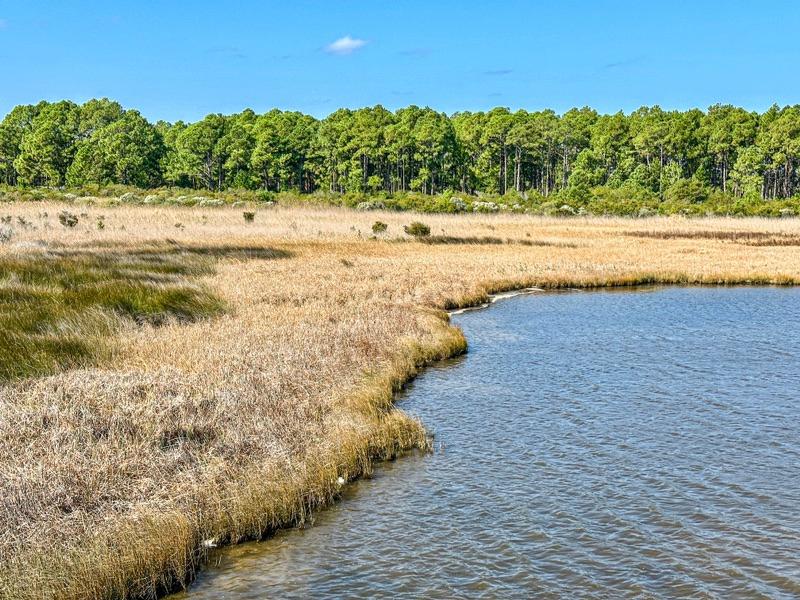
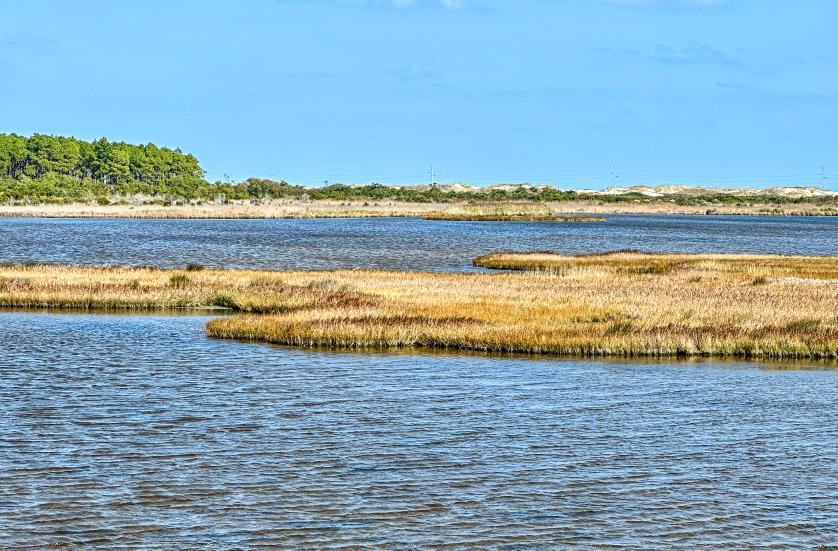
Bodie Island Lighthouse features black and white stripes. Because of the curvature of the earth, ship captains can estimate how far away from shore they were by counting how many stripes they could see. Far away, they could only see the top stripes. | A photo of a light-keeper and his wife. | Above and below: Bodie Island next to the lighthouse had plenty of backwaters. | |
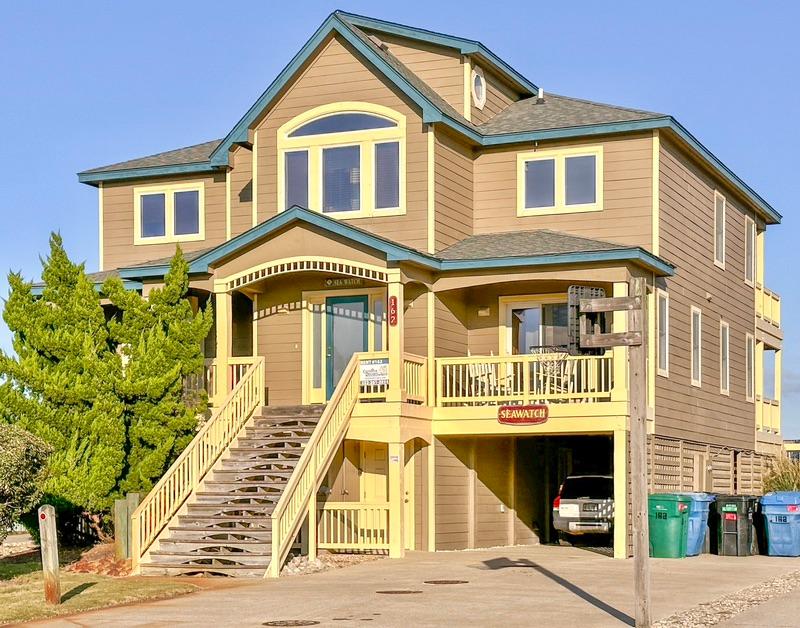
The drive up to Corolla is odd. The stretch of highway 12 that is part of the Cape Hatteras National Seashore is raw sand, undeveloped, and spectacular. The rest is overdeveloped with businesses and miles and miles of rental units. Although there are some pockets of cute commercial businesses, most aren’t very attractive. The rental housing is nice and surprisingly new, much like the rentals we saw two days ago at Sandbridge Beach. There are thousands of these pastel-colored two and three story houses. Where do all the renters come from?
We drove the side streets most of the way to Corolla. The houses lining the dunes were more attractive than the commercial outlets along highway 12. Again, like Sandbridge Beach, these houses seem to be newly built, with many still under construction. Were the Outer Banks more wild just a decade or two ago?
| 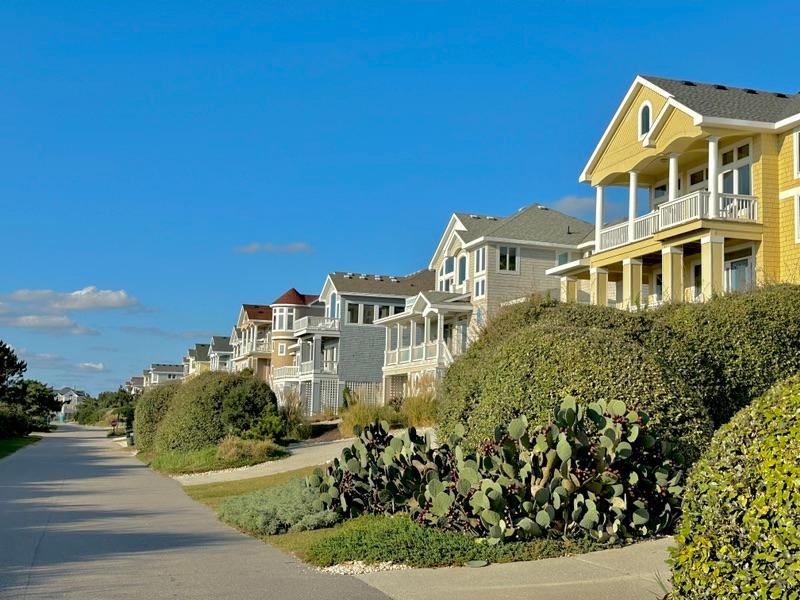 | The side-street that we drove most of the way up to Corolla. This row of rentals parallels the dunes protecting the Atlantic Ocean side of the island. | Corolla, literally at the end of the road, was a genuine QT. The lighthouse, built in 1873, was solid red brick. For a whopping $12 you could walk up the spiral staircase to the top. We passed. We’ve climbed many lighthouses in our day for free. The grounds were nicely kept up and a wedding was taking place when we were there. It was a picturesque spot to tie the knot. | 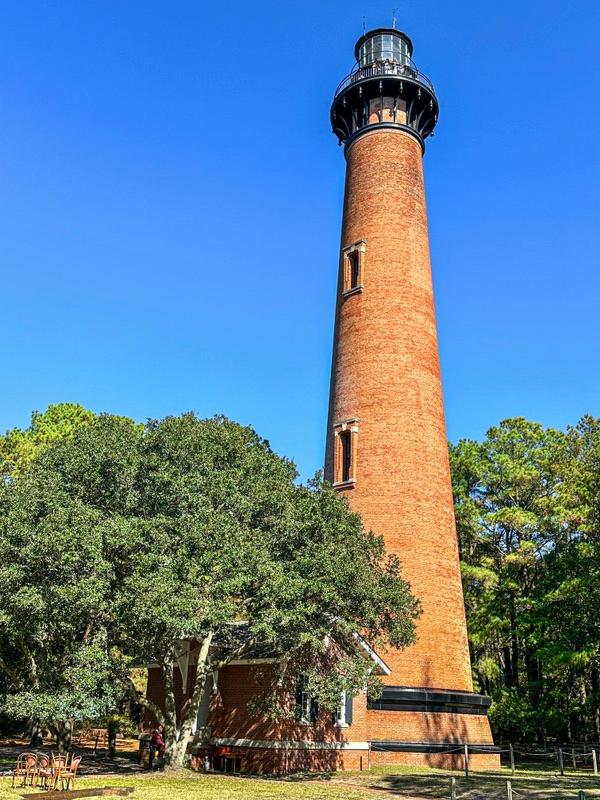 | 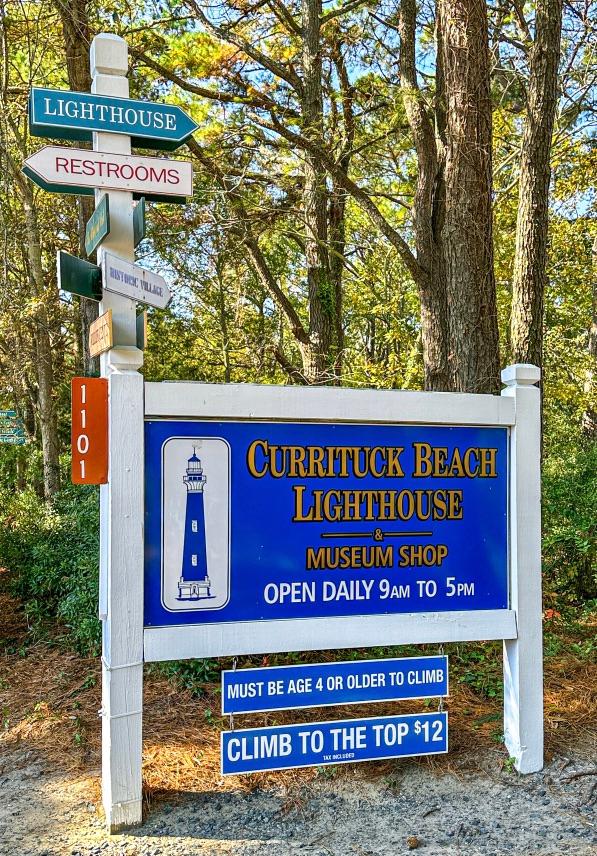 | 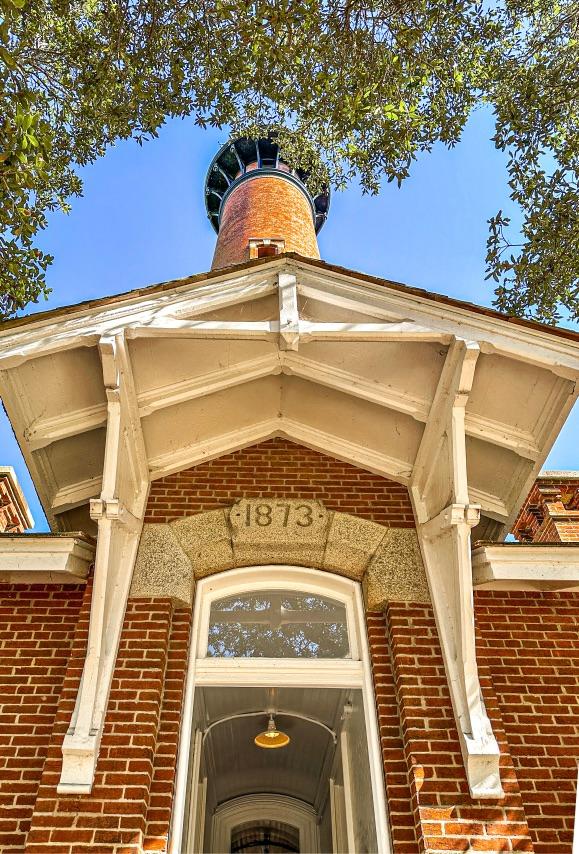 | |
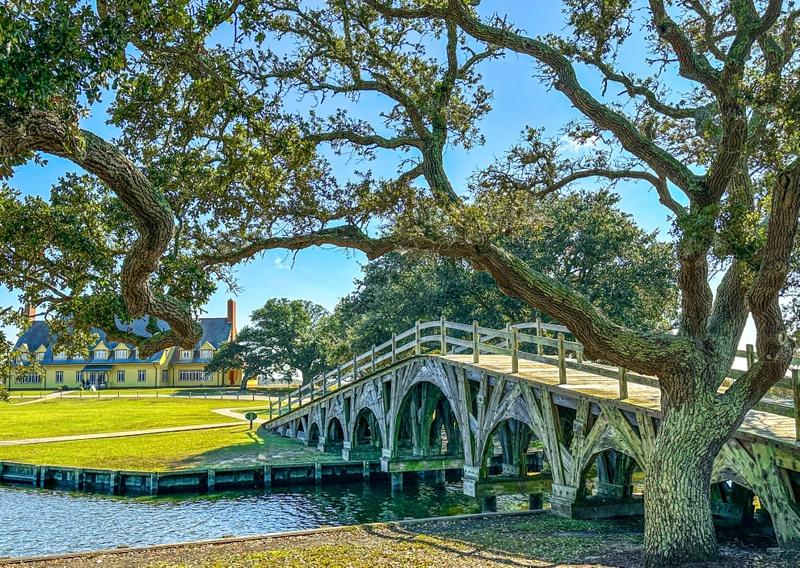
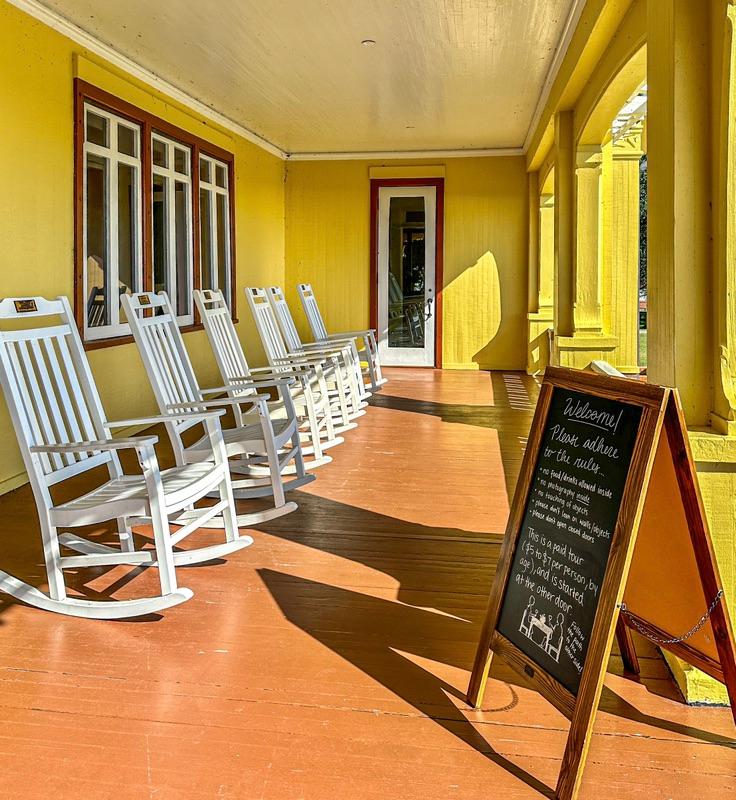
The big draw in Corolla was the Whalehead Mansion, a 1920s Art Nouveau-style 21,000 square-foot shack built by Edward Collings Knight, Jr. and his wife, Marie Louise, as a winter vacation home. The town of Corolla, located in Currituck County, on the long narrow sand peninsula that separates the Atlantic Ocean from the Currituck Sound, is smack in the middle of a major waterfowl flyway. Currituck is an Algonquin Indian word that means ‘land of the wild goose’.
Edward Knight was an avid duck and goose hunter. He must have been, as there were no roads that came anywhere near Corolla in the 1920s. In fact, Corolla wasn’t even a real town. To build a mansion in the middle of nowhere just to shoot ducks says a lot about his passion. Ironically, Knight was involved in founding the More Game Birds in America, the forerunner of Ducks Unlimited. I guess at some point he knew that he, and his cronies, were thinning the duck population too much.
We took the tour of the house. For the 1920s, it was as modern as anything built today, fully electrified and with indoor plumbing. It even featured an electric refrigerator, a modern marvel at the time.
With decades of neglect, the mansion had badly deteriorated, however, when the county assumed ownership in 1992, the house was fully restored from its copper-shingled roof to its basement foundation (we heard stories of snakes infesting the flooded basement). The county tracked down many of the old furnishings and refurbished them to their original luster. The furnishings it couldn’t procure, accurate facsimiles were either acquired or fabricated. Unfortunately, photos weren’t allowed in the house. Too bad, I would have had a field day in there.
The mansion was completed in 1925 and the Knights only got to enjoy the house through 1936, when he died at the age of 72. Edward Knight, Jr. inherited his fortune. His father, Edward, Sr., invented the sleeping railroad car which he sold to the Pullman Company. He also made a fortune in sugar refining. To his credit, Jr. managed his father’s companies successfully.
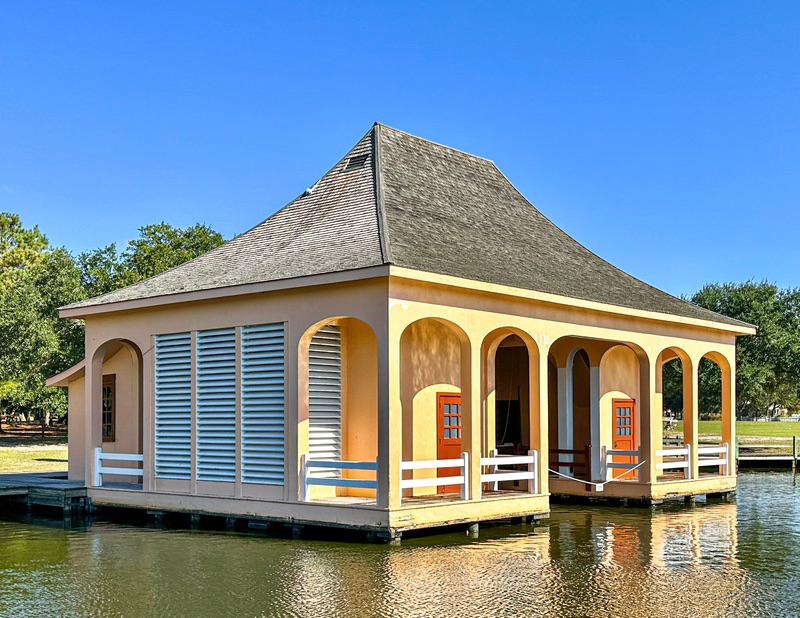
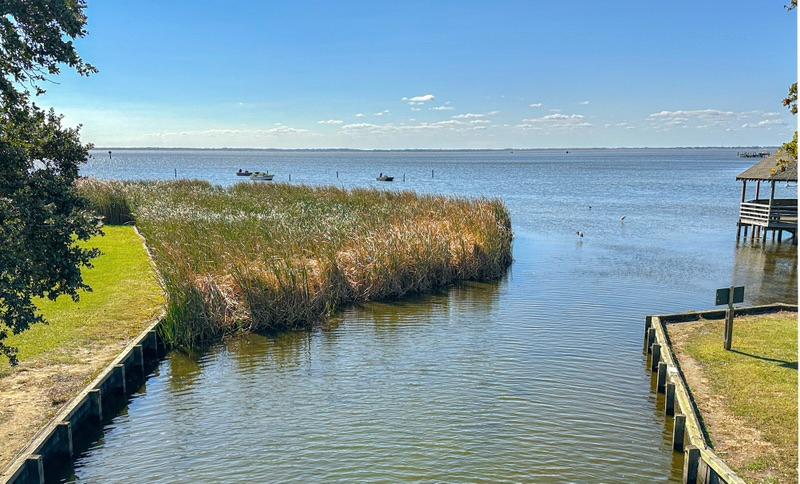
| 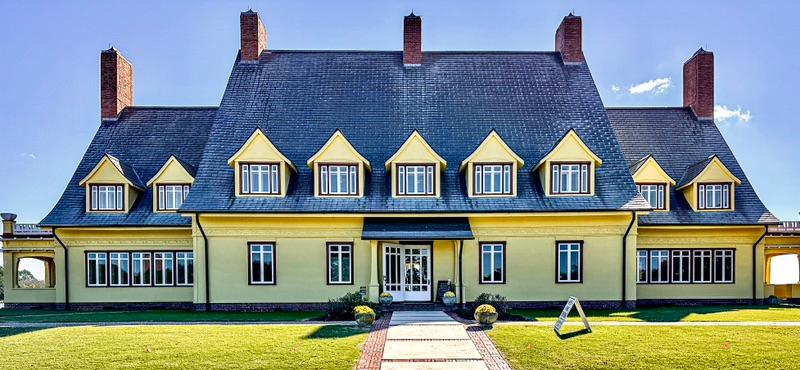 |  | 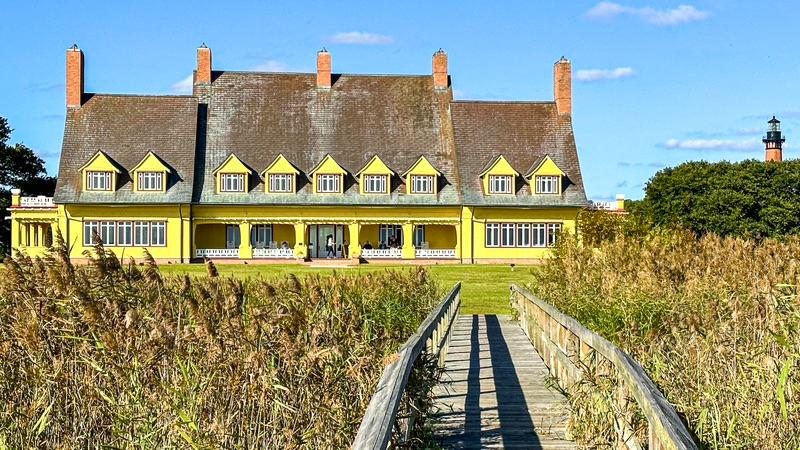 |  | 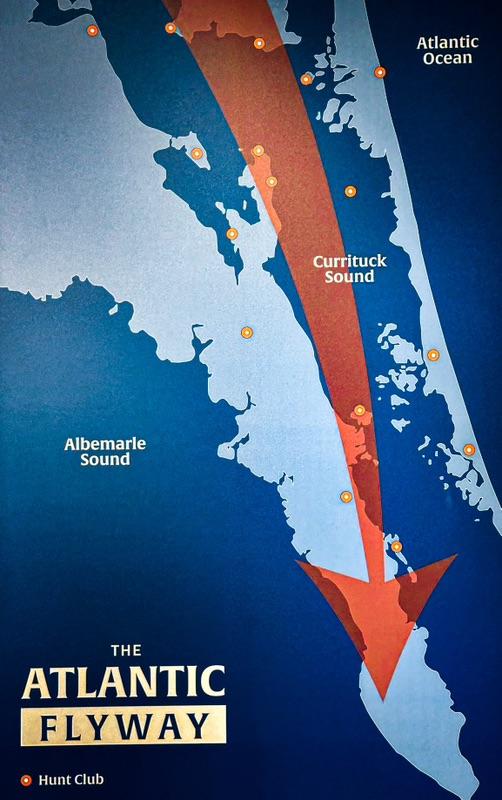 | The Outer Banks is the thin peninsula on the far right. Corolla is located in the northern part of the peninsula. | The boathouse sits in a man-made harbor. | The harbor’s outlet to the Currituck Sound. | |
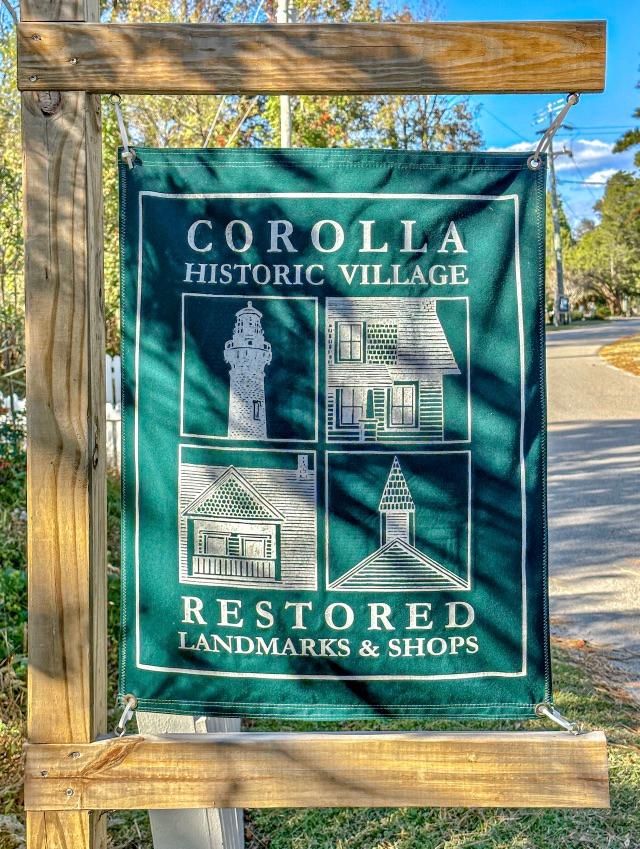
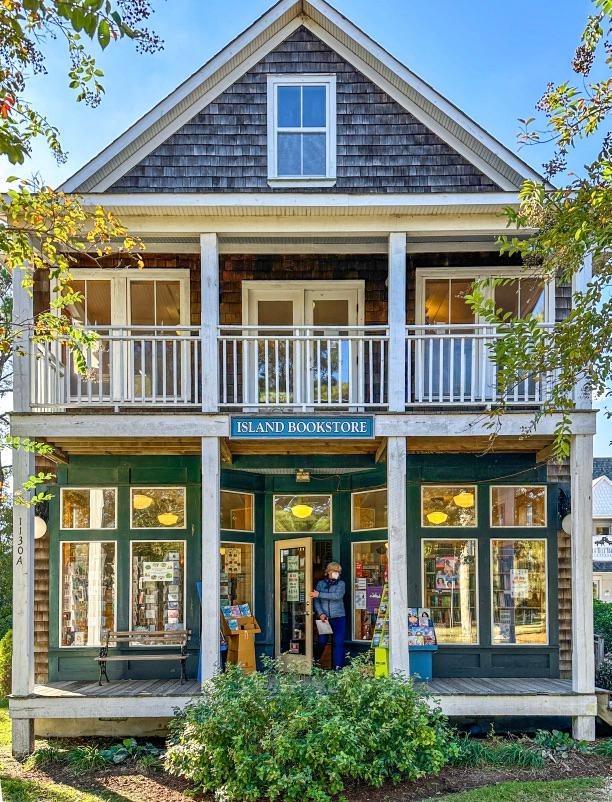
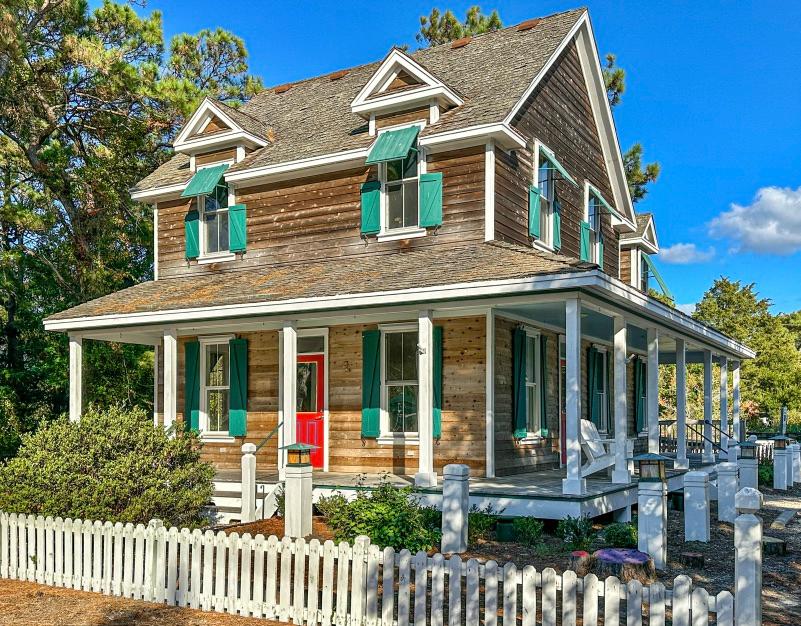
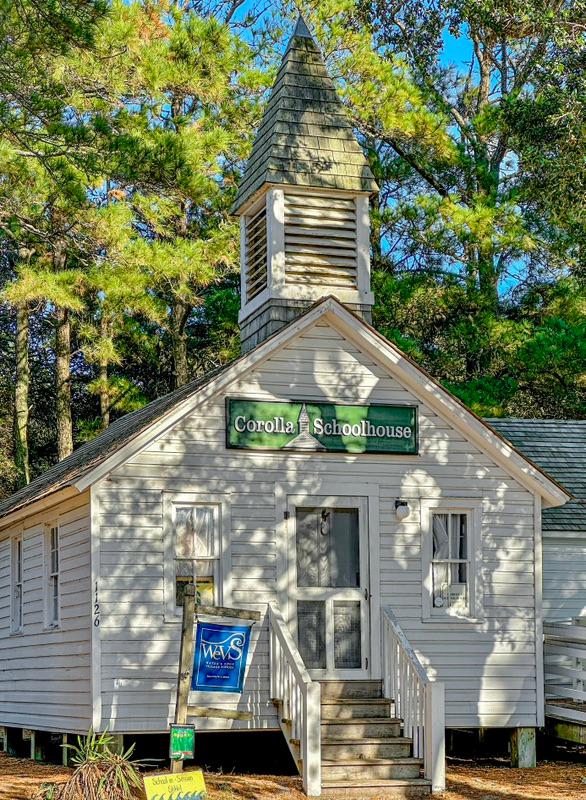
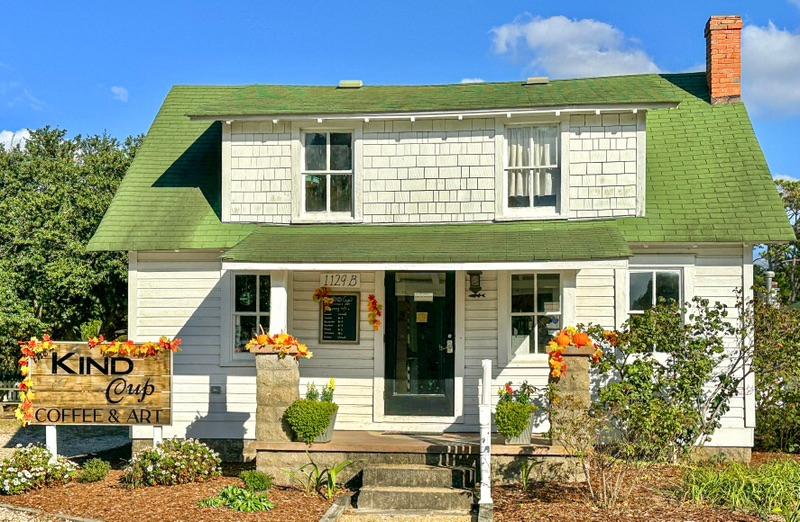
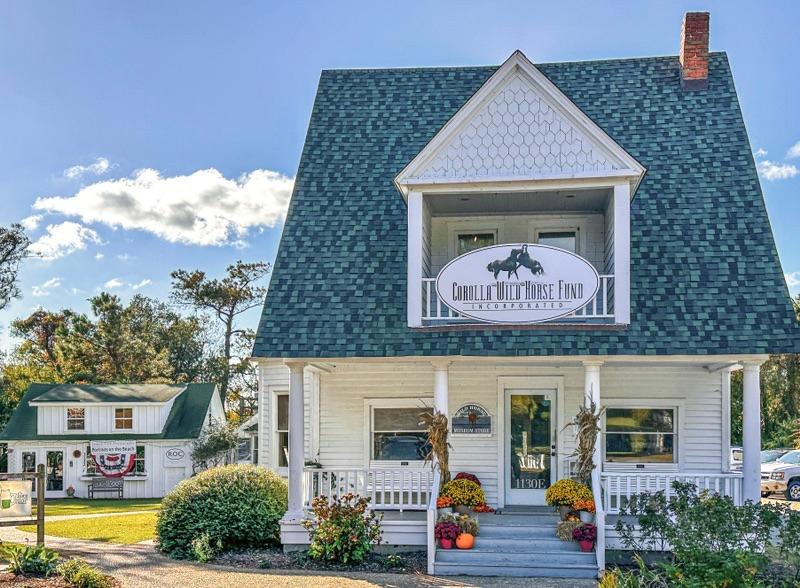
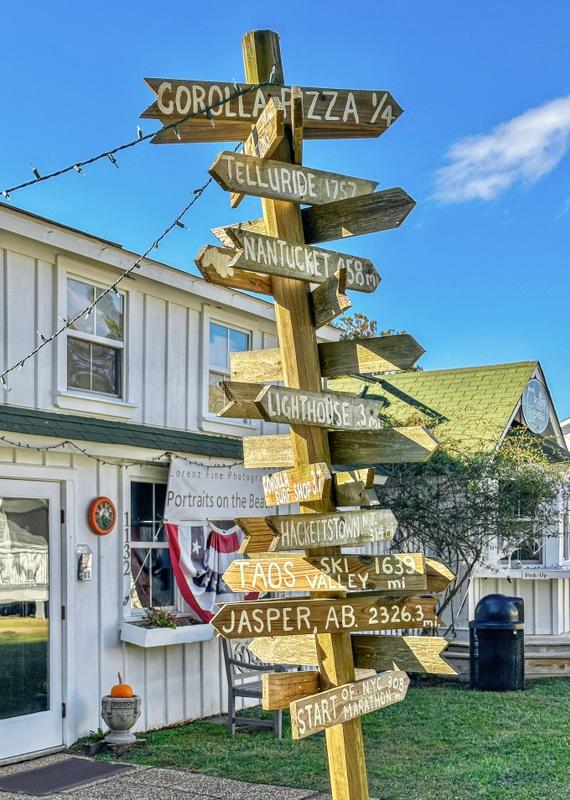
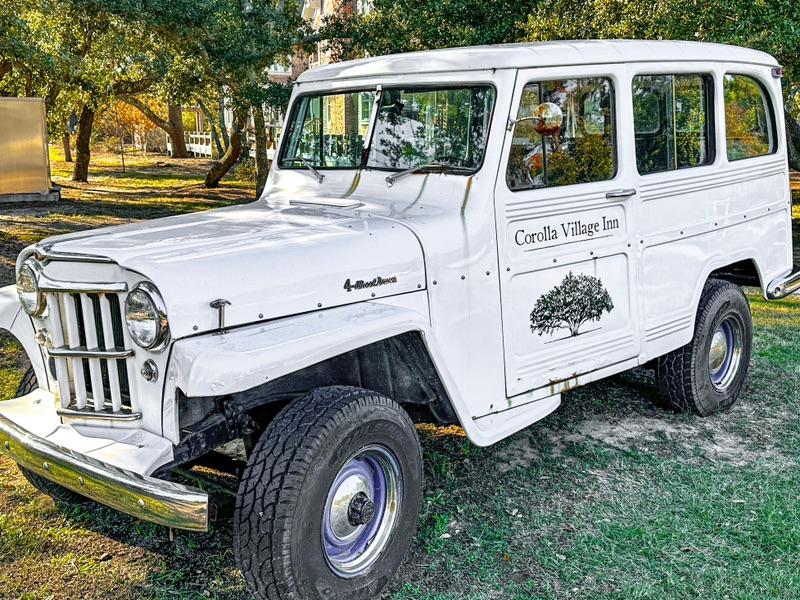
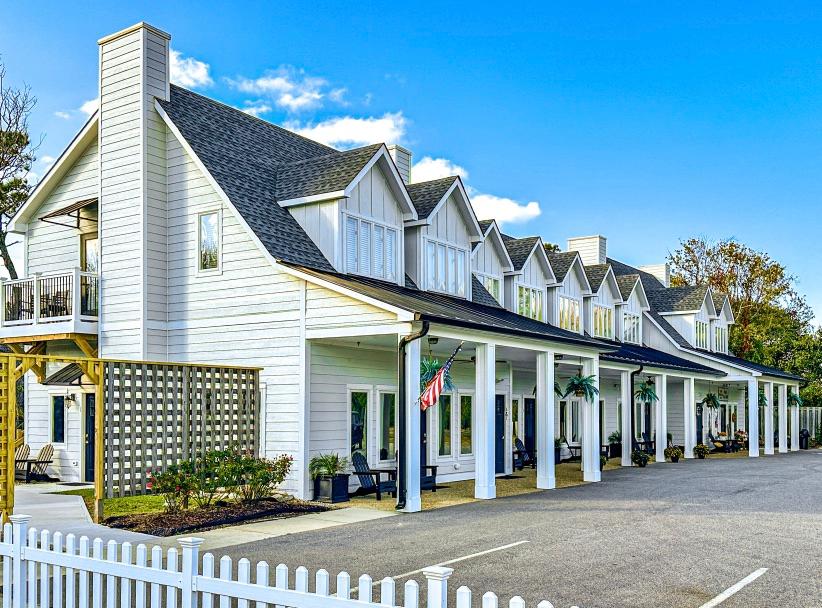
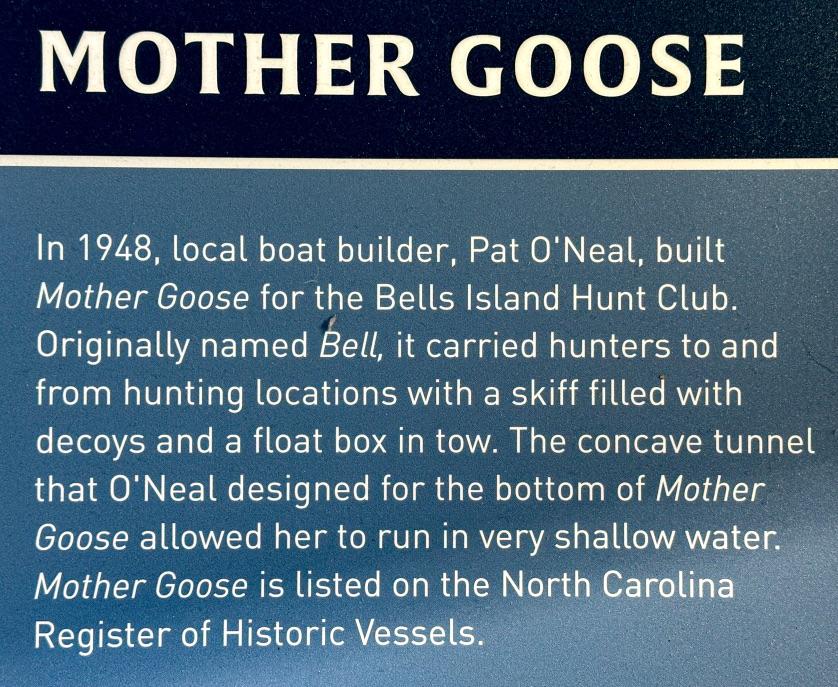
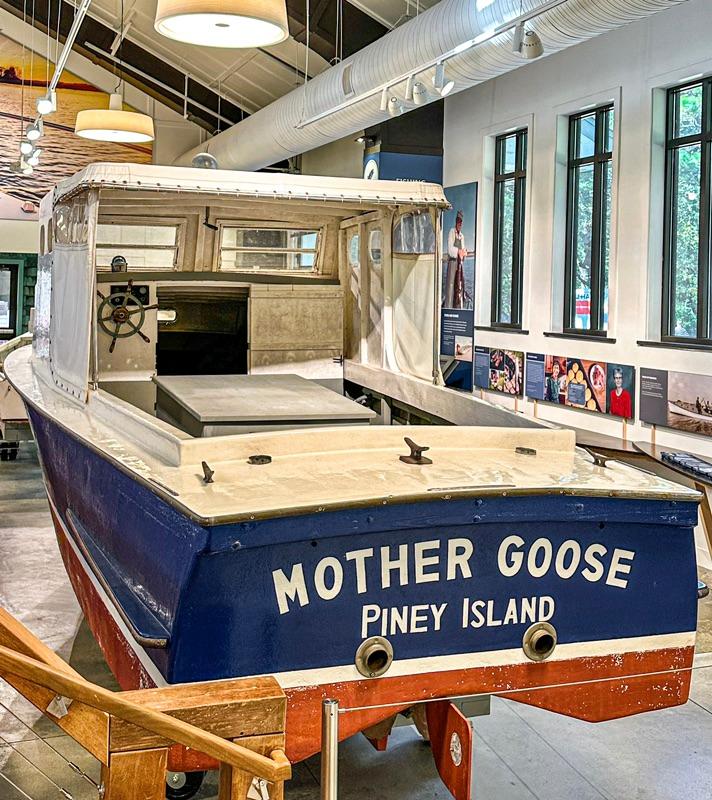
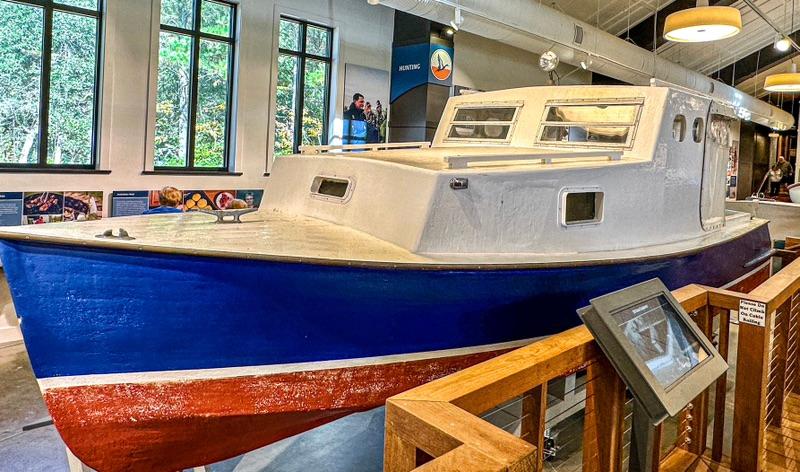
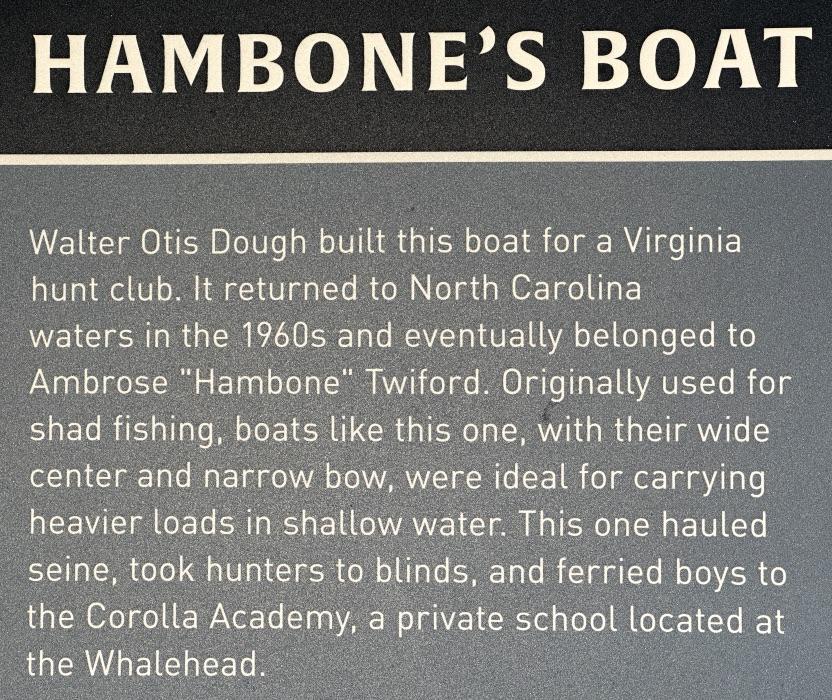
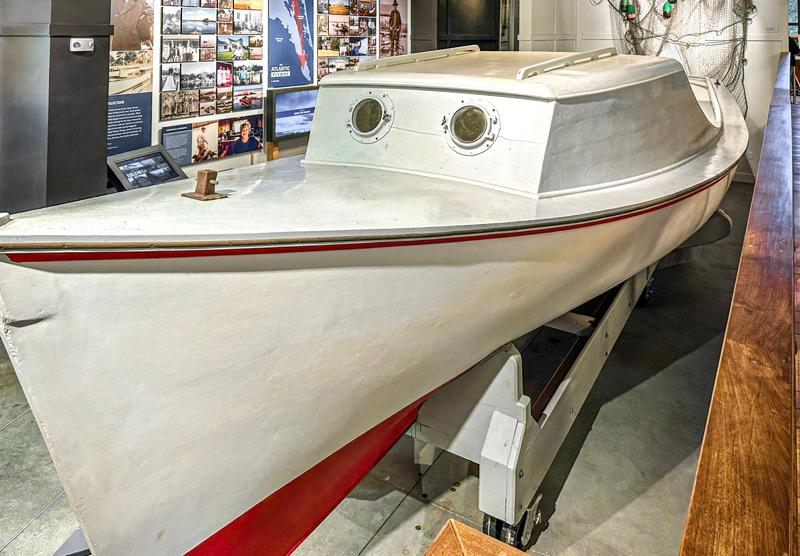
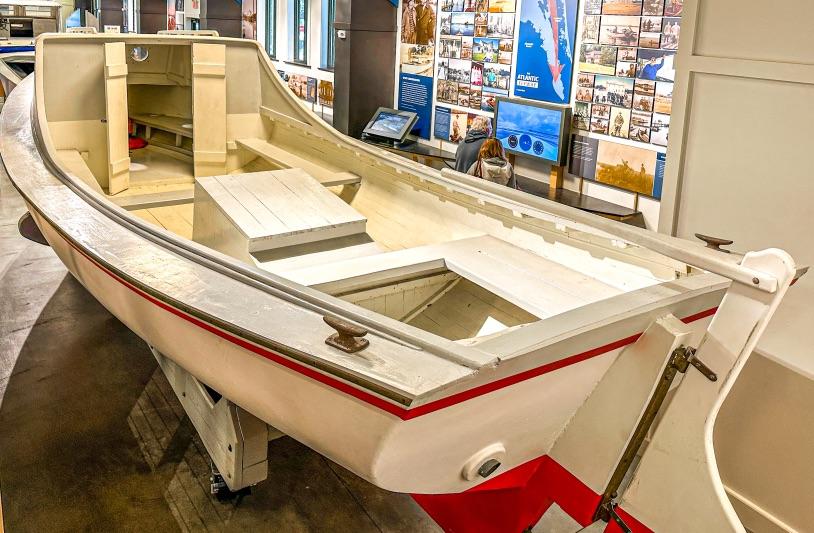
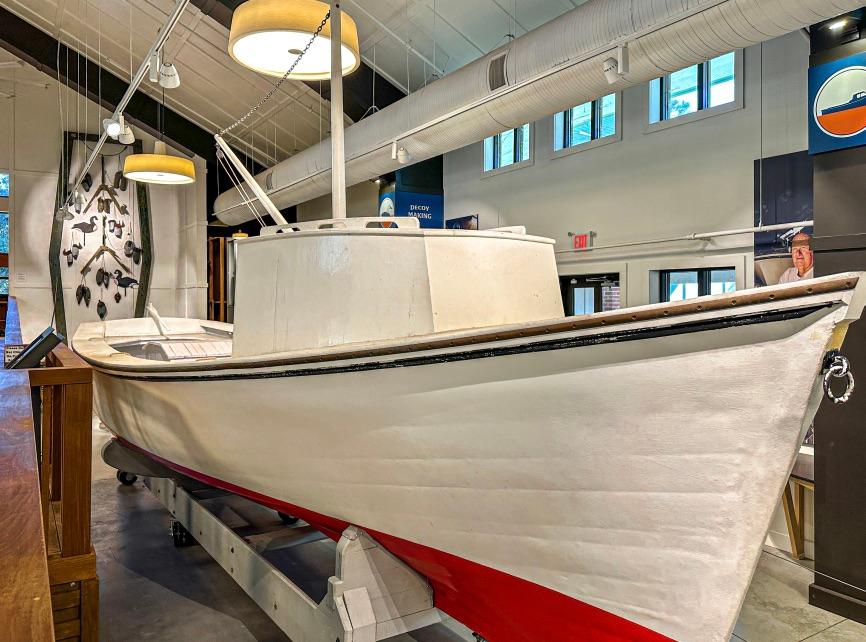
Historic Corolla, two square blocks of old-time downtown Corolla, has also been restored in the town’s attempt to stave off modern development. Businesses utilizing original shops is a great idea. | A nice vintage Willys Jeep. | This last picture of an Inn isn’t part of the historic downtown. It is just a building on the highway. Still, the architectural design blended in fairly well. | Lastly, we perused the maritime museum in Corolla. They had several hand-built boats on display. The Currituck Sound was noted for two things: Waterfowl (mainly ducks) and seafood (mainly oysters). Of course, both were over-harvested, but are now better protected. Each Sound, the vast waterways that the Outer Banks form, are quite shallow. Currituck Sound, which is 10 to 15 miles wide and 40 miles long, averages only 5’ in depth. | Notice that the rudder and prop are nestled in a concave cavity in the hull. This gives the boat a very shallow draft needed for the shallow waters of the Currituck Sound. | A photo of a local fishermen. | |
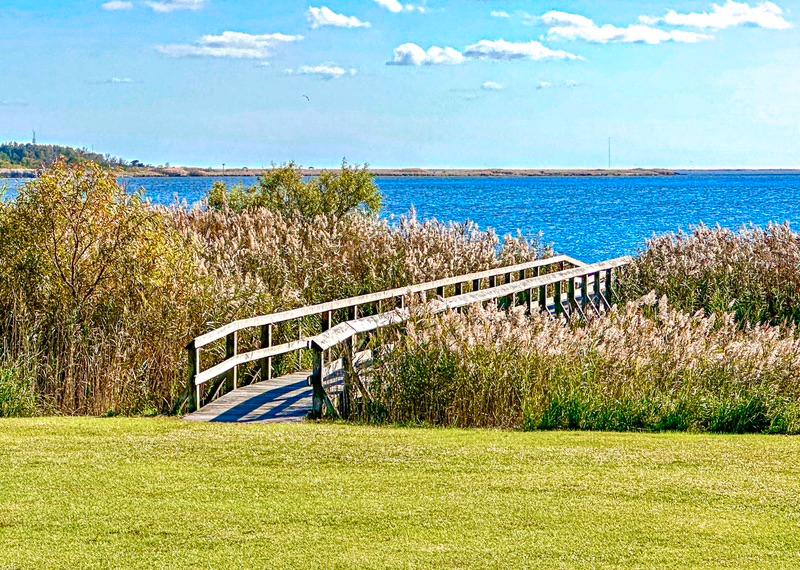
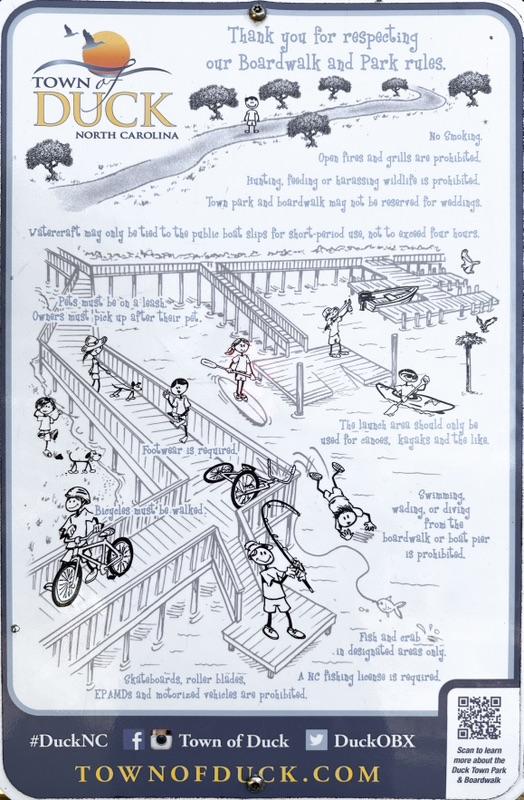
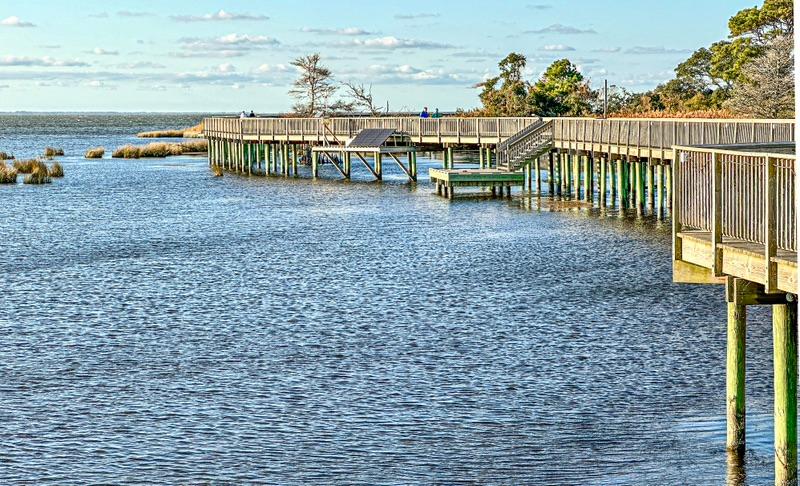
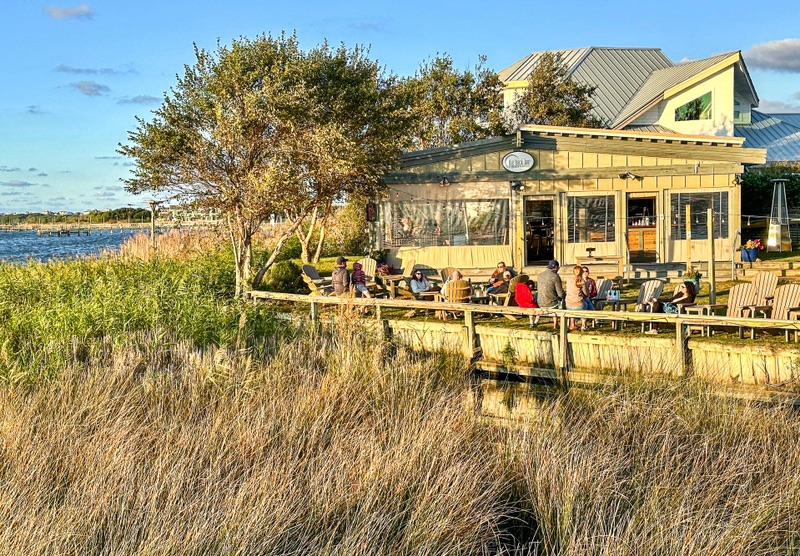
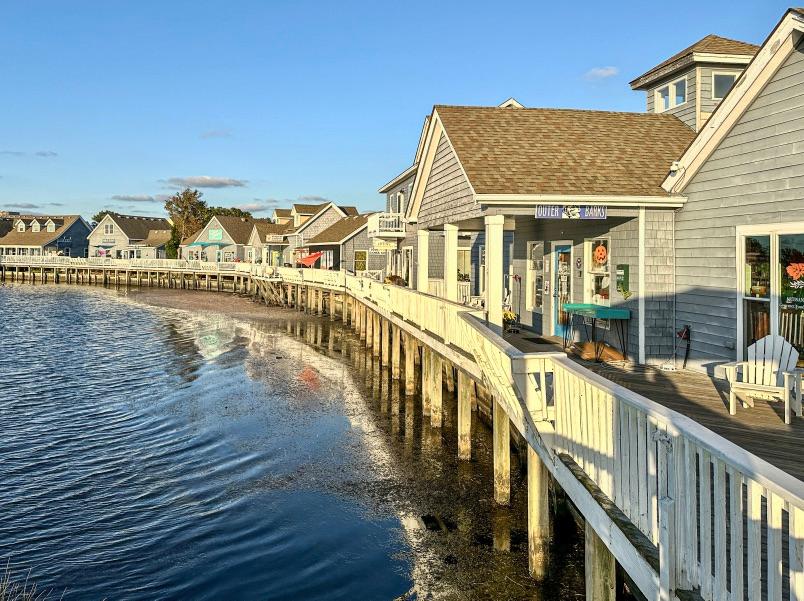
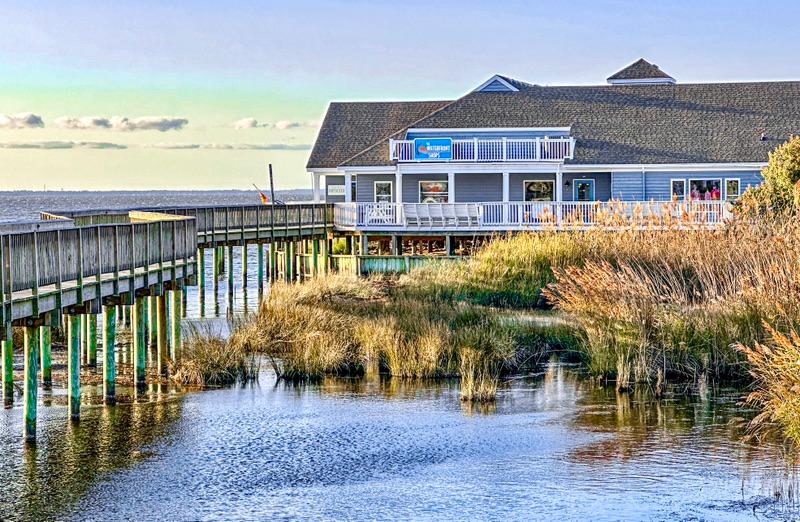
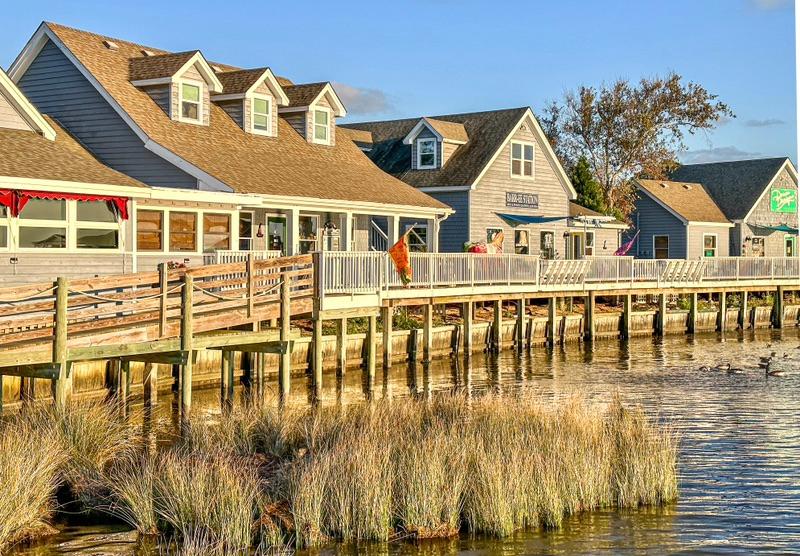
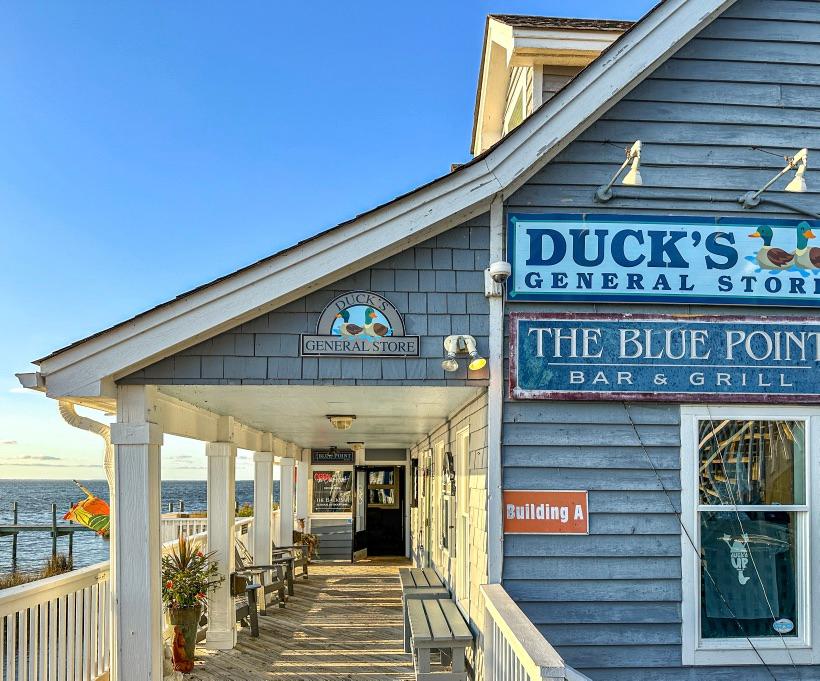
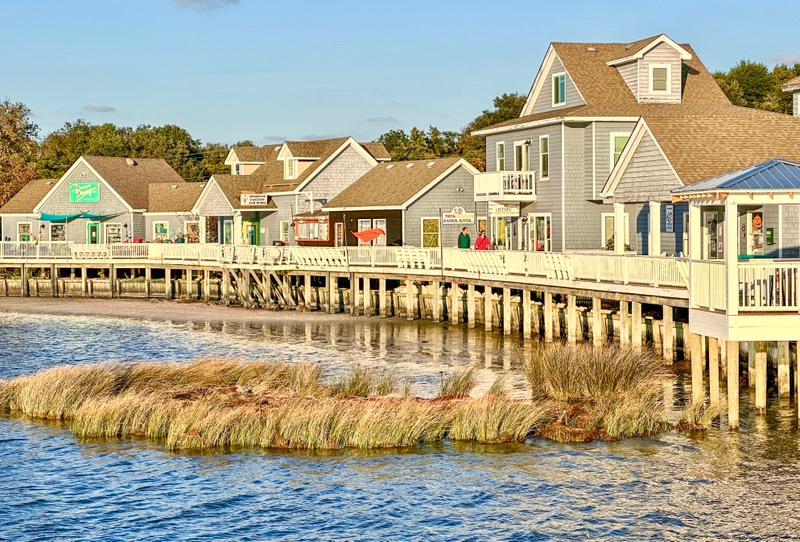
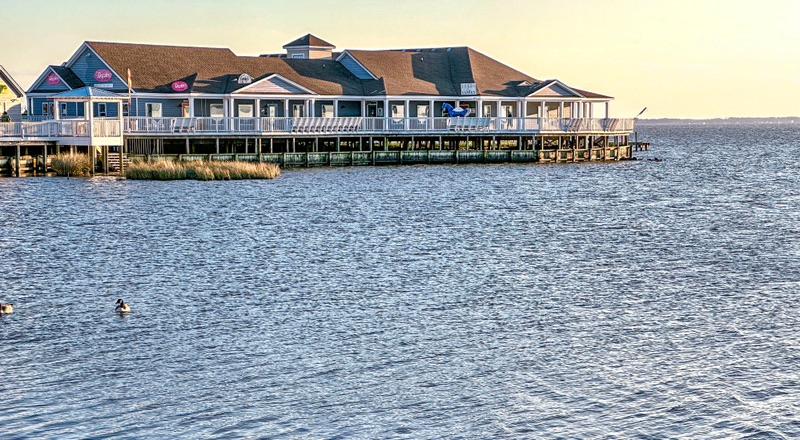
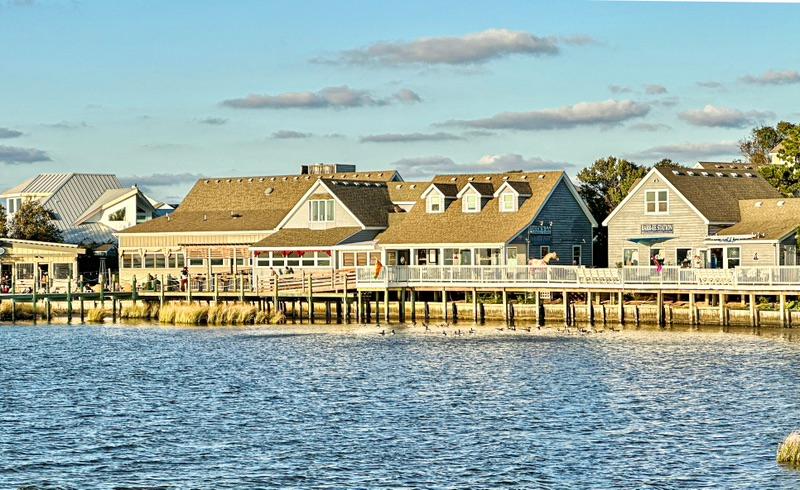
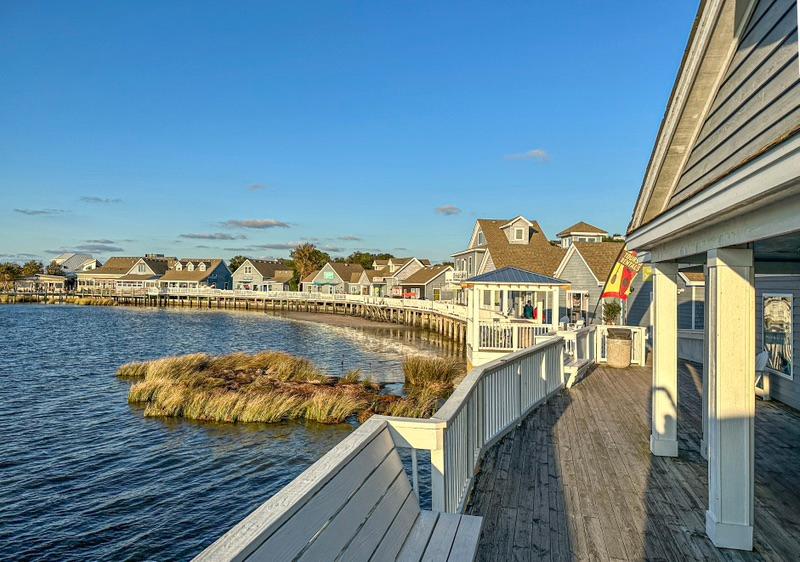
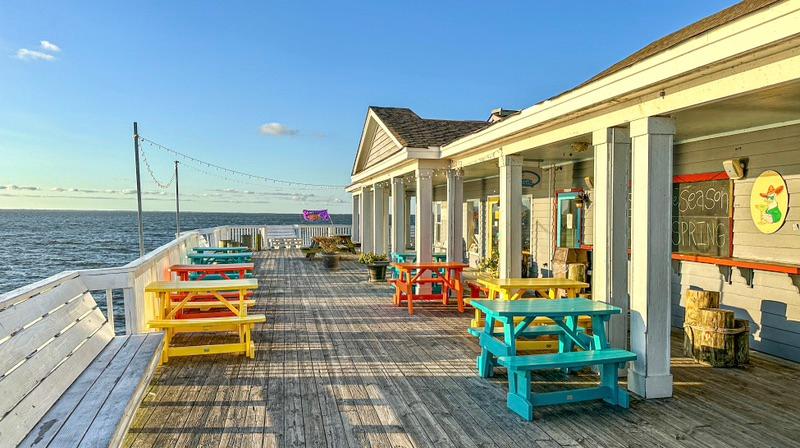
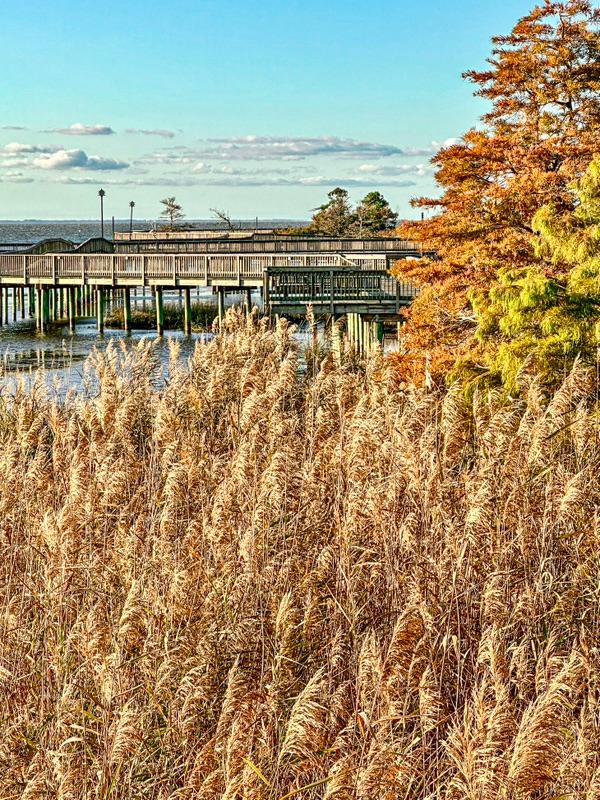
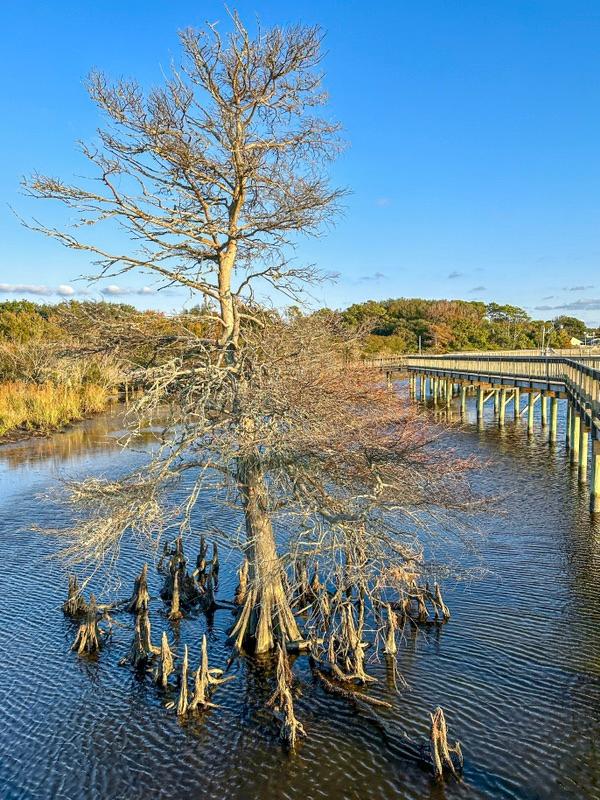
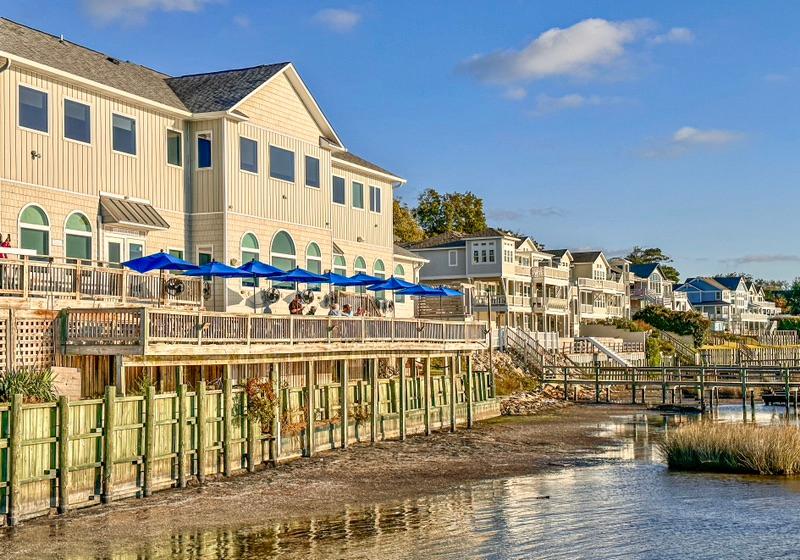
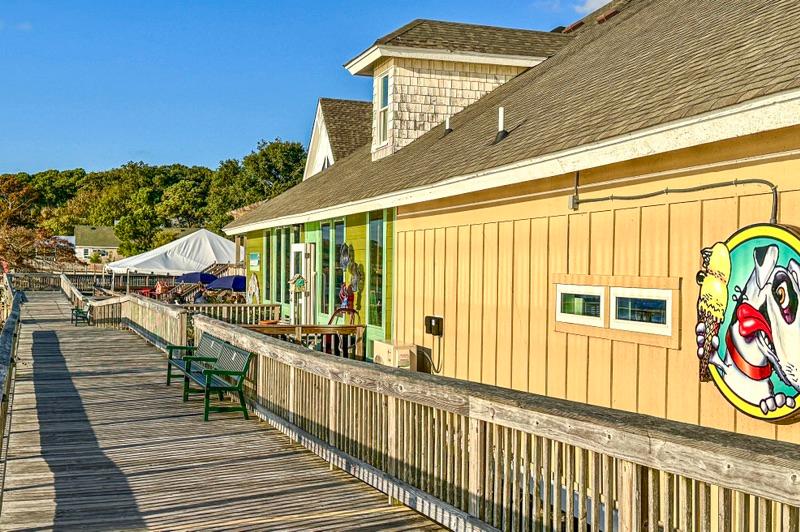
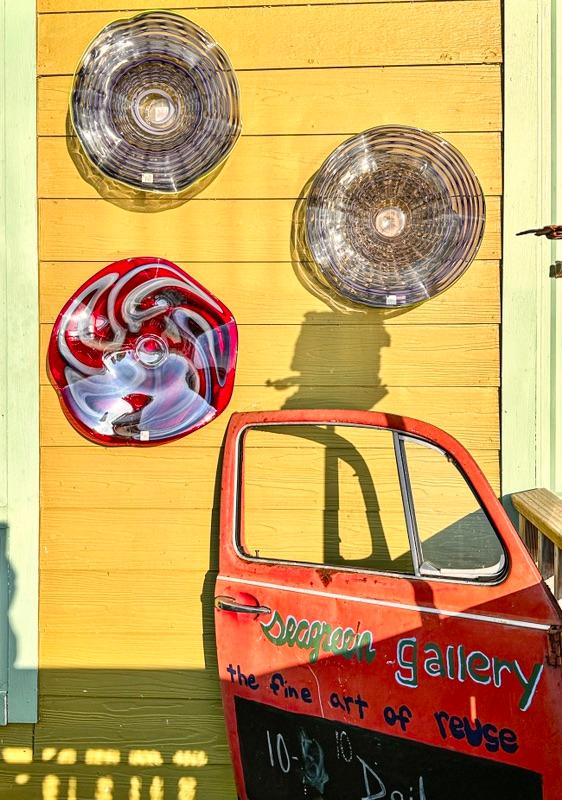
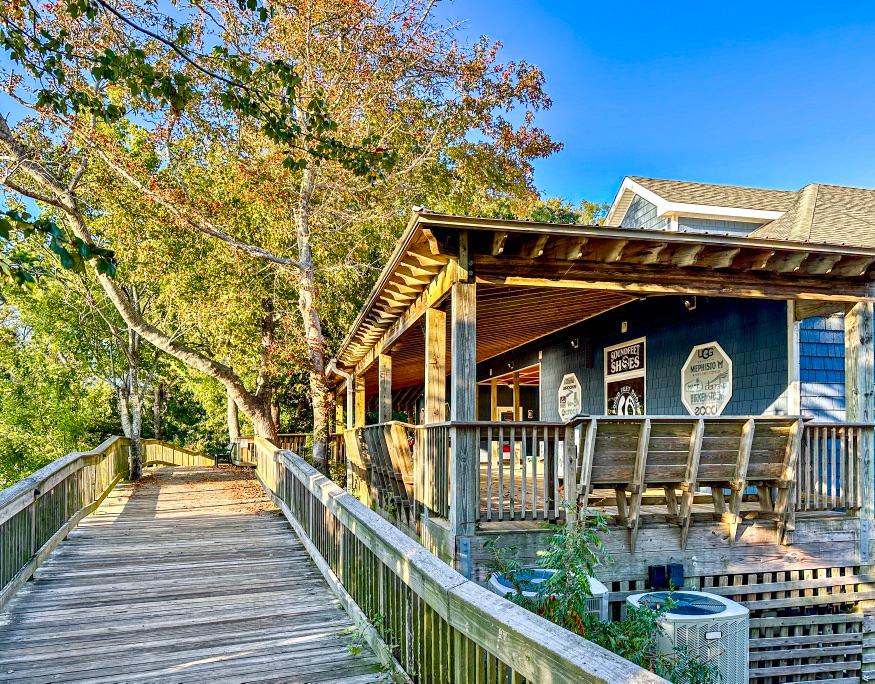
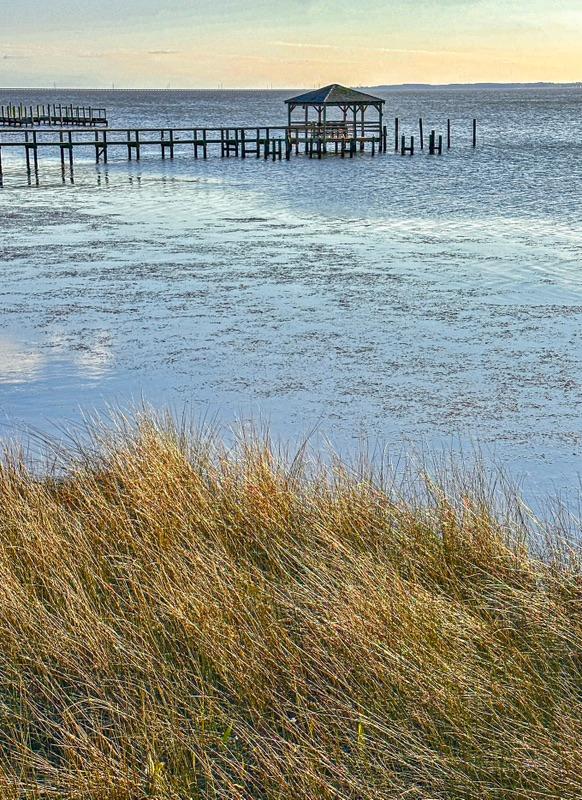
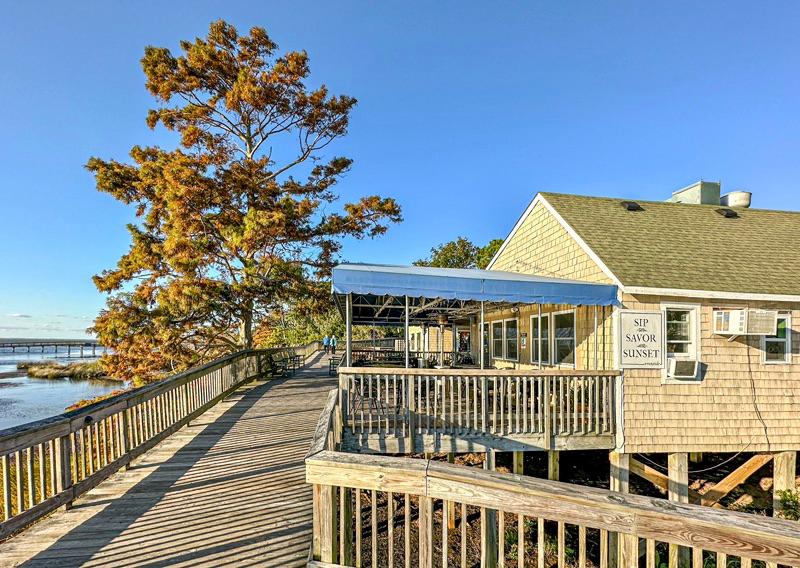
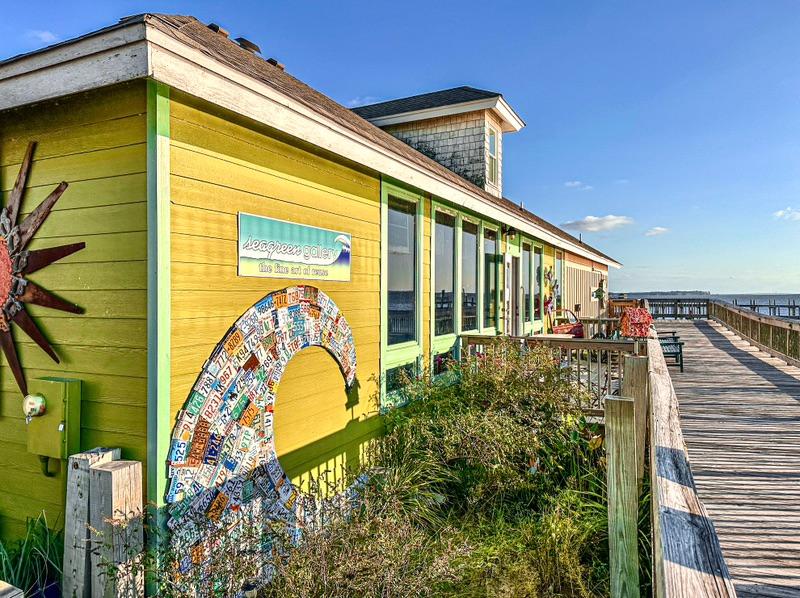
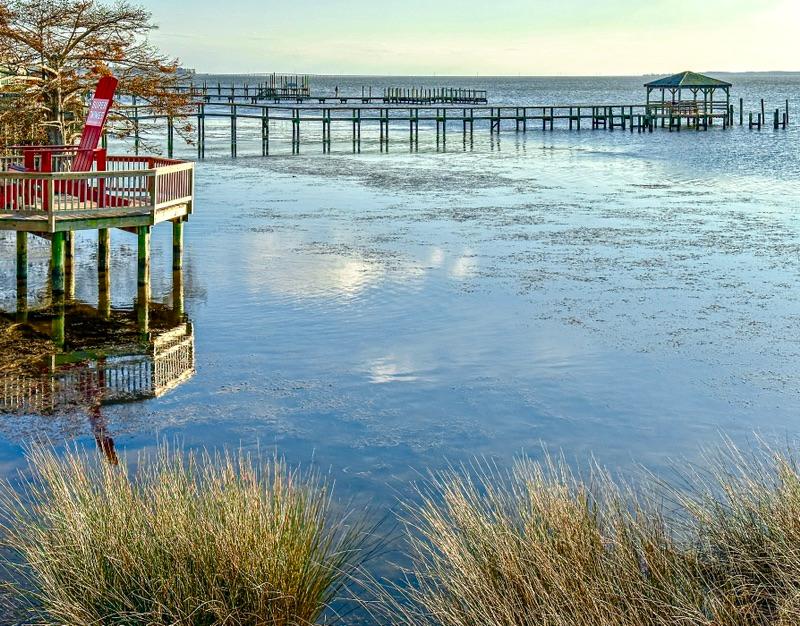
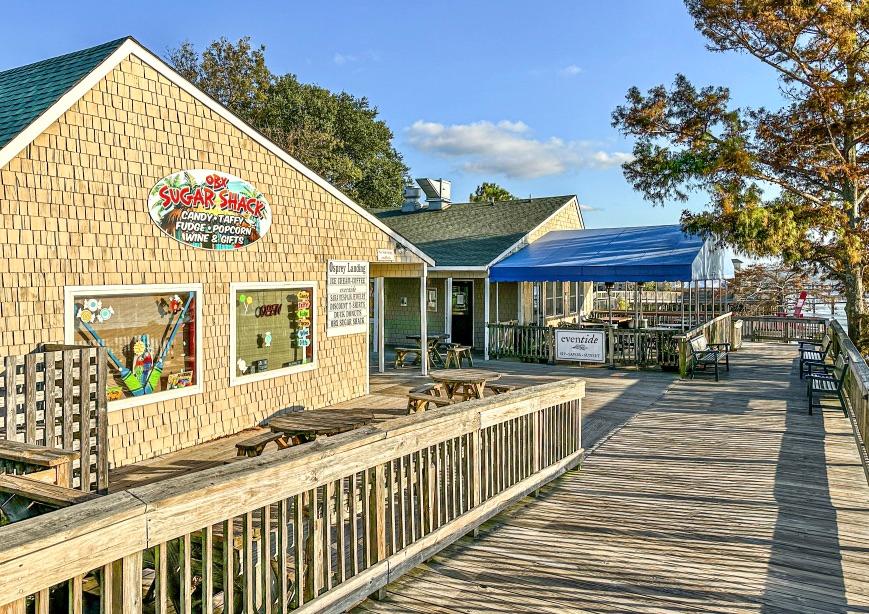
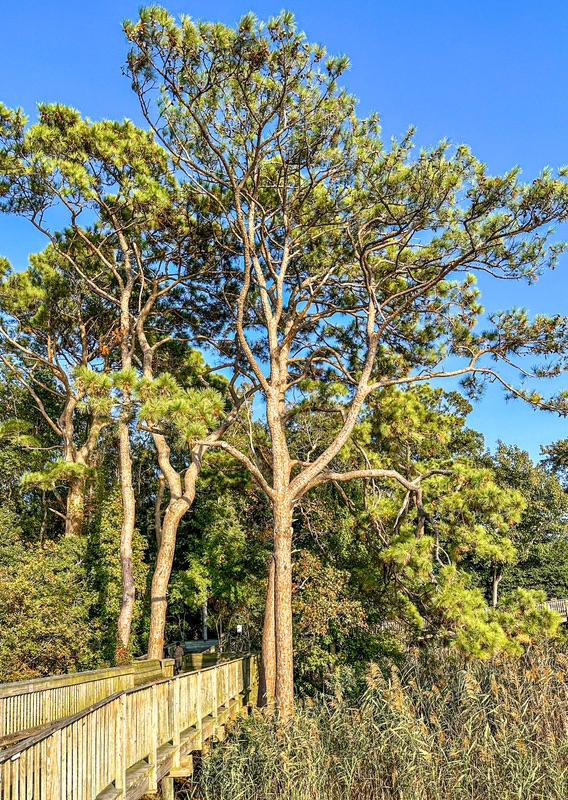
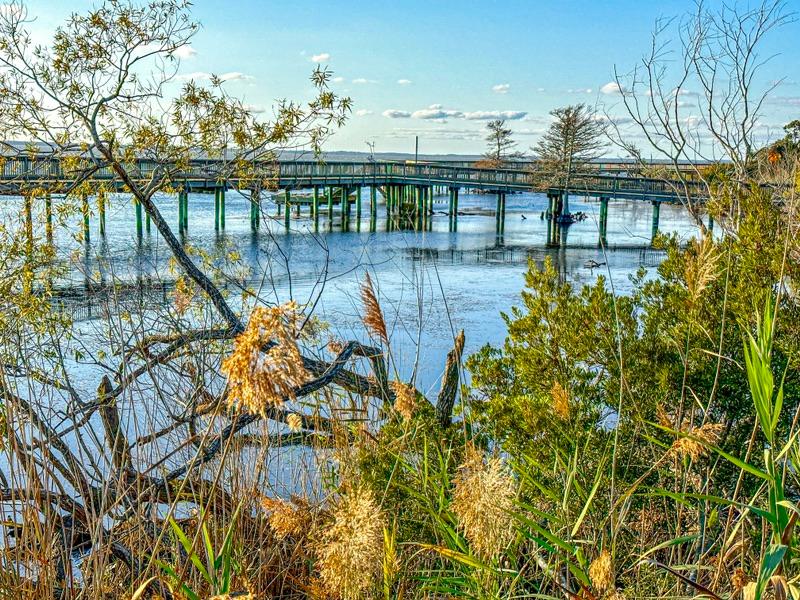
Our next stop was the cute town of Duck. The entire downtown is half in the waters of the Currituck Sound, and is assessable via a 2-mile long boardwalk hovering high above the water. We walked every inch of the boardwalk giving us 4 miles of hiking just in Duck.
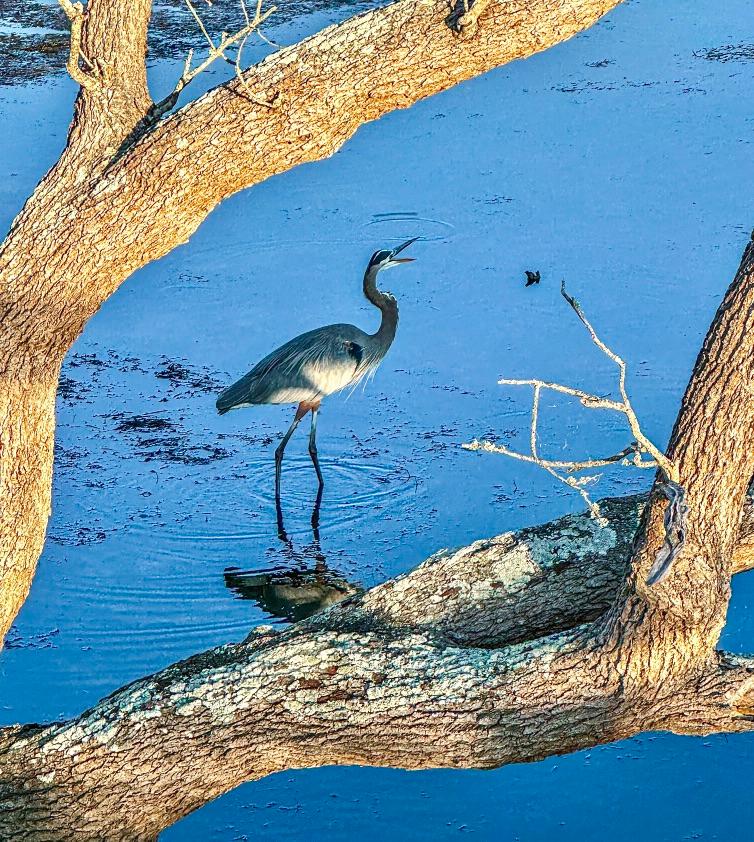
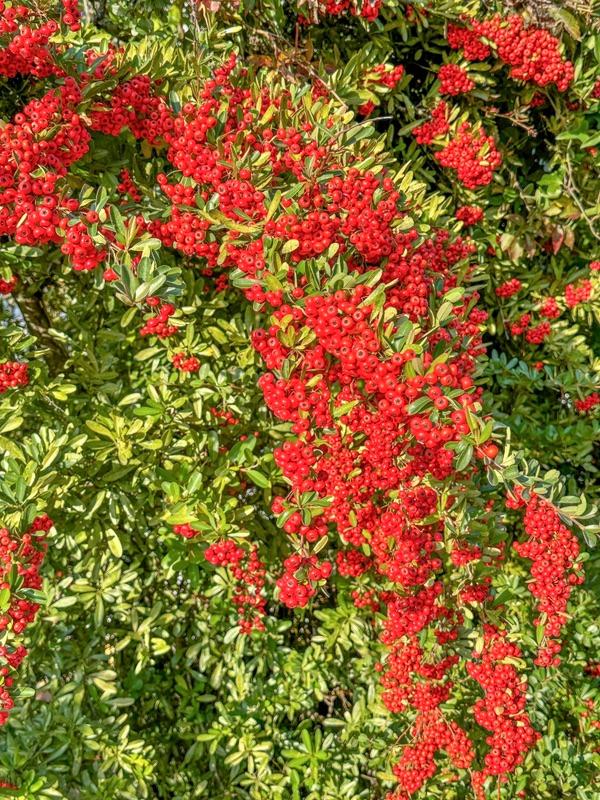
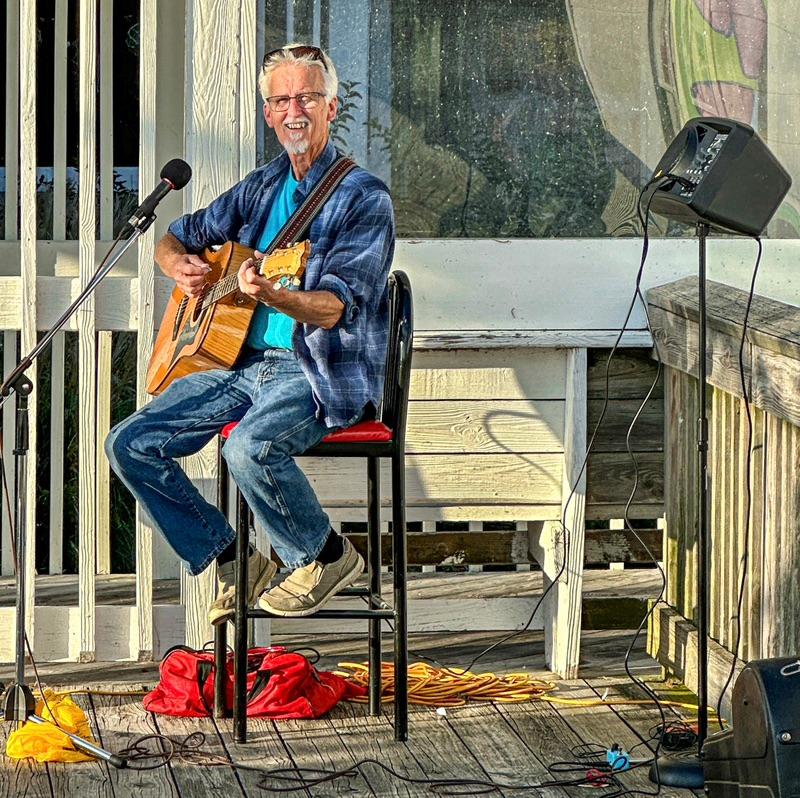
I know that I got carried away with all the photos of the boardwalk, however, it’s not everyday that you come across a boardwalk town.
|  |  |  |  |  |  |  |  |  |  |  |  |  |  |  |  |  |  |  |  |  |  |  |  |  |  |  |  |  |  |  | | | |
Corolla and Duck feature a lot of swanky gated-communities with gorgeous landscaping, flowers, and artistically-shaped shrubs. We ‘mistakenly’ ventured into some of these ‘private, do not enter’ streets. It must be nice!
The real star of the Outer Banks is the unbroken Atlantic Ocean beach that stretches on-and-on for miles-and-miles. The sand is perfect and vast. Access to the beach is well provided. The waves pound. Rip-tide warnings are posted everywhere and I believe them.
Unlike the nice even rows of orderly waves that we enjoy in Mexico, these angry waves have no pattern. The water boils and broils. The wind, unusually calm yesterday, howled today. We learned that the wind on the Outer Banks normally blows at a constant 15-20 mph, which is why the Wright Brothers traveled to the Outer Banks to try their flying contraption. Speaking of Wright Brothers, tomorrow we go to Kitty Hawk.
| |
Glossary of terms used for newcomers: 1) V-Jer. The name of our camper. 2) Saturn. The name of our Van. 3) Duende. Our mischievous gremlin that breaks things. 4) Tata. The good gremlin that helps us fix Duende’s dirty work. 5) The Black Hole. This is what we call Walmart because every time we go in for just a couple of items, we come out spending way more than we figured. 6) QT. Quaint Town. 7) Little Buddy. This is what we call our Dyson cordless stick vacuum. | | | | |