A Note from Lisa A. Miller, CNM, JD

Are you all ready for Halloween? October is here, and two more webinars are now available in my Expert Insights series with AWHONN, one is a truly detailed review of the Sinusoidal FHR pattern, with plenty that will surprise you (Boo!) and the second is a deep dive into the NICHD and includes information on the new ACOG clinical practice guideline, so don’t be afraid to check them out!


Halloween is my daughter-in-law’s favorite holiday (her birthday is the day before) and she and my son always have the best costumes. I have to say I love the miniature candies that pop up on the shelves this time of year, mini-Snickers being my personal fave. Trick or treating aside, this issue of Birth News You Can Use brings you some “brain candy” that is rich in information but free from calories, so read on…

If It Quacks Like a Duck...


As many of you know, I love reviewing information on fetal monitoring from outside the U.S., even though the terminology and paper speed may differ. And while EFM is an oxygen monitor, not an infection monitor, we are all familiar with FHR changes that can occur during labor in the face of infection, making delivery decisions quite difficult.


Chandraharan and Bolten shed a great deal of light on the subject with their “Chorio Duck Score”. While I am not suggesting you put this in your hospital protocols, I think it is worth a read for the review of physiology alone, and it might help you improve conversations and collaboration when faced with suspected infection in the intrapartum period.


You can download this open access article here.

What I'm Reading


Sticking with the focus on physiology, I think you will enjoy this commentary by Ghi and colleagues on what they term “relative uteroplacental insufficiency of labor”.


While the term is a mouthful, the concept of fetal oxygen as a demand versus supply issue in labor makes a great deal of sense. And again, while you will have to get by the difference in terminology (CTG vs. EFM, etc.) the deep dive into physiology and the emphasis on management of EFM in context makes this a great resource.


This is also open access, so get your copy today!

Hands-On Practice, Real FHR Tracings


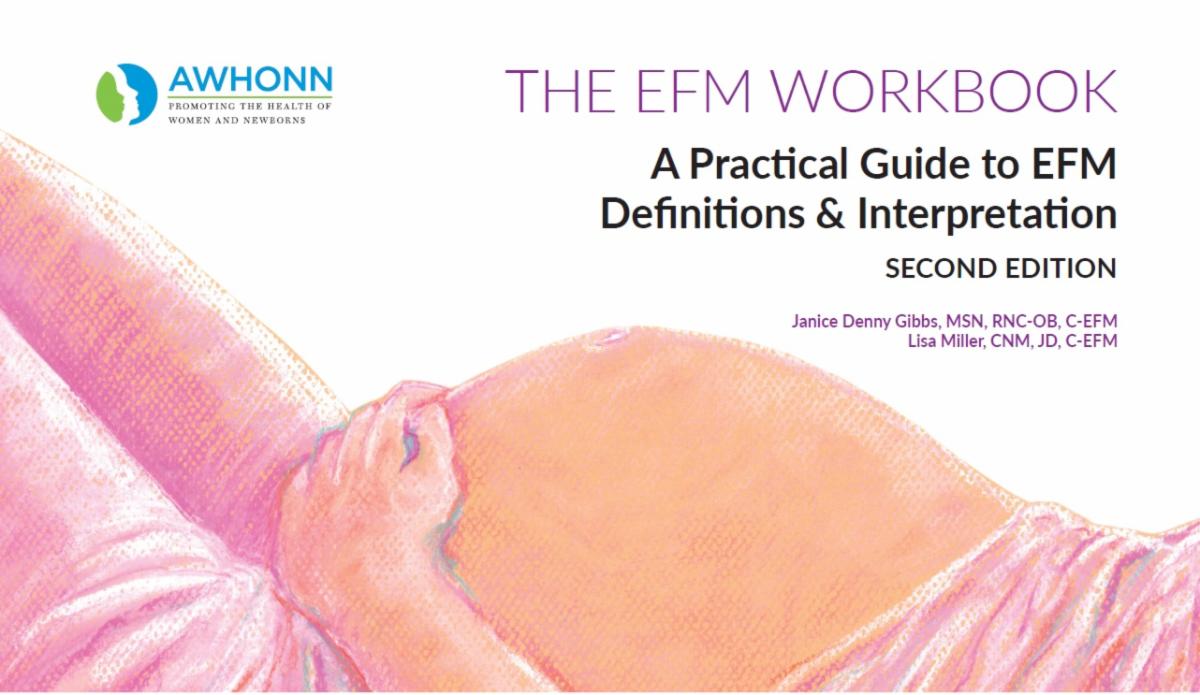
A practical way to strengthen your fetal monitoring assessment and interpretation is now available. The AWHONN EFM Workbook is your go-to resource—featuring 30 full-color practice tracings, expert commentary, and tools to build a shared mental model across your team. Perfect for educators, learners, and anyone committed to safer, clearer communication in L&D.


Order your copy through AWHONN.

Prefer your education on demand?


Then please join me for a webinar from my collaboration with AWHONN (offering CME!) or experience the module-based EFM Review course perfect for prepping for the NCC certification exam, credentialing, or just a nice way to reinforce core concepts.


See below for details and links…

New for 2025


  • What to Write vs. What to Know: A Clinician’s Guide to Documentation
  • Are You Prepared? Surviving the Stress of a Deposition
  • What’s in a Wave? Understanding the Sinusoidal Pattern
  • Practice Pearls from a Deep Dive into the NICHD

Expert Insights with Lisa Miller


Focused on essential knowledge and practical skills to enhance patient care and outcomes, you can now stream webinars on your own schedule, earning Continuing Medical Education (CME) credits or nursing contact hours. Discounts are available for AWHONN members, and you can buy the webinars as a bundle!


View the full webinar catalog here.

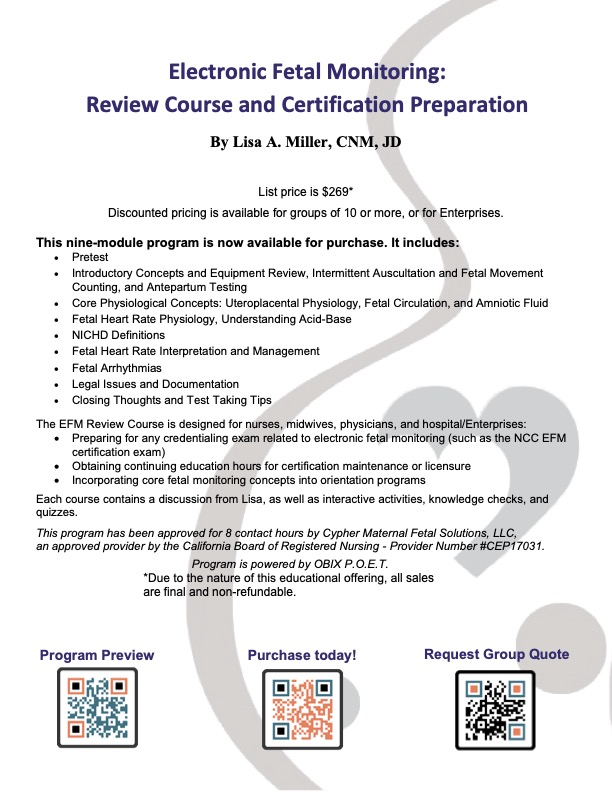
EFM Review Course and Certification Prep


Are you interested in an in-depth online Electronic Fetal Monitoring (EFM) review course suitable for NCC C-EFM exam prep, orientation, or just a refresher?


If so, I’ve got you covered! Click below to view the course brochure, request a quote, or sign up.


Course Information

Facebook