Dec. 2, 2024

Top stories

■ Trump press secretary pick removed post praising Pence on Jan. 6, then ran for Congress as an election denier (CNN) / What Karoline Leavitt, Trump’s new press secretary, can learn from her many predecessors (Vanity Fair) / Reporters brace for the frenzy of a second Trump White House (Vanity Fair) 


■ MSNBC confronts viewer frustration, changes and an identity crisis (Washington Post) / Elon Musk floats buying MSNBC, but he’s not the only billionaire who may be interested (CNN)


■ Judge dismisses lawsuit against Fox News over Jan. 6 coverage (Washington Post) 


■ Newsmax posts new statement on Smartmatic, acknowledges that court found election rigging claims untrue (Deadline) 


■ TelevisaUnivision hit with layoffs as CEO Daniel Alegre launches sweeping reorganization (Hollywood Reporter)


■ CNN anchor Kaitlan Collins adding role as chief White House correspondent (Washington Post) / CNN commentator Scott Jennings joins Los Angeles Times editorial board after owner calls for more conservative voices (The Hill) / Sara Aridi joins NYT Early Careers team (New York Times) / Kyle Felling named KBIA general manager (KBIA) / ‘Axios hires Marc Caputo.’ (Max Tani) / WSJ taps Josh Chin as senior global correspondent (Talking Biz News) / Salon hires Cara Michelle Smith as senior writer for money (Talking Biz News)


■ The Verge plans to launch a sitewide paywall on Tuesday; some content and the publication's social feed-like homepage will remain free (Semafor)


■ Why the NBA's ratings are down big — and why its new media partners should care (The Wrap) 


■ Core copyright violation claim moves ahead in The Intercept’s lawsuit against OpenAI (Nieman Journalism Lab) / How ChatGPT search (mis)represents publisher content (Columbia Journalism Review) 


■ Journalists flock to Bluesky as X becomes increasingly 'toxic' (NBC News) / Remember Nuzzel? A similar news-aggregating tool now exists for Bluesky (Nieman Journalism Lab) 


■ A new kind of local news in San Francisco (Semafor) 


■ Colorado's news deserts, mapped (Axios Denver) 


■ Behind the scenes with our Thanksgiving Day Parade reporter (New York Times) 


Press freedom 


■ Donald Trump’s latest nominee poses yet another threat to journalism (Poynter) / What the FBI has done, and Kash Patel could do (Columbia Journalism Review) 


■ If You Can Keep It: The press and the PRESS Act (1A/WAMU)


■ Who is Austin Tice? Family of captured Houston journalist to visit White House Friday for meeting (Houston Chronicle)

CRAFT

Covering Climate Change: Tips for telling impactful, solutions-oriented stories

Climate change and its impacts will continue dominating the news cycle as extreme weather events become more frequent. And journalists play a vital role in covering these disasters with context, clarity, and urgency. 


While the overarching climate story can feel formidable, research shows that audiences tend to tune out when the news is overwhelmingly bad. Enter solutions journalism.


The Solutions Project is a nonprofit organization that connects journalists with community leaders to tell climate stories. The organization created a Storybank hub, which highlights stories of grassroots organizations working at the intersection of climate justice and other social challenges.


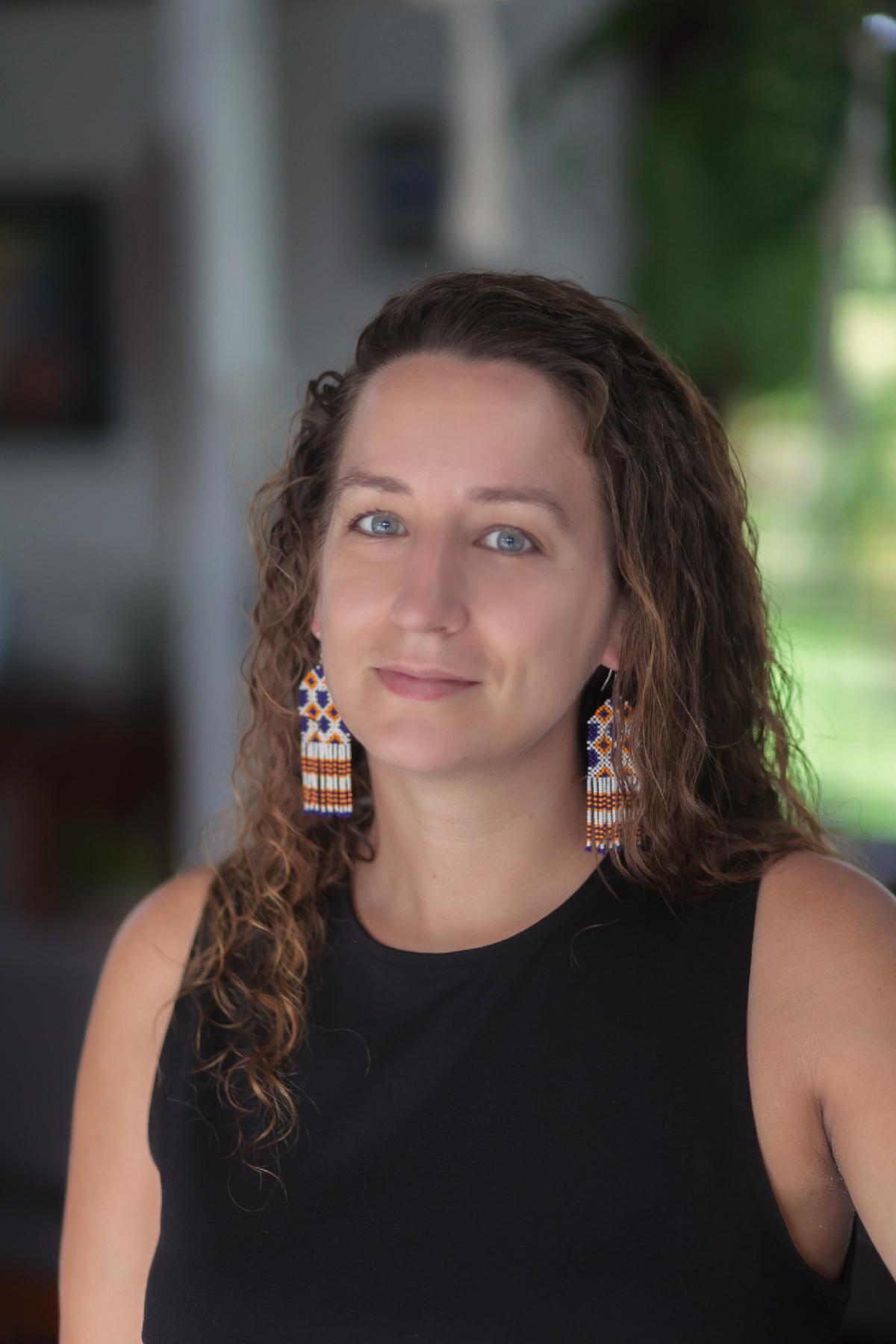
The Institute reached out to Thelma Young Lutunatabua, the organization’s senior manager of narrative strategies, to learn how journalists can best utilize its resources.

What are the biggest challenges you see with climate change coverage right now?


Young Lutunatabua: A major issue is that while most people understand the climate crisis is happening, they don’t see how climate is connected to the rest of their lives. There are opportunities to put issues like extreme weather and environmental laws in the larger context of climate solutions — like public transit, solar, and rain gardens that impact everyday health and living issues. Some news outlets are working to educate other desks in climate coverage, but we’d like to see this be the rule — not the exception. 


Additionally, so many climate journalists are being laid off, and those who are left have so much on their plate. It is because of these factors that climate coverage doesn’t always have the capacity to cover the depth of climate stories and how it connects with communities now. The community-based groups featured in the Storybank are already actively witnessing and building solutions that weave climate with housing access, good jobs, health and safety, as well as other day-to-day priorities. 


For example, PUSH Buffalo is ensuring there’s more affordable, energy-efficient housing, while also training local community members to have skills to land high-quality green jobs. … In Chicago, Blacks in Green envisions a Sustainable Square Mile — a walk-to-work, walk-to-shop, walk-to-learn, and walk-to-play village where African Americans own the businesses, own the land, and live the “conservation lifestyle.” 


Too often, reporters define experts as only scientists or technologists, which misses the opportunity to understand climate within our everyday realities. The Solutions Project actively connects community leaders with reporters to tell solutions stories that sprout from the ground up and really make a difference in people’s lives.


Can you share some examples of how journalists have worked with The Solutions Project to provide impactful climate coverage?


TYL: There are incredible climate-justice solutions happening all the time and all over the country. However, grassroots groups often don’t have the budget to pay for communications work to tell the stories of their wins. This is where The Solutions Project tries to help build connections. 


For example, when Good Morning America was looking for positive solutions around water, we connected them with New Alpha Community Development Corporation, an environmental justice nonprofit in South Carolina that adopted hydro panels — solar technology that converts water vapor in the air into clean drinking water — to provide their community with clean drinking water. … Frontline communities aren’t waiting for someone else to come in and save them — they are solving problems all the time, and it's really inspiring for others to learn about! 


We also let the producer know about New Alpha’s ribbon-cutting for the South’s first environmental justice training center. Good Morning America was then able to be there for that exciting moment. Just like our community partnerships, we build relationships with journalists for the long-haul.


What do you see as the top climate solutions stories not being told in traditional journalism?


TYL: As part of telling the full climate story, it's important that we see more stories that are about solutions grounded in communities most affected by extreme weather, polluting industries, and other consequences of the climate crisis. They are closest to the problems and offer the most effective solutions. … 


These solutions are popping up across the country, like resilience hubs, which are community spaces for disaster recovery. More cities, counties, and states are experiencing the benefit of working with community partners as they build climate solutions.


Read on to discover more resources for your climate coverage.

CAREER
 

Axios’ Jim VandeHei on the top qualities needed to be a great reporter


“Thick skin, innate or grown: If you are focused on pleasing others or keeping the peace, do something else with your life. Be a nurse or teacher or referee. You need to not care what others think of you, or this pressure will crush your fearlessness and drive to win.


Fearlessness: This is related to — but different than — thin skin. If you are naturally cautious and fear being questioned, this profession will not work for you. Fearlessness is not recklessness. Some of the best reporters are neurotic and prone to second-guessing. But in the end, they push through because they know they sought and found truth.


Curious mind: A great reporter constantly pursues what's new, what's next, what's really happening. You need to feel it in your bones and be deeply, hopelessly unsatisfied until you know fully and confidently. You're the person who is always asking questions and naturally skeptical. If you are at all content or gullible or incurious, please don't do journalism.”


-- Jim VandeHei, co-founder and CEO of Axios, excerpt from memo: “How to be a great reporter”


VandeHei and Axios co-founder Mike Allen received the National Press Club’s esteemed Fourth Estate Award last month. Watch their remarks.

 
COMMUNITY

Resources


This newsletter is written & edited by the National Press Club Journalism Institute staff: Beth Francesco, Holly Butcher Grant, Elliot C. Williams, and Mitch Harle. Send us your questions and suggestions for topics to cover.


Get this from a friend? Subscribe, and view the archives.

Facebook  Twitter  Linkedin  Youtube  

DONATE TO THE INSTITUTE


The National Press Club Journalism Institute promotes an engaged global citizenry through an independent and free press, and equips journalists with skills and standards to inform the public in ways that inspire a more representative democracy. As the non-profit affiliate of the National Press Club, the Institute powers journalism in the public interest. The Institute's tax ID number is 52-1750908.